|
|
Dear ,
This is your weekly summary of our news, research, books, videos, and other resources related to senior living, retirement, and care in Mexico, along with independent and assisted living and information about age-related challenges (e.g., limited mobility, dementia, Alzheimer's, Parkinson's, ALS, stroke, multiple sclerosis, healthspan, and so on).
I hope you are finding this weekly newsletter helpful, and if you know of someone who may also find this information helpful, please forward it to them. They can subscribe using our Web Newsletter page (click here). If, for any reason, you do not wish to receive this weekly newsletter any longer, there is a simple 'Unsubscribe' or 'Opt Out' link at the bottom right corner of this newsletter and also right here: Unsubscribe
This weekly newsletter typically includes information in each of the following categories: San Miguel insights, senior care, and health information, as well as Cielito Lindo basic information.
Here’s what we typically cover each week:
- San Miguel de Allende highlights – why this is such a special place to live
- Health & wellness insights – articles, videos, and expert reviews
- Care options & community life at Cielito Lindo – flexible, affordable living with a warm, human touch
This Week’s Theme: The Unacknowledged Caregiver
This week, we explore how our modern healthcare requires a navigator to assist seniors.
|
|
|
|
|
| Weekly insights into San Miguel:
|
|
|
- Colorful and Epicurean San Miguel - This is such an amazing place,
particularly the food and the colors. Although we are addressing a topic that is stressful, challenging, and emotional, we should also acknowledge what an incredible place San Miguel is.
|
|
|
|
|
The Colors of San Miguel: Mysterious Portals
In San Miguel de Allende, even the smallest window feels like a secret waiting to be kept. A diamond of glass set deep within layers of worn plaster, this one glows softly from within, as if guarding a whispered story. The red wall beside it burns like a quiet flame—sun-baked, time- streaked, alive with the brushstrokes of decades. The whitewash around the frame has cracked into delicate fault lines, revealing the patient work of heat, rain, and passing hands. You don’t simply look at a window like this—you lean toward it, half-expecting it to inhale.
There is something deliciously intimate about these portals. They are not grand
entrances; they are murmurs. Behind the iron lattice might be a kitchen perfumed with simmering canela, or a tiled courtyard where a fountain sighs into the afternoon. In San Miguel, doors and windows are thresholds between worlds—the public and the private, the present and the remembered. Stand before one long enough, and you begin to feel it: the city watching you back, inviting you to imagine the life unfolding just beyond the glass.
|
|
|
|
|
Restaurant Review: Inside Café Insurgentes 66, Centro, San Miguel de Allende, Gto., Mexico Phone: +52 415 154 7876
Days and Hours:
Daily, approximately 8:00 AM – 2:00 PM (arrive early on weekends — it fills quickly)
Atmosphere:
Inside Café feels exactly as its name suggests — intimate, welcoming, and tucked away in the heart of Centro. The shaded courtyard, bright Talavera accents, and cheerful energy create a relaxed morning refuge. It’s casual but thoughtfully arranged, with a lived-in charm that reflects the warmth of San Miguel itself. Expect a convivial mix of locals, expats, and returning seasonal regulars.
Service:
Friendly, efficient, and genuinely hospitable. The staff runs a tight ship despite the often-packed dining room. Coffee refills are prompt, special requests are handled graciously, and there’s a sense that many guests are known by name. Even during the
rush, the service rarely feels rushed.
Cuisine:
A satisfying blend of Mexican breakfast classics and American comfort favorites. Portions are generous without being sloppy, and presentation is bright and inviting. Ingredients are fresh, flavors are bold, and dishes arrive hot — a detail not to be underestimated in busy breakfast spots.
Signature
Dish:
Chilaquiles (especially with green sauce) — perfectly crisp tortillas that soften just enough under vibrant salsa, topped with crema, queso fresco, and your choice of protein. Balanced heat and excellent texture make this a standout.
Starters:
Breakfast here moves straight into mains, but the house-baked muffins and fresh fruit plates are excellent openers. The granola with yogurt is a lighter option that still satisfies.
Main Courses:
- Fluffy pancakes — golden, slightly crisp at the edges, and generously portioned.
- Eggs Benedict — a popular favorite, with a well-executed hollandaise.
- Omelets packed with fillings and served with hearty
sides.
- Mexican plates like huevos rancheros and breakfast burritos that lean authentic yet comforting.
Portion sizes are notably ample — many diners leave with take-home boxes.
Desserts:
Though primarily a breakfast and brunch destination, sweet cravings are satisfied by their pancakes, French toast, and rotating baked goods. Think indulgent rather than refined pastry.
Wine and Cocktails:
This is more about strong coffee than sparkling wine. The house coffee is robust and plentiful, and fresh juices are vibrant. Mimosas are available for those easing into a leisurely brunch, but alcohol is secondary to the food.
Final Thoughts:
Inside Café succeeds because it knows exactly what it is: a warm, reliable,
crowd-pleasing breakfast institution in San Miguel de Allende. It may not chase culinary trends, but it delivers comfort, consistency, and genuine hospitality — and in a town brimming with brunch options, that reliability is golden.
If you’re recommending a place for hearty portions, friendly service, and a no-pretense yet charming setting, Inside Café is an easy yes.
Cost: $$$
Rating: ★★★★☆ (4.5/5 stars)
|
|
|
|
|
| Information related to Mexico, senior care and health:
|
|
|
- Lead article - These are articles specifically written for you each week. They address a wide range of
relevant topics, such as factors that can increase your health and lifespan, diagnostics, understanding causal factors for Alzheimer's and other dementias, and so on. The lead article typically sets the tone for the core content of the newsletter (videos and book reviews). On occasion, the focus may be centered on Mexico, Pueblos Magicos, and San Miguel de Allende.
- Caregiver's Sentiment
- This quote typically honors what we, as caregivers, are going through and feeling.
- Caregiver's Affirmation - This affirmation bolsters our self care, our image or ourselves on this journey and our ability to endure.
- Videos - Typically, three videos are related to the lead article, and they include a summary and timestamped highlights.
- Book Review - Typically related to the lead article.
|
|
|
|
|
Modern Healthcare Requires a Navigator — Especially for Seniors
Modern healthcare now demands executive-level coordination. A single senior managing multiple chronic conditions may see five specialists, take eight or more medications, navigate insurance authorization protocols, interpret laboratory trends, and weigh probabilistic treatment decisions
— often within 20-minute appointments structured around documentation requirements. We would not assign this level of systems management responsibility to a junior hospital administrator. Yet we routinely assign it to aging patients whose cognitive bandwidth and physiologic reserve are changing. The result is not an isolated failure. It is structural strain.
Article Highlights- Modern healthcare now requires executive-level coordination, yet that responsibility is often assigned to aging patients managing multiple chronic conditions.
- By 2030, one in five Americans will be over 65; the majority will manage multi-condition care within increasingly complex delivery systems.
- The current model creates a capacity mismatch between system demands and realistic cognitive bandwidth.
- Short, documentation-heavy clinical encounters optimize for throughput — not comprehension.
- Polypharmacy and age-related metabolic changes significantly increase the risk of preventable adverse drug events.
- Specialization improves expertise but diffuses accountability, leaving patients as the default care integrators.
- Minor coordination errors compound over time, contributing to avoidable hospitalizations and crisis-driven care.
- The system measures compliance; it rarely measures comprehension.
- Expecting seniors to independently manage expanding medical complexity reflects outdated design assumptions.
- Advocacy should not be framed as assistance; it is a risk mitigation infrastructure.
- Structured advocacy redistributes cognitive load, improves continuity, and reduces silent misunderstanding.
- Integrated healthcare systems operating under value-based reimbursement models are uniquely positioned to embed
advocacy into their structures.
- AI can serve as a longitudinal context engine, surfacing inconsistencies and supporting informed participation — without replacing clinicians.
- Institutionalized advocacy aligns ethical responsibility with economic prudence by reducing upstream instability.
- Seeking advocacy is not a weakness; it is strategic agency in a high-complexity system.
You can access the full article here. Additionally, we have 100s of senior health and care-related articles (over 600,000 words) available here.
|
|
|
|
|
Caregivers' Sentiment: This Sort of Love is Truly Extraordinary
There is a particular loneliness in loving someone who no longer remembers your name, your shared history, or the life you built together. Caregiving in the shadow of dementia often happens out of sight—behind closed doors, in hospital rooms, in the quiet hours before dawn. It is work that rarely receives applause. It is devotion that may never again be acknowledged by the one who once knew you best.
And yet, this is where love reveals its purest form. When there is no audience, no reassurance, no reciprocity—only choice. The choice to show up. The choice to stay gentle. The choice to continue offering dignity and tenderness in the face of gradual loss. This kind of caregiving is not a weakness; it is moral courage. It is love stripped of
performance and rooted in promise.
If you are walking this road, know this: you are seen. Even if the world does not fully understand the weight you carry, and even if the one you love cannot recognize your sacrifice, your presence matters. Your constancy matters. Your quiet defiance against despair matters.
Love without an audience is still love. And it is extraordinary.
|
|
|
|
|
Caregiver's Affirmation
Advocacy is not an admission of frailty; it is a clear-eyed response to complexity. In a healthcare system that demands coordination, interpretation, and endurance, wisdom means recognizing that clarity is safer than confusion and partnership is stronger than isolation. To ask questions, to bring someone alongside you, to ensure understanding before consent — these are not small acts. They are deliberate, protective choices.
Support does not replace independence; it fortifies it. For seniors, it preserves dignity by reducing unnecessary strain. For caregivers, it affirms that your presence is not interference — it is infrastructure. Strength is not measured by how much one can carry alone, but by how thoughtfully one builds the right team to carry what matters.
|
|
|
|
|
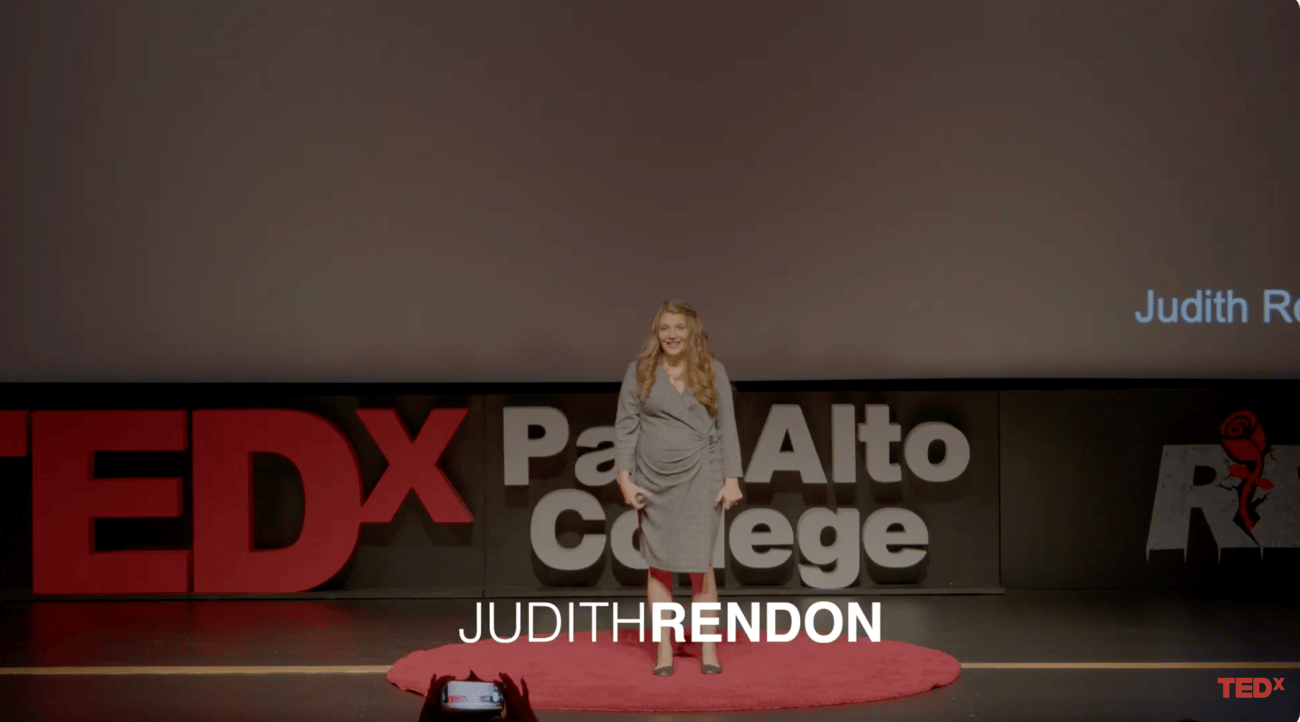
Grieving for your aging parent before you lose them
The video discusses anticipatory grief, a term that describes the emotional experience of grieving before a loss occurs, often triggered by a terminal or chronic illness diagnosis. The speaker shares personal experiences, highlighting the complexities of feelings such as frustration, guilt, and helplessness that arise during caregiving. It emphasizes that grief is unique to each individual and that acknowledging these emotions is essential for healing. The discussion encourages viewers to lean into their grief, suggesting that this process can soften the pain and help
maintain the love shared with the person facing loss. Understanding anticipatory grief can ultimately aid in navigating the difficult journey of impending loss.
The discussion highlights the significance of recognizing and expressing emotions during anticipatory grief, particularly when dealing with aging parents. It encourages viewers to embrace their feelings, understand the difference between grief and mourning, and find ways to express their emotions for healing. The speaker emphasizes the importance of being present and cherishing the moments with loved ones, ultimately fostering a deeper connection through love amidst the pain of impending loss.
View the video here. https://www.youtube.com/watch?v=IQxRMNNN4wE&list=PLmB2dHqb_WqC2H1WeSqF5czCREagGbxAy&index=124 Highlights:0:15 – Anticipatory grief is a term many may not be familiar with, yet it is crucial to recognize while experiencing it.0:39 – Anticipatory grief often arises after a diagnosis of terminal or chronic illness, marking a
significant change in life.1:40 – A personal example illustrates anticipatory grief, as the speaker faced a stage four cancer diagnosis shortly after marriage.2:26 – Many experience frustration and guilt when acknowledging the reality of impending loss, complicating their grief.3:21 – Frustration can manifest in caregiving situations, reflecting deeper feelings of loss and helplessness.4:10 – Individual expressions of grief are valid and unique to each person’s relationship with their loved one.5:10 –
Anticipatory grief may seem pessimistic, but it can help in processing emotions and preparing for loss.5:27 – Leaning into grief allows for the acknowledgment of feelings, softening the pain over time.5:43 – The love shared with the person never dies, even as one learns to cope with their absence.5:58 – Discussing the genuine part of the grieving journey when anticipating loss.6:27 – Differentiating between grief felt after loss and anticipatory grief.7:14 – The importance of being present with loved ones during their
final days.8:03 – Encouragement to enjoy what remains rather than focusing on what’s lost.8:21 – Pain is inevitable, but suffering is optional through acceptance.9:12 – Acknowledging feelings can lead to understanding and emotional release.10:04 – Love is the source of deep sadness when anticipating loss.10:30 – Clarifying the difference between grief (internal) and mourning (external expression).10:57 – Emphasizing that emotions need motion for healing.11:30 – Acknowledgment of sadness regarding aging parents and the
importance of addressing it.
|
|
|
|
|
Book Review: Mysteries of the Faded Mind (Large Print Edition, February 7, 2026) By Adam Teston
Overview
In Mysteries of the Faded Mind, Adam Teston delivers a compassionate and accessible exploration of Alzheimer’s disease and dementia, focusing not only on the science of cognitive decline but also on its deeply human impact. Written in large print—an important feature for seniors and aging readers—the book is especially well-suited for older adults, caregivers, and healthcare workers seeking clarity and comfort in the face of memory loss.
Rather than presenting dementia solely as a medical condition, Teston frames it as a profound life transition that reshapes identity, relationships, and daily existence. The result is a book that informs while gently guiding readers through one of the most emotionally challenging realities of aging.
Synopsis
Teston examines how memory loss develops, beginning with early warning signs and progressing through the stages of Alzheimer’s disease and other forms of dementia. He explains how neural pathways deteriorate, why behavior and personality changes occur, and how cognitive decline affects reasoning, recognition, and emotional regulation.
Beyond clinical explanations, the book centers on lived experience. Through narrative storytelling and realistic caregiving scenarios, readers witness the gradual fading of memory and the ripple effects it has on spouses, children, and professional caregivers. Common challenges—confusion, agitation, wandering,
emotional withdrawal, and loss of recognition—are addressed with empathy and practical insight.
Teston also acknowledges the ambiguous grief caregivers experience: mourning someone who is still physically present but psychologically altered. The emotional toll of caregiving, burnout, and anticipatory grief are treated with honesty and sensitivity.
Key Themes
The Fragility of Identity The book thoughtfully explores how memory shapes personal identity. As memories fade, so too can aspects of personality, autonomy,
and self-perception.
The Emotional Reality of Dementia Rather than focusing strictly on symptoms, Teston emphasizes the emotional journey—for both the individual and their loved ones.
Science Made Accessible Neurological concepts are explained in clear, digestible language. Readers gain a foundational understanding of how the brain functions and what happens when cognitive systems break down.
Caregiver Compassion and Resilience The book validates the exhaustion, grief, and love intertwined in caregiving. It underscores the importance of support systems and self-care.
Preserving Dignity Above all, Teston stresses dignity. Even as memory declines, the need for respect, patience, and human connection remains constant.
Writing Style
Teston blends educational content with storytelling, creating a tone that is both informative and deeply empathetic. His language avoids heavy clinical jargon, making complex neurological material accessible to general readers.
The narrative elements add emotional weight without becoming overly sentimental. The large print format enhances
readability, particularly for seniors or individuals with visual strain—an appropriate and thoughtful choice given the subject matter.
Conclusion
Mysteries of the Faded Mind is a meaningful contribution to the growing literature on Alzheimer’s disease and dementia. It serves as both an educational resource and a compassionate companion for those facing cognitive decline—personally or within their families.
For retirees, adult children caring for aging parents, healthcare professionals, and students entering geriatric fields, this
book offers clarity, empathy, and reassurance. While it does not present groundbreaking medical research, its strength lies in its humanity.
It reminds readers that even when memories fade, dignity, compassion, and connection endure.
Rating: 4.5 out of 5 stars
An insightful and heartfelt guide to understanding dementia—highly recommended for caregivers, families, and anyone seeking to better comprehend the emotional and neurological realities of memory loss.
Additional Resources We Offer
We have curated collections of resources that may be useful:
Articles - We write fresh articles about senior living, health, care, and finances every week
Caregiver Books - We review
books related to caregiving methods, logistics, challenges, and coping
Senior Health - We review books related to healthspan, lifespan, and disease
|
|
|
|
|
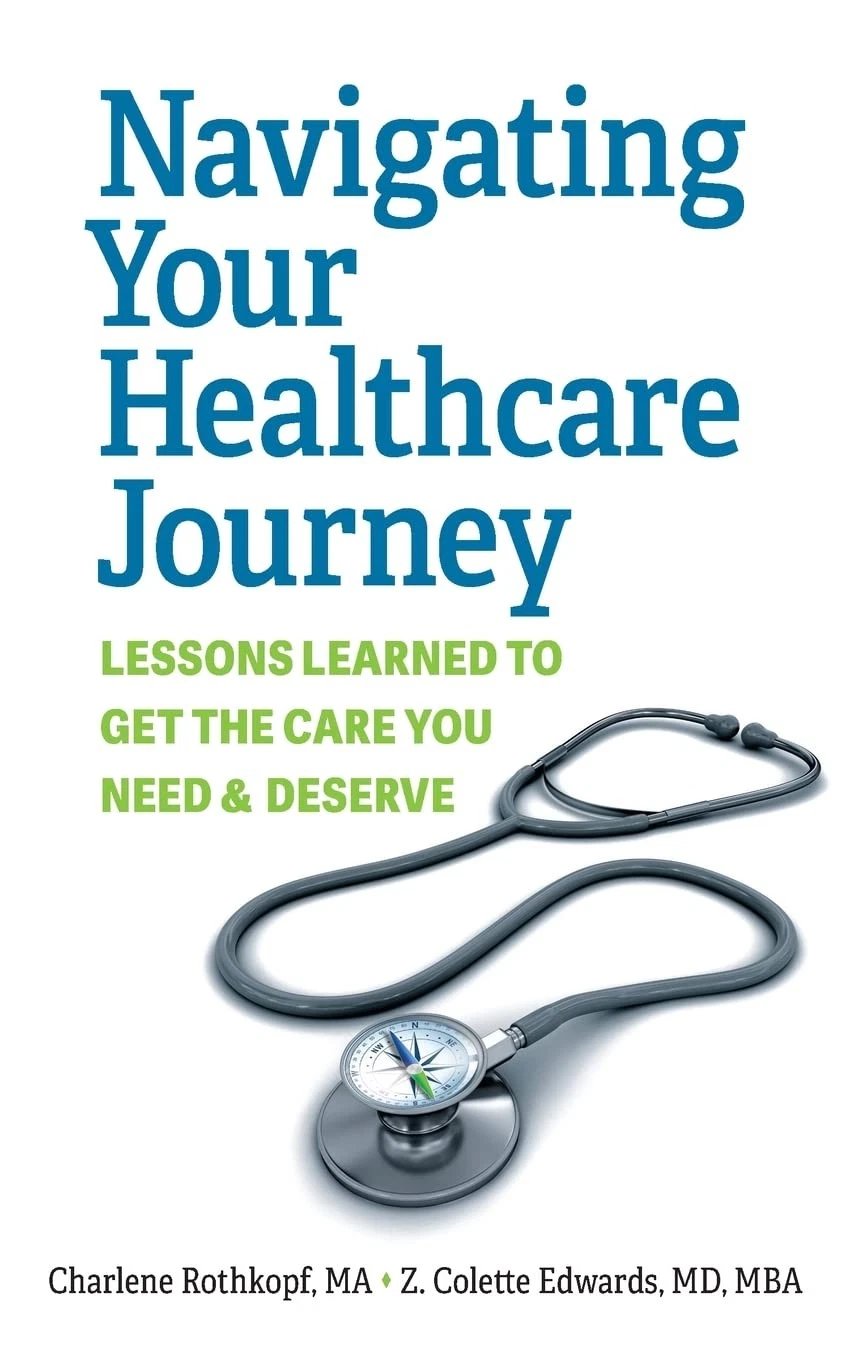
Book Review: Navigating Your Healthcare Journey: Lessons Learned to Get the Care You Need and Deserve
By Z. Colette Edwards and Charlene Rothkopf ISBN:
9781954805484
Overview
In Navigating Your Healthcare Journey, Z. Colette Edwards and Charlene Rothkopf offer a practical, experience-driven guide to help patients become informed, confident participants in their own medical care. Drawing from professional expertise and personal healthcare experiences, the authors shine a light on the realities of today’s complex healthcare system—while providing readers with the tools to advocate effectively for themselves or their loved ones.
This book is especially relevant for seniors, retirees, and
caregivers who often face multiple providers, chronic conditions, Medicare decisions, and complicated care transitions.
Synopsis
The authors walk readers step-by-step through the healthcare experience—from preparing for doctor appointments and managing diagnoses to understanding insurance coverage and coordinating care between specialists.
Rather than assuming the system works seamlessly, the book acknowledges common breakdowns: communication gaps, incomplete medical records, unclear discharge instructions, insurance denials, and rushed consultations. Each chapter offers practical strategies to reduce risk and increase clarity.
Readers learn how to:
- Prepare effectively for medical appointments
- Ask meaningful, outcome-focused questions
- Organize and maintain personal health records
- Navigate hospital stays and discharge planning
- Understand insurance processes, including Medicare considerations
- Recognize when to seek second opinions
The tone is empowering, reminding readers that healthcare is not something that simply happens to them—it is a partnership that requires active participation.
Key Themes:
Patient Empowerment and Advocacy
The book’s strongest message is that patients must advocate for themselves. Seniors, in particular, are encouraged not to feel intimidated by medical authority or complex terminology.
Communication as a Lifeline
Clear communication between patient and provider is portrayed as essential to safety and positive outcomes. The authors stress preparation, follow-up, and written documentation.
System Awareness
Healthcare is shown as a system with structural challenges. Understanding how referrals, authorizations, and insurance approvals work can prevent
unnecessary stress and delays.
Caregiver Partnership
For elderly patients or those managing chronic illness, caregivers play a critical role. The book offers guidance on how family members can be organized, informed allies without becoming overwhelmed.
Prevention and Preparedness
Maintaining updated records, medication lists, and emergency contacts is framed as preventive healthcare in itself—particularly important for retirees who may travel or live part-time abroad.
Writing Style
Edwards and Rothkopf write in a clear, accessible style free of unnecessary medical jargon. The book reads like guidance from experienced professionals who have seen the system from the inside.
It balances anecdotal examples with practical checklists and actionable advice. The structure makes it easy for readers to reference specific topics when facing immediate healthcare decisions.
Conclusion
Navigating Your Healthcare Journey is a highly practical guide that
demystifies modern healthcare and empowers readers to take control of their medical experiences. For seniors entering Medicare, retirees managing multiple specialists, or adult children caring for aging parents, this book offers both reassurance and strategy.
While it does not promise to fix systemic healthcare challenges, it equips readers with the knowledge and tools to navigate them more effectively—and with greater confidence.
Rating: 4.5 out of 5 stars
A timely, empowering, and practical guide—particularly valuable for seniors and caregivers seeking clarity and control in today’s complicated healthcare environment.
Additional Resources We Offer
We have curated collections of resources that may be useful:
Articles - We write fresh articles about senior living, health, care, and
finances every week
Caregiver Books - We review books related to caregiving methods, logistics,
challenges, and coping
Senior Health - We review books related to healthspan, lifespan, and disease
|
|
|
|
|
| Cielito Lindo's basic information is included for your convenience:
|
|
|
- Cielito Lindo Info: After the signature, the newsletter always includes information about Cielito Lindo, so it is at your fingertips when you want it: Our costs, various related websites, social media channels like YouTube, our various addresses, and so on.
- Travel Info: Recommended airports and shuttles.
|
|
|
Web Sites - Cielito LIndo and Rancho Los Labradores
Here are our Web sites, including Cielito Lindo and Labradores Suites (hotel) all of which are part of the larger Rancho Los Labradores gated community just north of San Miguel de Allende.
Web Sites - Cielito LIndo and Rancho Los Labradores
Here are our Web sites, including Cielito Lindo and Labradores Suites (hotel) all of which are part of the larger Rancho Los Labradores gated community just north of San Miguel de Allende.
- Cielito Lindo provides independent living, light assisted living, assisted living, memory care and hospice with 24*7 staffing along with a la carte assisted living services to those living in the villas and suites at Rancho Los Labradores.
- Rancho Los Labradores Suites offer short and long term residence.
- Rancho Los Labradores is a country club resort feeling CCRC that provides a gated community with countless amenities and opportunities for different levels of independent living along with assisted living and memory care within Cielito Lindo.
Cielito Lindo Living Options & Costs Guide
We offer several living options depending on the level
of care you or your loved one needs. Here’s a breakdown to help you plan:
1) Villas (Rent or Own)
- Cost: $1,300 – $1,700 per month
- Additional Costs: Utilities, renter’s insurance, etc.
- What’s Included: This is mostly independent living.
- Extras: You can add independent or assisted living services (charged separately, à la carte).
- Support: We can connect you with a realtor if you'd like to purchase.
2) Cielito Lindo Condos & Suites
Best for: Independent living with optional assistance.
Option 1: Independent Living + Meals
- Cost: $2,250 per month
Includes:- 2 meals a day
- Hotel like room cleaning, towel and linen service
- Monthly medical check-up
Optional Add-ons:- Meals for an additional person: $450/month
- Extra care services available à la carte
Option 2: Light-Assisted Living in Condos & Suites
- Cost: $3,900 per month
Includes:- Full assisted living services
- Designed for residents who still want independence but need some support
- Smooth transition to full Assisted Living or Memory Care as needs change
- One-Time Inscription Fee: $4,000
For Couples:- $4,900/month for two people
- Same one-time fee ($4,000 per couple)
- Note: Suitability is based on cognitive ability, mobility, and safety.
3) Cielito Lindo Assisted Living, Memory Care, & Hospice
Best for: Seniors needing full-time care and supervision.
- Cost: $3,900 per month
Includes:- 24/7 care and monitoring
- All meals
- Physical therapy
- Full-time doctor on site
- Spacious private room with
bath
- One-Time Inscription Fee: $4,000
- For
Couples: $4,900/month
4) Specialized Hospice Suite
Best for: Intensive care needs or end-of-life comfort and also recuperative at a far lower cost than a hospital- Cost: $4,900 per month
Includes:- Full 24/7 monitoring
- Recuperative, Palliative and hospice care
- On-site doctor
- All meals
- Special space for visiting family
|
|
|
YouTube videos and Curated Playlists
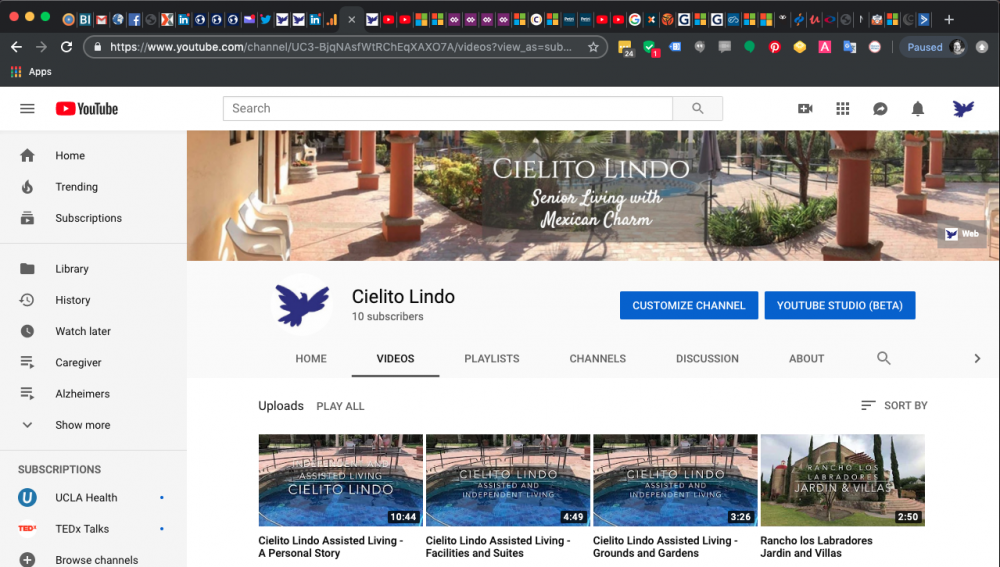
Here is our YouTube Channel. This is where we have lots of videos about Cielito Lindo and Rancho Los Labradores. We also have 1,600+ other senior care and expat in Mexico videos: YouTube |
|
|
|
|
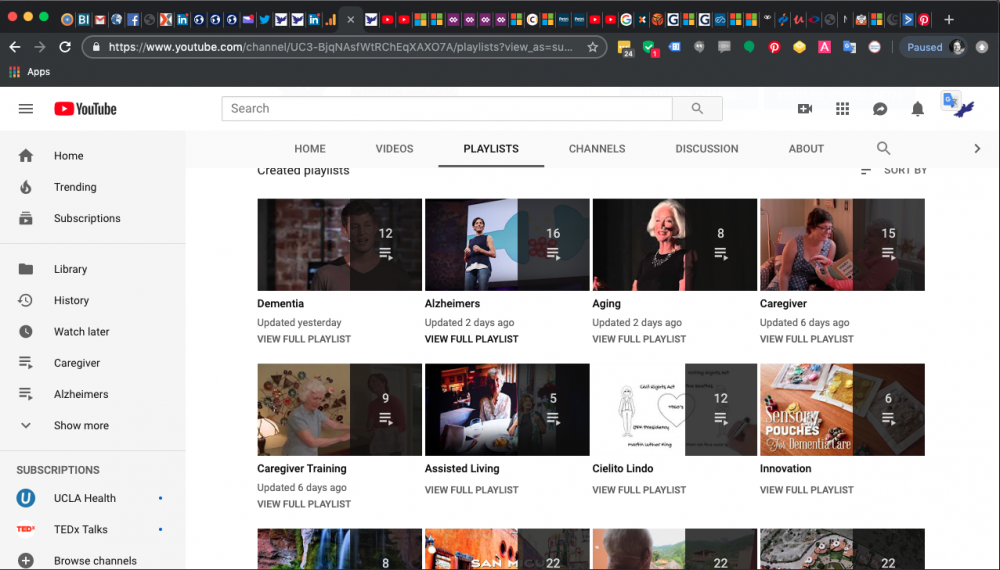
Additionally, our playlists cover a wide area and include 1,200+ videos. These playlists include videos about San Miguel and Mexico in general, caregiving and health, and a broad spectrum of senior living topics. Playlists
|
|
|
|
|
Additional Resources We Offer
We have curated collections of resources that may be useful:
Articles - We write fresh articles about senior living, health, care, and finances every week
Caregiver
Books - We review books related to caregiving methods, logistics, challenges, and coping
Senior Health - We review books related to healthspan, lifespan, and disease
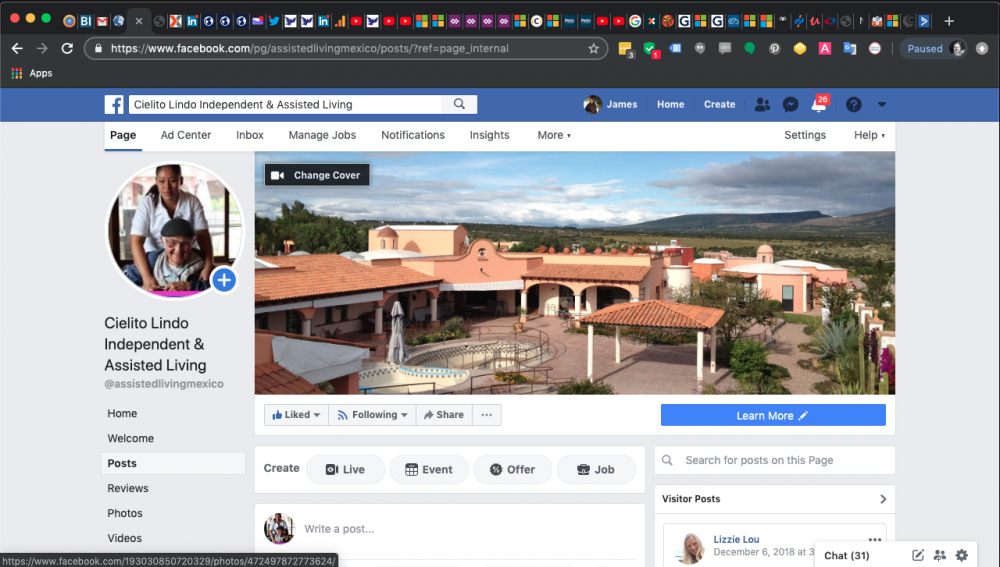
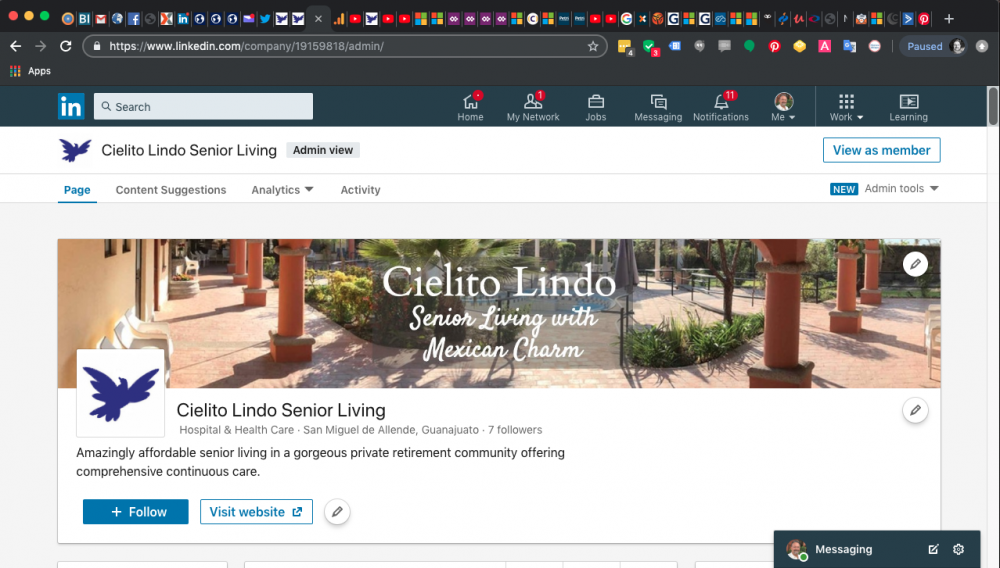
And here are our various social media forums, where we talk a lot about assisted living and memory care along with the various sort of challenges that sometimes come in our senior years (Alzheimer’s, Parkinson other dementias, and so on), but also about senior living in Mexico.
Facebook
|
|
|
|
|
|
|
|
|
|
|
Please don’t hesitate to contact me for anything related to senior living, especially in Mexico. I will gladly give you any assistance I can.
Thanks again!
James
James Sims
Marketing and Sales
Cielito Lindo Senior Living
1. 888.406.7990 (Voice and text)
1.209.312.0555 (WhatsApp)
Phones:
English speaking:
1.888.406.7990 (in US & CDN)
00.1.881.406.7990 (in MX)
Spanish speaking:
011.52.415.101.0201 (in US & CDN)
1.415.101.0201 (in MX)
Expat Health
Insurance:
ExpatInsurance.com
Tax Considerations for Expats:
Robert Hall Taxes
Medicare in Mexico
Lakeside Medical Group:
Robert Ash - ash@lakemedical
Best Bank:
Intercam Banco
Located in: Plaza De La Conspiración
Address: San Francisco 4, Zona Centro,
37700 San Miguel de Allende, Gto., Mexico
Hours: Open ⋅ Closes 4 PM
Phone: +011 52 415 154 6660
Addresses and Travel:
Physical address:
Cielito Lindo Independent and Assisted Living, Camino Real Los Labradores S/N, Rancho Viejo 1, San Miguel de Allende, GTO, Mexico, 37885
Packages from online providers like Amazon:
Camino Real Los Labradores, Rancho Los Labradores / Cielito Lindo, San Miguel de Allende, GTO, 37880 México
PO Box for letters and small envelopes:
Rancho Los Labradores / Cielito Lindo, c/o Alejandra Serrano , PMB N° 515-C,
220 N Zapata HWY N°11, Laredo TX, 78043-4464
Air:
Best airports to fly into: Leon (BJX) or Queretaro (QRO)
Shuttle:
Best
airport shuttle: BajioGo
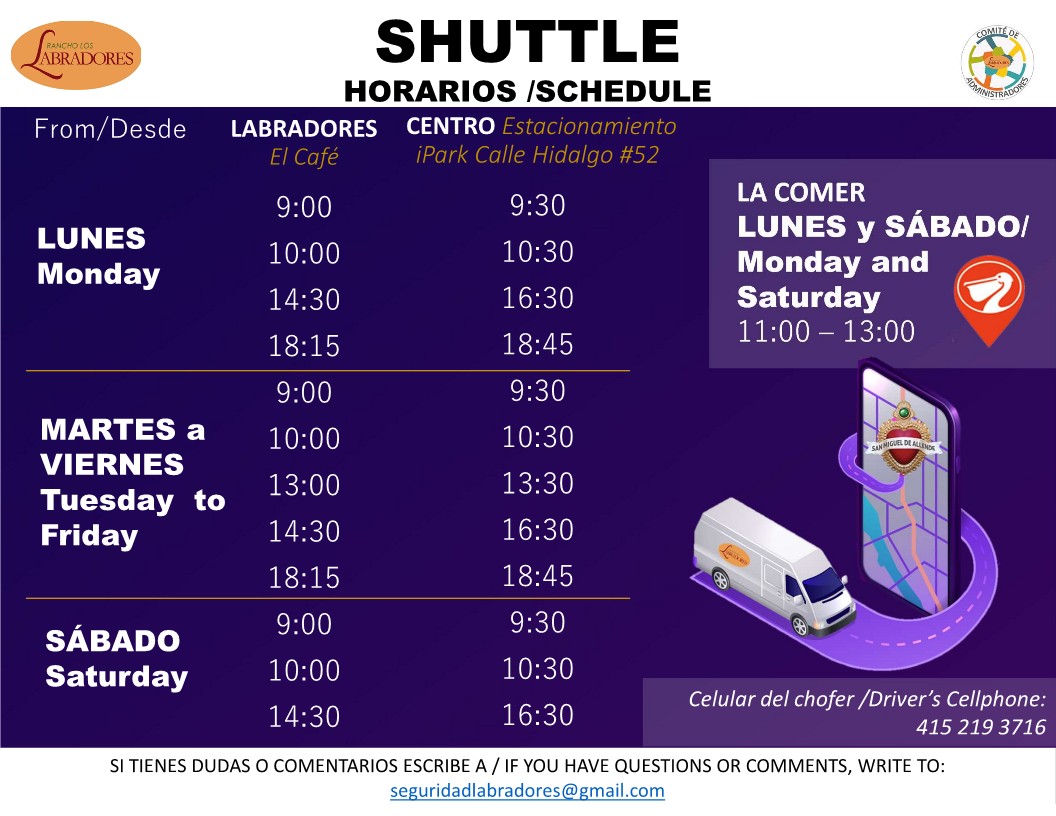
Shuttle between San Miguel and Rancho Los Labradores / Cielito Lindo
|
|
|
|
|
|
|
Regards,
James
James Sims
Marketing and Sales
Cielto LIndo Senior Living
jsims.cielitolindo@gmail.com
|
|
|
|
|
|
|
|