|
|
Subject:
Your Weekly Guide to Senior Living & Care in Mexico
Dear ,
Welcome to your weekly touchpoint from all of us at Cielito Lindo. Each edition brings together helpful insights, heartwarming stories, expert advice, and curated resources about senior living, retirement, and age-related care challenges—including Alzheimer’s, Parkinson’s, stroke, limited mobility, and more.
We understand that navigating this stage of life can be overwhelming, whether for yourself or a loved one. That’s why we're here—to offer guidance, support, and a glimpse into the enriching life many have found
here in beautiful San Miguel de Allende.
If you find this newsletter valuable, please forward it to a friend or family member who might also benefit. They can easily subscribe via our Newsletter page. And of course, if you ever wish to unsubscribe, there’s a quick opt-out link below at the bottom right corner of this newsletter.
Here’s what we typically cover each week:
- San
Miguel de Allende highlights – why this is such a special place to live
- Health & wellness insights – articles, videos, and expert reviews
- Care options & community life at Cielito Lindo – flexible, affordable living with a warm, human touch
This Week’s Theme: Empowering and Liberating Caregivers
This week, we examine the incredible health giving benefits of pet companionship.
|
|
|
|
|
| Weekly insights into San Miguel:
|
|
|
Colorful & Epicurean San Miguel
While much of what we discuss involves the challenges of aging
and caregiving, it's also important to celebrate the beauty that surrounds us. San Miguel de Allende is a feast for the senses—bursting with color, rich in culture, and renowned for its incredible food and art. It’s not just a place to live—it’s a place to thrive, to enjoy, and to heal.
|
|
|
|
|
The Colors of San Miguel: Radiant Beauty
There is no other place in the world that glows quite like San Miguel de Allende, where even the quietest door seems to seep poetic imagery through its pores. This wooden portal, weathered and warm like a hand long held, is embraced in a vibrant frame of sunflowers,
bougainvillea, and leafy vines — as if the city herself insisted that beauty not only be seen but celebrated. What other city dresses its walls with such unabashed joy? In San Miguel, even stone breathes with tenderness. It's not decoration, it's devotion — a visual prayer of color and craft, whispering to every passerby: life is precious, come closer. These adorned thresholds are not just doors; they are invitations to feel, to pause, to remember that magic lives in the everyday. (Photo courtesy of SMA photographer Sam Perez)
|
|
|
|
|
Restaurant: Pirules Garden Kitchen, Rosewood San Miguel de Allende
Address: Nemesio Diez 11, Colonia Centro, San Miguel de Allende, GTO 37700, Mexico Phone: +52 415 152 9700 Days and Hours: - Lunch: Mon, Wed–Sun 1:30 pm – 4:15 pm
- Dinner: Mon, Wed–Sun 6:00 pm – 10:00 pm
Atmosphere: Set beneath a majestic pirul tree in a lush garden, Pirules offers both indoor and outdoor seating—including a communal chef’s table and open‑kitchen bar. The space, crafted by Cuaik Arquitectos Studio, blends local materials like reclaimed wood, clay tiles, and bespoke ironwork for a refined yet relaxed ambiance
Service: Service is polished and personal. Staff are attentive without being obtrusive. A reviewer noted how "Antonio… attentive… has been working at Rosewood…14 years," highlighting the team’s deep-rooted knowledge and hospitality.
Cuisine: Helmed by Chef Odín Rocha, the menu celebrates full-circle sustainability: ~80% of ingredients are sourced within a 60‑mile radius, honoring local farms and partnerships like La Factoria and Traspatio. Seasonal, regionally rooted fare showcases a creative fusion of ancestral techniques (e.g., wood-fire, fermentation) and contemporary recipes.
Signature Dish: The Short‑Rib Fideúa with cured egg yolk and salsa macha is a standout—rich, texturally complex, and emblematic of the kitchen’s mastery.
Starters: - Preserved Sardines on rustic bread
- Octopus Carpaccio with lemon oil & arugula
- Roasted Endives with charcoal mayonnaise & croutons
- Black Bean Soup with farm cheese and crispy quesadilla
Main Courses: - Barbacoa Chicken with refried beans & tortillas
- Grilled Red Snapper served over coconut rice
- Creamy Rice featuring braised beef cheeks & chorizo
- Pork Belly in green mole with pickled tomatillo
- Rib‑eye Carne Asada, Rack of Lamb, Lamb-Shank Sandwich
Desserts: Though specific desserts are not widely listed, guests often end on a sweet note with seasonal artisanal sweets from the hotel’s garden and public market offerings.
Wine and Cocktails: An impressive international and Mexican wine list thoughtfully curated to tell a regional story via partnerships with vineyards in the U.S. and Europe . Bartender Ana Paula Ulrich delights with fresh, low‑alcohol cocktails, like
the lavender‑papaya “Lavanda” or mezcal‑based “Pirul”.
Final Thoughts: Pirules Garden Kitchen sets a new benchmark in San Miguel for sustainability-anchored, season-led fine dining. Its warm service, artistry-driven ambience, and menu rooted in place deliver a memorable culinary experience. Expect to spend more than average, but for a special occasion—it’s more than worth it.
Cost: $$$$ Rating: ⭐️⭐️⭐️⭐️½
Highlighted Reviewer Quotes:
“All of my senses were tantalized … ambiance was over‑the‑top stunning … we went as a big group to celebrate a birthday and it was the perfect space to feel luxurious and pampered.” wanderlog.com
“The tasting menu received both praise … and criticism for being overpriced … food temperature and pacing …” wanderlog.com
Recommendations: If you’re planning a special night out in San Miguel, reserve early (especially for groups ≥4) and consider requesting the terrace/event space when
available. Let the team know your serving tempo; their fine‑tuned attentiveness ensures an unforgettable experience.
|
|
|
|
|
Health, Caregiving & Life in Mexico
|
|
|
This section brings you thoughtful, relevant, and at times, even life-changing content to support your journey—whether you're exploring care options, supporting a loved one, or planning for your own future.
- Lead Article - Each week’s main feature is written just for you—diving into meaningful topics like extending healthspan, navigating diagnostics, or understanding the causes of Alzheimer’s and other dementias. We also occasionally explore the beauty and cultural richness of Mexico, including Pueblos Mágicos and the colorful life in San Miguel de Allende.
- Op Ed - A short editorial that reflects on the lead article’s themes, offering a personal or thought-provoking perspective.
- Caregiver’s Sentiment - A heartfelt quote or reflection honoring the emotional depth of caregiving—because your feelings and efforts matter.
- Videos - Two or three curated videos that align with the week’s theme, featuring summaries and timestamped highlights to make them easy to explore.
- Book Reviews - One or two handpicked books to deepen your understanding, lift your spirits, or simply remind you that you’re not alone.
|
|
|
|
|
How Companion Animals Promote Cognitive Health in Older Adults
Cognitive decline significantly undermines the well-being of older adults, eroding memory, decision-making abilities, and the precious autonomy that defines independent living. Particularly for those navigating the twilight years solo, the shadows of social isolation and physical inactivity cast long, exacerbating cognitive vulnerabilities. Beyond the realm of conventional interventions—such as mental exercises and community engagement—lies an unheralded guardian of cognitive health: the companion animal. This exploration delves into the profound contributions of pets in bolstering
the cognitive vitality of the elderly, offering emotional sustenance, encouraging active lifestyles, and bestowing a renewed sense of purpose upon daily existence.
Article Highlights- Cognitive decline in older adults threatens memory, decision-making, and independence—especially for those living alone.
- Social isolation and physical inactivity exacerbate the risk of cognitive
deterioration in seniors.
- Companion animals offer emotional connection, mental stimulation, and physical activity, supporting brain health.
- A 2019 study in the Journal of Gerontology found seniors with pets experience a slower rate of cognitive decline.
- Pets combat loneliness and depression, which are closely linked to cognitive decline.
- Daily pet care routines (feeding, walking, grooming) provide structure and purpose, keeping seniors mentally engaged.
- Physical activity through pet care (especially walking dogs) supports
cardiovascular and cognitive health.
- Stress reduction is a key benefit—interacting with pets lowers cortisol levels, which are linked to brain aging.
- Mental engagement through pet responsibilities helps maintain executive functions like planning and decision-making.
- Pets bring joy, laughter, and companionship, improving overall emotional well-being.
- Personal stories of transformation reflect the profound emotional and cognitive uplift seniors experience through pet ownership.
- Community pet programs can offer similar benefits for those unable to have pets full-time.
- Challenges such as allergies, finances, and housing restrictions must be considered when pairing pets with seniors.
- Therapy animals offer structured interaction opportunities for cognitive and emotional support.
- Integrating pets into elder care can be a low-cost, high-reward intervention to improve quality of life and
cognitive resilience.
You can read the complete article here and select others from our collection of 100+ articles on our site.
|
|
|
|
|
Caregiver’s Sentiment: Empathy Isn’t About Disappearing Into Someone Else’s Pain
"You don't have to dim your light to walk beside someone in the dark. Shine, so they can find their way too."
When someone we love is going through darkness—grief, depression, trauma or chronic illness—it can feel wrong to smile, to thrive, or to radiate anything they can’t currently feel. Out of loyalty, we might dim ourselves, lower our voice, hide our joy. We fear that being okay, even happy, could come across as insensitive or distant. But this quote reminds us that we don’t serve anyone by shrinking.
Empathy isn’t about disappearing into someone else’s pain; it’s about staying present as ourselves. When we let ourselves shine—by being emotionally
steady, kind, hopeful—we become a point of orientation in their storm. Our light doesn’t mock their darkness; it offers contrast, clarity, and the gentle possibility of something else. We don’t need to vanish to prove we care. In fact, it’s our wholeness, not our brokenness, that gives us the power to help others find their way.
|
|
|
|
|
Caregiver Affirmation
"From the ashes of our exhaustion and heartache, we rise—stronger, wiser, and more compassionate. Like the phoenix, we are reborn through the fire of caregiving, transformed by love and pain into a radiant force of resilience and grace."
This affirmation recognizes the intense emotional and physical toll that caregiving can take—burnout, sorrow, and the quiet suffering that often goes unseen. But it also honors the profound inner strength that emerges through such trials. The phoenix doesn't simply survive the fire; it is reborn because of it. Similarly, caregivers endure great hardship, but through that process they cultivate an extraordinary depth of empathy, endurance, and quiet heroism. This affirmation is a reminder that while caregiving may burn us down, it also gives us the power to rise anew, with hearts forged by love and spirits steeled by sacrifice.
|
|
|
|
|
More Than a Pet: How Animal Companionship Transforms Senior Health—Including Those With Dementia
July 11, 2025 | James Sims, Editor, www.cielitolindoseniorliving.com
When 82-year-old Marian was gifted a scrappy Jack Russell Terrier, something unexpected happened. Her days, once blurred in monotony and silence, became structured around feeding, walking, and—most importantly—talking to her new companion. Marian has early-stage dementia, but her connection to this dog reignited a sense of purpose many thought was lost.
Animal companionship isn’t just a warm-and-fuzzy perk—it’s a powerful, often underestimated tool for improving senior health, especially among those grappling with cognitive decline. But like all tools, its effectiveness depends on thoughtful, individualized use.
Boosting Physical and Mental Health
Numerous studies underscore the
benefits of pet ownership for older adults. A 2021 study highlighted in a recent video found that seniors with dementia who were involved in pet care experienced increased physical activity and reduced loneliness. Routine pet tasks, from feeding to short walks, offer gentle exercise and a predictable structure that can ease anxiety and disorientation. More than that, pets elicit affection and communication—two human needs often unmet in later stages of life.
A Sense of Purpose Amid Cognitive Decline
One of the most poignant impacts of animal companionship is the restoration of purpose. As dementia progresses, many individuals experience what caregivers describe as a “shrinking world”—loss of autonomy, routine, and identity. Caring for a pet, even in small ways, restores agency. As the video illustrates, feeding or simply talking to a pet can spark
emotional engagement that traditional therapies often can’t replicate.
A Relationship That Doesn’t Judge
Pets offer something rare: nonjudgmental companionship. For those with dementia, whose cognitive lapses may alienate them from family and friends, this emotional consistency is invaluable. Pets don’t correct forgotten names or recoil at repetition. They respond to tone, presence, and affection—abilities often preserved longer in people with dementia than abstract memory.
Acknowledging the Risks and Limitations
Of course, animal companionship isn't a one-size-fits-all remedy. There are some potential pitfalls: pets can increase fall risk, cause anxiety, or become neglected if the individual can’t provide consistent care. Some seniors may
reject essential help in order to remain with their pet, complicating caregiving. These are not reasons to dismiss the benefits—but they are reminders that successful pet ownership in dementia care requires support. Sometimes that support means the pet lives with a nearby caregiver who brings it by for visits. In other cases, robotic pets—yes, really—have shown similar emotional benefits without the maintenance.
Conclusion
We often talk about “aging in place” and “dignified decline” as goals for elder care. But perhaps we’ve overlooked a simple, ancient ally in that mission: the humble animal companion. For seniors—especially those with dementia—a pet can provide more than comfort. It can provide connection, routine, and meaning. The question isn’t whether older adults should have pets. It’s how we, as families and communities, can help make safe, supportive pet companionship possible.
|
|
|
|
|
Video: Owning A Pet Can Slow Mental Decline In Older Adults
Owning a pet for over five years can slow cognitive decline in older adults, as shown in a University of Michigan study with 1300 participants.
The study revealed that long-term pet ownership can delay aging in the brain, with greater benefits for specific groups. Researchers used cognitive tests to compare cognitive scores with years of pet ownership, showing a 1.2 point increase in scores for long-term pet owners after six years. The study suggests that the stress-buffering effects and increased physical activity from owning a pet could contribute to these positive outcomes. Further research is needed to understand
the specific reasons behind these associations.
View the video here.
Highlights:
0:10 - A new study shows that owning a pet for more than five years can slow cognitive decline in older adults.
0:24 - Long-term pet ownership was found to delay aging in the brain, with greater benefits for black pet owners, individuals with a college education, and men.
0:37 - Participants with normal cognitive skills at the start of the study were examined over six years using cognitive tests.
0:49 -
Researchers developed a composite cognitive score for each participant based on tests of subtraction, counting, and word recall.
1:09 - Cognitive scores decreased at a slower rate among pet owners, with the strongest difference seen in long-term pet owners.
1:30 - More research is needed to understand the reasons behind the positive effects of pet ownership on cognitive function.
1:49 - Dr. Tiffany Braley suggests that the stress-buffering effects and increased physical activity from owning a pet could benefit cognitive health.
|
|
|
|
|
Video: How pets might be able to help lessen cognitive decline
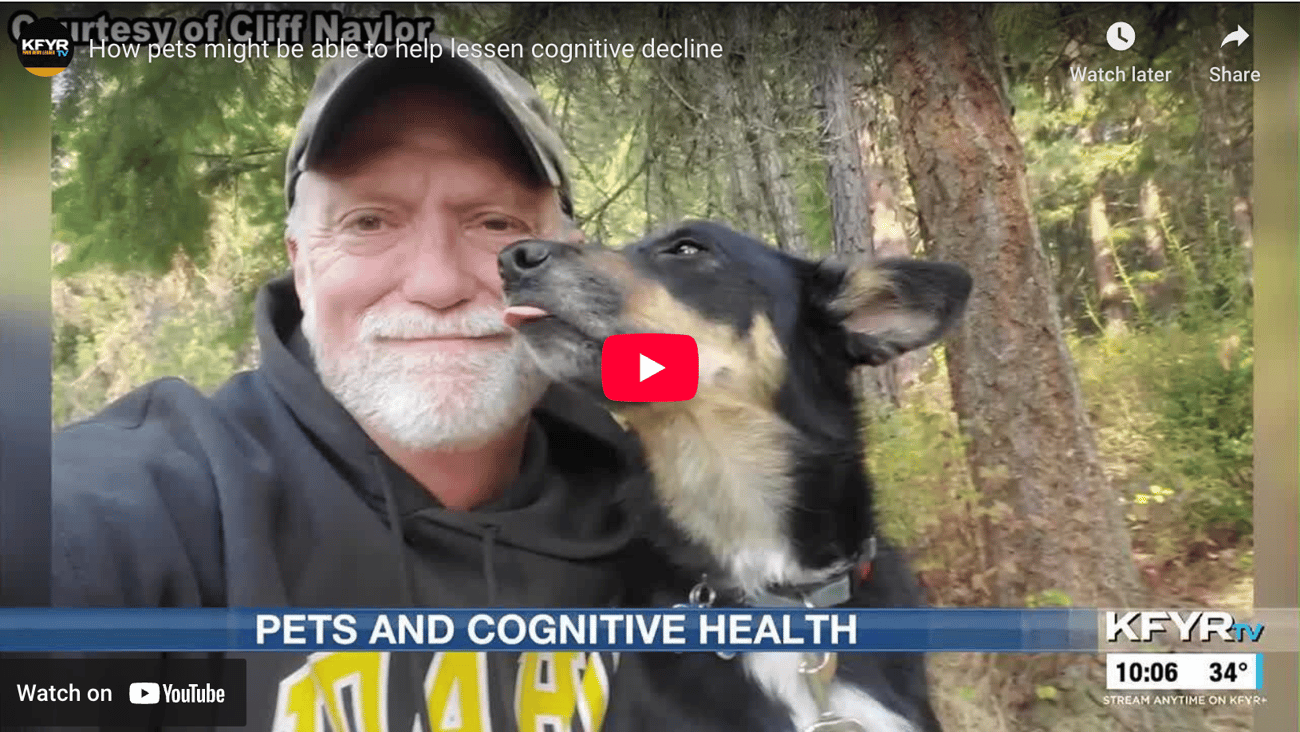
Owning a pet, especially for individuals over 50 living alone, may reduce the risk of developing dementia. Pets offer unconditional love, companionship, and even help improve physical health by lowering blood pressure. The companionship provided by a pet is highlighted as a significant benefit, potentially reducing cognitive decline. Therapy dogs, like Rocky, are trained to provide comfort and have shown positive effects on those in need. Loneliness, especially among retired individuals, can be alleviated by having a dog or cat as a companion.
View the video here.
Highlights:
0:05 - Older than 50 living alone may have less risk of dementia with a pet
0:30 - Pets provide unconditional love, companionship, and exercise
0:57 - Having a dog is a great way to meet people and improve physical health
1:21 - Companionship from a pet is one of the biggest benefits
1:51 - Therapy dogs like Rocky can comfort those in need
2:03 - Loneliness can be a significant issue for retired people
|
|
|
|
|
Video: Are Pets Beneficial For Someone With Dementia?
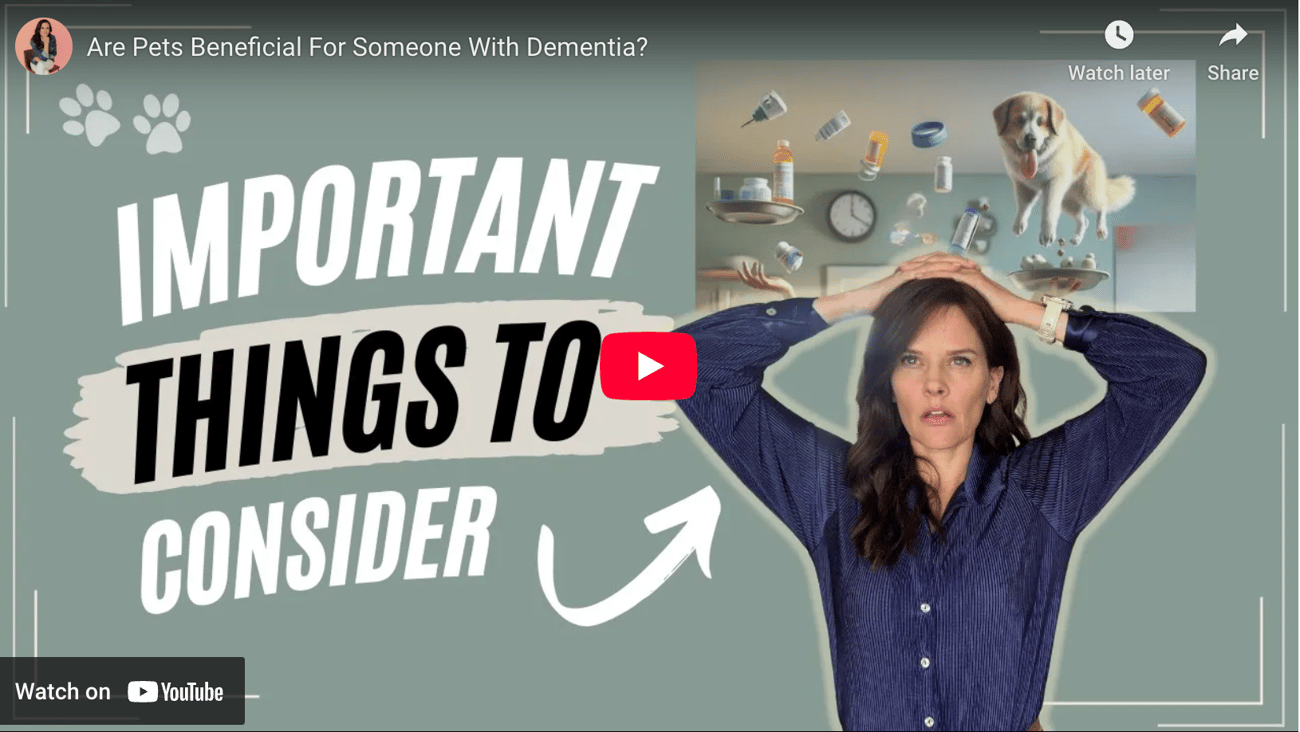
The video delves into the topic of whether pets are beneficial for individuals with dementia. It emphasizes the importance of considering individual circumstances when deciding if a person with dementia can have a pet. The discussion includes the pros and cons of owning a pet for someone with dementia, highlighting the positive impact on physical activity, loneliness, and mental well-being when involved in the pet's care. While pets can provide companionship and a sense of purpose, challenges like rejecting care need to be considered. Ultimately, the decision to have a pet for a person with dementia depends on various factors that should be carefully evaluated.
The decision to have a pet for a person with dementia
involves weighing the benefits and challenges carefully. Understanding the impact on both the individual with dementia and the caregiver is essential. It's crucial to consider factors like fall risks, anxiety, proper care, and the ability to manage the responsibilities of pet ownership. Ultimately, making an informed decision based on the well-being of both the individual with dementia and the caregiver is paramount in ensuring a safe and supportive environment.
View the video here.
Highlights:
0:30 - Getting a Jack Russell Terrier dog for a loved one with dementia to keep them active and provide companionship.
1:03 - Discussing whether people with dementia can have pets and the importance of considering individual circumstances.
3:14 - Exploring the idea of
people with dementia having pets, highlighting the varying factors to consider.
3:51 - A study showing the impact of owning a pet on physical activity and loneliness in individuals with dementia.
4:38 - The study revealing that involvement in a pet's care positively affects mental health and quality of life.
5:15 - Benefits of having a pet for people with dementia, such as feeling connected, companionship, and a sense of purpose.
5:33 - The potential challenges of having a pet for individuals with dementia, including rejecting care.
05:56 - Rejecting care
to stay with a pet can be a challenge for individuals with dementia.
06:13 - Owning a pet can increase anxiety and worry for a person with dementia.
06:41 - Overfeeding and lack of proper care can lead to health issues for pets and individuals.
07:51 - Pets can pose a fall risk for individuals with dementia, leading to significant consequences.
08:07 - Consider the caregiver's ability to take on the responsibility of caring for a pet for someone with dementia.
09:02 - Assessing the mobility and limitations of a person with dementia is crucial before deciding
on pet ownership.
|
|
|
|
|
Book Review: Healing Companions: Ordinary Dogs and Their
Extraordinary Power to Transform Livesby Jane Miller
OverviewJane Miller, a licensed psychotherapist and certified dog trainer, presents a powerful and compassionate look at how psychiatric service dogs can dramatically change lives. Healing Companions is both an inspirational narrative and a practical guide, offering insight into the therapeutic potential of the human-dog bond, particularly for those living with mental health challenges.
SynopsisThe book introduces readers to the emerging field of psychiatric service dogs (PSDs) and the unique roles they play in supporting people with mental illnesses like PTSD, anxiety, depression, and
agoraphobia. Drawing from her clinical experience and work in dog-assisted therapy, Miller shares case studies of clients whose lives have been transformed by their canine partners. The narrative is woven with personal stories, professional observations, and how-to guidance that covers choosing, training, and caring for a service dog.
Key Themes- The Healing Power of Animals: Central to the book is the idea that dogs can provide emotional grounding, reduce symptoms of mental illness, and enhance quality of life.
- Empowerment through Partnership: Miller emphasizes the mutual relationship between human and dog, showing how both benefit from the bond.
- Integration with Therapy: Rather than replacing conventional mental health treatments, service dogs are shown as powerful adjuncts to therapy and medication.
- Education and Advocacy: The book educates readers about their rights under the Americans with Disabilities Act (ADA), offering practical information for navigating the legal and logistical aspects of service dog ownership.
- Responsibility and Care: It also underscores the responsibility involved in caring for a dog that provides this kind of support, including attention to the animal’s emotional and physical needs.
Writing StyleMiller’s writing is accessible and empathetic, balancing clinical authority with warmth and personal storytelling. The tone is encouraging, grounded in
real-life examples, and educational without being dry or overly technical. This makes the book particularly approachable for seniors, caregivers, and individuals new to the concept of psychiatric service dogs.
ConclusionHealing Companions is a groundbreaking and heartening book that offers a lifeline to individuals suffering from emotional and psychological struggles. Jane Miller skillfully blends inspiration with practical advice, making this a valuable resource for not only potential service dog users, but also caregivers, healthcare professionals, and family members. Particularly relevant for seniors facing late-in-life mental health challenges or isolation, the book encourages a hopeful, holistic
approach to healing.
Rating: 4.7 out of 5 starsA thoughtful and informative read, especially for those exploring alternative supports for emotional well-being
|
|
|
|
|
| Cielito Lindo's basic information is included for your convenience:
|
|
|
- Cielito Lindo Info: After the signature, the newsletter always includes information about Cielito Lindo, so it is at your fingertips when you want it: Our costs, various related websites, social media channels like YouTube, our various addresses, and so on.
- Travel Info: Recommended airports and shuttles.
|
|
|
Web Sites - Cielito LIndo and Rancho Los Labradores
Here are our Web sites, including Cielito Lindo and Labradores Suites (hotel) all of which are part of the larger Rancho Los Labradores gated community just north of San Miguel de Allende.
- Cielito Lindo provides independent living, light assisted living, assisted living, memory care and hospice with 24*7 staffing along with a la carte assisted living services to those living in the villas and suites at Rancho Los Labradores.
- Rancho Los Labradores Suites offer short and long term residence.
- Rancho Los Labradores is a country club resort feeling CCRC that provides a gated community with countless amenities and opportunities for different levels of independent living along with assisted living and memory care within Cielito Lindo.
Cielito Lindo Living Options & Costs Guide
We offer several living options depending on the level of care you or your loved one needs. Here’s a breakdown to help you plan:
1) Villas (Rent or Own)
- Cost: $1,300 – $1,700 per month
- Additional Costs: Utilities, renter’s insurance, etc.
- What’s Included: This is mostly independent living.
- Extras: You can add independent or assisted living services (charged separately, à la carte).
- Support: We can connect you with a realtor if you'd like to purchase.
2) Cielito Lindo Condos & Suites
Best for: Independent living with optional assistance.
Option 1: Independent Living + Meals
- Cost: $2,250 per month
Includes:- 2 meals a day
- Monthly medical check-up
Optional Add-ons:- Meals for an additional person: $450/month
- Extra care services available à la carte
Option 2: Light-Assisted Living in Condos & Suites
- Cost: $3,900 per month
Includes:- Full assisted living services
- Designed for residents who still want independence but need some support
- Smooth transition to full Assisted Living or Memory Care as needs
change
- One-Time Inscription Fee: $4,000
For Couples:- $4,900/month for two people
- Same one-time fee ($4,000 per couple)
- Note: Suitability is based on cognitive ability, mobility, and safety.
3) Cielito Lindo Assisted Living, Memory Care, & Hospice
Best for: Seniors needing full-time care and supervision.
- Cost: $3,900 per month
Includes:- 24/7 care and monitoring
- All meals
- Physical therapy
- Full-time doctor on site
- Spacious private room with
bath
- One-Time Inscription Fee: $4,000
- For Couples: $4,900/month
4) Specialized Hospice Suite
Best for: Intensive care needs or end-of-life comfort and also recuperative at a far lower cost than a hospital- Cost: $4,900 per month
Includes:- Full 24/7 monitoring
- Recuperative, Palliative and hospice care
- On-site doctor
- All meals
- Special space for visiting
family
|
|
|
YouTube videos and Curated Playlists
Here is our YouTube Channel. This is where we have lots of videos about Cielito Lindo and Rancho Los Labradores. We also have 1,600+ other senior care and expat in Mexico videos: YouTube |
|
|
|
|
Additionally, our playlists cover a wide area and include 1,200+ videos. These playlists include videos about San Miguel and Mexico in general, caregiving and health, and a broad spectrum of senior living topics. Playlists
|
|
|
|
|
Additional Resources We Offer
We have curated collections of resources that may be useful:
Articles - We write fresh articles about senior living, health, care, and finances every week
Caregiver
Books - We review books related to caregiving methods, logistics, challenges, and coping
Senior Health - We review books related to healthspan, lifespan, and disease
And here are our various social media forums, where we talk a lot about assisted living and memory care along with the various sort of challenges that sometimes come in our senior years (Alzheimer’s, Parkinson other dementias, and so on), but also about senior living in Mexico.
Facebook
|
|
|
|
|
|
|
|
|
|
|
|
|
|
|
|
|
|
|
Please don’t hesitate to contact me for anything related to senior living, especially in Mexico. I will gladly give you any assistance I can.
Thanks again!
James
James Sims
Marketing and Sales
Cielito Lindo Senior Living
1. 888.406.7990 (voice and text)
Phones:
English speaking:
1.888.406.7990 (in US & CDN)
00.1.881.406.7990 (in MX)
Spanish speaking:
011.52.415.101.0201 (in US & CDN)
1.415.101.0201 (in MX)
Expat Logistics:
Visas for Expats:
Sonia Diaz Mexico
Immigration
Pros MX
Tax Considerations for Expats:
Robert Hall Taxes
Best Bank:
Intercam Banco
Located in: Plaza De La Conspiración
Address: San Francisco 4, Zona Centro,
37700 San Miguel de Allende, Gto., Mexico
Hours: Open ⋅ Closes 4 PM
Phone: +52 415 154 6660
Addresses and Travel:
Physical address:
Cielito Lindo Independent and Assisted Living, Camino Real Los Labradores S/N, Rancho Viejo 1, San Miguel de Allende, GTO, Mexico, 37885
Packages from online providers like Amazon:
Camino Real Los Labradores, Rancho Los Labradores / Cielito Lindo, San Miguel de Allende, GTO, 37880 México
PO Box for letters and small envelopes:
Rancho Los Labradores / Cielito Lindo, c/o Alejandra Serrano ,
PMB N° 515-C, 220 N Zapata HWY N°11, Laredo TX, 78043-4464
Best airports to fly into: Leon (BJX) or Queretaro (QRO)
Best airport shuttle: BajioGo
Shuttle:
Shuttle between San Miguel and Cielito Lindo
|
|
|
|
|
|
Maps and Navigation
Best smartphone navigation for Mexico and Central America: Waze
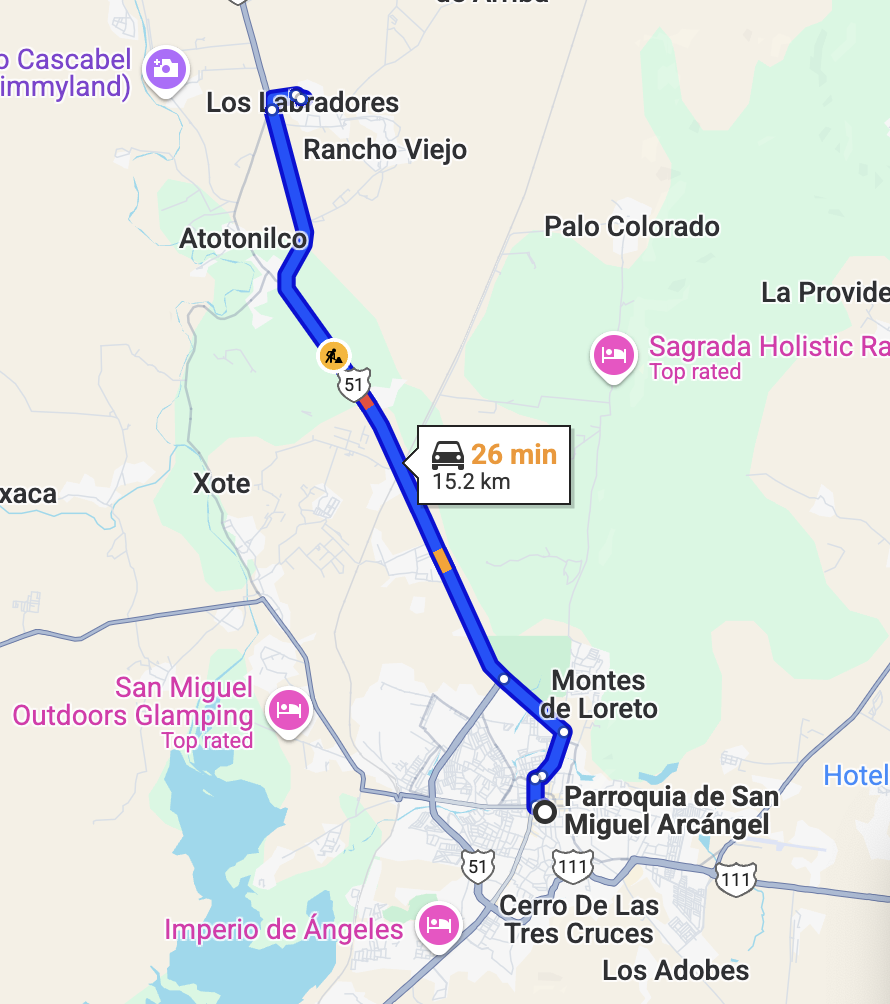
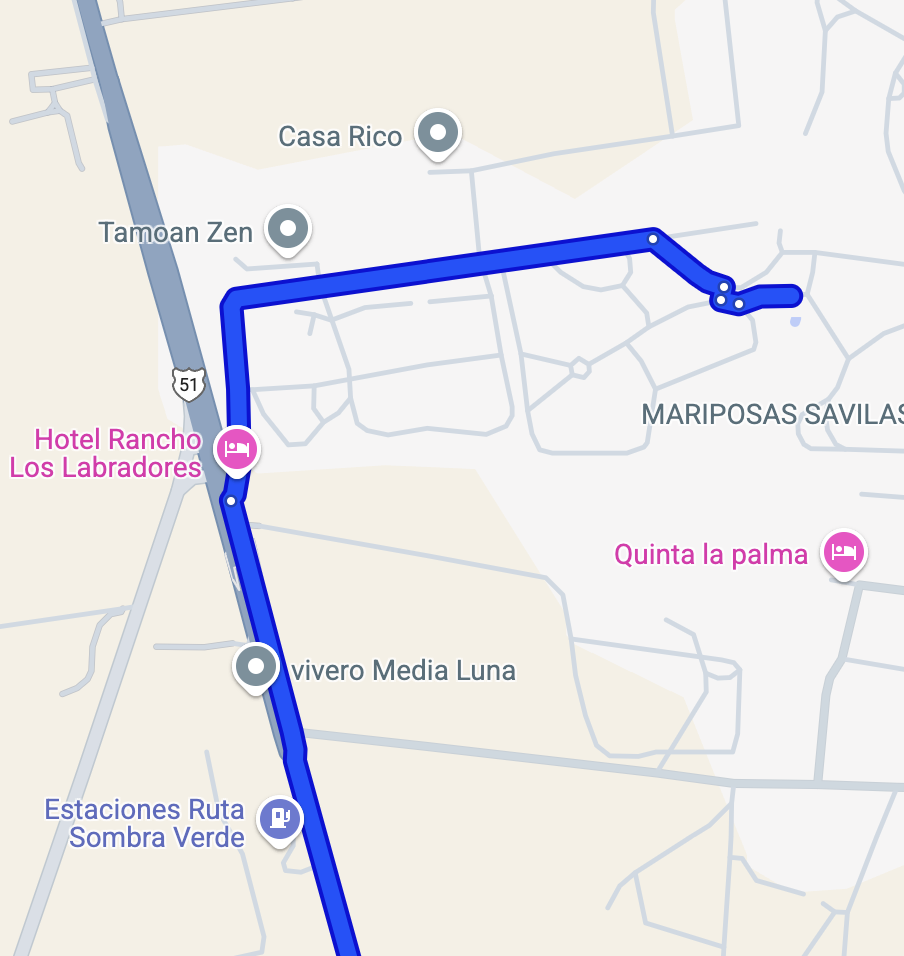
These two maps the location of Cielito Lindo / Rancho Los Labradores, 15 km north of San Miguel on Highway 51, just opposite the Atoltinilco exit.
|
|
|
|
|
|
|
Regards,
James
James Sims
Marketing and Sales
Cielto Lindo Senior Living
James@CielitoLindoSeniorLiving.Com
|
|
|
|
|
|
|
|