|
|
Dear ,
This is your weekly summary of our news, research, books, videos, and other resources related to senior living, retirement, and care in Mexico, along with independent and assisted living and information about age-related challenges (e.g., limited mobility, dementia, Alzheimer's, Parkinson's, ALS, stroke, multiple sclerosis, healthspan and so on).
I hope you are finding this weekly newsletter helpful, and if you know of someone who may also find this information helpful, please forward it to them. They can subscribe using our Web Newsletter page (click here). If, for any reason, you do not wish to receive this weekly newsletter any longer, there is a simple 'Unsubscribe' or 'Opt Out' link at the bottom right corner of this newsletter and also right here: Unsubscribe
This weekly newsletter typically includes information in each of the following categories: San Miguel insights, senior care, and health information, as well as Cielito Lindo basic information.
This Week’s Theme: Better Healthcare for Senior
The week's newsletter focuses on how the healthcare system and government both need to adjust toward better serving our seniors.
|
|
|
|
|
| Weekly insights into San Miguel:
|
|
|
- Colorful and Epicurean San Miguel - This is such an amazing place,
particularly the food and the colors. Although we are addressing a topic that is stressful, challenging, and emotional, we should also acknowledge what an incredible place San Miguel is.
|
|
|
|
|
The Colors of San Miguel: Jacaranda Pagentry
There’s something effortlessly enchanting about a San Miguel rooftop in the late
afternoon, when the light mellows to that honeyed glow and the whole town seems to exhale. This particular terrace, framed by the sun-drenched yellow walls and shaded by a cloud of jacaranda blossoms, is the kind of place where time doesn’t just slow down — it stretches luxuriously.
Two people sit at a small table tucked beneath the purple canopy, glasses in hand, as if they've been there for hours and might stay for hours more. Around them, terracotta pots brim with succulents, agave, and tumbling bougainvillea — nature spilling over the edges in a quiet riot of color. Overhead, the jacaranda's lavender petals drift like confetti, softening the edges of everything below.
This is San Miguel outdoor living at its best: not just a patio or a rooftop, but a seamless extension of the home — a place for gathering, lingering, watching the sun arc across the sky. It’s where morning coffee turns into brunch, turns into wine
at sunset, all beneath a sky so wide and blue it feels like it belongs to you.
And perhaps that’s what makes these rooftops so magical — they're not only beautiful, they invite you to live in the moment. To breathe deeper. To look up. To feel the softness of the air, the warmth of the stone beneath your feet, and the quiet music of life happening all around you.
|
|
|
|
|
Tastes of San Miguel: Luna Rooftop Tapas Bar
Address: Rosewood San Miguel de Allende, Nemesio Diez 11, Zona Centro, San Miguel de Allende, Gto., Mexico
Phone: +52 415 152 9700
Days and Hours:
Monday: 2:00 PM – 11:00 PM Tuesday to Sunday: 12:00 PM – 11:00 PM
Atmosphere: Luna Rooftop Tapas Bar is,
quite simply, one of the most visually stunning spots in all of San Miguel de Allende. Perched atop the Rosewood Hotel, its open-air terrace provides a cinematic view of the city’s colonial rooftops, fiery sunsets, and the majestic Parroquia de San Miguel Arcángel. The design is chic yet warm, with flickering lanterns, colorful textiles draped over wooden chairs, and lush plant accents creating a space that feels both cosmopolitan and deeply rooted in Mexican tradition. It’s ideal for romantic evenings, stylish gatherings, or anyone wanting to soak in the city’s magic from above.
Service: Service is polished and attentive, in keeping with Rosewood’s five-star standard. Staff are fluent in both Spanish and English, and effortlessly blend professionalism with the kind of easy-going warmth that defines hospitality in San Miguel. Waiters are knowledgeable about
the menu and eager to recommend cocktails or pairing options, without ever being intrusive.
Cuisine: The cuisine is rooted in Mediterranean-style tapas with strong Mexican influences. Small plates dominate the menu, encouraging sharing and a leisurely pace. You’ll find Spanish classics like patatas bravas and jamón ibérico alongside dishes with bold Mexican touches—think tuna tostadas with chipotle aioli or grilled octopus with adobo.
The grilled lamb tacos with homemade tortillas and avocado salsa are a standout—tender, smoky, and deeply flavorful. They're emblematic of Luna’s ability to elevate familiar flavors into something unforgettable.
Start with the charred corn esquites with epazote and lime, or the crispy calamari served with saffron aioli. The burrata with roasted cherry tomatoes and local olive oil is also a luxurious, creamy indulgence.
Though primarily a tapas venue, larger plates like the wood-fired flatbreads (try the chorizo and manchego) or the grilled shrimp skewers with spicy mango glaze work beautifully as mains. For heartier appetites, there’s a sirloin with chimichurri
that’s both rustic and refined.
The dessert menu is limited but well-executed. The churros with chocolate ganache are a crowd favorite, and the flan infused with orange zest is a delicate, citrusy finale.
Luna shines with its cocktail program. The “Rosewood Margarita” is a local legend—tequila blanco, citrus, and a twist of ginger give it a signature kick. Their mezcal offerings are also excellent, served with orange slices and sal de gusano. The wine list features a thoughtful mix of Mexican, Spanish, and Californian selections, with several available by the glass.
Final Thoughts: Luna Rooftop Tapas Bar offers a total sensory experience: exquisite food, an unforgettable view, and ambiance that embodies the romance of San Miguel de Allende. It’s perfect for sunset dining or evening drinks under the stars. While prices are on the higher side, the
experience is more than worth it—this is a destination restaurant, one to return to again and again.
Cost: $$$$ (4 out of 5 dollar signs)
Rating: ⭐⭐⭐⭐⭐ (5 stars)
|
|
|
|
|
| Information related to Mexico, senior care and health:
|
|
|
- Lead article - These are articles specifically written for you each week. They address a wide range of
relevant topics, such as factors that can increase your health and lifespan, diagnostics, understanding causal factors for Alzheimer's and other dementias, and so on. The lead article typically sets the tone for the core content of the newsletter (videos and book reviews). On occasion, the focus may be centered on Mexico, Pueblos Magicos, and San Miguel de Allende.
- Caregiver's Sentiment
- This quote typically honors what we, as caregivers, are going through and feeling.
- Videos - Typically, three videos are related to the lead article, and they include a summary and timestamped highlights.
- Book Review
- Typically related to the lead article.
|
|
|
|
|
How Drug Companies and Media Skew Senior Healthcare
What if the medical research behind your prescriptions was written by the same company profiting from the drug? Seniors are often the most medicated and the least represented in clinical trials—making them especially vulnerable to misleading health news and overprescription. This eye-opening article explores how pharmaceutical companies and sensationalized media shape our understanding of health, and offers guidance for
families and caregivers looking to protect their loved ones from a system built for profit, not prevention.
Article Highlights- Many medical studies are funded and written by the same companies that sell the drugs being tested. This creates a built-in conflict of interest.
- Academic doctors
may appear as study authors, even when the research was actually ghostwritten by pharmaceutical companies.
- Positive studies are published far more often than negative ones, giving a distorted view of how well drugs actually work.
- In a major review of antidepressant trials, only 51% showed real benefit, but 94% of published papers appeared positive.
- Health news is often based
on press releases, not rigorous analysis of the actual research.
- Headlines like “Grapes Reverse Aging” or “Coffee Prevents Dementia” often come from small, early studies—if they’re based on science at all.
- The healthcare system profits more from long-term treatment than from cures or prevention.
- Seniors are routinely prescribed medications that weren’t adequately tested in older populations with multiple conditions.
- Polypharmacy—taking many medications at once—is common and raises the risk of falls, confusion, and hospitalization.
- Side effects are often mistaken for new illnesses, creating a cycle of more symptoms and more drugs.
- Some treatments are approved based on small changes in lab numbers, not meaningful improvements in how people feel or function.
- Exploring functional, holistic, naturopathic, and nutritional care may offer safer, more personalized approaches to healing and prevention.
- Asking questions, reassessing medications, and staying informed are essential steps to staying healthy—and not just medicated.
You can read the complete article here and select others from our collection of 70+ articles on our site.
|
|
|
|
|
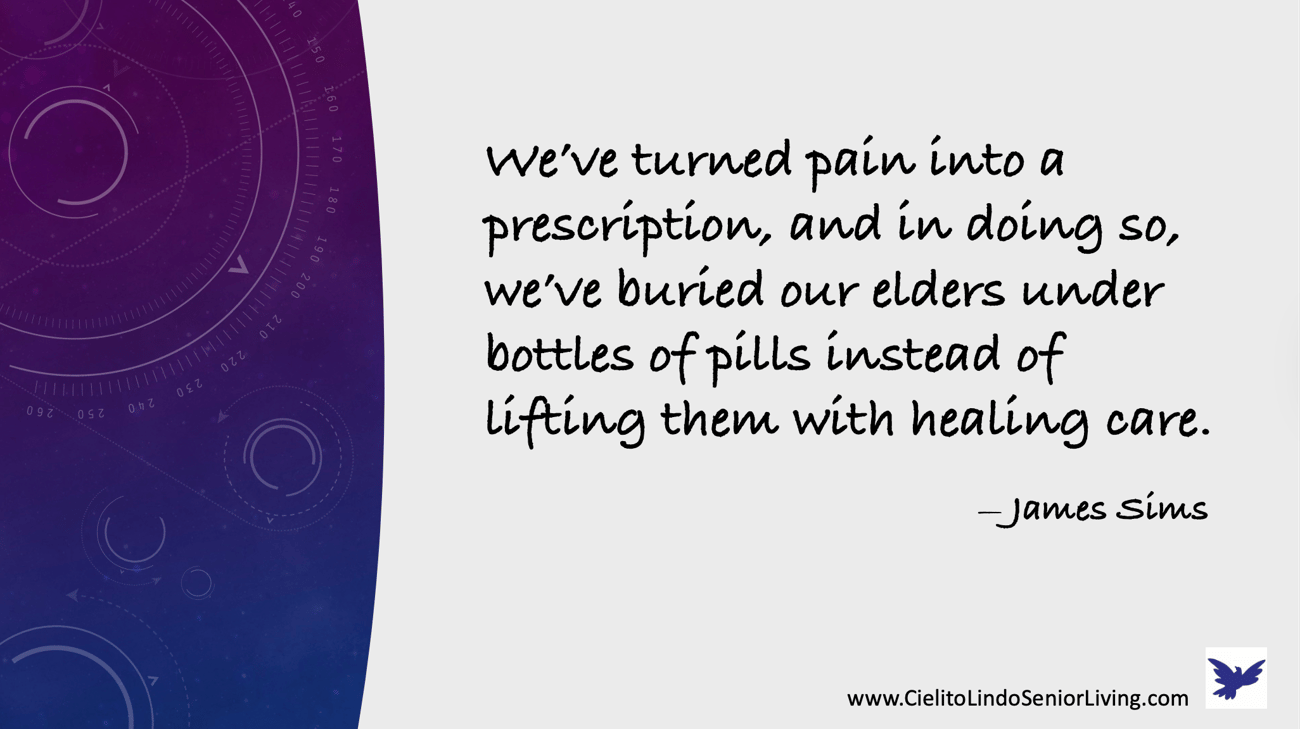
Caregiver's Sentiment: More Healing Care and Less Pills
When I said “We’ve turned pain into a prescription,” I wasn’t just talking about convenience or numbing discomfort—I was also pointing directly at the pattern of overprescribing and even inappropriate prescribing, especially in older populations. It’s not just that we reach for pills too
quickly—it’s that we often reach for the wrong ones, or for too many, without fully considering the individual’s whole health picture or whether non-drug options might actually be safer and more effective.
And when I follow that with “we’ve buried our elders under bottles of pills instead of lifting them with healing care,” I’m not using metaphor lightly.
I’m talking about the very real burden seniors carry: polypharmacy that leads to dangerous drug interactions, side effects that mimic new diseases, and a cycle that can rob people of clarity, mobility, and independence. These are preventable harms—harms that happen when we treat the prescription pad like a first and final solution.
What’s lost in this approach is the opportunity to explore alternatives: lifestyle interventions, physical therapy, nutrition, social engagement, or even simply reevaluating whether the medication is still needed. Healing care means asking better questions, seeing the person beyond the chart, and refusing to let expedience replace ethics. This quote is meant to provoke that reflection—and, hopefully, inspire a different kind of care. One that heals, rather than heaps on.
|
|
|
|
|
The Hidden Cost of Overmedicating Our Seniors
April 11, 2025 | James Sims, Editorial Contributor, www.cielitolindoseniorliving.com
What if the research behind your medication
wasn’t objective science, but marketing in disguise? For many seniors—the most medicated group in America—that’s not necessarily hypothetical. It may also be a reality.
Pharmaceutical companies fund the majority of clinical trials. That’s already a red flag. But it gets worse: they often ghostwrite the studies themselves, with academic doctors lending only their names. Positive results are published far more frequently than negative ones, giving doctors—and patients—a dangerously skewed picture of a drug’s effectiveness.
Take antidepressants. Of 74 FDA-registered trials on 12 drugs, only 51% showed any benefit. Yet 94% of published studies looked positive. Seniors, frequently prescribed these medications, were often not even included in the original research. Still, these drugs became standard care—despite raising risks of confusion, falls, and cognitive decline.
This
problem extends far beyond antidepressants. Polypharmacy—taking multiple medications daily—is rampant among older adults. Yet few drugs are tested in populations with multiple health conditions. Side effects are common and often misinterpreted as new illnesses, triggering a cascade of additional prescriptions. It’s a cycle that can diminish quality of life and increase hospitalizations.
Meanwhile, health news adds to the confusion. Media outlets often recycle pharmaceutical press releases, hyping early or irrelevant studies with flashy headlines: “Grapes Reverse Aging!” or “Coffee Cures Dementia!” These stories rarely mention study size, limitations, or risks—leaving seniors vulnerable to misinformation and false hope.
Behind it all lies a simple but troubling truth: the system profits more from long-term treatment than from prevention or cures. There’s little financial incentive to invest in solutions that truly restore health. One-and-done therapies don’t create lifelong customers. Chronic medication regimens do.
So how can seniors and caregivers push back?
Start with curiosity. Ask your doctor if a drug was tested on people your age. Review all medications regularly—ask what each one is for, and whether it's still needed. Be skeptical of miracle headlines, and favor proven habits (lifestyle and diet) over hype: whole foods, daily movement, sleep, social connection. These often outperform pills in real-world outcomes.
Explore integrative care—functional medicine, nutrition therapy, and holistic approaches that treat the person, not just the diagnosis. And most importantly, don’t
settle for being a passive patient in a system designed to medicate more than it heals.
The healthcare system may be slow to change. But your choices, your voice, and your vigilance? Those can start today.
|
|
|
|
|
Video: Polypharmacy in Geriatrics
The video discusses polypharmacy in geriatrics, defined as the use of five or more medications daily, affecting a significant portion of the elderly population. It highlights the risks associated with polypharmacy, including inappropriate medication use, adverse drug events, and the potential for prescribing cascades. A case study of a 74-year-old patient illustrates these challenges, emphasizing the complexity of managing multiple medications. The video also addresses the increased risk of drug interactions and the importance of adherence to prescribed regimens. Finally, it suggests using guidelines like the STOPP
criteria to improve medication management in elderly patients, aiming to reduce the risks associated with polypharmacy.
The video further emphasizes the critical role of pharmacists in managing polypharmacy, advocating for proactive patient engagement, and ensuring adherence to medication regimens. It highlights the necessity of thorough medication reconciliation and the use of technology to aid in medication management. The importance of communication between patients, caregivers, and healthcare providers is also underscored to optimize treatment plans and minimize adverse drug interactions. Overall, the video serves as a comprehensive guide for healthcare professionals to improve medication safety in elderly patients.
View the video here Highlights:0:21 – Polypharmacy is defined as the use of five or more prescribed medications daily.1:12 – 37% of elderly Americans use five or more prescription medications.1:27 – Inappropriate medication use occurs in 11.5% to 62.5% of the elderly population.1:45 – One in six hospital visits in the elderly is due to adverse drug events.2:07 – Case example of patient SJ, a 74-year-old man with multiple health issues and medications.3:21 – Prescribing cascades occur when adverse drug events are misinterpreted as new diseases.4:20 – Lack of adherence to medications increases with the number prescribed.5:11 – Drug interactions can be pharmacodynamic or pharmacokinetic, complicating
treatment.7:11 – Omeprazole can increase side effects of citalopram, highlighting drug interaction risks.10:15 – Guidelines like STOPP criteria can help manage polypharmacy in elderly patients.10:28 – Discusses tools for managing prescriptions in elderly patients, organized by body systems.10:57 – Introduces the Beers Criteria, which lists medications to avoid in older adults.11:31 – Highlights high-alert medications that require caution, including anticholinergics and NSAIDs.12:16 – Emphasizes the dangers of malnutrition in elderly patients on multiple medications.12:20 – Introduces CancelRx, a tool for prescribers to electronically discontinue unnecessary prescriptions.13:10 – Discusses the pharmacist’s role in managing polypharmacy and preventing medication errors.14:19 – Suggests proactive measures pharmacists can take, including medication
reconciliation.15:03 – Highlights the importance of counseling patients on OTC medications and supplements.18:21 – Recommends using pill boxes and lists to help patients stay organized with their medications.20:23 – Stresses the importance of communication among caregivers and healthcare providers.
|
|
|
|
|
Video: Big Pharma – How much power do drug companies have? | DW Documentary
The documentary explores the immense power and influence of pharmaceutical companies, particularly in drug pricing and lobbying efforts. It highlights Martin Shkreli’s notorious price hike of Daraprim, which exemplifies the industry’s profit-driven motives at the expense of patient access. The film discusses the ethical implications of drug pricing, the manipulation of clinical trial data, and the long-term consequences of inadequate warnings about drug side effects. Victims of harmful medications, like
Depakine, reveal the struggles they face in seeking accountability from pharmaceutical giants. Overall, the documentary critiques the capitalist framework that prioritizes profits over public health.
The documentary further examines the stark contrast in drug pricing, particularly highlighting the disparity between Avastin and Lucentis, both used for eye conditions. It critiques the pharmaceutical industry’s profit-driven motives, as seen in the exorbitant pricing of treatments like Sovaldi for hepatitis C and Kim Raya for cancer. The narrative emphasizes the ethical implications of such pricing strategies, the impact on patient access to essential medications, and the ongoing struggles for accountability within the industry. The film ultimately calls for a reevaluation of the current healthcare system that
prioritizes profits over public health.
View the video here Highlights:0:06 – Pharmaceutical companies are hiking drug prices significantly.
0:30 – The drug ecosystem is described as completely money-driven.
1:00 – The pharmaceutical industry’s lobbying heavily influences Congress.
1:24 – The industry’s main concern is profit, prioritizing shareholders over patients.
2:29 – Martin Shkreli raised the price of Daraprim by 5,000%.
4:10 – Shkreli’s congressional testimony highlights the ethical dilemmas in drug pricing.
5:02 – Shkreli becomes a symbol of the excesses and cynicism of the pharmaceutical industry.
7:30 – Large laboratories are accused of hiding negative results from clinical trials.
10:01 – Victims of drug side effects seek justice against pharmaceutical companies.
15:41 – A warning about the risks of the drug Depakine was added almost 50 years after its launch.
20:22 – The results of a study showed that Avastin improved visual acuity, unlike previous treatments.
21:37 – Lucentis was introduced, priced significantly higher than Avastin, despite similar efficacy.
23:14 – The cost of preparing Avastin for eye treatment was 20 times less than Lucentis.
26:15 – Legal battles ensued as Avastin was eventually authorized for use in France, but too late for many.
30:11 – Gilead’s hepatitis C treatment, Sovaldi, was priced at $84,000 for a three-month course.
32:02 – The high price of hepatitis C treatment sparked outrage among patients in France.
35:12 – Generic drugs significantly reduced the price of hepatitis C treatment to less than $80.
36:14 – Novartis marketed a new cancer gene therapy, Kim Raya, at an exorbitant price of €320,000.
39:35 – The high cost of cancer treatments raises concerns about accessibility for patients.
42:00 – The FDA’s funding model creates a conflict of interest in drug approvals.
|
|
|
|
|
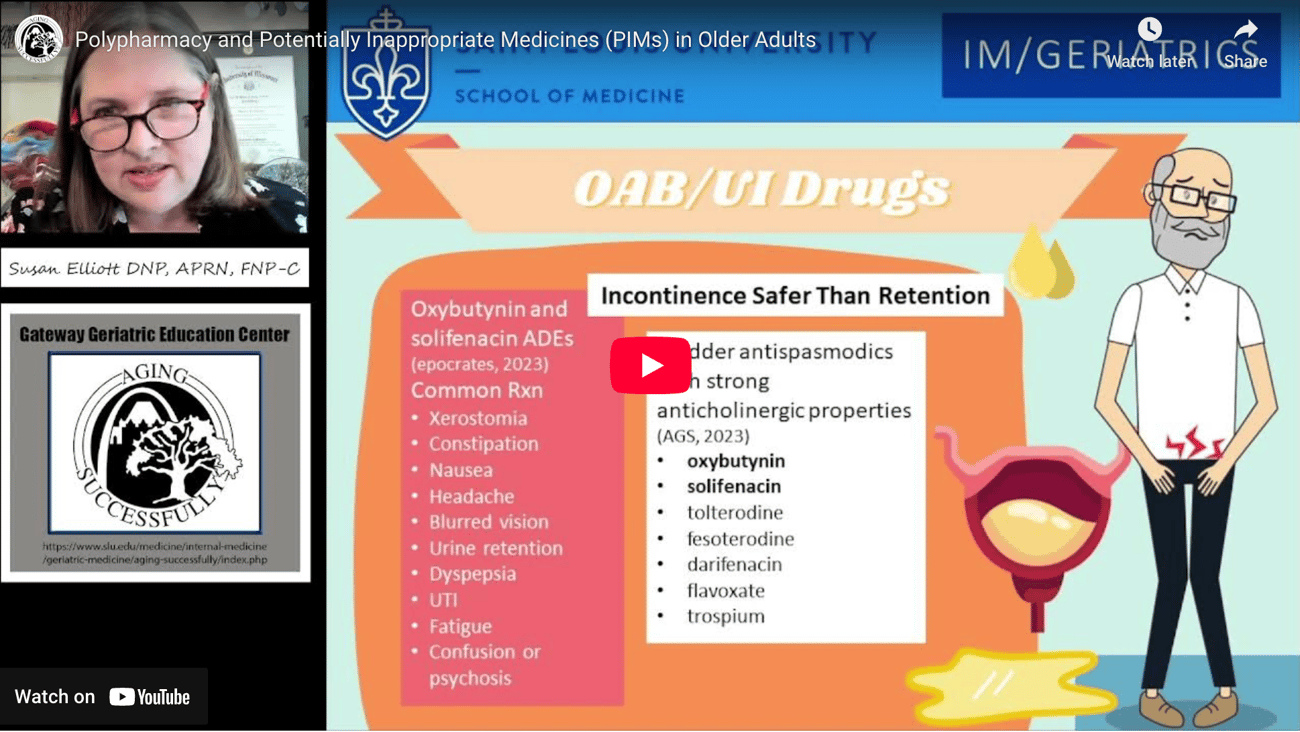
Video: Polypharmacy and Potentially Inappropriate Medicines (PIMs) in Older Adults
In this presentation, Susan Elliott discusses polypharmacy and potentially inappropriate medications (PIMs) in older adults. She defines polypharmacy as the use of five or more medications, with severe polypharmacy being ten or more. The prevalence of polypharmacy is highlighted, with CDC data showing that over one-third of older adults experience it, and a significant percentage are prescribed PIMs. Elliott emphasizes the importance of understanding lifespan and prognosis when prescribing medications,
advocating for patient-centered care that weighs risks against benefits. She reviews tools for identifying PIMs, such as the Beers Criteria and STOPP/START criteria, and notes recent updates to these guidelines. The presentation underscores the need for careful medication management in geriatric care to enhance quality of life.
In this segment, Susan Elliott elaborates on specific medications to avoid in older adults, emphasizing the risks associated with anticholinergic drugs and the importance of reviewing medication lists for appropriateness. She discusses case studies to illustrate the impact of polypharmacy and highlights the need for careful medication management to enhance patient safety and quality of life. The presentation concludes with an invitation for further resources and questions related to
geriatric care.
Highlights:
0:00 – Introduction by Susan Elliott, nurse practitioner at St. Louis University, discussing polypharmacy and potentially inappropriate medications (PIMs) in older adults.
0:27 – Objectives of the talk: defining polypharmacy and PIMs, listing tools for identifying PIMs, and correlating them with the four M’s of age-friendly healthcare.
1:01 – Importance of understanding lifespan and prognosis in older adults, particularly in nursing home residents.
2:14 – Overview of the American Geriatric Society’s guiding principles for care in older adults, emphasizing patient preferences and risk versus harm.
3:32 – Definition of polypharmacy: five or more medications; severe polypharmacy: ten or more.
4:09 – CDC study findings: 36.8% of older adults had polypharmacy, and 70% had a potentially inappropriate medication.
5:02 – Detection rates of PIMs: Beers Criteria (38.5%) vs. STOPP/START criteria (60.4%).
6:04 – Discussion of various tools for identifying PIMs, including the Beers Criteria and STOPP/START criteria.
7:21 – Update on the Beers Criteria in March 2023, including the addition of an anticoagulation table.
8:21 – New recommendations advise avoiding rivaroxaban and caution with dabigatran due to major bleeding risks.
9:13 – Aspirin is now on the avoid list for primary prevention because of bleeding risks.
9:27 – Baclofen is added to the avoid list for patients with decreased renal function due to encephalopathy risks.
10:14 – Anticholinergic bladder medications can cause severe side effects, including confusion and UTIs.
12:00 – Cumulative anticholinergic burden increases risks of falls, delirium, and dementia in older adults.
13:06 – 40% of medications for geriatric patients are associated with geriatric syndromes.
14:01 – Case study of a 78-year-old woman highlights the need to review medications for appropriateness.
15:21 – Aspirin is not indicated for primary prevention in older adults without active heart disease.
15:48 – Oxybutynin is identified as an inappropriate medication for the patient discussed.
16:09 – Resources for deep prescribing and geriatric education are available for further learning.
|
|
|
|
|
Book Review: Deprescribing and Polypharmacy in an Aging Population by Ali Elbeddini (Kindle Edition)
Overview
Ali Elbeddini’s Deprescribing and Polypharmacy in an Aging Population is a deeply relevant and timely exploration of one of the most pressing challenges in geriatric healthcare: the overuse of medications in older adults. Written for healthcare professionals, caregivers, and those engaged in patient safety and aging policy, this guide presents a strategic and
research-informed approach to mitigating the risks of polypharmacy through deprescribing.
SynopsisThis practical and academically grounded book focuses on the global health issue of polypharmacy—where aging individuals are prescribed multiple medications simultaneously, often without proper coordination. Elbeddini provides evidence-based methods for deprescribing, which involves safely reducing or stopping medications that may no longer be beneficial or could be harmful. He emphasizes the importance of a multidisciplinary approach, engaging patients, caregivers, pharmacists, and physicians in a
collaborative process.
The book breaks down the complex factors contributing to polypharmacy, such as mental health comorbidities, fragmented healthcare systems, and lack of continuity in care. Elbeddini then offers real-world strategies to overcome institutional and systemic barriers, making it an indispensable resource for clinicians looking to implement deprescribing protocols.
Key Themes
- Polypharmacy and its Risks: The book underscores how multiple medications can lead to adverse drug reactions, diminished quality of life, and even hospitalization among seniors.
- Deprescribing as a Clinical Strategy: It advocates for a structured, patient-centered approach to reevaluating medication regimens.
- Multidisciplinary Collaboration: Emphasizes the role of pharmacists, nurses, physicians, and caregivers in building effective deprescribing programs.
- Barriers and Enablers: The text identifies institutional, cultural, and practical challenges to deprescribing, offering strategies to address these issues.
- Patient Engagement and Education: Stresses the need for educating both
patients and healthcare providers on the benefits of minimizing unnecessary medication.
Writing StyleElbeddini writes with a balance of clinical authority and accessibility. While the content is rooted in evidence-based practice and would best suit healthcare professionals, the language is clear enough for engaged lay readers—particularly caregivers or advocates for elderly patients—to gain useful insights. The structure is logical, with each chapter building upon the last, and case
examples help ground the theory in practice.
Conclusion
Deprescribing and Polypharmacy in an Aging Population is a vital contribution to the field of geriatric medicine and healthcare policy. With the aging global population and the rise in chronic conditions necessitating multiple medications, this book provides a roadmap for safer, more thoughtful prescribing practices. It offers actionable solutions that could be
transformative in improving elder care, reducing healthcare costs, and enhancing patient well-being.
This is an essential read for anyone involved in the care of older adults—from primary care physicians and pharmacists to policymakers and caregivers.
Rating: ⭐⭐⭐⭐⭐ (5/5 stars)A must-read for healthcare providers working with aging populations—comprehensive, practical, and profoundly important.
Note: While it is good to know that books like this are published, this is very expensive ($175) and hardly any cheaper on Ebay. I read the first 30 or so pages on google books and it seems like it is incredible informative.
Additional Resources Cielito Lindo Offers
We have curated collections of resources that may be useful.
Articles - We write fresh articles about senior living, health, care, and finances every week
Caregiver Books - We review books related to caregiving methods, logistics, challenges, and coping
Senior Health - We review books related to healthspan, lifespan, and disease
We also have 1,600+ other senior care and expat in Mexico videos: YouTube
|
|
|
|
|
| Cielito Lindo's basic information is included for your convenience:
|
|
|
- Cielito Lindo Info: After the signature, the newsletter always includes information about Cielito Lindo, so it is at your fingertips when you want it: Our costs, various related websites, social media channels like YouTube, our various addresses, and so on.
- Travel Info: Recommended airports and shuttles.
|
|
|
Web Sites - Cielito LIndo and Rancho Los Labradores
Here are our Web sites, including Cielito Lindo and Labradores Suites (hotel) all of which are part of the larger Rancho Los Labradores gated community just north of San Miguel de Allende.
- Cielito Lindo provides independent living, light assisted living, assisted living, memory care and hospice with 24*7 staffing along with a la carte assisted living services to those living in the villas and suites at Rancho Los Labradores.
- Rancho Los Labradores Suites offer short and long term residence.
- Rancho Los Labradores is a country club resort feeling CCRC that provides a gated community with countless amenities and opportunities for different levels of independent living along with assisted living and memory care within Cielito Lindo.
1) Villas (rent or own) i) Rents range from $1,300 to $ 2,200 plus utilities, renter insurance, etc. Cielito Lindo's independent and assisted living services are available a la carte. We will introduce you to our realtor if this is your
choice.
2) Independent and Light Assisted Living in the Cielito Lindo Condos & Suites - depends on the nature of the care and whether it is feasible. Option 1 - $2,250 a month, fully independent living including a meal plan (2 meals a day).
a) Meals for another person for $450.
b) Monthly medical check ups.
c) Additional care services are available a la carte
Option 2 - $3,900 monthly, full Cielito Lindo assisted living services but living more independently in Cielito Lindo Condos & Suites. Residents may seamlessly transition into Cielito Lindo Assisted Living and Memory Care when necessary. Staying in these suites depends on cognitive ability, mobility, safety, and monitoring considerations. $4,000 one-time inscription fee.
a) $4,900 a month for a couple and $4,000 for one-time inscriptions
b) add $500 per bed or room
3) Independent and Assisted Living in Cielito Lindo Assisted Living, Memory Care, and Hospice. Complete care with 24*7 monitoring, meals, physical therapy, full-time doctor, spacious and private room and bath. $3,900 a month for full Cielito Lindo
Services, $4,000 for one-time inscription
a) $4,900 a month for a couple, and $4,000 for one-time inscriptions
(a) No added fees for Memory Care or hospice.
4) Specialized Hospice Suite. Complete and intensive care, suitable for intensive recovery or end of life with 24*7 monitoring, meals, palliative care, full-time doctor, adjoining space for family.
|
|
|
YouTube videos and Curated Playlists
Here is our YouTube Channel. This is where we have lots of videos about Cielito Lindo and Rancho Los Labradores. We also have 1,600+ other senior care and expat in Mexico videos: YouTube |
|
|
|
|
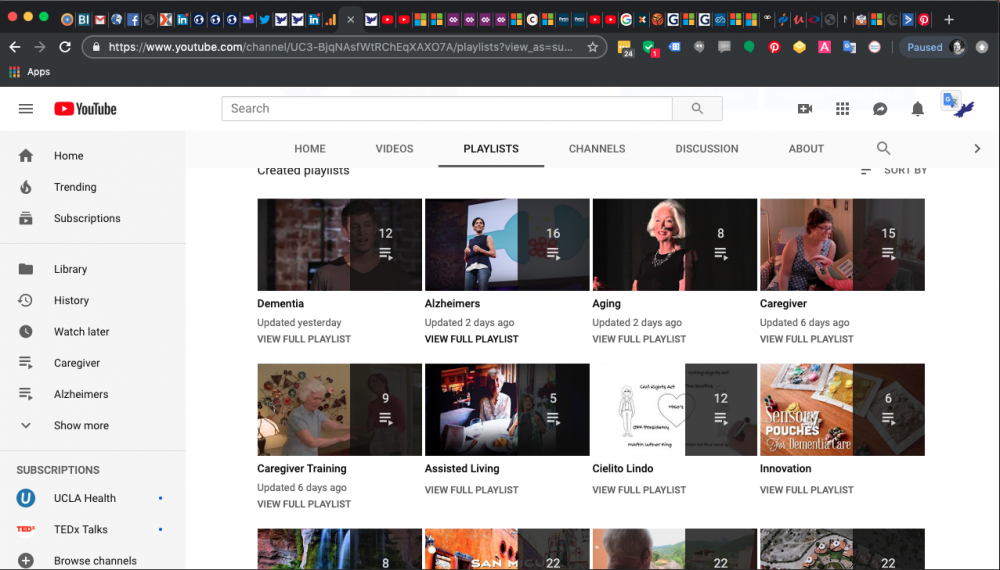
Additionally, our playlists cover a wide area and include 1,200+ videos. These playlists include videos about San Miguel and Mexico in general, caregiving and health, and a broad spectrum of senior living topics. Playlists
|
|
|
|
|
Additional Resources We Offer
We have curated collections of resources that may be useful:
Articles - We write fresh articles about senior living, health, care, and finances every week
Caregiver
Books - We review books related to caregiving methods, logistics, challenges, and coping
Senior Health - We review books related to healthspan, lifespan, and disease
And here are our various social media forums, where we talk a lot about assisted living and memory care along with the various sort of challenges that sometimes come in our senior years (Alzheimer’s, Parkinson other dementias, and so on), but also about senior living in Mexico.
Facebook
|
|
|
|
|
|
|
|
|
|
|
|
|
|
|
|
|
|
|
Please don’t hesitate to contact me for anything related to senior living, especially in Mexico. I will gladly give you any assistance I can.
Thanks again!
James
James Sims
Marketing and Sales
Cielito Lindo Senior Living
1. 888.406.7990 (voice and text)
Phones:
English speaking:
1.888.406.7990 (in US & CDN)
00.1.881.406.7990 (in
MX)
Spanish speaking:
011.52.415.101.0201 (in US & CDN)
1.415.101.0201 (in MX)
Expat Logistics:
Visas for Expats:
Sonia Diaz Mexico
Tax Considerations for Expats:
Robert Hall Taxes
Addresses and Travel:
Physical address:
Cielito Lindo Independent and Assisted Living, Camino Real Los Labradores S/N, Rancho Viejo 1, San Miguel de Allende, GTO, Mexico, 37885
Packages from online providers like Amazon:
Camino Real Los Labradores, Rancho Los Labradores / Cielito Lindo, San Miguel de Allende, GTO, 37880 México
PO Box for letters and small envelopes:
Rancho Los Labradores / Cielito Lindo, c/o Alejandra Serrano ,
PMB N° 515-C, 220 N Zapata HWY N°11, Laredo TX, 78043-4464
Best airports to fly into: Leon or Queretaro
Airport shuttle: www.bajiogo.com
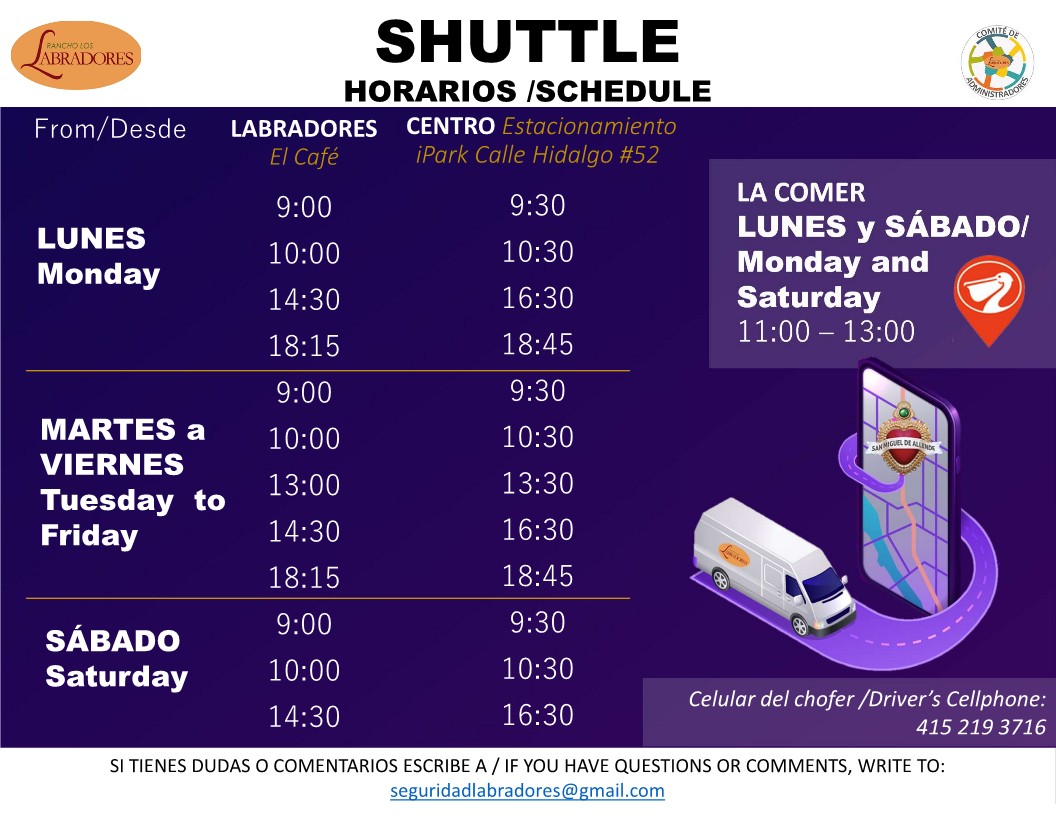
Shuttle:
Shuttle between San Miguel and Cielito Lindo:
|
|
|
|
|
|
|
Regards,
James
James Sims
Marketing and Sales
Cielto LIndo Senior Living
jsims.cielitolindo@gmail.com
|
|
|
|
|
|
|
|