|
|
Dear ,
This is your weekly summary of our news, research, books, videos, and other resources related to senior living, retirement, and care in Mexico, along with independent and assisted living and information about age-related challenges (e.g., limited mobility, dementia, Alzheimer's, Parkinson's, ALS, stroke, multiple sclerosis, healthspan, and so on).
I hope you are finding this weekly newsletter helpful, and if you know of someone who may also find this information helpful, please forward it to them. They can subscribe using our Web Newsletter page (click here). If, for any reason, you do not wish to receive this weekly newsletter any longer, there is a simple 'Unsubscribe' or 'Opt Out' link at the bottom right corner of this newsletter and also right here: Unsubscribe
This weekly newsletter typically includes information in each of the following categories: San Miguel insights, senior care, and health information, as well as Cielito Lindo basic information.
Here’s what we typically cover each week:
- San Miguel de Allende highlights – why this is such a special place to live
- Health & wellness insights – articles, videos, and expert reviews
- Care options & community life at Cielito Lindo – flexible, affordable living with a warm, human touch
This Week’s Theme:
This week’s newsletter explores ways that we, as caregivers, can survive if not thrive, as we fulfill our caregtiver role.
|
|
|
|
|
|
|
|
Weekly insights into San Miguel:
|
|
|
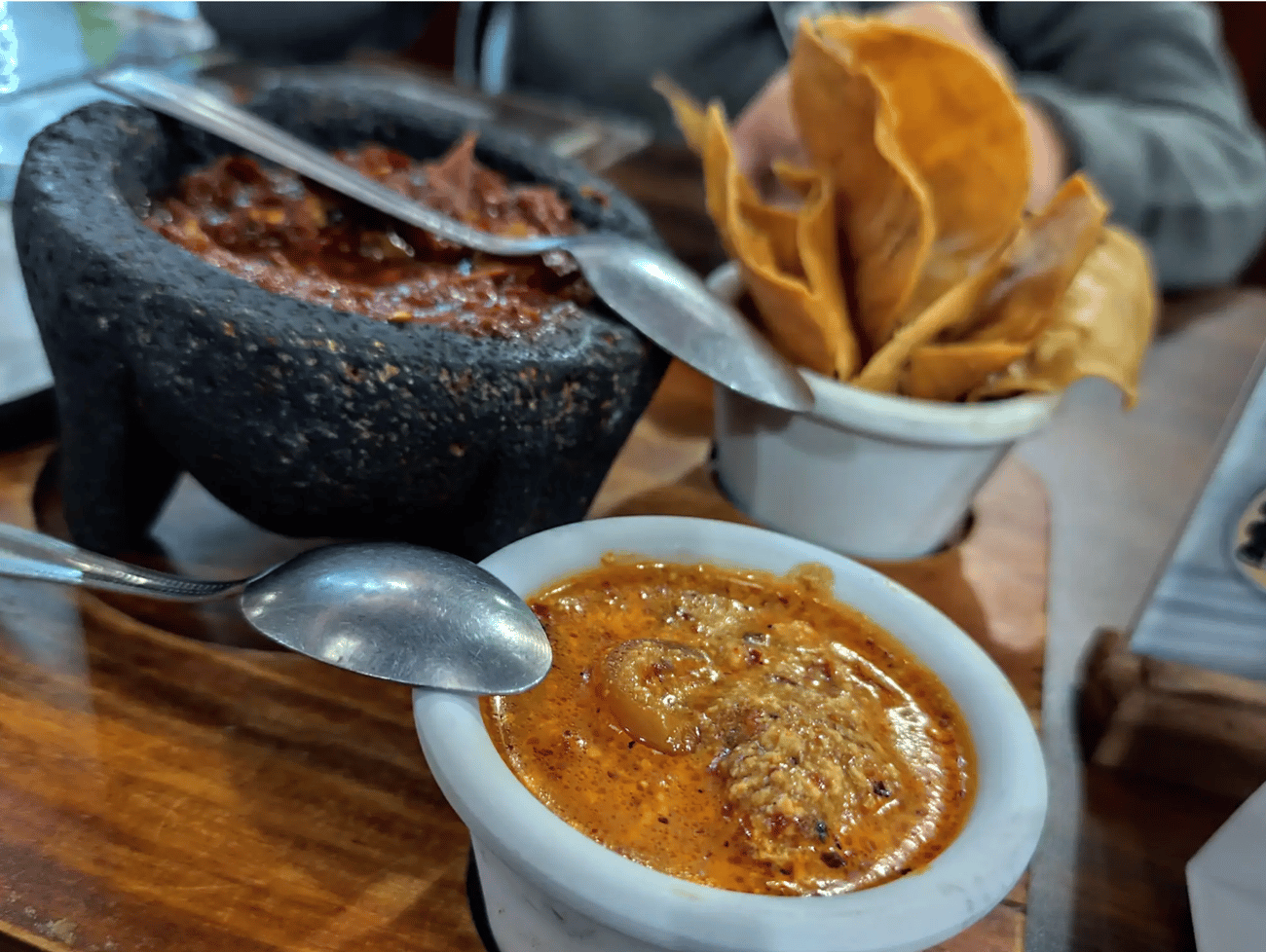
- Colorful and Epicurean San Miguel - This is such an amazing place, particularly the food and the colors. Although we are addressing a topic that is stressful, challenging, and emotional, we should also acknowledge what an incredible place San Miguel is.
|
|
|
|
|
Vintage San Miguel de Allende
Color, culture, and enchantment
I created this silkscreened travel poster as a love letter to San Miguel de Allende and to the fabulous visual spirit of the 1970s, when travel art was bold, sun-drenched, and full of soul. With its warm oranges, deep teals, weathered texture, and hand-pulled print feel, the piece celebrates the city’s unmistakable romance: the rose-colored towers of La Parroquia, cobblestone streets glowing in late-afternoon light, blooming bougainvillea, potted agave, and the slow magic of colonial rooftops under a Mexican sun. It is meant to feel both nostalgic and alive — a tribute to color, cultura y encanto, and to the kind of travel memory that stays golden long after the suitcase is unpacked.
|
|
|
|
|
The Hotels of San Miguel: Casa Schuck - Boutique Hotel
Tucked behind its quiet walls in San Miguel de Allende, Casa Schuck feels less like a boutique hotel and more like a private sanctuary that has learned the art of welcome. There is beauty everywhere: in the lush gardens, the sun-warmed roof decks, the thoughtfully decorated rooms, and the peaceful corners where you can sit with a book while the city hums softly beyond the doorway. Even when the house is full, it somehow preserves a rare sense of calm, offering guests the feeling that they have discovered a hidden paradise of their own.
What makes Casa Schuck extraordinary, though, is not only its taste, charm, or views over San Miguel at sunset. It is the warmth and attentiveness of the staff, who seem to anticipate needs with genuine care. From the gracious hospitality to the unexpected help with something as stressful as confirming airline tickets and printing boarding passes, the experience feels deeply personal. Casa Schuck carries the elegance of a beautiful B&B, but with a level of service that stays with you long after you leave.
|
|
|
|
|
Restaurant Review: Restaurant: Almuerzos Despertar Allende
Salida a Celaya esquina con 5 de Mayo, Centro, San Miguel de Allende, Gto..
Instagram: https://www.instagram.com/almuerzosdespertarallende/
Days and Hours:
Monday–Sunday, 8:00 a.m.–3:00 p.m.
Atmosphere: A cheerful, unpretentious Mexican breakfast spot with the feeling of a neighborhood morning ritual. The location near the entrance to Centro gives it a lively San Miguel energy: casual, colorful, and built for lingering over coffee before the day opens up.
Service: Warm and informal, with the kind of hospitality that suits almuerzo rather than a rushed breakfast. This feels like a place designed around comfort, value, and easy conversation.
Cuisine:
Traditional Mexican breakfast and brunch fare, with an emphasis on familiar, hearty plates: chilaquiles, eggs, enchiladas, flautas, guisos, café de olla, and other morning staples. Public posts describe the concept as "almuerzos mexicanos" in San Miguel de Allende.
Signature Dish:
Chilaquiles appear to be the house calling card, with mentions of chilaquiles suizos, chilaquiles favorita, mollequiles, and other variations.
Starters:
Begin with café de olla, preferably served slowly and properly, the way a San Miguel morning asks for it. A café lechero is another comforting choice for those who want something softer and creamier.
Main Courses:
The strongest order is likely a plate of chilaquiles—red, green, suizos, or one of the house versions—followed by enchiladas mineras, flautas, eggs, or guisos for a more traditional almuerzo. The Wednesday Mexican buffet, listed from 9:00 a.m. to noon in public posts, suggests a generous homestyle approach with coffee, juice, and Mexican breakfast dishes.
Desserts: This is more of a breakfast-and-brunch destination than a dessert room. Look for sweet breakfast comforts if available, but the soul of the menu is savory, saucy, and deeply Mexican.
Wine and Cocktails:
Not the focus here. Coffee is the drink to order: café de olla, café lechero, or simple morning coffee. A public post also mentions café americano ilimitado as part of a promotion.
Final Thoughts: Almuerzos Despertar Allende feels like a smart addition to San Miguel’s breakfast scene: accessible, local, and rooted in the foods people actually crave in the morning. It is not trying to be precious; it is trying to feed you well. Come for chilaquiles and café de olla, stay for the easy Centro-adjacent charm.
Cost: $$
Rating: ★★★★☆
|
|
|
|
|
|
Information related to Mexico, senior care and health:
|
|
|
- Lead article - These are articles specifically written for you each week. They address a wide range of relevant topics, such as factors that can increase your health and lifespan, diagnostics, understanding causal factors for Alzheimer's and other dementias, and so on. The lead article typically sets the tone for the core content of the newsletter (videos and book reviews). On occasion, the focus may be centered on Mexico, Pueblos Magicos, and San Miguel de Allende.
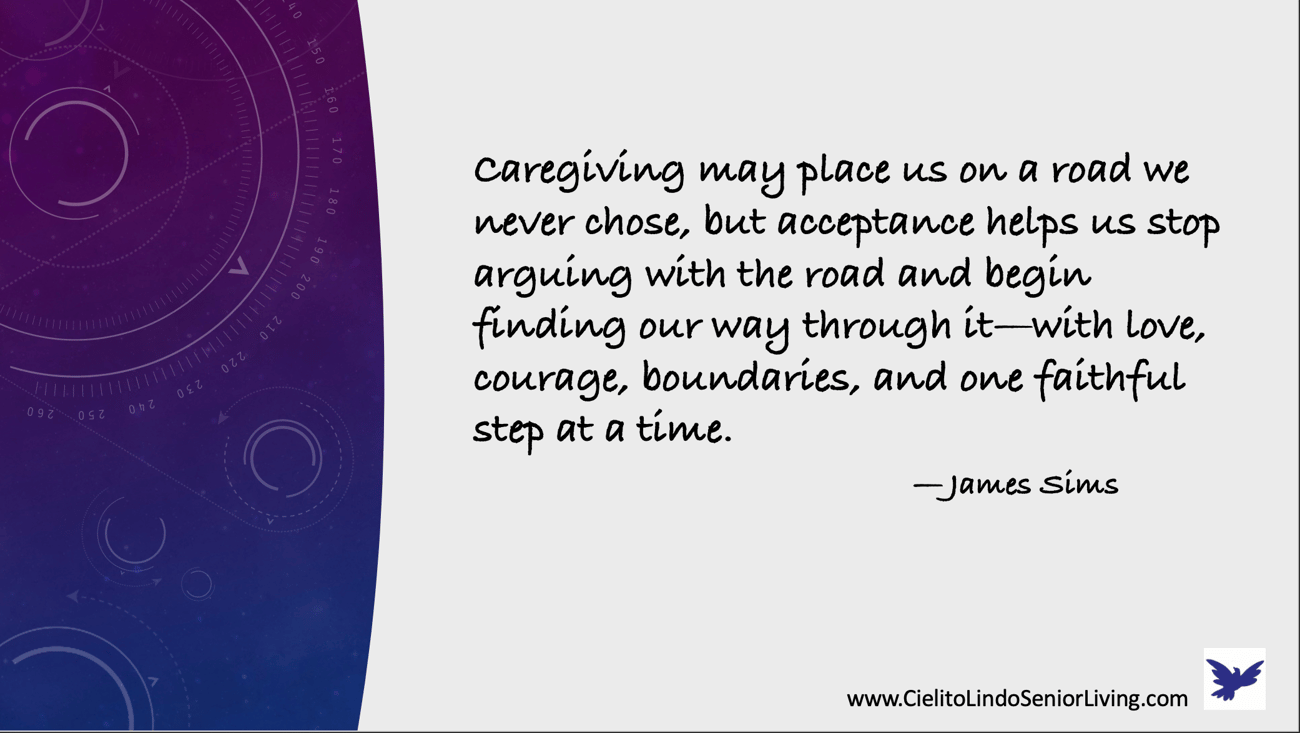
- Caregiver's Sentiment - This quote typically honors what we, as caregivers, are going through and feeling.
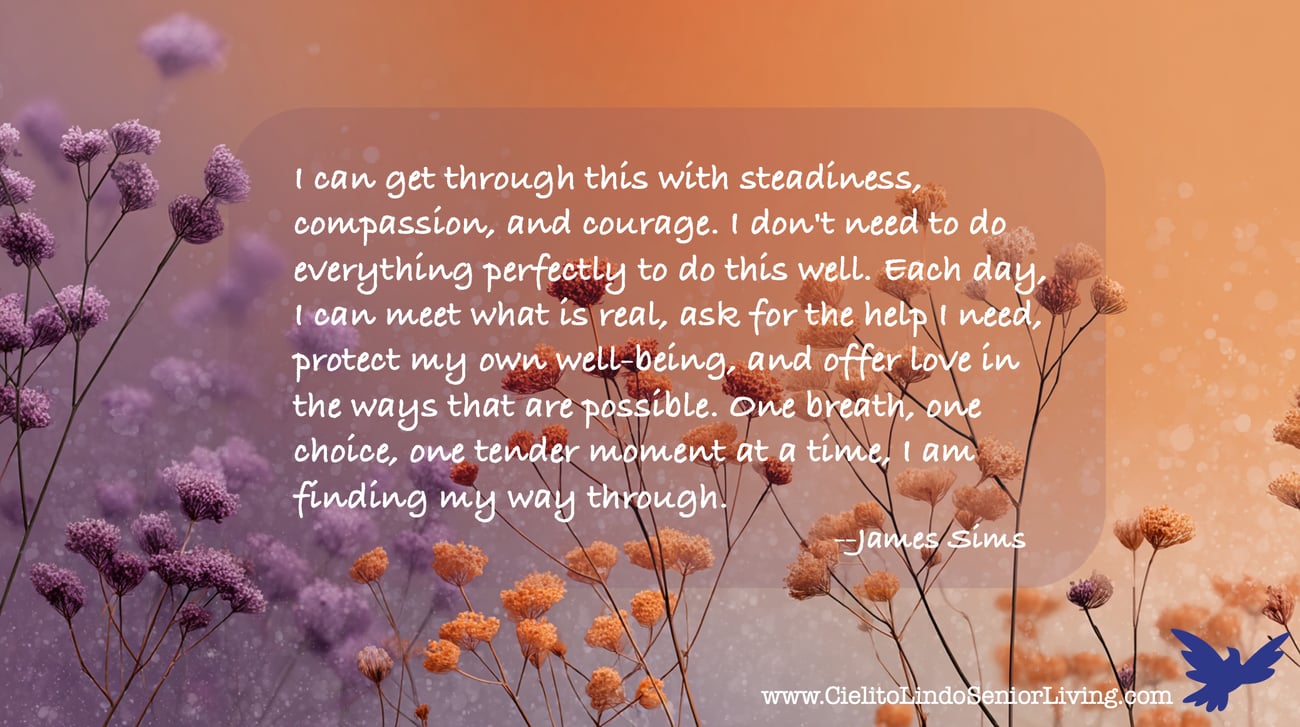
- Caregiver's Affirmation - This affirmation bolsters our self care, our image or ourselves on this journey and our ability to endure.
- Videos - Typically, three videos are related to the lead article, and they include a summary and timestamped highlights.
- Book Review - Typically related to the lead article.
|
|
|
|
|
This quote speaks to the painful reality that caregiving often begins without permission. A diagnosis, decline, crisis, or sudden change can place someone on a path they never expected to walk. The quote honors that grief honestly: caregiving may involve loss, exhaustion, fear, and the ache of watching someone you love become different from who they once were. Acceptance here does not mean pretending the situation is easy, fair, or okay. It means recognizing what is true so the caregiver no longer has to spend all their energy resisting reality.
The deeper message is that once we stop arguing with the road we are on, we can begin to see the steps still available to us. A caregiver may not be able to cure the illness, reverse the decline, or restore the life they had imagined, but they can still choose how they meet each day. They can ask for help, set boundaries, protect their own health, offer tenderness, create moments of dignity, and take one faithful step at a time. In that way, acceptance becomes a doorway back to agency, helping caregivers find their way through what cannot be changed by focusing on what still can.
|
|
|
|
|
Caregiver's Affirmation
This affirmation is meant to remind us, as caregivers, that "doing it well" does not mean never feeling tired, sad, overwhelmed, or uncertain. It means continuing to show up with honesty and care, while also remembering that your own health and humanity matter too. Caregiving done well includes love for the person receiving care, but it also includes mercy toward yourself.
|
|
|
|
|
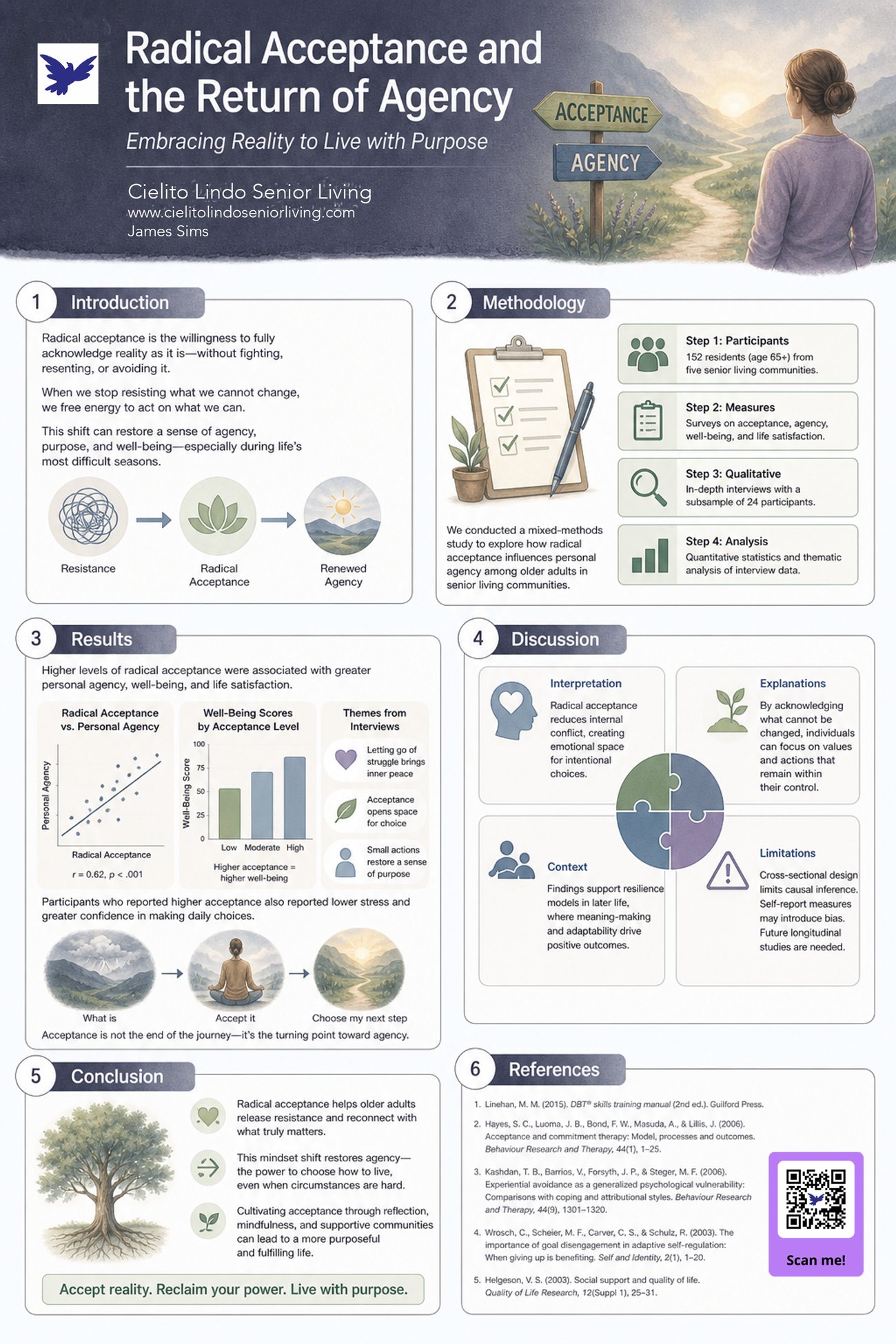
Radical Acceptance and the Return of Agency
Radical acceptance is not surrender. It is the disciplined act of refusing to waste our lives arguing with reality.
I think of radical acceptance as a cousin to the Serenity Prayer. It does not ask us to give up. It asks us to stop fighting what cannot be changed so we can focus our attention, courage, and energy on what still can be.
There is no real power in endlessly replaying what happened, wishing it had been different, or arguing with reality after the fact. The power comes when we are able to say, "This is where I am. This is what is true. Now what is the wisest, healthiest, most constructive step I can take from here?"
That is where acceptance becomes agency.
Radical acceptance begins with the recognition that some things have already happened, some people will not become who we wish they were, some losses cannot be undone, and some circumstances are beyond our power to reverse. We may grieve them, dislike them, learn from them, or even feel anger about them. Acceptance does not require us to approve of what happened or pretend it did not hurt. But once something is true, our continued resistance to its existence does not change it. It only consumes the energy we need for healing, movement, and choice.
In that sense, radical acceptance is closely related to the Serenity Prayer. Both ask us to distinguish between what we can change and what we cannot. But radical acceptance emphasizes the moment after we clearly see the truth. It asks: Now that I am no longer spending all my energy wishing this were different, what becomes possible?
This perspective is especially relevant for caregivers. So often, caregiving is not a role we carefully choose after thoughtful preparation. We are thrown into it by illness, aging, decline, crisis, or love. Suddenly, we are carrying responsibilities we may not feel ready for, facing decisions we never expected to make, and watching someone we love change in ways we cannot control.
In that kind of reality, it is easy to slip into helplessness, resentment, exhaustion, or despair. We may find ourselves thinking, This should not be happening. I cannot do this. This is not the life I imagined. And all of those feelings may be completely understandable. But radical acceptance gives us a way to pause, breathe, and begin again from the truth of where we are.
It allows us to say: This is the situation. I may not have chosen it, I may not be able to fix all of it, and I may not be able to make it fair. But I can still choose how I meet it. I can still ask for help. I can still protect my own health. I can still create moments of tenderness, dignity, patience, and peace. I can still chart a path through this, and eventually, beyond it.
When we stop dwelling only on what happened, we are not minimizing it. We are refusing to let it own the rest of the story. We are shifting from protest to response, from rumination to action, from helplessness to authorship. The past may explain how we arrived here, but it need not dictate what we do next.
That is where agency returns.
This is the pivotal moment: when we let go of resisting what has already transpired and redirect our energy toward where we go from here. That shift is not only powerful and productive; it releases us from the futility of arguing with reality. It gives us back the emotional energy, clarity, and sense of possibility that come when we remember that even if we cannot change what happened, we can still choose how we respond, how we heal, and how we move forward with our lives.
You can access the complete article here. Additionally, we have 100's of other senior care and health-related articles here.
|
|
|
|
|
I offer this video because, as caregivers, suddenly thrown into this challenging journey, our only choice is to accept that this is happening, and then figure out where we go from here.
Radical Acceptance and the End of Unnecessary Suffering
This video explains radical acceptance as a core DBT skill for reducing emotional suffering by facing reality as it is, rather than fighting what has already happened. The speaker emphasizes that acceptance does not mean approval, forgiveness, passivity, or pretending pain is okay; it means acknowledging the truth so that healing and wise action become possible.
The message centers on the idea that pain is unavoidable, but suffering grows when people resist reality through rumination, denial, blame, control, numbing, or self-judgment.
The video walks through why people resist painful truths, how resistance affects emotional and physical distress, and how acceptance can be practiced in small steps: noticing resistance, pausing judgment, telling the truth, feeling emotions, grounding in the body, using acceptance statements, and choosing the next right action.
Its significance is practical and therapeutic: the video frames radical acceptance as a way to reclaim energy, clarity, and agency after grief, rejection, trauma, illness, injustice, or self-hatred. Rather than promising that pain will disappear, it argues that acceptance ends the "war around the pain," allowing people to begin living from reality rather than being trapped by the past.
View the video here
Highlights:
- (01:04) — Radical acceptance is defined as fully accepting reality as it is, not as you wish it were.
- (01:45) — The speaker introduces the equation "suffering equals pain multiplied by resistance."
- (02:59) — Radical acceptance is clarified as neither approval nor surrender, but a refusal to deny reality.
- (05:55) — Resistance is described as a trap: what you resist persists, and what you avoid grows.
- (09:37) — The speaker gives a small starting practice: notice resistance, name it, breathe into it, and gently stop fighting what is.
- (10:50) — Acceptance is presented as a process that happens in tiny moments rather than all at once.
- (13:37) — The video offers an acceptance statement: "This is what’s happening right now. I may not like it. I may not want it, but I am choosing to stop fighting it."
- (16:19) — Real-life examples begin, including rejection, grief, injustice, illness, trauma, and self-acceptance.
- (20:05) — The common thread is that radical acceptance does not remove pain, but removes the war around the pain.
- (32:29) — The closing encouragement is to start small by breathing and saying, "This is what’s happening, this is what I feel, and I can stand it."
|
|
|
|
|
|
|
|
Cielito Lindo's basic information is included for your convenience:
|
|
|
- Cielito Lindo Info: After the signature, the newsletter always includes information about Cielito Lindo, so it is at your fingertips when you want it: Our costs, various related websites, social media channels like YouTube, our various addresses, and so on.
- Travel Info: Recommended airports and shuttles.
- Downloadable Brochure: Click here.
|
|
|
Web Sites - Cielito LIndo and Rancho Los Labradores
Here are our Web sites, including Cielito Lindo and Labradores Suites (hotel) all of which are part of the larger Rancho Los Labradores gated community just north of San Miguel de Allende.
Web Sites - Cielito LIndo and Rancho Los Labradores
Here are our Web sites, including Cielito Lindo and Labradores Suites (hotel) all of which are part of the larger Rancho Los Labradores gated community just north of San Miguel de Allende.
- Cielito Lindo provides independent living, light assisted living, assisted living, memory care and hospice with 24*7 staffing along with a la carte assisted living services to those living in the villas and suites at Rancho Los Labradores.
- Rancho Los Labradores Suites offer short and long term residence.
- Rancho Los Labradores is a country club resort feeling CCRC that provides a gated community with countless amenities and opportunities for different levels of independent living along with assisted living and memory care within Cielito Lindo.
Cielito Lindo Living Options & Costs Guide
We offer several living options depending on the level of care you or your loved one needs. Here’s a breakdown to help you plan:
1) Villas (Rent or Own)
- Cost: $1,700 – $2,000 per month
- Additional Costs: Utilities, renter’s insurance, etc.
- What’s Included: This is mostly independent living.
- Extras: You can add independent or assisted living services (charged separately, à la carte).
- Support: We can connect you with a realtor if you'd like to purchase.
2) Cielito Lindo Condos & Suites
Best for: Independent living with optional assistance.
Option 1: Independent Living + Meals
- Cost: $2,250 per month
Includes:
- 2 meals a day
- Hotel like room cleaning, towel and linen service
- Monthly medical check-up
Optional Add-ons:
- Meals for an additional person: $450/month
- Extra care services available à la carte
Option 2: Light-Assisted Living in Condos & Suites
- Cost: $3,900 per month
Includes:
- Full assisted living services
- Designed for residents who still want independence but need some support
- Smooth transition to full Assisted Living or Memory Care as needs change
- One-Time Inscription Fee: $4,000
For Couples:
- $4,900/month for two people
- Same one-time fee ($4,000 per couple)
- Note: Suitability is based on cognitive ability, mobility, and safety.
3) Cielito Lindo Assisted Living, Memory Care, & Hospice
Best for: Seniors needing full-time care and supervision.
- Cost: $3,900 per month
Includes:
- 24/7 care and monitoring
- All meals
- Physical therapy
- Full-time doctor on site
- Spacious private room with bath
- One-Time Inscription Fee: $4,000
- For Couples:
- $5,400/month for two people (only one needs care)
- $6,900/month for two people (both need care)
- Same one-time fee ($4,000 per couple)
- Note: Suitability is based on cognitive ability, mobility, and safety.
4) Specialized Hospice Suite
Best for: Intensive care needs or end-of-life comfort and also recuperative at a far lower cost than a hospital
- Cost: $4,900 per month
Includes:
- Full 24/7 monitoring
- Recuperative, Palliative and hospice care
- On-site doctor
- All meals
- Special space for visiting family
|
|
|
YouTube videos and Curated Playlists
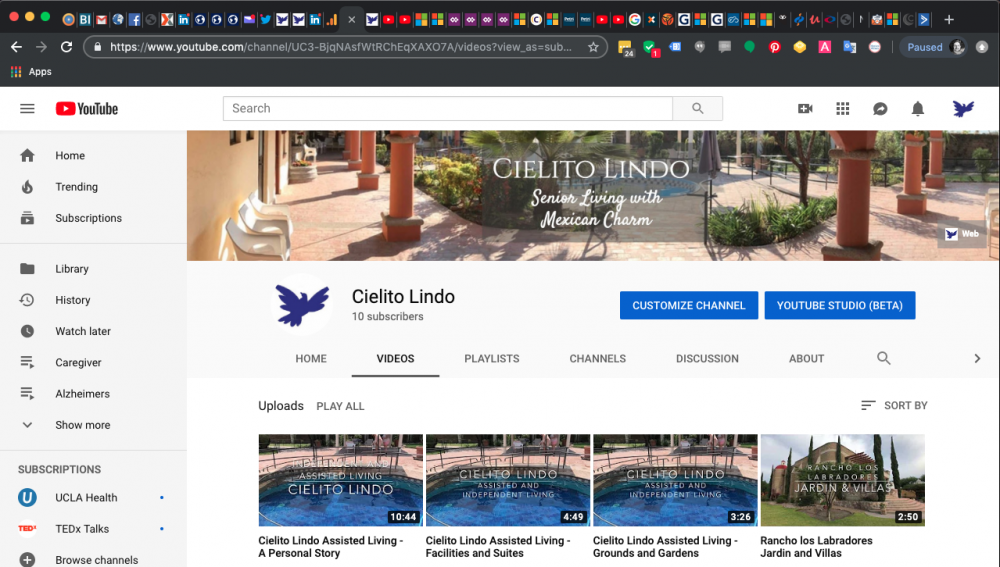
Here is our YouTube Channel. This is where we have lots of videos about Cielito Lindo and Rancho Los Labradores. We also have 1,600+ other senior care and expat in Mexico videos: YouTube
|
|
|
|
|
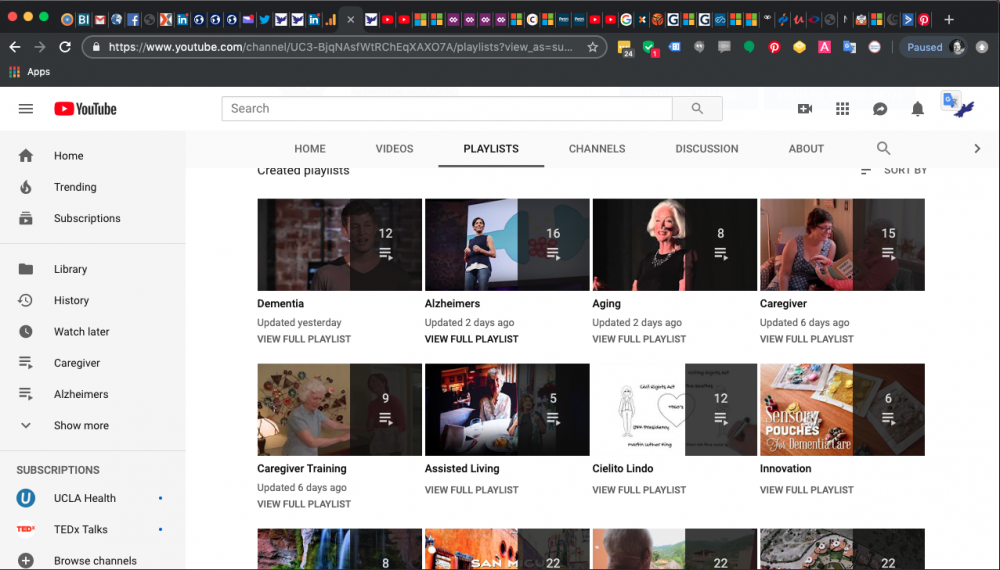
Additionally, our playlists cover a wide area and include 1,200+ videos. These playlists include videos about San Miguel and Mexico in general, caregiving and health, and a broad spectrum of senior living topics. Playlists
|
|
|
|
|
Additional Resources We Offer
We have curated collections of resources that may be useful:
Articles - We write fresh articles about senior living, health, care, and finances every week
Caregiver Books - We review books related to caregiving methods, logistics, challenges, and coping
Senior Health - We review books related to healthspan, lifespan, and disease
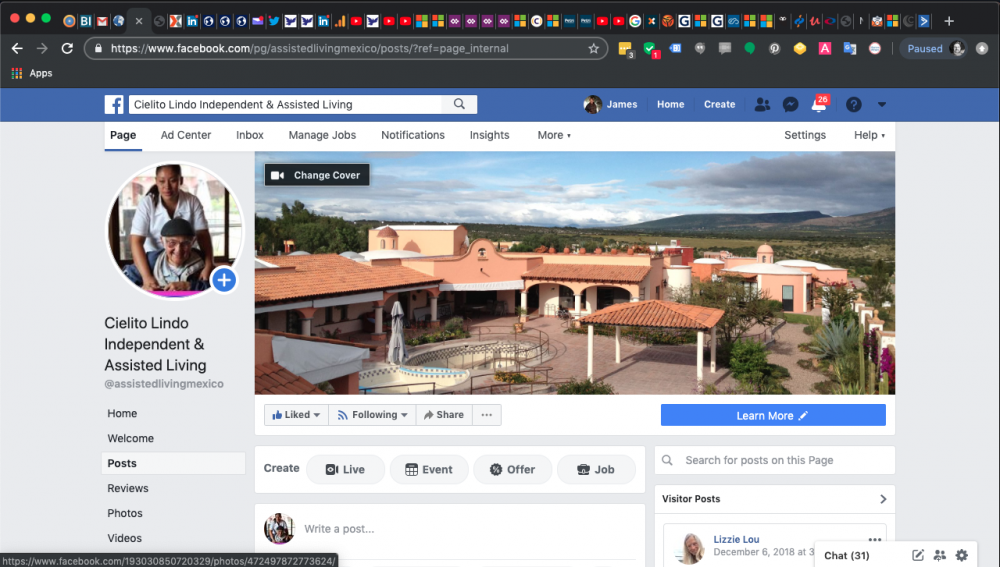
And here are our various social media forums, where we talk a lot about assisted living and memory care along with the various sort of challenges that sometimes come in our senior years (Alzheimer’s, Parkinson other dementias, and so on), but also about senior living in Mexico.
Facebook
|
|
|
|
|
|
|
|
|
|
|
Please don’t hesitate to contact me for anything related to senior living, especially in Mexico. I will gladly give you any assistance I can.
Thanks again!
James
James Sims
Marketing and Sales
Cielito Lindo Senior Living
1. 888.406.7990 (Voice and text)
1.209.312.0555 (WhatsApp)
Phones:
English speaking:
1.888.406.7990 (in US & CDN)
00.1.881.406.7990 (in MX)
Spanish speaking:
011.52.415.101.0201 (in US & CDN)
1.415.101.0201 (in MX)
SMA Colonias (subdivisions/neighborhoods):
Map and descriptions
Addresses and Travel:
Physical address:
Cielito Lindo Independent and Assisted Living, Camino Real Los Labradores S/N, Rancho Viejo 1, San Miguel de Allende, GTO, Mexico, 37885
Packages from online providers like Amazon:
Camino Real Los Labradores, Rancho Los Labradores / Cielito Lindo, San Miguel de Allende, GTO, 37880 México
PO Box for letters and small envelopes:
Rancho Los Labradores / Cielito Lindo, c/o Alejandra Serrano , PMB N° 515-C, 220 N Zapata HWY N°11, Laredo TX, 78043-4464
Air:
Best airports to fly into: Leon (BJX) or Queretaro (QRO)
Shuttle:
Best airport shuttle: BajioGo
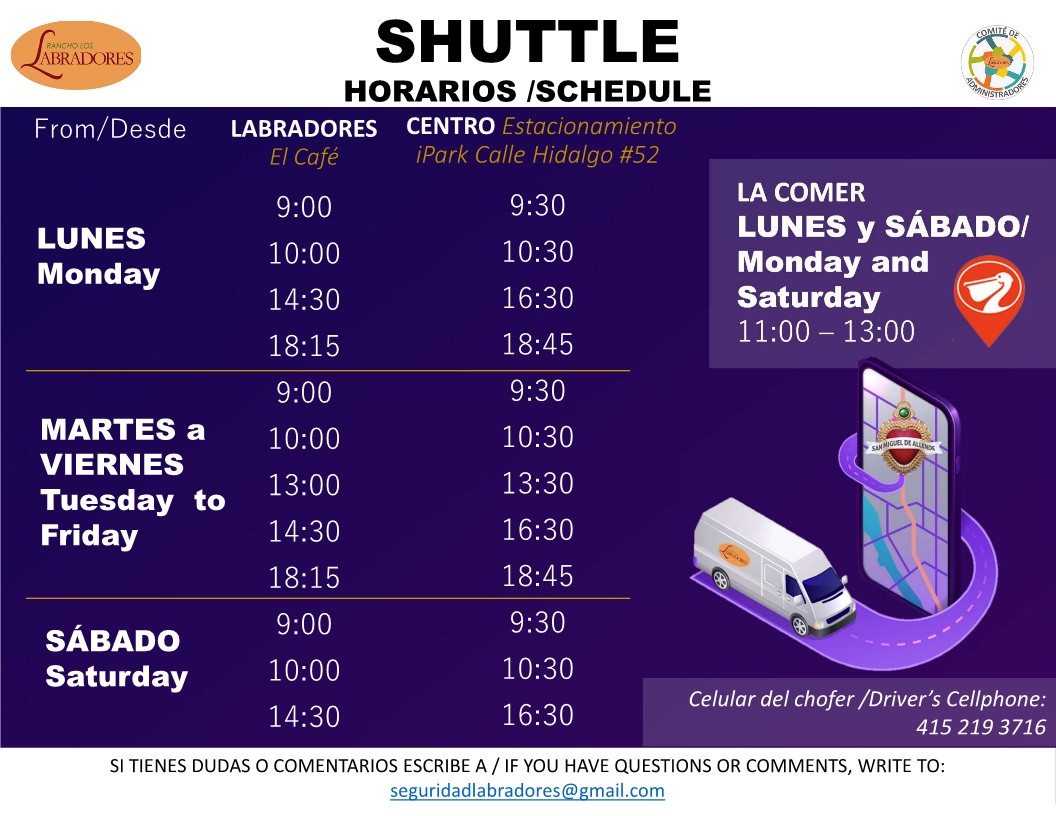
Shuttle between San Miguel and Rancho Los Labradores / Cielito Lindo
|
|
|
|
|
|
|
|
|
|
|