|
|
Subject: Your Weekly Guide to Senior Living & Care in Mexico
Dear ,
Welcome to your weekly touchpoint from all of us at Cielito Lindo. Each edition brings together helpful insights, heartwarming stories, expert advice, and curated resources about senior living, retirement, and age-related care challenges—including Alzheimer’s, Parkinson’s, stroke, limited mobility, and more.
We understand that navigating this stage of life can be overwhelming, whether for yourself or a loved one. That’s why we're here—to offer guidance, support, and a glimpse into the enriching life many have found
here in beautiful San Miguel de Allende.
If you find this newsletter valuable, please forward it to a friend or family member who might also benefit. They can easily subscribe via our Newsletter page. And of course, if you ever wish to unsubscribe, there’s a quick opt-out link below at the bottom right corner of this newsletter.
Here’s what we typically cover each week:
- San Miguel de Allende
highlights – why this is such a special place to live
- Health & wellness insights – articles, videos, and expert reviews
- Care options & community life at Cielito Lindo – flexible, affordable living with a warm, human touch
This Week’s Theme: Empowering and Liberating Caregivers
This week, we examine how we need to support caregivers, not add to their burden.
|
|
|
|
|
| Weekly insights into San Miguel:
|
|
|
Colorful & Epicurean San Miguel
While much of what we discuss involves the
challenges of aging and caregiving, it's also important to celebrate the beauty that surrounds us. San Miguel de Allende is a feast for the senses—bursting with color, rich in culture, and renowned for its incredible food and art. It’s not just a place to live—it’s a place to thrive, to enjoy, and to heal.
|
|
|
|
|
The Colors of San Miguel: The Ultimate Pueblo Magico
For me, the quintessential Pueblo Mágico is San Miguel. And nowhere captures that magic more fully than the cobblestones of the centro histórico. Just beyond the waking murmur of footsteps and the rustle of leaves in El Jardín, the Parroquia de San Miguel Arcángel rises like a vision—pink, improbable, perfect.
El Jardín, the town’s central plaza, isn’t grand by size, but by soul. Its laurel trees, sculpted and still, cast dappled shadows across benches where abuelos read their newspapers and schoolchildren steal a few extra moments before the bell. The scent of fresh pan dulce drifts from a nearby
bakery, mingling with the resin of polished wood from a guitarist tuning up for the day. Conversations bloom like bougainvillea—soft, sudden, always in Spanish, sometimes in laughter.
And above it all, the Parroquia.
You can’t speak of San Miguel without that sacred spire—Gothic in form, yet unmistakably Mexican in its fire-kissed stone and whimsical ambition. Its rosy cantera surface shifts in the light—now golden, now blush—as clouds wander across the highland sky. No matter how often you see it, it startles you. A cathedral that looks like a dream made solid.
In the golden hush of morning, the façade glows with quiet majesty, as if holding its breath. By afternoon, it radiates heat and
haloed defiance. And in the evening, when the bells begin their aching call, it becomes silhouette and memory, reaching into the dusk like a prayer unfinished.
People come and say, “It’s beautiful,” but beautiful is too easy a word. The Jardín and the Parroquia don’t just please the eye—they alter the rhythm of your breath. They slow you down. They remind you that stillness can be holy, and that time, in San Miguel, isn’t something you chase.
You sit. You listen to the birds. You watch light fall across ancient stone. And for a moment—perhaps longer—you belong to this place. (Photo courtesy of SMA photographer Sam Perez)
|
|
|
|
|
Address: Zacateros 14, Centro, San Miguel de Allende, Gto., México
Phone: +52 415 125 1488
Days & Hours:
- Lunch: Tue–Sat 1 pm–5 pm, Sun 1 pm–7:15 pm
- Dinner: Tue–Thu 5 pm–9:30 pm; Fri–Sat 5 pm–10:30 pm
- Sunday ends at 8 pm
- Happy Hour cocktails Tues–Thurs 4–7 pm
Atmosphere:
Set within a historic cantera-walled courtyard, Kan Bei blends warm lighting, indoor fireplaces, and artful Asian-inspired accents. The ambiance
strikes a perfect balance between casual elegance and fine dining, creating a sophisticated yet inviting space ideal for special occasions.
Service:
Service is consistently praised as attentive and knowledgeable. Diners note well-paced courses and personable bartenders, though a few have mentioned the tasting menus can feel rushed if not communicated properly.
Cuisine:
Asian fusion with refined Chinese, Thai, and broader Asian influences. The menu is artfully crafted, from small bites to full main courses, all presented with elegant flair.
Signature
Dish:
The Grandma’s Pork Belly (stewed in traditional Chinese style, served with gohan rice and amaranth furikake) captivates both visually and taste-wise—comforting, yet sophisticated.
Starters:
- Shanghai Wonton: pork belly and shrimp in tamarind, ginger, sesame sauce.
- Maguro Kyoto: bluefin tuna on crispy wonton with tropical fruit, avocado, matcha.
- Pandan Chicken wrapped in banana leaf with satay and sweet chili.
Main Courses:
- Grandma’s Pork Belly (see above)
- Flying Crab: crispy soft-shell crab with matcha aioli and yuzu-melon foam.
- Thai Curry Soup: shrimp, coconut milk, spinach, shiitake.
- Grilled
chicken masala with mango, green beans, passion fruit sauce and lychee ice cream .
Desserts:
- Sticky Rice with coconut-lemongrass, mango, charred fig, pistachio, lychee ice cream.
- Strawberry Cloud: marinated berries, mascarpone cream, hibiscus salt, lychee ice cream .
Wine & Cocktails:
An extensive list of Mexican and imported wines plus premium bottles like Moët, Dom Pérignon. The bar shines with handcrafted cocktails (e.g., Dragon Jade, Gauxin, Kintsugi) and inventive mocktails.
Final Thoughts:
Kan Bei delivers a luxurious Asian-inspired culinary journey in a breathtaking setting. It's
ideal for date nights, celebrations, or when you're craving refined fusion cuisine. Some tasting menus may feel brisk; specifying pacing preferences enhances enjoyment.
Cost: $$$$$ (MXN 500+ per person)
Rating: ★★★★☆ (4.5/5)
Highlighted Reviewer Quotes:
“All of my senses were tantalized … ambiance was over‑the‑top stunning … we went as a big group to celebrate a birthday and it was
the perfect space to feel luxurious and pampered.” wanderlog.com
“The tasting menu received both praise … and criticism for being overpriced … food temperature and pacing …” wanderlog.com
Recommendations: If you’re planning a special night out in San Miguel, reserve early (especially for groups ≥4) and consider requesting the terrace/event space when available. Let the team know your serving tempo; their fine‑tuned attentiveness ensures an unforgettable experience.
|
|
|
|
|
Health, Caregiving & Life in Mexico
|
|
|
This section brings you thoughtful, relevant, and at times, even life-changing content to support your journey—whether you're exploring care options, supporting a loved one, or planning for your own future.
- Lead Article - Each week’s main feature is written just for you—diving into meaningful topics like extending healthspan, navigating diagnostics, or understanding the causes of Alzheimer’s and other dementias. We also occasionally explore the beauty and cultural richness of Mexico, including Pueblos Mágicos and the colorful life in San Miguel de Allende.
- Op Ed - A short editorial that reflects on the lead article’s themes, offering a personal or thought-provoking perspective.
- Caregiver’s Sentiment - A heartfelt quote or reflection honoring the emotional depth of caregiving—because your feelings and efforts matter.
- Videos - Two or three curated videos that align with the week’s theme, featuring summaries and timestamped highlights to make them easy to explore.
- Book Reviews - One or two handpicked books to deepen your understanding, lift your spirits, or simply remind you that you’re not alone.
|
|
|
|
|
Empowering Caregivers to Make Hard Decisions Without Judgment or Guilt
In the incredibly complex and demanding world of caregiving for a loved one with a chronic condition, unpaid family caregivers often bear the brunt of responsibilities while facing judgment from family members who are not directly involved in daily care. This article highlights the disproportionate expectations placed on caregivers, particularly women, and emphasizes the importance of empathy, understanding, and support. It advocates for a shift from criticism to compassion, allowing caregivers to make hard decisions with confidence and free from guilt.
Article Highlights- Caregiving responsibilities often fall disproportionately on one family member, typically a daughter, based on outdated assumptions about availability and gender roles.
- Career setbacks and financial sacrifices are common
among caregivers, who may reduce hours, decline promotions, or exit the workforce entirely.
- Family members uninvolved in daily care frequently offer judgments and advice untethered from reality, failing to grasp the complexity of the caregiver’s role.
- Self-imposed guilt can be relentless—caregivers constantly question whether they’re doing enough, even as they exhaust every resource they have.
- Praise from the sidelines often masks a lack of meaningful support, reinforcing the myth that caregivers can and should “do it all.”
- Caregivers are often expected to balance full-time jobs, emotional labor, and round-the-clock care, without acknowledgment of the toll it takes.
- Decisions like hiring outside help or transitioning a loved one to assisted living are often viewed as failures rather than necessary, thoughtful choices.
- Judgment—whether subtle or overt—contributes to emotional burnout, feeding resentment, self-doubt, and profound fatigue.
- Caregivers face societal misconceptions that caregiving is a “natural” role that requires no expertise, boundaries, or self-care.
- Each caregiving scenario is shaped by unique financial, emotional, and logistical constraints; there is no one-size-fits-all solution.
- Critics rarely understand that the options caregivers face are often all difficult, and none ideal—each choice carries real trade-offs.
- Support begins with empathy, not advice; those who haven’t lived the caregiving reality are in no position to judge those who have.
- Caregivers deserve the freedom to make hard decisions without shame, confident in their intimate understanding of their loved one’s needs.
- Letting go of guilt starts with setting boundaries, building support networks, and
recognizing the right to protect one’s own health.
- Ultimately, caregiving is an act of fierce love and sacrifice, and those who shoulder it need compassion—not critique.
You can read the complete article here and select others from our
collection of 100+ articles on our site.
|
|
|
|
|
Caregiver’s Sentiment: Walking Through Fire
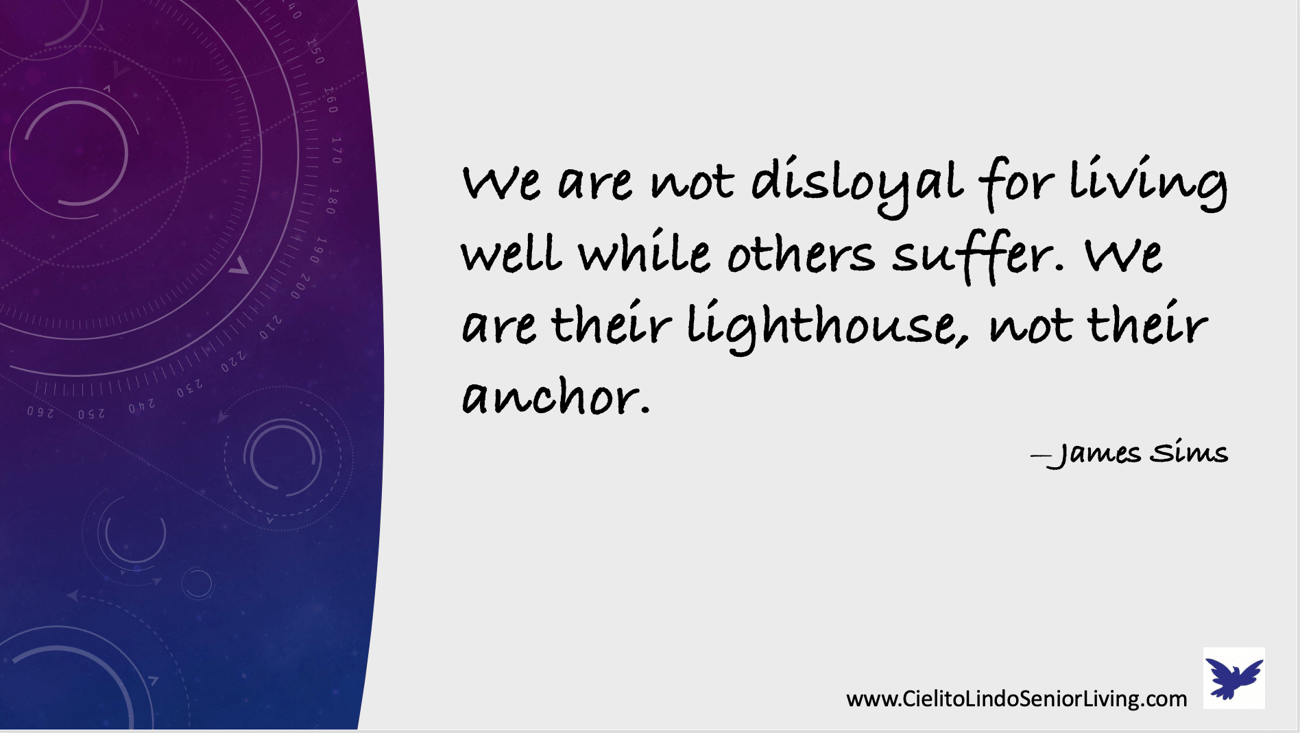
"We are not disloyal for living well while others suffer. We are their lighthouse, not their anchor.”
When someone we love is struggling, especially with deep pain, illness, or emotional despair, it’s easy to feel that our own joy must be muted. Guilt creeps in when we laugh, succeed, or even just rest, as if our well-being diminishes the seriousness of their suffering. But this quote gently disrupts that narrative. It reminds us that our strength, not our sorrow, is what our loved ones need most.
An anchor, though grounding, can also weigh things down. A lighthouse, by contrast, stands firm and bright—not to judge the ships lost in the storm, but to guide them, to offer constancy and direction. Being well doesn’t mean we’re detached or indifferent. It means we are rooted enough to offer help, calm enough to be a presence of peace, and visible enough to be a source of hope. Living well is not a betrayal—it’s the gift of stability and light we give to those adrift in pain.
|
|
|
|
|
Caregiver Affirmation
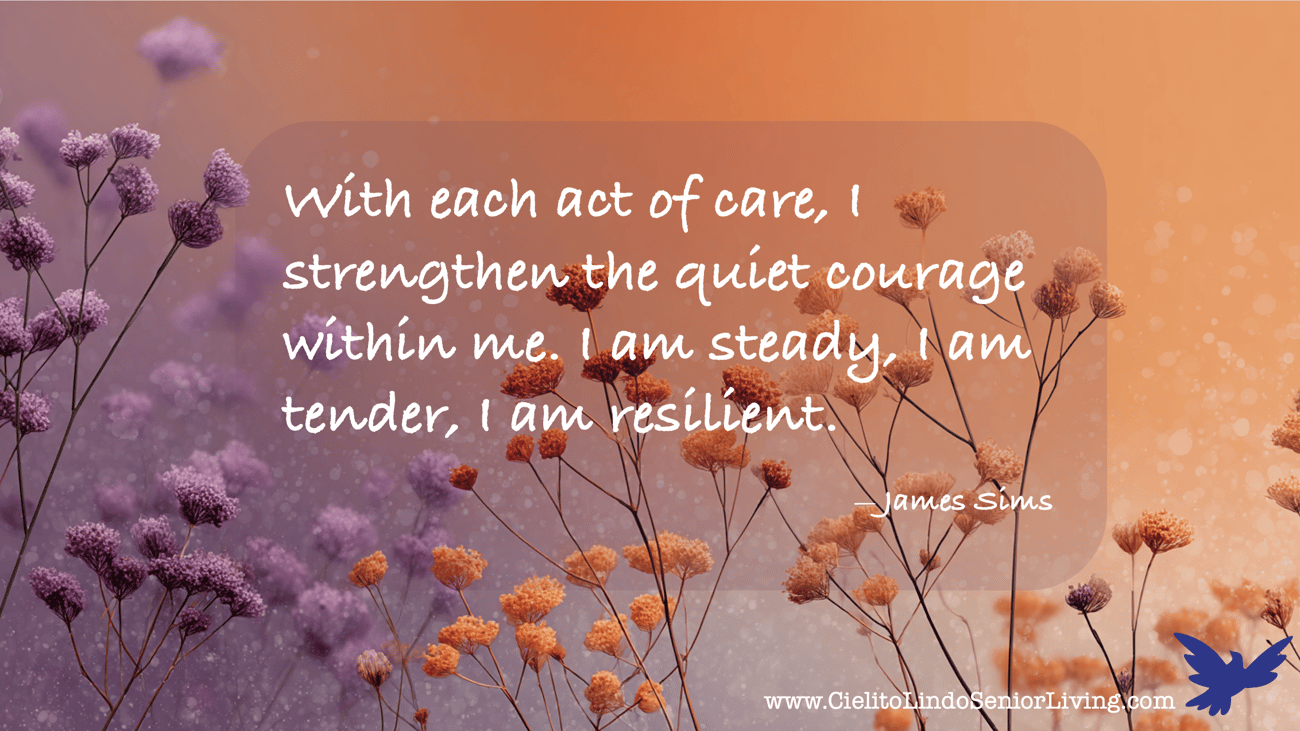
“With each act of care, I strengthen the quiet courage within me. I am steady, I am tender, I am resilient.”
With each act of care
Resilience isn’t something we wait to feel—it’s something we build. Every time you show up, even in fatigue or uncertainty, you add to your inner foundation. Each gesture matters.
I strengthen the quiet courage within me
This is not the loud, heroic courage of movies. It’s the steady, private kind that endures. It lives in your hands, your patience, your showing up again and again.
I am steady
You don’t have to feel strong all the time. Steadiness is in the returning—in the way you anchor others by finding your footing, even briefly, in the present moment.
I am tender
You lead with your heart. That gentleness is not a weakness, it is a
healing force. Even when the world feels heavy, your care is soft enough to soothe.
I am resilient
Resilience doesn’t mean you’re unaffected. It means you keep moving, loving, adapting. You carry more than most—and still, you offer light.
|
|
|
|
|
When Caregiving Comes with Guilt: The Invisible Burden No One Talks AboutJuly 4, 2025 | James Sims, Editor, www.cielitolindoseniorliving.com
The hardest part of caregiving often isn't the sleepless nights, the endless appointments, or the emotional toll of watching a loved one fade. It's the guilt—especially the guilt that others, knowingly or not, pile on top of you.
We need to acknowledge and dismantle the silent epidemic of caregiver guilt, particularly the kind magnified by judgment from those who don’t walk the caregiving path. Only then can we
empower caregivers—not just to endure—but to thrive in their roles with clarity and confidence. And just as importantly, caregivers themselves must be given permission to shed the guilt that often prevents them from protecting their own well-being.
Guilt is the constant background noise in the lives of family caregivers. It seeps in when they leave their loved one in the care of someone else for just a few hours. It shouts when they consider placing a parent in assisted living. And it deafens when outsiders offer criticisms disguised as concern: "Have you tried doing it this way?"or "If it were me, I wouldn't..."
What these observers often fail to grasp is that caregiving decisions are not made in a vacuum. They're shaped by unrelenting demands and limited resources—emotional, financial, physical. For caregivers like Sarah, who juggles a demanding job while supporting a mother with dementia, the choice to hire part-time help wasn't a failure of
duty but a lifeline. Yet she still faced barbed questions from her siblings, who offered opinions without offering help.
This kind of external judgment compounds what is already a deeply personal emotional struggle. Caregivers often judge themselves harshly: Am I doing enough? Did I make the right call? Could I be better?
The cultural ideal of the selfless, tireless caregiver only adds pressure. Society praises caregivers for their devotion, yet remains largely indifferent to their sacrifices. When they step back to protect their own health or sanity, they're sometimes viewed as selfish. The same people who say, "I don't know how you do it,"too often follow with, "But have you considered..."
Judgment becomes especially acute around decisions like transitioning a loved one to assisted living or hospice care. These are acts of compassion, made to ensure safety and dignity, yet caregivers are made to feel as if they're giving up.
Family
dynamics often exacerbate this. In many cases, caregiving falls disproportionately on one individual—often the daughter, the youngest, or the one perceived to have the most "flexibility."That person ends up not only carrying the practical weight of care, but also the emotional burden of justifying their every move.
Some might argue that caregiving is a family responsibility, and with it comes scrutiny. But caregiving isn't a debate club—it's a frontline, lived experience. Unless you've helped your parent bathe, navigated the labyrinth of medical billing, or made peace with watching someone you love lose pieces of themselves, your opinion should come with humility, not certainty.
Caregiving is not a series of choices between good and bad. Often, it is a series of decisions between hard and harder. There's no perfect solution, only the best imperfect option under the circumstances.
To truly support caregivers, we must all shift from judgment
to empathy—and beyond that, to empowerment. Empowerment means helping caregivers feel validated in their decisions, backed in their boundaries, and unshackled from the expectation to be superhuman. And for caregivers themselves, empowerment starts with letting go of guilt: the guilt imposed by others and the guilt we often create within ourselves.
Let’s stop expecting perfection and start offering grace. Caregiving is not about doing everything. It's about doing what you can, with love, amid impossible choices. That, in itself, is enough.
If you know a caregiver, don’t ask them why they made a choice—ask them how you can help. Because sometimes, the greatest act of support is listening without judgment and honoring the courage it takes to care. And if you are a caregiver, remind yourself daily: your love shows in every hard choice you make. You deserve the freedom to care without the weight of guilt on your shoulders.
|
|
|
|
|
The Phenomenon of Caregiver Guilt
The burden of guilt is a silent, persistent companion for many dementia caregivers—especially those who feel torn between
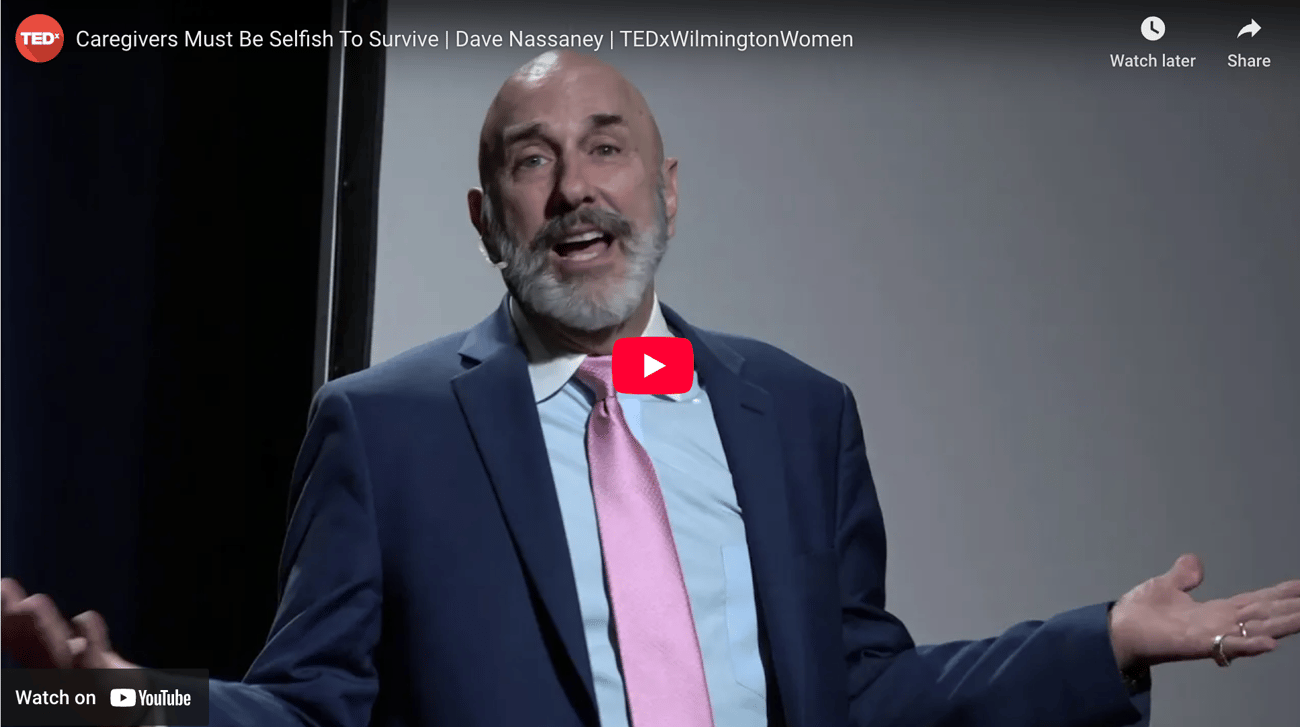
selflessness and self-preservation. In the TEDx talk “Caregivers Must Be Selfish to Survive,” Dave Nassaney confronts this internal conflict head-on. Drawing from his personal caregiving journey after his wife’s massive stroke, Nassaney articulates a truth that many caregivers are afraid to admit: neglecting their own needs can lead to emotional burnout, physical illness, and in many cases, premature death. His message—that caregivers must embrace a form of "selfishness"to survive—is a radical reframe of what it means to be loving and responsible. For those caring for individuals with dementia, where the emotional toll is compounded by relentless cognitive decline and the loss of shared reality, this message is especially resonant. Caregivers often wrestle with guilt not only from within but also from the judgment of others who misunderstand the complexity of their role.
Nassaney’s talk validates this struggle and reframes self-care not as indulgence, but as an ethical imperative—one that can free caregivers from paralyzing guilt and allow them to show up more fully, sustainably, and compassionately for the ones they love.
Video: Video: Caregivers Must Be Selfish To Survive | Dave Nassaney | TEDxWilmingtonWomen
In this TEDx talk, Dave Nassaney emphasizes the importance of caregivers prioritizing their own well-being to effectively support their loved ones. He shares personal experiences, highlighting the overwhelming challenges caregivers face, including guilt, isolation, and depression. Nassaney stresses that many caregivers may become sicker than those they care for, with a significant percentage dying before their loved ones. He advocates for caregivers to join support groups and adopt a mindset of self-care, using the metaphor of putting on one’s own oxygen mask first. By doing so, caregivers can not only survive but thrive, ultimately providing better care for their loved ones.
View the video here.
Highlights:
0:10 – Almost everybody will eventually care for a loved one or need care themselves.
0:35 – One third of the US population are caregivers, with many feeling depressed.
1:12 – 30% of caregivers may die before their loved ones.
3:20 – The speaker’s wife suffered a massive stroke, changing his role to caregiver.
4:10 – The speaker realized he needed to be selfish to survive
caregiving.
5:55 – Joining a caregiver support group changed everything for him.
6:06 – The metaphor of putting on your own mask
first in emergencies applies to caregiving.
7:34 – The speaker’s wife is doing well because he learned to prioritize his needs.
9:00 – Imagine if every new caregiver was healthy and capable from the start.
10:04 – Caregivers can thrive and be joyful while providing care.
|
|
|
|
|
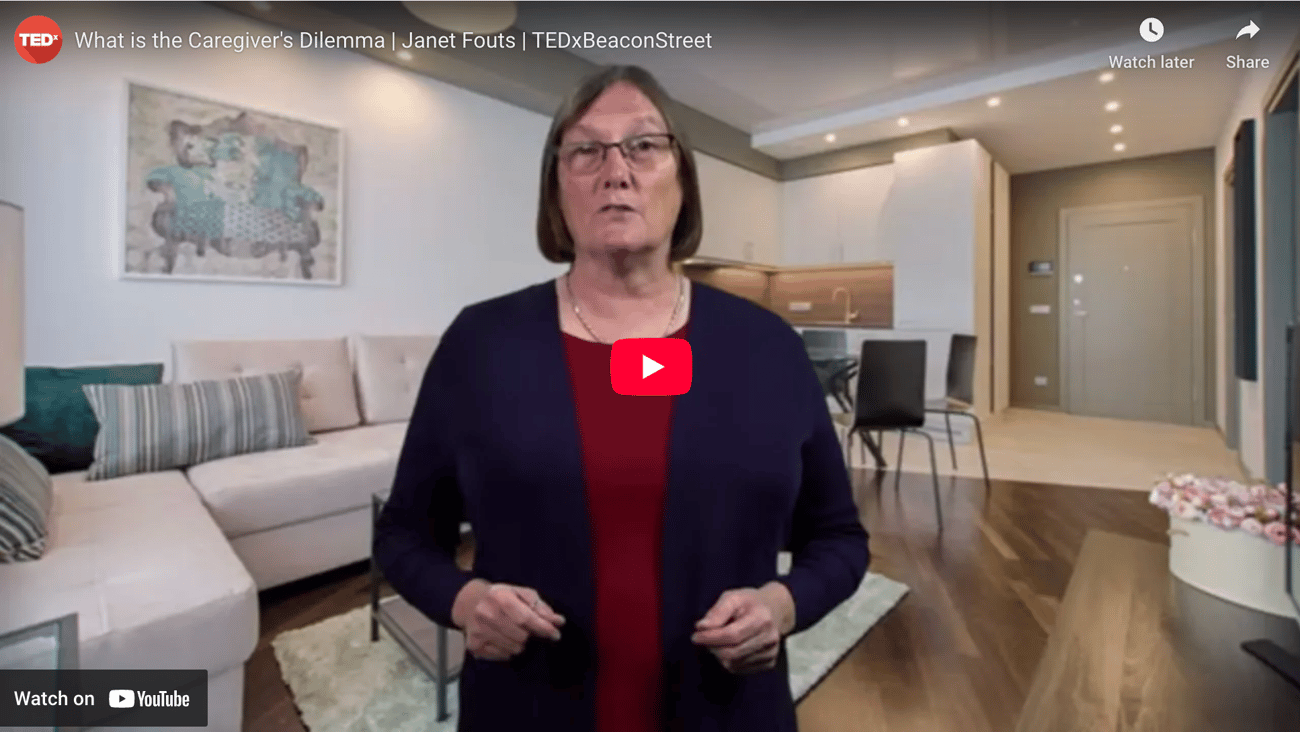
Video: What is the Caregiver’s Dilemma | Janet Fouts | TEDxBeaconStreet
In “What is the Caregiver’s Dilemma,” Janet Fouts shares her personal journey as a caregiver facing the challenges of balancing self-care with caring for a loved one. She emphasizes that neglecting one’s own health can lead to burnout and stress, which ultimately affects the quality of care provided. Fouts introduces mindfulness as a powerful tool to manage stress and improve well-being, advocating for “micro-doses” of mindfulness throughout the day. Simple practices like pausing and focusing on positive moments can significantly enhance resilience and emotional health. Ultimately,
she encourages caregivers to prioritize their own needs to be better equipped to care for others.
View the video here.
Highlights:0:12 – When my family got the cancer diagnosis, life hit the fan big time.1:00 – The harder it got, the more I realized my own mental and physical health was suffering.1:59 – The caregiver’s dilemma is how do we care for ourselves and those we love?2:55 – I discovered the simple, elegant power of mindfulness.4:38 – I realized I don’t have time to not be mindful because it helps me to be more creative and productive.5:19 – I couldn’t get out of that negative cycle of stress.7:41 – When you feel yourself slipping down that slope towards overwhelm, stop for a pause.9:12 – The pause becomes a habit that refreshes, restores, and revives.10:11 – Mindfulness can be about choosing what’s important in this moment.11:34 – May you be happy, may you be safe, and may you have ease.
|
|
|
|
|
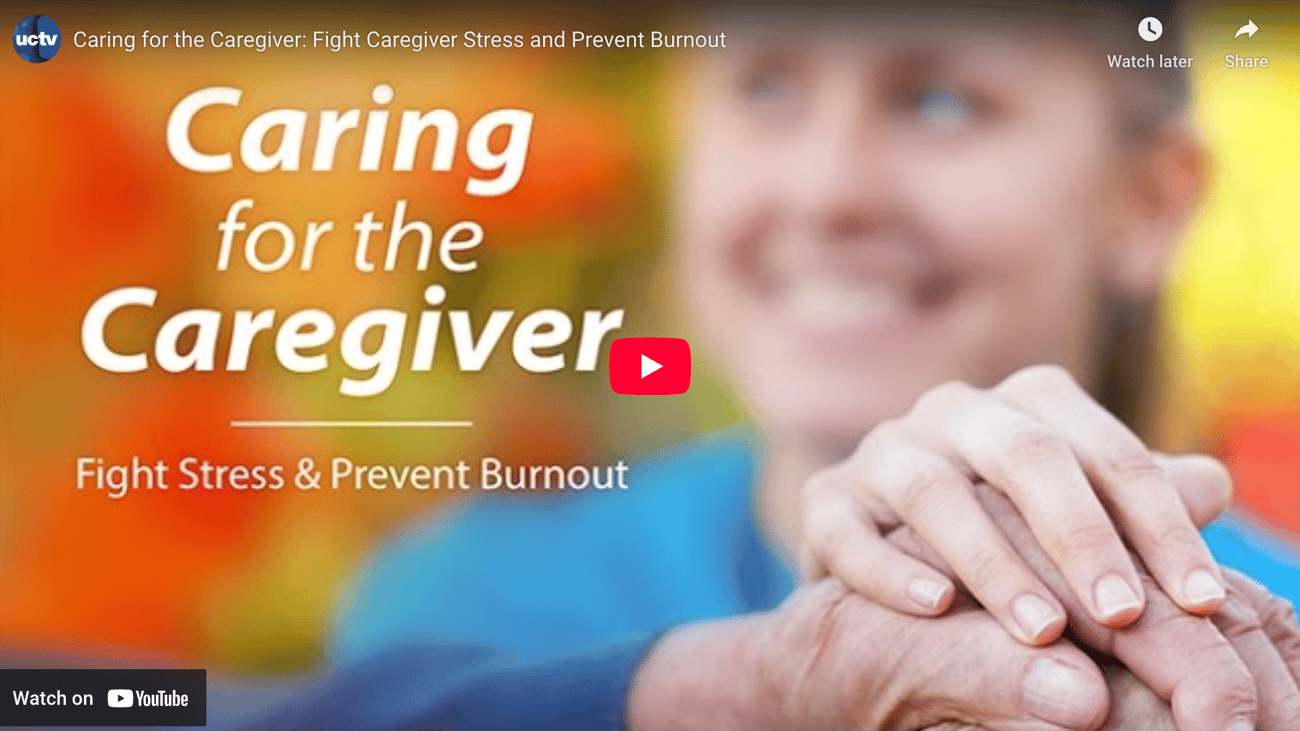
Video: Caring for the Caregiver: Fight Caregiver Stress and Prevent Burnout
The video discusses the significant stress and burnout faced by caregivers, particularly those caring for individuals with Alzheimer’s disease. It highlights the psychological and physical consequences of caregiving, including increased rates of depression and cardiovascular diseases. Research indicates that caregivers often feel a loss of control and experience high levels of stress, which can lead to severe health risks. The presentation emphasizes the growing number
of Alzheimer’s patients and the urgent need for support systems for caregivers. Key findings reveal that caregivers exhibit accelerated biological aging and have a higher risk of mortality compared to non-caregivers, underscoring the importance of addressing caregiver well-being.
The video further explores the physiological and psychological impacts of caregiving, emphasizing the need for effective interventions. It highlights the importance of caregivers engaging in enjoyable activities to improve their mood and reduce stress. The discussion includes findings from studies that show significant reductions in depressive symptoms and inflammatory markers among caregivers who participated in structured support programs. The need for larger-scale studies to validate these findings is also
addressed, alongside a clarification of different dementia types and their implications for caregiving.
View the video here.
Highlights:
0:22 – Introduction to the Institute for Research on Aging
and its mission.
1:12 – Welcome message from Danielle Glorioso, emphasizing the importance of caregiver support.
3:13 – Overview of findings related to caregivers of individuals with Alzheimer’s disease.
5:27 – Discussion on the psychological and physical consequences of caregiving.
6:43 – Statistics on the increasing number of Alzheimer’s patients and the impact on caregivers.
10:06 – Caregivers report significant feelings of loss of control and stress.
12:06 – Study findings on mortality rates among caregivers compared to non-caregivers.
14:40 – Increased risk of
cardiovascular diseases in caregivers highlighted.
19:00 – The correlation between depression in caregivers and cardiovascular health risks.
24:41 – Accelerated biological aging observed in caregivers compared to non-caregivers.31:08 – Discussing arterial dilation in caregivers and its relation to cardiovascular events.32:43 – The importance of developing skills to cope with caregiving challenges.34:00 – Emphasizing the need for caregivers to engage in rewarding activities.37:14 – Overview of a study assessing the impact of interventions on caregivers’ health.41:02 – Results showing significant reductions in depressive symptoms among caregivers.42:19 – Behavioral activation condition leading to a notable decrease in inflammatory markers.43:06 – Highlighting the need for larger studies to confirm findings.45:08 – Clarifying the differences between various types of dementia.49:10 – A caregiver’s personal story illustrating the benefits of engaging in pleasurable activities.52:06 – Discussing the effectiveness of multicomponent interventions for caregiver
support.
|
|
|
|
|
Book Review: The Caregiver’s Path to
Compassionate Decision Making: Making Choices for Those Who Can’t by Viki Kind, MA
OverviewThis practical and heartfelt guide is designed to help caregivers navigate the complex and often emotionally taxing decisions required for individuals with compromised mental capacity. Viki Kind, an experienced bioethicist, provides a compassionate, adaptable framework for making ethical decisions on behalf of those who cannot advocate for themselves. Now in its second edition, the book includes bonus materials from Kind’s workbook, offering additional tools to empower caregivers in their decision-making process.
Synopsis
In The Caregiver’s Path to Compassionate Decision Making, Viki Kind addresses the challenges faced by caregivers responsible for making critical choices for individuals with dementia, stroke, mental illness, brain injury, and other cognitive impairments. The book is structured to guide readers through decisions ranging from everyday matters like taking away car keys to more life-altering situations such as end-of-life care. Kind provides a detailed decision-making framework rooted in ethics, respect, and compassion. Her system is flexible, ensuring
it can be tailored to suit the specific needs of the person being cared for, depending on their mental and physical abilities. Real-life examples and personal stories are included to bring the content to life, making it relatable and practical for readers.
Key Themes
- Ethical Decision-Making: The book centers around a framework that helps caregivers make ethical decisions by considering the well-being and dignity of the person who cannot decide for themselves.
- Respect and Compassion: Kind emphasizes that the decision-making process should always be grounded in empathy, honoring the individual’s values and preferences wherever possible.
- Flexibility: Recognizing that every situation is unique, the book’s decision-making system can be adapted to the specific cognitive and emotional capacity of the care recipient.
- Practical Guidance: Kind provides step-by-step questions, strategies, and scenarios that caregivers can apply in real-life situations, making the advice actionable and easy to follow.
- End-of-Life Care: Special attention is given to the difficult
choices that come with end-of-life decisions, offering caregivers emotional support and practical tools for navigating these moments.
Writing StyleViki Kind’s writing is clear, compassionate, and direct. She expertly combines professional knowledge with personal insight, making the book accessible to both professional caregivers and family members. The real-life examples provide a relatable context, and the workbook-style questions and strategies ensure that the advice is practical and applicable. Kind’s tone remains empathetic throughout, acknowledging the emotional toll caregiving can take while providing much-needed
encouragement.
Conclusion
The Caregiver’s Path to Compassionate Decision Making is an invaluable resource for caregivers faced with making difficult decisions on behalf of loved ones with impaired mental capacity. Viki Kind’s approach blends ethical rigor with emotional sensitivity, giving caregivers the tools they need to make decisions they can feel confident about. This book is highly recommended for both professional caregivers and family members navigating the challenging and emotional landscape of caregiving.
Rating: ★★★★☆ (4.8/5)
|
|
|
|
|
Dementia Caregiving - At the Intersection of Compassion and Fear
For anyone caring for a loved one with chronic cognitive impairment—be it Alzheimer's, dementia, or another neurodegenerative condition—Digital MD by Dr. Liz Kwo offers more than just a glimpse into the future of healthcare; it offers hope, empowerment, and practical insight. As caregivers, we often stand at the intersection of compassion and fear—devoted to those we care for while silently grappling with the terrifying question: Could this happen to me? That fear is not only understandable—it’s legitimate. This book speaks directly to that dual reality. Through her firsthand experience and broad industry knowledge, Dr. Kwo unveils how digital health innovations—like remote monitoring, predictive analytics, and cognitive health tools—are not only changing the way we care for others, but also offering us, the caregivers, new ways to protect our own health and independence as we age.
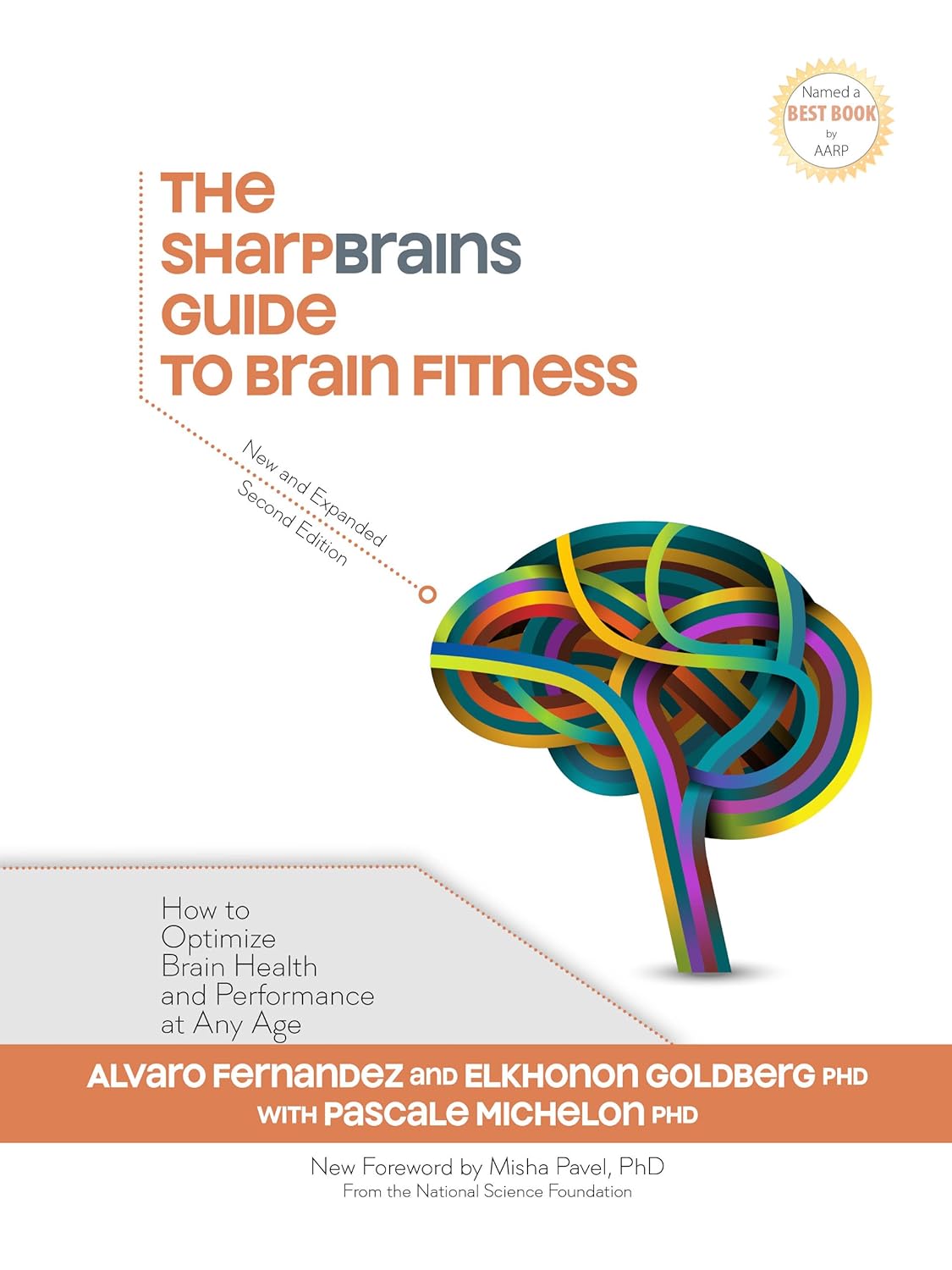
Book Review: The SharpBrains Guide to Brain Fitness By Alvaro Fernandez and Dr. Elkhonon Goldberg. Published by SharpBrains Incorporated, April 2013
Overview The SharpBrains Guide to Brain Fitness is a comprehensive, evidence-based resource aimed at helping readers understand and improve brain health across the lifespan. Co-authored by Alvaro Fernandez, an entrepreneur with a background in cognitive science, and Dr. Elkhonon Goldberg, a clinical neuropsychologist and professor, the book
bridges neuroscience with practical application. The guide is especially relevant for aging adults, caregivers, and health professionals interested in preserving cognitive vitality and staving off age-related decline.
Synopsis This expanded edition, recognized by AARP as one of the best brain fitness books, delves into what truly impacts cognitive function and debunks many popular myths about brain health. The book is structured as both an accessible neuroscience primer and a practical self-help manual. It presents a framework for self-assessment, lifestyle strategies, and personalized cognitive training, drawing from over a decade’s worth of peer-reviewed research. Through expert interviews, scientific analysis, and actionable tips, it empowers readers to become informed participants in their
own cognitive wellness.
Key Themes - Neuroplasticity: The book underscores the brain’s lifelong ability to change and adapt, especially in response to mental and physical challenges.
- Evidence-Based Interventions: Focus on
scientifically validated approaches—including physical exercise, stress management, social engagement, and cognitive training.
- Cognitive Reserve & Resilience: How building mental strength through learning, novelty, and challenge can protect against cognitive decline.
- Consumer Awareness: Sharp critique of the brain-training industry and common misconceptions promoted by media and commercial products.
- Lifelong Learning: Encourages ongoing intellectual stimulation as a crucial aspect of healthy aging.
Writing Style Fernandez and Goldberg strike a thoughtful balance between academic rigor and readability. The prose is clear, jargon-free, and organized logically, making complex neuroscience accessible to lay readers. The book is rich with analogies, graphics, checklists, and real-world examples, which help reinforce key ideas. The inclusion of scientist interviews adds credibility and nuance, offering a range of perspectives that invite critical thinking.
Conclusion The SharpBrains Guide to Brain Fitness stands out for its integrity, depth, and practical utility. It offers a rare blend of intellectual substance and user-friendliness, ideal for seniors aiming to maintain independence and mental sharpness, caregivers seeking to support loved ones, and anyone concerned about aging and brain health. The book avoids sensational claims, instead offering grounded guidance backed by credible research. A must-read for those serious about cognitive well-being in midlife and beyond.
Rating: ⭐⭐⭐⭐⭐ (5/5 stars) This guide earns a
full 5 stars for its science-backed insights, practical value, and thoughtful delivery. An essential addition to the aging adult’s wellness library.
Additional Resources Cielito Lindo Offers
We have curated collections of resources that may be useful.
Articles - We write fresh articles about senior living, health, care, and finances every week
Caregiver Books - We review books related to caregiving methods, logistics, challenges, and coping
Senior Health - We review books related to healthspan, lifespan, and disease
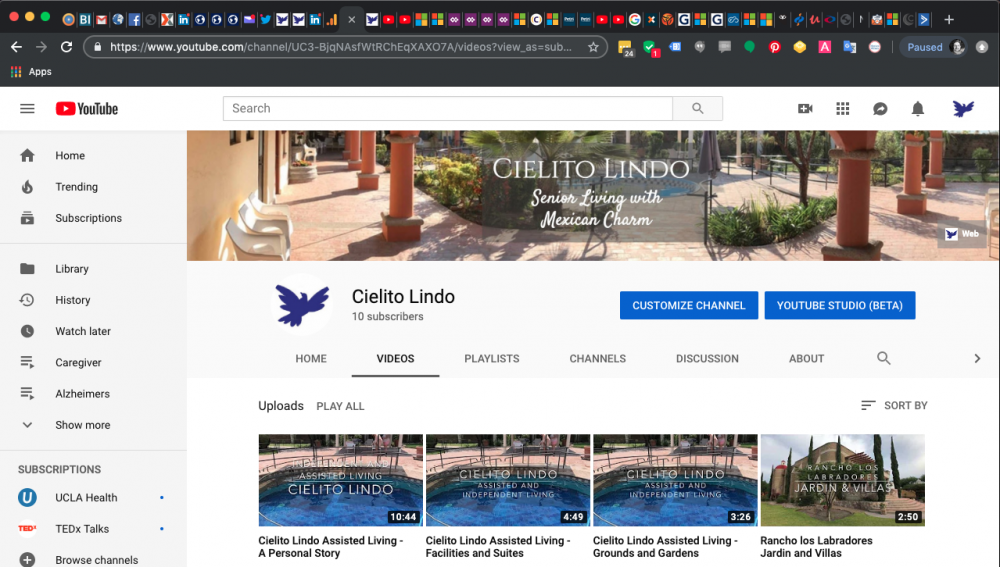
We also have 1,600+ other senior care and expat in Mexico videos: YouTube |
|
|
|
|
| Cielito Lindo's basic information is included for your convenience:
|
|
|
- Cielito Lindo Info: After the signature, the newsletter always includes information about Cielito Lindo, so it is at your fingertips when you want it: Our costs, various related websites, social media channels like YouTube, our various addresses, and so on.
- Travel Info: Recommended airports and shuttles.
|
|
|
Web Sites - Cielito LIndo and Rancho Los Labradores
Here are our Web sites, including Cielito Lindo and Labradores Suites (hotel) all of which are part of the larger Rancho Los Labradores gated community just north of San Miguel de Allende.
- Cielito Lindo provides independent living, light assisted living, assisted living, memory care and hospice with 24*7 staffing along with a la carte assisted living services to those living in the villas and suites at Rancho Los Labradores.
- Rancho Los Labradores Suites offer short and long term residence.
- Rancho Los Labradores is a country club resort feeling CCRC that provides a gated community with countless amenities and opportunities for different levels of independent living along with assisted living and memory care within Cielito Lindo.
Cielito Lindo Living Options & Costs Guide
We offer several living options depending on the level of care you or your loved one needs. Here’s a breakdown to help you plan:
1) Villas (Rent or Own)
- Cost: $1,300 – $1,700 per month
- Additional Costs: Utilities, renter’s insurance, etc.
- What’s Included: This is mostly independent living.
- Extras: You can add independent or assisted living services (charged separately, à la carte).
- Support: We can connect you with a realtor if you'd
like to purchase.
2) Cielito Lindo Condos & Suites
Best for: Independent living with optional assistance.
Option 1: Independent Living + Meals
- Cost: $2,250 per month
Includes:- 2 meals a day
- Monthly medical check-up
Optional Add-ons:- Meals for an additional person:
$450/month
- Extra care services available à la carte
Option 2: Light-Assisted Living in Condos & Suites
- Cost: $3,900 per month
Includes:- Full assisted living services
- Designed for residents who still want independence but need some support
- Smooth transition to full Assisted Living or Memory Care as needs change
- One-Time Inscription Fee: $4,000
For Couples:- $4,900/month for two people
- Same one-time fee ($4,000 per couple)
- Note: Suitability is based on cognitive ability, mobility, and safety.
3) Cielito Lindo Assisted Living, Memory Care, & Hospice
Best for: Seniors needing full-time care and supervision.
- Cost:
$3,900 per month
Includes:- 24/7 care and monitoring
- All meals
- Physical therapy
- Full-time doctor on site
- Spacious private room with bath
- One-Time Inscription Fee: $4,000
- For Couples: $4,900/month
4) Specialized Hospice Suite
Best for: Intensive care needs or end-of-life comfort and also recuperative at a far
lower cost than a hospital- Cost: $4,900 per month
Includes:- Full 24/7 monitoring
- Recuperative, Palliative and hospice care
- On-site doctor
- All meals
- Special space for visiting family
|
|
|
YouTube videos and Curated Playlists
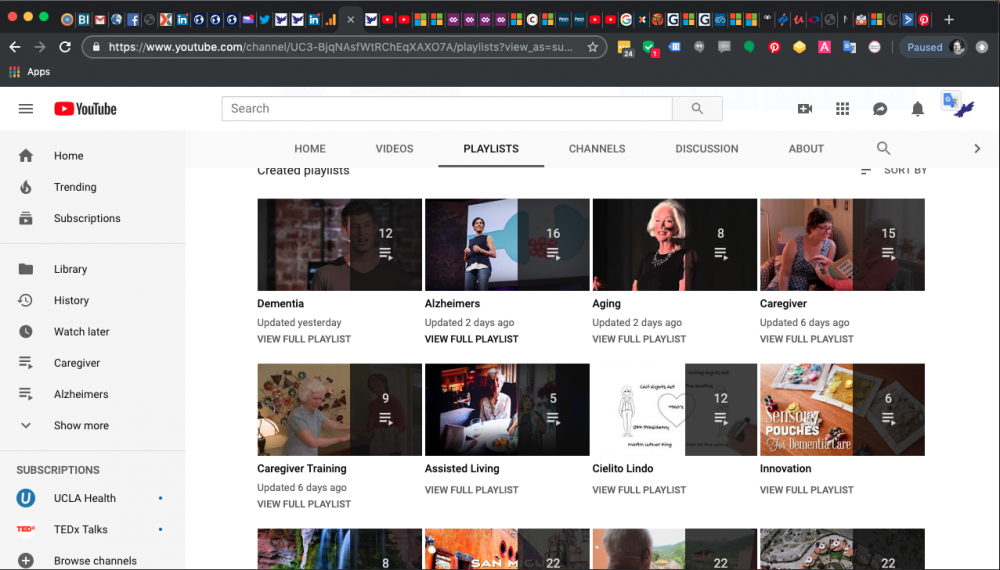
Here is our YouTube Channel. This is where we have lots of videos about Cielito Lindo and Rancho Los Labradores. We also have 1,600+ other senior care and expat in Mexico videos: YouTube |
|
|
|
|
Additionally, our playlists cover a wide area and include 1,200+ videos. These playlists include videos about San Miguel and Mexico in general, caregiving and health, and a broad spectrum of senior living topics. Playlists
|
|
|
|
|
Additional Resources We Offer
We have curated collections of resources that may be useful:
Articles - We write fresh articles about senior living, health, care, and finances every week
Caregiver
Books - We review books related to caregiving methods, logistics, challenges, and coping
Senior Health - We review books related to healthspan, lifespan, and disease
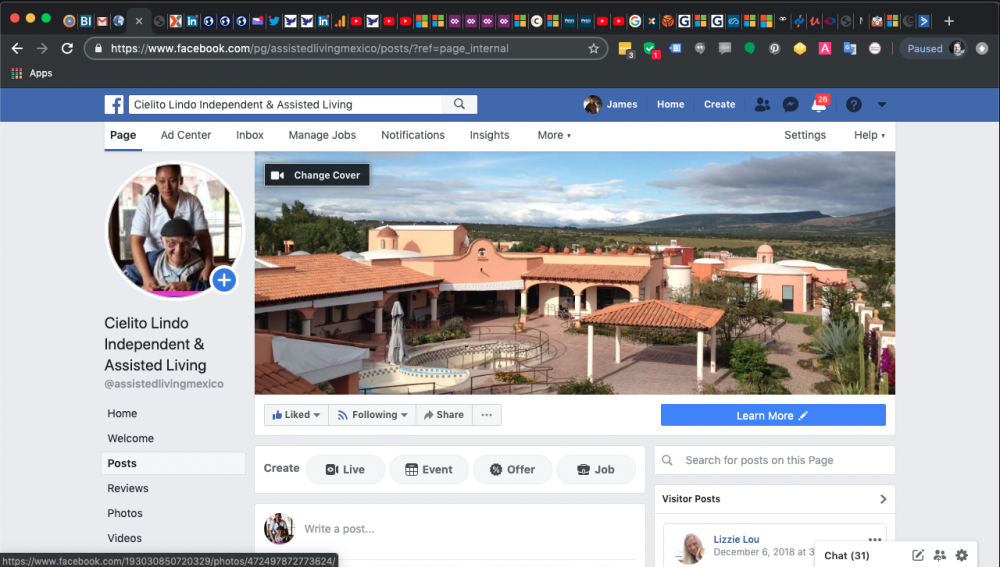
And here are our various social media forums, where we talk a lot about assisted living and memory care along with the various sort of challenges that sometimes come in our senior years (Alzheimer’s, Parkinson other dementias, and so on), but also about senior living in Mexico.
Facebook
|
|
|
|
|
|
|
|
|
|
|
|
|
|
|
|
|
|
|
Please don’t hesitate to contact me for anything related to senior living, especially in Mexico. I will gladly give you any assistance I can.
Thanks again!
James
James Sims
Marketing and Sales
Cielito Lindo Senior Living
1. 888.406.7990 (voice and text)
Phones:
English speaking:
1.888.406.7990 (in US & CDN)
00.1.881.406.7990 (in MX)
Spanish speaking:
011.52.415.101.0201 (in US & CDN)
1.415.101.0201 (in MX)
Expat Logistics:
Visas for Expats:
Sonia Diaz Mexico
Immigration Pros
MX
Tax Considerations for Expats:
Robert Hall Taxes
Best Bank:
Intercam Banco
Located in: Plaza De La Conspiración
Address: San Francisco 4, Zona Centro,
37700 San Miguel de Allende, Gto., Mexico
Hours: Open ⋅ Closes 4 PM
Phone: +52 415 154 6660
Addresses and Travel:
Physical
address:
Cielito Lindo Independent and Assisted Living, Camino Real Los Labradores S/N, Rancho Viejo 1, San Miguel de Allende, GTO, Mexico, 37885
Packages from online providers like Amazon:
Camino Real Los Labradores, Rancho Los Labradores / Cielito Lindo, San Miguel de Allende, GTO, 37880 México
PO Box for letters and small envelopes:
Rancho Los Labradores / Cielito Lindo, c/o Alejandra Serrano , PMB N°
515-C, 220 N Zapata HWY N°11, Laredo TX, 78043-4464
Best airports to fly into: Leon (BJX) or Queretaro (QRO)
Best airport shuttle: BajioGo
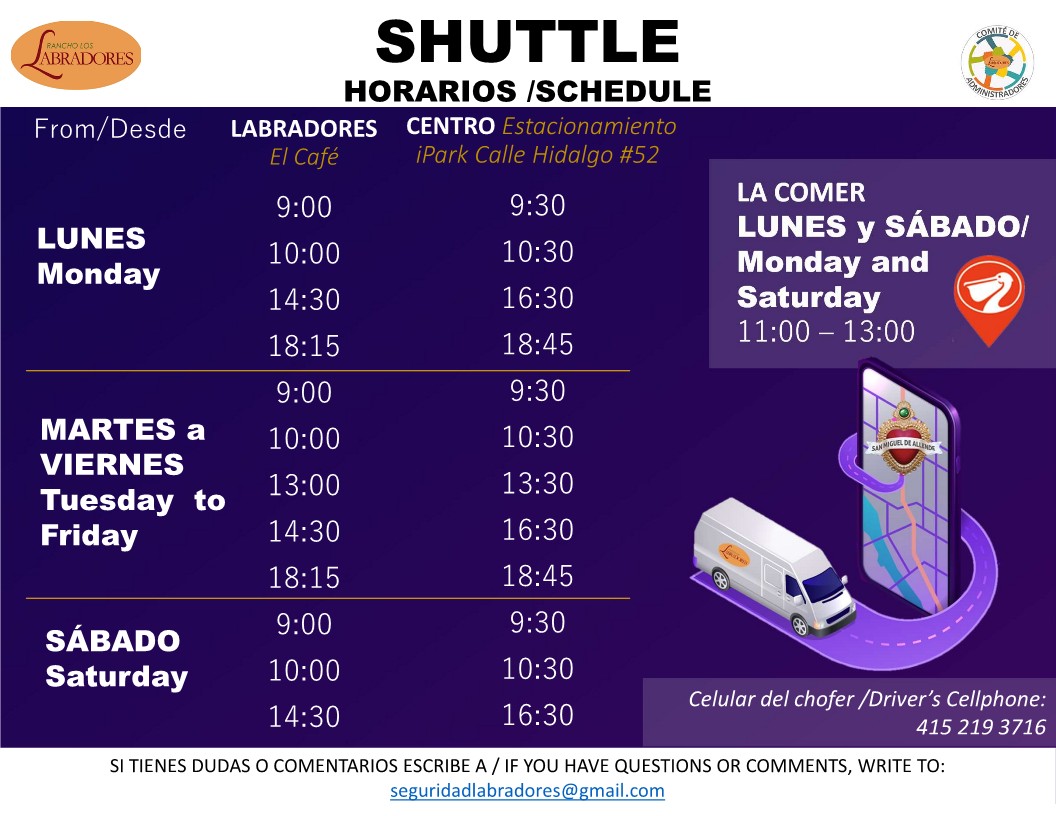
Shuttle:
Shuttle between San Miguel and Cielito Lindo
|
|
|
|
|
|
Maps and Navigation
Best smartphone navigation for Mexico and Central America: Waze
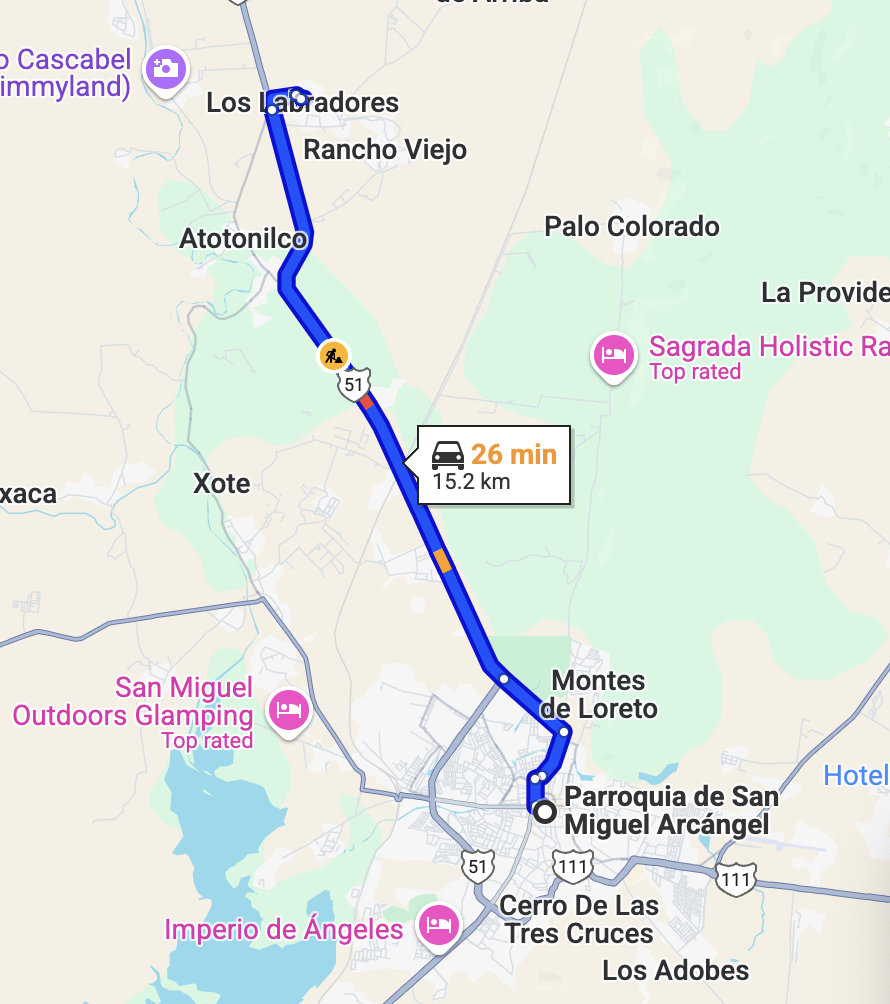
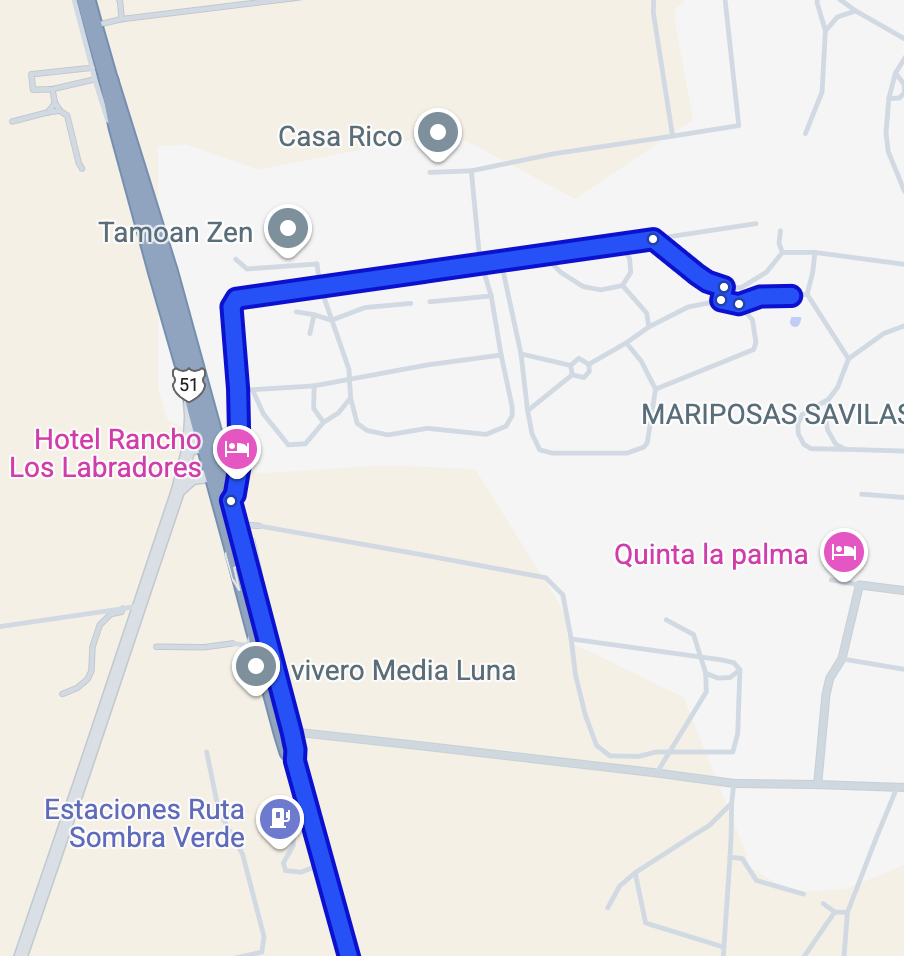
These two maps the location of Cielito Lindo / Rancho Los Labradores, 15 km north of San Miguel on Highway 51, just opposite the Atoltinilco exit.
|
|
|
|
|
|
|
Regards,
James
James Sims
Marketing and Sales
Cielto Lindo Senior Living
James@CielitoLindoSeniorLiving.Com
|
|
|
|
|
|
|
|