|
|
Dear ,
This is your weekly summary of our news, research, books, videos, and other resources related to senior living, retirement, and care in Mexico, along with independent and assisted living and information about age-related challenges (e.g., limited mobility, dementia, Alzheimer's, Parkinson's, ALS, stroke, multiple sclerosis, healthspan, and so on).
I hope you are finding this weekly newsletter helpful, and if you know of someone who may also find this information helpful, please forward it to them. They can subscribe using our Web Newsletter page (click here). If, for any reason, you do not wish to receive this weekly newsletter any longer, there is a simple 'Unsubscribe' or 'Opt Out' link at the bottom right corner of this newsletter and also right here: Unsubscribe
This week’s newsletter explores how our desperation is sometimes being exploited by marketing.
Here’s what we typically cover each week:
- San Miguel de Allende highlights – why this is such a special place to live
- Health & wellness insights – articles, videos, and expert reviews
- Care options & community life at Cielito Lindo – flexible, affordable living with a warm, human touch
This Week’s Theme:
This week’s newsletter explores the need for better support for both the loved one and the caregiver throughout the journey.
|
|
|
|
|
| Weekly insights into San Miguel:
|
|
|
- Colorful and Epicurean San Miguel - This is such an amazing place,
particularly the food and the colors. Although we are addressing a topic that is stressful, challenging, and emotional, we should also acknowledge what an incredible place San Miguel is.
|
|
|
|
|
| Travel Poster - San Miguel de Allende
I think this poster says it all: "Where beauty, romance, and magic meet." I really enjoy creating these posters every week because I am really in love with this city.
|
|
|
|
|
The Hotels of San Miguel: L’Ôtel Casa Arca: Artful Seclusion in the Heart of San Miguel
There is a particular pleasure in stepping off one of San
Miguel de Allende’s busiest central streets and finding, almost immediately, a sense of hush.
Set inside historic Casa Cohen on Calle Relox, L’Ôtel Casa Arca feels less like a conventional hotel and more like a beautifully composed private world. The Parroquia’s pink spires are only a few minutes away on foot, yet the mood inside is intimate and unhurried: high ceilings, warm stone, contemporary Mexican art and rooms washed in soft, natural light. The hotel occupies part of the Dôce 18 concept house, where hospitality mingles with galleries, boutiques and dining spaces.
The guest rooms are generous and quietly theatrical. Fireplaces, handcrafted furnishings and expansive bathrooms encourage lingering rather than simply sleeping. In select suites, bathtubs face the sky or the city, while indoor-outdoor showers bring a little of San Miguel’s golden air into the morning ritual. The effect is luxurious without feeling stiff—more linen,
cantera and candlelight than polished corporate perfection.
Upstairs, the rooftop pool offers a welcome pause from the bright, percussive energy of Centro. Bells drift across the rooftops; swallows flicker through the late-afternoon light; the city’s domes and terraces seem close enough to touch. Breakfast is another highlight, frequently praised by guests for both its quality and attentive service, and the hotel’s restaurant and bars make it easy to remain within this small universe for an entire evening.
The greatest luxury, however, may be the staff’s sense of timing. Service is polished but rarely intrusive—the sort of hospitality that remembers what you asked for yesterday and places it quietly before you today. Recent guest reviews repeatedly commend the team, the comfortable rooms and the remarkably central location.
Travelers seeking complete isolation should remember that this is a hotel embedded in the living center of San
Miguel, surrounded by restaurants, shops, footsteps and celebration. Its historic layout may also present limitations for guests with mobility needs.
L’Ôtel Casa Arca is best suited to design-conscious couples, art lovers and travelers who want to feel folded into San Miguel rather than transported away from it. It is romantic, sensuous and deeply rooted in place—a refuge where the city’s beauty is not merely visible outside the window, but carried inward through stone, light, art and silence.
|
|
|
|
|
Restaurant Review: Luna Rooftop (Rosewood)
Nemesio Diez 11, Zona Centro, Centro, 37700 San Miguel de Allende, Gto., Mexico 📞 +52 415 152 9700
Days and Hours:
- Monday: 2:00 pm –
11:00 pm
- Tuesday – Sunday: 12:00 pm – 11:00 pm
(Kitchen typically closes around 10:00 pm)
Atmosphere:
Luna Rooftop crowns the Rosewood San Miguel de Allende, offering what many consider the most stunning rooftop views in the city. With direct lines of sight to La Parroquia and the city’s historic skyline, the ambiance blends chic outdoor lounge style with a breezy, cosmopolitan feel. It's especially magical at sunset, drawing in both visitors and locals alike for a golden-hour experience.
Service: Service is polished and friendly, generally attentive without being overbearing. Staff are known for their warm hospitality, though occasional lapses can occur during peak hours. Most
guests feel well-cared-for and welcomed.
Cuisine:
The menu showcases a Mediterranean-meets-Mexican philosophy. Think: upscale tapas, fresh seafood, seasonal salads, and bites designed to be shared — all with a creative local twist. Dishes highlight quality ingredients and modern presentation without being fussy.
Signature Dish:
The standout offering is the selection of Mediterranean tapas, such as grilled octopus, lamb skewers, or house flatbreads, all elevated by local flavors and elegant plating. These are ideal for lingering alongside craft cocktails.
Starters: Typical starters include artisanal salads with local produce, tuna tartare, mezze-style dips, and fresh cheeses — perfect for beginning a relaxed rooftop evening.
Main Courses: Main offerings are creative and seasonal, leaning into seafood, gourmet tacos, and small plates built for sharing. Items like shrimp in adobo, lamb sliders, and inventive flatbreads
frequently impress.
Desserts: Desserts are often refreshing and light — think tropical sorbets, rich chocolate creations, or fruit-forward pastries, suited for the open-air setting and lighter rooftop fare.
Wine and Cocktails:
The drink program shines: expect artisanal cocktails that creatively use mezcal, tequila, and fresh herbs, plus a well-curated wine list. There’s an emphasis on presentation and balance — drinks that taste as good as they look against the San Miguel skyline.
Final Thoughts:
Luna Rooftop is a must-visit rooftop experience in San Miguel de Allende. The scenery alone is worth the visit, but the inventive cuisine, elegant cocktails, and lively yet relaxed vibe make it a top choice for a special night out. Go for sunset, stay for the atmosphere.
Cost: $$$
(Moderate to high-end pricing for San Miguel; cocktails and small plates can add up)
Rating: ⭐️⭐️⭐️⭐️☆ (4.5/5)
|
|
|
|
|
| Information related to Mexico, senior care and health:
|
|
|
- Lead article - These are articles specifically written for you each week. They address a wide range of
relevant topics, such as factors that can increase your health and lifespan, diagnostics, understanding causal factors for Alzheimer's and other dementias, and so on. The lead article typically sets the tone for the core content of the newsletter (videos and book reviews). On occasion, the focus may be centered on Mexico, Pueblos Magicos, and San Miguel de Allende.
- Caregiver's Sentiment
- This quote typically honors what we, as caregivers, are going through and feeling.
- Caregiver's Affirmation - This affirmation bolsters our self care, our image or ourselves on this journey and our ability to endure.
- Videos - Typically, three videos are related to the lead article, and they include a summary and timestamped highlights.
- Book Review - Typically related to the lead article.
|
|
|
|
|
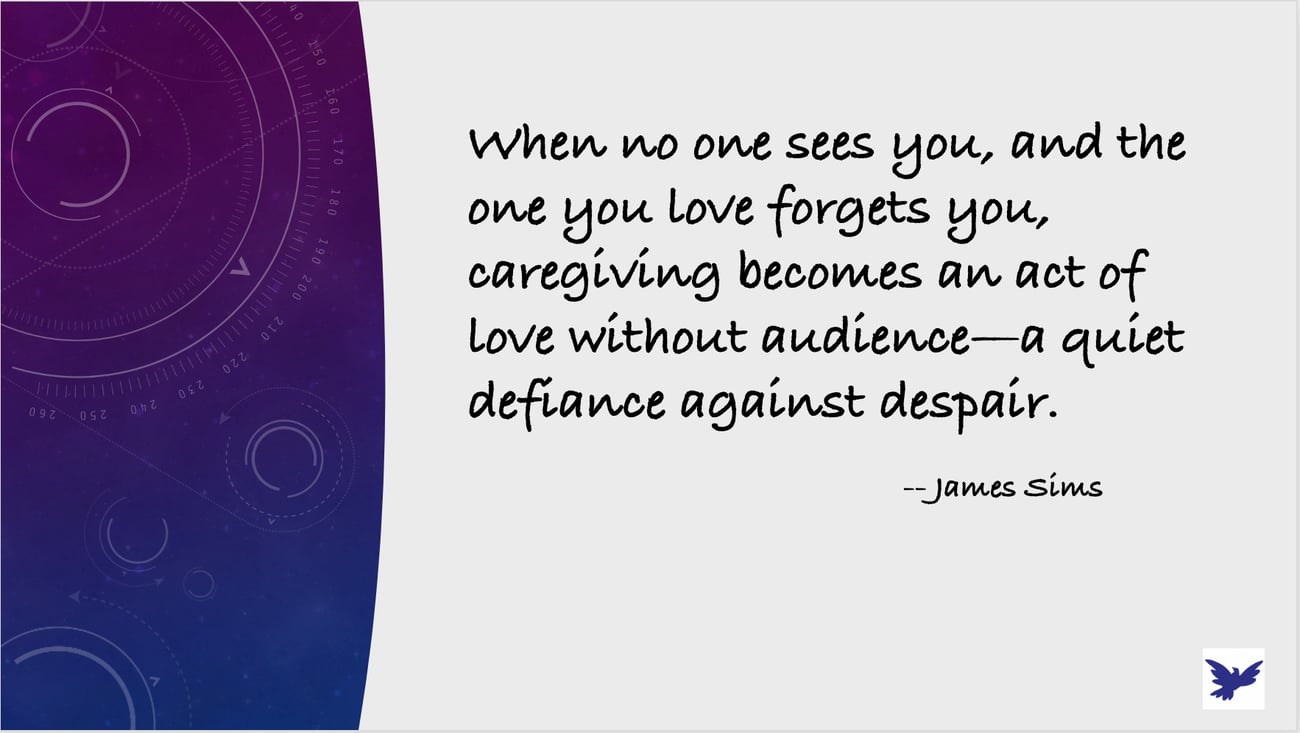
"When no one sees you, and the one you love forgets you, caregiving becomes an act of love without an audience—a quiet defiance against despair."
This quote honors the emotional isolation that caregivers often endure, especially those caring for loved ones with dementia. It reframes their perseverance as something quietly radical—not because it is praised, but because it is done anyway. It acknowledges that love, in its purest form, is sometimes practiced in darkness, without validation or even recognition—and that doing so is not weakness, but courage. It speaks to the strength of continuing to show up, not because it’s easy or acknowledged, but because love, redefined and redrawn by illness, still asks for presence.
|
|
|
|
|
Caregiver's Affirmation
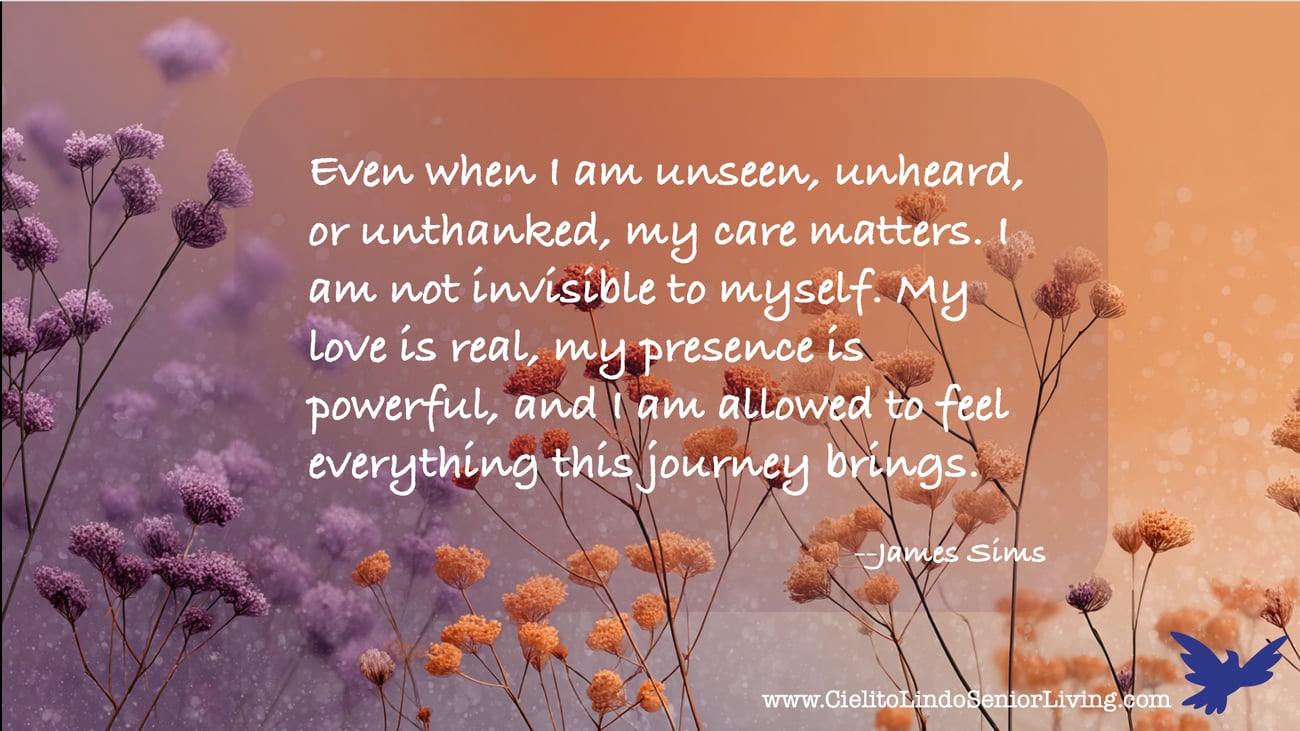
"Even when I am unseen, unheard, or unthanked, my care matters. I am not invisible to myself. My love is real, my presence is powerful, and I am allowed to feel everything this journey brings."
This affirmation offers internal validation when external affirmation is absent. It reminds the caregiver that their worth isn't measured by recognition, but by the depth of their humanity. It creates space for both emotional truth and quiet pride—a space where exhaustion, grief, love, and resilience can all exist together without judgment. It's a hand over the heart—a grounding reminder that what they do is meaningful, even when no one says so.
|
|
|
|
|
When Alzheimer’s Desperation Becomes a Marketing Strategy
There are few cruelties more intimate than watching someone you love disappear by inches.
Alzheimer’s disease does not simply take memory; it steals recognition, language, independence, and eventually the small daily rituals that make a person feel like themselves. Families living through it are already in an emotional emergency. That is why ads promising secret causes, miracle reversals, or celebrity "cures" are not merely annoying. They are cruel.
I was reminded of this after seeing an ad that used Clint Eastwood’s name to suggest that the "root cause" of Alzheimer’s disease had been identified and reversed. Whether the celebrity is Eastwood, another actor, a doctor, or a familiar news anchor, the formula is now depressingly familiar: take a fragment of real science, inflate it into a breakthrough, attach it to a trusted face, and aim it at people frightened enough to click.
This is not a harmless exaggeration. It is exploitation with a landing page.
The ad’s hook involved Toxoplasma gondii, a common parasite that can persist in the body and, in some cases, affect the brain. That much is real. The CDC says T. gondii can form tissue cysts in skeletal muscle, the heart, the brain, and the eyes, and that these cysts may remain for the life of the host. Researchers have also examined whether chronic infection could play some role in Alzheimer’s disease, including through inflammation in the central nervous system, immune activation, neurotransmitter changes, and other pathways. A 2021 review concluded that T. gondii may play a role in Alzheimer’s progression and deserves further study.
But "may play a role" is not "the cause." "Associated with" is not "proven to reverse." And "worth studying" is not a license to sell false certainty to desperate families.
The last thing we should do is dismiss promising research simply because it challenges
the dominant theory of the day. Alzheimer’s research has at times suffered from overconfidence, with years of intense focus on the amyloid hypothesis while other possible pathways struggled to gain attention. Scientific humility is not the enemy of discovery. It is the condition that makes discovery possible.
But humility cuts both ways. A possible association is not a cure. A biological pathway is not a proven treatment. And a provocative hypothesis is not a permission slip for a marketer to frighten caregivers into believing that a single parasite explains one of medicine’s most complex diseases.
That distinction matters. Science advances by careful language. Scam marketing survives by destroying it.
The available evidence does not support the claim that T. gondii is the hidden root cause of Alzheimer’s disease or dementia. Nor does it justify the lurid suggestion that a parasite is steadily eating neurons and causing "brain rot" in the general population. The reality is more complicated, more uncertain, and therefore less useful to people trying to sell miracle answers.
And that is the point. These ads are not designed to educate. They are designed to convert anguish into revenue.
For caregivers and family members, the temptation is painfully understandable. When someone you love is slipping away, hope is not abstract. It is oxygen. You want one more appointment, one more treatment, one more overlooked explanation. You want the sentence that begins, "What if we caught it in time?" No one should be shamed for wanting that. The shame belongs to those who weaponize that longing.
Legitimate Alzheimer’s treatments are
imperfect. Drugs such as lecanemab and donanemab are not cures, are not appropriate for every patient, and carry real risks. But they have at least gone through clinical trials and regulatory review. The FDA converted lecanemab to traditional approval after determining that a confirmatory trial verified clinical benefit. That is the bridge the scam ads never cross: evidence, review, risk disclosure, and accountability.
A social media ad does not have to prove very much before it reaches a grieving daughter at midnight or a husband searching for answers before dawn. It only has to sound plausible long enough to earn the click.
That imbalance should disturb us. We regulate claims on drug labels, medical devices, and clinical trials, but the internet has become a gray market of medical insinuation. A claim can be too slippery to qualify as formal medical advice but still powerful enough to change what a frightened
person believes. It can avoid saying "cure" while implying cure. It can avoid using the word "endorsement" when borrowing a celebrity’s face. It can avoid responsibility while collecting payment.
Families facing dementia deserve better. They deserve honest explanations: Alzheimer’s is complex; research into infection, inflammation, amyloid, tau, genetics, vascular disease, and immune response is ongoing; and no single online advertisement has uncovered the secret that neurologists, researchers, and caregivers somehow missed.
They also deserve protection from a marketplace that treats grief as a business opportunity. The most urgent step is not complicated: platforms should be faster and stricter about removing health ads that imply celebrity endorsement, miracle reversal, or hidden cures without credible evidence. A grieving family should not have to become a medical fact-checker just to survive the internet.
There is nothing wrong with hope. But hope should be protected, not harvested.
You can access the complete article here. Additionally, we have 100's of other senior care and health-related articles here.
|
|
|
|
|
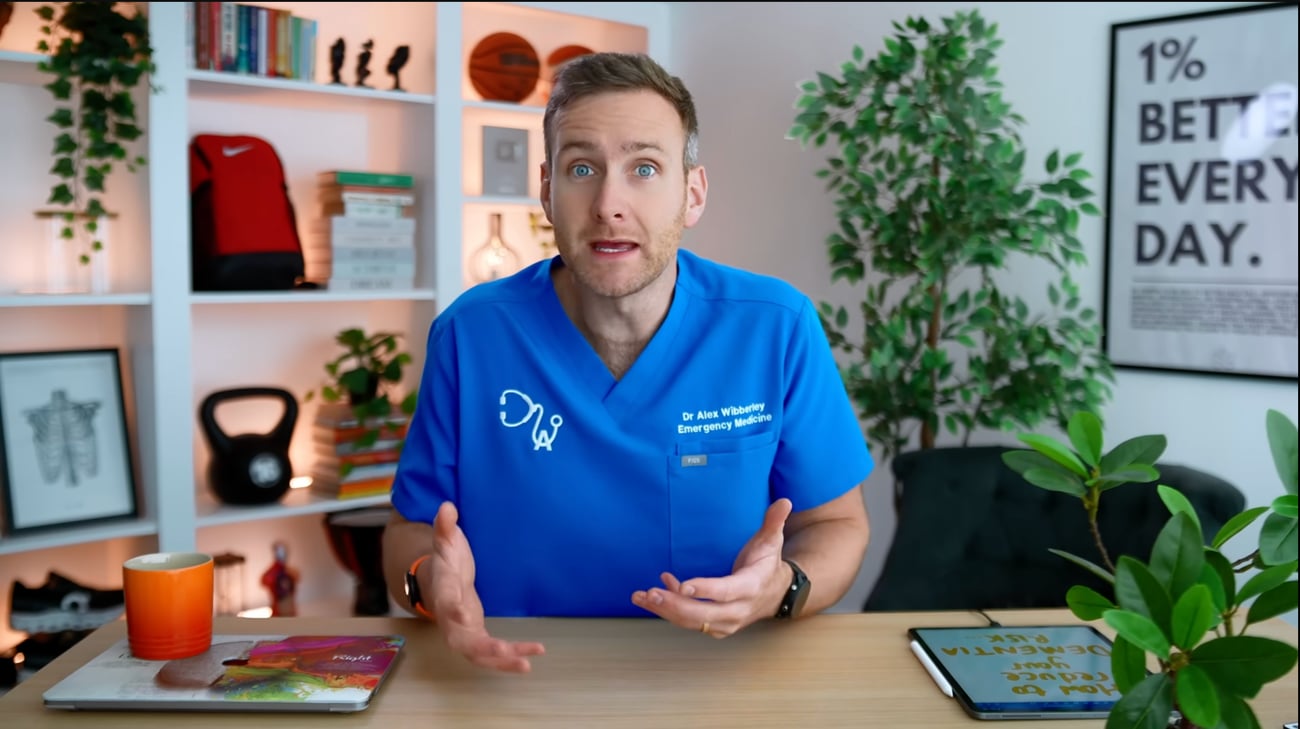
Video: Stop Dementia Before It Starts | 4 Critical Hacks
Let me begin by saying that it is important to be clear about what this video is — and what it is not. Dementia is not one single disease, and we still do not fully understand the causes, mechanisms, or progression of its many forms. Alzheimer’s disease, vascular dementia, Lewy body dementia, frontotemporal dementia, and other causes of cognitive decline each have different biology, different risk factors, and different clinical patterns. Anyone who claims to have a simple cure for dementia is either oversimplifying the science or selling something. That said, uncertainty does not mean helplessness. While we do not know everything, we do know that certain factors greatly increase the risk of cognitive decline over time — including poor sleep, physical inactivity, high blood pressure, metabolic disease, social isolation, smoking, poor cardiovascular health, and chronic inflammation. We also know
that many of the same habits that protect the heart appear to protect the brain. So this video should not be understood as offering a cure, a guaranteed prevention strategy, or a treatment for dementia. Rather, it highlights practical steps that may help lower risk and support long-term brain health. The goal is not to promise that dementia can always be stopped before it starts, but to focus on the areas where our choices may meaningfully improve the odds.
View the video here.
Highlights- 0:00 — Why dementia is so frightening The video opens by describing dementia as one of the most feared conditions of aging because it can take away memory, independence, identity, and eventually the ability to recognize loved ones. The speaker argues that the goal of medicine should not simply be to prolong
decline, but to help people remain healthy, independent, and mentally sharp for as long as possible.
- 1:42 — Dementia is not just Alzheimer’s The speaker explains that Alzheimer’s disease is the most common form of dementia, but not the only one. Other forms include vascular dementia, Lewy body dementia, and frontotemporal dementia. Each affects the brain differently, but all can severely alter memory, personality, behavior, and independence.
- 2:10 — Dementia is more than forgetfulness The speaker shares experience working in a dementia care setting and
emphasizes that advanced dementia can involve personality changes, agitation, aggression, self-harm, and the inability to recognize family members. The point is not to scare viewers, but to explain why prevention and risk reduction matter.
- 3:05 — Four small habits with strong evidence The video introduces four low-cost habits that may help protect long-term brain health. The speaker emphasizes that none require expensive supplements, special equipment, or dramatic lifestyle changes. The habits are framed as ways to restore elements of ancestral living: frequent movement, whole foods, walking after meals, and basic self-care.
- 4:19 — Why small habits matter The speaker explains that dementia develops slowly over years. Brain decline does not happen overnight. Several underlying processes appear to contribute, including poor blood flow, insulin resistance, poor blood sugar control, chronic inflammation, and impaired energy metabolism in the brain.
- 4:46 — Four major risk pathways
- The video highlights four mechanisms linked to cognitive decline:
- First, the brain depends on steady oxygen and nutrient delivery
through healthy blood vessels.
- Second, insulin resistance and poor blood sugar regulation can damage the brain and are strongly linked to Alzheimer’s disease.
- Third, chronic low-grade inflammation contributes to vascular damage. Fourth, overall metabolic fitness affects how well the brain processes energy over time.
- 5:44 — Habit 1: Climb stairs quickly when possible The first habit is taking stairs briskly whenever possible. The speaker refers to this as a form of short, intense lifestyle activity — brief bursts of effort built into daily life rather than
formal exercise. Even an extra 30 seconds of hard stair climbing each day can add up over months and years.
- 7:07 — Why stair climbing may help the brain The speaker explains that the brain needs a constant supply of oxygenated blood. Activities that improve cardiovascular fitness can improve the brain’s blood supply over time. Short bursts of stair climbing may also improve blood sugar control, addressing more than one dementia-related risk pathway.
- 8:53 — Habit 2: Add nuts to the daily diet The second habit is adding a small daily serving of nuts. The
speaker connects this to research on the Mediterranean diet, especially the PREDIMED trial, in which Mediterranean-style eating supplemented with extra-virgin olive oil or nuts showed cardiovascular benefits compared with a low-fat control diet.
- 10:25 — Nuts as a practical replacement for sweets The speaker describes using nuts to reduce cravings for sweets. Nuts provide healthy fats, protein, and fiber, which help with satiety and may reduce blood sugar spikes compared with sugary snacks. This is presented as a simple way to improve metabolic health without relying on expensive supplements.
- 12:25 — Why nuts may support brain health Nuts may support blood vessel health, reduce inflammation, improve cholesterol patterns, and help stabilize blood sugar. Walnuts are highlighted because they contain alpha-linolenic acid, a plant-based omega-3 fatty acid, along with antioxidants that may help protect against oxidative stress.
- 13:00 — Habit 3: Walk for 5 to 10 minutes after meals The third habit is taking a short walk after meals. The speaker argues that this is one of the most underappreciated tools for metabolic health. After eating, carbohydrates are broken down into glucose, which enters the bloodstream. If a person immediately sits down, blood sugar and insulin levels can rise sharply.
- 14:08 — Blood sugar, insulin resistance, and brain disease Repeated blood sugar spikes over years can contribute to insulin resistance, type 2 diabetes, vascular disease, and metabolic stress. The speaker notes that Alzheimer’s disease is sometimes informally referred to as "type 3 diabetes" because of the relationship between brain energy metabolism, insulin resistance, and cognitive decline.
- 15:20 — How walking after meals works Walking activates the large muscles of the legs and glutes, allowing them to take up glucose from the bloodstream. This reduces the glucose spike after
eating, lowers insulin demand, and may reduce inflammation and blood-vessel damage over time. The speaker suggests starting with five to ten minutes after lunch or dinner.
- 16:34 — Habit 4: Brush and floss properly twice daily The fourth habit is oral hygiene. The speaker acknowledges that brushing and flossing may sound unrelated to dementia, but argues that gum disease is increasingly associated with cognitive decline and Alzheimer’s risk.
- 17:10 — Gum disease and chronic inflammation The video explains that gum disease is not only a local mouth problem.
Inflamed gums can release bacteria and inflammatory molecules into the bloodstream, contributing to chronic systemic inflammation. Since inflammation can damage blood vessels, including those that supply the brain, oral health may matter more than people realize.
- 18:05 — Oral bacteria and Alzheimer’s research
- The speaker discusses Porphyromonas gingivalis, a bacteria associated with gum disease, and notes that researchers have detected markers related to this bacteria and its toxins in the brains of some people who died with Alzheimer’s disease. The speaker
appropriately cautions that association does not prove causation, but says the signal is strong enough to take oral health seriously.
- 19:02 — How the four habits fit together The speaker summarizes the four habits: brisk stair climbing, daily nuts, short walks after meals, and brushing/flossing. Each targets one or more of the major dementia-related risk pathways: cardiovascular fitness, blood sugar control, inflammation, vascular health, and brain energy metabolism.
- 20:00 — Start small and build gradually The video closes by emphasizing that these four
habits are not the only ways to protect brain health, and they are not a guaranteed prevention strategy. Instead, they are small, repeatable behaviors that can become automatic. The speaker encourages viewers to add one habit first, then gradually add others over time.
|
|
|
|
|
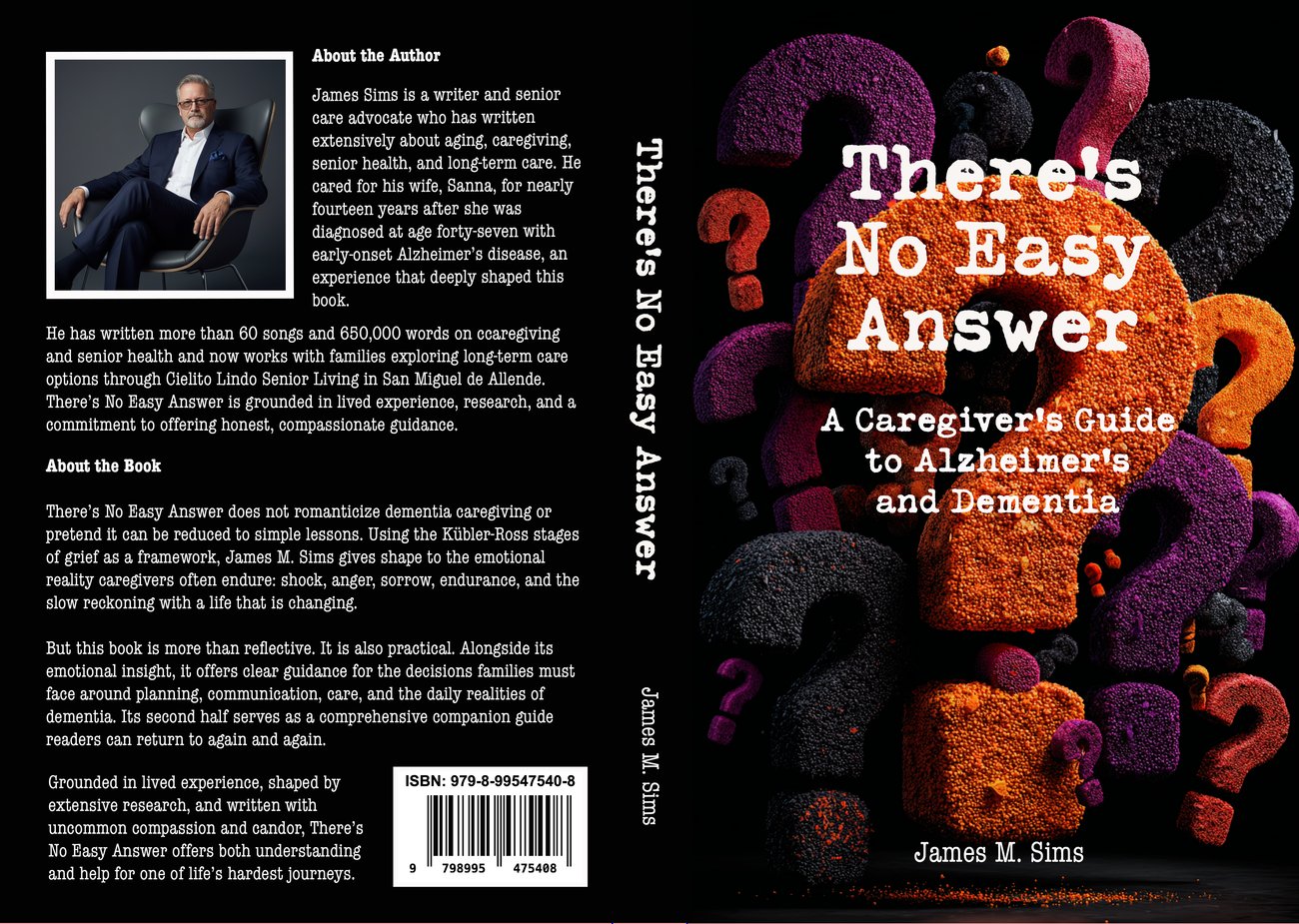
Book Review: There’s No Easy Answer: A Caregiver’s Guide to Alzheimer’s and
Dementia
by James M. Sims
Overview
There’s No Easy Answer is a compassionate and unusually comprehensive guide to caring for someone with Alzheimer’s disease or another form of dementia. Drawing on nearly fourteen years of caring for his wife, Sanna, after her diagnosis with early-onset Alzheimer’s at age forty-seven, James M. Sims combines personal experience, emotional insight, research, and practical guidance.
The book’s central strength is its refusal to simplify dementia caregiving. Sims acknowledges that love, patience, and good
intentions do not remove the grief, anger, exhaustion, uncertainty, and difficult decisions that caregivers face. Instead, he offers readers a framework for understanding those experiences and tools for managing them.
Synopsis
The book follows the caregiver journey from diagnosis onward, using the Kübler-Ross stages of grief as an organizing framework. Through this structure, Sims explores the shock of diagnosis, denial, anger, sorrow, endurance, and the gradual acceptance of a life permanently altered by dementia.
Alongside this emotional narrative, the book addresses practical concerns such as family planning, communication, daily care, safety, changing relationships, and difficult care decisions. The second half functions as a companion guide, offering scripts, checklists, and materials that
caregivers can revisit as circumstances change.
This combination makes the book both reflective and functional. Readers are not merely told what caregiving may feel like; they are also given concrete help for conversations and situations that can otherwise feel overwhelming.
Key Themes
Grief is the book’s defining theme. Sims presents dementia caregiving as a prolonged experience of loss in which the person being cared for is still physically present while memory, personality, independence, and shared history gradually change.
Another major theme is emotional honesty. The book makes room for resentment, anger, guilt, fatigue, and despair without portraying caregivers as selfish or inadequate. This candor may be especially valuable to readers who feel ashamed of their own
reactions.
Preparedness also plays an important role. The practical sections emphasize that families benefit from discussing care preferences, legal and financial matters, communication strategies, and future living arrangements before a crisis occurs.
Finally, the book explores purpose after loss. Sims’s transformation from spouse and caregiver into writer and senior-care advocate gives the work a broader sense of meaning. His experience becomes not only a personal testimony but also a source of service to others.
Writing Style
Sims writes with compassion, candor, and emotional depth. His firsthand experience gives the book credibility and intimacy, while the practical sections keep it from becoming solely a memoir.
The tone is supportive
without being sentimental. Sims does not romanticize sacrifice or imply that caregivers can solve every problem through greater patience. His writing recognizes the limits of control and the need for realistic expectations, outside help, and self-compassion.
The grief-stage framework provides structure, although readers should understand that caregiving emotions rarely occur in a neat sequence. The book appears to use the framework as a way to interpret recurring experiences rather than as a rigid psychological formula.
Conclusion
There’s No Easy Answer is a valuable resource for spouses, adult children, relatives, and friends caring for someone with Alzheimer’s or dementia. It is particularly well
suited to readers who need both emotional recognition and practical direction.
Its combination of personal testimony, caregiving guidance, scripts, and checklists distinguishes it from books that focus only on medical information or personal reflection. The book’s message is sobering but humane: there may be no easy answer, yet caregivers do not have to face every decision without guidance, language, or support.
Rating: 4.8 out of 5 stars
|
|
|
|
|
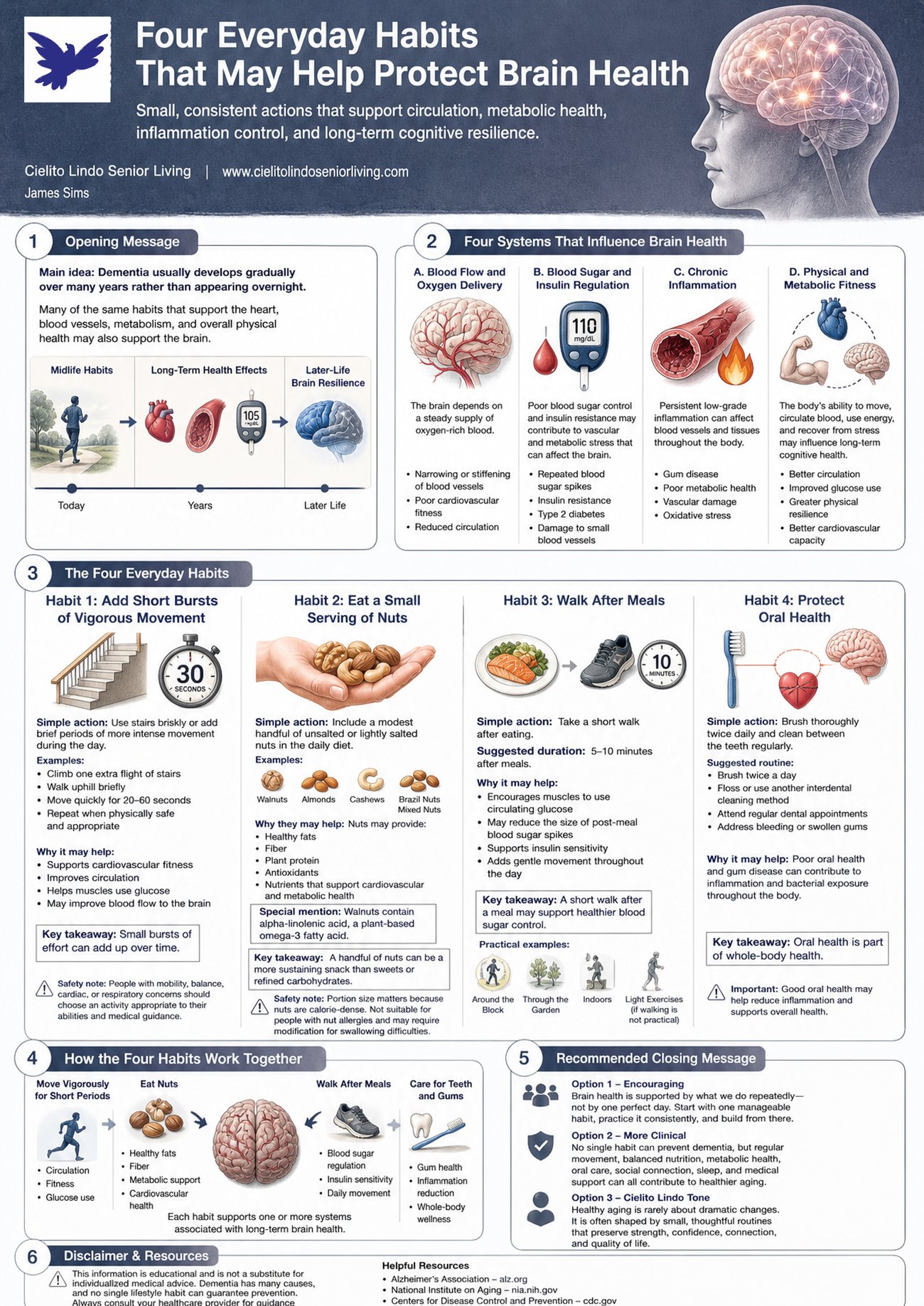
Infographic: Four Dementia Hacks
Small,
everyday choices can play a meaningful role in supporting long-term brain health. This infographic highlights four simple habits—brief bursts of movement, a small serving of nuts, a short walk after meals, and consistent oral care—that may help support circulation, metabolic health, inflammation control, and overall cognitive resilience.
No single habit can prevent dementia, but steady, realistic routines can help us care for the whole person over time. This infographic is a companion to our YouTube video, where we explore the ideas in greater detail. Watch here: [YouTube
video]
At Cielito Lindo, we believe healthy aging is often built through small, thoughtful actions that preserve strength, dignity, confidence, and quality of life.
|
|
|
|
|
| I’m not being Pollyanna when I offer this song. I wrote "Every
Day’s a Blessing" as I practiced radical acceptance in my own life, and I came through my 15-year caregiving journey genuinely feeling and believing that every day is a blessing.
Every Day’s a Blessing
"Every Day’s a Blessing" was born from a simple truth: gratitude is not always easy.
On the surface, the message feels straightforward—wake up each day with a cup-half-full perspective,
cherish the moment, and choose love over regret. But living that way, truly facing each day with openness instead of worry and thankfulness instead of resentment, can be one of life’s greatest challenges.
That is why the music carries both intimacy and weight.
The slow-tempo country ballad framework grounds the song in storytelling and honesty. Pedal steel guitar counter-melodies add warmth and movement, reminding us that gratitude is not passive. It is active. It is rhythmic. It must be chosen again and again.
The Telecaster
leads, drenched in reverb and stretched into long, aching phrases, act almost like another voice in the song. They echo the distance between what we strive for and where we sometimes find ourselves. That space—the longing inside the guitar notes—helps the message feel earned, not merely spoken.
At first listen, the song may seem deceptively simple, with clear words and a gentle melody. But like gratitude itself, its depth is revealed slowly.
Underneath it all is the recognition that choosing joy and thankfulness is not naïve. It is courageous. It is the kind of perspective that can carry us through loss, disappointment, uncertainty, and change.
Ultimately, this song is a reminder that every day really is a blessing—if we let it be. It is an invitation to notice the beauty in small things, to stop chasing what is already behind us, and to sing the one song we have been given while we still can.
Key: G Major
Tempo: 74 BPM
Genre: Country Ballad
Lyrics
[Verse 1]
I don’t count the miles I’ve traveled,
Don’t regret the roads I’ve missed.
The sun still paints the morning sky,
And I wake to moments like this.
[Chorus]
Every day’s a blessing if you let it,
A song you only get one chance to sing.
The glass is always full when
love is in it,
And joy’s in the simple things.
[Verse 2]
I don’t chase the past behind me,
No shadows I need to outrun.
I hold the laughter close beside me,
And give my thanks with the setting sun.
[Chorus]
Every day’s a blessing if you let it,
A song you only get one chance to sing.
The glass is always full when love is in it,
And joy’s in the simple things.
[Bridge]
Some folks see rain, I see water for the roses.
Some folks count loss, I count doors that open.
This life’s too short for doubt or second-guessing.
I choose love. I choose the blessing.
[Final Chorus]
Every day’s a blessing if you let it,
A song you only get one chance to sing.
The glass is always full when love is in it,
And joy’s in the simple things.
[Outro]
Every day’s a blessing…
Every day’s a blessing…
Copyright © 2025 James M. Sims and The Resilient Heart (ASCAP). Lyrics, music, arrangement, and production. All Rights Reserved.
|
|
|
|
|
| Cielito Lindo's basic information is included for your convenience:
|
|
|
- Cielito Lindo Info: After the signature, the newsletter
always includes information about Cielito Lindo, so it is at your fingertips when you want it: Our costs, various related websites, social media channels like YouTube, our various addresses, and so on.
- Travel Info: Recommended airports and shuttles.
- Downloadable Brochure: Click here.
|
|
|
Web Sites - Cielito LIndo and Rancho Los Labradores
Here are our Web sites, including Cielito Lindo and Labradores Suites (hotel) all of which are part of the larger Rancho Los Labradores gated community just north of San Miguel de Allende.
Web Sites - Cielito LIndo and Rancho Los Labradores
Here are our Web sites, including Cielito Lindo and Labradores Suites (hotel) all of which are part of the larger Rancho Los Labradores gated community just north of San Miguel de Allende.
- Cielito Lindo provides independent living, light assisted living, assisted living, memory care and hospice with 24*7 staffing along with a la carte assisted living services to those living in the villas and suites at Rancho Los Labradores.
- Rancho Los Labradores Suites offer short and long term residence.
- Rancho Los Labradores is a country club resort feeling CCRC that provides a gated community with countless amenities and opportunities for different levels of independent living along with assisted living and memory care within Cielito Lindo.
Cielito Lindo Living Options & Costs Guide
We offer several living options depending on the level
of care you or your loved one needs. Here’s a breakdown to help you plan:
1) Villas (Rent or Own)
- Cost: $1,700 – $2,000 per month
- Additional Costs: Utilities, renter’s insurance, etc.
- What’s Included: This is mostly independent living.
- Extras: You can add independent or assisted living services (charged separately, à la carte).
- Support: We can connect you with a realtor if you'd like to purchase.
2) Cielito Lindo Condos & Suites
Best for: Independent living with optional assistance.
Option 1: Independent Living + Meals
- Cost: $2,250 per month
Includes:- 2 meals a day
- Hotel like room cleaning, towel and linen service
- Monthly medical check-up
Optional Add-ons:- Meals for an additional person: $450/month
- Extra care services available à la carte
Option 2: Light-Assisted Living in Condos & Suites
- Cost: $3,900 per month
Includes:- Full assisted living services
- Designed for residents who still want independence but need some support
- Smooth transition to full Assisted Living or Memory Care as needs change
- One-Time Inscription Fee: $4,000
For Couples:- $4,900/month for two people
- Same one-time fee ($4,000 per couple)
- Note: Suitability is based on cognitive ability, mobility, and safety.
3) Cielito Lindo Assisted Living, Memory Care, & Hospice
Best for: Seniors needing full-time care and supervision.
- Cost: $3,900 per month
Includes:- 24/7 care and monitoring
- All meals
- Physical therapy
- Full-time doctor on site
- Spacious private room with
bath
- One-Time Inscription Fee: $4,000
- For Couples:
- $5,400/month for two people (only one needs care)
- $6,900/month for two people (both need care)
- Same one-time fee ($4,000 per couple)
- Note: Suitability is based on cognitive ability, mobility, and safety.
4) Specialized Hospice Suite
Best for: Intensive care needs or end-of-life comfort and also recuperative at a far lower cost than a hospital- Cost: $4,900 per month
Includes:- Full 24/7 monitoring
- Recuperative, Palliative and hospice care
- On-site doctor
- All meals
- Special space for visiting family
|
|
|
YouTube videos and Curated Playlists
Here is our YouTube Channel. This is where we have lots of videos about Cielito Lindo and Rancho Los Labradores. We also have 1,600+ other senior care and expat in Mexico videos: YouTube |
|
|
|
|
Additionally, our playlists cover a wide area and include 1,200+ videos. These playlists include videos about San Miguel and Mexico in general, caregiving and health, and a broad spectrum of senior living topics. Playlists
|
|
|
|
|
Additional Resources We Offer
We have curated collections of resources that may be useful:
Articles - We write fresh articles about senior living, health, care, and finances every week
Caregiver
Books - We review books related to caregiving methods, logistics, challenges, and coping
Senior Health - We review books related to healthspan, lifespan, and disease
And here are our various social media forums, where we talk a lot about assisted living and memory care along with the various sort of challenges that sometimes come in our senior years (Alzheimer’s, Parkinson other dementias, and so on), but also about senior living in Mexico.
Facebook
|
|
|
|
|
|
|
|
|
|
|
Please don’t hesitate to contact me for anything related to senior living, especially in Mexico. I will gladly give you any assistance I can.
Thanks again!
James
James Sims
Marketing and Sales
Cielito Lindo Senior Living
1. 888.406.7990 (Voice and text)
1.209.312.0555 (WhatsApp)
Phones:
English speaking:
1.888.406.7990 (in US & CDN)
00.1.881.406.7990 (in MX)
Spanish speaking:
011.52.415.101.0201 (in US & CDN)
1.415.101.0201 (in MX)
SMA Colonias (subdivisions/neighborhoods):
Map and descriptions
Addresses and Travel:
Physical address:
Cielito Lindo Independent and Assisted Living, Camino Real Los Labradores S/N, Rancho Viejo 1, San Miguel de Allende, GTO, Mexico, 37885
Packages from online providers like Amazon:
Camino Real Los Labradores, Rancho Los Labradores / Cielito Lindo, San Miguel de Allende, GTO, 37880 México
PO Box for letters and small envelopes:
Rancho Los Labradores / Cielito Lindo, c/o Alejandra Serrano , PMB N° 515-C,
220 N Zapata HWY N°11, Laredo TX, 78043-4464
Air:
Best airports to fly into: Leon (BJX) or Queretaro (QRO)
Shuttle:
Best
airport shuttle: BajioGo
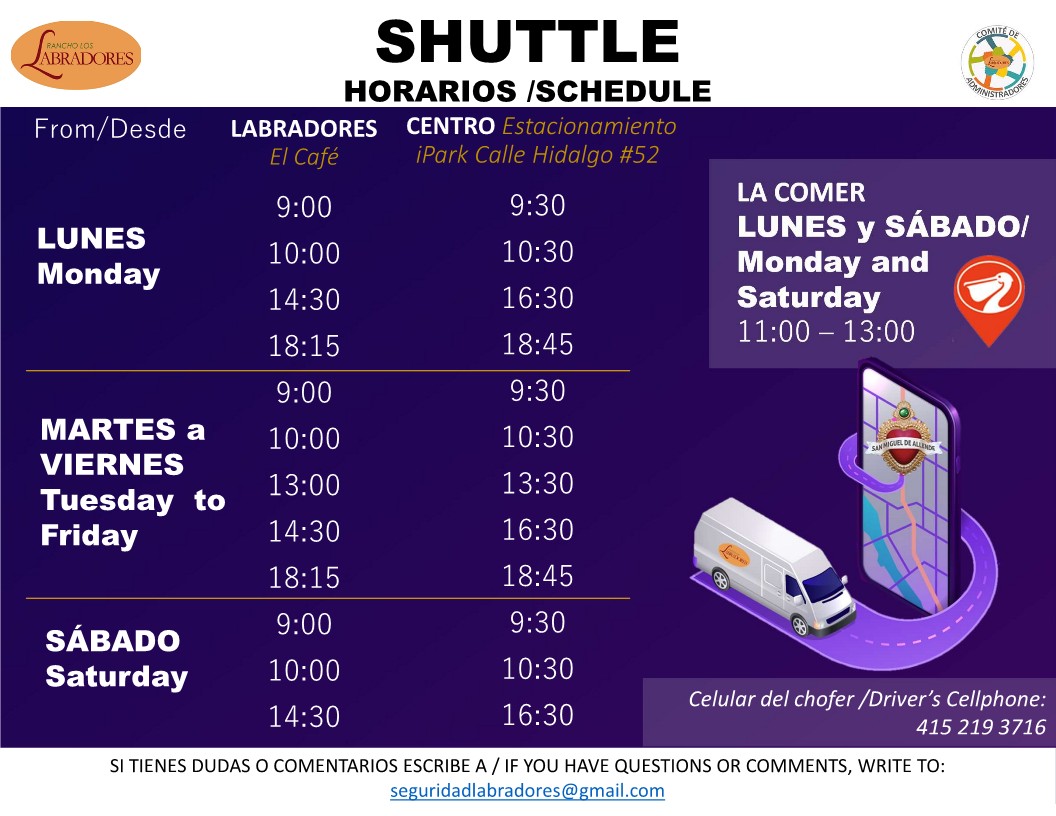
Shuttle between San Miguel and Rancho Los Labradores / Cielito Lindo
|
|
|
|
|
|
|
|
|
|
|