|
|
Subject: Your Weekly Guide to Senior Living & Care in Mexico
Dear
,
Welcome to your weekly touchpoint from all of us at Cielito Lindo. Each edition brings together helpful insights, heartwarming stories, expert advice, and curated resources about senior living, retirement, and age-related care challenges—including Alzheimer’s, Parkinson’s, stroke, limited mobility, and more.
We understand that navigating this stage of life can be overwhelming, whether for yourself or a loved one. That’s why we're here—to offer guidance, support, and a glimpse into the enriching life many have found
here in beautiful San Miguel de Allende.
If you find this newsletter valuable, please forward it to a friend or family member who might also benefit. They can easily subscribe via our Newsletter page. And of course, if you ever wish to unsubscribe, there’s a quick opt-out link below at the bottom right corner of this newsletter.
Here’s what we typically cover each week:
- San
Miguel de Allende highlights – why this is such a special place to live
- Health & wellness insights – articles, videos, and expert reviews
- Care options & community life at Cielito Lindo – flexible, affordable living with a warm, human touch
This Week’s Theme: Empowering and Liberating Caregivers
This week, we explore options for caregivers to identify, understand, and manage the guilt that often accompanies caregiving.
|
|
|
|
|
| Weekly insights into San Miguel:
|
|
|
Colorful & Epicurean San Miguel
While much of what we discuss involves the challenges of aging
and caregiving, it's also important to celebrate the beauty that surrounds us. San Miguel de Allende is a feast for the senses—bursting with color, rich in culture, and renowned for its incredible food and art. It’s not just a place to live—it’s a place to thrive, to enjoy, and to heal.
|
|
|
|
|
The Colors of San Miguel: Tranquil Morning Light
There’s a moment on certain mornings, where the light is still low and soft — especially after a rain the night before, when the stones of San Miguel’s streets are still slightly damp and vibrant with color — when the city feels as though it’s stepped right out of a storybook and paused, waiting for someone to turn the next page.
This callejón — Cuesta de San José — curls upward like the opening line of a fairytale with the iconic La Parroquia in the background. The kind of street where you half-expect to see a violinist playing from a wrought iron balcony or a trail of marigold petals left behind by a quiet procession. The houses wear their colors with a kind of theatrical pride: deep mango, faded rose, soft creams, and dusky orange — each one holding secrets behind its carved doors and heavy knockers. And beyond them all, like a dream crescendo, rises La Parroquia, the pink gothic spires haloed by cypress and cloud.
But what makes it truly feel like a living fairytale isn’t just the beauty — it’s the intimacy. The people walking arm in arm, laughing quietly, as if they too are part of the set. The trumpet vine spilling down a whitewashed wall, unbothered by time. The clink of a cup
of coffee rings out from an open window, the scent of pan dulce drifting faintly down the alley.
There’s no rush here. The cobblestones slow you, demand you pay attention — not just to where you step, but to where you are. And in that stillness, San Miguel reveals itself not as a place
frozen in time, but as a story still being written; one of warmth and color and the quiet joy of belonging. (Photo courtesy of Sam Perez, SMA Photographer)
|
|
|
|
|
Restaurant: Quanax Sabor A México
Address & Phone: Calle Dr. Ignacio Hernández Macías 48, 37700 San Miguel de Allende, Guanajuato, Mexico. Tel: +52 415 152 0080
Days & Hours:
- Closed Mondays
- Tuesday–Saturday: 14:00–22:00
- Sunday: 09:00–17:00
Atmosphere:
Set in a beautifully restored courtyard accented by trees, skylights, and warm lanterns, Quanax blends rustic-modern design with intimate warmth. The open, airy dining spaces feel both upscale and welcoming.
Service:
Attentive, knowledgeable staff elevate the dining experience—often guiding guests through dish origins and ingredient stories. Reviewers consistently praise the polished service as part of the memorable experience.
Cuisine:
Chef Irving Cano reinvents traditional Mexican dishes through a modern and creative lens—rooted in respect for memory and flavor. The menu features innovative combinations that reflect regional heritage with contemporary technique
Signature Dish:
Standouts include the tuna ceviche tostada, Thai‑style short rib birria, and an imaginative piglet ice‑cream sandwich—highlighting playful yet bold contrasts of textures and flavors.
Starters:
Expect refined starters like grilled octopus sopecitos, Kampachi ceviche, and tuna tostadas. Each is beautifully plated and balanced for taste and aesthetics.
Main Courses:
Selections such as wagyu birria cooked low and slow, pork belly with pibil, and grilled fish offer rich regional classics elevated into artful compositions with modern flair.
Desserts:
The piglet ice‑cream sandwich remains the most talked‑about dessert—creamy, surprising, and evocative, it makes a playful yet satisfying finale to the tasting experience.
Wine and Cocktails:
Though specifics are limited in sources, diners mention wine pairings and wine‑tasting events paired with crafted tapas, suggesting a well‑chosen wine list and appropriate drink offerings.
Final Thoughts:Quanax stands as one of San Miguel’s most compelling new gastronomic destinations. It delivers a memorable culinary journey rooted in Mexican tradition yet daring in execution. Every dish is consciously composed to delight both palate and imagination. The atmosphere and service complete the package, making it ideal for food lovers seeking something truly unique.
Cost: $$$$
Rating: ★★★★½ – Exceptional cuisine and experience, with room to grow in broader visibility and drink menu detail.
Quanax is an unmissable stop if you want to explore Mexico’s depth through the lens of contemporary and creative cuisine.
|
|
|
|
|
Health, Caregiving & Life in Mexico
|
|
|
This section brings you thoughtful, relevant, and at times, even life-changing content to support your journey—whether you're exploring care options, supporting a loved one, or planning for your own future.
- Lead Article - Each week’s main feature is written just for you—diving into meaningful topics like extending healthspan, navigating diagnostics, or understanding the causes of Alzheimer’s and other dementias. We also occasionally explore the beauty and cultural richness of Mexico, including Pueblos Mágicos and the colorful life in San Miguel de Allende.
- Op Ed - A short editorial that reflects on the lead article’s themes, offering a personal or thought-provoking perspective.
- Caregiver’s Sentiment - A heartfelt quote or reflection honoring the emotional depth of caregiving—because your feelings and efforts matter.
- Videos - Two or three curated videos that align with the week’s theme, featuring summaries and timestamped highlights to make them easy to explore.
- Book Reviews - One or two handpicked books to deepen your understanding, lift your spirits, or simply remind you that you’re not alone.
|
|
|
|
|
|
|
Surviving Caregiver Guilt: How to Let Go and Find Peace
Caregiving is one of the purest acts of love—but it often carries a hidden cost: guilt.
The constant worry that you’re not doing enough, not giving enough, not being enough becomes an exhausting loop, especially for those caring for a loved one with dementia. It’s a
quiet torment that breeds self-doubt, stress, and burnout.
But what if guilt isn’t a sign you’re failing? What if it’s a reflection of how deeply you care?
This article explores the emotional weight of caregiver guilt, why it lingers, and how to begin letting go. You’ll find strategies for self-forgiveness, tools for reframing impossible expectations, and a gentle reminder: your well-being matters too.
Article Highlights- Caregiving is an act of deep love, but often comes with a hidden burden: chronic, unresolved guilt.
- Dementia caregiving carries unique emotional challenges, including the pain of being misunderstood, resented, or forgotten by the very person you’re caring for.
- Guilt takes many forms—from survivor’s guilt to self-care guilt—and often stems from impossible standards rather than actual failures.
- “Never enough” thinking is common, but perfection is not the goal. Showing up, day after day, is an extraordinary act.
- Losing patience is part of being human, not a sign of moral failure. One bad moment does not cancel out months or years of compassion.
- Taking time for yourself is not selfish—it’s survival. You cannot care for someone else if you are emotionally, physically, or financially depleted.
- Facility placement is not abandonment. It’s an act of love and responsibility when home care becomes unsustainable.
- Reclaiming your life after caregiving is not disloyal. It is healing. Grief and joy can coexist.
- Caregiver guilt doesn’t just hurt emotionally—it has physical consequences, increasing the risk for heart disease, depression, anxiety, and even cognitive decline in the caregiver.
- Financial tolls are steep and often unrecognized, especially with dementia care, which can cost tens of thousands annually—mostly out of pocket.
- Caregiving isolates. Relationships suffer, support networks shrink, and many caregivers feel invisible
or misunderstood.
- Societal messages romanticize self-sacrifice, but glorifying burnout only adds to caregiver harm.
- Guilt is not proof of failure—it’s proof of love. The heavier the guilt, the deeper the commitment.
- Healing begins with self-compassion. Replace the “shoulds” and “if onlys” with recognition of your strength, effort, and humanity.
- Your well-being matters. You are not just a caregiver—you are a person who deserves rest, care, dignity, and peace.
|
|
|
|
|
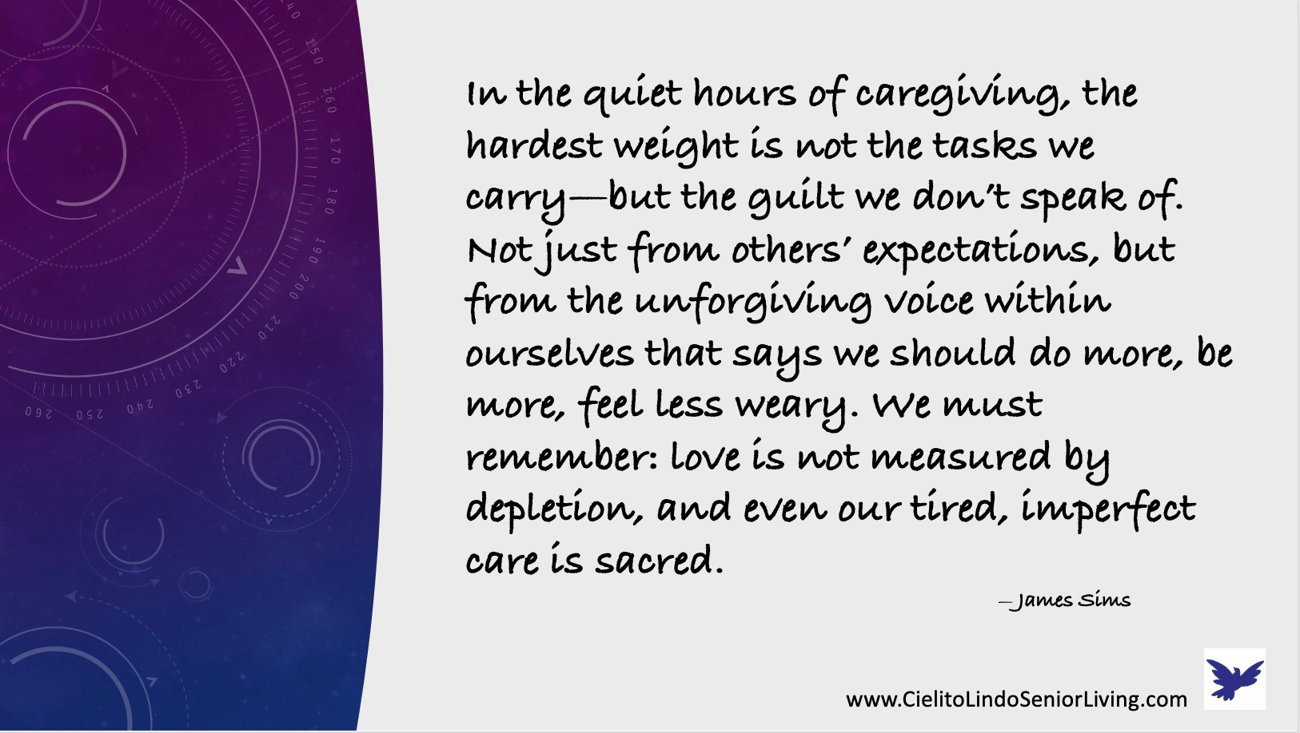
Caregiver's Sentiment: Even Our Tired, Imperfect Care is Sacred
"In the quiet hours of caregiving..."
These are the moments many don't see: the late nights, the early mornings, the brief pauses between endless needs. In these still spaces, reflection often deepens, and with it, vulnerability. It's where both love and weariness meet.
"...the hardest weight is not the tasks we carry—but the guilt we don't speak of."
The physical work of caregiving is real, but often what drains us more is invisible: the internal weight of wondering if we're doing enough, being enough, giving enough. This kind of guilt is usually quiet and unspoken, yet it shapes a significant portion of the emotional landscape.
"Not just from others' expectations, but from the unforgiving voice within ourselves..."
External pressure plays a role, as do cultural expectations and family dynamics—but often the most relentless demands come from within. The part of us that feels we must be tireless, endlessly giving, emotionally unshakable. When we're not, it can feel like we've somehow failed.
"...that says we should do more, be more, feel less weary."
There's a deep-rooted belief for many caregivers that love means self-erasure. That if we're exhausted or longing for space, we're not loving enough. That belief is both untrue and harmful.
"May we remember: love is not measured by depletion..."
This reframe is an invitation. Love doesn't grow stronger the more we lose ourselves. Depleting ourselves isn't a
measure of devotion. In fact, true love includes self-regard, sustainability, and honest limits.
"...and even our tired, imperfect care is sacred."
Caregiving doesn't have to be flawless to be meaningful. The care we offer, even when it comes with sighs, mistakes, or moments of doubt, is still an act of profound love. It is human, and it is holy.
|
|
|
|
|
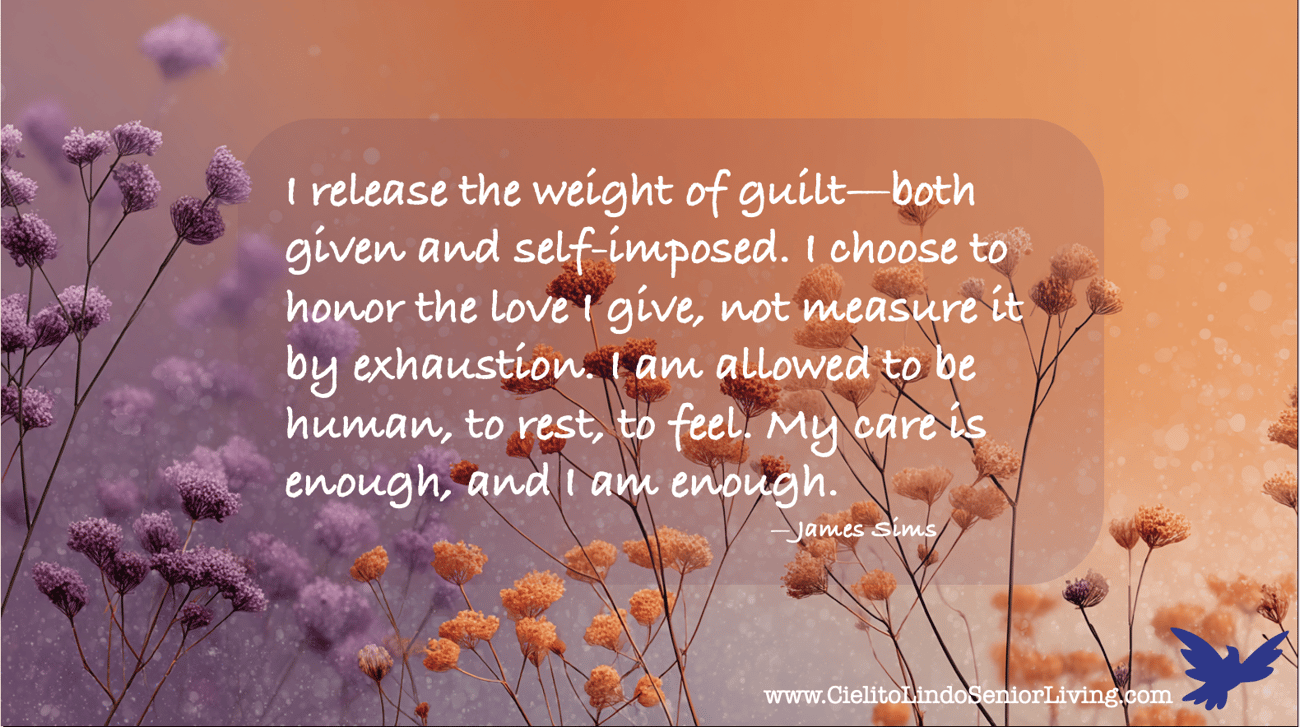
Caregiver Affirmation
"I release the weight of guilt—both given and self-imposed."
This is a radical act of self-sovereignty. Guilt—especially chronic, layered guilt—binds us to a distorted version of love, one that confuses self-sacrifice with worth. By releasing it, you are not abandoning responsibility or care. You are stepping out of a story that says your suffering is necessary to prove your love. That’s not liberation from caregiving—it’s liberation within it.
"I choose to honor the love I give, not measure it by exhaustion."This choice breaks a common but unspoken rule: that devotion must come at the cost of your own well-being. By refusing to let exhaustion be your metric, you shift the value system. Love is no longer proven by depletion—it’s recognized in presence, in patience, in the sacred act of showing up, even imperfectly.
"I am allowed to be human, to rest, to feel."Liberation deepens here. This is where you reclaim your full self—not just as a caregiver, but as a person with needs, emotions, and limits. You are not a machine. Your emotions do not disqualify you from being strong. Your rest does not mean your care is less meaningful.
"My care is enough, and I am enough."
This is the core liberation: enoughness. Not based on endless doing, but on inherent worth. To believe this—to live this—is to take back your power from guilt, from judgment, from impossible standards. It is to say: My presence is valuable, not because I am perfect, but because I care.
|
|
|
|
|
You Are Not Failing. You Are Loving Through the Hardest Thing.July
25, 2025 | James Sims, Editor, www.cielitolindoseniorliving.com
Some kinds of love break your heart slowly. Dementia caregiving is one of them.
You hold the hand of someone who no longer says your name. You repeat answers to questions they asked five minutes ago. You try to protect their dignity even as their mind slips away from you. They just burned another pan and nearly started a stovetop fire again, and you find yourself on the brink of losing your temper.
You're doing everything you can, and still, guilt shows up like a shadow that never leaves.
I've spoken to hundreds of caregivers over the years. The most common thing they say isn't "I'm tired," or "I'm not prepared for this," or even "I need help", though those are always true. It's this: "I feel like I'm failing."
But here's the truth that never gets said loud enough:
You're not failing. You're grieving in real time—while loving, protecting, and showing up for someone who may not even recognize you anymore.
Guilt creeps in when the world asks the impossible and then whispers, "Why can't you do more, or do it
better?"
It appears when you lose your patience or when you need a break. It appears when you surrender to the need to choose a care facility after months or years of trying to do it all on your own.
But guilt doesn't mean you've done something wrong.
More often, it means you care too much to stop wondering if you could have done more.
That's what no one tells you:
Guilt is love that doesn't know where to go.
And if you're carrying it today, it means your heart is still in it—even if your spirit is stretched thin.
The Real Cost of Caregiver Guilt
This guilt is not just emotional, it's physical, financial, and deeply personal. It keeps you up at night. It follows you into conversations, even the ones where you smile and say, "I'm fine."
It chips away at your health, your relationships, your sense of self. You
disappear piece by piece.
Worse, it isolates. Friends don't always understand. Siblings step back. Support networks shrink. And somewhere in the middle of all that, your life starts to feel like it's on hold, or worse, like it's vanished.
But it doesn't have to stay this way.
You Have to Give Yourself Permission
You are allowed to take a walk without guilt.
You are allowed to place your loved one in a facility if home care has become unsustainable.
You are allowed to want your life back, not because you're selfish, but because you're human. And because your life matters too.
You are allowed to feel joy again.
You are allowed to rest.
You are allowed to survive.
You are allowed to let go of guilt that was never yours to carry.
I know this is hard to believe, especially in a culture that praises quiet suffering and calls it noble. But here's the truth:
Caregivers are not saints. They are people with limits, hearts, and needs of their own.
And every time you show up, even with trembling
hands and a tired heart, you are proving something extraordinary:
That love can endure, even through sorrow.
Even through loss.
Even through forgetfulness.
You have already done more than enough.
Let the guilt go.
Let the healing begin.
Because you matter too. Really.This isn't shallow sentiment in fancy script on a Hallmark card.
It's an
imperative.
You matter too.
|
|
|
|
|
Video: Why Do Caregivers Feel Guilt?
The video discusses the phenomenon of caregiver guilt, emphasizing that guilt arises from our thoughts about caregiving situations rather than the situations themselves. Caregivers often feel guilty for
actions like placing a loved one in a care facility or losing patience. The speaker encourages caregivers to consciously choose their thoughts, suggesting that recognizing their efforts and the difficulty of their decisions can help alleviate guilt. It is highlighted that guilt does not improve the quality of life for either caregivers or their loved ones. By reframing their thoughts, caregivers can foster a more supportive mindset that acknowledges their humanity and the challenges they face.
The speaker emphasizes the importance of awareness in caregiving, urging caregivers to challenge negative thoughts that contribute to guilt. By reframing their mindset, caregivers can focus on their intentions and the love behind their decisions. Guilt is portrayed as unproductive, as it neither
alters past choices nor benefits the loved one. The video encourages caregivers to seek support and offers resources for further exploration of guilt management. Ultimately, it promotes a compassionate understanding of the caregiver’s journey, reinforcing that they are doing their best in challenging circumstances.
View the video here. https://www.youtube.com/watch?v=ONTs9P85Sgk&list=PLmB2dHqb_WqC2H1WeSqF5czCREagGbxAy&index=118
Highlights:
0:01 – Caregiver guilt is a common issue among caregivers.
0:14 – Caregivers often feel guilty for snapping at their loved ones or making difficult decisions.
0:30 – Guilt stems from our thoughts about situations, not the situations themselves.
1:10 – It’s our thinking that leads to feelings of guilt, not the act of placing a loved one in a care facility.
2:11 – Caregivers should consciously decide what they
want to think about their decisions.
2:46 – Guilt does not improve the quality of life for caregivers or their loved ones.
3:34 – Caregivers can choose thoughts that are true and do not lead to guilt.
4:07 – Acknowledging the difficulty of decisions can help alleviate guilt.
4:18 – Our brains often repeat negative thoughts, leading to guilt.
5:00 – Caregivers should recognize their humanity and the challenges they face.
5:06 – Recognize that negative thoughts about caregiving do not help you or your loved one.
5:30 – A caregiver spent over
$10,000 on a walk-in tub that her mom doesn’t use, leading to feelings of guilt.
6:02 – Guilt won’t change past decisions or improve the situation.
6:36 – Focus on the intention behind decisions, like wanting to improve a loved one’s quality of life.
7:01 – Consider how you want to think about your caregiving situation instead of succumbing to guilt.
7:50 – Feeling guilty does not improve your loved one’s condition; it only makes you feel worse.
8:12 – You have the power to change your thoughts about caregiving
situations.
8:41 – Acknowledge that you are a caring individual trying to make the best decisions for your loved one.
9:01 – An article with five ways to work through guilt is available for further guidance.
9:21 – Join support groups for caregivers to find community and connection.
|
|
|
|
|
Video: Working Through Caregiver Guilt
The video explores the emotional challenges caregivers face, particularly focusing on caregiver guilt. It defines guilt as a complex emotion that can be both motivating and destructive. Caregivers often feel guilty about their actions or inactions, driven by unrealistic expectations and societal pressures. The speaker emphasizes the importance of recognizing what aspects of caregiving are within our control and encourages caregivers to set boundaries to mitigate guilt. Additionally, the video highlights the detrimental effects of striving for perfection and the influence of guilt trippers,
urging caregivers to accept their limitations and prioritize self-care.
The video emphasizes the importance of recognizing and addressing caregiver guilt, encouraging caregivers to reframe their thoughts and accept their limitations. It highlights the need for self-care and the power of acknowledging positive actions to combat feelings of inadequacy. By understanding that emotions are valid but not necessarily factual, caregivers can better manage their feelings and improve their overall well-being. The discussion also touches on the significance of small daily acts of care, reinforcing that these contribute to the overall support provided to loved ones.
View the video here. Highlights:0:02 – Discussing caregiver guilt and its complexities.0:34 – Understanding guilt as both a good and destructive emotion.1:11 – Guilt arises from perceived moral violations in caregiving.2:00 – Guilt can stem from
unrealistic expectations we place on ourselves.3:10 – Guilt can paralyze caregivers and worsen their well-being.4:05 – Common guilt feelings include rushing meals or not visiting enough.5:51 – Caregivers often feel guilty about taking time for themselves.7:00 – Recognizing what we can and cannot control in caregiving.10:06 – The impact of guilt trippers on caregivers’ emotions.12:52 – Accepting that perfection in caregiving is unrealistic.15:20 – Caregiver guilt often stems from personalizing blame for situations beyond our
control.16:03 – Catastrophizing can lead to feelings of guilt, making caregivers feel responsible for events like falls.18:05 – Recognizing and changing distorted thought patterns can empower caregivers and improve emotional well-being.19:12 – It’s essential to separate feelings from facts to combat negative self-perceptions.22:06 – Caregivers should reframe guilt as a self-inflicted emotion rather than a reflection of their worth.23:12 – Accepting limitations is crucial; caregivers cannot be everything for
everyone.25:30 – Acknowledging and listing positive actions can help counteract feelings of guilt.26:00 – Emotions are valid; caregivers should accept their feelings without letting them dictate reality.27:02 – Practicing self-care is vital for caregivers to maintain their ability to care for others.28:40 – Caregiving consists of countless small acts that collectively demonstrate love and care.
|
|
|
|
|
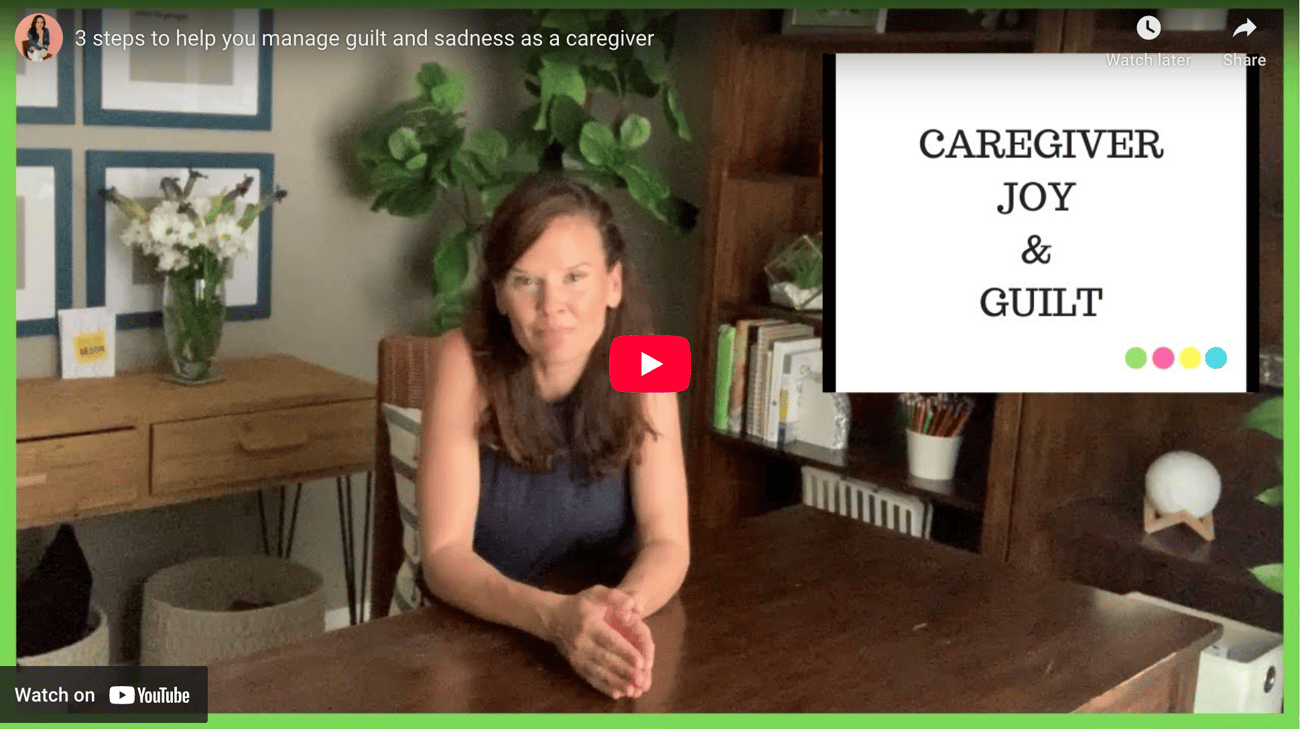
Video: 3 steps to help you manage guilt and sadness as a caregiver
In this video, the speaker addresses the emotional challenges caregivers face, particularly guilt and sadness when enjoying life while a loved one is in a care facility. The discussion is sparked by a caregiver’s heartfelt question about finding joy amidst grief. Three key strategies are offered: first, recognize that feelings of guilt and sadness are normal and reflect love for the affected person. Second, continue to enjoy the present moment, as suffering does not benefit the loved one. Lastly, caregivers are encouraged to embrace joy without guilt, reinforcing that their happiness does not diminish their loved one’s experience.
The video elaborates on the importance of mindfulness for caregivers, suggesting they engage their senses to stay present and enjoy fleeting moments of joy. It reinforces that guilt is a common emotion but does not benefit their loved ones. The speaker provides resources for further support and encourages caregivers to embrace their feelings while seeking happiness.
View the video here. Highlights:0:00 – Introduction to the topic of managing guilt and sadness as a caregiver.0:20 – A caregiver shares struggles with guilt while enjoying time with family.1:38 – The speaker introduces three tips to cope with difficult emotions.2:35 – Tip 1: Recognize emotions as normal; guilt and sadness are common.3:31 – Acknowledge emotions and send thoughts to your loved one.3:57 – Tip 2: Continue to enjoy the moment you are in.4:29 – Suffering through moments does not impact your loved one.5:07 – Emphasizing the importance of allowing oneself to experience joy.5:35 – Encouragement to embrace joy without guilt.6:00 – Conclusion and encouragement for caregivers to practice these tips.5:11 – A caregiver shares her struggle to enjoy a walk while feeling guilty about leaving her mother at home.5:51 – It’s emphasized that guilt does not change the situation of the loved one in care.6:38 – The speaker introduces mindfulness as a way to enjoy the present moment despite feelings of grief.7:10 – Engaging all senses can help immerse oneself in the present and alleviate sadness.8:19 – A free audio exercise is offered to practice mindfulness during everyday tasks.9:03 – Caregivers are encouraged not to miss moments of joy due to guilt about their loved ones.9:40 – The speaker invites viewers to join a waitlist for more
resources on managing caregiver emotions.10:06 – The speaker reassures caregivers that their feelings are valid and encourages them to keep striving.
|
|
|
|
|
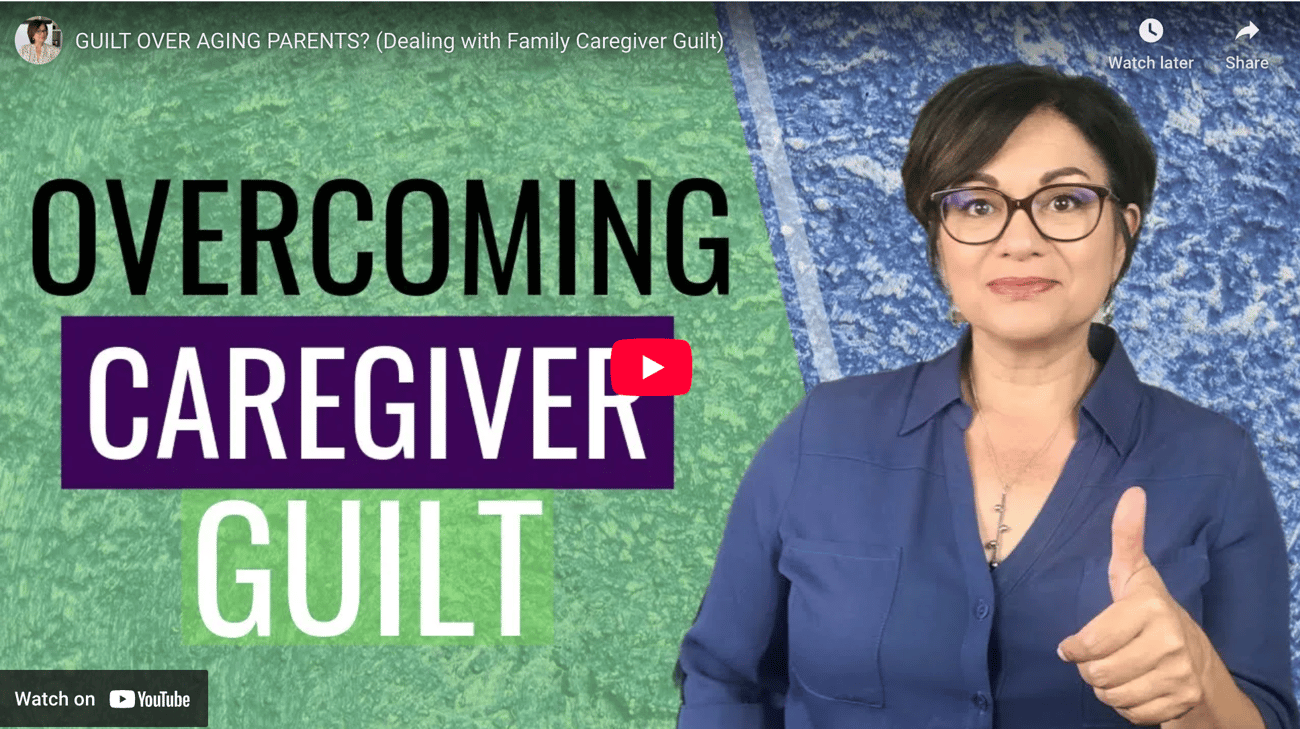
Video: GUILT OVER AGING PARENTS? (Dealing with Family Caregiver Guilt)
Having guilt about elderly parents is almost a right of passage for adult children! But it doesn’t have to be that way! Whether you feel like you’re not a good caregiver, or your elderly mother puts a guilt trip on you, or you’re feeling guilty over putting your parent in an assisted living or nursing home, this video will help you to reduce your feelings of guilt so you can get on with providing care while maintaining your sanity!
|
|
|
|
|
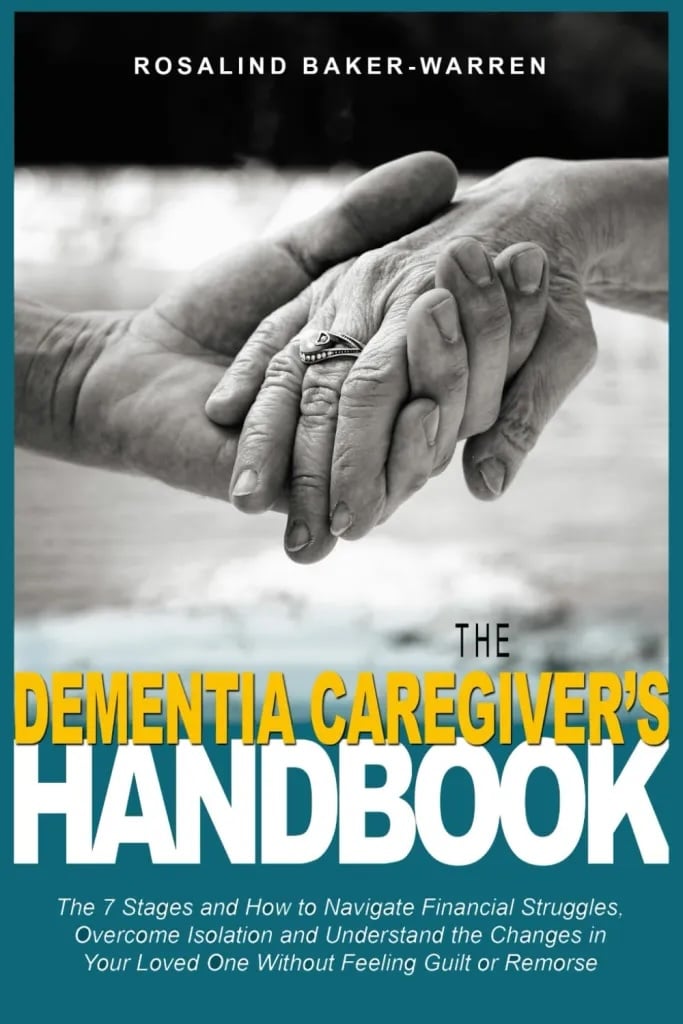
Book Review: The Dementia Caregiver’s Handbook by Rosalind Baker-Warren
OverviewRosalind Baker-Warren delivers a deeply empathetic and practical guide for those thrust into the challenging role of caring for a loved one with dementia. This handbook is specifically crafted for caregivers seeking clarity, support, and direction through the emotional and logistical complexities of dementia care.
Synopsis
The book outlines the seven stages of dementia, providing a structured understanding of what to expect at each phase. Baker-Warren goes beyond clinical descriptions by incorporating practical strategies for everyday caregiving tasks, emotional resilience, and long-term planning. The subtitle promises guidance on navigating financial struggles, combating isolation, and managing guilt—topics the author addresses with both sensitivity and realism.
Key Themes
- Progression of Dementia: Each stage is demystified, helping caregivers anticipate and adapt to changes.
- Emotional Wellness: There is a strong focus on the caregiver’s mental health, offering tips to handle grief, resentment, and burnout.
- Financial Navigation: The book includes actionable advice on budgeting, insurance, legal considerations, and access to public resources.
- Communication Strategies: Baker-Warren offers guidance on maintaining dignity and connection as verbal communication deteriorates.
- Support Systems: Isolation is a major
topic—highlighting the importance of finding community, respite care, and professional help.
Writing StyleBaker-Warren writes in a compassionate, conversational tone that reassures and empowers readers. The content is well-organized with digestible chapters and bullet points, making it easy to reference specific sections. Personal anecdotes are interwoven with factual information, lending authenticity and relatability to the material.
Conclusion
The Dementia Caregiver’s Handbook is an indispensable resource for both new and seasoned caregivers. It doesn’t sugarcoat the difficulties but provides comfort through practical wisdom. This is not just a manual—it’s a companion through one of life’s most demanding roles.
Rating: ★★★★☆ (4.5 out of 5 stars)A heartfelt and informative guide, though some readers may wish for more in-depth case studies or professional medical input. Still, a highly valuable resource for any caregiver navigating the dementia journey.
Additional Resources Cielito Lindo Offers
We have curated collections of resources that may be useful.
Articles - We write fresh articles about senior living, health, care, and finances every week
Caregiver Books - We review books related to caregiving methods, logistics, challenges, and coping
Senior Health - We review books related to healthspan, lifespan, and disease
We also have 1,600+ other senior care and expat in Mexico videos: YouTube
|
|
|
|
|
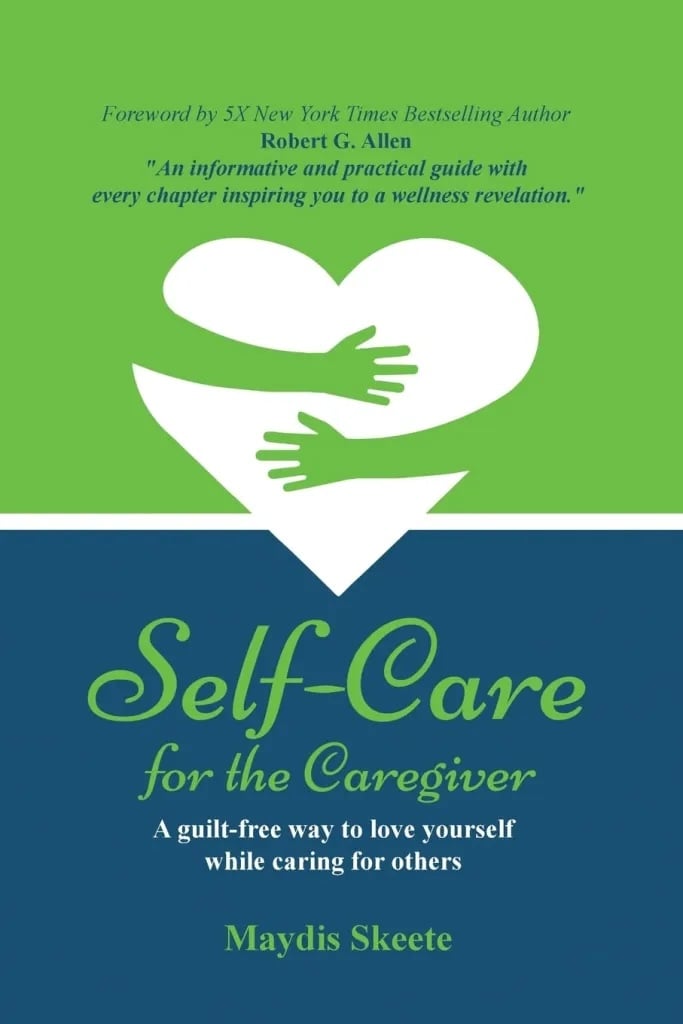
Book Review: Self-Care for the Caregiver: A Guilt-Free Way to Love Yourself While Caring for Others by Maydis Skeete
Overview
In Self-Care for the Caregiver, Maydis Skeete addresses the often-overlooked needs of caregivers by offering a compassionate, empowering, and practical guide to maintaining personal wellness while supporting others. The book speaks directly to those who may feel emotionally drained, physically overwhelmed, or spiritually depleted from caregiving—offering both validation and actionable strategies.
SynopsisThis guide centers around the principle that caregivers cannot pour from an empty cup. Skeete structures the book around core self-care pillars: emotional balance, physical health, mental clarity, and spiritual nourishment. Each chapter focuses on different aspects of self-care, offering reflection prompts, exercises, and lifestyle recommendations tailored to the unique demands placed on caregivers.
The book aims to dismantle the guilt and martyrdom often associated with caregiving, encouraging readers to reframe self-care as a necessary, not selfish, act.
Key Themes
- Guilt-Free Self-Love: Emphasizes the importance of recognizing and releasing guilt that comes from prioritizing oneself.
- Mind-Body Wellness: Offers holistic strategies such as mindfulness, nutrition, movement, and rest, all adapted to the caregiver lifestyle.
- Boundaries and Balance: Teaches how to set healthy emotional and logistical boundaries without sacrificing compassion.
- Daily Rituals and Mindfulness: Encourages small, sustainable routines for mental and emotional replenishment.
- Resilience and Burnout Prevention: Focuses on building
long-term stamina and emotional regulation.
Writing StyleSkeete writes in a gentle, affirming tone that feels more like a nurturing conversation than a clinical manual. The style is accessible and inspiring, with practical tools woven into reflective narratives. The structure is modular, making it easy for overwhelmed readers to pick up at any point and still benefit.
Conclusion
Self-Care for the Caregiver is a much-needed voice in the caregiving space. Maydis Skeete effectively reframes the role of the caregiver not just as a giver of care—but as someone deserving of it too. It's a vital read for anyone feeling depleted, especially those navigating the emotional complexities of long-term caregiving.
Rating: ★★★★★ (5 out of 5 stars)An empowering and uplifting guide that offers real-world solutions with a heartfelt tone. Essential reading for caregivers at all stages of their journey.
Additional Resources Cielito Lindo Offers
We have curated collections of
resources that may be useful.
Articles - We write fresh articles about senior living, health, care, and finances every week
Caregiver Books - We review books related to caregiving methods, logistics, challenges, and coping
Senior Health - We review books related to healthspan, lifespan, and disease
We also have 1,600+ other senior care and expat in Mexico videos: YouTube
|
|
|
|
|
| Cielito Lindo's basic information is included for your convenience:
|
|
|
- Cielito Lindo Info: After the signature, the newsletter always includes information about Cielito Lindo, so it is at your fingertips when you want it: Our costs, various related websites, social media channels like YouTube, our various addresses, and so on.
- Travel Info: Recommended airports and shuttles.
|
|
|
Web Sites - Cielito LIndo and Rancho Los Labradores
Here are our Web sites, including Cielito Lindo and Labradores Suites (hotel) all of which are part of the larger Rancho Los Labradores gated community just north of San Miguel de Allende.
- Cielito Lindo provides independent living, light assisted living, assisted living, memory care and hospice with 24*7 staffing along with a la carte assisted living services to those living in the villas and suites at Rancho Los Labradores.
- Rancho Los Labradores Suites offer short and long term residence.
- Rancho Los Labradores is a country club resort feeling CCRC that provides a gated community with countless amenities and opportunities for different levels of independent living along with assisted living and memory care within Cielito Lindo.
Cielito Lindo Living Options & Costs Guide
We offer several living options depending on the level of care you or your loved one needs. Here’s a breakdown to help you plan:
1) Villas (Rent or Own)
- Cost: $1,300 – $1,700 per month
- Additional Costs: Utilities, renter’s insurance, etc.
- What’s Included: This is mostly independent living.
- Extras: You can add independent or assisted living services (charged separately, à la carte).
- Support: We can connect you with a realtor if you'd like to purchase.
2) Cielito Lindo Condos & Suites
Best for: Independent living with optional assistance.
Option 1: Independent Living + Meals
- Cost: $2,250 per month
Includes:- 2 meals a day
- Monthly medical check-up
Optional Add-ons:- Meals for an additional person: $450/month
- Extra care services available à la carte
Option 2: Light-Assisted Living in Condos & Suites
- Cost: $3,900 per month
Includes:- Full assisted living services
- Designed for residents who still want independence but need some support
- Smooth transition to full Assisted Living or Memory Care as needs
change
- One-Time Inscription Fee: $4,000
For Couples:- $4,900/month for two people
- Same one-time fee ($4,000 per couple)
- Note: Suitability is based on cognitive ability, mobility, and safety.
3) Cielito Lindo Assisted Living, Memory Care, & Hospice
Best for: Seniors needing full-time care and supervision.
- Cost: $3,900 per month
Includes:- 24/7 care and monitoring
- All meals
- Physical therapy
- Full-time doctor on site
- Spacious private room with
bath
- One-Time Inscription Fee: $4,000
- For Couples: $4,900/month
4) Specialized Hospice Suite
Best for: Intensive care needs or end-of-life comfort and also recuperative at a far lower cost than a hospital- Cost: $4,900 per month
Includes:- Full 24/7 monitoring
- Recuperative, Palliative and hospice care
- On-site doctor
- All meals
- Special space for visiting
family
|
|
|
YouTube videos and Curated Playlists
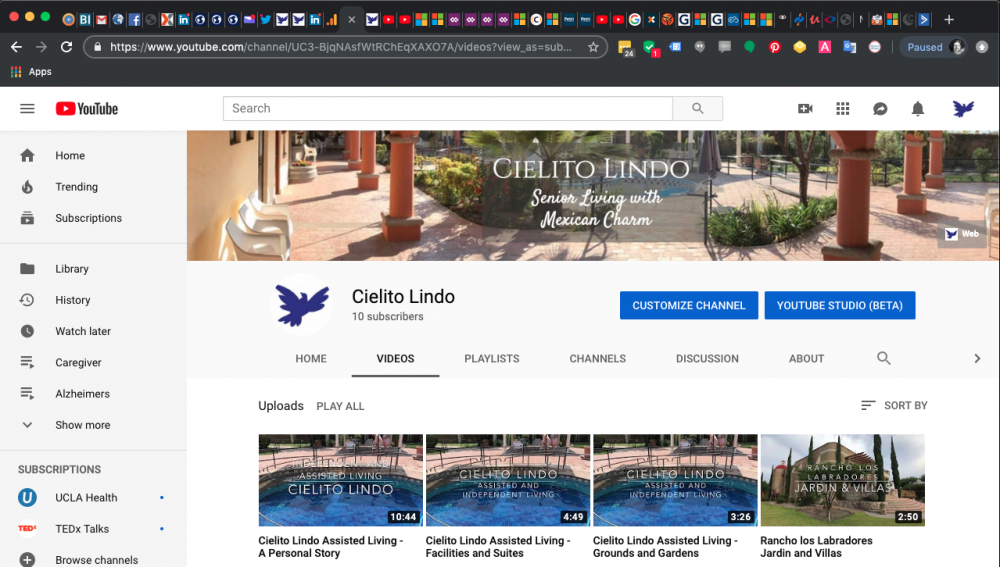
Here is our YouTube Channel. This is where we have lots of videos about Cielito Lindo and Rancho Los Labradores. We also have 1,600+ other senior care and expat in Mexico videos: YouTube |
|
|
|
|
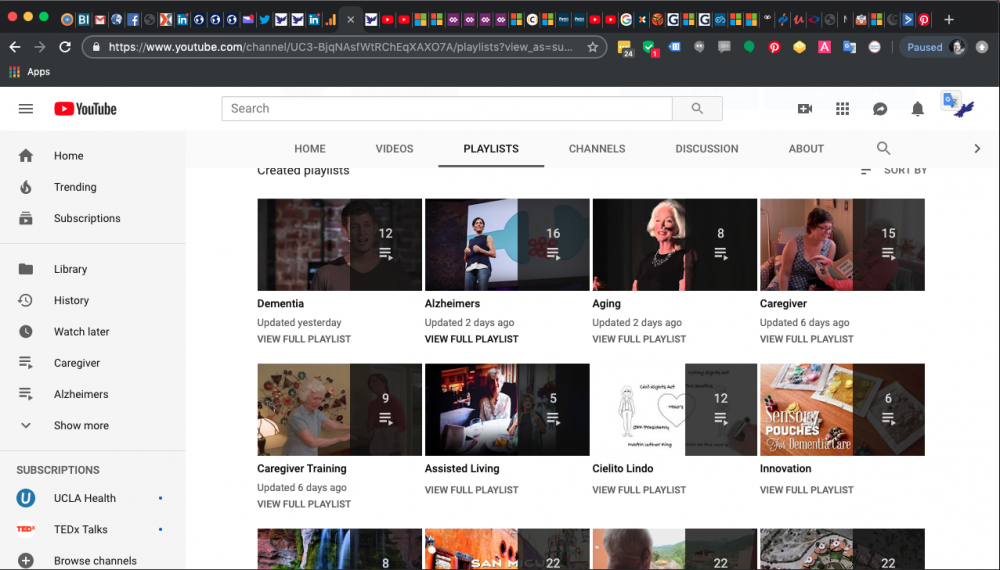
Additionally, our playlists cover a wide area and include 1,200+ videos. These playlists include videos about San Miguel and Mexico in general, caregiving and health, and a broad spectrum of senior living topics. Playlists
|
|
|
|
|
Additional Resources We Offer
We have curated collections of resources that may be useful:
Articles - We write fresh articles about senior living, health, care, and finances every week
Caregiver
Books - We review books related to caregiving methods, logistics, challenges, and coping
Senior Health - We review books related to healthspan, lifespan, and disease
And here are our various social media forums, where we talk a lot about assisted living and memory care along with the various sort of challenges that sometimes come in our senior years (Alzheimer’s, Parkinson other dementias, and so on), but also about senior living in Mexico.
Facebook
|
|
|
|
|
|
|
|
|
|
|
|
|
|
|
|
|
|
|
Please don’t hesitate to contact me for anything related to senior living, especially in Mexico. I will gladly give you any assistance I can.
Thanks again!
James
James Sims
Marketing and Sales
Cielito Lindo Senior Living
1. 888.406.7990 (voice and text)
Phones:
English speaking:
1.888.406.7990 (in US & CDN)
00.1.881.406.7990 (in MX)
Spanish speaking:
011.52.415.101.0201 (in US & CDN)
1.415.101.0201 (in MX)
Expat Logistics:
Visas for Expats:
Sonia Diaz Mexico
Immigration
Pros MX
Tax Considerations for Expats:
Robert Hall Taxes
Best Bank:
Intercam Banco
Located in: Plaza De La Conspiración
Address: San Francisco 4, Zona Centro,
37700 San Miguel de Allende, Gto., Mexico
Hours: Open ⋅ Closes 4 PM
Phone: +52 415 154 6660
Addresses and Travel:
Physical address:
Cielito Lindo Independent and Assisted Living, Camino Real Los Labradores S/N, Rancho Viejo 1, San Miguel de Allende, GTO, Mexico, 37885
Packages from online providers like Amazon:
Camino Real Los Labradores, Rancho Los Labradores / Cielito Lindo, San Miguel de Allende, GTO, 37880 México
PO Box for letters and small envelopes:
Rancho Los Labradores / Cielito Lindo, c/o Alejandra Serrano ,
PMB N° 515-C, 220 N Zapata HWY N°11, Laredo TX, 78043-4464
Best airports to fly into: Leon (BJX) or Queretaro (QRO)
Best airport shuttle: BajioGo
Shuttle:
Shuttle between San Miguel and Cielito Lindo
|
|
|
|
|
|
Maps and Navigation
Best smartphone navigation for Mexico and Central America: Waze
These two maps the location of Cielito Lindo / Rancho Los Labradores, 15 km north of San Miguel on Highway 51, just opposite the Atoltinilco exit.
|
|
|
|
|
|
|
Regards,
James
James Sims
Marketing and Sales
Cielto Lindo Senior Living
James@CielitoLindoSeniorLiving.Com
|
|
|
|
|
|
|
|