|
|
Dear ,
This is your weekly summary of our news, research, books, videos, and other resources related to senior living, retirement, and care in Mexico, along with independent and assisted living and information about age-related challenges (e.g., limited mobility, dementia, Alzheimer's, Parkinson's, ALS, stroke, multiple sclerosis, healthspan, and so on).
I hope you are finding this weekly newsletter helpful, and if you know of someone who may also find this information helpful, please forward it to them. They can subscribe using our Web Newsletter page (click here). If, for any reason, you do not wish to receive this weekly newsletter any longer, there is a simple 'Unsubscribe' or 'Opt Out' link at the bottom right corner of this newsletter and also right here: Unsubscribe
This weekly newsletter typically includes information in each of the following categories: San Miguel insights, senior care, and health information, as well as Cielito Lindo basic information.
Here’s what we typically cover each week:
- San Miguel de Allende highlights – why this is such a special place to live
- Health & wellness insights – articles, videos, and expert reviews
- Care options & community life at Cielito Lindo – flexible, affordable living with a warm, human touch
This Week’s Theme: The Unacknowledged Caregiver
This week, we explore how binaural beats can positively affect people with dementia.
Holiday Message
|
|
|
|
|
| Weekly insights into San Miguel:
|
|
|
- Colorful and Epicurean San Miguel - This is such an amazing place,
particularly the food and the colors. Although we are addressing a topic that is stressful, challenging, and emotional, we should also acknowledge what an incredible place San Miguel is.
|
|
|
|
|
The Colors of San Miguel: Another Breathtaking SMA Door
Ah, yet another breathtaking San Miguel de Allende door—this one dressed in
all the festive magic of the season! The deep wooden panels, adorned with intricate carvings, radiate old-world craftsmanship, while the frame bursts with Christmas spirit—twinkling lights, candy canes, bright red poinsettias, and shimmering ornaments.
This is the kind of door that makes you pause as you wander the city’s callejones at dusk, the glow of the lantern above adding to the warm, golden ambiance. It’s a perfect example of how San Miguel doesn’t just celebrate the holidays; it embraces them with an elegance and charm all its own. (Photo courtesy of SMA photographer Sam Perez)
|
|
|
|
|
Tastes of San Miguel: Paprika Restaurante & Music House
Address: Ancha de San Antonio 9A, Zona Centro, San Miguel de Allende, Mexico, 37700
Phone Number: +52 415 152 4373
Days and Hours:
- Monday: Closed
- Tuesday to Thursday: 5:00 PM – 9:00 PM
- Friday to Sunday: 1:00 PM – 9:00 PM
Atmosphere:
Paprika boasts a charming courtyard setting that exudes a relaxed and inviting ambiance. The venue is renowned for its live music events, featuring genres like Gypsy Jazz, Swing, and Cumbia, which enhance the dining experience. The combination of rustic architecture and melodic tunes creates a vibrant yet cozy atmosphere.
Service:
The staff at Paprika are attentive and friendly, ensuring guests feel welcomed. Service is generally prompt, with waitstaff knowledgeable about the menu offerings. However, during peak hours, especially on live music nights, service may experience slight delays due to high patronage.
Cuisine:
Paprika offers an international menu with a focus on casual comfort food. The restaurant caters to diverse dietary preferences, providing vegan and vegetarian options alongside meat dishes. The menu features items such as burgers, lasagna, and tortilla soup, prepared with fresh ingredients.
Signature Dish:
The Vegan Lasagna is a standout, praised for its flavorful layers and use of plant-based ingredients, making it a favorite among both vegan and non-vegan patrons.
Starters:
- Bruschetta: Grilled bread topped with cooked tomatoes and a generous amount of garlicky pesto.
- Guacamole: Freshly prepared and served with
crisp tortilla chips.
Main Courses:
- Vegan Burger: A plant-based patty served with a toasted bun and all the traditional fixings.
- Tortilla
Soup: A flavorful broth featuring tortilla strips and seasoned vegetables.
- Lasagna: Available in both vegan and traditional versions, layered with rich sauces and fresh ingredients.
Desserts:
While specific desserts aren't highlighted, the menu may offer daily specials. It's advisable to inquire with the staff about available sweet treats to conclude your meal.
Wine and Cocktails:
Paprika features a selection of wines and handcrafted cocktails. The Mezcal Margarita comes highly recommended, offering a refreshing and well-balanced flavor that complements the menu offerings.
Final Thoughts:
Paprika Restaurante & Music House provides a delightful fusion of culinary and musical experiences in San Miguel de Allende. Its diverse menu, accommodating various dietary preferences, coupled with live musical performances, makes it a must-visit spot for both locals and tourists seeking a memorable dining experience.
Cost:
$$ – $$$ (Moderate pricing)
Rating:
★★★★☆ (4 out of 5 stars)
|
|
|
|
|
| Information related to Mexico, senior care and health:
|
|
|
- Lead article - These are articles specifically written for you each week. They address a wide range of
relevant topics, such as factors that can increase your health and lifespan, diagnostics, understanding causal factors for Alzheimer's and other dementias, and so on. The lead article typically sets the tone for the core content of the newsletter (videos and book reviews). On occasion, the focus may be centered on Mexico, Pueblos Magicos, and San Miguel de Allende.
- Caregiver's Sentiment
- This quote typically honors what we, as caregivers, are going through and feeling.
- Caregiver's Affirmation - This affirmation bolsters our self care, our image or ourselves on this journey and our ability to endure.
- Videos - Typically, three videos are related to the lead article, and they include a summary and timestamped highlights.
- Book Review - Typically related to the lead article.
|
|
|
|
|
Article Summary: Alzheimer’s Disease Update - Therapies and Diagnostics (2026)
January 3, 2026 | James Sims, Editor, Cielito Lindo Senior Living
Here is an updated investigative report (as of January 2026) on the current state of Alzheimer’s disease (AD) therapies and diagnostics, with a critical evaluation of both approved treatments and recent advances—while remaining mindful of the broader problem of flawed medical research.
Symptomatic Therapies – Still the Foundation
These drugs provide modest, short-term relief of cognitive symptoms, but do not alter disease progression. They remain standard care due to wide availability and safety profiles.
Cholinesterase Inhibitors
Drug Names: Donepezil (Aricept®), Rivastigmine (Exelon®), Galantamine (Razadyne®)
Approved For: Mild to Severe
Notes: Slight improvements in cognition and behavior; available in oral and patch forms.
Glutamatergic Modulator
Drug Name: Memantine (Namenda®)
Approved For: Moderate to Severe
Notes: Helps with confusion and daily function; sometimes combined with donepezil (Namzaric®).
Evidence Summary:
These agents offer 6–12 months of slowed decline in some patients. Trials supporting these are decades old and modest in scale—survivors of the “old school” of drug development, before the biologic revolution.
Disease-Modifying Therapies – Amyloid Hypothesis Still Driving the Bus
These anti-amyloid monoclonal antibodies are FDA-approved only for early-stage Alzheimer’s with confirmed amyloid pathology (via PET, CSF, or increasingly, blood tests).
Lecanemab (Leqembi®)
Type: Biweekly IV
(or weekly subcutaneous injection as of 2025)
Benefit: ~27% slowing of decline over 18 months
Risks: ARIA (edema/bleeding), headaches
Donanemab (Kisunla®)
Type: Monthly IV infusion
Benefit: Similar slowing of decline; allows pause after plaque clearance
Risks: ARIA, requires regular MRI monitoring
Aducanumab (Aduhelm)
Status: Withdrawn
Notes: Controversial efficacy; approved then discontinued due to trial inconsistencies
Critical Caveat:
While these drugs are marketed as breakthroughs, they do not halt or reverse Alzheimer’s. Benefits are clinically modest and depend on early detection, strict inclusion criteria, and ongoing imaging.
Investigative Perspective:
- Trials had conflicts of interest and lacked real-world replication.
- The ~27% benefit is relative, not absolute—a slowing of inevitable decline.
- Publication bias and small subgroup analyses may have inflated reported outcomes.
Breakthrough in Diagnostics – Blood-Based Biomarkers (Finally)
In 2025, the FDA cleared the first blood tests for Alzheimer’s—marking a major shift away from costly PET scans and lumbar punctures.
Lumipulse G Plasma Ratio
Developer: Fujirebio
Markers: pTau217 / β-Amyloid 1-42
Use Case: High accuracy (~92–97% agreement with PET); for adults 55+ with symptoms
Elecsys pTau181
Developer: Roche
Markers: pTau181
Use Case: First test approved for primary care to assist early diagnosis
These blood tests do not diagnose Alzheimer’s alone, but can help rule in or rule out amyloid pathology. Their high negative predictive value makes them ideal for early triage.
Other Promising Biomarkers:
- ALZpath pTau217 (LDT): In research use; FDA submission likely
- Combinatorial Panels: pTau + NfL + GFAP enhance progression prediction
- Emerging Tools: Brain-derived vesicles, 5-plex panels for preclinical detection
What’s in the Pipeline?
There are currently ~138 drugs in clinical trials (as of late 2025), targeting multiple pathways beyond amyloid.
• Tau-targeting drugs – May better correlate with clinical symptoms
• Anti-inflammatory agents – Target microglial activation
• Metabolic/mitochondrial therapies – e.g., P7C3 compounds (NAD+ restoration); shown to reverse damage in mouse models
• Oligomer blockers – e.g., NU-9 targets early toxic intermediates before plaques form
Note: Most of these drugs will never reach approval due
to poor replication, inflated preclinical claims, or statistical artifacts.
Critical Reflection – How Reliable Is the Alzheimer’s Research?
Given the reproducibility crisis and medical reversal trends, we must approach Alzheimer’s research with informed skepticism:
• Many “breakthrough” studies fail replication or lack real-world relevance
• The amyloid hypothesis remains controversial—is it cause or effect?
• Statistical significance (p < 0.05) often means very little clinically
• The media, driven by press releases, often overhypes weak findings
“The more paradigm-shifting a study, the less likely it is to replicate. Yet those are the studies that get funded, published, and hyped.”
Where We Stand in 2026
What’s Real:
• Blood-based diagnostics have made early detection more accessible
• Some therapies can modestly slow disease progression—by months, not years
• No reversal of cognitive decline
• Most new therapies offer minimal clinical improvement
What Patients and Clinicians Should Do:
• Use combination therapies only when appropriate
• Leverage blood-based diagnostics for early intervention
• Emphasize non-pharma strategies (diet, sleep, cognition, exercise, social engagement)
• Support independent research and data transparency
|
|
|
|
|
The Guilt That
Dementia Caregivers Carry
August 31, 2025 | James Sims, Editor, Cielito Lindo Senior Living
Caregiving is hard—an understatement in itself. But dementia caregiving is something else entirely: so grueling, so relentless, it often defies description.
It's not just the physical labor, the sleepless nights, or the constant vigilance. It's the slow unraveling of the person you love—and the person you used to be—until all that's left is a quiet, crushing question: Am I doing enough?
This is the guilt that haunts dementia caregivers. Not because they've failed, but because they care so deeply. And too often, they're asked to carry it alone—by society, by distant relatives, by a culture that glorifies martyrdom and judges survival strategies as selfishness.But this guilt? It isn't a moral
failing. It's a symptom of love—and a sign that the system surrounding caregivers is broken.
The Long, Unforgiving MiddleUnlike a crisis or sudden illness, dementia unfolds over years—sometimes decades. It's not a fire you can put out. It's a slow leak that drains everything: your bank account, your health, your spirit, your patience, your sense of self.
You try to protect your loved one's dignity while managing their decline. You walk a tightrope between empathy and exhaustion. You correct them gently when they forget what day it is. You redirect them when they wander. You absorb their frustration, their confusion, their outbursts.
And when they forget your name—but still need you to hold everything together—you swallow that heartbreak, too.
Eventually, you may have to make decisions they can't understand: to bring in outside help, to hire full-time care, to consider a facility when home is no longer safe. Each step brings more guilt. Not because it's wrong—but because it feels like love is losing its grip.
What makes this guilt uniquely cruel is that dementia caregiving rarely offers validation. There are no "thank-yous,"no breakthroughs. The person you're caring for may not even recognize your sacrifices—or you. You're giving everything, and receiving silence in return.
Backseat Caregivers and the Politics of JudgmentAnd then come the opinions—from people who aren't
in the room.
One of the most common dynamics in dementia care is what I call 'backseat caregiving': family members who live far away are minimally involved, but offer numerous critiques. Why Mexico? Why
assisted living? Why not just keep Mom at home?
They don't see the wandering at 2 a.m., or the weight loss, or the moments when your loved one accuses you of stealing. They don't feel the dread every time the phone rings, or the devastation of having to explain, for the fifth time in one day, that their spouse has passed away.And yet, they feel entitled to weigh in—often from a place of their own grief, fear, or guilt. But their judgment lands on you, the caregiver, like a final blow.
The result? You're exhausted, out of options, and still feel like you're disappointing everyone—especially yourself.
Guilt Is Assigned—But It Doesn't Belong to YouLet's be clear: caregiving guilt doesn't come from doing wrong. It comes from doing everything—and still not being able to stop the disease. It comes from being human in an inhumane situation. It comes from impossible expectations and the absence of support.
In many families, caregiving falls
to one person by default: the one who lives closest, the one without children, the one with the "flexible"job (whatever that means). Often, it's a daughter. Always, it's someone who didn't ask for the job, but who stepped up anyway.
Meanwhile, society wraps caregiving in empty praise: You're a hero. You're an angel. But when you finally set a boundary, make a hard decision, or say you can't do it anymore, the applause stops—and the judgment begins.
We tell caregivers to give everything, and then shame them when they run out.
The Cost of GuiltCaregiver guilt doesn't just live in the mind. It shows up in bodies, bank accounts, and burnout.
It contributes to higher rates of depression, anxiety, heart disease, and even dementia in caregivers themselves. It leads people to delay their own care, deplete their savings, and shrink their world. Friendships fade—marriages strain. Careers stall.
And in the darkest moments, guilt whispers that needing help is weakness. That placing a parent in memory care is a betrayal. That carving out even one hour for yourself is selfish.
None of that is true.
What Caregivers DeserveDementia caregivers deserve more than pity. They deserve liberation—from guilt, from unrealistic expectations, and from the illusion that love means doing it all alone.
If you are a caregiver, you are not failing. You are surviving something brutal. You are showing up for someone who may not even know you're there. And that matters.
If you're a family member watching from the sidelines, offer help, not advice. Trust the decisions of the person in the trenches. And
if you can't help directly, then support their right to make hard choices without shame.
We must start telling a new story about caregiving—one that honors complexity, champions sustainability, and replaces judgment with solidarity.Because at the end of the day, caregivers don't need to be reminded how much their loved one is losing.
They need to be reminded that they still matter—and they need more than praise. They need real, tangible support from our government, our healthcare system, our workplaces, our communities, our friends, and our families.
|
|
|
|
|
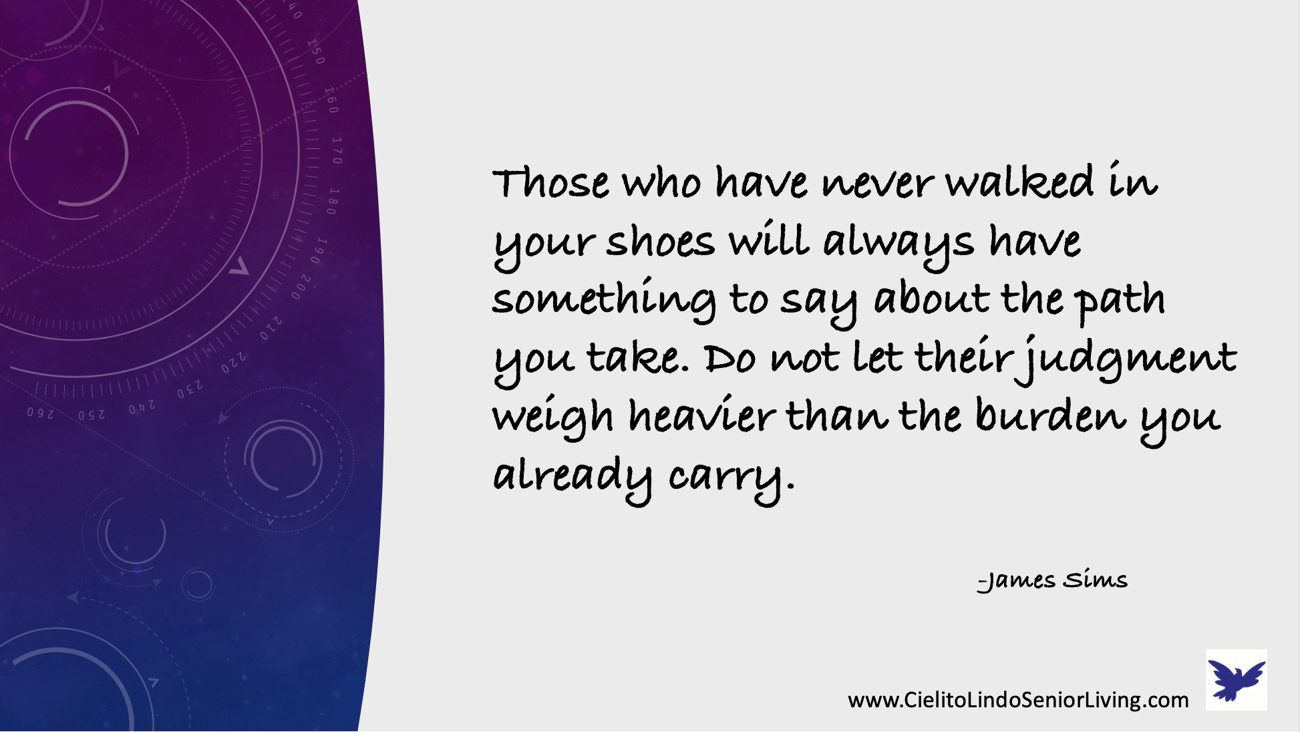
Caregiver's Sentiment: We have to rise above the judgment of others
Caregiving is often a thankless role, one filled with immense love but also exhaustion, self-doubt, and isolation. The expectations placed upon caregivers—whether by family, friends, or society—can be crushing, especially when they come with criticism rather than support. Those who have never shouldered the responsibility themselves may judge without understanding, offering guilt instead of gratitude. The true strength of a caregiver lies in rising above this misplaced judgment, knowing that their worth is not defined by the approval of those who have never lived their struggle. Instead, it is defined by the love, patience, and resilience they bring
to those in their care.
|
|
|
|
|
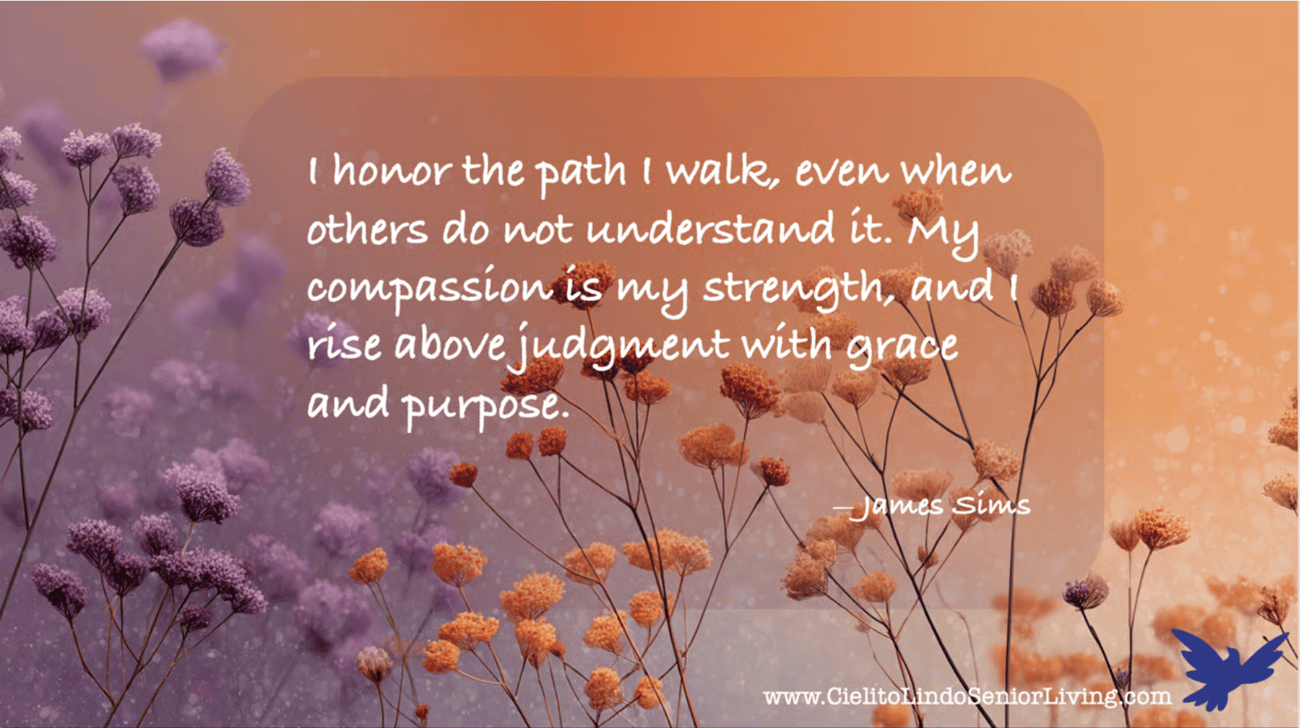
Caregiver's Affirmation
As a caregiver, you're often called upon to make difficult decisions, sacrifice your time, and prioritize someone else's needs over your own. And while you're doing all of this from a place of love and devotion, it’s painful when others—especially those who haven’t lived your reality—offer
criticism instead of compassion. They may not see the long nights, the emotional toll, or the patience it takes to show up, day after day, often without thanks.
This affirmation reminds you that you are walking a path few truly understand. It’s okay if others don’t see or appreciate every step—you see it, and you know the heart behind it. Rising above judgment doesn’t mean you ignore how it hurts; it means you refuse to let it define your worth. Your worth lies in your daily acts of care, your quiet strength, and the love that fuels everything you do.
Every time you choose kindness in the face of frustration, every time you stay when it would be easier to walk away—that is strength. And no one can take that away from you.
|
|
|
|
|
Video: Cognitive Clarity - 40Hz Binaural
Beats, Gamma Brain Waves for Enhanced Cognitive PerformanceThis audio track uses 40 Hz gamma-frequency binaural beats, a form of sound-based brainwave entrainment designed to support focus, mental clarity, and sustained attention. When two slightly different tones are played into each ear, the brain perceives a third tone, the binaural beat, which can encourage specific brainwave states.
How It May Help
Gamma
waves, generally ranging from 32 to 100 Hz, are associated with higher-order cognitive functions such as attention, memory, and perceptual clarity. Research and commentary from neuroscientists, including Andrew Huberman, suggest gamma activity plays a role in concentration and cognitive performance. For caregivers, this may be useful during tasks that require focus, planning, documentation, or mental stamina.
Recommended Use
- Timing: Listen approximately 10 minutes before a focused task to allow the
brain time to respond.
- Consistency: Regular use may help reinforce focus over time.
- Pairing: Combining the audio with a calm visualization or intentional breathing exercise may enhance its effect.
- Balance: Because gamma and
beta states promote alertness, it is important to intentionally transition out of them after periods of work.
Supporting Rest and Sleep
Sustained stimulation of alert brain states can interfere with rest if not balanced. After mentally demanding activities, switching to audio that encourages alpha waves (relaxation and creativity) or delta waves (deep rest and sleep) can help the nervous system settle and support healthy sleep patterns.
Who May Benefit
This type of audio may be useful for caregivers, students, professionals, people with dementia, or anyone managing cognitively demanding responsibilities, particularly when mental clarity and sustained attention are needed. As with
all supportive tools, individual responses vary, and it should be viewed as a complement, not a replacement, to rest, routine, and good sleep hygiene.
View the video here.
|
|
|
|
|
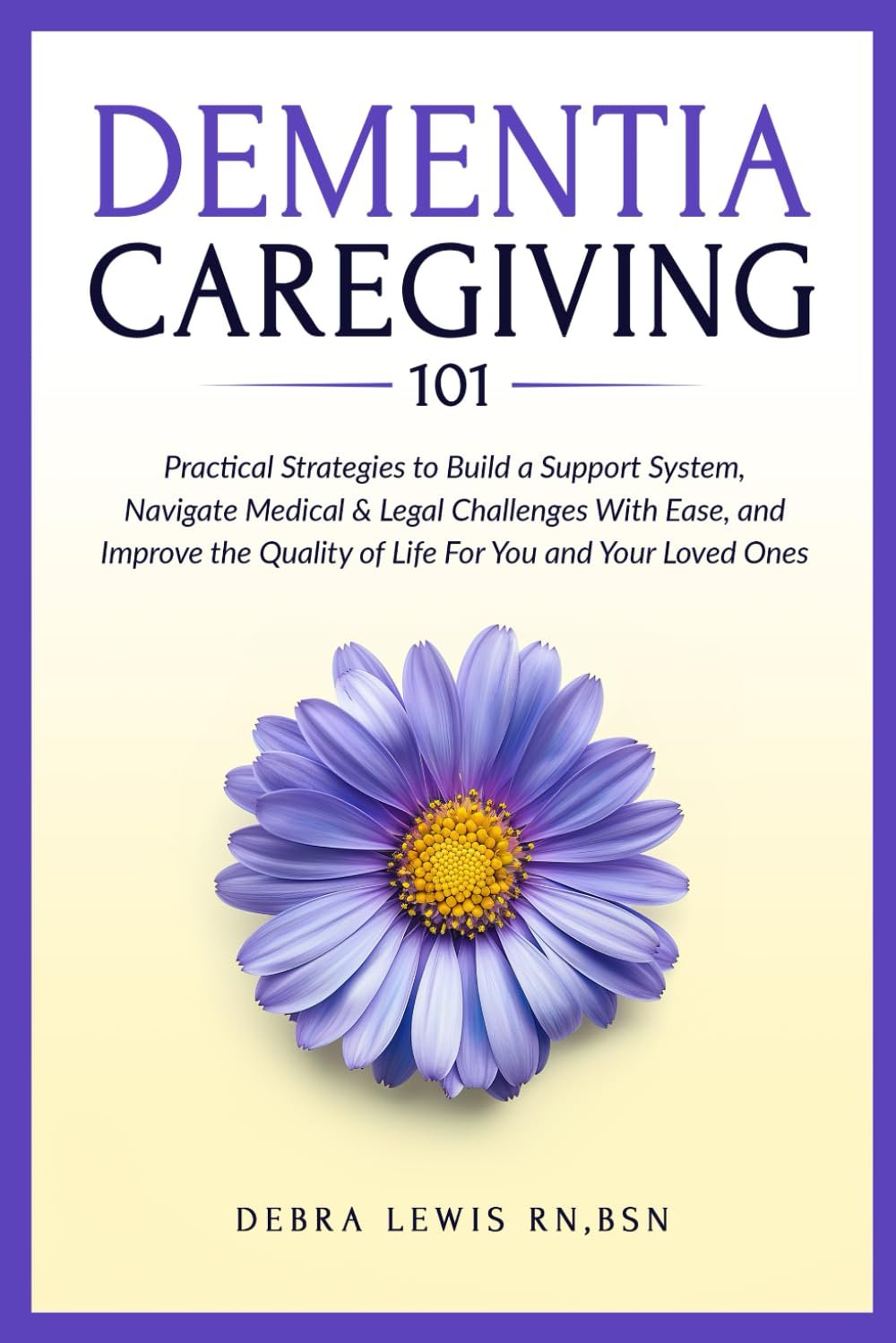
Book Review: Dementia Caregiving 101: Practical Strategies to Build a Support System, Navigate Medical & Legal Challenges With Ease, and Improve the Quality of Life For You and Your Loved Ones
by Debra Lewis Published: October 14, 2024
Overview
Dementia Caregiving 101 by Debra Lewis is a compassionate, well-structured, and deeply practical guide for new and overwhelmed caregivers navigating the emotional and logistical maze of dementia care. It is particularly geared toward adult children, spouses, and other family members who’ve stepped unexpectedly into a caregiving role and need immediate, trustworthy support. With its warm tone and clear action steps, this book offers more than just information—it offers reassurance, direction, and a path forward.
Synopsis From the moment of diagnosis to advanced-stage dementia, this book walks caregivers through what to expect and how to cope. Lewis starts by breaking down the types of dementia and their stages before delving into the everyday realities of caregiving. Topics include how to set up a caregiving routine, how to communicate effectively with someone experiencing cognitive decline, legal and financial planning, crisis management, and team building. Crucially, Lewis also emphasizes caregiver self-care, recognizing that the best care for a loved one begins with the well-being of the caregiver.
Key Themes
- Understanding Dementia: Practical insights into symptoms, progression, and variations (e.g., Alzheimer’s, Lewy Body, vascular dementia).
- Preparedness: The importance of early legal, financial, and medical planning, including powers of attorney, advance directives, and care
options.
- Daily Routine and Communication: Concrete tools for creating structure and using non-confrontational communication techniques to ease daily friction.
- Caregiver Support: Tips for building a caregiving team, tapping into local resources, and acknowledging the emotional labor involved.
- Self-Care and Emotional Resilience: Mindful practices and realistic encouragement for caregivers to avoid burnout and maintain their own health.
- Crisis Readiness: How to prepare for medical emergencies and transitions, including facility care and end-of-life decisions.
- Finding Joy and Connection: Creative suggestions for maintaining emotional connection and shared activities even as cognitive
decline progresses.
Writing Style Debra Lewis writes with clarity, empathy, and a deep respect for the caregiver’s emotional journey. The tone is accessible and encouraging, never patronizing. Chapters are organized for easy reference, with bullet points, summaries, and real-life examples that make the material approachable. Importantly, Lewis avoids dense medical jargon, opting instead for straightforward explanations and actionable tips.
Conclusion
Dementia Caregiving 101 stands out as a valuable and timely resource for anyone suddenly thrust into the role of caregiver. It offers both an emotional lifeline and a strategic guide, balancing practical checklists with emotional insight. Whether you’re early in the caregiving journey or deep in its trenches, this book is a steadying companion—helpful, hopeful, and grounded in real-world caregiving realities. It’s particularly well-suited to seniors caring for spouses or adult children navigating care for aging parents.
Rating: ★★★★☆ (4.7 out of 5 stars) A compassionate and comprehensive caregiver’s guide—clear, useful, and emotionally supportive. Near-essential reading for those caring for loved ones with dementia.
Additional Resources Cielito Lindo Offers
We have curated collections of resources that may be useful.
Articles - We write fresh articles about senior living, health, care, and
finances every week
Caregiver Books - We review books related to caregiving methods, logistics,
challenges, and coping
Senior Health - We review books related to healthspan, lifespan, and disease
We also have 1,700+ other senior care and expat in Mexico videos: YouTube
|
|
|
|
|
| Cielito Lindo's basic information is included for your convenience:
|
|
|
- Cielito Lindo Info: After the signature, the newsletter always includes information about Cielito Lindo, so it is at your fingertips when you want it: Our costs, various related websites, social media channels like YouTube, our various addresses, and so on.
- Travel Info: Recommended airports and shuttles.
|
|
|
Web Sites - Cielito LIndo and Rancho Los Labradores
Here are our Web sites, including Cielito Lindo and Labradores Suites (hotel) all of which are part of the larger Rancho Los Labradores gated community just north of San Miguel de Allende.
Web Sites - Cielito LIndo and Rancho Los Labradores
Here are our Web sites, including Cielito Lindo and Labradores Suites (hotel) all of which are part of the larger Rancho Los Labradores gated community just north of San Miguel de Allende.
- Cielito Lindo provides independent living, light assisted living, assisted living, memory care and hospice with 24*7 staffing along with a la carte assisted living services to those living in the villas and suites at Rancho Los Labradores.
- Rancho Los Labradores Suites offer short and long term residence.
- Rancho Los Labradores is a country club resort feeling CCRC that provides a gated community with countless amenities and opportunities for different levels of independent living along with assisted living and memory care within Cielito Lindo.
Cielito Lindo Living Options & Costs Guide
We offer several living options depending on the level
of care you or your loved one needs. Here’s a breakdown to help you plan:
1) Villas (Rent or Own)
- Cost: $1,300 – $1,700 per month
- Additional Costs: Utilities, renter’s insurance, etc.
- What’s Included: This is mostly independent living.
- Extras: You can add independent or assisted living services (charged separately, à la carte).
- Support: We can connect you with a realtor if you'd like to purchase.
2) Cielito Lindo Condos & Suites
Best for: Independent living with optional assistance.
Option 1: Independent Living + Meals
- Cost: $2,250 per month
Includes:- 2 meals a day
- Hotel like room cleaning, towel and linen service
- Monthly medical check-up
Optional Add-ons:- Meals for an additional person: $450/month
- Extra care services available à la carte
Option 2: Light-Assisted Living in Condos & Suites
- Cost: $3,900 per month
Includes:- Full assisted living services
- Designed for residents who still want independence but need some support
- Smooth transition to full Assisted Living or Memory Care as needs change
- One-Time Inscription Fee: $4,000
For Couples:- $4,900/month for two people
- Same one-time fee ($4,000 per couple)
- Note: Suitability is based on cognitive ability, mobility, and safety.
3) Cielito Lindo Assisted Living, Memory Care, & Hospice
Best for: Seniors needing full-time care and supervision.
- Cost: $3,900 per month
Includes:- 24/7 care and monitoring
- All meals
- Physical therapy
- Full-time doctor on site
- Spacious private room with
bath
- One-Time Inscription Fee: $4,000
- For
Couples: $4,900/month
4) Specialized Hospice Suite
Best for: Intensive care needs or end-of-life comfort and also recuperative at a far lower cost than a hospital- Cost: $4,900 per month
Includes:- Full 24/7 monitoring
- Recuperative, Palliative and hospice care
- On-site doctor
- All meals
- Special space for visiting family
|
|
|
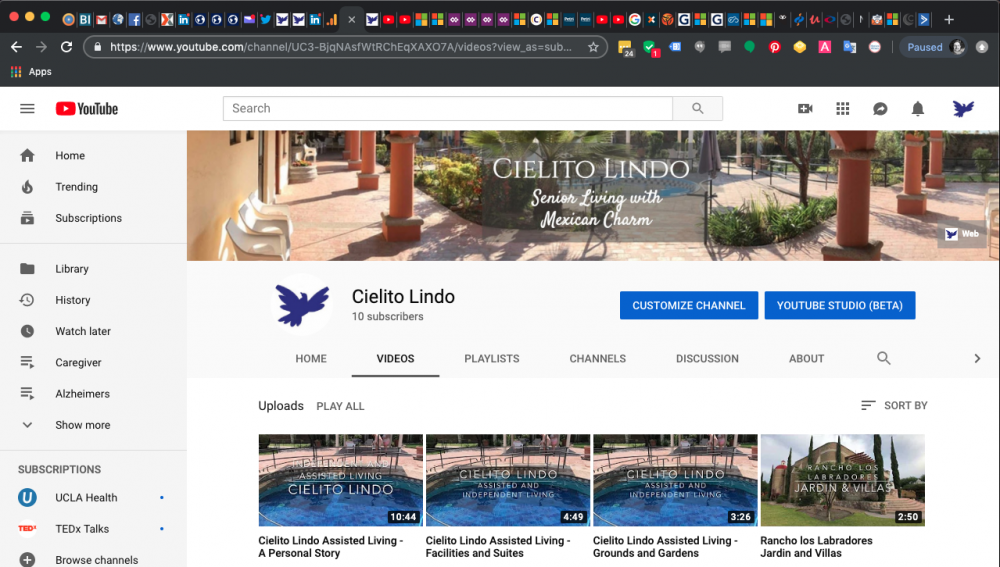
YouTube videos and Curated Playlists
Here is our YouTube Channel. This is where we have lots of videos about Cielito Lindo and Rancho Los Labradores. We also have 1,600+ other senior care and expat in Mexico videos: YouTube |
|
|
|
|
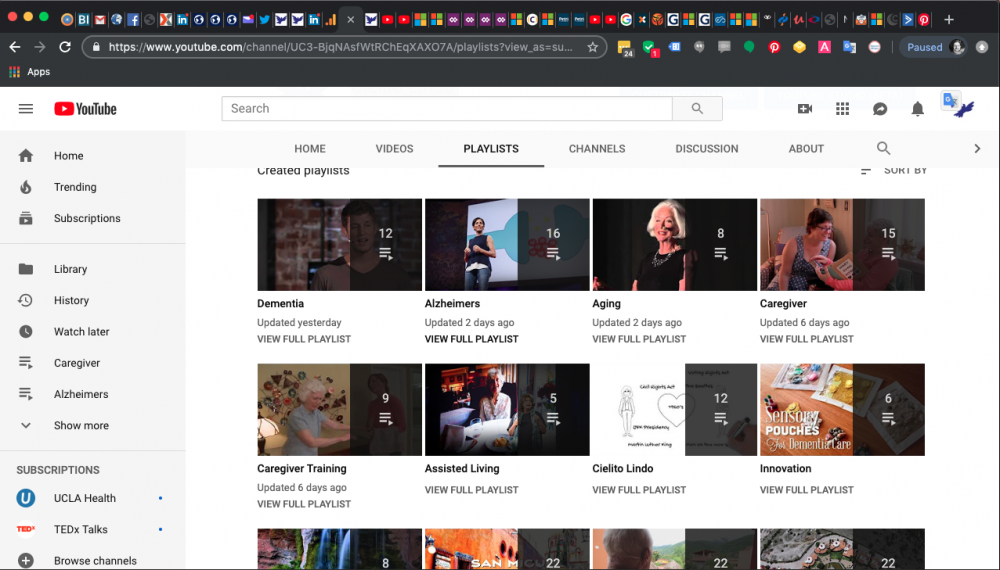
Additionally, our playlists cover a wide area and include 1,200+ videos. These playlists include videos about San Miguel and Mexico in general, caregiving and health, and a broad spectrum of senior living topics. Playlists
|
|
|
|
|
Additional Resources We Offer
We have curated collections of resources that may be useful:
Articles - We write fresh articles about senior living, health, care, and finances every week
Caregiver
Books - We review books related to caregiving methods, logistics, challenges, and coping
Senior Health - We review books related to healthspan, lifespan, and disease
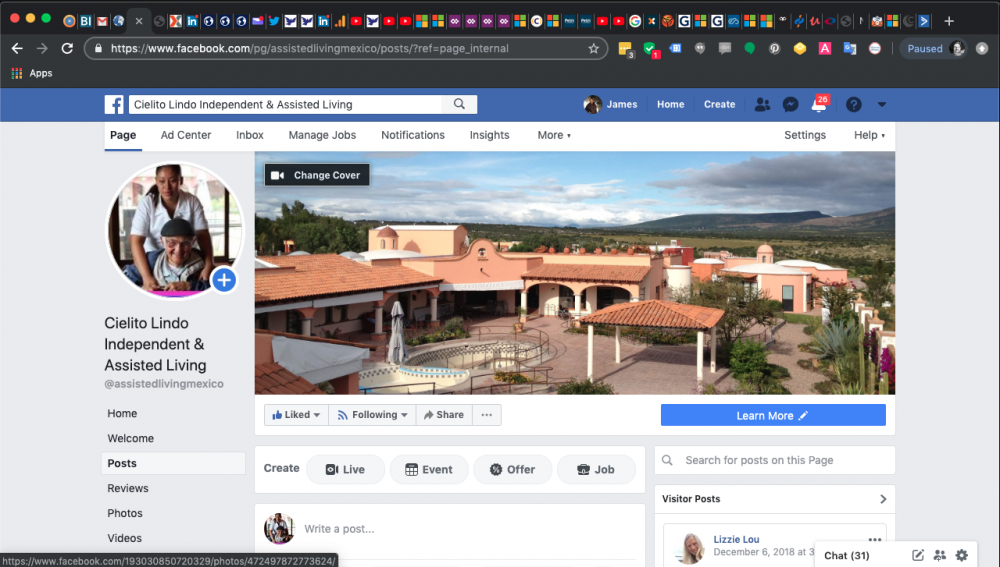
And here are our various social media forums, where we talk a lot about assisted living and memory care along with the various sort of challenges that sometimes come in our senior years (Alzheimer’s, Parkinson other dementias, and so on), but also about senior living in Mexico.
Facebook
|
|
|
|
|
|
|
|
|
|
|
|
|
|
|
|
|
|
|
Please don’t hesitate to contact me for anything related to senior living, especially in Mexico. I will gladly give you any assistance I can.
Thanks again!
James
James Sims
Marketing and Sales
Cielito Lindo Senior Living
1. 888.406.7990 (Voice and text)
1.209.312.0555 (WhatsApp)
Phones:
English speaking:
1.888.406.7990 (in US & CDN)
00.1.881.406.7990 (in MX)
Spanish speaking:
011.52.415.101.0201 (in US & CDN)
1.415.101.0201 (in MX)
Expat Health
Insurance:
ExpatInsurance.com
Tax Considerations for Expats:
Robert Hall Taxes
Medicare in Mexico
Lakeside Medical Group:
Robert Ash - ash@lakemedical
Best Bank:
Intercam Banco
Located in: Plaza De La Conspiración
Address: San Francisco 4, Zona Centro,
37700 San Miguel de Allende, Gto., Mexico
Hours: Open ⋅ Closes 4 PM
Phone: +011 52 415 154 6660
Addresses and Travel:
Physical address:
Cielito Lindo Independent and Assisted Living, Camino Real Los Labradores S/N, Rancho Viejo 1, San Miguel de Allende, GTO, Mexico, 37885
Packages from online providers like Amazon:
Camino Real Los Labradores, Rancho Los Labradores / Cielito Lindo, San Miguel de Allende, GTO, 37880 México
PO Box for letters and small envelopes:
Rancho Los Labradores / Cielito Lindo, c/o Alejandra Serrano , PMB N° 515-C,
220 N Zapata HWY N°11, Laredo TX, 78043-4464
Air:
Best airports to fly into: Leon (BJX) or Queretaro (QRO)
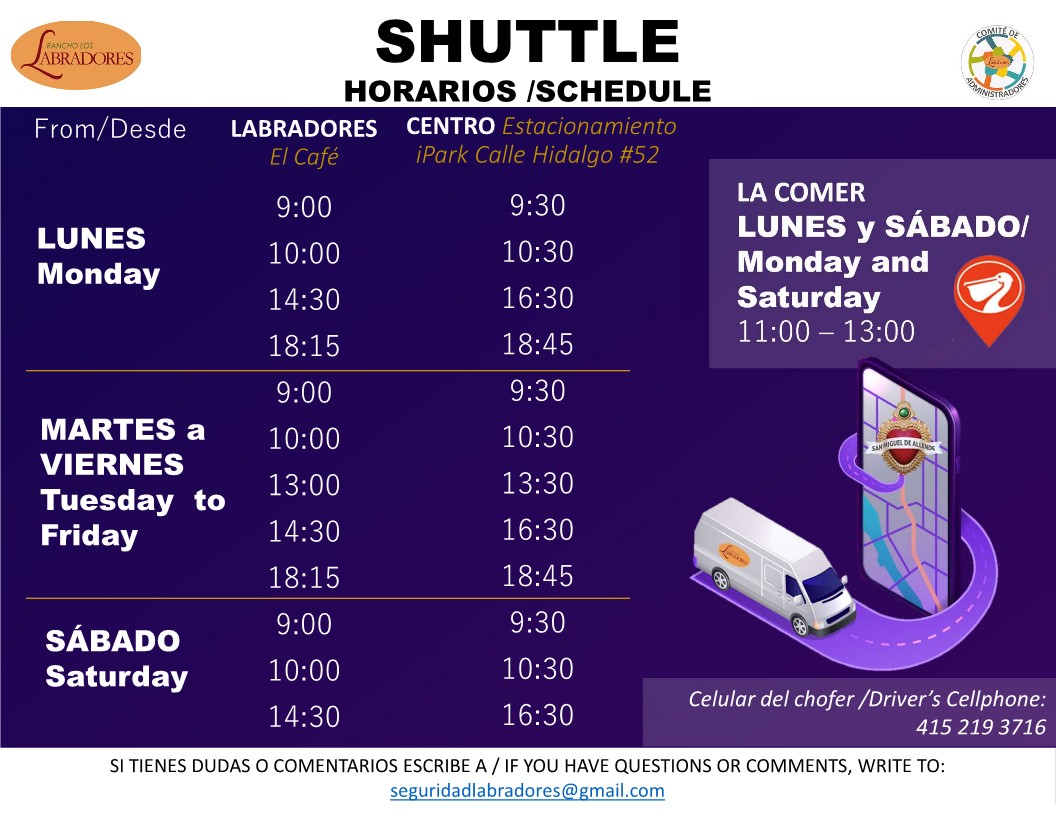
Shuttle:
Best
airport shuttle: BajioGo
Shuttle between San Miguel and Rancho Los Labradores / Cielito Lindo
|
|
|
|
|
|
|
Regards,
James
James Sims
Marketing and Sales
Cielto LIndo Senior Living
jsims.cielitolindo@gmail.com
|
|
|
|
|
|
|
|