|
|
Dear ,
This is your weekly summary of our news, research, books, videos, and other resources related to senior living, retirement, and care in Mexico, along with independent and assisted living and information about age-related challenges (e.g., limited mobility, dementia, Alzheimer's, Parkinson's, ALS, stroke, multiple sclerosis, healthspan, and so on).
I hope you are finding this weekly newsletter helpful, and if you know of someone who may also find this information helpful, please forward it to them. They can subscribe using our Web Newsletter page (click here). If, for any reason, you do not wish to receive this weekly newsletter any longer, there is a simple 'Unsubscribe' or 'Opt Out' link at the bottom right corner of this newsletter and also right here: Unsubscribe
This weekly newsletter typically includes information in each of the following categories: San Miguel insights, senior care, and health information, as well as Cielito Lindo basic information.
Here’s what we typically cover each week:
- San Miguel de Allende highlights – why this is such a special place to live
- Health & wellness insights – articles, videos, and expert reviews
- Care options & community life at Cielito Lindo – flexible, affordable living with a warm, human touch
This Week’s Theme:
This week’s newsletter explores ways that we might reframe our caregiving journey in a positive context..
|
|
|
Is There Life After Caregiving?
Keynote Presention at the 3rd Annual Glogal Make Caregivers Symposium
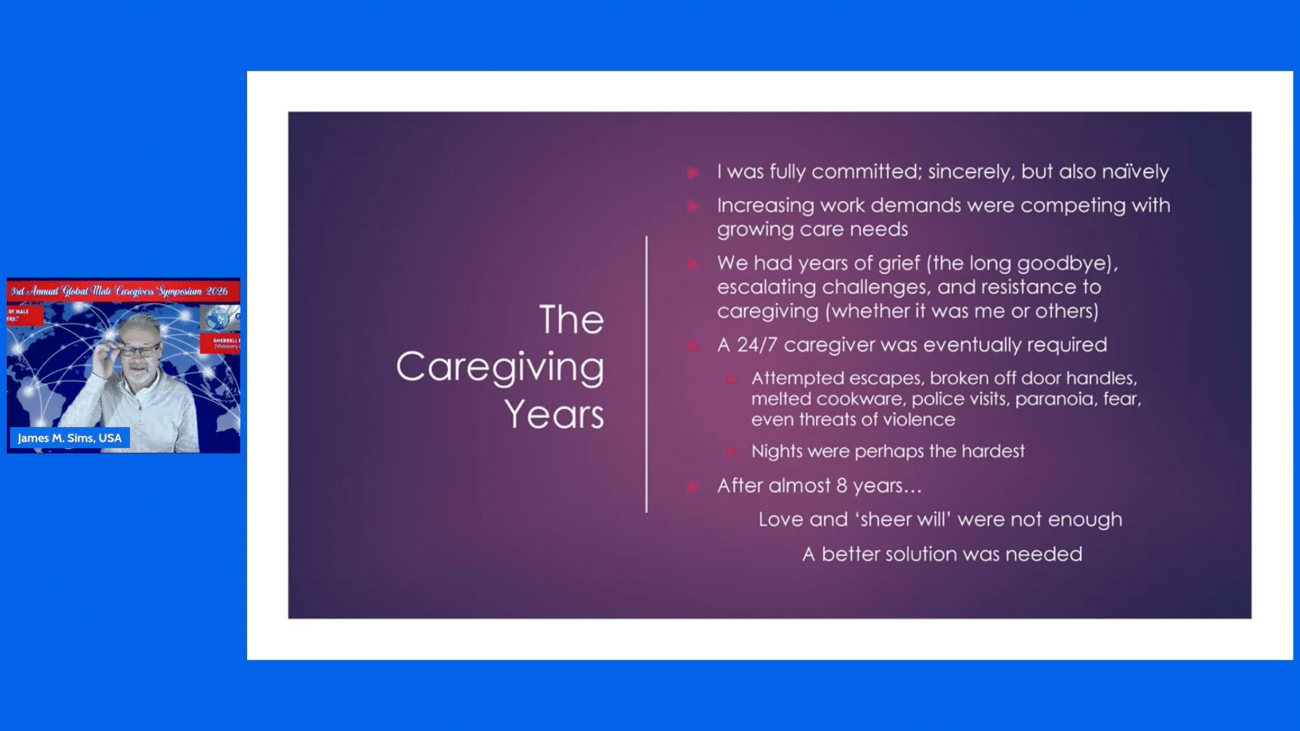
I’m honored to share my keynote presentation from the 3rd Annual Global Male Caregivers Symposium 2026.
For those who were not able to attend the online symposium, I’m making the video available here.
What happens after caregiving changes everything?
In this deeply personal keynote, I reflect on one of the hardest and most honest questions caregivers face: Is there life after caregiving? Drawing from my own journey as a husband, full-time caregiver, and senior health and care advocate, I speak candidly about exhaustion, grief, love, sacrifice, identity, and the unexpected possibility of renewal.
This is more than a talk about caregiving. It is a talk about what caregiving does to the human heart — and how pain, purpose, humility, and compassion can reshape a life.
In this keynote, I share:
• the emotional and financial weight caregivers often carry
• the “long goodbye” of dementia caregiving
• the search for meaningful care solutions
• the grief that remains after caregiving ends
• the possibility of healing, purpose, and a new lease on life
For caregivers, former caregivers, family members, and professionals alike, I hope this message offers understanding, validation, and hope.
While caregiving may change your life forever, it does not mean your life is over.
View the video here on oiur youtube channel
|
|
|
|
|
View the video here on oiur youtube channel
|
|
|
|
|
|
|
| Weekly insights into San Miguel:
|
|
|
- Colorful and Epicurean San Miguel - This is such an amazing place,
particularly the food and the colors. Although we are addressing a topic that is stressful, challenging, and emotional, we should also acknowledge what an incredible place San Miguel is.
|
|
|
|
|
The Colors of San Miguel: Morning Light
There are mornings in San Miguel de Allende when the streets seem to wake up before the rest of us—when the cobblestones still hold the night’s coolness, the lanterns glow softly, and the hills beyond town begin to gather light. I love how this photograph catches that hush: the color of the facades, the steep pull of the street, the first gold touching the trees in the distance. It feels like one of those rare moments when a city shows you its gentler heartbeat.
Photo by Dawn Gaskill, whose eye caught the kind of beauty that can make you stop mid-step and simply look longer. Not the grand, obvious spectacle, but the quiet, radiant grace of a new day arriving.
|
|
|
|
|
Restaurant Review: FirenzeRecreo #13, Zona Centro, 37700 San Miguel de Allende, Guanajuato, Mexico. Reservations: +52 415 121 0763.
Days and Hours: Monday through Saturday, 5:30 p.m. to 9:30 p.m.
Atmosphere: Firenze feels like one of those dependable San Miguel dining rooms that locals protect with near-religious devotion. The space is intimate, cozy, and notably quieter than many Centro restaurants, which makes it especially good for conversation, date night, or a relaxed dinner with friends.
Service: Warm, polished, and attentive service is part of why Firenze has lasted so long at the top of the local conversation. Multiple diners specifically praise the staff’s consistency and professionalism, and the restaurant’s long-running local following suggests a front-of-house that knows how to make regulars feel at home.
Cuisine: Italian and Mediterranean with a San Miguel sensibility: housemade pastas, expertly prepared fish, rich braises, and a menu that leans more toward comfort and finesse than flash. This is a restaurant built on repeat business, not novelty for novelty’s sake.
Signature Dish: The fish special and the boneless beef short rib are the two dishes that come up again and again in praise, and both seem to define Firenze’s reputation. Your note about fish, short ribs, and pasta tracks exactly with what regular diners highlight most.
Starters: Soups appear to be a quiet strength here, and oysters, mussels, and classic Italian openers fit the tone of the menu well. Firenze seems to do starters the way seasoned neighborhood favorites should: confidently, without overcomplication.
Main Courses: This is where Firenze earns its reputation. The seafood preparations are frequently singled out, the short ribs have an almost cult-like following, and the pastas are praised for proper texture and seasoning. Expect hearty, satisfying plates that still show restraint.
Desserts: Desserts are less talked about than the mains, which usually means the savory menu is the star, but diners do note finishing on a positive note. I would treat dessert here as a pleasant coda rather than the main event.
Wine and Cocktails: Firenze appears stronger on wine than on cocktail theatrics. Diners consistently mention enjoying the wine list, and that fits the restaurant’s old-school, dinner-first identity.
Final Thoughts: Firenze is exactly the kind of San Miguel restaurant that earns the phrase “longtime local favorite.” It is not chasing trends; it is delivering what people come back for: excellent fish, deeply satisfying short ribs, very good pasta, and a comfortable room that understands hospitality. Add in its repeated local recognition as one of the city’s best, and Firenze reads as a restaurant that has moved beyond hype into institution status.
Cost: $$$$
Rating: ★★★★½
|
|
|
|
|
| Information related to Mexico, senior care and health:
|
|
|
- Lead article - These are articles specifically written for you each week. They address a wide range of
relevant topics, such as factors that can increase your health and lifespan, diagnostics, understanding causal factors for Alzheimer's and other dementias, and so on. The lead article typically sets the tone for the core content of the newsletter (videos and book reviews). On occasion, the focus may be centered on Mexico, Pueblos Magicos, and San Miguel de Allende.
- Caregiver's Sentiment
- This quote typically honors what we, as caregivers, are going through and feeling.
- Caregiver's Affirmation - This affirmation bolsters our self care, our image or ourselves on this journey and our ability to endure.
- Videos - Typically, three videos are related to the lead article, and they include a summary and timestamped highlights.
- Book Review - Typically related to the lead article.
|
|
|
|
|
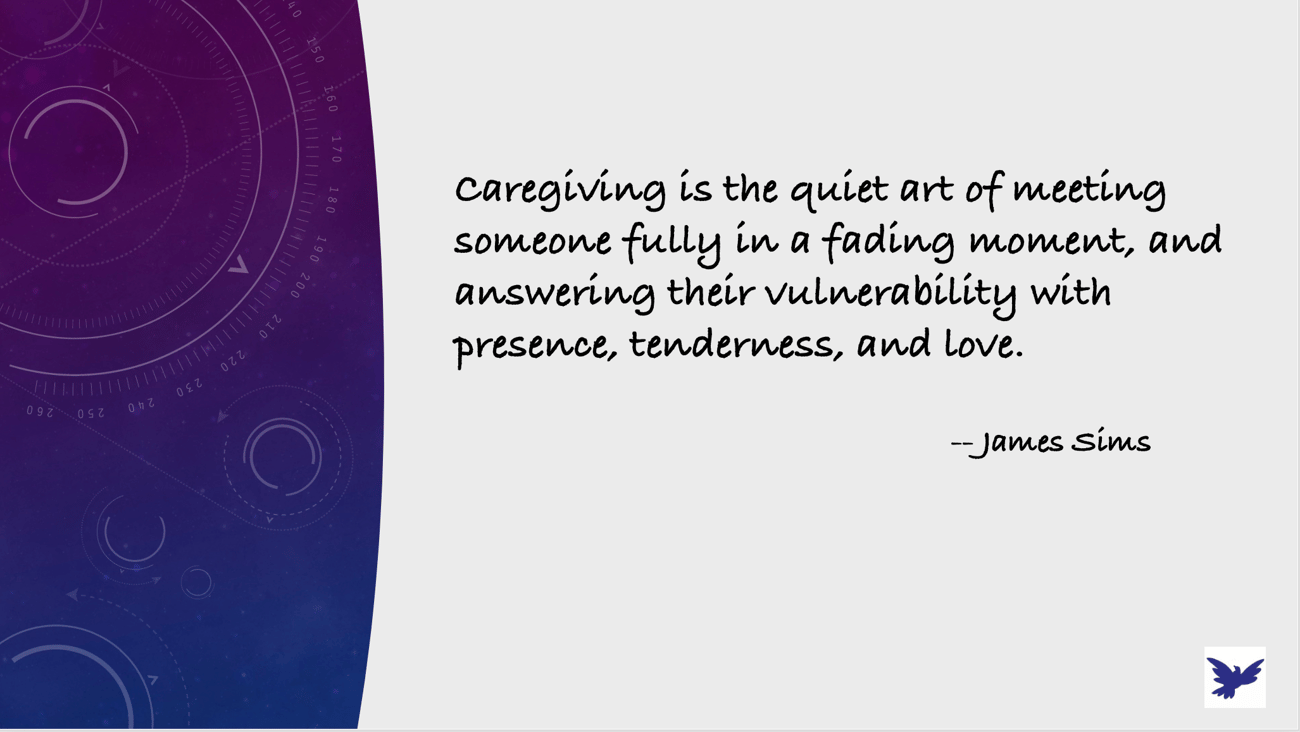
Caregivers' Sentiment: A Way of Being
Caregiving, at its best, is not merely a set of tasks. It is a way of being with another person when life has become more fragile, more uncertain, and more precious. To meet someone fully in a fading moment is to resist the urge to rush past what is difficult or to reduce a person to their diagnosis, limitations, or needs. It is to see the whole human being still present there, worthy of dignity, patience, and deep attention. In that sense, caregiving becomes an act of witness. It says: I see you, I will not look away, and I will honor this moment with you for as long as it is here.
The second half of the quote speaks to the heart of that calling. Vulnerability asks something of us, not perfection, but presence. Not grand speeches, but tenderness. Not easy answers, but love steady enough to remain. Caregivers often stand in places where words fail and outcomes cannot be controlled, yet their gift is to answer fear, confusion, loss, and dependence with gentle faithfulness. That is why caregiving is an art. It is shaped not only by what is done, but by how it is done: with compassion, with calm, and with the quiet courage to keep showing up. In a world that often glorifies power and productivity, caregiving reminds us that some of the most profound human beauty is found in simply staying close to one another when moments begin to
fade.
|
|
|
|
|
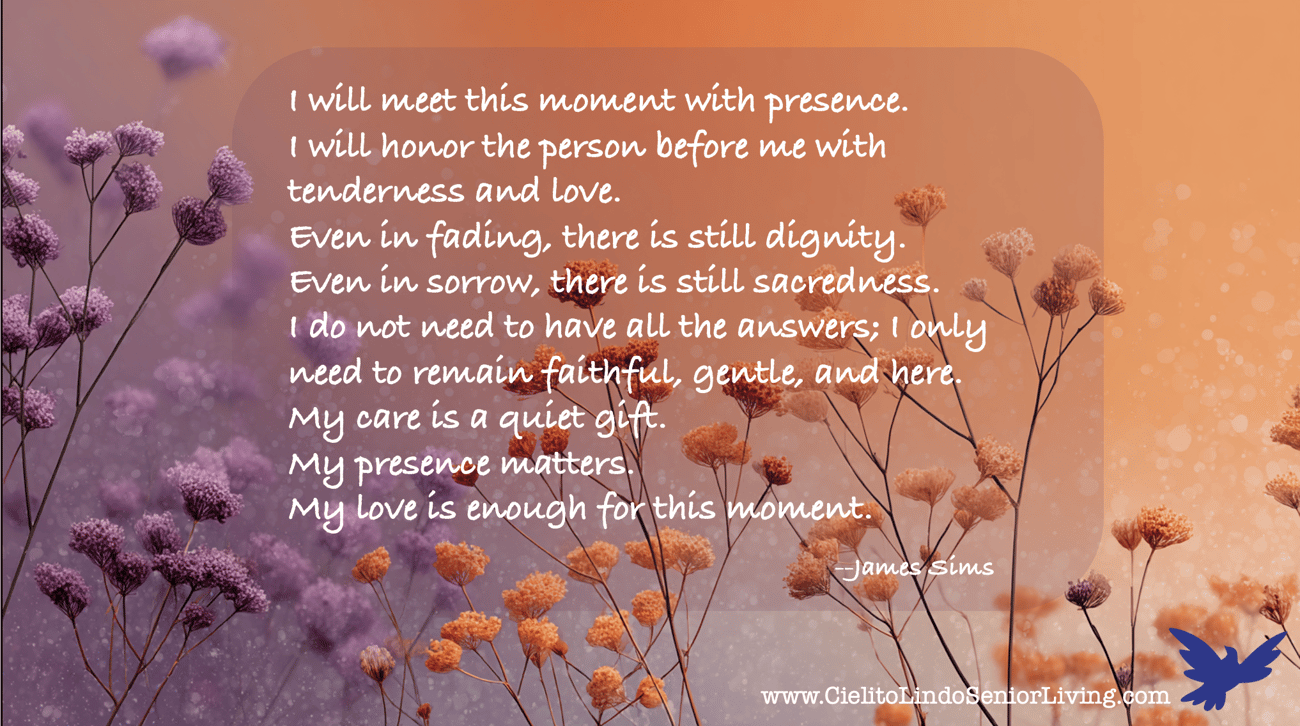
Caregiver's Affirmation
This affirmation speaks to the deep emotional and spiritual posture of caregiving. “I will meet this moment with presence” is a refusal to live only in fear of what is coming or grief over what has already been lost. It is a commitment to be here now, in the one moment that can actually be touched. Caregiving can feel overwhelming because it often carries sorrow, uncertainty, and exhaustion all at once. But this line gently brings the caregiver back to what is possible: not solving everything, not controlling the future, but meeting this one moment with attention, steadiness, and love. It echoes the heart of the article’s wisdom that life is fragile, finite, and therefore sacred in its passing form.
“I will honor the person before me with tenderness and love” reminds us that caregiving is never only about managing needs. It is about protecting personhood. When illness, dementia, or decline begin to change someone’s abilities, the temptation is to focus only on what is fading. But tenderness looks deeper. It sees the soul still present, the dignity still intact, the human worth that no diagnosis can erase. To honor someone in this way is to slow down, to be gentle, to let our care say: you are not a burden, you are not disappearing from value, you are still worthy of reverence and love.
The lines “Even in fading, there is still dignity. Even in sorrow, there is still sacredness” carry the spiritual center of the affirmation. They acknowledge loss without surrendering to despair. Fading is real. Sorrow is real. Dementia, decline, and grief are not romanticized here. And yet the affirmation insists that what is holy is not removed by suffering. There is still beauty in a hand held patiently, still meaning in a quiet shared gaze, still grace in showing up again and again when things are hard. These words give the caregiver permission to grieve while also remembering that the moment has not become empty just because it has become painful.
“I do not need to have all the answers; I only need to remain faithful, gentle, and here” is a merciful correction to the pressure many caregivers carry. Caregivers often feel they must be endlessly strong, endlessly wise, endlessly capable. But much of caregiving unfolds in situations that cannot be fixed. The affirmation releases the caregiver from the burden of perfection and places the emphasis where it belongs: on faithful presence. To be gentle and here is not a lesser offering. It is often the most healing gift available. It says that love does not always arrive as solutions; sometimes it arrives as companionship, patience, and the courage not to leave.
The closing lines, “My care is a quiet gift. My presence matters. My love is enough for this moment,” are especially important because they speak directly to the hidden nature of caregiving. So much of it goes unseen. It can feel repetitive, lonely, and unnoticed. But these words affirm that quiet acts are not small acts. A calm voice, a repeated explanation, a prepared meal, a gentle touch, a moment of patience when frustration would be easier, all of these are forms of love with profound worth. This affirmation tells the caregiver that what they are giving is real, meaningful, and holy, even when the world does not applaud it. And perhaps most tenderly of all, it reminds them that for this moment, love does not need to be perfect to be enough.
|
|
|
|
|
Memento Mori, Ichigo Ichie, and My Friend Wally
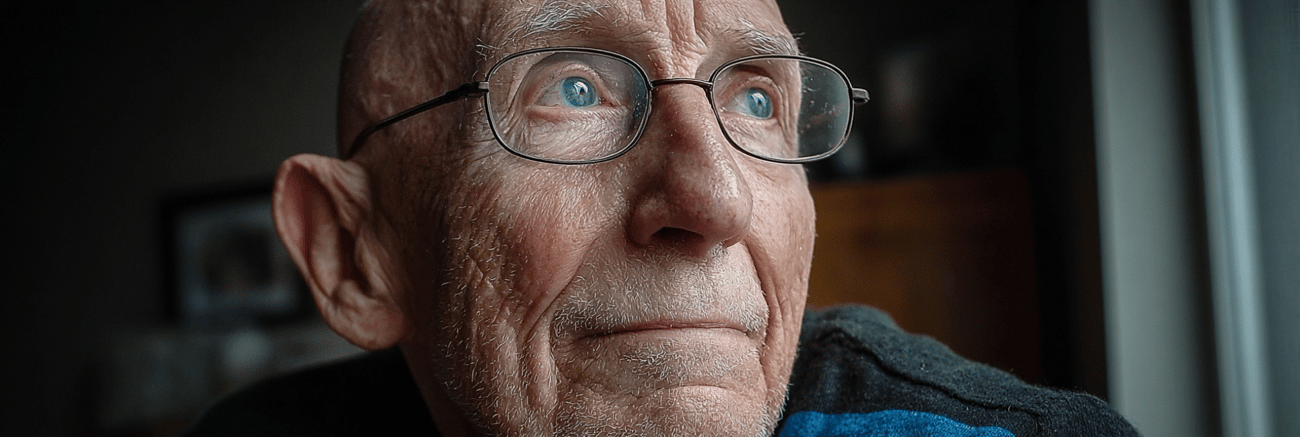
My new friend Wally has early-stage dementia.
He also has a t-shirt that stops people in their tracks. It reads: “I am dying, you should try it. I am here now.”
It may sound funny at first, in a dark and disarming way. Then it settles
into something deeper. The shirt is not really about dying. It is about waking up. It is about presence. It is about the strange clarity that can come when a person stops pretending life is endless.
Wally has every right to be bitter. He has every right to feel cheated, angry, frightened, resentful, or consumed by sorrow. Dementia is cruel. It threatens memory, independence, identity, and the future itself. If anyone were entitled to host a daily pity party, it would be someone facing that reality.
And yet that is not Wally.
You can read the complete article here. Additionally we have 100's of other senior care and health related articles here.
|
|
|
|
|
How Emotions Come to the Forefront in Early Dementia
By James SimsThere are scientific studies, reviews, and articles indicating that emotional reactivity or responses can become relatively heightened (or appear more intense/preserved) as cognitive functions diminish in certain dementias—particularly Alzheimer’s disease (AD) and mild cognitive impairment (MCI), the most common forms—even as memory, executive function, and other cognitive abilities decline.
This is not universal across all dementia types (for example, behavioral variant frontotemporal dementia often involves emotional blunting instead), but evidence from neuroimaging, behavioral studies, and clinical observations supports the pattern in AD/MCI. It is sometimes framed as a compensatory mechanism, an up-regulation of emotion-related brain networks, or a result of impaired cognitive emotion regulation (which normally dampens or contextualizes feelings).
Key Studies and Findings
- A 2013 study (Sturm et al.) directly measured emotional contagion (how strongly a person “catches” and resonates with others’ emotions, a basic form of emotional reactivity) using the Interpersonal Reactivity Index in 237 participants: 111 healthy controls, 62 with MCI, and 64 with AD. Emotional contagion increased linearly and significantly with disease progression (controls < MCI, p < 0.01; MCI < AD, p < 0.001). This was linked to smaller volumes in right-hemisphere temporal lobe structures (including inferior/middle/superior temporal gyri, temporal pole, anterior hippocampus, and
parahippocampal gyrus) that are involved in affective signal detection and emotion inhibition. The authors concluded that neurodegeneration in these areas (which occurs alongside cognitive decline) leads to “up-regulation of emotion-generating mechanisms,” resulting in heightened emotional reactivity. Depressive symptoms rose separately and only weakly correlated with this effect.
- Research on heightened emotion processing as a compensatory mechanism in AD (e.g., Warren, 2022, drawing on the tri-network model of brain networks) notes that despite compromised memory and executive functioning, people with AD often retain (or show) a rich emotional life. Heightened emotions and emotional changes are common even in the prodromal MCI stage and may reflect reliance on preserved
implicit/emotional memory networks when cognitive ones degrade. These can be mistaken for behavioral symptoms but are tied to the disease process itself.
- In preclinical/early AD (amyloid-positive but still cognitively normal individuals), longitudinal data show increasing emotional reactivity with age, alongside declines in interpersonal warmth (in women), detectable before major cognitive or structural changes become apparent. This suggests affective shifts can emerge early and intensify as cognition begins to diminish.
Supporting Observations from Articles and
Clinical Reports
Caregiver-oriented and clinical articles frequently describe heightened emotions, mood swings, or emotional intensity in the middle stages of dementia (when cognitive decline is more noticeable), often in situations that demand thinking or social navigation. Examples include greater frustration, agitation, or raw emotional responses despite memory loss. This aligns with the idea that basic emotional processing can persist or intensify while higher-order cognitive control weakens.
Some explanations in the literature point to reduced emotion-regulation capacity due to cognitive decline: with fewer mental resources for reappraising or suppressing feelings, emotions may feel or appear more raw and intense.
In short, while dementia is primarily defined by cognitive loss, multiple lines of evidence (especially in AD/MCI) show that emotional reactivity can be relatively preserved or even heightened as cognition diminishes—sometimes as a direct consequence of the underlying brain changes. This has implications for care approaches that emphasize emotional connection and validation over purely cognitive strategies. If you’re looking for resources on a specific dementia type or practical caregiving tips, more details could help narrow it down.
|
|
|
|
|
| Cielito Lindo's basic information is included for your convenience:
|
|
|
- Cielito Lindo Info: After the signature, the newsletter
always includes information about Cielito Lindo, so it is at your fingertips when you want it: Our costs, various related websites, social media channels like YouTube, our various addresses, and so on.
- Travel Info: Recommended airports and shuttles.
- Downloadable Brochure: Click here.
|
|
|
Web Sites - Cielito LIndo and Rancho Los Labradores
Here are our Web sites, including Cielito Lindo and Labradores Suites (hotel) all of which are part of the larger Rancho Los Labradores gated community just north of San Miguel de Allende.
Web Sites - Cielito LIndo and Rancho Los Labradores
Here are our Web sites, including Cielito Lindo and Labradores Suites (hotel) all of which are part of the larger Rancho Los Labradores gated community just north of San Miguel de Allende.
- Cielito Lindo provides independent living, light assisted living, assisted living, memory care and hospice with 24*7 staffing along with a la carte assisted living services to those living in the villas and suites at Rancho Los Labradores.
- Rancho Los Labradores Suites offer short and long term residence.
- Rancho Los Labradores is a country club resort feeling CCRC that provides a gated community with countless amenities and opportunities for different levels of independent living along with assisted living and memory care within Cielito Lindo.
Cielito Lindo Living Options & Costs Guide
We offer several living options depending on the level
of care you or your loved one needs. Here’s a breakdown to help you plan:
1) Villas (Rent or Own)
- Cost: $1,300 – $1,700 per month
- Additional Costs: Utilities, renter’s insurance, etc.
- What’s Included: This is mostly independent living.
- Extras: You can add independent or assisted living services (charged separately, à la carte).
- Support: We can connect you with a realtor if you'd like to purchase.
2) Cielito Lindo Condos & Suites
Best for: Independent living with optional assistance.
Option 1: Independent Living + Meals
- Cost: $2,250 per month
Includes:- 2 meals a day
- Hotel like room cleaning, towel and linen service
- Monthly medical check-up
Optional Add-ons:- Meals for an additional person: $450/month
- Extra care services available à la carte
Option 2: Light-Assisted Living in Condos & Suites
- Cost: $3,900 per month
Includes:- Full assisted living services
- Designed for residents who still want independence but need some support
- Smooth transition to full Assisted Living or Memory Care as needs change
- One-Time Inscription Fee: $4,000
For Couples:- $4,900/month for two people
- Same one-time fee ($4,000 per couple)
- Note: Suitability is based on cognitive ability, mobility, and safety.
3) Cielito Lindo Assisted Living, Memory Care, & Hospice
Best for: Seniors needing full-time care and supervision.
- Cost: $3,900 per month
Includes:- 24/7 care and monitoring
- All meals
- Physical therapy
- Full-time doctor on site
- Spacious private room with
bath
- One-Time Inscription Fee: $4,000
- For
Couples: $4,900/month
4) Specialized Hospice Suite
Best for: Intensive care needs or end-of-life comfort and also recuperative at a far lower cost than a hospital- Cost: $4,900 per month
Includes:- Full 24/7 monitoring
- Recuperative, Palliative and hospice care
- On-site doctor
- All meals
- Special space for visiting family
|
|
|
YouTube videos and Curated Playlists
Here is our YouTube Channel. This is where we have lots of videos about Cielito Lindo and Rancho Los Labradores. We also have 1,600+ other senior care and expat in Mexico videos: YouTube |
|
|
|
|
Additionally, our playlists cover a wide area and include 1,200+ videos. These playlists include videos about San Miguel and Mexico in general, caregiving and health, and a broad spectrum of senior living topics. Playlists
|
|
|
|
|
Additional Resources We Offer
We have curated collections of resources that may be useful:
Articles - We write fresh articles about senior living, health, care, and finances every week
Caregiver
Books - We review books related to caregiving methods, logistics, challenges, and coping
Senior Health - We review books related to healthspan, lifespan, and disease
And here are our various social media forums, where we talk a lot about assisted living and memory care along with the various sort of challenges that sometimes come in our senior years (Alzheimer’s, Parkinson other dementias, and so on), but also about senior living in Mexico.
Facebook
|
|
|
|
|
|
|
|
|
|
|
Please don’t hesitate to contact me for anything related to senior living, especially in Mexico. I will gladly give you any assistance I can.
Thanks again!
James
James Sims
Marketing and Sales
Cielito Lindo Senior Living
1. 888.406.7990 (Voice and text)
1.209.312.0555 (WhatsApp)
Phones:
English speaking:
1.888.406.7990 (in US & CDN)
00.1.881.406.7990 (in MX)
Spanish speaking:
011.52.415.101.0201 (in US & CDN)
1.415.101.0201 (in MX)
SMA Colonias (subdivisions/neighborhoods):
Map and descriptions
Addresses and Travel:
Physical address:
Cielito Lindo Independent and Assisted Living, Camino Real Los Labradores S/N, Rancho Viejo 1, San Miguel de Allende, GTO, Mexico, 37885
Packages from online providers like Amazon:
Camino Real Los Labradores, Rancho Los Labradores / Cielito Lindo, San Miguel de Allende, GTO, 37880 México
PO Box for letters and small envelopes:
Rancho Los Labradores / Cielito Lindo, c/o Alejandra Serrano , PMB N° 515-C,
220 N Zapata HWY N°11, Laredo TX, 78043-4464
Air:
Best airports to fly into: Leon (BJX) or Queretaro (QRO)
Shuttle:
Best
airport shuttle: BajioGo
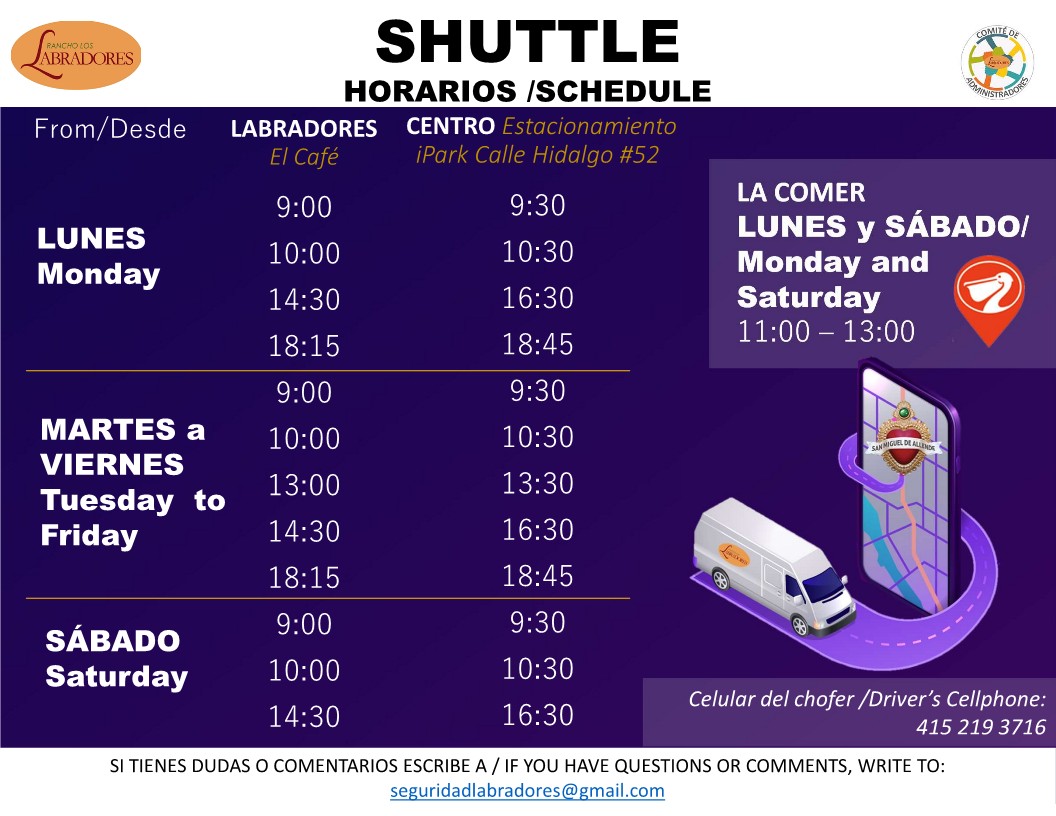
Shuttle between San Miguel and Rancho Los Labradores / Cielito Lindo
|
|
|
|
|
|
|
|
|
|
|