|
|
Dear ,
This is your weekly summary of our news, research, books, videos, and other resources related to senior living, retirement, and care in Mexico, along with independent and assisted living and information about age-related challenges (e.g., limited mobility, dementia, Alzheimer's, Parkinson's, ALS, stroke, multiple sclerosis, healthspan, and so on).
I hope you are finding this weekly newsletter helpful, and if you know of someone who may also find this information helpful, please forward it to them. They can subscribe using our Web Newsletter page (click here). If, for any reason, you do not wish to receive this weekly newsletter any longer, there is a simple 'Unsubscribe' or 'Opt Out' link at the bottom right corner of this newsletter and also right here: Unsubscribe
This weekly newsletter typically includes information in each of the following categories: San Miguel insights, senior care, and health information, as well as Cielito Lindo basic information.
Here’s what we typically cover each week:
- San Miguel de Allende highlights – why this is such a special place to live
- Health & wellness insights – articles, videos, and expert reviews
- Care options & community life at Cielito Lindo – flexible, affordable living with a warm, human touch
This Week’s Theme: The Unacknowledged Caregiver
This week, we explore how arthritis and degenerative joint disease plague seniors.
Holiday Message
|
|
|
|
|
| Weekly insights into San Miguel:
|
|
|
- Colorful and Epicurean San Miguel - This is such an amazing place,
particularly the food and the colors. Although we are addressing a topic that is stressful, challenging, and emotional, we should also acknowledge what an incredible place San Miguel is.
|
|
|
|
|
The Colors of San Miguel: San Ignacio's Birthday
The Parroquia rises like a cathedral in a dream — not quite of this earth, its pink spires catching fire with every burst above. Fireworks lace the sky in spirals and silvers, their echoes bouncing off the cobbled streets like ancient drums, calling back saints and shadows. It is San Ignacio's night — and the city remembers.
Crowds gather shoulder to shoulder, hushed not by silence but by reverence. Children lift their chins to the sky, eyes wide, faces lit by emerald sparks.
Somewhere near the garden, an abuelita clasps her rosary with one hand and a concha in the other, whispering a prayer between bites. Couples hold each other a little tighter. Friends share mezcal from pocket flasks. Even the streetlamps seem to glow with extra warmth tonight.
There’s something sacred in this chaos — in the way beauty and devotion collide midair. San Ignacio, protector of souls, is honored not with quiet, but with sky-shaking joy. And beneath it all, the Parroquia glows patiently, timeless, as if she's seen a thousand nights like this — and knows a thousand more will come.
You feel it too — that something eternal lives here, just beneath the crackle of fireworks and the scent of burnt sugar and gunpowder.
(Photo courtesy of Ian Gough, San Miguel photographer)
|
|
|
|
|
Tastes of San Miguel: Ghar Restaurant
Address & Phone: Mesones 14, Zona Centro, San Miguel de Allende, Gto., 37700, Mexico
Phone: +52 415 690 3703
Days & Hours:
Open for brunch Wednesday through Monday, 9:00 a.m. – 1:00 p.m.
Lunch/Dinner service from
2:00 p.m. – 11:00 p.m. Closed Tuesdays
Atmosphere: Located within the charming colonial courtyard of Casa Hoyos, Ghar offers an elegant yet relaxed ambiance that blends Indian warmth with Mexican colonial architecture. The open-air setting and refined décor make it a standout for leisurely meals that feel upscale but approachable.
Service: Service is attentive and informed, reflecting the restaurant’s commitment to both hospitality and culinary integrity. Staff are well-versed in the menu and responsive to dietary preferences, a necessity given the restaurant's creative fusion approach.
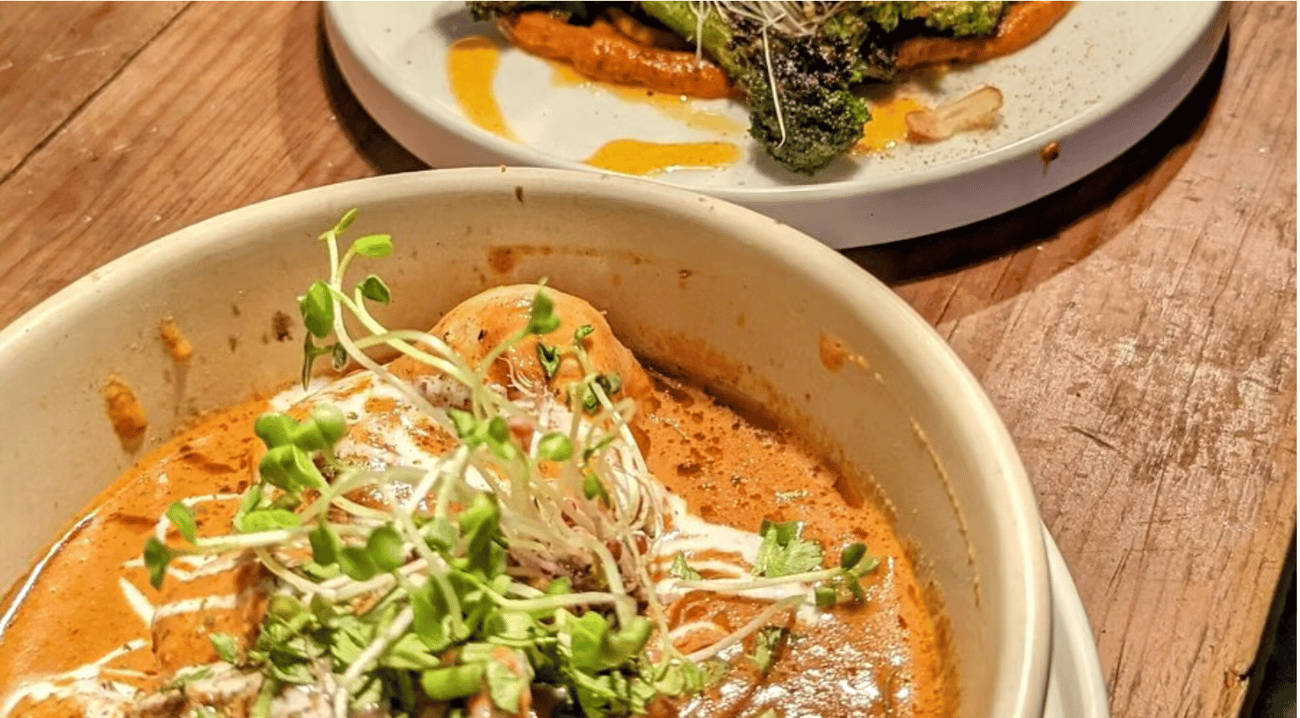
Cuisine: Ghar offers Indian cuisine with a contemporary and local twist. Chef Hiran Patel, originally from Gujarat and trained in Chicago, brings a refined vision that honors Indian culinary traditions while incorporating Mexican ingredients and sensibilities. The result is a harmonious fusion where masalas meet moles, with flavors both familiar and refreshingly unexpected.
Signature Dish: The tandoor-grilled lamb chops — aromatic, juicy, and expertly spiced — are a standout. A perfect marriage of Indian grilling tradition and local sourcing.
Starters: The nopales pakora is a brilliant example of cross-cultural innovation. Using the classic Indian fritter technique on a cactus native to Mexico yields a dish that’s both novel and nostalgic.
Main Courses:
- Tandoor-grilled lamb chops
- Baja mussels in a fiery Goan Vindaloo sauce — bold and beautifully balanced
- Creamy korma with local setas (mushrooms) — a rich and satisfying vegetarian option
Each dish reflects technique, creativity, and attention to balance — from spice to texture.
Desserts: While the current dessert offerings weren’t
highlighted in the original write-up, Ghar's attention to detail suggests a dessert menu aligned with the rest of the culinary philosophy — likely small, well-executed, and possibly drawing from both Indian and Mexican traditions.
Wine and Cocktails: Expect a thoughtful cocktail list and wine selection, likely tailored to complement the bold spices and rich
sauces of Indian cuisine. The setting within Casa Hoyos, which features a rooftop bar, hints at a refined drinks program worth exploring.
Final Thoughts: Ghar is a sophisticated and inventive addition to San Miguel de Allende’s increasingly global culinary scene. It offers a welcome departure from formulaic Indian restaurants, focusing instead on deep
flavors, seasonal ingredients, and cultural synergy. The courtyard setting adds to the charm, making it a destination for both locals and travelers looking for something both grounded and adventurous.
Cost: $$$ Reasonably priced for a fine dining experience in San Miguel. Elevated but not extravagant.
Rating: ★★★★☆ (4 out of 5 stars) A beautifully executed concept with strong dishes and thoughtful ambiance. A bit more depth in the dessert or beverage offerings could elevate it further — but as is, it’s an exciting and memorable dining experience.
|
|
|
|
|
| Information related to Mexico, senior care and health:
|
|
|
- Lead article - These are articles specifically written for you each week. They address a wide range of
relevant topics, such as factors that can increase your health and lifespan, diagnostics, understanding causal factors for Alzheimer's and other dementias, and so on. The lead article typically sets the tone for the core content of the newsletter (videos and book reviews). On occasion, the focus may be centered on Mexico, Pueblos Magicos, and San Miguel de Allende.
- Caregiver's Sentiment
- This quote typically honors what we, as caregivers, are going through and feeling.
- Caregiver's Affirmation - This affirmation bolsters our self care, our image or ourselves on this journey and our ability to endure.
- Videos - Typically, three videos are related to the lead article, and they include a summary and timestamped highlights.
- Book Review - Typically related to the lead article.
|
|
|
|
|
Article: Why Joints Hurt With Age - Understanding Arthritis and Degenerative Joint Disease in Seniors
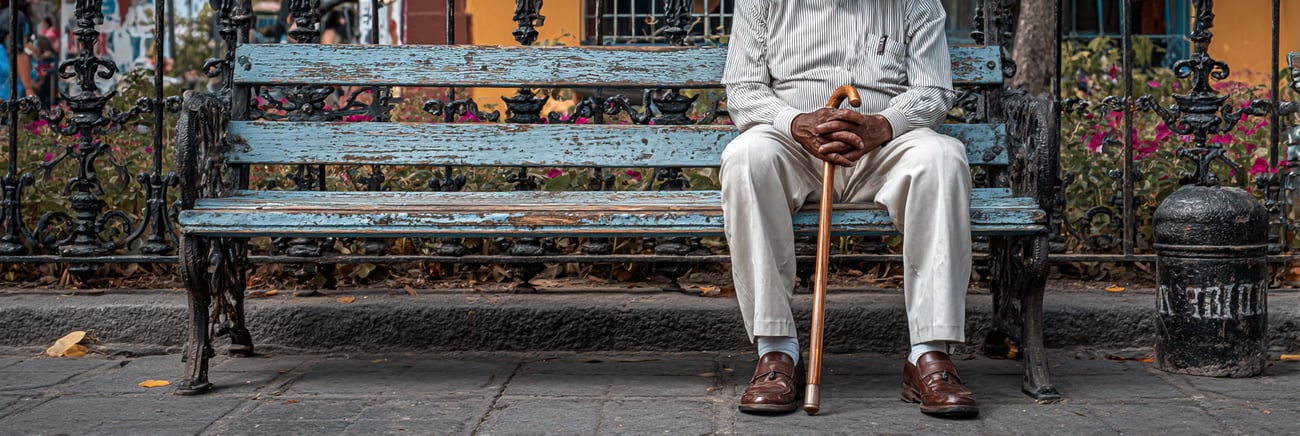
For many people, the first sign of aging isn’t gray hair or wrinkles—it’s the moment they hesitate before standing up, grip a jar a little tighter, or quietly calculate whether a walk, a trip, or a hobby is “worth the pain.” Achy knees, stiff fingers, sore hips, and unreliable
shoulders become so common with age that they are often accepted without protest. Friends, doctors, and even advertisements reinforce the same message: this is normal, this is arthritis, this is what getting older looks like.
But that story is incomplete—and in many ways, wrong. While joint pain is common in later life, debilitating joint pain is not an unavoidable biological destiny. It is the end result of decades-long interactions between movement, muscle loss, diet, metabolic health, injury, stress, sleep, and medical decision-making—many of which are modifiable even late in life. This article examines why joints hurt as we age, why conventional treatments so often disappoint, and what actually helps preserve mobility and independence. Not by promising miracle cures, but by replacing comforting myths with uncomfortable truths—and, in the process, offering something far more valuable than false reassurance: realistic hope.
Article Highlights- Joint pain is common with age, but not
inevitable. Aging increases vulnerability, but lifestyle, metabolism, and muscle health largely determine outcomes.
- “Arthritis” is not one disease. Degenerative, inflammatory, and metabolic forms differ and require distinct strategies.
- Joints are living systems, not mechanical hinges. They depend on movement, muscle support, circulation, and repair—not just intact cartilage.
- Muscle loss is a major driver of disability. Weak muscles shift stress onto joints and often matter more than cartilage damage.
- Pain does not equal damage. Severe pain can occur with minimal structural changes, while advanced degeneration may cause little discomfort.
- Sedentary behavior and repetitive overuse are both harmful. Joints deteriorate
with too little movement—or too much of the wrong kind.
- Excess weight harms joints mechanically and metabolically. Body fat promotes inflammation that affects even non–weight-bearing joints.
- Diet and metabolic
health strongly influence joint pain. Insulin resistance, ultra-processed foods, and chronic inflammation accelerate degeneration.
- Many joint injuries cast a decades-long shadow. Poorly rehabilitated injuries are a leading cause of later-life arthritis.
- Sleep, stress, and medications matter more than most people realize. Chronic stress, poor sleep, and polypharmacy amplify pain and impair repair.
- Conventional treatments often manage symptoms, not causes. Painkillers and injections rarely change long-term joint health.
- Imaging is an unreliable guide to suffering. X-rays and MRIs frequently mislead patients and drive unnecessary fear or overtreatment.
- Strength training is one of the most effective interventions
available. It remains beneficial well into advanced age and is underutilized.
- There are no miracle cures—progress comes from stacking small wins. Movement, nutrition, sleep, strength, and load management work together.
- Better joint care restores agency, not dependency. The goal is functional, resilient joints—not perfect images or permanent pain suppression.
- What harms the brain in “type 3 diabetes” also harms joints. Insulin resistance and chronic inflammation—central to type 2 diabetes and Alzheimer’s disease—are strongly associated with earlier, more painful osteoarthritis, challenging the idea that arthritis is merely mechanical “wear and tear.”
You can access the article here. Additionally, we have 100's of senior health and care-related articles (over 600,000 words) which can be found here.
|
|
|
|
|
Caregiver's Sentiment: A Double-Edged Sword
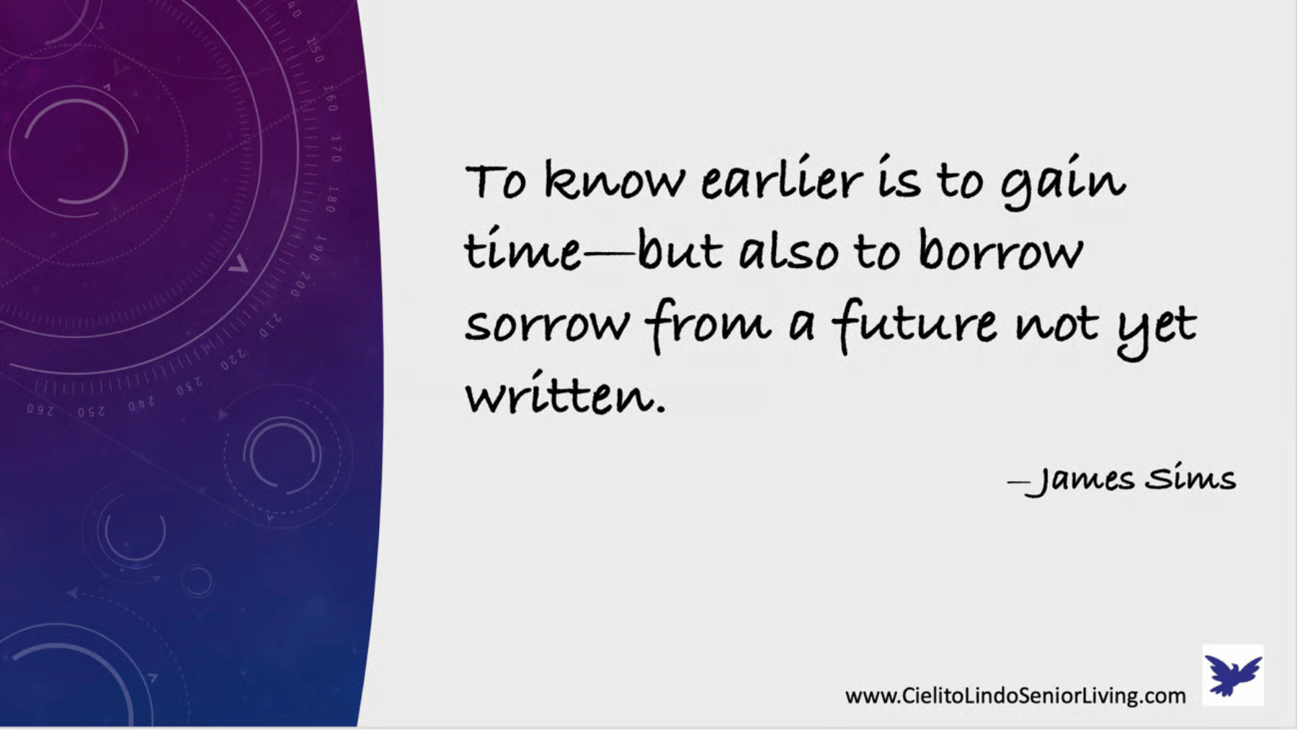
“To know earlier is to gain time—but also to borrow sorrow from a future not yet written.”
Early detection (e.g., ten years earlier) of Alzheimer’s offers undeniable advantages: the opportunity to plan, to begin treatments sooner, and to reclaim agency in the face of an unpredictable illness. For many, it brings relief after months or years of uncertainty. But clarity comes with a cost. A diagnosis delivered years before symptoms appear can begin a long vigil of anxiety—where every moment of forgetfulness may feel like the beginning of decline, and each passing year carries the weight of anticipation.
This quote captures that bittersweet paradox. Scientific progress gives us new tools, but it also forces us to confront uncomfortable truths sooner. The emotional burden of living in Alzheimer’s shadow for years must not be overlooked. If we are to embrace early diagnosis, we must also build systems of emotional, social, and legal support robust enough to carry the weight of this new knowledge.
|
|
|
|
|
Caregiver's Affirmation
This affirmation is a declaration of resilience in the face of ignorance. Too often, caregivers are second-guessed by those who offer opinions without offering help. But judgment from the sidelines lacks the context of sleepless nights, difficult trade-offs, and daily sacrifices. This affirmation reminds caregivers that only those who show up get to speak with authority—and that the daily labor of love they perform is worth more than a thousand uninformed opinions.
It offers a powerful shift in mindset: from seeking approval to owning truth. It encourages caregivers to place their trust not in others' reactions, but in their own experience. By doing so, they reclaim autonomy, silence guilt, and recognize that their efforts are not only enough—they are heroic.
|
|
|
|
|
I am sharing this video because arthritis and chronic inflammation affect nearly all of us as we age, whether we are older adults ourselves or caregivers supporting loved ones. What is often overlooked is that the same underlying drivers of arthritis and degenerative joint disease, particularly insulin resistance, metabolic dysfunction, and chronic low-grade inflammation, are also central contributors to Alzheimer’s disease and other neurodegenerative conditions. Joint pain, metabolic disease, and cognitive decline are not isolated problems; they are frequently different expressions of the same systemic processes.
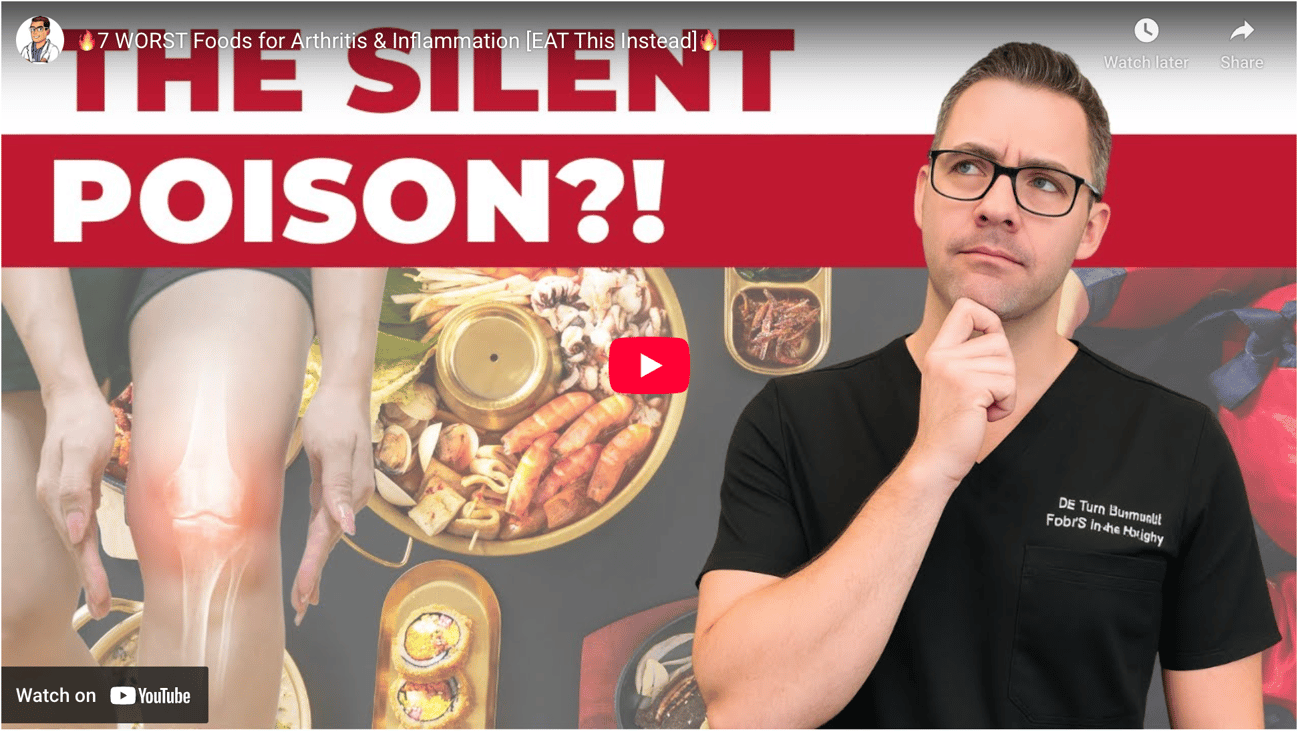
Video: 7 WORST Foods for Arthritis & Inflammation [EAT This Instead]
In this evidence-driven nutrition video, Tom Bernanke examines how diet directly influences joint pain, arthritis, and systemic inflammation. Framed around multiple forms of arthritis, including osteoarthritis, gout, and autoimmune conditions such as rheumatoid arthritis, the video emphasizes that joint disease is not purely mechanical. Instead, it is deeply intertwined with metabolism, blood sugar regulation, inflammatory signaling, and nutrient
balance. Throughout, Bernanke anchors his claims in clinical and animal studies, repeatedly linking dietary patterns to inflammatory cytokines, insulin resistance, tendon stiffness, and crystal formation within joints.
The first half of the video outlines the seven worst dietary contributors to joint pain, focusing on processed meats, alcohol, refined carbohydrates, inflammatory seed oils, hydrogenated trans fats, high-fructose corn syrup, and excess sugar exposure, particularly in the context of gout. Each category is tied to specific biological mechanisms, including advanced glycation end products (AGEs), omega-6 fatty acid imbalance, impaired nutrient absorption, and elevated markers such as CRP and interleukin-6. A recurring theme is that chronic inflammation is often driven by dietary excess
rather than aging alone.
The video concludes with a practical pivot toward evidence-supported alternatives, highlighting anti-inflammatory foods and compounds such as turmeric and curcumin, omega-3–rich fish, green tea extract, and targeted supplementation. Hydration, sugar reduction, and metabolic control are emphasized as foundational strategies. Rather than promoting restriction alone, the video reframes dietary change as a substitution strategy, replacing inflammatory inputs with nutrients shown to support joint health and reduce systemic inflammation.
Key Timestamped Highlights
00:00–00:17 – Introduction and promise of study-supported dietary guidance for joint pai
00:17–01:12 – Overview of arthritis types: osteoarthritis, gout, autoimmune arthritis, and diabetes-related joint stiffness
01:12–01:31 – Metabolic dysfunction as a driver of stiff tendons, crystals, and joint inflammation
Worst Foods for Arthritis & Inflammation
01:31–02:13 – Processed meats and AGEs; links to inflammatory cytokines and joint pain
02:13–03:26 – Alcohol intake thresholds, gut inflammation, and impaired nutrient absorption
03:26–04:37 – Refined carbohydrates, glycemic index, tendon stiffness, and joint loading
04:37–06:08 – Inflammatory seed oils, omega-6 to omega-3 imbalance, and chronic inflammation
06:08–07:30 – Hydrogenated trans fats, processed foods, and metabolic syndrome
07:30–08:49 – High-fructose corn syrup, soda, cytokine activation, and loss of anti-inflammatory markers
09:13–10:47 – Sugar, fruit, and gout; uric acid crystal formation and hydration strategies
What to Eat Instead
11:08–11:32 – Turmeric and curcumin; population-level intake and inflammation reduction
11:32–11:52 – Omega-3 fatty acids from fish; importance of correcting fatty acid ratios
12:14–12:24 – Green tea extract, collagen, and supportive supplementation
12:24–End – Summary of dietary substitution strategy and closing recommendations
|
|
|
|
|
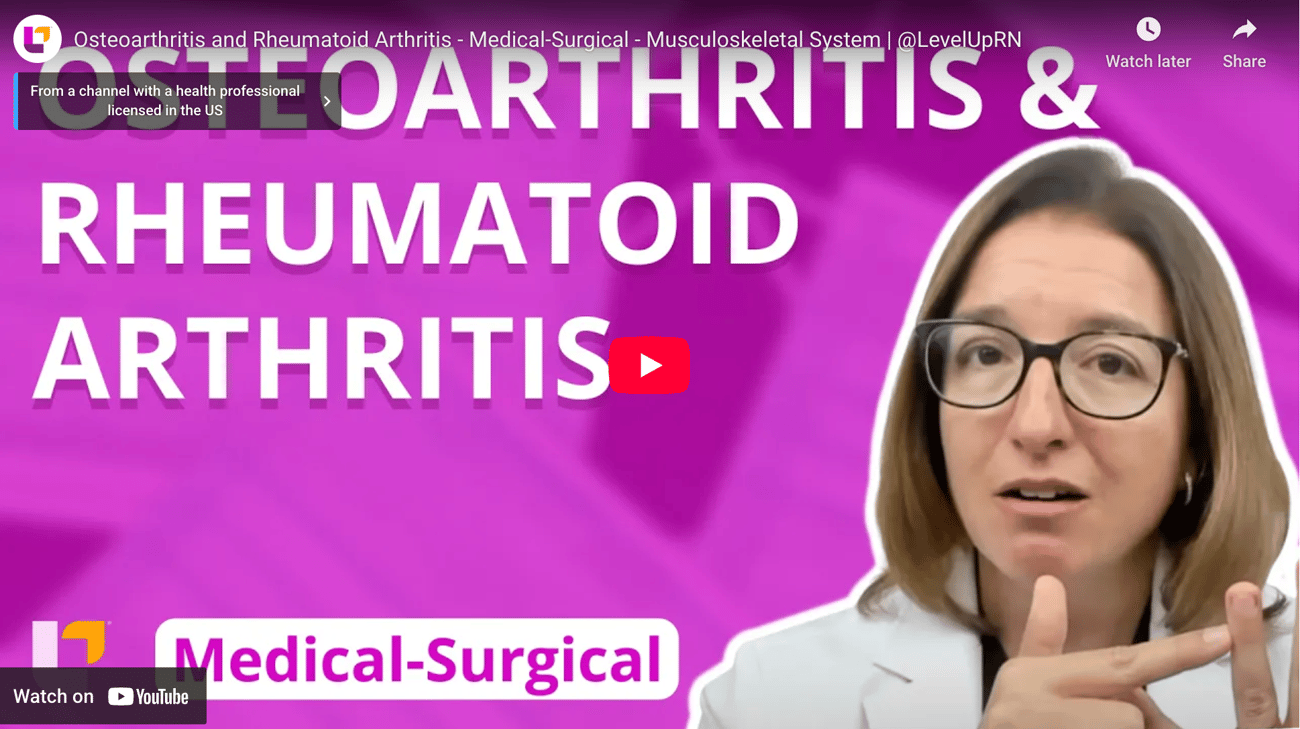
Video: Osteoarthritis and Rheumatoid Arthritis
In this clear, exam-oriented teaching video, LevelUpRN walks through a structured comparison of osteoarthritis (OA) and rheumatoid arthritis (RA), emphasizing pathophysiology, clinical presentation, diagnostics, and treatment approaches. The instructor begins by grounding osteoarthritis as a degenerative, mechanical process, driven by cartilage wear, inflammation, and reduced joint mobility, particularly in weight-bearing joints. Risk factors such as age, obesity, repetitive stress, and smoking are highlighted, along with hallmark features including crepitus, joint enlargement, and Heberden’s and Bouchard’s nodes.
The video then contrasts this with rheumatoid arthritis, which is framed as a systemic autoimmune disease affecting the synovium and leading to chronic inflammation, cartilage destruction, and joint deformity. Key distinctions are reinforced through patterns of pain, OA worsening with activity and improving with rest, RA presenting with morning stiffness and improving with movement, as well as symmetry of joint involvement. The instructor also outlines classic RA deformities, including swan-neck and boutonniere deformities, ulnar drift, and systemic features such as subcutaneous
nodules and lymphadenopathy.
Throughout, the content is tightly aligned to nursing education priorities, highlighting high-yield lab findings, imaging, pharmacologic treatments, and patient education strategies. The video concludes by synthesizing differences between OA and RA into a concise comparison framework and reinforcing learning with a short quiz, making it especially useful for exam preparation and clinical differentiation.
Key Timestamped Highlights
00:00–00:42 – Introduction to osteoarthritis vs. rheumatoid arthritis and learning objectives
00:42–01:14 – Definition of osteoarthritis and degeneration of articular cartilage
01:14–01:47 – OA risk factors and core symptoms, including crepitus
02:20–02:46 – Heberden’s nodes (DIP joints) and Bouchard’s nodes (PIP joints)
03:21–04:17 – OA treatments: NSAIDs, topical agents, glucosamine, corticosteroid and hyaluronic acid injections
04:17–05:15 – Patient education for OA: activity balance, weight loss, strength training, ice vs. heat
05:15–05:40 – Transition to rheumatoid arthritis as an autoimmune disorder
05:40–06:27 – RA pathophysiology, risk factors, and bilateral, symmetrical joint involvement
06:27–07:35 – RA deformities: swan-neck, boutonniere deformities, and ulnar drift
07:35–08:33 – Systemic RA symptoms and abnormal laboratory findings (RF, ANA, ESR, CRP)
08:33–09:12 – Diagnostic imaging and arthrocentesis in RA
09:12–09:33 – RA treatments: immunosuppressants, NSAIDs, hydroxychloroquine
09:33–10:26 – Nursing care and patient teaching for RA, including Sjögren’s syndrome monitoring
10:51–12:58 – Direct comparison of OA vs. RA, pain patterns, joint involvement, nodes vs. deformities, lab differences
12:58–13:51 – Knowledge-check quiz reinforcing key distinctions
13:51–14:26 – Closing remarks and study encouragement
|
|
|
|
|
| Cielito Lindo's basic information is included for your convenience:
|
|
|
- Cielito Lindo Info: After the signature, the newsletter always includes information about Cielito Lindo, so it is at your fingertips when you want it: Our costs, various related websites, social media channels like YouTube, our various addresses, and so on.
- Travel Info: Recommended airports and shuttles.
|
|
|
Web Sites - Cielito LIndo and Rancho Los Labradores
Here are our Web sites, including Cielito Lindo and Labradores Suites (hotel) all of which are part of the larger Rancho Los Labradores gated community just north of San Miguel de Allende.
Web Sites - Cielito LIndo and Rancho Los Labradores
Here are our Web sites, including Cielito Lindo and Labradores Suites (hotel) all of which are part of the larger Rancho Los Labradores gated community just north of San Miguel de Allende.
- Cielito Lindo provides independent living, light assisted living, assisted living, memory care and hospice with 24*7 staffing along with a la carte assisted living services to those living in the villas and suites at Rancho Los Labradores.
- Rancho Los Labradores Suites offer short and long term residence.
- Rancho Los Labradores is a country club resort feeling CCRC that provides a gated community with countless amenities and opportunities for different levels of independent living along with assisted living and memory care within Cielito Lindo.
Cielito Lindo Living Options & Costs Guide
We offer several living options depending on the level
of care you or your loved one needs. Here’s a breakdown to help you plan:
1) Villas (Rent or Own)
- Cost: $1,300 – $1,700 per month
- Additional Costs: Utilities, renter’s insurance, etc.
- What’s Included: This is mostly independent living.
- Extras: You can add independent or assisted living services (charged separately, à la carte).
- Support: We can connect you with a realtor if you'd like to purchase.
2) Cielito Lindo Condos & Suites
Best for: Independent living with optional assistance.
Option 1: Independent Living + Meals
- Cost: $2,250 per month
Includes:- 2 meals a day
- Hotel like room cleaning, towel and linen service
- Monthly medical check-up
Optional Add-ons:- Meals for an additional person: $450/month
- Extra care services available à la carte
Option 2: Light-Assisted Living in Condos & Suites
- Cost: $3,900 per month
Includes:- Full assisted living services
- Designed for residents who still want independence but need some support
- Smooth transition to full Assisted Living or Memory Care as needs change
- One-Time Inscription Fee: $4,000
For Couples:- $4,900/month for two people
- Same one-time fee ($4,000 per couple)
- Note: Suitability is based on cognitive ability, mobility, and safety.
3) Cielito Lindo Assisted Living, Memory Care, & Hospice
Best for: Seniors needing full-time care and supervision.
- Cost: $3,900 per month
Includes:- 24/7 care and monitoring
- All meals
- Physical therapy
- Full-time doctor on site
- Spacious private room with
bath
- One-Time Inscription Fee: $4,000
- For
Couples: $4,900/month
4) Specialized Hospice Suite
Best for: Intensive care needs or end-of-life comfort and also recuperative at a far lower cost than a hospital- Cost: $4,900 per month
Includes:- Full 24/7 monitoring
- Recuperative, Palliative and hospice care
- On-site doctor
- All meals
- Special space for visiting family
|
|
|
YouTube videos and Curated Playlists
Here is our YouTube Channel. This is where we have lots of videos about Cielito Lindo and Rancho Los Labradores. We also have 1,600+ other senior care and expat in Mexico videos: YouTube |
|
|
|
|
Additionally, our playlists cover a wide area and include 1,200+ videos. These playlists include videos about San Miguel and Mexico in general, caregiving and health, and a broad spectrum of senior living topics. Playlists
|
|
|
|
|
Additional Resources We Offer
We have curated collections of resources that may be useful:
Articles - We write fresh articles about senior living, health, care, and finances every week
Caregiver
Books - We review books related to caregiving methods, logistics, challenges, and coping
Senior Health - We review books related to healthspan, lifespan, and disease
And here are our various social media forums, where we talk a lot about assisted living and memory care along with the various sort of challenges that sometimes come in our senior years (Alzheimer’s, Parkinson other dementias, and so on), but also about senior living in Mexico.
Facebook
|
|
|
|
|
|
|
|
|
|
|
|
|
|
|
|
|
|
|
Please don’t hesitate to contact me for anything related to senior living, especially in Mexico. I will gladly give you any assistance I can.
Thanks again!
James
James Sims
Marketing and Sales
Cielito Lindo Senior Living
1. 888.406.7990 (Voice and text)
1.209.312.0555 (WhatsApp)
Phones:
English speaking:
1.888.406.7990 (in US & CDN)
00.1.881.406.7990 (in MX)
Spanish speaking:
011.52.415.101.0201 (in US & CDN)
1.415.101.0201 (in MX)
Expat Health
Insurance:
ExpatInsurance.com
Tax Considerations for Expats:
Robert Hall Taxes
Medicare in Mexico
Lakeside Medical Group:
Robert Ash - ash@lakemedical
Best Bank:
Intercam Banco
Located in: Plaza De La Conspiración
Address: San Francisco 4, Zona Centro,
37700 San Miguel de Allende, Gto., Mexico
Hours: Open ⋅ Closes 4 PM
Phone: +011 52 415 154 6660
Addresses and Travel:
Physical address:
Cielito Lindo Independent and Assisted Living, Camino Real Los Labradores S/N, Rancho Viejo 1, San Miguel de Allende, GTO, Mexico, 37885
Packages from online providers like Amazon:
Camino Real Los Labradores, Rancho Los Labradores / Cielito Lindo, San Miguel de Allende, GTO, 37880 México
PO Box for letters and small envelopes:
Rancho Los Labradores / Cielito Lindo, c/o Alejandra Serrano , PMB N° 515-C,
220 N Zapata HWY N°11, Laredo TX, 78043-4464
Air:
Best airports to fly into: Leon (BJX) or Queretaro (QRO)
Shuttle:
Best
airport shuttle: BajioGo
Shuttle between San Miguel and Rancho Los Labradores / Cielito Lindo
|
|
|
|
|
|
|
Regards,
James
James Sims
Marketing and Sales
Cielto LIndo Senior Living
jsims.cielitolindo@gmail.com
|
|
|
|
|
|
|
|