|
|
Subject:
Your Weekly Guide to Senior Living & Care in Mexico
Dear ,
Welcome to your weekly touchpoint from all of us at Cielito Lindo. Each edition brings together helpful insights, heartwarming stories, expert advice, and curated resources about senior living, retirement, and age-related care challenges—including Alzheimer’s, Parkinson’s, stroke, limited mobility, and more.
We understand that navigating this stage of life can be overwhelming, whether for yourself or a loved one. That’s why we're here—to offer guidance, support, and a glimpse into the enriching life many have found
here in beautiful San Miguel de Allende.
If you find this newsletter valuable, please forward it to a friend or family member who might also benefit. They can easily subscribe via our Newsletter page. And of course, if you ever wish to unsubscribe, there’s a quick opt-out link below at the bottom right corner of this newsletter.
Here’s what we typically cover each week:
- San
Miguel de Allende highlights – why this is such a special place to live
- Health & wellness insights – articles, videos, and expert reviews
- Care options & community life at Cielito Lindo – flexible, affordable living with a warm, human touch
This Week’s Theme: Empowering and Liberating Caregivers
This week, we explore options for caregivers to reclaim at least some of their health, wellbeing and sanity..
|
|
|
|
|
| Weekly insights into San Miguel:
|
|
|
Colorful & Epicurean San Miguel
While much of what we discuss involves the challenges of aging
and caregiving, it's also important to celebrate the beauty that surrounds us. San Miguel de Allende is a feast for the senses—bursting with color, rich in culture, and renowned for its incredible food and art. It’s not just a place to live—it’s a place to thrive, to enjoy, and to heal.
|
|
|
|
|
The Colors of San Miguel: Vibrant Mural
Yet, another vibrant mural from San Miguel de Allende
It practically hums with the heat of its own colors: searing reds, molten oranges, defiant purples. This isn’t just paint on wall; it’s a visual shout, a myth made solid.
The figure at the center — arms outstretched, chest bared, face serene and strangely sorrowful — feels Christlike, yet also unmistakably human. Around him, helmets of conquistadors and perhaps ancient warriors lie beneath like discarded masks. Above, a grinning sun beams like a witness or a trickster, its sharp white teeth both celebratory and menacing.
It feels like San Miguel itself — layered with contradictions. Spiritual and rebellious. Joyful and wounded. Alive with color and complicated history.
You can almost imagine the artist brushing in these forms under the late afternoon sun, hands stained with pigment, a radio murmuring boleros in the background, and the stone wall slowly swallowing their vision like earth absorbing rain.
|
|
|
|
|
Restaurant: Tastes of San Miguel: The Restaurant Address: Sollano 16, Centro, San Miguel de Allende 37700, Gto, Mexico Phone: MX: 415.154.7862 | US: 213.471.2833 Days and Hours: Sunday, Tuesday, Wednesday: 12:00 PM – 10:00 PM Thursday, Friday, Saturday: 12:00 PM – 11:00 PM
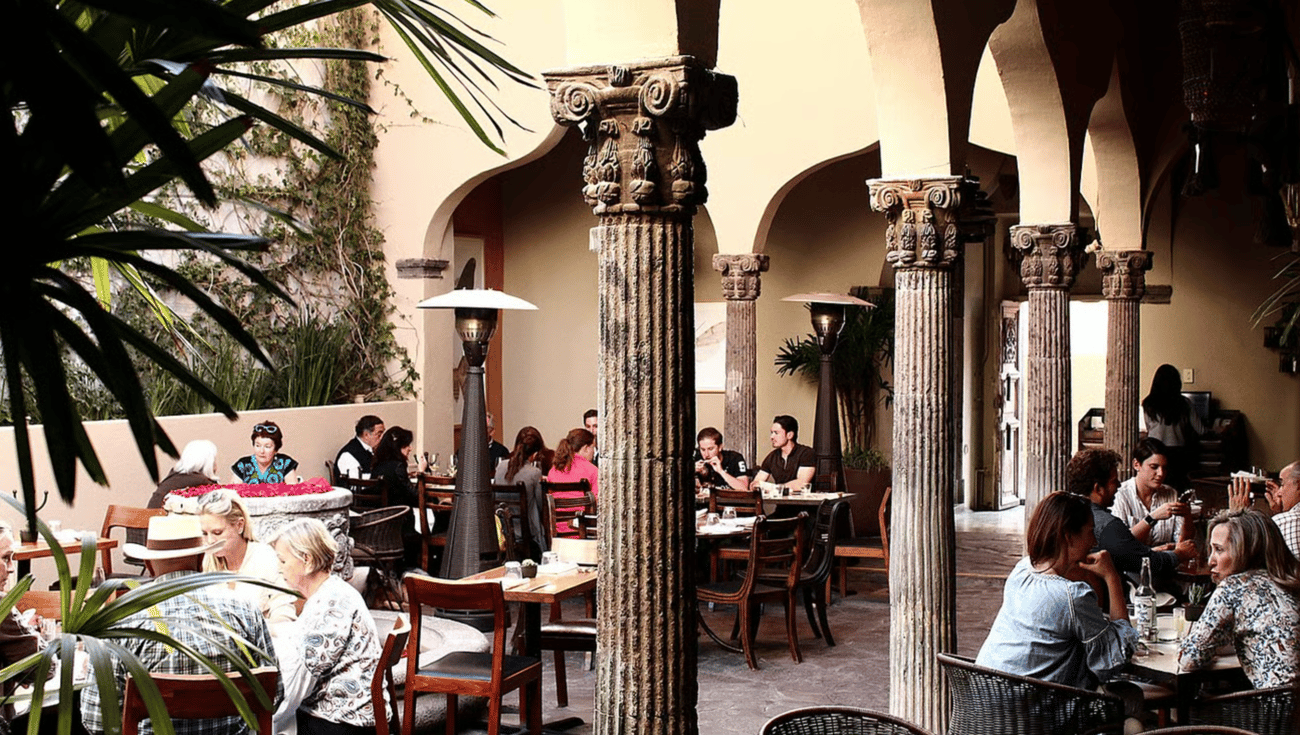
Atmosphere: Set within a stunning 18th-century Moroccan-style courtyard, The Restaurant is the epitome of colonial elegance infused with modern flair. Dining al fresco beneath swaying lanterns and lush greenery, or inside the tastefully appointed salon with its intimate lighting and contemporary decor, is an immersive experience. The ambiance is effortlessly romantic—refined without pretension, inviting without being informal. Service: Service here strikes that rare balance between professionalism and warmth. The staff is well-trained, gracious, and deeply informed about the menu and sourcing. Requests for substitutions or dietary accommodations are met with poise and care. Every
guest is made to feel like a regular.
Cuisine: Under the guidance of Chef Donnie Masterton, the cuisine is globally inspired yet grounded in the rustic, soul-satisfying pleasures of comfort food. Sourcing ingredients from his own Ranchito El Garbanzo, Masterton brings sustainable, seasonal ingredients to the forefront of every dish. The menu reads like a passport stamped with creativity, but each plate remains approachable and deeply satisfying.
The kale salad is an unexpected triumph—light yet bold, bright yet grounded. Tossed with precision and layered with texture, it encapsulates the ethos of The Restaurant: simplicity elevated through top-quality ingredients and confident technique.
Starters:
Among the standout appetizers is the tuna tartare—pristine and delicately seasoned, presented with the kind of care that hints at the caliber of what’s to come. Rotating small plates, often featuring global or seasonal influences, offer an adventurous opening to any meal.
Main Courses:
The burger is iconic, a go-to for locals and a must-try for newcomers—expertly seared and deeply flavorful, with just the right balance of indulgence and refinement. The risotto is another high note, rich and comforting with a perfectly creamy texture. Seasonal mains range from fresh seafood to inventive vegetarian dishes, each plated with elegance and culinary savvy.
Desserts:
Desserts are where the kitchen’s finesse shines. Expect rich chocolate-centered creations that don’t overwhelm, and fruit-forward finales that play with acidity and sweetness in just the right proportions. Every bite is both a visual and gustatory treat.
Wine and Cocktails:
The bar program is polished and intentional. A smartly curated wine list features a harmonious mix of international and standout Mexican vintages. Cocktails are crafted with precision—especially the margaritas, which are bright, balanced, and widely regarded as among the best in San Miguel. Fresh juices and high-end spirits keep the bar program as ambitious as the kitchen.
Final Thoughts: The Restaurant is not merely a dining destination—it’s a cultural fixture in San Miguel de Allende. With its rare blend of ambiance, service, and culinary excellence, it appeals to locals, expats, and discerning travelers alike. Chef Masterton’s commitment to sustainability and global flavors creates a menu that both comforts and surprises. Whether
for a celebration or a sophisticated weekday meal, this is a place that delivers time and again.
Cost: $$$$ Rating: ★★★★½
|
|
|
|
|
Health, Caregiving & Life in Mexico
|
|
|
This section brings you thoughtful, relevant, and at times, even life-changing content to support your journey—whether you're exploring care options, supporting a loved one, or planning for your own future.
- Lead Article - Each week’s main feature is written just for you—diving into meaningful topics like extending healthspan, navigating diagnostics, or understanding the causes of Alzheimer’s and other dementias. We also occasionally explore the beauty and cultural richness of Mexico, including Pueblos Mágicos and the colorful life in San Miguel de Allende.
- Op Ed - A short editorial that reflects on the lead article’s themes, offering a personal or thought-provoking perspective.
- Caregiver’s Sentiment - A heartfelt quote or reflection honoring the emotional depth of caregiving—because your feelings and efforts matter.
- Videos - Two or three curated videos that align with the week’s theme, featuring summaries and timestamped highlights to make them easy to explore.
- Book Reviews - One or two handpicked books to deepen your understanding, lift your spirits, or simply remind you that you’re not alone.
|
|
|
|
|
|
|
The Caregiver’s Reset: Practical Tools for Emotional Survival
As a senior care advocate, I am often asked—sometimes in passing, sometimes in desperation—“What can I do to help alleviate the stress and anxiety of caregiving?” But it is nearly always asked with a note of resignation, signalling a sense of hopelessness.
The question is never theoretical. It comes from people
who are exhausted, emotionally frayed, and too often on the verge of collapse. It’s asked by those who love deeply but feel like they’re being slowly hollowed out in the process.
What I offer here isn’t theory. It’s what I’ve researched, tested, and lived over a 13-year caregiving journey of my own. These practices didn’t erase the pain, but they gave me the ability to keep showing up, not out of obligation, but with presence and clarity.
You don’t need a program or a guru. What you need are practical tools to stay emotionally upright in the face of something that is both beautiful and brutal. This article represents my sincere effort to present practical and actionable steps to help alleviate stress.
Article Highlights- Caregiver burnout isn’t weakness—it’s the predictable result of doing too much with too little support.
- You don’t need to fix everything—just take five minutes to care for yourself.
- Heart coherence is a simple breathing technique that helps calm your nervous system and clear your mind.
- The HeartMath Institute has over 400 peer-reviewed studies showing that heart coherence reduces anxiety, improves sleep, and stabilizes mood.
- Try this: Breathe in for 5 seconds, out for 5 seconds, while focusing on a moment of love or gratitude.
- Clear thinking returns when you quiet the noise. Use mini “neuro resets” like mindfulness, box breathing, or grounding exercises.
- Even three minutes of focused breathing can reduce reactivity and improve mental clarity.
- Positive psychology isn’t about fake joy—it’s about noticing micro-moments of meaning that help you emotionally survive.
- Try a
daily gratitude prompt: “Three things that didn’t suck today.” If it made your day 1% better, it counts.
- Positive affirmations rewire the inner critic. Use short, believable phrases like: “I’m allowed to be tired and still be loving.”
- Skip the fluffy stuff—authenticity is more powerful than cheerfulness.
- Self-compassion is the most radical form of emotional repair. Talk to yourself like someone you love.
- Use the Self-Compassion Break (Neff): Acknowledge suffering, recognize shared humanity, offer kindness to yourself.
- Sleep hygiene isn’t about perfect 8-hour nights—it’s about ritualizing rest, even when sleep is disrupted.
- You’re not just a
caregiver—you’re still you. And you deserve care, presence, and peace just as much as the person you love.
|
|
|
|
|
Caregiver's Sentiment: Hugs Are Essential
When someone steps into a caregiving role—whether gradually or suddenly—their world often narrows to a focus on appointments, medications, safety, and survival. Amid this whirlwind, it's easy to overlook the quiet power of human connection. Yet it’s precisely in these moments of vulnerability and stress that something as simple as a hug can become profoundly healing. For the
caregiver, a hug can provide comfort, validation, and a fleeting but essential reminder that they, too, are cared for. For the person receiving care, especially those who may feel frightened, isolated, or powerless, a gentle embrace can speak volumes: You are safe. You are loved. You are not alone.
Caregiving can be a lonely and emotionally taxing job, and it's often misunderstood by others in ways that may not be fully understood. Physical connection—hugs, hand-holding, a reassuring touch—can cut through that loneliness, offering both people a moment of emotional relief. These moments don’t fix everything, but they soften the edges of the hard days and nourish the spirit in a way that no checklist ever could. That’s why, in
caregiving, hugs are not just acts of affection—they are acts of resilience.
|
|
|
|
|
Caregiver Affirmation
"In every quiet act of care, I am not losing myself—I am becoming more whole. My love is my strength, and my gentleness is my power."
This affirmation is a reminder that caregiving, though often exhausting and self-sacrificing, is not a path of depletion but of transformation. It reframes the journey as one that reveals deeper capacities for love, compassion, and resilience. By affirming that the caregiver is becoming more whole, it challenges the fear that they will vanish in service to others. It validates both the strength it takes to endure and the quiet heroism found in each moment of tenderness. This quote encourages inner peace by recognizing caregiving not as a burden
to endure, but as a profound and worthy part of one's human journey.
|
|
|
|
|
Becoming Through Caregiving: How 13 Years of Showing Up Changed MeJuly 18, 2025 | James Sims, Editor, www.cielitolindoseniorliving.com
I didn’t set out to become a better person. I just wanted to survive.
Fifteen years ago, I stepped into the role of caregiver—a title that sounds gentle but often feels anything but. I wasn’t looking
for growth. I wasn’t seeking transformation. I was simply trying to hold everything together in a world that felt like it was falling apart.
For years, caregiving felt like being thrown into the deep end without a life vest. The exhaustion was unrelenting. The losses—of time, independence, identity—were real and often invisible to others. I went from friend to nurse, advocate, scheduler, lifeline. Some days I handled it with grace. Others I did not.
But somewhere along the line, amid the quiet repetition of tasks and the slow unraveling of what I once considered normal, something began to shift.
It didn’t happen in a single revelatory moment. It came in the accumulation of quiet acts: waiting without resentment. Listening without interruption. Apologizing. Letting go of being right. Holding space for someone else’s pain, even when mine felt unbearable.
And then one day, I realized I was no longer asking, When will this end?
I was asking, Who am I becoming through this?
What emerged was a new personal mantra: Patience. Kindness. Humility. Grace.
Not virtues I pursued with intention, but qualities forged by necessity—carved into me by the sheer endurance caregiving demanded. I didn’t grow stronger by feeling strong. I grew stronger by showing up, especially when I felt powerless.
Recently, I came across a quote that struck me like a bell. It captured everything I had experienced
but hadn’t yet put into words. It read:
“Isn’t it strange how paradoxical your world feels?
Working out makes you feel weak… Before it makes you strong.
Learning something new makes you feel dumb… Before it makes you wise.
Facing your fears makes you feel terrified… Before it makes you brave.
In order to heal, you have to suffer. And in order to have peace, you need chaos.
Because life disguises growth as failure. And progress as pain.
But if it feels hard, it probably matters… Because becoming is messy.
It breaks who you were to make room for who you’re meant to be.
You don’t build strength by feeling powerful. You build it by showing up when you feel
powerless.
So if you feel tired… uncertain… and behind—
You might just be in the middle of becoming. And that’s exactly where you’re supposed to be.”
To anyone still in the thick of the journey—who feels stretched beyond their limits, who wonders if they’re making a difference, who feels alone in the struggle—I want to say this: if it feels impossibly hard, it’s because it matters.
You may not see the growth yet. You may not feel changed in a way that looks anything like progress. But you’re
becoming. You are evolving in the quiet, uncelebrated moments of care—where love looks like repetition, where strength looks like continuing, and where transformation hides in the mess.
That said, I also recognize that not everyone emerges from caregiving feeling transformed. Some emerge simply surviving. And that is valid too. This path is deeply personal and often grueling. There is no one “right” way through it. But for those open to reflection, caregiving holds a strange and profound potential: it can break us down—and build us up into someone softer, stronger, more human.
Caregiving broke me in all the right ways. It stripped away the noise and ego and left behind something quieter, more honest. If you are in that space now—exhausted, uncertain, wondering if you can keep going—please know this: you may
be exactly where you’re supposed to be.
Because becoming isn’t beautiful. It’s messy, raw, and real.
And paradoxically, it just might be the making of you, as it was for me.
|
|
|
|
|
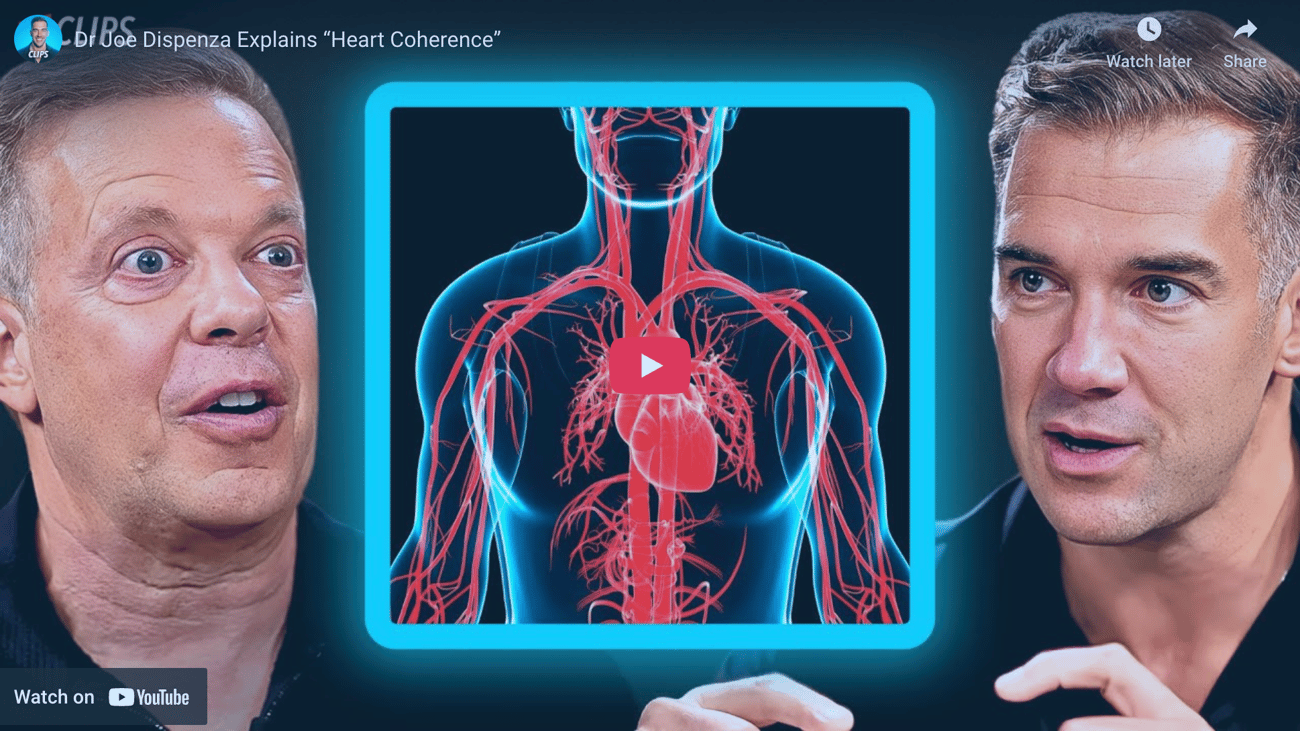
Dr Joe Dispenza Explains “Heart Coherence”
In this video, Dr. Joe Dispenza explains “heart coherence,” emphasizing its importance in
emotional and physical well-being. He describes how stress triggers physiological changes that lead to incoherent heartbeats, which can negatively affect creativity and overall health. By transitioning from a survival mode to a relaxed state, individuals can synchronize their heart and brain, enhancing creativity and emotional healing. Dispenza highlights the detrimental effects of stress on bodily systems and advocates for shifting focus from the material world to a broader, expansive awareness. This shift allows individuals to access a state of pure consciousness, promoting healing and creativity.
View the Video here.
Highlights:
0:00 – Dr. Joe Dispenza introduces the concept of heart coherence.
0:12 – Describes physiological changes in the body during stress and survival.
1:13 – Explains how incoherent heartbeats result from stress and emotional turmoil.
1:58 – Discusses the heart as a creative center and its role in emotional healing.
2:40 – Highlights the synchronization of heart and brain for enhanced creativity.
3:44 – Describes the transition from stress to relaxation and its effects on brain waves.
4:27 – Explains how stress narrows focus and creates chaos in the brain.
6:02 – Discusses the impact of stress on bodily systems and overall health.
7:43 – Emphasizes the importance of shifting focus from the physical to the expansive.
9:12 – Concludes with the idea of becoming pure consciousness through detachment from the material world.
|
|
|
|
|
Video: Self-compassion for caregivers
Facilitated meditation to enhance caregiver self-compassion.
View the video here.
|
|
|
|
|
Anxiety & Depression Relief – Binaural Beats & Isochronic Tones (With Subliminal Messages)
Binaural Beats meditation for anxiety relief and relaxation.
|
|
|
|
|
Good sleep isn’t just a luxury—it’s a powerful pillar of brain health, especially as we age. At Cielito Lindo, where we support both independent and assisted living within the tranquil beauty of Rancho Los Labradores, we often talk with families about the connection between rest and resilience. That’s why we’re sharing this insightful video by therapist Emma McAdam. In it, she gently walks us through sleep hygiene habits—like creating a wind-down routine, limiting screens before bed, and reserving your bed for rest—that can truly help “train the brain” toward better sleep. For seniors navigating changes in routine or cognition, even small improvements in sleep can support mood, memory, and overall wellness. We hope it brings comfort and useful ideas, whether you’re caring for a loved one or simply seeking a more peaceful night’s rest.
Sleep Hygiene: Train Your Brain to Fall Asleep
and Sleep Better
This video by Emma McAdam emphasizes the importance of sleep hygiene for improving sleep quality and mental health. It outlines practical strategies for establishing a bedtime routine, such as maintaining a consistent sleep schedule, creating a calming environment, and limiting screen time before bed. The video also advises against caffeine and alcohol consumption close to bedtime, as well as the importance of regular exercise. Additionally, it suggests using relaxation techniques and reserving the bed for sleep and intimacy to strengthen the brain’s association with sleep. Overall, these tips aim to help viewers train their brains for better sleep and overall well-being. View the video here. Highlights:0:00 – Many clients face sleep difficulties alongside issues like depression and anxiety.0:28 – The video discusses training the brain for better sleep through sleep hygiene.1:00 – Quality sleep is crucial for mental health; lack of sleep can lead to mental illness.1:33 – Sleep hygiene involves creating a routine that signals the brain when to sleep.2:23 – Establish a consistent sleep schedule and a calming wind-down routine.3:10 – Limit daytime naps to under 30 minutes to
improve nighttime sleep.4:34 – Avoid caffeine 4-6 hours before bedtime to enhance sleep quality.5:22 – Alcohol may help you fall asleep but disrupts sleep quality later in the night.6:12 – Regular exercise, even for just 10 minutes, can significantly improve sleep.7:02 – If struggling to sleep, get out of bed and engage in a boring activity until sleepy.
|
|
|
|
|
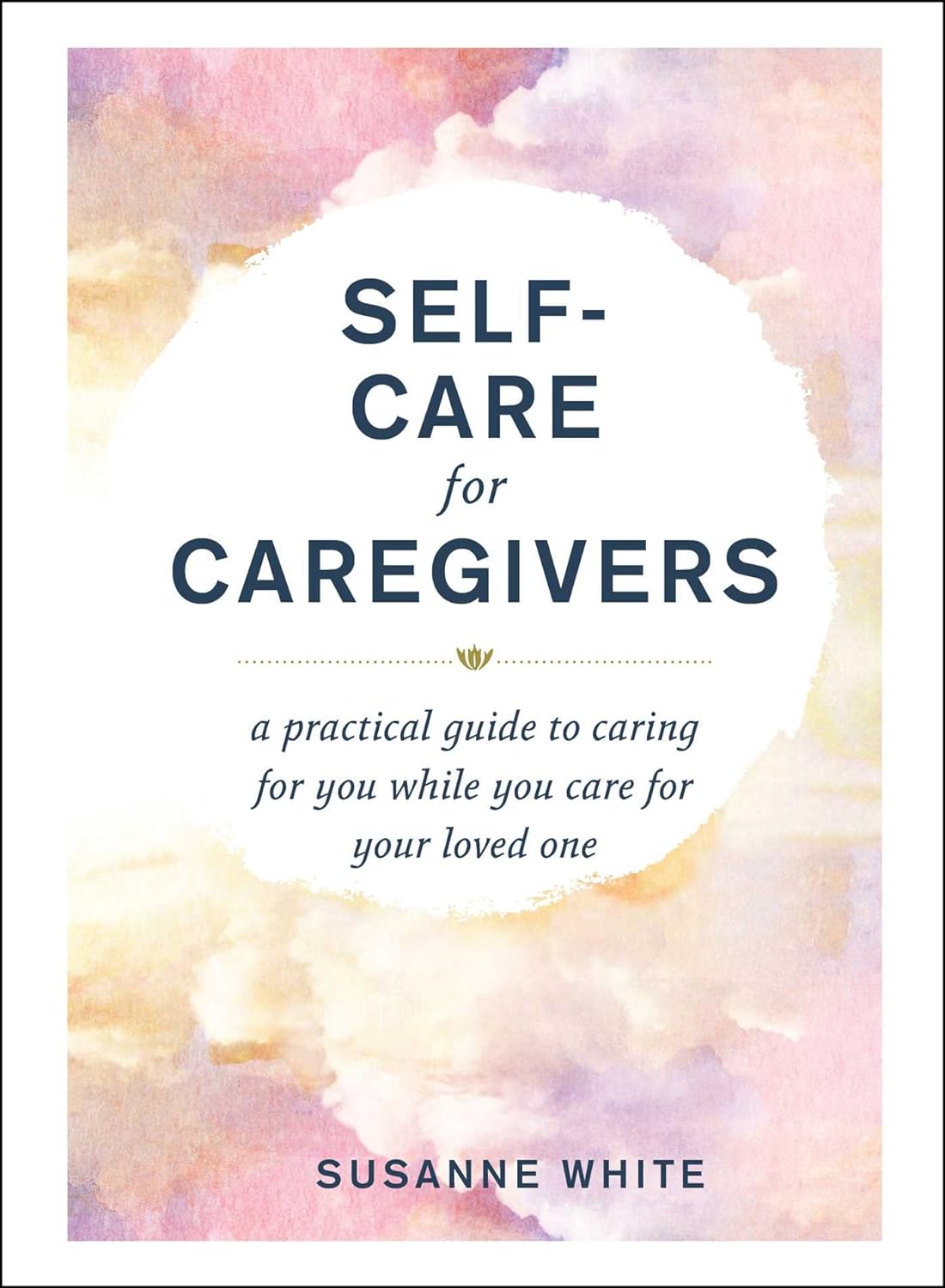
Book Review: Self-Care for Caregivers: A Practical Guide to Caring for You While You Care for Your Loved One By Susanne White (Hardcover – September 6, 2022)
Overview
Susanne White, a caregiver and founder of Caregiver Warrior, offers a compassionate and much-needed guide aimed at those providing care to loved ones. Self-Care for Caregivers focuses on the all-too-often overlooked
needs of caregivers themselves, offering realistic and immediately applicable self-care strategies. With burnout, emotional fatigue, and isolation commonly faced by caregivers—especially among seniors and those supporting aging family members—White’s book comes as a calming and supportive resource.
SynopsisThe book provides bite-sized, practical techniques that are accessible even in the busiest caregiving schedules. From mindfulness exercises and emotional check-ins to journaling and connecting with support systems, White emphasizes daily, small acts of self-preservation. Each chapter contains a mix of encouraging narrative and straightforward steps that remind caregivers of the importance—and the feasibility—of prioritizing their own well-being. The guide
doesn’t shy away from the emotional weight of caregiving but delivers it with warmth and reassurance.
Key Themes
- Mindful Awareness: Techniques to anchor oneself in the moment using the five senses and grounding practices.
- Emotional Regulation: HALT (Hungry, Angry, Lonely, Tired) is a recurring tool used to prompt self-assessment.
- Gratitude and Positivity: Emphasizing lists and reflections to shift mindset.
- Boundaries and Permission: Encouraging caregivers to set limits and seek help without guilt.
- Sustainability of Care: Framing self-care
not as indulgent, but essential for long-term caregiving success.
- Resources and Support: Includes external resources for more extensive help, making the book a launchpad rather than a comprehensive manual.
Writing
StyleWhite writes in a tone that’s friendly, conversational, and nurturing—like a peer who has walked the same path. The book avoids clinical jargon, making it inviting for readers who are emotionally or mentally drained. The structure is flexible, allowing readers to dip in and out, which is especially useful for those short on time or mental bandwidth. It’s formatted for ease, with checklists, prompts, and simple exercises that don’t require prior knowledge or preparation.
Conclusion
Self-Care for Caregivers fills a critical gap in the caregiving literature by putting the caregiver’s needs front and center without guilt or judgment. While some readers looking for deeper psychological or clinical insights might find it basic, that’s also its strength—it’s approachable and
refreshingly doable. It’s a valuable addition to the bookshelf of anyone navigating the complex world of caregiving, especially older adults balancing their own aging concerns while supporting others.
Rating: ★★★★☆ (4.5/5 Stars)A warm, practical, and encouraging guide for caregivers. Slightly repetitive in places, but consistently supportive and useful.
Additional Resources Cielito Lindo Offers
We have curated collections of resources that may be useful.
Articles - We write fresh articles about senior living, health, care, and finances every week
Caregiver Books - We review books
related to caregiving methods, logistics, challenges, and coping
Senior
Health - We review books related to healthspan, lifespan, and disease
We also have 1,600+ other senior care and expat in Mexico
videos: YouTube
|
|
|
|
|
| Cielito Lindo's basic information is included for your convenience:
|
|
|
- Cielito Lindo Info: After the signature, the newsletter always includes information about Cielito Lindo, so it is at your fingertips when you want it: Our costs, various related websites, social media channels like YouTube, our various addresses, and so on.
- Travel Info: Recommended airports and shuttles.
|
|
|
Web Sites - Cielito LIndo and Rancho Los Labradores
Here are our Web sites, including Cielito Lindo and Labradores Suites (hotel) all of which are part of the larger Rancho Los Labradores gated community just north of San Miguel de Allende.
- Cielito Lindo provides independent living, light assisted living, assisted living, memory care and hospice with 24*7 staffing along with a la carte assisted living services to those living in the villas and suites at Rancho Los Labradores.
- Rancho Los Labradores Suites offer short and long term residence.
- Rancho Los Labradores is a country club resort feeling CCRC that provides a gated community with countless amenities and opportunities for different levels of independent living along with assisted living and memory care within Cielito Lindo.
Cielito Lindo Living Options & Costs Guide
We offer several living options depending on the level of care you or your loved one needs. Here’s a breakdown to help you plan:
1) Villas (Rent or Own)
- Cost: $1,300 – $1,700 per month
- Additional Costs: Utilities, renter’s insurance, etc.
- What’s Included: This is mostly independent living.
- Extras: You can add independent or assisted living services (charged separately, à la carte).
- Support: We can connect you with a realtor if you'd like to purchase.
2) Cielito Lindo Condos & Suites
Best for: Independent living with optional assistance.
Option 1: Independent Living + Meals
- Cost: $2,250 per month
Includes:- 2 meals a day
- Monthly medical check-up
Optional Add-ons:- Meals for an additional person: $450/month
- Extra care services available à la carte
Option 2: Light-Assisted Living in Condos & Suites
- Cost: $3,900 per month
Includes:- Full assisted living services
- Designed for residents who still want independence but need some support
- Smooth transition to full Assisted Living or Memory Care as needs
change
- One-Time Inscription Fee: $4,000
For Couples:- $4,900/month for two people
- Same one-time fee ($4,000 per couple)
- Note: Suitability is based on cognitive ability, mobility, and safety.
3) Cielito Lindo Assisted Living, Memory Care, & Hospice
Best for: Seniors needing full-time care and supervision.
- Cost: $3,900 per month
Includes:- 24/7 care and monitoring
- All meals
- Physical therapy
- Full-time doctor on site
- Spacious private room with
bath
- One-Time Inscription Fee: $4,000
- For Couples: $4,900/month
4) Specialized Hospice Suite
Best for: Intensive care needs or end-of-life comfort and also recuperative at a far lower cost than a hospital- Cost: $4,900 per month
Includes:- Full 24/7 monitoring
- Recuperative, Palliative and hospice care
- On-site doctor
- All meals
- Special space for visiting
family
|
|
|
YouTube videos and Curated Playlists
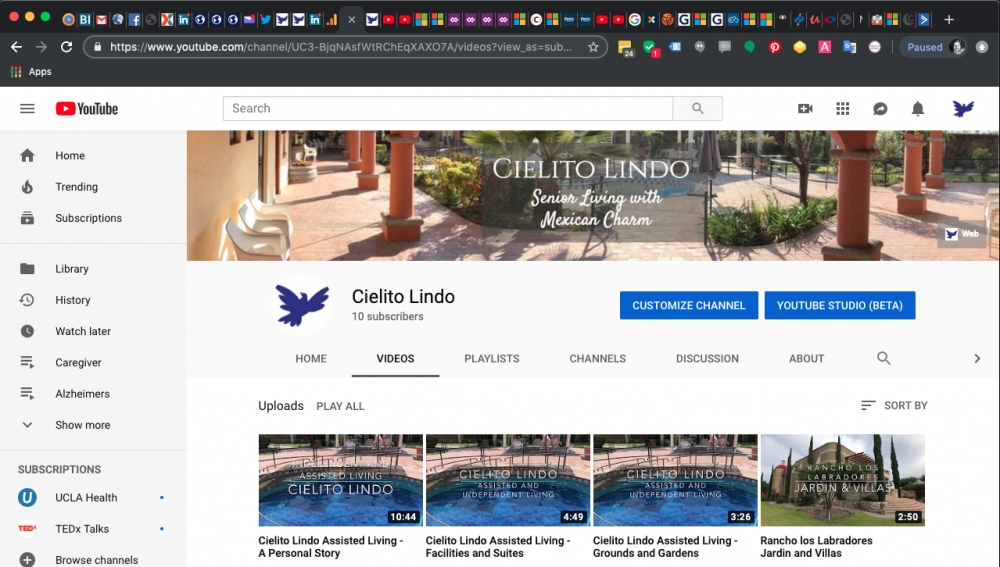
Here is our YouTube Channel. This is where we have lots of videos about Cielito Lindo and Rancho Los Labradores. We also have 1,600+ other senior care and expat in Mexico videos: YouTube |
|
|
|
|
Additionally, our playlists cover a wide area and include 1,200+ videos. These playlists include videos about San Miguel and Mexico in general, caregiving and health, and a broad spectrum of senior living topics. Playlists
|
|
|
|
|
Additional Resources We Offer
We have curated collections of resources that may be useful:
Articles - We write fresh articles about senior living, health, care, and finances every week
Caregiver
Books - We review books related to caregiving methods, logistics, challenges, and coping
Senior Health - We review books related to healthspan, lifespan, and disease
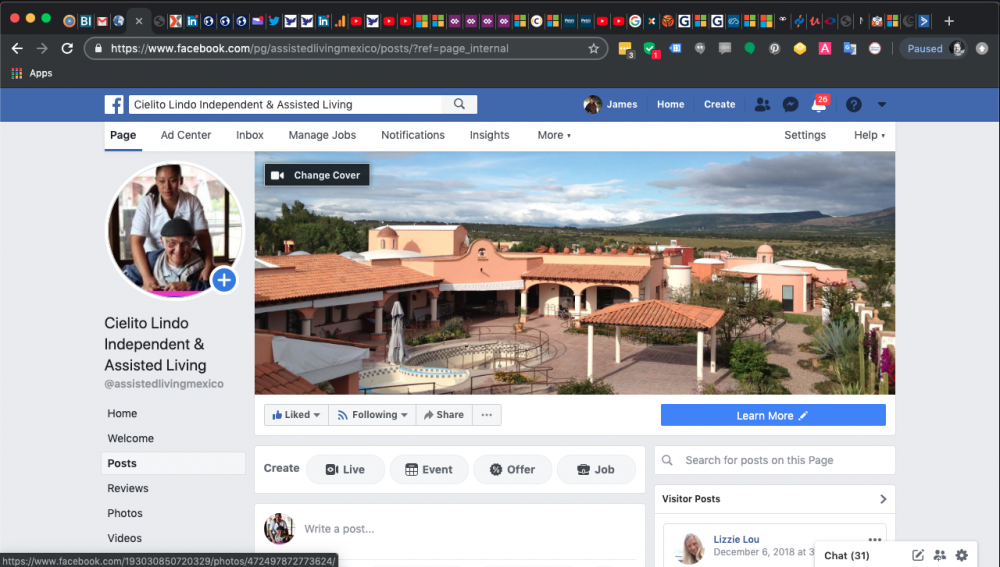
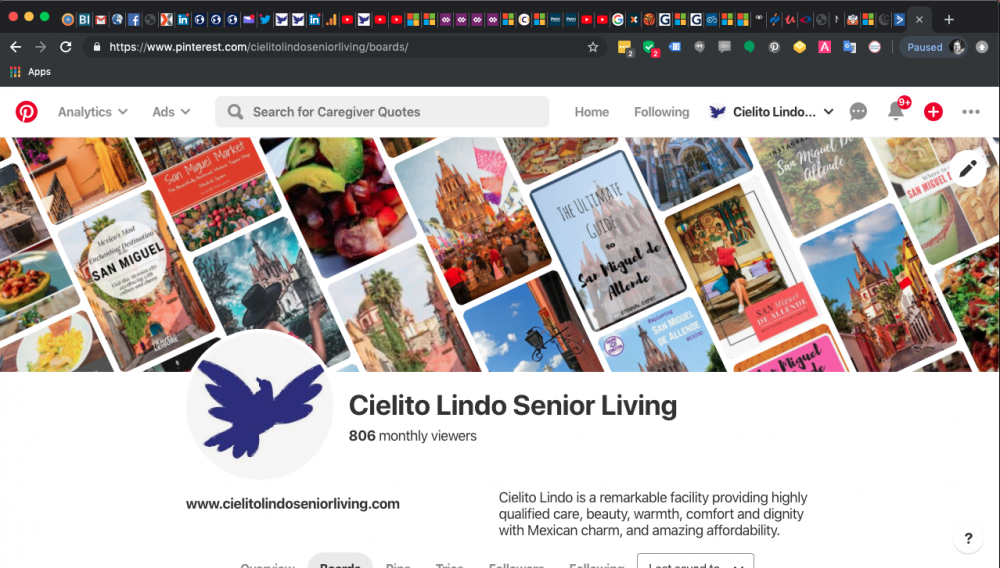
And here are our various social media forums, where we talk a lot about assisted living and memory care along with the various sort of challenges that sometimes come in our senior years (Alzheimer’s, Parkinson other dementias, and so on), but also about senior living in Mexico.
Facebook
|
|
|
|
|
|
|
|
|
|
|
|
|
|
|
|
|
|
|
Please don’t hesitate to contact me for anything related to senior living, especially in Mexico. I will gladly give you any assistance I can.
Thanks again!
James
James Sims
Marketing and Sales
Cielito Lindo Senior Living
1. 888.406.7990 (voice and text)
Phones:
English speaking:
1.888.406.7990 (in US & CDN)
00.1.881.406.7990 (in MX)
Spanish speaking:
011.52.415.101.0201 (in US & CDN)
1.415.101.0201 (in MX)
Expat Logistics:
Visas for Expats:
Sonia Diaz Mexico
Immigration
Pros MX
Tax Considerations for Expats:
Robert Hall Taxes
Best Bank:
Intercam Banco
Located in: Plaza De La Conspiración
Address: San Francisco 4, Zona Centro,
37700 San Miguel de Allende, Gto., Mexico
Hours: Open ⋅ Closes 4 PM
Phone: +52 415 154 6660
Addresses and Travel:
Physical address:
Cielito Lindo Independent and Assisted Living, Camino Real Los Labradores S/N, Rancho Viejo 1, San Miguel de Allende, GTO, Mexico, 37885
Packages from online providers like Amazon:
Camino Real Los Labradores, Rancho Los Labradores / Cielito Lindo, San Miguel de Allende, GTO, 37880 México
PO Box for letters and small envelopes:
Rancho Los Labradores / Cielito Lindo, c/o Alejandra Serrano ,
PMB N° 515-C, 220 N Zapata HWY N°11, Laredo TX, 78043-4464
Best airports to fly into: Leon (BJX) or Queretaro (QRO)
Best airport shuttle: BajioGo
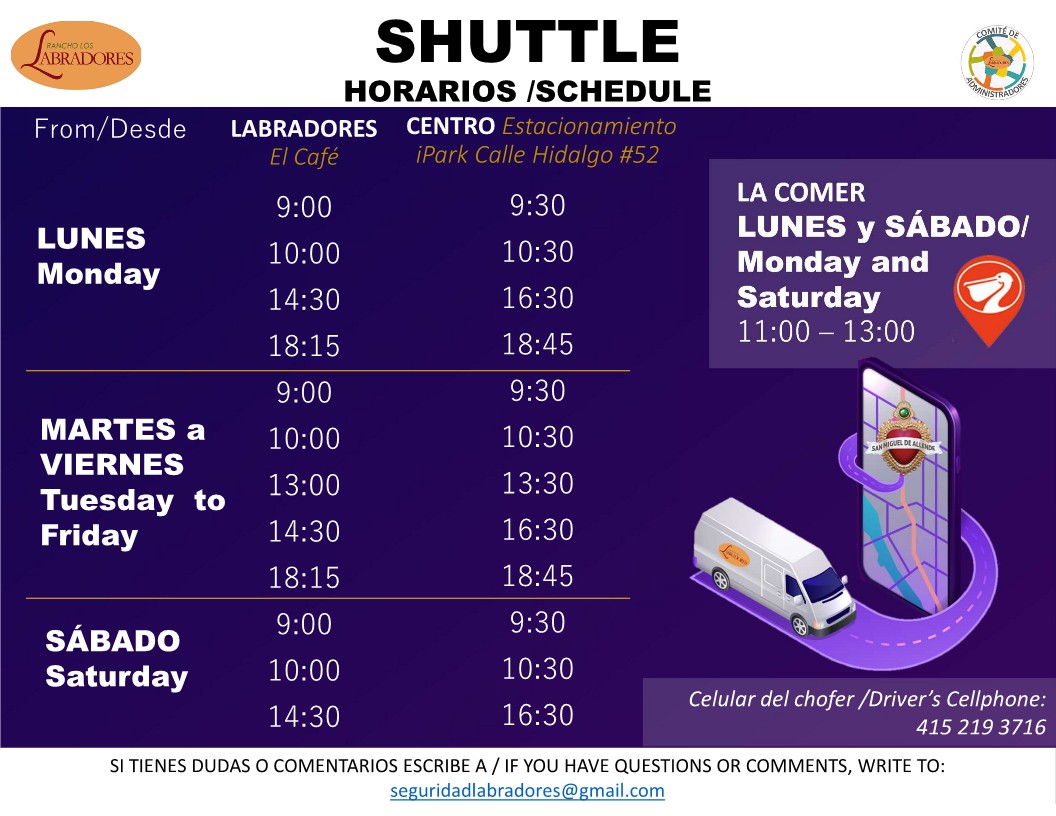
Shuttle:
Shuttle between San Miguel and Cielito Lindo
|
|
|
|
|
|
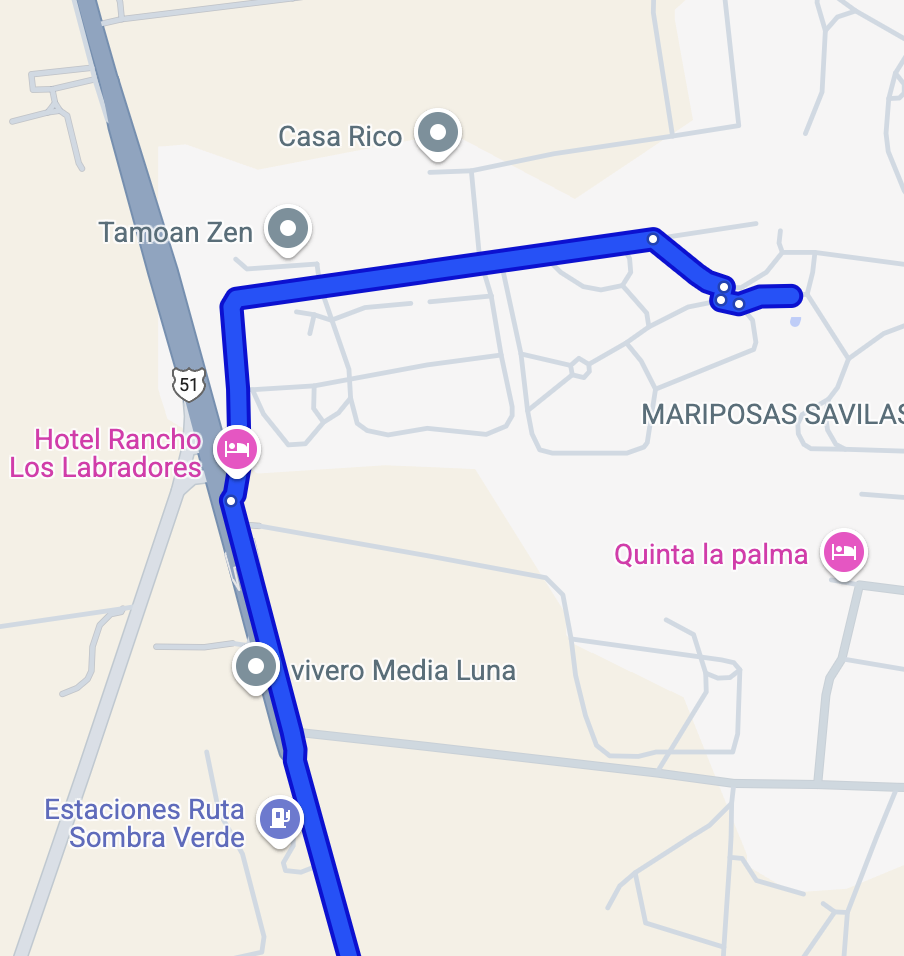
Maps and Navigation
Best smartphone navigation for Mexico and Central America: Waze
These two maps the location of Cielito Lindo / Rancho Los Labradores, 15 km north of San Miguel on Highway 51, just opposite the Atoltinilco exit.
|
|
|
|
|
|
|
Regards,
James
James Sims
Marketing and Sales
Cielto Lindo Senior Living
James@CielitoLindoSeniorLiving.Com
|
|
|
|
|
|
|
|