|
|
Dear ,
This is your weekly summary of our news, research, books, videos, and other resources related to senior living, retirement, and care in Mexico, along with independent and assisted living and information about age-related challenges (e.g., limited mobility, dementia, Alzheimer's, Parkinson's, ALS, stroke, multiple sclerosis, healthspan, and so on).
I hope you are finding this weekly newsletter helpful, and if you know of someone who may also find this information helpful, please forward it to them. They can subscribe using our Web Newsletter page (click here). If, for any reason, you do not wish to receive this weekly newsletter any longer, there is a simple 'Unsubscribe' or 'Opt Out' link at the bottom right corner of this newsletter and also right here: Unsubscribe
This weekly newsletter typically includes information in each of the following categories: San Miguel insights, senior care, and health information, as well as Cielito Lindo basic information.
Here’s what we typically cover each week:
- San Miguel de Allende highlights – why this is such a special place to live
- Health & wellness insights – articles, videos, and expert reviews
- Care options & community life at Cielito Lindo – flexible, affordable living with a warm, human touch
This Week’s Theme: The Unacknowledged Caregiver
This week, we explore how caregivers cope with the oft-thankless nature of the role.
Holiday Message
|
|
|
|
|
| Weekly insights into San Miguel:
|
|
|
- Colorful and Epicurean San Miguel - This is such an amazing place,
particularly the food and the colors. Although we are addressing a topic that is stressful, challenging, and emotional, we should also acknowledge what an incredible place San Miguel is.
|
|
|
|
|
The Colors of San Miguel: Flowered Arch Adorns Casa Proserpina.
Morning gathers itself quietly on a narrow street in San Miguel de Allende, where a single doorway becomes a kind of punctuation mark in the day.
The wall is the color of ripe mango, sun-warmed even before the hour feels earned. Set into it, a heavy wooden door—scarred, studded, patiently dignified—holds its ground beneath an extravagant arch of flowers. Roses
spill outward in unapologetic reds and pinks, dense and joyful, as if the house itself decided restraint was overrated. Ribbons trail from wrought-iron lanterns, their colors catching the faintest breeze, offering movement where the street remains still.
Nothing announces this doorway. There is no sign calling for attention, no crowd pausing for photographs yet. It exists in that brief window when beauty is unobserved, doing what it does best without witnesses. The scent of petals lingers close to the stone. The wood remembers other mornings, other hands, other lives passing through.
San Miguel has many grand gestures, but it is moments like this—an ordinary door dressed as if for a private celebration—that reveal its truer rhythm. Not spectacle, but devotion. Not noise, but care. A quiet insistence that even the threshold between street and home deserves to be loved.
(Photo courtesy of Sam Perez, San Miguel photographer)
|
|
|
|
|
Luna Rooftop (Rosewood) Nemesio Diez 11, Zona Centro, Centro, 37700 San Miguel de Allende, Gto., Mexico 📞 +52 415 152 9700
Days and Hours:
- Monday: 2:00 pm – 11:00 pm
- Tuesday – Sunday: 12:00 pm – 11:00 pm
(Kitchen typically closes around 10:00 pm)
Atmosphere:
Luna Rooftop crowns the Rosewood San Miguel de Allende, offering what many consider the most stunning
rooftop views in the city. With direct lines of sight to La Parroquia and the city’s historic skyline, the ambiance blends chic outdoor lounge style with a breezy, cosmopolitan feel. It's especially magical at sunset, drawing in both visitors and locals alike for a golden-hour experience.
Service: Service is polished and friendly, generally attentive without being overbearing. Staff are known for their warm hospitality, though occasional lapses can occur during peak hours. Most guests feel well-cared-for and welcomed.
Cuisine:
The menu showcases a Mediterranean-meets-Mexican philosophy. Think: upscale tapas, fresh seafood, seasonal salads, and bites designed to be shared — all with a creative local twist. Dishes highlight quality ingredients and modern presentation without being fussy.
Signature Dish:
The standout offering is the selection of Mediterranean tapas, such as grilled octopus, lamb skewers, or house flatbreads, all elevated by local flavors and elegant plating. These are ideal for lingering alongside craft cocktails.
Starters: Typical starters include artisanal salads with local produce, tuna tartare, mezze-style dips, and fresh cheeses — perfect for beginning a relaxed rooftop evening.
Main Courses: Main offerings are creative and seasonal, leaning into seafood, gourmet tacos, and small plates built for sharing. Items like shrimp in adobo, lamb sliders, and inventive flatbreads frequently impress.
Desserts: Desserts are often refreshing and light — think tropical sorbets, rich chocolate creations, or fruit-forward pastries, suited for the open-air setting and lighter rooftop fare.
Wine and Cocktails:
The drink program shines: expect artisanal cocktails that creatively use mezcal, tequila, and fresh herbs, plus a well-curated wine list. There’s an emphasis on presentation and balance — drinks that taste as good as they look against the San Miguel skyline.
Final Thoughts:
Luna Rooftop is a must-visit rooftop experience in San Miguel de Allende. The scenery alone is worth the visit, but the inventive cuisine, elegant cocktails, and lively yet relaxed vibe make it a top choice for a special night out. Go for sunset, stay for the atmosphere.
Cost: $$$
(Moderate to high-end pricing for San Miguel; cocktails and small plates can add up)
Rating: ⭐️⭐️⭐️⭐️☆ (4.5/5)
|
|
|
|
|
| Information related to Mexico, senior care and health:
|
|
|
- Lead article - These are articles specifically written for you each week. They address a wide range of
relevant topics, such as factors that can increase your health and lifespan, diagnostics, understanding causal factors for Alzheimer's and other dementias, and so on. The lead article typically sets the tone for the core content of the newsletter (videos and book reviews). On occasion, the focus may be centered on Mexico, Pueblos Magicos, and San Miguel de Allende.
- Caregiver's Sentiment
- This quote typically honors what we, as caregivers, are going through and feeling.
- Caregiver's Affirmation - This affirmation bolsters our self care, our image or ourselves on this journey and our ability to endure.
- Videos - Typically, three videos are related to the lead article, and they include a summary and timestamped highlights.
- Book Review - Typically related to the lead article.
|
|
|
|
|
Caregiving Is Hard Enough — Thanklessness Makes It Even Harder
Caregiving is one of the most demanding roles a person can assume, yet it is often entered into
without training, preparation, or a clear end in sight. It is physically exhausting, emotionally draining, financially overwhelming, and relentlessly time-consuming. Many caregivers give up sleep, careers, social lives, and even their own health to tend to someone they love.
And sometimes—often, in fact—it is also thankless.
This is not a failure of love. It is not a failure of patience. It is a reality of caregiving that deserves to be spoken aloud.
For those caring for loved ones with dementia, this reality can be especially painful. Dementia does not simply erode memory; it reshapes behavior and perception. Fear can turn into anger. Confusion can become suspicion. A once-gentle parent or partner may lash out, resist help, or express resentment toward the very person keeping them safe. Caregivers
may be met not with gratitude, but with accusations, harsh criticism, paranoia, or rejection.
None of this reflects the caregiver’s worth—or the depth of their care.
Still, being told “they don’t mean it”—if that reassurance is offered at all—does not erase the sting of harsh words. Understanding the disease does not make repeated hostility easier to bear. Love can coexist with grief, frustration, and hurt, and acknowledging those emotions is not a betrayal—it is an act of honesty.
Too often, caregivers feel pressure to present themselves as endlessly patient, endlessly compassionate, endlessly strong. Society praises caregivers as heroes, but heroism leaves little room for vulnerability. There is quiet shame in admitting exhaustion. Guilt in admitting resentment. Isolation in feeling unseen while doing everything for someone else.
Yet these feelings
are not signs of weakness. They are deeply human signs of strain.
Caregivers deserve more than admiration from afar. They deserve tangible support: time to rest, access to respite care, financial relief, flexible workplaces, and mental health resources that recognize caregiving as the emotionally complex labor it is. They deserve communities that ask not just, “How is your loved one?” but, “How are you holding up?”—and mean it.
Most of all, caregivers deserve permission to tell the truth—and nonjudgmental empathy when they do.
There is, however, one quiet truth caregivers often discover—sometimes only out of necessity. In situations this complex and uncontrollable, survival depends not just on what we do, but on how we learn to be.
Caregiving demands a unique internal shift: a cultivated patience, a widened understanding, a perspective that separates the disease from the person and the behavior from the intention. This perspective is not only what allows caregivers to remain kind and steady toward their loved ones—it is also a vital coping mechanism. When circumstances cannot be changed, the only meaningful control left is how deeply we allow them to wound us.
This does not mean suppressing pain or pretending things are easier than they are. It means choosing, again and again, to meet chaos with steadiness; cruelty with context; fear with compassion. It means recognizing that while we cannot control the illness, the personality changes, or the emotional volatility, we can shape how we absorb
them—how much of ourselves we surrender in the process.
When caregivers find this internal grounding, something subtle yet powerful happens. The days may not become easier, but they become more survivable. Conflicts soften. Emotional injuries heal faster. And slowly, over time, caregivers often discover they have developed a deeper benevolence—not just toward their loved one, but toward others, and toward themselves.
This is not a gift caregiving asks lightly of anyone. It is forged under pressure, earned through endurance. But in the very long run, it may be one of the few ways caregivers can emerge from this experience not only intact, but changed in a way that honors both their sacrifice and their humanity.
Caregiving is already hard. When gratitude is absent, inner compassion becomes not just a virtue—but a lifeline.
You can access the article here. Additionally, we have 100's of senior health and care-related articles (over 600,000 words) which can be found here.
|
|
|
|
|
Caregiver's Sentiment: A Quiet Defiance Against Despair
“When no one sees you, and the one you love forgets you, caregiving becomes an act of love without audience—a quiet defiance against despair.”
This quote honors the emotional isolation that caregivers often endure, especially those caring for loved ones with dementia. It reframes their perseverance as something quietly radical—not because it is praised, but because it is done anyway. It’s an acknowledgment that love, in its purest form, is sometimes practiced in darkness, without validation or even recognition—and that doing so is not weakness, but courage. It speaks to the strength of continuing to show up, not because it’s easy or acknowledged, but because love, redefined and redrawn by illness, still asks for presence.
|
|
|
|
|
Caregiver's Affirmation
“Even when I am unseen, unheard, or unthanked, my care matters. I am not invisible to myself. My love is real, my presence is powerful, and I am allowed to feel everything this journey brings.”
This affirmation offers internal validation when external affirmation is absent. It reminds the caregiver that their worth isn't measured by recognition, but by the depth of their humanity. It creates space for both emotional truth and quiet pride—a space where exhaustion, grief, love, and resilience can all exist together without judgment. It's a hand over the heart—a grounding reminder that what they do is meaningful, even when no one says so.
|
|
|
|
|
This video does not exactly address the issue highlighted in this article, but still, addressing the possible resentment arising from various caregiving scenarios is still useful.
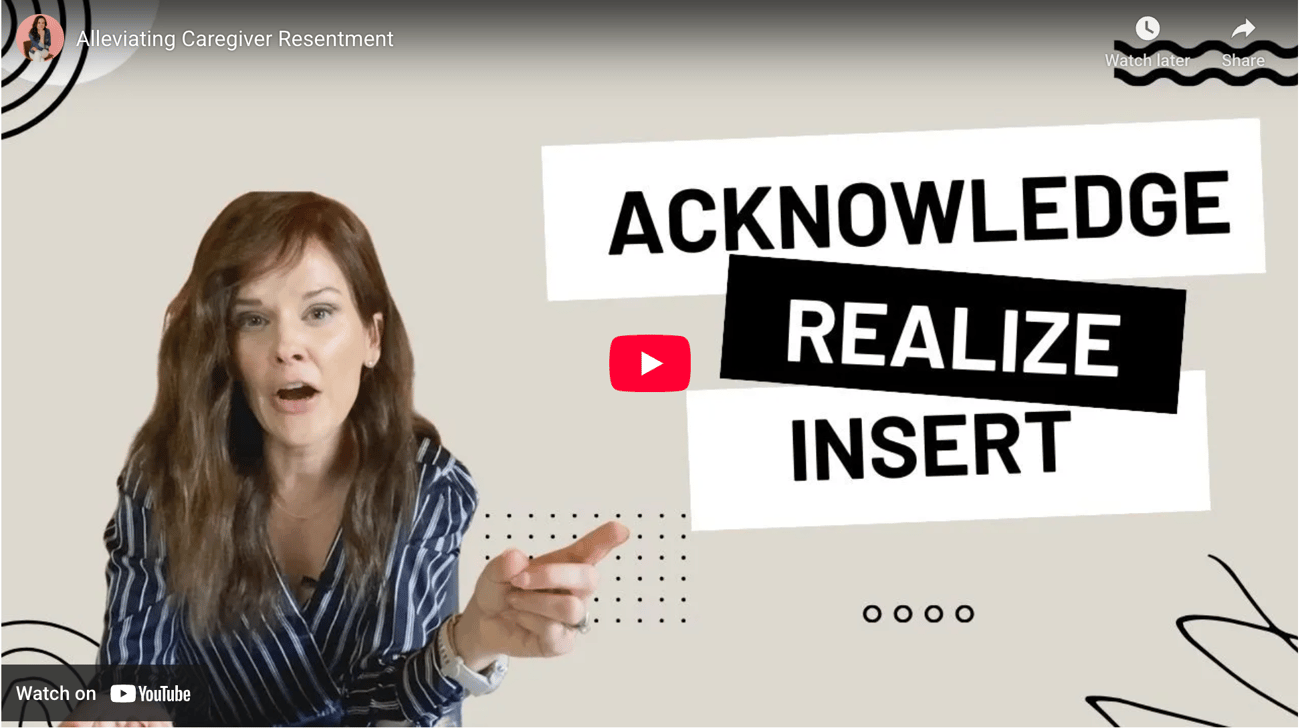
Video: Alleviating Caregiver Resentment
In this video, the speaker addresses caregiver resentment as a uniquely damaging emotional state, one that not only harms the caregiver but also undermines the care relationship itself. Speaking from personal experience while caring for her father, she distinguishes resentment, anger, and jealousy from emotions like grief or sadness, which are painful but natural. Resentment, by contrast, is framed as an emotion that rarely serves anyone, especially when caring for a loved one with dementia.
She introduces a simple three-step framework for working through resentment. First, caregivers must acknowledge their humanity, recognizing that difficult thoughts such as “this isn’t fair” or “others should help more” do not make them bad people or bad caregivers. Second, she emphasizes a crucial cognitive insight: resentment is not caused by the caregiving situation itself, but by the thoughts we have about it. Finally, she advocates deliberately choosing alternative thoughts that are more useful and less emotionally corrosive, even when the original thought may be factually true.
A central theme is that truth alone is not the deciding factor in whether a thought deserves our attention. Even accurate thoughts can be destructive if they generate resentment that damages relationships and erodes emotional resilience. By choosing thoughts that promote patience, acceptance, and peace, caregivers protect not only their own mental health but also their capacity to show up compassionately for their loved ones. The video ultimately reframes emotional control not as denial, but as an act of responsibility and self-preservation in an already demanding caregiving role.
Timestamped Highlights
(00:00) The speaker introduces resentment as one of several harmful emotions caregivers may experience, distinguishing it from natural emotions like grief or sadness.
(00:32) She explains that resentment, jealousy, and anger rarely serve caregivers or their loved ones with dementia.
(01:10) Personal context: since May, she has been caring for her father and notices recurring thoughts about unfairness, money, and lack of family support.
(01:29) She acknowledges that these thoughts fuel resentment and leave her feeling emotionally depleted.
(01:49) Step One: recognize your humanity; having uncomfortable or socially unacceptable thoughts does not make you a bad caregiver or person.
(02:33) Step Two begins: emotions are created by thoughts, not by the caregiving situation itself.
(02:49) She clarifies that resentment arises specifically from thoughts like “I shouldn’t have to do this” or “my family should help more.”
(03:06) Step Three: intentionally choose alternative thoughts that reduce resentment and help you cope, even if they must be practiced deliberately.
(03:28) Example reframing thoughts include “I can do this,” and “this is temporary,” used consciously to interrupt default resentment patterns.
(04:09) She emphasizes focusing on what can be controlled, thoughts and perspective, rather than uncontrollable realities like illness.
(05:17) Addressing a common objection: even if a resentful thought is true, it can still be harmful and therefore worth changing.
(06:08) Key insight: negative emotions affect only the caregiver, not the person they are directed at, making them a poor emotional investment.
(06:46) She outlines the relational consequences of resentment, including passive-aggression, damaged family dynamics, and reduced willingness to help.
(07:19) What matters most is how resentment impacts the caregiver’s role and emotional sustainability, not whether the thought is justified.
(08:02) Closing reframe: the external situation stays the same, but by changing thoughts, caregivers can experience patience, acceptance, and peace instead of resentment.
|
|
|
|
|
This video does not exactly apply to what we go through as caregivers, but it is still worth a listen.
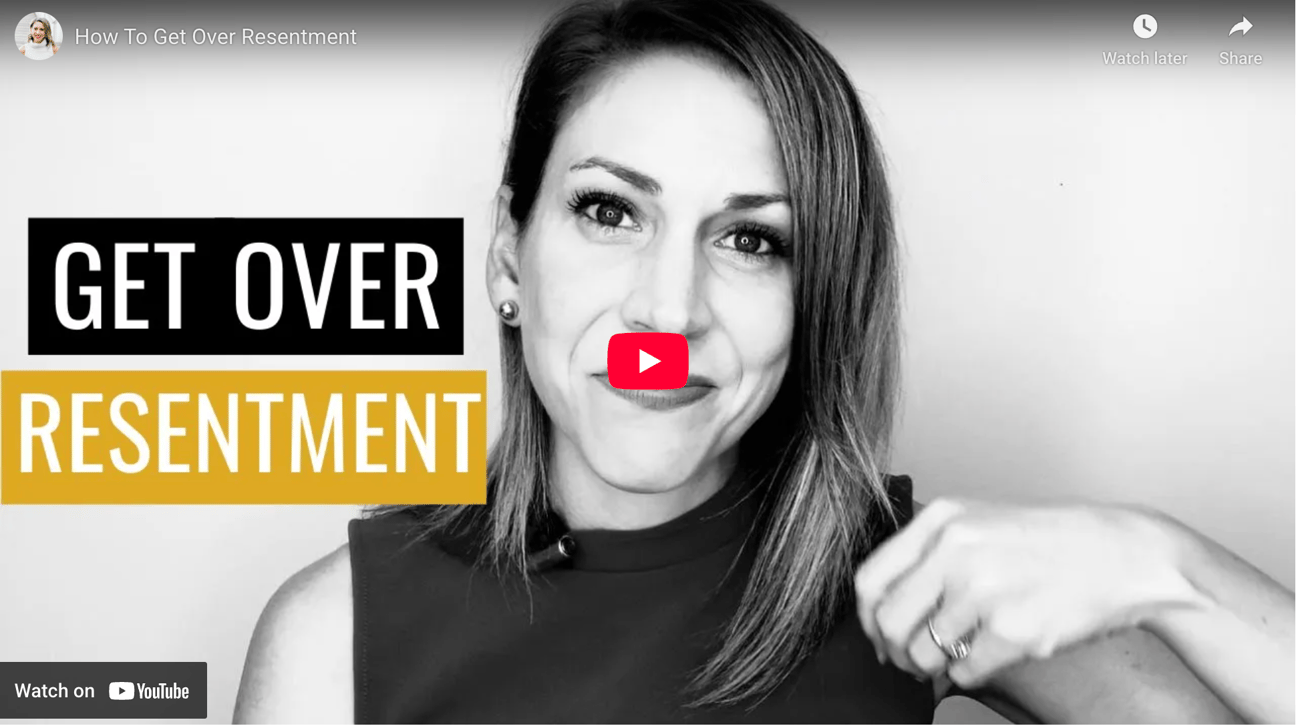
Video: How To Get Over Resentment
In this video, therapist Julia Christina frames resentment as a form of self-inflicted harm, the classic “drinking poison and hoping the other person dies” problem. Her core point is that resentment typically hurts the person carrying it far more than the person it is aimed at, especially because the other person often has little to no awareness of the expectations and interpretations driving the resentment.
She argues that resentment most often forms from unmet expectations, particularly “secret expectations”, the unspoken rules we hold about how someone should behave, what they should say, and what they should prioritize. Using a personal example involving her husband after a long drive home with three young children, she demonstrates how resentment can spike when we interpret a missed acknowledgment as evidence of being undervalued, even though the other person’s attention may be elsewhere and their intent may be neutral.
Her practical antidote is to slow down before reacting, use strong emotion as a cue for curiosity, identify the expectation underneath the resentment, and reclaim responsibility for meeting certain needs internally, especially validation and recognition. She invites viewers to consider the fairness of expecting others to read minds and manage our happiness, and she notes that deeper resentment tied to older wounds or trauma may require more serious examination, but the first step is always to ask whether holding onto resentment is helpful, healthy, or healing.
Timestamped Highlights:
(00:00) Resentment is described as “drinking poison and hoping the other person dies”, it harms you more than the target, who often doesn’t even know you feel it.
(00:34) She sets the goal: explain how people get stuck in resentment and offer tools to get out of it, while acknowledging it isn’t always easy.
(02:08) Guided reflection: think of someone you resent (boss, parent, partner, friend) and notice what comes up, anger, heat, “fiery emotions”.
(02:53) Key thesis: resentment is commonly created by unmet expectations, someone didn’t do, say, or treat us the way we wanted.
(03:21) “Secret expectations”: many resentments come from expectations the other person never knew existed, rules we never clearly stated.
(04:10) Important distinction: telling someone what you want is not the same as having a genuine agreement; resentment is different when there’s a real promise or bargain that’s broken.
(05:22) Personal story setup: after a family trip, her husband drives five hours home; the kids are exhausted and dysregulated, creating chaos in the car.
(06:09) She takes on the emotional labor: spends most of the drive managing three young kids from the front seat, trying to keep peace so her husband can drive safely.
(06:58) The resentment trigger: she thanks him for driving safely; he says “thank you” but doesn’t thank her; internally she starts boiling and tells herself a story about selfishness and not being valued.
(07:31) “Be curious” moment: she treats intense emotion as a signal to pause, pay attention, breathe, and respond rather than react.
(08:19) She names the real cause: resentment came from an unspoken expectation that he should recognize and affirm her effort.
(08:47) Self-validation tool: she asks, “Do I need his approval?”, and experiments with giving herself recognition, “Well done, you did a good job”.
(09:32) Reframing: We often outsource pride and good feelings to others, but we can generate those internally; doing so reduces resentment.
(10:00) Cognitive reset: his lack of thanks doesn’t prove lack of value; he could be distracted, tired, focused on unpacking; his mental state isn’t hers to control.
(11:01)–(12:12) Responsibility flip: she challenges the idea that others should read minds and meet our needs, then invites viewers to imagine how it feels when someone imposes that job on you.
(13:46) Depth caveat: some resentment is tied to deeper pain or trauma; it may require more careful examination than simple expectation-management.
(14:17) Closing question: ask whether keeping the resentment is useful, healthy, or healing, and let that guide what you do next.
|
|
|
|
|
| Cielito Lindo's basic information is included for your convenience:
|
|
|
- Cielito Lindo Info: After the signature, the newsletter always includes information about Cielito Lindo, so it is at your fingertips when you want it: Our costs, various related websites, social media channels like YouTube, our various addresses, and so on.
- Travel Info: Recommended airports and shuttles.
|
|
|
Web Sites - Cielito LIndo and Rancho Los Labradores
Here are our Web sites, including Cielito Lindo and Labradores Suites (hotel) all of which are part of the larger Rancho Los Labradores gated community just north of San Miguel de Allende.
Web Sites - Cielito LIndo and Rancho Los Labradores
Here are our Web sites, including Cielito Lindo and Labradores Suites (hotel) all of which are part of the larger Rancho Los Labradores gated community just north of San Miguel de Allende.
- Cielito Lindo provides independent living, light assisted living, assisted living, memory care and hospice with 24*7 staffing along with a la carte assisted living services to those living in the villas and suites at Rancho Los Labradores.
- Rancho Los Labradores Suites offer short and long term residence.
- Rancho Los Labradores is a country club resort feeling CCRC that provides a gated community with countless amenities and opportunities for different levels of independent living along with assisted living and memory care within Cielito Lindo.
Cielito Lindo Living Options & Costs Guide
We offer several living options depending on the level
of care you or your loved one needs. Here’s a breakdown to help you plan:
1) Villas (Rent or Own)
- Cost: $1,300 – $1,700 per month
- Additional Costs: Utilities, renter’s insurance, etc.
- What’s Included: This is mostly independent living.
- Extras: You can add independent or assisted living services (charged separately, à la carte).
- Support: We can connect you with a realtor if you'd like to purchase.
2) Cielito Lindo Condos & Suites
Best for: Independent living with optional assistance.
Option 1: Independent Living + Meals
- Cost: $2,250 per month
Includes:- 2 meals a day
- Hotel like room cleaning, towel and linen service
- Monthly medical check-up
Optional Add-ons:- Meals for an additional person: $450/month
- Extra care services available à la carte
Option 2: Light-Assisted Living in Condos & Suites
- Cost: $3,900 per month
Includes:- Full assisted living services
- Designed for residents who still want independence but need some support
- Smooth transition to full Assisted Living or Memory Care as needs change
- One-Time Inscription Fee: $4,000
For Couples:- $4,900/month for two people
- Same one-time fee ($4,000 per couple)
- Note: Suitability is based on cognitive ability, mobility, and safety.
3) Cielito Lindo Assisted Living, Memory Care, & Hospice
Best for: Seniors needing full-time care and supervision.
- Cost: $3,900 per month
Includes:- 24/7 care and monitoring
- All meals
- Physical therapy
- Full-time doctor on site
- Spacious private room with
bath
- One-Time Inscription Fee: $4,000
- For
Couples: $4,900/month
4) Specialized Hospice Suite
Best for: Intensive care needs or end-of-life comfort and also recuperative at a far lower cost than a hospital- Cost: $4,900 per month
Includes:- Full 24/7 monitoring
- Recuperative, Palliative and hospice care
- On-site doctor
- All meals
- Special space for visiting family
|
|
|
YouTube videos and Curated Playlists
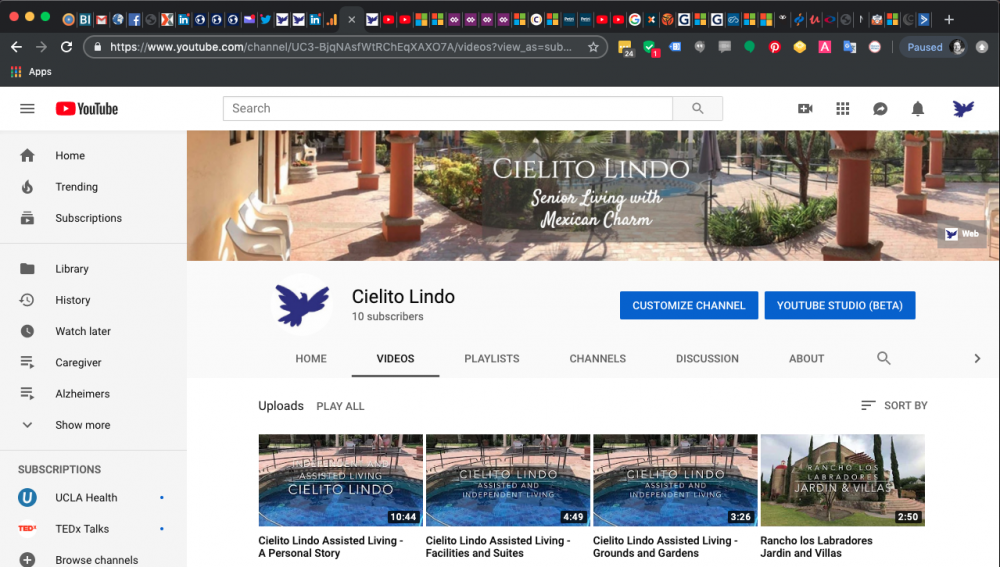
Here is our YouTube Channel. This is where we have lots of videos about Cielito Lindo and Rancho Los Labradores. We also have 1,600+ other senior care and expat in Mexico videos: YouTube |
|
|
|
|
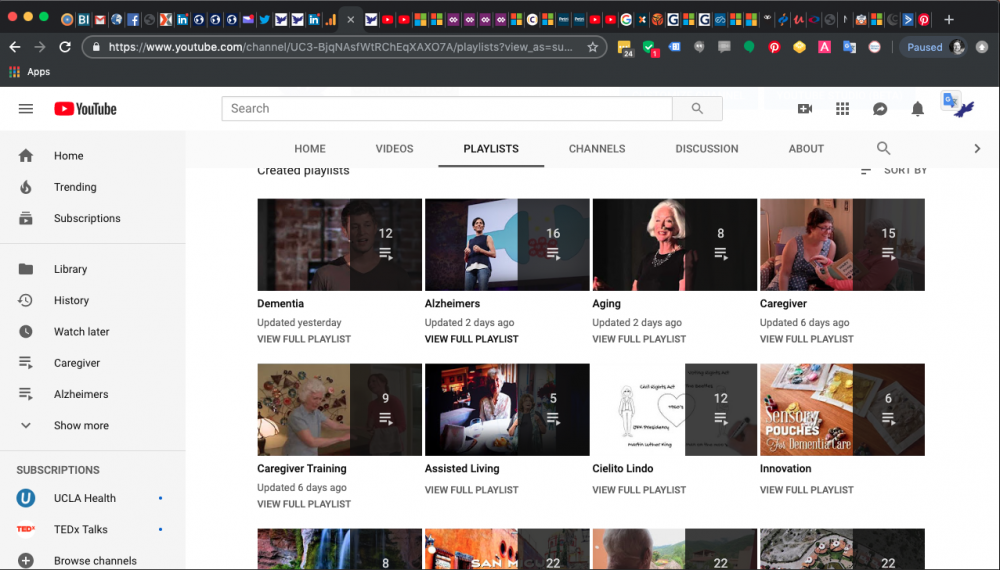
Additionally, our playlists cover a wide area and include 1,200+ videos. These playlists include videos about San Miguel and Mexico in general, caregiving and health, and a broad spectrum of senior living topics. Playlists
|
|
|
|
|
Additional Resources We Offer
We have curated collections of resources that may be useful:
Articles - We write fresh articles about senior living, health, care, and finances every week
Caregiver
Books - We review books related to caregiving methods, logistics, challenges, and coping
Senior Health - We review books related to healthspan, lifespan, and disease
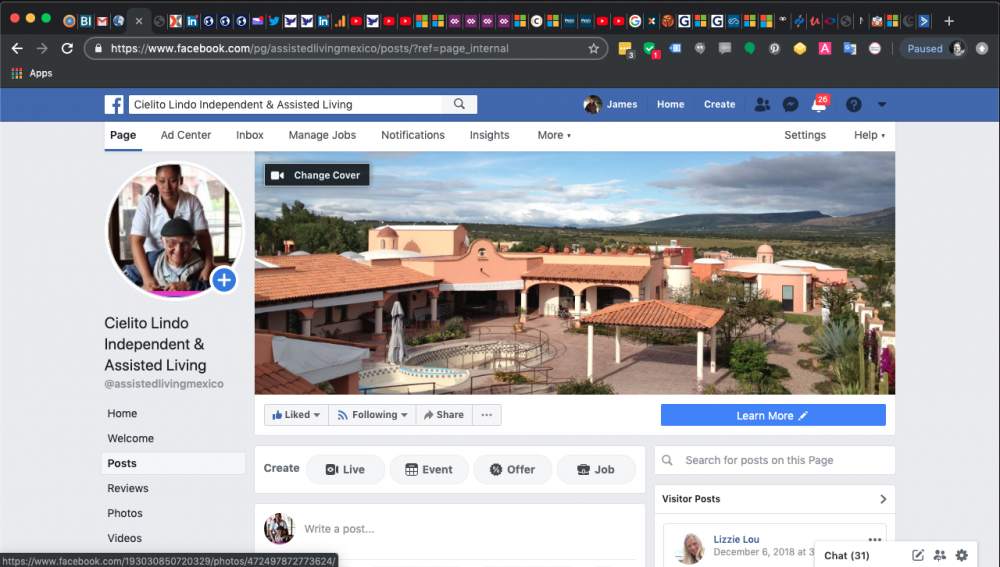
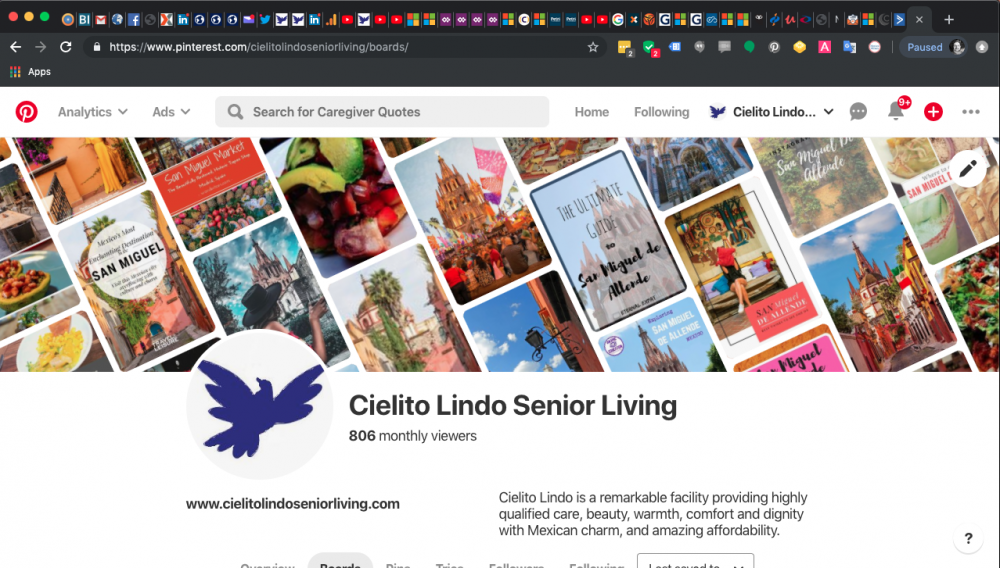
And here are our various social media forums, where we talk a lot about assisted living and memory care along with the various sort of challenges that sometimes come in our senior years (Alzheimer’s, Parkinson other dementias, and so on), but also about senior living in Mexico.
Facebook
|
|
|
|
|
|
|
|
|
|
|
|
|
|
|
|
|
|
|
Please don’t hesitate to contact me for anything related to senior living, especially in Mexico. I will gladly give you any assistance I can.
Thanks again!
James
James Sims
Marketing and Sales
Cielito Lindo Senior Living
1. 888.406.7990 (Voice and text)
1.209.312.0555 (WhatsApp)
Phones:
English speaking:
1.888.406.7990 (in US & CDN)
00.1.881.406.7990 (in MX)
Spanish speaking:
011.52.415.101.0201 (in US & CDN)
1.415.101.0201 (in MX)
Expat Health
Insurance:
ExpatInsurance.com
Tax Considerations for Expats:
Robert Hall Taxes
Medicare in Mexico
Lakeside Medical Group:
Robert Ash - ash@lakemedical
Best Bank:
Intercam Banco
Located in: Plaza De La Conspiración
Address: San Francisco 4, Zona Centro,
37700 San Miguel de Allende, Gto., Mexico
Hours: Open ⋅ Closes 4 PM
Phone: +011 52 415 154 6660
Addresses and Travel:
Physical address:
Cielito Lindo Independent and Assisted Living, Camino Real Los Labradores S/N, Rancho Viejo 1, San Miguel de Allende, GTO, Mexico, 37885
Packages from online providers like Amazon:
Camino Real Los Labradores, Rancho Los Labradores / Cielito Lindo, San Miguel de Allende, GTO, 37880 México
PO Box for letters and small envelopes:
Rancho Los Labradores / Cielito Lindo, c/o Alejandra Serrano , PMB N° 515-C,
220 N Zapata HWY N°11, Laredo TX, 78043-4464
Air:
Best airports to fly into: Leon (BJX) or Queretaro (QRO)
Shuttle:
Best
airport shuttle: BajioGo
Shuttle between San Miguel and Rancho Los Labradores / Cielito Lindo
|
|
|
|
|
|
|
Regards,
James
James Sims
Marketing and Sales
Cielto LIndo Senior Living
jsims.cielitolindo@gmail.com
|
|
|
|
|
|
|
|