|
|
Subject: Your
Weekly Guide to Senior Living & Care in Mexico
Dear ,
Welcome to your weekly touchpoint from all of us at Cielito Lindo. Each edition brings together helpful insights, heartwarming stories, expert advice, and curated resources about senior living, retirement, and age-related care challenges—including Alzheimer’s, Parkinson’s, stroke, limited mobility, and more.
We understand that navigating this stage of life can be overwhelming, whether for yourself or a loved one. That’s why we're here—to offer guidance, support, and a glimpse into the enriching life many have found here in beautiful
San Miguel de Allende.
If you find this newsletter valuable, please forward it to a friend or family member who might also benefit. They can easily subscribe via our Newsletter page. And of course, if you ever wish to unsubscribe, there’s a quick opt-out link below at the bottom right corner of this newsletter.
Here’s what we typically cover each week:
- San Miguel de Allende highlights – why this is such a special place to live
- Health & wellness insights – articles, videos, and expert reviews
- Care options & community life at Cielito Lindo – flexible, affordable living with a warm, human touch
This Week’s Theme: Healthcare Costs in Mexico
This week, we explore how senior expats can afford healthcare in Mexico.
|
|
|
|
|
| Weekly insights into San Miguel:
|
|
|
Colorful & Epicurean San Miguel
While much of what we discuss involves the challenges of aging
and caregiving, it's also important to celebrate the beauty that surrounds us. San Miguel de Allende is a feast for the senses—bursting with color, rich in culture, and renowned for its incredible food and art. It’s not just a place to live—it’s a place to thrive, to enjoy, and to heal.
|
|
|
|
|
The Colors of San Miguel: Another Magical Aspect of San Miguel
I remember the fall morning, in the hush
just after sunrise, I found myself drawn down a quiet callejón where the light slants gold across the cobblestones. The scent of marigolds hung in the air—earthy and sweet, almost spicy in the cool air—and ahead, a grave bathed in riotous color seemed to shimmer in the shadows.
Día de los Muertos is not loud here. Not in this corner, anyway. Here, remembrance is tender. A blanket of flower petals—cempasúchil, bougainvillea, maybe even some crushed bugambilia—spilled like a handmade carpet across a worn stone tomb. Crepe paper flowers rested like offerings made not just to the dead, but to beauty itself. Someone had arranged everything with quiet devotion. You could feel the care in the placement, the way the orange circled the edges like a blessing. The way a single white tissue flower, with its crimson heart, leaned against a pan de muerto left soft and untouched.
Even the shadows were reverent.
This isn’t the garish kind of celebration some might imagine. It is vivid, yes—vibrant as a feast—but intimate too, like a whispered story told in color. Every hue is saturated with meaning. The purples, for mourning and reflection. The pinks, for joy. The orange marigolds, radiant with the promise that memory is its own kind of immortality.
The richness of it doesn’t scream. It hums.
And as I stood there, a woman passed slowly behind me, quietly humming under her breath, carrying a small basket of tamales wrapped in cloth. We didn’t speak. We didn’t need to. In that moment, I felt the veil soften.
This is the sort of magic I often find myself enraptured with as I walk around San Miguel and take it in through the lens of my camera.
|
|
|
|
|
Tastes of San Miguel: Inside Cafe
Insurgentes 66-Planta Alta, Zona Centro, Centro Histórico, 37700 San Miguel de Allende, Gto., MéxicoPhone: +52 415 152 3999Days and Hours:Monday to Saturday: 9:00 AM – 3:00 PMSunday: 9:00 AM – 2:00 PM (Special Chilaquiles Brunch)Friday Night: 6:00 PM – 9:00 PM
(Asian-inspired dinner and cocktails)
Atmosphere:
Inside Cafe offers a cozy, multi-level space with a rooftop terrace providing stunning views of San Miguel de Allende's historic churches, including Santa Ana Church and El Oratorio. The ambiance is relaxed and welcoming, making it a popular spot for locals and travelers alike.Service:
The staff at Inside Cafe is known for their friendly and attentive service, contributing to a pleasant dining experience. The owners, a Kiwi/Mexican couple, are often present, adding a personal touch to the hospitality.
Cuisine:
Inside Cafe specializes in an "All Day Brunch" menu with a fusion of Mexican and international flavors. They offer a variety of vegetarian, vegan, and gluten-free options, catering to diverse dietary preferences.
The "Sexy Breakfast" is a standout, featuring savory French toast with avocado, egg, bacon, and chili maple syrup—a delightful blend of sweet and savory flavors.
- Spring Rolls: Fresh and crisp, served with a tangy dipping sauce.
- Broccoli Appetizer: Flavorful and well-seasoned, a favorite among patrons.
- Pulled Pork Sandwich: Tender pulled pork served on a crusty bagel, accompanied by homemade pickles.
- Tandoori Chicken Salad: A highlight for many, combining well-seasoned chicken with fresh
greens.
- Coconut Cilantro Curry: Part of their Asian-inspired dinner menu, offering a rich and aromatic experience.
While specific desserts are not highlighted, the café's menu includes sweet options like the "Inside Pan Frances," a French toast dish praised by visitors.
Inside Cafe offers a selection of cocktails, particularly during their Friday night dinner service. The "Jamaica Margarita" is noted as a refreshing choice.
Final Thoughts:
Inside Cafe captures the heart of San Miguel de Allende with its warm atmosphere, creative menu, and excellent service. The rooftop terrace alone is worth the visit, and the diverse offerings ensure there’s something for everyone.
Cost: $$Rating: ★★★★☆
|
|
|
|
|
Health, Caregiving & Life in Mexico
|
|
|
This section brings you thoughtful, relevant, and at times, even life-changing content to support your journey—whether you're exploring care options, supporting a loved one, or planning for your own future.
- Lead Article - Each week’s main feature is written just for you—diving into meaningful topics like extending healthspan, navigating diagnostics, or understanding the causes of Alzheimer’s and other dementias. We also occasionally explore the beauty and cultural richness of Mexico, including Pueblos Mágicos and the colorful life in San Miguel de Allende.
- Op Ed - A short editorial that reflects on the lead article’s themes, offering a personal or thought-provoking perspective.
- Caregiver’s Sentiment - A heartfelt quote or reflection honoring the emotional depth of caregiving—because your feelings and efforts matter.
- Videos - Two or three curated videos that align with the week’s theme, featuring summaries and timestamped highlights to make them easy to explore.
- Book Reviews - One or two handpicked books to deepen your understanding, lift your spirits, or simply remind you that you’re not alone.
|
|
|
|
|
Empowering Seniors: AI Tools for Effective Healthcare Advocacy
Artificial intelligence used to feel like science fiction —
something far away, maybe even a little intimidating. But today, it’s quietly showing up in our everyday lives: helping us write emails, navigate cities, translate languages, and yes — even manage our health.
For older adults and their families, this shift is opening remarkable new doors. AI tools are now helping seniors and caregivers organize medical histories, track symptoms, identify medication conflicts, and prepare for more productive doctor visits.
In a healthcare system that can feel rushed or impersonal, especially when dealing with complex or misunderstood conditions like long COVID, AI offers something powerful: clarity, confidence, and the ability to be heard.
This article explores how AI can become a trusted partner for seniors — not just in navigating care, but in taking the lead as thoughtful, informed advocates for their own wellbeing. Whether you’re managing your own health or supporting a loved one, these tools may offer more than just information — they offer peace of mind.
Article Highlights- AI is no longer a distant concept — it’s becoming part of daily life, from navigation to healthcare.
- Seniors face unique challenges in healthcare, especially when dealing with long COVID, polypharmacy, and cognitive changes.
- Long COVID
often brings vague, overlooked symptoms like fatigue, dizziness, and brain fog — which can be easily dismissed in rushed medical settings.
- AI tools help seniors organize symptoms, track patterns, and generate clear questions for their doctors — leading to more effective appointments.
- Medical history analyzers and symptom trackers help uncover hidden issues and flag potential medication side effects.
- AI-powered tools can suggest diagnostic tests based on symptoms and offer justifications seniors can bring to their doctors.
- Polypharmacy tools identify drug interactions and help avoid harmful side effects — a game-changer for older adults managing multiple prescriptions.
- AI doesn’t replace medical
care — it augments it, offering a "second set of eyes" that empowers patients to speak up.
- AI helps craft clear, concise health narratives for time-limited appointments, helping ensure critical details aren’t missed.
- Many seniors struggle with tech adoption — simplified, voice-activated AI tools can bridge the gap with gentle design.
- Seniors build trust in AI over time when tools offer clear recommendations, respect privacy, and involve family or caregivers.
- Caregivers benefit too — AI allows adult children to stay engaged remotely, track a loved one’s symptoms, and coordinate care from afar.
- Real-world success stories show AI tools uncover missed diagnoses, prevent dangerous
drug interactions, and guide treatment.
- A step-by-step plan is included for seniors and caregivers to start using AI tools confidently and securely.
- The takeaway: AI is a new ally in senior healthcare — one that empowers, organizes, and helps ensure no symptom goes unheard.
You can read the complete article here and select others from our collection of 70+ articles on our site.
|
|
|
|
|
Caregiver's Sentiment: The Greatest Triumphs
I never imagined those words would come to define my journey — not through a career milestone, but through love, caregiving, and heartbreak. My wife was just 47 when she was diagnosed with early-onset Alzheimer’s. In that moment, everything
changed. I had to become more than a husband: I had to become her advocate, her protector, her full-time caregiver. And like so many of you, I did it without a roadmap — only love, desperation, and the fierce hope that I could hold it all together.
The truth is, this path pulled me far beyond what I thought I could handle. It was overwhelming, humbling, and often lonely. But in rising to meet those challenges, I also found unexpected strength — and eventually, the peace that comes from knowing I wasn’t alone. For me, that peace came when I discovered Cielito Lindo in San Miguel. It’s more than a care facility — it’s a place of beauty, dignity, and real human warmth. A place where caregivers like me can find not just help, but understanding. If you’re navigating the impossible — I just want you to know: there are good people, good places, and real support out there. You don’t have to do this alone.
|
|
|
|
|
AI Is Already Your Friend — Especially If You’re a Senior Trying to Navigate Healthcare
May 2, 2025 | James Sims, Editor, www.cielitolindoseniorliving.com
Artificial Intelligence still evokes fear in some circles — a mysterious force that might one day take over our jobs, our decisions, maybe even our lives. But if AI really were our
friend, it would probably be surprised to learn just how many of us still think it’s a stranger. Because here’s the truth: AI isn’t coming. It’s already here. And it’s been quietly helping us — especially seniors — in ways we may not even notice. From predictive text that finishes our emails to navigation apps that steer us away from traffic, AI is already embedded in the fabric of daily life. And increasingly, it’s showing up in a space where older adults often struggle most: healthcare. If you’ve ever felt rushed during a doctor’s appointment, confused by a medication list, or unsure whether a symptom was serious or "just aging," you’re not alone. Seniors face unique challenges when navigating healthcare — long COVID, multiple prescriptions, chronic fatigue, cognitive shifts — all in a system designed for speed over nuance. But now, AI tools are stepping in not
to replace doctors, but to make sure patients are heard. AI Isn’t Replacing Care — It’s Making it More Accessible One of the biggest misconceptions about AI in healthcare is that it will push people out of the process. In fact, it’s doing the opposite. For older adults, AI is increasingly acting like a well-organized friend: keeping track of symptoms, flagging dangerous drug interactions, and helping you prepare for more productive doctor visits. Feeling dizzy for weeks? A symptom tracker can log your experience and suggest what to ask your doctor. Taking multiple medications? AI can check for interactions that even your pharmacist might miss. Worried about being brushed off during a short consult? AI can help you craft a concise, data-driven narrative so your
provider pays attention. This isn’t fantasy. It’s happening right now — with tools as simple as ChatGPT or as specialized as polypharmacy management apps. Real Tools for Real People and a Genuine Need For many seniors, managing health feels like a full-time job. But AI can help lighten the load: - Symptom checkers help identify potential causes before they become emergencies.
- Medication analyzers flag dangerous drug combinations in seconds.
- Health data organizers turn years of scattered records into a coherent story.
- AI-generated questions give you confidence going into a medical visit.
- Custom assistants can help family caregivers stay informed from miles away.
And best of all, many of these tools don’t require you to be tech-savvy. Some work with voice commands. Others are built for accessibility, with large text, simple language, and intuitive design.
Why Seniors Need AI the Most The irony is, the group that could benefit most from AI — older adults — is also the group most hesitant to embrace it. That’s understandable. New technology can feel overwhelming, and healthcare is already complicated enough. But the stakes are too high to wait. Seniors often face "diagnosis by dismissal," where symptoms like brain fog or fatigue are brushed off as "just aging." AI can help prevent that — not by offering a diagnosis, but by equipping patients with evidence and confidence to push for answers. Long COVID is a perfect example. Many older adults with persistent symptoms have used AI tools to log their experience, analyze lab results, and even suggest tests that led to real diagnoses. In one case I followed, an AI assistant flagged a possible clotting disorder after months of vague symptoms — a diagnosis that may have prevented a stroke.
The Future of Healthcare Isn’t Cold — It’s Collaborative Too often, we view technology — especially AI — as something
alien, even adversarial. But for seniors navigating a healthcare system full of noise and gaps, AI can be something much more human: a second set of eyes, a translator, a steady hand. AI is not about replacing empathy or eliminating doctors. It’s about making sure patients — especially the most vulnerable — don’t fall through the cracks. It’s about restoring agency in a system that too often strips it away. So if AI were our friend — and I believe it is — it wouldn’t be offended by our skepticism. But it might gently point out that it’s been helping us all along. And that with just a little more trust, it could help us live better, longer, and with more dignity. Final Thought The future of senior healthcare isn’t machine vs.
human. It’s human + machine. And for once, that equation feels like a win.
|
|
|
|
|
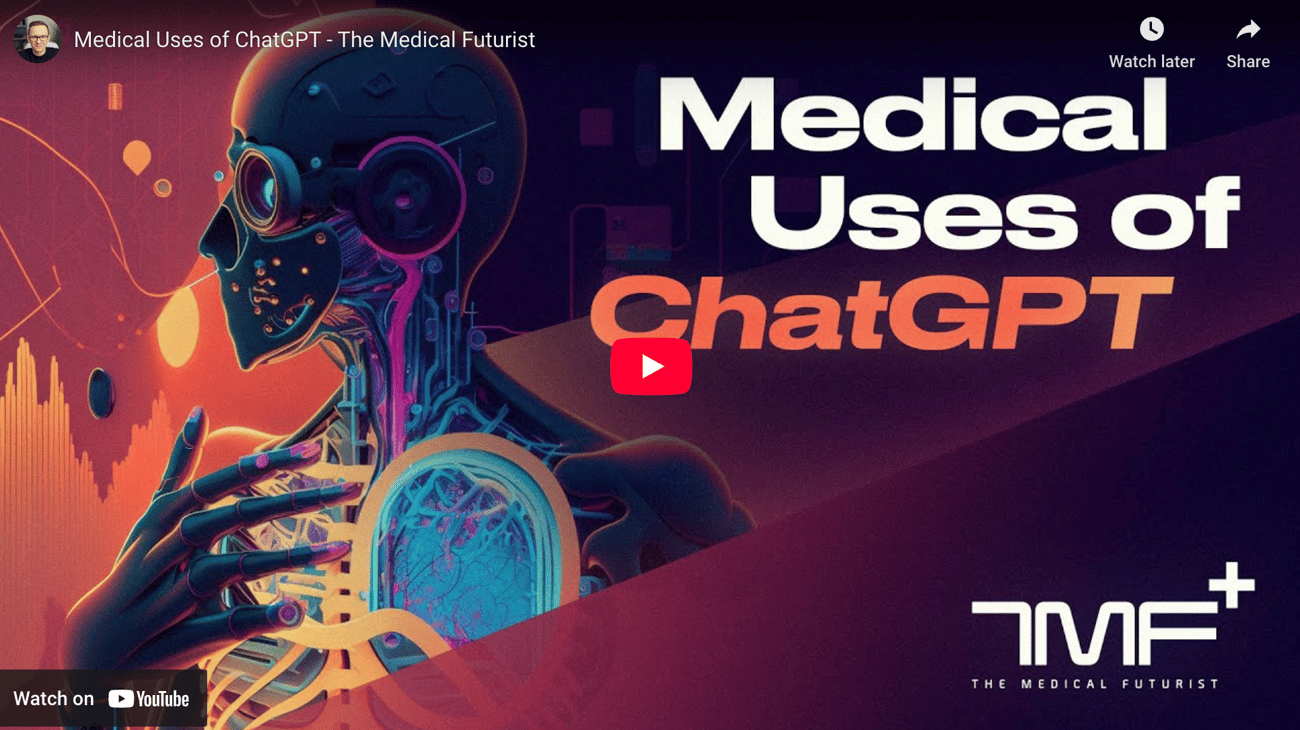
Video: Medical Uses of ChatGPT – The Medical Futurist
The video discusses the medical applications of ChatGPT, highlighting its ability to generate clinical notes, answer medical questions, and even pass the U.S. medical licensing exam. While it shows promise in assisting healthcare professionals, it also has limitations, such as the inability to cite sources, which raises concerns about trustworthiness. The speaker emphasizes the potential of AI to address the global shortage of doctors by serving as a medical chatbot. As AI technology advances, healthcare professionals will need to adapt to new roles, including fact-checking AI-generated information. Overall, the integration of AI in healthcare could revolutionize diagnostics and treatment planning. View the video here. Highlights:0:01 – The internet buzzes with news on ChatGPT and its various uses.2:02 – ChatGPT passed all three parts of the U.S. medical licensing exam without specialized training.2:24 – ChatGPT can assist in creating accurate clinical notes from doctor dictations.3:03 – ChatGPT performs well in answering general medical questions but lacks specificity.4:12 – ChatGPT could serve as a medical chatbot, addressing
the shortage of doctors.5:14 – Current limitations of ChatGPT include the inability to cite sources for medical information.6:23 – The rise of AI in healthcare necessitates a new role for professionals as fact-checkers.7:22 – Google’s DeepMind released a model specifically for healthcare-related questions.8:02 – The potential of AI in healthcare is significant, especially with a shortage of medical personnel.9:05 – AI will change diagnostics, treatment planning, and the entire healthcare field.
|
|
|
|
|
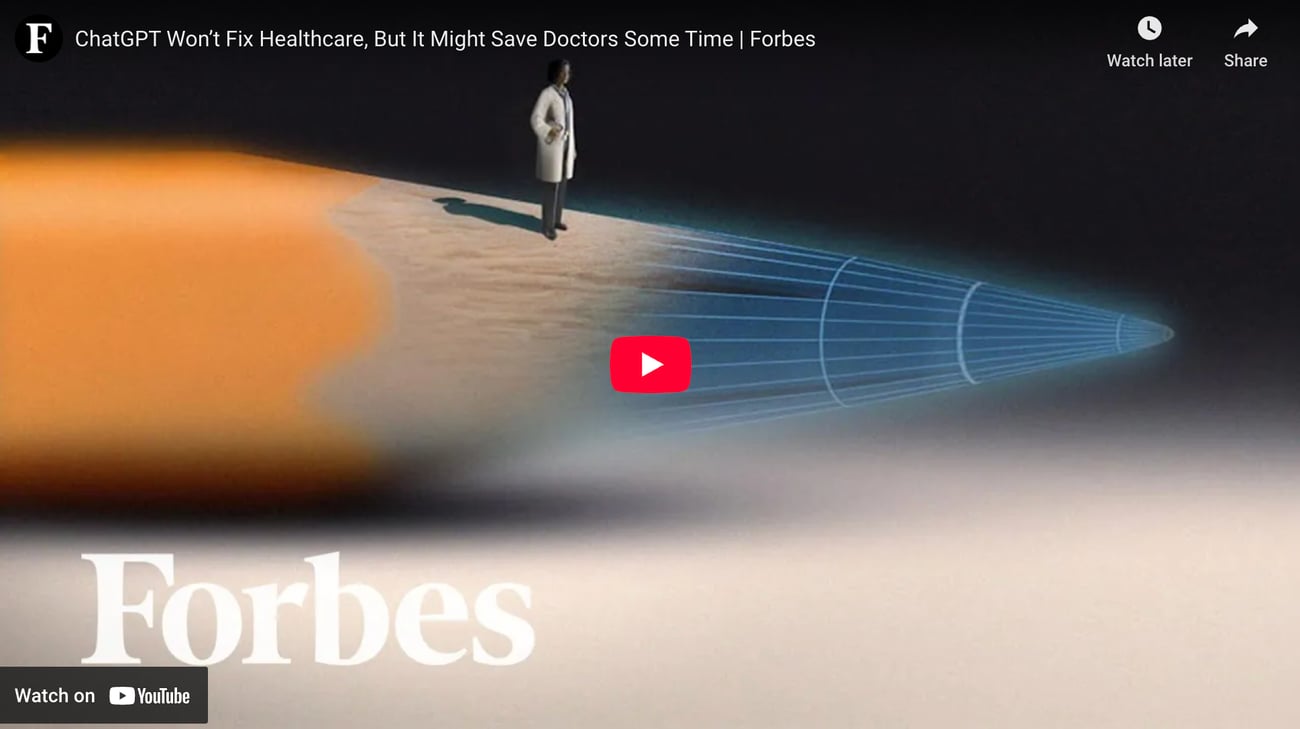
Video: ChatGPT Won’t Fix Healthcare, But It Might Save Doctors Some Time | Forbes
In this discussion, Katie Jennings highlights the intersection of ChatGPT and healthcare, focusing on Doximity’s Docs GPT, which aims to alleviate administrative burdens for doctors. The technology can significantly reduce the time spent on tasks like writing appeal letters to insurance companies. However, concerns about patient privacy and data security remain paramount, as healthcare systems must ensure that protected health information is not compromised. The conversation emphasizes the need for human oversight to verify the accuracy of AI-generated content,
addressing the potential risks of misinformation. Overall, while AI has the potential to streamline healthcare administration, ethical considerations and security measures must be prioritized.
Katie Jennings discusses the cautious optimism surrounding AI in healthcare, highlighting the importance of human involvement and patient consent. She notes the skepticism among healthcare workers due to past technology failures and emphasizes the slow pace of change in the industry. While generative AI shows promise in areas like diagnostics, the reliance on outdated systems poses challenges. Doximity’s integration of AI with online faxing reflects an effort to modernize administrative processes while addressing these concerns.
View the video here.
Highlights:0:12 – Katie Jennings discusses the early applications of ChatGPT in healthcare.0:41 – Introduction of Doximity’s Docs GPT, aimed at reducing administrative burdens for doctors.1:30 – Technology’s potential to make administrative tasks faster, rather than cutting jobs.2:01 – Docs GPT helps doctors write appeal letters to insurance companies, reducing time from 20 minutes to 1 minute.3:06 – Importance of maintaining patient privacy and avoiding protected health information in AI-generated letters.4:14 – Concerns about the security of patient data when using AI technologies in healthcare.5:45 – The necessity for human oversight in verifying the accuracy of AI-generated content.6:32 – The concept of "hallucination" in AI, where incorrect information may be generated.6:49 – Emphasis on starting AI applications in backend administration rather than direct patient care.7:10 – Discussion on the ethical considerations of using AI in healthcare settings.7:20 – People expect a
human to be behind documents, emphasizing the need for human oversight in AI-generated content.8:29 – Patient awareness and consent are critical as technology becomes more integrated into healthcare processes.9:14 – There is significant trepidation among healthcare workers regarding new technologies due to past implementation failures.10:25 – A startup has developed a bot that makes calls to insurance companies, streamlining administrative processes.11:40 – Widespread adoption of AI in healthcare will take time, with concerns about accuracy and updates remaining.12:20 – The healthcare industry is still reliant on outdated technologies like fax machines and CD-ROMs.13:44 – Generative AI has potential applications in drug discovery and diagnostics, but patient-facing care will evolve slowly.14:03 – Doximity is integrating its Docs GPT tool with online faxing to adapt to current healthcare practices.
|
|
|
|
|
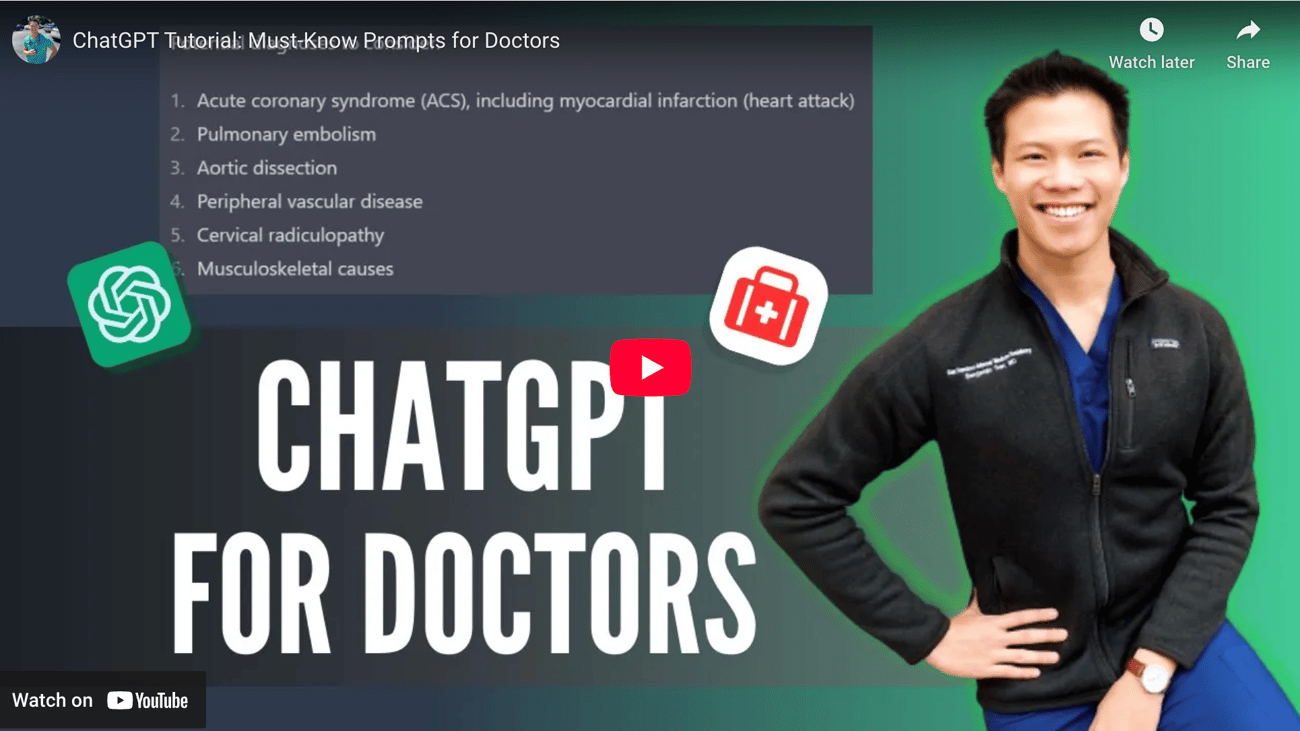
Video: ChatGPT Tutorial: Must-Know Prompts for Doctors
This tutorial on using ChatGPT in healthcare highlights its potential applications for doctors and residents. It covers essential prompts for patient care, such as using ChatGPT as a curbside consultant for differential diagnoses and identifying drug interactions. The importance of caution and fact-checking is emphasized, particularly regarding patient safety and HIPAA compliance. Specific examples demonstrate how ChatGPT can assist in diagnosing conditions like pulmonary embolism and managing medication interactions. Additionally, it provides guidance on monitoring lab values when
prescribing medications like spironolactone. Overall, the video showcases how ChatGPT can enhance productivity and patient communication in medical practice.
This tutorial emphasizes the practical applications of ChatGPT in enhancing patient communication and documentation in healthcare. It showcases how to approach sensitive topics with empathy, simplify medical information for diverse patient literacy levels, and generate essential documents like letters of medical necessity efficiently. The video illustrates the potential of AI to improve medical practice and patient care, making it a valuable resource for healthcare professionals.
View the video here.
Highlights:0:00 – ChatGPT’s growing
role in healthcare is introduced.0:12 – The tutorial focuses on prompts for patient care and medical documentation.0:30 – A disclaimer emphasizes the importance of caution and fact-checking when using ChatGPT in medical contexts.1:00 – ChatGPT is demonstrated as a curbside consultant for emergency room physicians.1:48 – It provides a differential diagnosis for a patient with severe chest pain.2:40 – ChatGPT outlines signs, symptoms, and labs for diagnosing a pulmonary embolism.4:01 – The importance of identifying drug interactions in patients with multiple medications is discussed.4:40 – ChatGPT identifies risks associated with combining isotretinoin and doxycycline.5:57 – It advises on lab monitoring when prescribing spironolactone.6:39 – The tutorial concludes with tips on improving patient communication and support.6:48 – Discussing compassionate approaches for patients with anorexia nervosa.7:12 – Suggested questions for addressing patient concerns about eating habits.7:31 – Importance of expressing observations without judgment in
patient care.8:01 – ChatGPT’s role in helping medical students understand patient emotions.9:10 – Using ChatGPT to simplify medical explanations for patients at different reading levels.10:35 – Example of an after-visit summary for a patient prescribed spironolactone.11:01 – ChatGPT’s ability to translate medical summaries into multiple languages.11:36 – Generating a letter of medical necessity for an MRI request.12:11 – Emphasis on the importance of MRI for accurate diagnosis and treatment.12:27 – Announcement of upcoming parts
and a book on ChatGPT in healthcare.
|
|
|
|
|
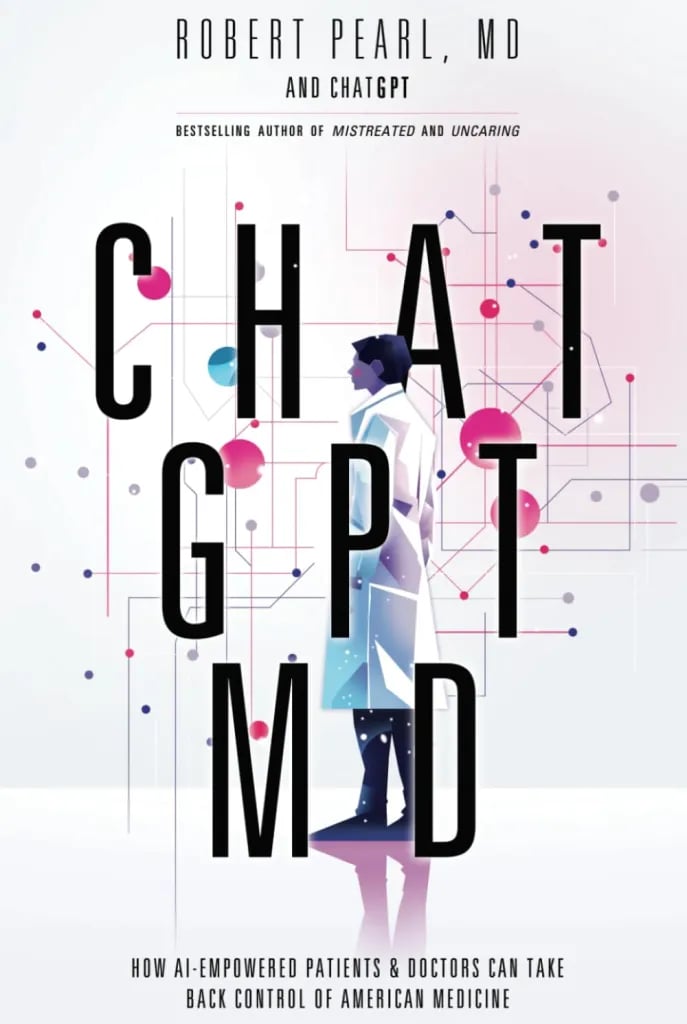
Book Review: ChatGPT, MD: How AI-Empowered Patients & Doctors Can Take Back Control of American Medicine By Robert Pearl, MD, and ChatGPT
Overview:
ChatGPT, MD is a forward-looking exploration of how generative AI, particularly ChatGPT, can revolutionize the American healthcare system. Authored by Dr. Robert Pearl, a healthcare expert, in collaboration with ChatGPT, the book highlights the potential for AI to empower both patients and healthcare professionals by improving diagnostics, reducing errors, and restoring the vital doctor-patient relationship. It offers a compelling argument for how AI can shift control away from corporate interests and back to the people most affected by
healthcare—doctors and patients.
Synopsis:The book begins by outlining the current struggles within American healthcare, including overwhelming bureaucracy, misaligned incentives, and the depersonalization of the patient experience. Dr. Pearl argues that generative AI, like ChatGPT, can address many of these problems. Using AI for tasks like diagnostics and patient education can free up doctors’ time, allowing them to focus more on personal interactions and complex decision-making.
In each chapter, real-world examples are given to showcase how AI might reduce human error in medical decision-making, democratize access to specialized knowledge, and allow patients to become more involved in their own care. At the same time, the book does not shy away from addressing the ethical and practical challenges AI may introduce, such as data privacy concerns, biases in algorithms, and the potential for job displacement among healthcare professionals.
Key Themes:
- Empowerment Through AI: The core message is that AI can restore control to doctors and patients, providing tools and knowledge that have historically been exclusive to specialists.
- Improving Diagnostics and Reducing Errors: AI can analyze large amounts of medical data, helping to reduce diagnostic mistakes and increasing the accuracy of treatments.
- Democratization of Healthcare: Patients are envisioned as becoming more informed and active participants in their healthcare through AI-driven insights.
- Challenges and Ethical Concerns: The book tackles difficult questions around bias in AI systems, data security, and the disruption AI could cause in healthcare employment.
Writing Style:The writing is clear, informative, and engaging, balancing technical medical concepts with accessibility for a general audience. Dr. Pearl uses conversational language, interspersed with real-life examples and hypothetical scenarios, making complex AI technology and medical topics understandable. The book also utilizes ChatGPT’s contributions to explain technical AI functions, presenting them in an easily digestible manner.
Conclusion:
ChatGPT, MD paints a hopeful picture of the future of American medicine. By showing how AI can alleviate some of the healthcare system’s biggest challenges, Dr. Pearl offers a vision for a more patient-centered, efficient, and humane approach to medicine. However, he is realistic in acknowledging the difficulties that lie ahead, from privacy issues to potential job losses. This balanced perspective makes the book essential reading for healthcare professionals and patients alike, especially those who want to be part of
the solution in reforming the system.
Rating:4.5/5 stars.
Additional Resources Cielito Lindo Offers
We have curated collections of resources that may be useful.
Articles - We write fresh articles about senior living, health, care, and finances every week
Caregiver Books
- We review books related to caregiving methods, logistics, challenges, and coping
Senior Health - We review books related to healthspan, lifespan, and disease
We also have 1,600+ other senior care and expat in Mexico videos: YouTube
|
|
|
|
|
| Cielito Lindo's basic information is included for your convenience:
|
|
|
- Cielito Lindo Info: After the signature, the newsletter always includes information about Cielito Lindo, so it is at your fingertips when you want it: Our costs, various related websites, social media channels like YouTube, our various addresses, and so on.
- Travel Info: Recommended airports and shuttles.
|
|
|
Web Sites - Cielito LIndo and Rancho Los Labradores
Here are our Web sites, including Cielito Lindo and Labradores Suites (hotel) all of which are part of the larger Rancho Los Labradores gated community just north of San Miguel de Allende.
- Cielito Lindo provides independent living, light assisted living, assisted living, memory care and hospice with 24*7 staffing along with a la carte assisted living services to those living in the villas and suites at Rancho Los Labradores.
- Rancho Los Labradores Suites offer short and long term residence.
- Rancho Los Labradores is a country club resort feeling CCRC that provides a gated community with countless amenities and opportunities for different levels of independent living along with assisted living and memory care within Cielito Lindo.
Cielito Lindo Living Options & Costs Guide
We offer several living options depending on the level of care you or your loved one needs. Here’s a breakdown to help you plan:
1) Villas (Rent or Own)
- Cost: $1,300 – $1,700 per month
- Additional Costs: Utilities, renter’s insurance, etc.
- What’s Included: This is mostly independent living.
- Extras: You can add independent or assisted living services (charged separately, à la carte).
- Support: We can connect you with a realtor if you'd like to purchase.
2) Cielito Lindo Condos & Suites
Best for: Independent living with optional assistance.
Option 1: Independent Living + Meals
- Cost: $2,250 per month
Includes:- 2 meals a day
- Monthly medical check-up
Optional Add-ons:- Meals for an additional person: $450/month
- Extra care services available à la carte
Option 2: Light-Assisted Living in Condos & Suites
- Cost: $3,900 per month
Includes:- Full assisted living services
- Designed for residents who still want independence but need some support
- Smooth transition to full Assisted Living or Memory Care as needs
change
- One-Time Inscription Fee: $4,000
For Couples:- $4,900/month for two people
- Same one-time fee ($4,000 per couple)
- Note: Suitability is based on cognitive ability, mobility, and safety.
3) Cielito Lindo Assisted Living, Memory Care, & Hospice
Best for: Seniors needing full-time care and supervision.
- Cost: $3,900 per month
Includes:- 24/7 care and monitoring
- All meals
- Physical therapy
- Full-time doctor on site
- Spacious private room with
bath
- One-Time Inscription Fee: $4,000
- For Couples: $4,900/month
4) Specialized Hospice Suite
Best for: Intensive care needs or end-of-life comfort and also recuperative at a far lower cost than a hospital- Cost: $4,900 per month
Includes:- Full 24/7 monitoring
- Recuperative, Palliative and hospice care
- On-site doctor
- All meals
- Special space for visiting
family
|
|
|
YouTube videos and Curated Playlists
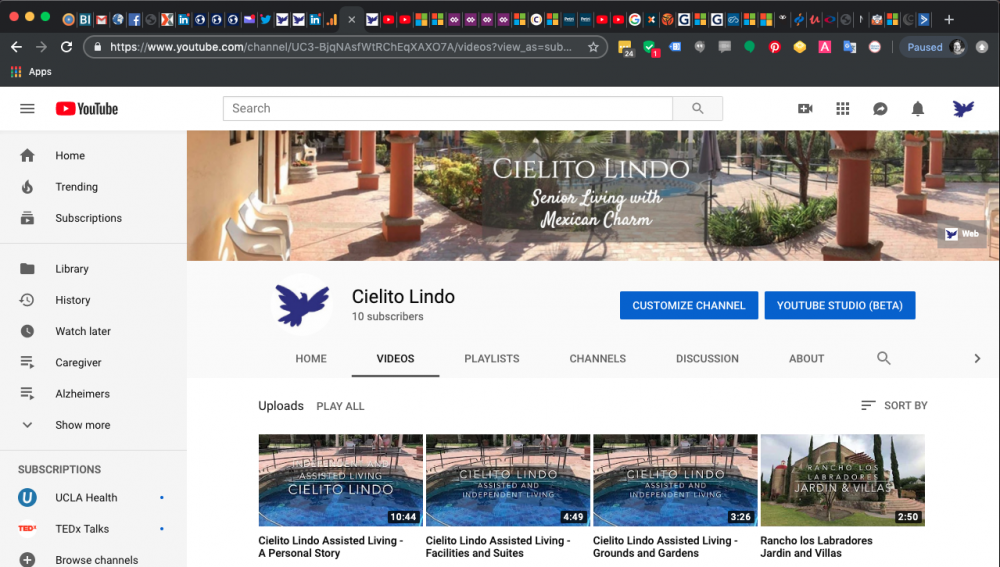
Here is our YouTube Channel. This is where we have lots of videos about Cielito Lindo and Rancho Los Labradores. We also have 1,600+ other senior care and expat in Mexico videos: YouTube |
|
|
|
|
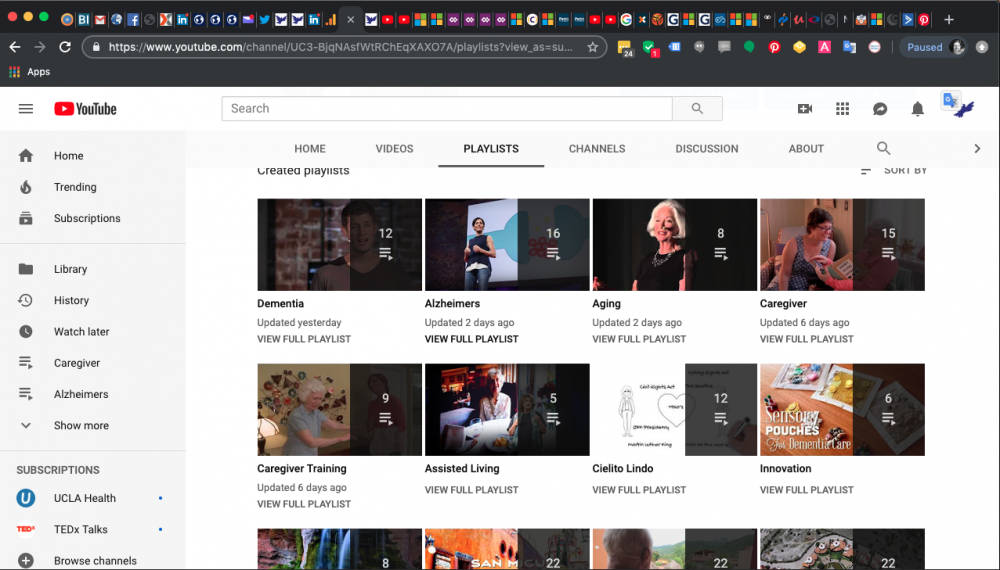
Additionally, our playlists cover a wide area and include 1,200+ videos. These playlists include videos about San Miguel and Mexico in general, caregiving and health, and a broad spectrum of senior living topics. Playlists
|
|
|
|
|
Additional Resources We Offer
We have curated collections of resources that may be useful:
Articles - We write fresh articles about senior living, health, care, and finances every week
Caregiver
Books - We review books related to caregiving methods, logistics, challenges, and coping
Senior Health - We review books related to healthspan, lifespan, and disease
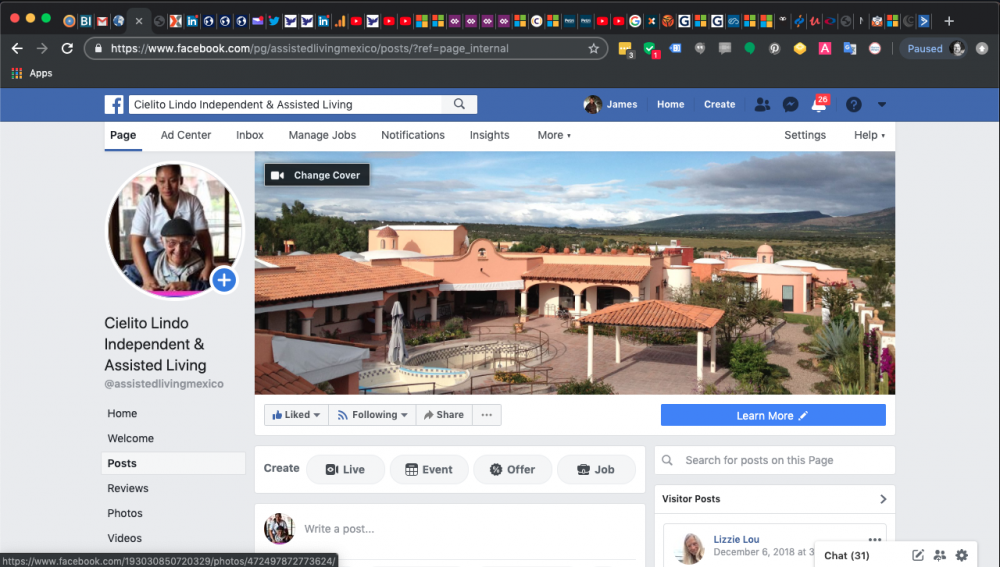
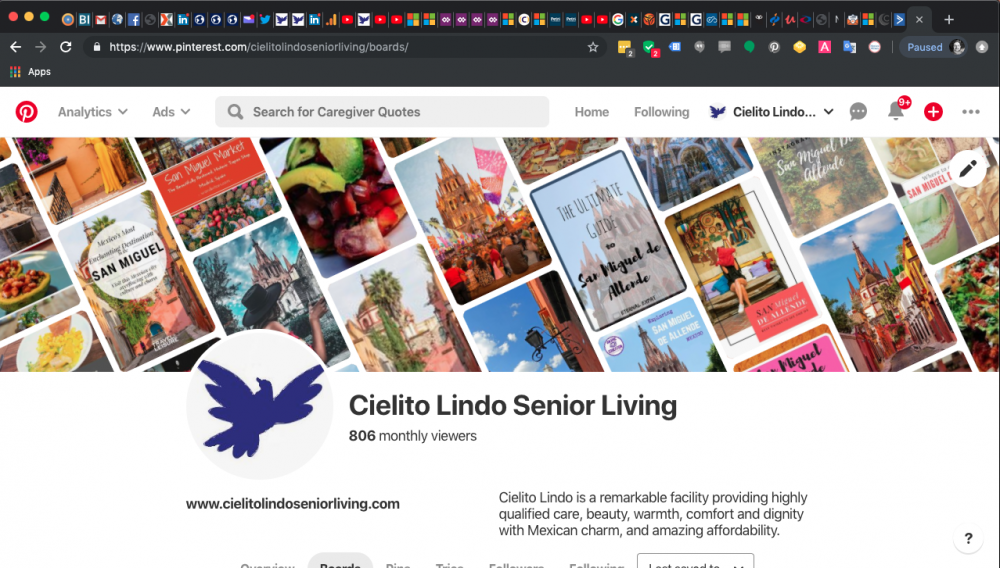
And here are our various social media forums, where we talk a lot about assisted living and memory care along with the various sort of challenges that sometimes come in our senior years (Alzheimer’s, Parkinson other dementias, and so on), but also about senior living in Mexico.
Facebook
|
|
|
|
|
|
|
|
|
|
|
|
|
|
|
|
|
|
|
Please don’t hesitate to contact me for anything related to senior living, especially in Mexico. I will gladly give you any assistance I can.
Thanks again!
James
James Sims
Marketing and Sales
Cielito Lindo Senior Living
1. 888.406.7990 (voice and text)
Phones:
English speaking:
1.888.406.7990 (in US & CDN)
00.1.881.406.7990 (in
MX)
Spanish speaking:
011.52.415.101.0201 (in US & CDN)
1.415.101.0201 (in MX)
Expat Logistics:
Visas for Expats:
Sonia Diaz Mexico
Tax Considerations for Expats:
Robert Hall Taxes
Addresses and Travel:
Physical address:
Cielito Lindo Independent and Assisted Living, Camino Real Los Labradores S/N, Rancho Viejo 1, San Miguel de Allende, GTO, Mexico, 37885
Packages from online providers like Amazon:
Camino Real Los Labradores, Rancho Los Labradores / Cielito Lindo, San Miguel de Allende, GTO, 37880 México
PO Box for letters and small envelopes:
Rancho Los Labradores / Cielito Lindo, c/o Alejandra Serrano ,
PMB N° 515-C, 220 N Zapata HWY N°11, Laredo TX, 78043-4464
Best airports to fly into: Leon or Queretaro
Airport shuttle: BajioGo
Shuttle:
Shuttle between San Miguel and Cielito Lindo:
|
|
|
|
|
|
|
Regards,
James
James Sims
Marketing and Sales
Cielto LIndo Senior Living
jsims.cielitolindo@gmail.com
|
|
|
|
|
|
|
|