|
|
Dear ,
This is your weekly summary of our news, research, books, videos, and other resources related to senior living, retirement, and care in Mexico, along with independent and assisted living and information about age-related challenges (e.g., limited mobility, dementia, Alzheimer's, Parkinson's, ALS, stroke, multiple sclerosis, healthspan, and so on).
I hope you are finding this weekly newsletter helpful, and if you know of someone who may also find this information helpful, please forward it to them. They can subscribe using our Web Newsletter page (click here). If, for any reason, you do not wish to receive this weekly newsletter any longer, there is a simple 'Unsubscribe' or 'Opt Out' link at the bottom right corner of this newsletter and also right here: Unsubscribe
This weekly newsletter typically includes information in each of the following categories: San Miguel insights, senior care, and health information, as well as Cielito Lindo basic information.
Here’s what we typically cover each week:
- San Miguel de Allende highlights – why this is such a special place to live
- Health & wellness insights – articles, videos, and expert reviews
- Care options & community life at Cielito Lindo – flexible, affordable living with a warm, human touch
This Week’s Theme:
TThis week’s newsletter explores how and why our healthcare system is broken.
|
|
|
|
|
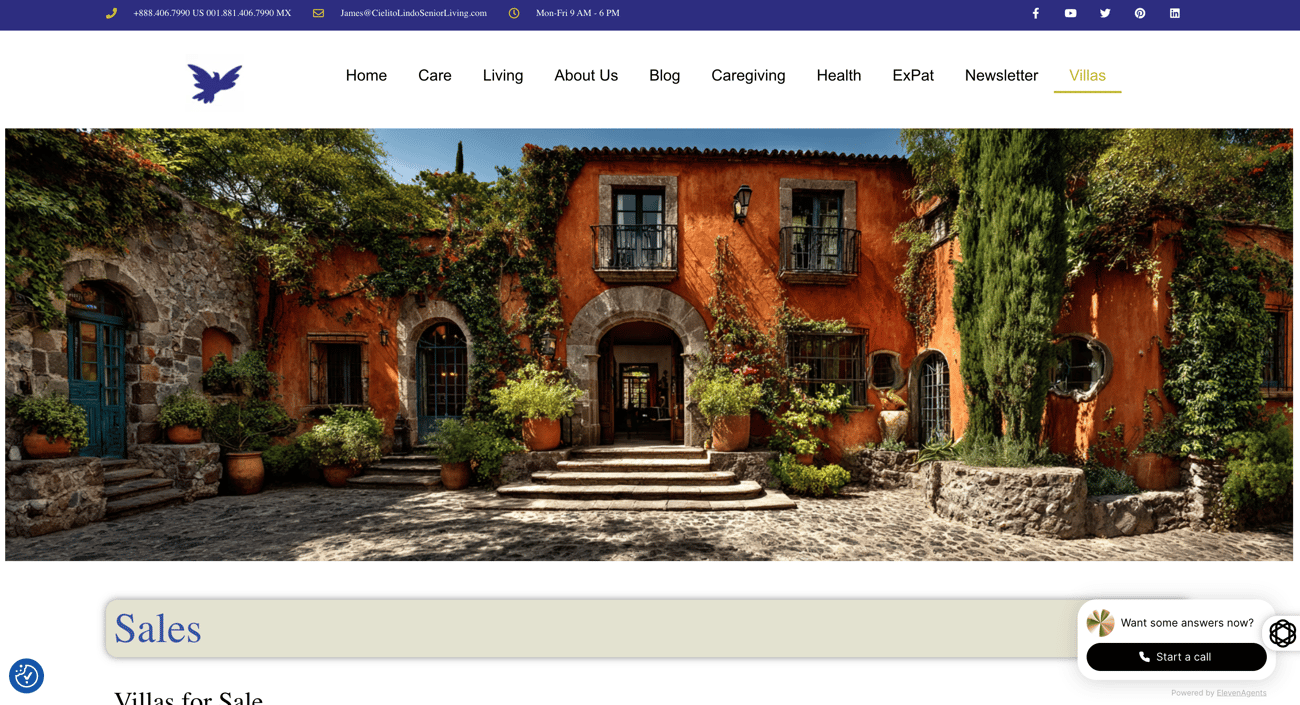
Villa Sales and Rentals
A significant portion of the people I work with are interested in independent living and would like to know more about our villas, both rentals and those for sale. So we have added a page to our website listing examples of what is currently available, along with contact information for more details. Rancho Los Labradores, the gated community surrounding Cielito Lindo, features over 150 beautiful homes and fabulous amenities.
Learn more here.
|
|
|
|
|
|
Weekly insights into San Miguel:
|
|
|
- Colorful and Epicurean San Miguel - This is such an amazing place, particularly the food and the colors. Although we are addressing a topic that is stressful, challenging, and emotional, we should also acknowledge what an incredible place San Miguel is.
|
|
|
|
|
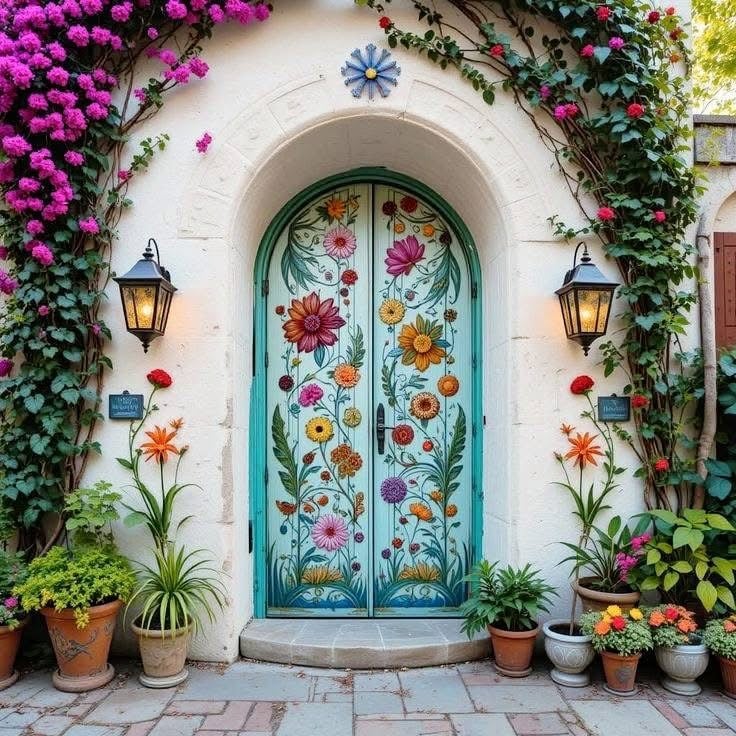
The Colors of San Miguel: Each Door Beckons With Its Own Story
In San Miguel de Allende, the doors are a singular attraction — storied, entreating, and impossibly gorgeous, each one seeming to guard a small, fragrant world of shadow, memory, and light. You can be walking an ordinary cobblestone street, half-distracted by the afternoon sun or the spill of bougainvillea overhead, and then a door like this appears and changes the tempo of your day. Suddenly you are no longer just passing through. You are wondering. Who has crossed this threshold? What courtyard lies behind it, cool with cantera stone and the murmur of a fountain? What flowers bloom just out of sight?
That is part of San Miguel’s quiet seduction: so much of its beauty lives at the edge of revelation. The doors do not announce; they entice. Painted with flowers, framed by climbing vines, warmed by lantern light, they offer that rare kind of charm that feels both intimate and elusive. They remind you that this city is not only meant to be seen, but gently approached — as one approaches a story, a memory, or a house where someone has just opened the windows to let the morning in.
|
|
|
|
|
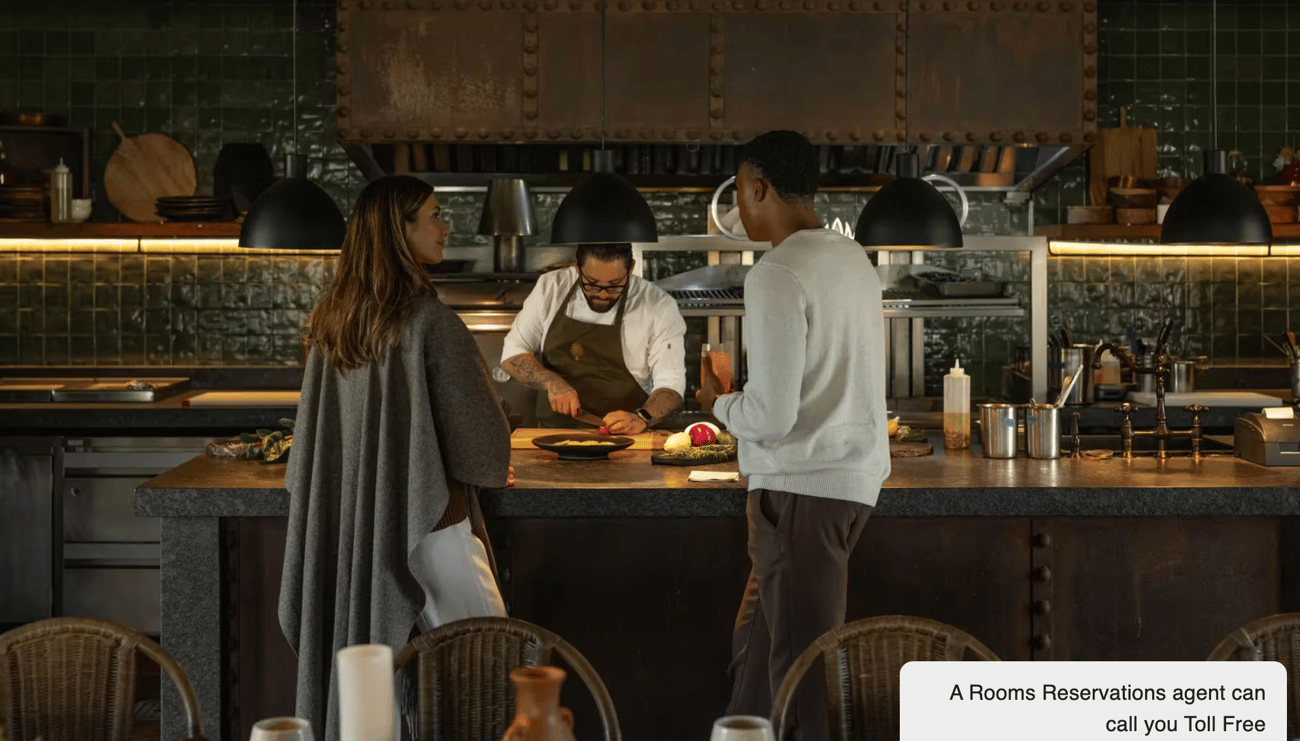
Restaurant Review: Pirules Garden Kitchen
Days and Hours: Wednesday through Monday. Lunch: 1:00 pm–5:00 pm. Dinner: 6:00 pm–10:00 pm. Closed Tuesday.
Atmosphere: Pirules feels very much in step with the best version of San Miguel de Allende luxury dining: open-air, polished, and rooted in place rather than merely dressed up for visitors. Rosewood frames it as a wood-fire, garden-driven concept, and that comes through in the restaurant’s identity—seasonal, land-connected, and intentionally relaxed rather than stiff. It sounds like the kind of room that lets the city’s highland elegance breathe.
Service: The official materials position Pirules as a chef-led, experience-driven restaurant, and that usually signals a service style built around explanation, pacing, and hospitality rather than speed alone. With Executive Chef Odín Rocha and Head of Bars Ana Paula Ulrich named prominently, the impression is of a place where the team is meant to guide the meal with confidence.
Cuisine: This is contemporary Mexican cooking anchored in wood fire, ancestral technique, and ingredients sourced within roughly 60 miles of San Miguel. That combination is especially compelling here: regional memory is not treated as nostalgia, but as structure. The menu moves between produce-forward plates, seafood, slow-cooked meats, and tortillas-and-moles cooking with a refined hotel-restaurant finish.
Signature Dish: The strongest signature statement appears to be the chef’s larger-format fire-driven offerings: the "Primitive" five-course tasting menu for the whole table, and the Corte del Chef at dinner. Both communicate the restaurant’s point of view most clearly—ritual, flame, seasonality, and contemporary Mexican technique.
Starters: There is real range at the opening of the meal. Lunch starters such as shrimp red aguachile, tuna tostada, octopus carpaccio, beet carpaccio, and mushroom birria show a kitchen comfortable moving from bright coastal acidity to earthy inland depth. At dinner, the organic tomato salad, charcoal-grilled endives, bean soup with chochoyotas, tamal oaxaqueño, and beef empanada suggest a more composed, heritage-minded beginning.
Main Courses: The mains are where Pirules looks most persuasive. Seasonal catch, huachinango zarandeado, short rib with fruit mole, roasted chicken with refried beans and corn tortillas, suckling pig, and the chef’s cut all reinforce the restaurant’s fire-and-terroir theme. This is not a menu chasing novelty for its own sake; it reads like a kitchen trying to make regional Mexican flavors feel both luxurious and intact.
Desserts: Dessert stays rooted in familiar pleasures but with enough flourish to feel destination-worthy. Lunch leans classic with tarte tatin, flan napolitano, and a citrusy carlota de limón, while dinner moves toward more expressive hotel-dessert territory with tres leches, guava buñuelo, five textures of Chocolate Abuelita, and a seasonal fruit pavlova.
Wine and Cocktails: Rosewood explicitly notes a dedicated bar program under Ana Paula Ulrich, which is encouraging even though the official page is lighter on specific cocktail names. The menus shown emphasize digestifs, coffee, and tea, but the broader positioning suggests cocktails are meant to be a meaningful part of the experience rather than an afterthought. Expect a beverage approach that aims for polish and balance with the food.
Final Thoughts: Pirules Garden Kitchen looks like one of those San Miguel dining rooms that understands what travelers come for but does not pander to them. The strongest appeal is its sense of place: local sourcing, wood fire, Mexican technique, and a refined hacienda setting. Based on the official menu and concept, it appears best suited to diners who want contemporary Mexican cuisine with real regional intelligence and the comfort of Rosewood-level staging.
Cost: $$$$
Rating: ★★★★½
|
|
|
|
|
|
Information related to Mexico, senior care and health:
|
|
|
- Lead article - These are articles specifically written for you each week. They address a wide range of relevant topics, such as factors that can increase your health and lifespan, diagnostics, understanding causal factors for Alzheimer's and other dementias, and so on. The lead article typically sets the tone for the core content of the newsletter (videos and book reviews). On occasion, the focus may be centered on Mexico, Pueblos Magicos, and San Miguel de Allende.
- Caregiver's Sentiment - This quote typically honors what we, as caregivers, are going through and feeling.
- Caregiver's Affirmation - This affirmation bolsters our self care, our image or ourselves on this journey and our ability to endure.
- Videos - Typically, three videos are related to the lead article, and they include a summary and timestamped highlights.
- Book Review - Typically related to the lead article.
|
|
|
|
|
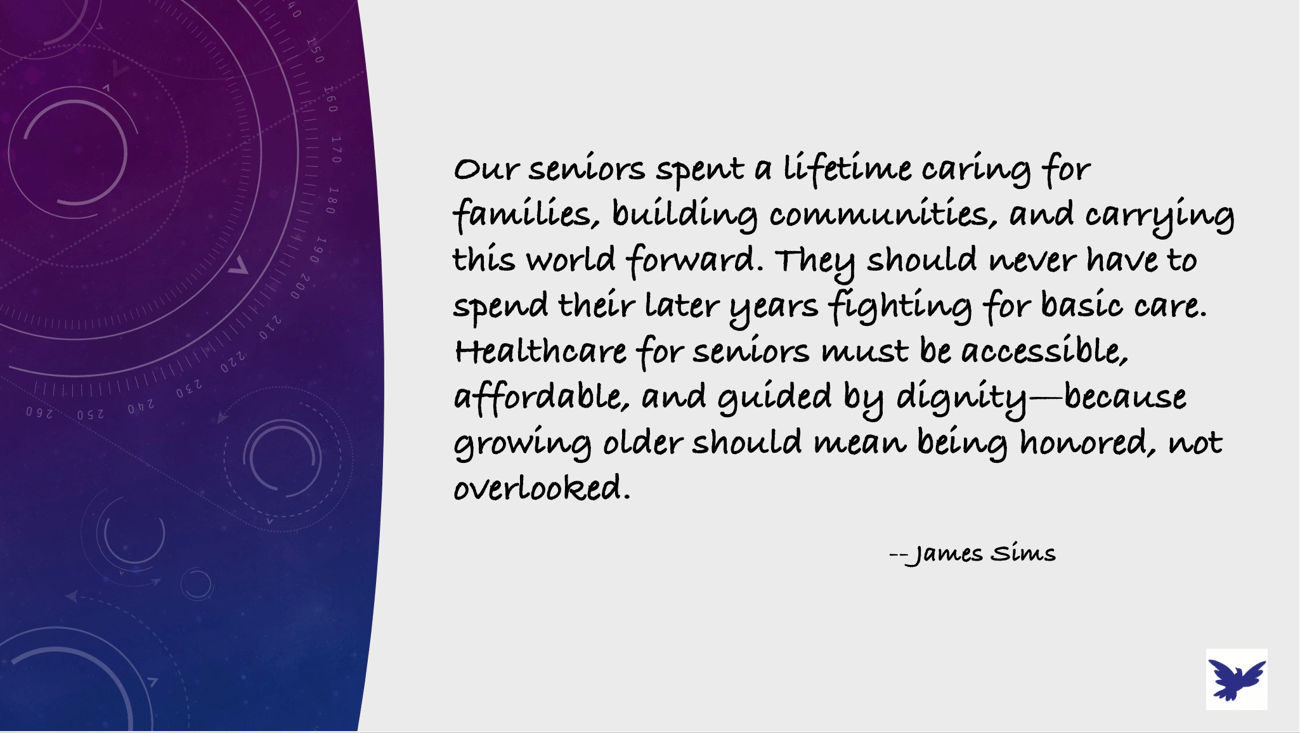
This quote is a reminder that seniors are not asking for special treatment, but for the dignity and care they have already spent a lifetime giving to others. It honors their legacy while challenging a system that too often makes aging harder instead of safer. At its core, it says that accessible and affordable healthcare is one of the clearest ways we show respect for those who helped build our families, our neighborhoods, and our world. To overlook them now is not just a failure of policy, but a failure of compassion.
|
|
|
|
|
Caregiver's Affirmation
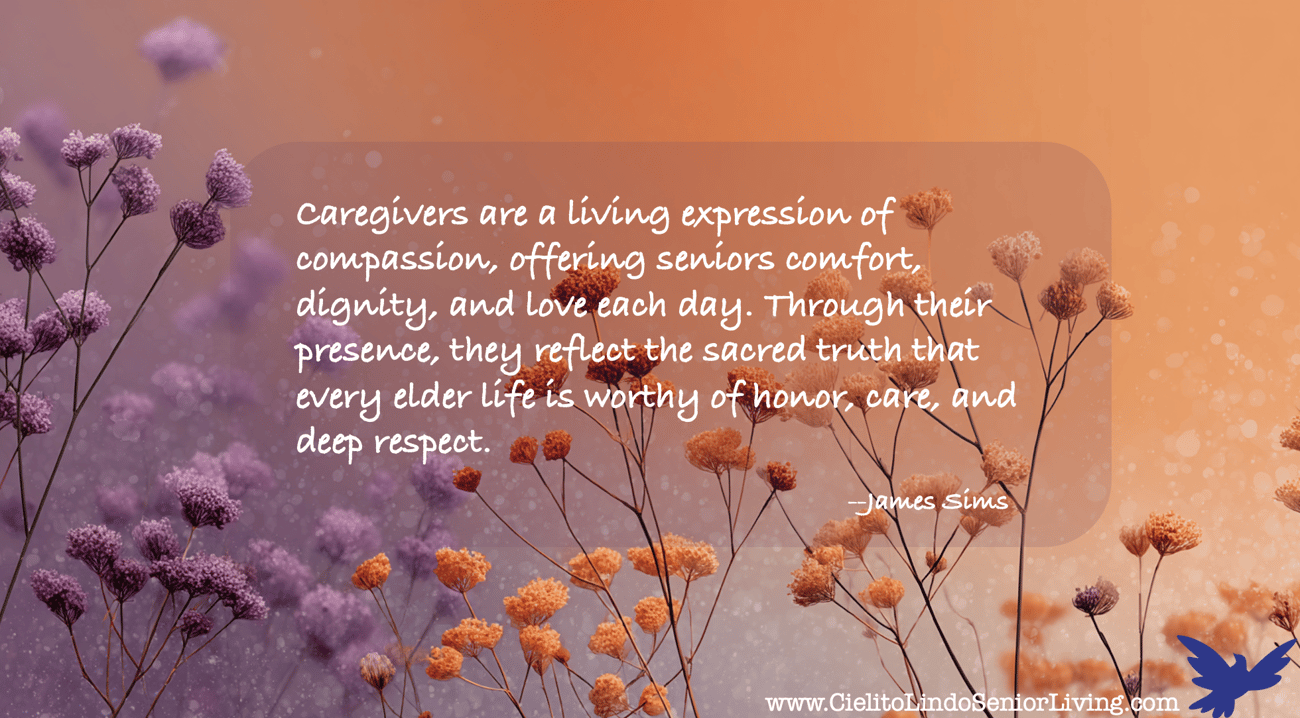
This affirmation recognizes caregivers as the quiet grace in the lives of seniors, offering more than assistance alone. Through gentle care, steady compassion, and loving presence, they help older adults feel cherished, respected, and deeply valued. It honors the unseen emotional strength of caregivers and the profound difference they make each day by reminding seniors that they are not invisible, but worthy of love, dignity, and honor.
|
|
|
|
|
Built for Profit, Not for Patients: Why Our Healthcare System Is Broken
The United States is home to some of the most advanced medicine in the world, but that fact has long concealed a harder truth: having remarkable medical capabilities is not the same thing as having a healthcare system that works. A system should be judged not by how spectacular it is at the top, but by how reliably it cares for people in ordinary moments of illness, uncertainty, and dependence. By that standard, American healthcare is not simply underperforming. It is broken.
Its failures are not random. They are built into the structure itself. Patients are routinely asked to navigate the challenges of confusion, delays, financial risk, and administrative burden, while insurers, hospital systems, and drug companies operate under incentives that reward revenue protection and market power. Even people with insurance often discover that coverage is not the same as security. What looks from a distance like a marvel of modern medicine often feels up close like a system that protects institutions more reliably than it protects the sick.
You can read the complete article here. Additionally, we have 100's of other senior care and health-related articles here.
|
|
|
|
|
When a Health-Care System Forgets the Patient
Every society reveals itself in how it treats people who are weak, frightened, and in need of care. Illness strips away the illusions of self-sufficiency on which modern life so often depends; it reminds us that there are moments when competence, income, and willpower are not enough. A health-care system is therefore never just an administrative arrangement. It is a statement, however implicit, about whether vulnerability will be met with solidarity or sorted by institutions according to cost, leverage, and risk.
Americans are used to speaking about their health-care system in two registers at once. In one, it is a source of national pride: the home of world-famous hospitals, biomedical breakthroughs, extraordinary specialists, and treatments that still draw patients from around the globe. In the other, it is a source of low-grade dread, familiar to nearly anyone who has ever tried to use it while sick, frightened, or responsible for someone they love. The first story is about excellence. The second is about experience. And one of the most revealing facts about American life is how long we have tolerated the distance between them.
A country can possess remarkable medicine without building a humane system of care. The United States has done exactly that. It has assembled some of the most impressive medical capabilities in the world while leaving millions of people to face illness not only as a physical trial but also as a financial and bureaucratic one. For many Americans, getting sick means entering a maze of coverage restrictions, prior authorizations, referral requirements, pharmacy substitutions, unexplained bills, and hours spent trying to extract clarity from institutions designed, in part, to withhold it. What is striking is not simply that this maze exists. It is how ordinary it has become.
The deepest problem with American health care is not only that it costs too much, though it plainly does. Nor is it only that outcomes often fail to justify the expense, though that too has been documented again and again. It is that the system so often asks people to manage complexity precisely when they are least able to bear it. Illness is already a destabilizing experience. It narrows attention. It makes people fearful, dependent, tired, and unsure. A decent health-care system would be designed with that vulnerability in mind. It would simplify the path to treatment. It would reduce uncertainty rather than multiply it. It would assume that people in pain should not also be required to become administrators of their own distress.
And yet that is often what American patients are asked to do. They are expected to consider deductibles and networks when deciding whether to seek care. They are expected to challenge denials while undergoing treatment. They are expected to compare prices that are not clearly disclosed, navigate billing codes they do not understand, and absorb costs that may arrive months after the crisis has passed. Even insurance, which ought to function as protection, frequently feels more like conditional access: a complicated set of permissions, limitations, and contingencies that the patient discovers only in the act of needing help.
It is tempting to call this dysfunction, as though the system had somehow wandered from its intended purpose. But that language flatters us. It recasts design as drift and, in doing so, becomes one of the ways the system excuses itself. The more unsettling possibility is that the system is expressing its priorities with uncomfortable clarity. In American health care, many of the most powerful institutions are not organized first around the patient’s need for timely, intelligible, affordable care. They are organized around managing financial risk, preserving revenue, defending market position, and negotiating leverage. Insurers are rewarded for controlling expenditures. Pharmaceutical firms are rewarded for maximizing returns. Hospital systems are rewarded for protecting margins and expanding profitable lines of business. None of these incentives are hidden. They shape the patient experience because they are supposed to.
That is why the frustrations of American health care feel so patterned. The delays are not random. The opacity is not incidental. The administrative burden is not merely an unfortunate byproduct of modern complexity. These things serve purposes within the structure. Complexity protects institutions. It diffuses blame. It allows costs to be shifted, obligations to be contested, and accountability to remain just out of reach. To the patient, that may feel like chaos. To the system, it is often simply a matter of how power operates.
Other wealthy countries, of course, have their own failures. They struggle with waiting times, staffing shortages, regional disparities, and budget pressures. No serious observer should romanticize them. But many do begin from a different premise: that health care is fundamentally a public obligation, and that ordinary access to it should not depend so heavily on a person’s employment status, financial resilience, or fluency in institutional jargon. That difference in premise matters. It shapes whether illness is treated primarily as a human circumstance requiring care or as a financial event to be processed through competing organizations.
The American model has long obscured this distinction by pointing to its own brightest achievements. It is true that the United States can perform astonishing medical feats. But a society should be wary of judging its institutions solely by their performance at the extremes. The test of a health-care system is not whether it can produce moments of brilliance. It is whether ordinary people can navigate ordinary episodes of illness with a basic expectation of dignity and security. Too often in the United States, they cannot.
The burden is not shared evenly. Those with money, time, education, and stable employment are often better positioned to navigate what others cannot. They can pay out of pocket, travel for care, take time off work, dispute bills, and persist through the phone calls and paperwork. Those without such advantages encounter the system more nakedly. For them, a denied claim is not an irritation; it can be a crisis. A delayed approval is not a bureaucratic annoyance; it can alter the course of an illness. A large medical bill is not merely stressful; it can destabilize housing, work, and family life. In this sense, the system does not merely reflect inequality. It intensifies it.
And still meaningful reform remains elusive. Part of the reason is political: the people harmed by the system are diffuse, episodic, and often overwhelmed, while the institutions that benefit from the arrangement are permanent, organized, and deeply embedded in American power. But part of the reason is cultural, too. The United States has never fully resolved what it believes health care to be. Is it a right? A market commodity? A workplace benefit? A public service? A private responsibility? The system embodies all of these ideas at once, and because they are not easily reconciled, the result is an arrangement that cannot quite decide whether to care for citizens, serve consumers, or extract value from both.
That ambiguity has moral consequences. It allows Americans to go on speaking as though the system’s failures were somehow accidental, or at least inevitable. But they are neither. They are the predictable result of a structure that has placed extraordinary medical talent within an institutional framework that is too often indifferent to the emotional and financial realities of being a patient. The country has not failed to solve a technical problem. It has failed to keep sight of a human one.
A health-care system exists, at bottom, for moments of vulnerability. That is its purpose. It is there for the instant when strength gives way, when the body becomes uncertain, when a family needs competence and reassurance more than market logic. If, at those moments, the system reliably introduces fear, confusion, delay, and debt, then something more than inefficiency is at work. The system has, in some essential sense, forgotten what it is for.
American medicine still inspires admiration. American health care more often inspires vigilance. That contrast should trouble us more than it does. It suggests not just a policy failure, but a civic one: a society rich in skill and resources, but uncertain whether its most advanced institutions are meant to serve the vulnerable or merely manage them.
|
|
|
|
|
|
Cielito Lindo's basic information is included for your convenience:
|
|
|
- Cielito Lindo Info: After the signature, the newsletter always includes information about Cielito Lindo, so it is at your fingertips when you want it: Our costs, various related websites, social media channels like YouTube, our various addresses, and so on.
- Travel Info: Recommended airports and shuttles.
- Downloadable Brochure: Click here.
|
|
|
Web Sites - Cielito LIndo and Rancho Los Labradores
Here are our Web sites, including Cielito Lindo and Labradores Suites (hotel) all of which are part of the larger Rancho Los Labradores gated community just north of San Miguel de Allende.
Web Sites - Cielito LIndo and Rancho Los Labradores
Here are our Web sites, including Cielito Lindo and Labradores Suites (hotel) all of which are part of the larger Rancho Los Labradores gated community just north of San Miguel de Allende.
- Cielito Lindo provides independent living, light assisted living, assisted living, memory care and hospice with 24*7 staffing along with a la carte assisted living services to those living in the villas and suites at Rancho Los Labradores.
- Rancho Los Labradores Suites offer short and long term residence.
- Rancho Los Labradores is a country club resort feeling CCRC that provides a gated community with countless amenities and opportunities for different levels of independent living along with assisted living and memory care within Cielito Lindo.
Cielito Lindo Living Options & Costs Guide
We offer several living options depending on the level of care you or your loved one needs. Here’s a breakdown to help you plan:
1) Villas (Rent or Own)
- Cost: $1,300 – $1,700 per month
- Additional Costs: Utilities, renter’s insurance, etc.
- What’s Included: This is mostly independent living.
- Extras: You can add independent or assisted living services (charged separately, à la carte).
- Support: We can connect you with a realtor if you'd like to purchase.
2) Cielito Lindo Condos & Suites
Best for: Independent living with optional assistance.
Option 1: Independent Living + Meals
- Cost: $2,250 per month
Includes:
- 2 meals a day
- Hotel like room cleaning, towel and linen service
- Monthly medical check-up
Optional Add-ons:
- Meals for an additional person: $450/month
- Extra care services available à la carte
Option 2: Light-Assisted Living in Condos & Suites
- Cost: $3,900 per month
Includes:
- Full assisted living services
- Designed for residents who still want independence but need some support
- Smooth transition to full Assisted Living or Memory Care as needs change
- One-Time Inscription Fee: $4,000
For Couples:
- $4,900/month for two people
- Same one-time fee ($4,000 per couple)
- Note: Suitability is based on cognitive ability, mobility, and safety.
3) Cielito Lindo Assisted Living, Memory Care, & Hospice
Best for: Seniors needing full-time care and supervision.
- Cost: $3,900 per month
Includes:
- 24/7 care and monitoring
- All meals
- Physical therapy
- Full-time doctor on site
- Spacious private room with bath
- One-Time Inscription Fee: $4,000
- For Couples: $4,900/month
4) Specialized Hospice Suite
Best for: Intensive care needs or end-of-life comfort and also recuperative at a far lower cost than a hospital
- Cost: $4,900 per month
Includes:
- Full 24/7 monitoring
- Recuperative, Palliative and hospice care
- On-site doctor
- All meals
- Special space for visiting family
|
|
|
YouTube videos and Curated Playlists
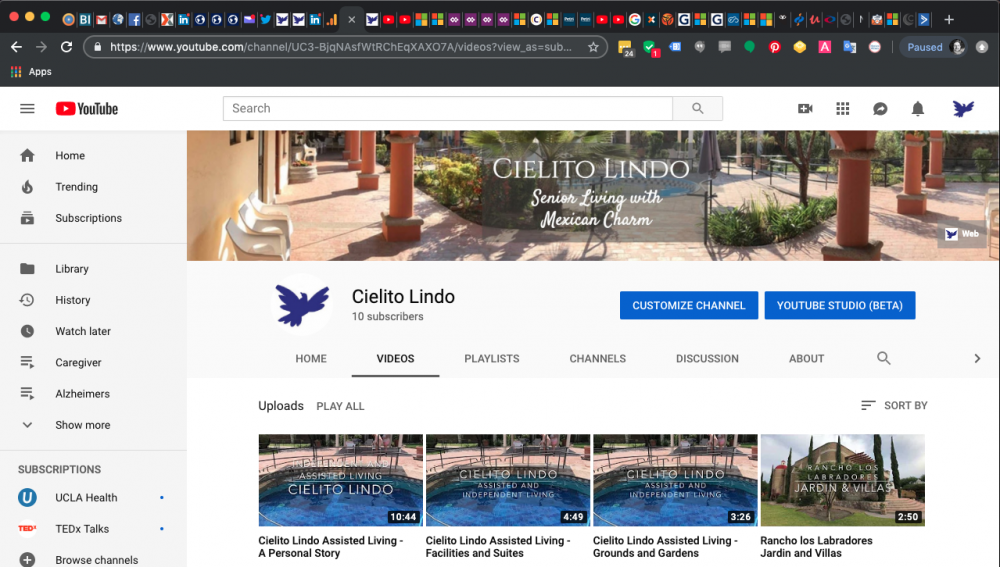
Here is our YouTube Channel. This is where we have lots of videos about Cielito Lindo and Rancho Los Labradores. We also have 1,600+ other senior care and expat in Mexico videos: YouTube
|
|
|
|
|
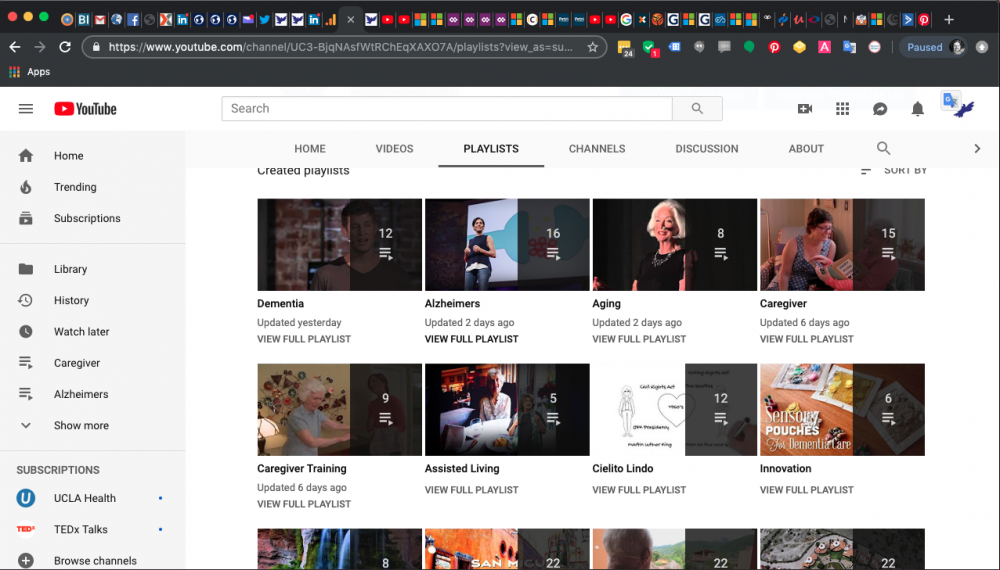
Additionally, our playlists cover a wide area and include 1,200+ videos. These playlists include videos about San Miguel and Mexico in general, caregiving and health, and a broad spectrum of senior living topics. Playlists
|
|
|
|
|
Additional Resources We Offer
We have curated collections of resources that may be useful:
Articles - We write fresh articles about senior living, health, care, and finances every week
Caregiver Books - We review books related to caregiving methods, logistics, challenges, and coping
Senior Health - We review books related to healthspan, lifespan, and disease
And here are our various social media forums, where we talk a lot about assisted living and memory care along with the various sort of challenges that sometimes come in our senior years (Alzheimer’s, Parkinson other dementias, and so on), but also about senior living in Mexico.
Facebook
|
|
|
|
|
|
|
|
|
|
|
Please don’t hesitate to contact me for anything related to senior living, especially in Mexico. I will gladly give you any assistance I can.
Thanks again!
James
James Sims
Marketing and Sales
Cielito Lindo Senior Living
1. 888.406.7990 (Voice and text)
1.209.312.0555 (WhatsApp)
Phones:
English speaking:
1.888.406.7990 (in US & CDN)
00.1.881.406.7990 (in MX)
Spanish speaking:
011.52.415.101.0201 (in US & CDN)
1.415.101.0201 (in MX)
SMA Colonias (subdivisions/neighborhoods):
Map and descriptions
Addresses and Travel:
Physical address:
Cielito Lindo Independent and Assisted Living, Camino Real Los Labradores S/N, Rancho Viejo 1, San Miguel de Allende, GTO, Mexico, 37885
Packages from online providers like Amazon:
Camino Real Los Labradores, Rancho Los Labradores / Cielito Lindo, San Miguel de Allende, GTO, 37880 México
PO Box for letters and small envelopes:
Rancho Los Labradores / Cielito Lindo, c/o Alejandra Serrano , PMB N° 515-C, 220 N Zapata HWY N°11, Laredo TX, 78043-4464
Air:
Best airports to fly into: Leon (BJX) or Queretaro (QRO)
Shuttle:
Best airport shuttle: BajioGo
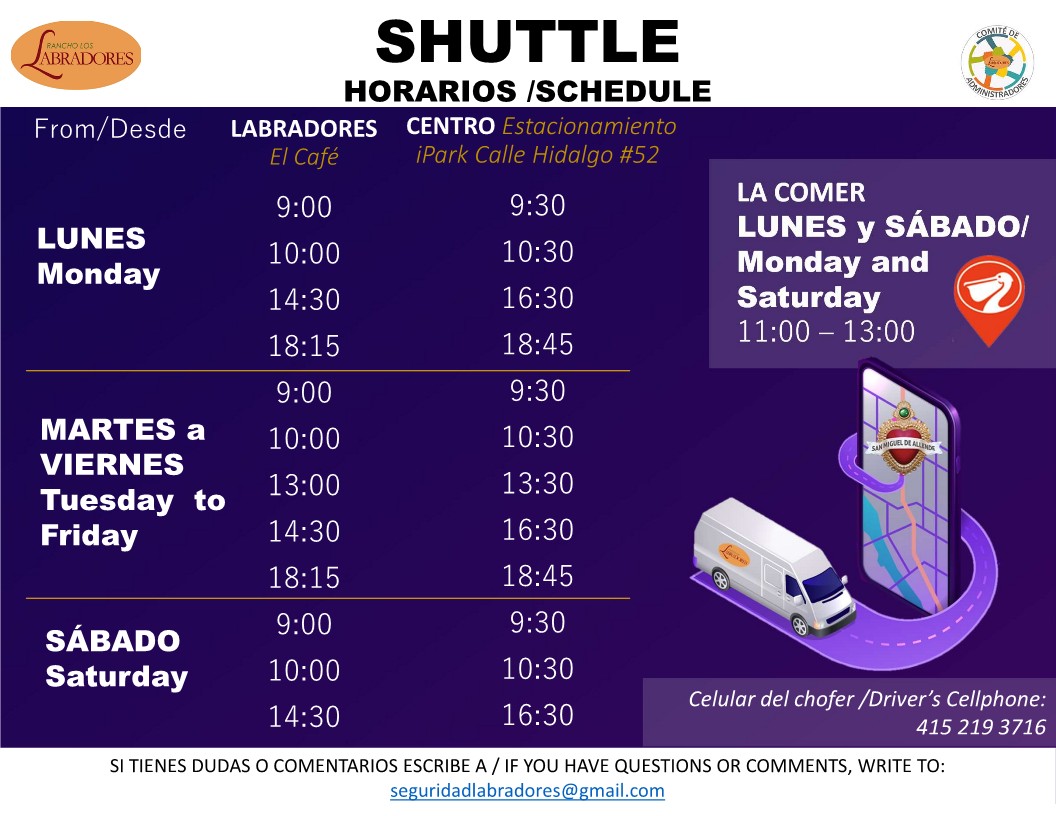
Shuttle between San Miguel and Rancho Los Labradores / Cielito Lindo
|
|
|
|
|
|
|
|
|
|
|