|
|
Dear ,
Welcome to our weekly collection of news, research, articles, books, videos, and creative resources about senior living, retirement, and care in Mexico. We explore independent and assisted living, ways to extend our healthy years, and the challenges of living with conditions such as dementia, Alzheimer’s, Parkinson’s, limited mobility, and other complex care needs.
Each week, I write articles, research hotels and restaurants, share quotes and affirmations, annotate YouTube videos, and create songs and travel posters. These are my ways of staying connected with you: those planning for later life, those already navigating its challenges, and the families, spouses, partners, and friends who care for them. My hope is to offer useful information, a little encouragement, and opportunities to appreciate the beauty and possibilities that remain at every stage of life.
This week, we consider a deeply personal subject: what happens to our remains after we die. We explore the choices available and the practical, emotional, cultural, and environmental considerations that can help us make decisions consistent with our wishes and values.
Alongside this week’s featured topic, you’ll find our usual mix of:
- San Miguel de Allende highlights: The places, people, food, and culture that make this a special place to live.
- Health and wellness insights: Research, articles, videos, and perspectives on aging well and navigating care.
- Care options and community life at Cielito Lindo: Flexible, affordable living and care with warmth and personal attention.
I hope this newsletter brings something useful and meaningful to your week. If someone you know might appreciate it, please forward it to them. They can subscribe through our newsletter page.
If you prefer to stop receiving these emails, you can unsubscribe at any time using the “Unsubscribe" or “Opt Out” link at the bottom of this newsletter.
Warmly,
James
This Week’s Theme:
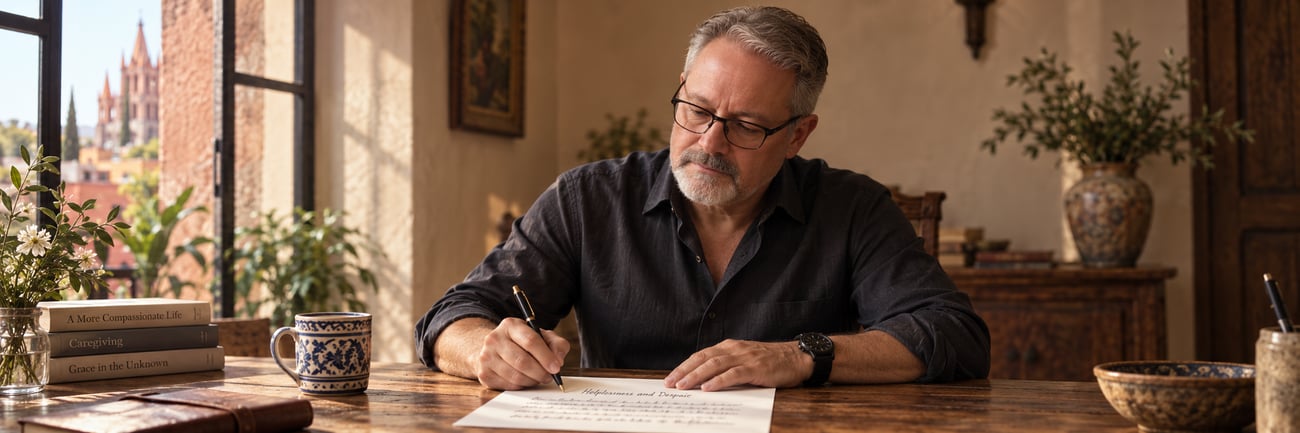
This week's newsletter explores the doubts, fears, and challenging thoughts we sometimes have as caregivers.
|
|
|
|
|
|
Weekly insights into San Miguel:
|
|
|
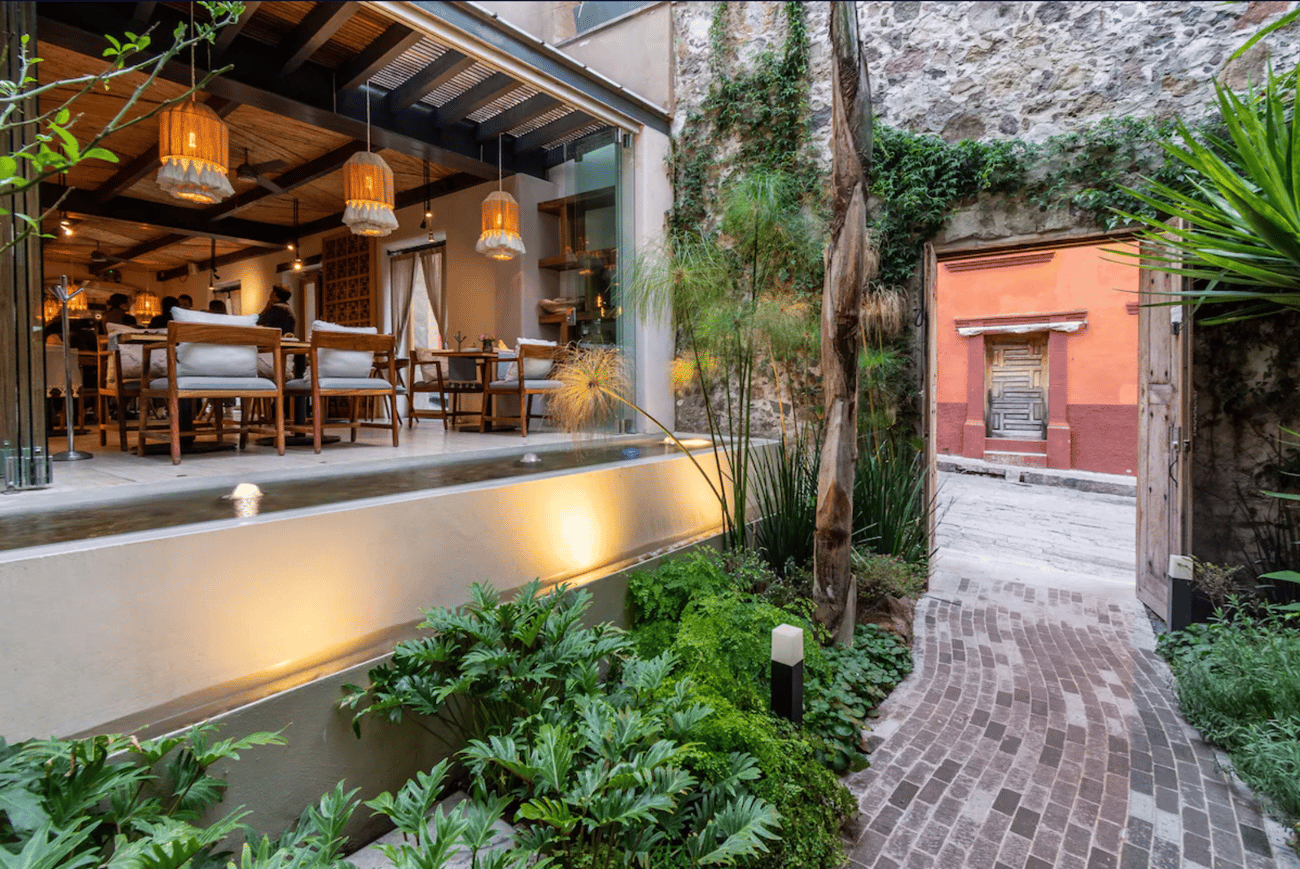
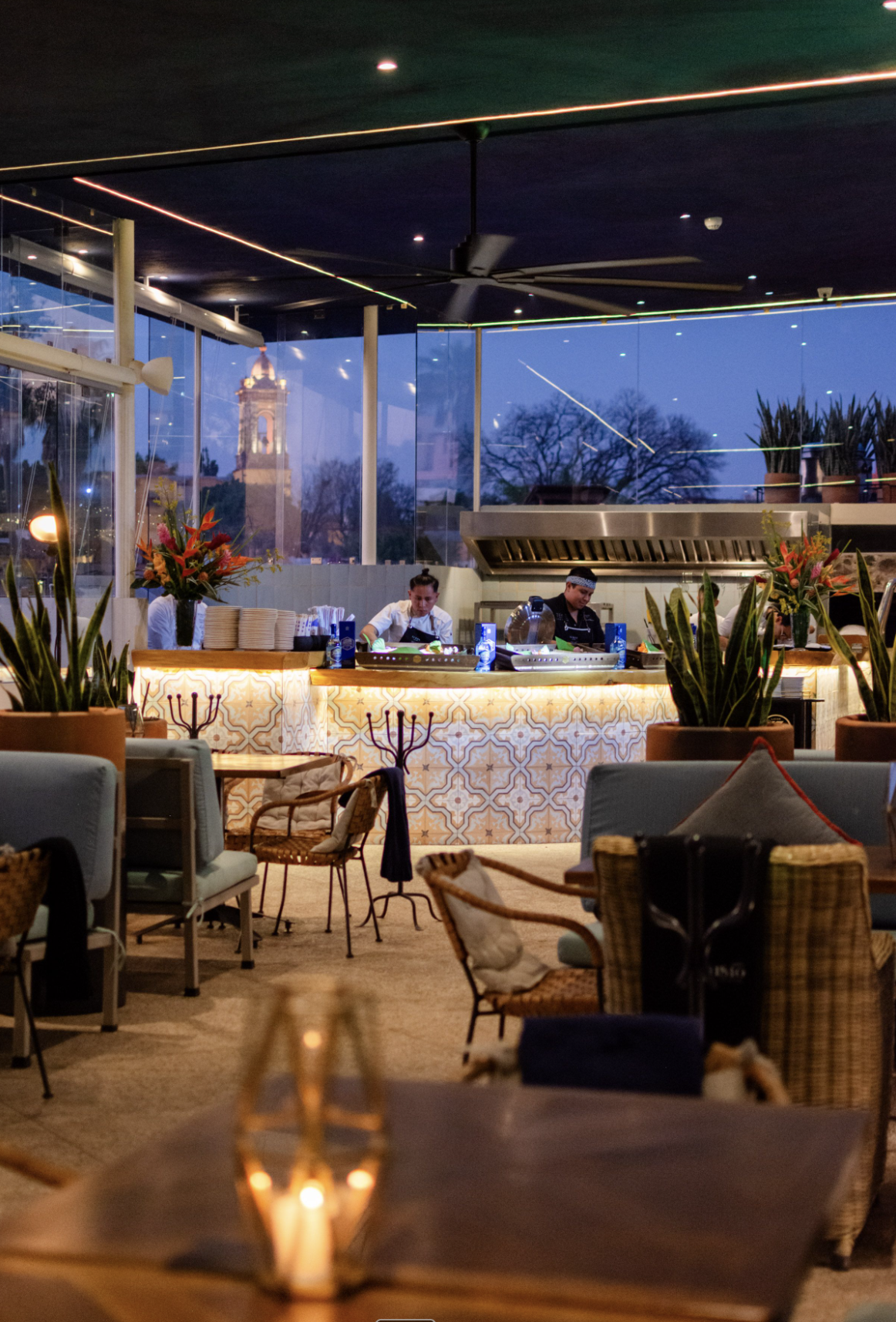
- Colorful and Epicurean San Miguel - This is such an amazing place, particularly the food and the colors. Although we are addressing a topic that is stressful, challenging, and emotional, we should also acknowledge what an incredible place San Miguel is.
|
|
|
|
|
|
Travel Poster - The Magic of San Miguel
San Miguel de Allende seems made for the kind of daydream that begins with looking up. Across the hillside, terracotta rooftops and sun-warmed walls gather around the pink spires of the Parroquia, while an impossibly blue sky opens above them. Then come the balloons: great floating globes of scarlet, gold, and turquoise, turning the skyline into something halfway between a vintage travel poster and a childhood imagining. Some hover like bright ornaments over the city; others drift toward the distant hills, growing smaller until they seem almost too delicate to carry anyone at all.
From a rooftop terrace, the temptation is to forget whatever you had planned and simply watch. A striped balloon passes above a church tower, another catches the sunlight, and for a moment the whole scene feels wonderfully improbable. Below, San Miguel holds its familiar pleasures—flowering courtyards, cobblestone streets, the promise of coffee around a corner. Above, there is the lovely extravagance of people sailing through the sky. Together, they give the city a particular magic: enough beauty to hold your attention, and enough fantasy to let your thoughts wander.
|
|
|
|
|
The Hotels of San Miguel: Casa Quebrada
Intimate scale and Mediterranean warmth in the historic center
Address: Quebrada 18C, Zona Centro, San Miguel de Allende, Guanajuato
Telephone: +52 415 688 5036 · Website
Atmosphere & Character
Casa Quebrada’s appeal begins with its intimate scale: warm terracotta tones, arches, natural textures, and greenery surrounding an entrance fountain. Its Mediterranean and Moroccan-inspired design brings a distinctive character to a small hotel in San Miguel’s historic center.
An Ambientes profile describes ten individually decorated rooms, with an emphasis on earthy colors, softened lighting, and spaces intended for relaxation. The attraction is easy to understand: a visually inviting base where a quiet interval between outings can become part of the pleasure of visiting San Miguel. Ambientes
Accommodations
The hotel advertises queen, double-bed, and king accommodations, along with a master suite. Its listed categories include a balcony or terrace, although the character of these outdoor spaces varies. Guests should distinguish between an interior patio or courtyard outlook and a balcony offering a broader view. Casa Quebrada
The hotel’s reservation listing includes air conditioning and heating, Nespresso machines, televisions, and Malin+Goetz bath amenities. These practical comforts complement the decorative character of the rooms. Before reserving, ask for photographs of the specific accommodation being offered and confirm bed size, outdoor space, and location within the property.
Service
Published guest feedback frequently praises the staff’s friendliness, helpfulness, and attention, along with room cleanliness. Recent Expedia reviews reinforce that favorable impression, including comments from returning guests. These are encouraging signs for travelers who value personal assistance in a smaller property. Expedia
Room placement deserves attention. Some guests describe restful stays, while others report street noise or sound from the neighboring restaurant, especially in certain ground-floor accommodations. Light sleepers should discuss their preferences directly with the hotel rather than assume that every room offers the same degree of quiet.
Dining and Breakfast
Neighboring Bocaciega, at Quebrada 18A, adds a convenient dining option. Its Mediterranean menu draws particularly on Greek and Lebanese influences, a fitting companion to the hotel’s design sensibility. The restaurant’s current reservation listing shows lunch and dinner service; this review does not offer a firsthand assessment of the cooking.
Breakfast is not included in the room categories currently advertised on Casa Quebrada’s website. Confirm whether your particular package offers any breakfast arrangement, and plan separately for the morning meal if it does not.
Amenities
The principal amenities support a comfortable stay centered on exploring the city:
- Garden and terrace areas.
- Air conditioning and heating.
- In-room espresso machines and Wi-Fi.
- Twenty-four-hour reception and concierge assistance.
- Parking arrangements and airport transfers, with terms and charges to confirm.
- Dog-friendly accommodations, subject to fees and hotel policies.
The hotel’s reservation information describes valet parking and paid airport transportation. Confirm these arrangements before arrival, particularly if traveling with a vehicle or pet.
Location and Accessibility
The Centro address is one of Casa Quebrada’s strongest advantages. Expedia places the Parroquia and the Templo de la Inmaculada Concepción within a ten-minute walk. That proximity makes it practical to return between sightseeing, shopping, and restaurant visits, although walking time depends on pace and route. Expedia
For travelers with limited mobility, an important qualification is that Expedia lists no elevator and stair-only access to upper floors. Request a ground-floor room if necessary, but also confirm the complete route from vehicle drop-off to the accommodation, including thresholds, bathroom access, and any steps to shared spaces. Ground-floor placement alone does not establish accessibility. Accessibility information
Who It’s Best For
Casa Quebrada is particularly appealing for couples and travelers who enjoy individual décor, a smaller property, and ready access to the historic center. It also merits consideration for visitors traveling with a dog, provided the hotel’s arrangements suit their needs.
Its strongest fit is a visit built around San Miguel itself: galleries, architecture, restaurants, and time spent wandering, with an attractive room to return to between excursions.
Final Thoughts
Casa Quebrada brings together intimate scale, warm design, and a useful central location. Its appeal rests on those tangible qualities, supported by generally favorable comments about hospitality and cleanliness. Choose the room carefully, clarify breakfast and parking arrangements, and give particular attention to noise exposure and stairs if either could affect your stay.
Cost:
Upscale boutique pricing. The official website advertises starting rates from MXN 2,280 for selected rooms, with higher starting prices for king accommodations and the master suite. These are advertised starting rates, not a quote for specific dates; confirm taxes, inclusions, parking, and pet charges. Published rates
The following are research-based editorial ratings, not firsthand assessments of an overnight stay or official hotel classifications.
Location: ★★★★★
Rooms: ★★★★
Design & Atmosphere: ★★★★½
Amenities: ★★★½
Service: ★★★★½, based on published guest feedback
Value: ★★★★, dependent on the booked rate
Overall Rating: ★★★★ (4/5)
The overall rating reflects an editorial assessment, rather than a mathematical average or a rating assigned by a booking platform.
|
|
|
|
|
Restaurant Reviews: Tené Kitchen & Bar
Located inside the Casa 1810 Parque hotel, at Calle del Codo 3
Address: Calle del Codo 3, esquina con Tenerías, Centro, San Miguel de Allende, Guanajuato
Telephone: +52 415 688 6981 Website
Days and Hours
The official website lists service daily from 8 a.m. to 11 p.m. Other reservation listings show an earlier breakfast opening, so confirm if planning an early visit. Rooftop service has a separate schedule. Official hours
Atmosphere
Tené offers one of the pleasures that makes dining in San Miguel so appealing: a meal within the courtyard of an old residence, where architecture contributes as much to the occasion as the menu. At Casa 1810 Parque, art and a relaxed setting support the restaurant’s stated emphasis on food to enjoy with family and friends.
There is also a choice of moods. A local dining guide describes a casual bar area, a more formal courtyard dining space with a fountain, and a rooftop terrace. Specify your preferred setting when reserving; a courtyard lunch and an evening above the rooftops offer quite different experiences.
Service
Published diner feedback includes warm praise for the hospitality, with guests recognizing individual servers and management for their attentiveness. That suggests a welcoming approach, although it is not a substitute for assessing the pacing and consistency of service firsthand
Cuisine
The restaurant describes its approach as comfort food: familiar dishes intended to evoke memories and encourage convivial meals. The published menu gives that idea considerable range, moving among Mexican favorites, grilled meats, pasta, pizza, and burgers. It is an accommodating proposition for a table of friends whose appetites do not necessarily point in the same direction.
Signature Dish
The wood-fired beef barbacoa is a compelling first choice: brisket accompanied by grilled onions, cilantro, lime, and handmade tortillas. It expresses the restaurant’s comfort-food identity particularly well. This is an editorial selection from the menu, rather than a confirmed house-designated signature. OpenTable menu
Starters
Guacamole 1810 adds roasted avocado, green pico de gallo, fried sage, and oregano to a familiar beginning. Other options include roasted cauliflower over chile-mixe romesco and a beet salad with basil jocoque, cashews, and passion-fruit purée. These combinations suggest that vegetables deserve attention alongside the richer dishes.
Main Courses
The menu includes charcoal-grilled pork ribs with dark-beer demi-glace, pumpkin-seed-crusted salmon, and octopus with wood-fired saffron rice. For something more casual, the namesake Tené burger combines Angus beef, bacon-and-tomato sofrito, cheeses, and arugula on house-made brioche. The range makes both a substantial dinner and a simpler lunch possible.
Desserts
Published selections include lemon cake with blueberry compote, apple tart with cinnamon and cardamom, and a chocolate dessert incorporating pistachio praline and ganache. A shared dessert would suit the restaurant’s convivial premise, especially after a generous main course. Confirm the day’s selection before deciding.
Wine and Cocktails
The drinks offering includes wine and a full bar, with published cocktails ranging from spritzes to a French 75 and a Negroni Sbagliato. Those sparkling aperitifs offer an appealing direction for a leisurely afternoon; for dinner, ask about current wines by the glass and pairings for your chosen dishes.
Final Thoughts
Tené’s strongest attraction is its versatility: an appealing courtyard, a relaxed bar, and a broad menu that makes gathering a mixed group relatively easy. It deserves consideration for an unhurried lunch, a family meal, or dinner with friends who appreciate attractive surroundings without a formal dining ritual.
The setting and menu provide good reasons to visit
Cost: $$$ out of $$$$$. Based on published prices, allow approximately MXN 600–900 per person for a shared starter, main course, and one cocktail, before dessert and gratuity. This is a planning estimate; menus and prices may change.
Overall Rating: ★★★★½ (4.5/5)
Research-based editorial rating reflecting the setting, menu variety, and published guest feedback—not a firsthand dining assessment.
|
|
|
|
|
|
Information related to Mexico, senior care and health:
|
|
|
- Lead article - These are articles specifically written for you each week. They address a wide range of relevant topics, such as factors that can increase your health and lifespan, diagnostics, understanding causal factors for Alzheimer's and other dementias, and so on. The lead article typically sets the tone for the core content of the newsletter (videos and book reviews). On occasion, the focus may be centered on Mexico, Pueblos Magicos, and San Miguel de Allende.
- Caregiver's Sentiment - This quote typically honors what we, as caregivers, are going through and feeling.
- Caregiver's Affirmation - This affirmation bolsters our self care, our image or ourselves on this journey and our ability to endure.
- Videos - Typically, three videos are related to the lead article, and they include a summary and timestamped highlights.
- Book Review - Typically related to the lead article.
|
|
|
|
|
Caregivers' Sentiment
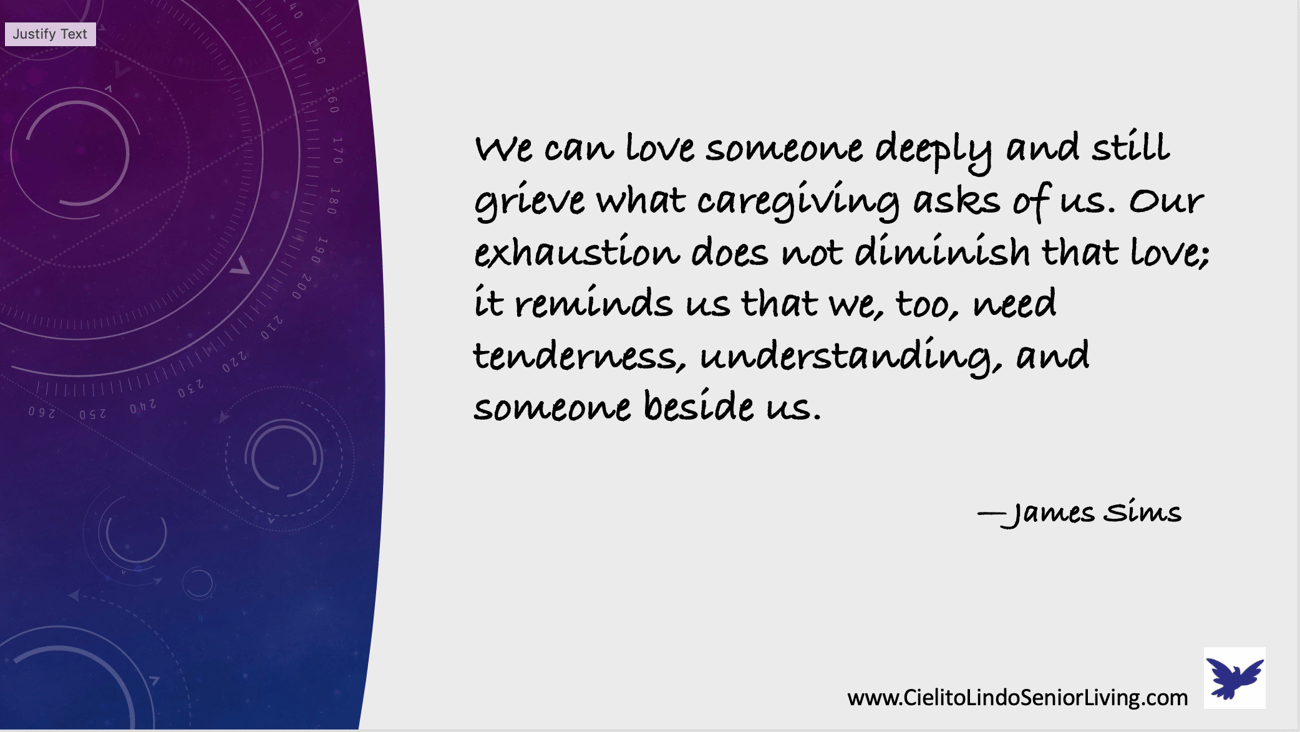
We can love someone deeply and still grieve what caregiving asks of us. We may miss the ease of our relationship, the plans we once made, or the freedom to move through a day without anticipating someone else’s needs. Admitting those losses can bring guilt, especially when our loved one is facing so much. Yet our sorrow deserves room alongside theirs. We can be devoted and exhausted, grateful for time together and frightened by what lies ahead. These feelings can exist together without making our love any less real. Sometimes we need someone to listen without trying to correct our feelings, to take over a task without waiting to be asked, or to sit beside us when there are no reassuring answers. Our exhaustion does not diminish our love. It reminds us that we are people whose lives are changing, too—and that we deserve tenderness, understanding, and companionship as we learn how to carry what has been asked of us.
|
|
|
|
|
Caregiver Affirmation
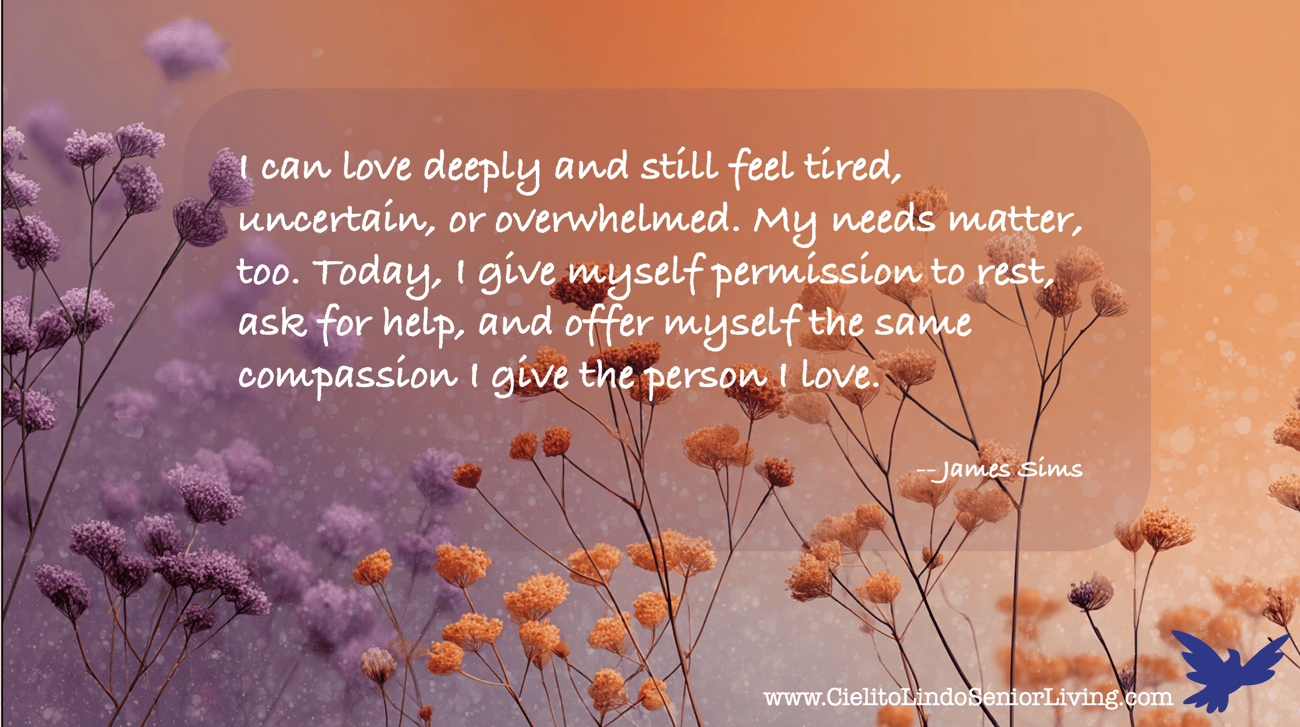
I can love deeply and still feel tired, uncertain, or overwhelmed. My love does not give me limitless energy or all the answers, and a difficult day does not erase the care I have given. I can grieve what has changed, worry about what lies ahead, and wish for time to myself without loving anyone less. My needs matter, too—not only because rest helps me care for someone else, but because my own life and well-being deserve attention. Today, I give myself permission to acknowledge my limits, ask for specific help, and accept support without apologizing for needing it. When a longer break is out of reach, I can still make room for a quiet breath, a meal, or an honest conversation with someone who understands. I do not have to earn compassion by reaching exhaustion. I deserve the same patience, tenderness, and understanding I offer the person I love.
|
|
|
|
|
Helplessness and Despair
Reflections on Love, Grief, and Becoming a Caregiver
I am still trying to put some of the pain into words.
Years after my wife passed away, following her fifteen-year battle with early-onset Alzheimer’s, I find myself returning to what happened to her, to us, and to the life we thought we would have. Perhaps writing about it again is another small release, an incremental catharsis in the long, slow process of healing.
I think about it often because I now help families evaluate care options in México for their loved ones. And because I am facing another caregiving journey in my own near future. That prospect brings back the uncertainty of the beginning, even with everything I have learned since.
I hope that, in sharing my experiences and thoughts, I can help you feel that your own challenges, doubts, and grief deserve acknowledgment and understanding. If you recognize something of yourself in these words, I hope you also feel a little less alone.
Read the complete article here.
You'll also find hundreds of additional articles exploring healthy aging, dementia, caregiving, hospice, senior living, and other topics designed to educate, support, and encourage older adults, families, and caregivers. Website
|
|
|
|
|
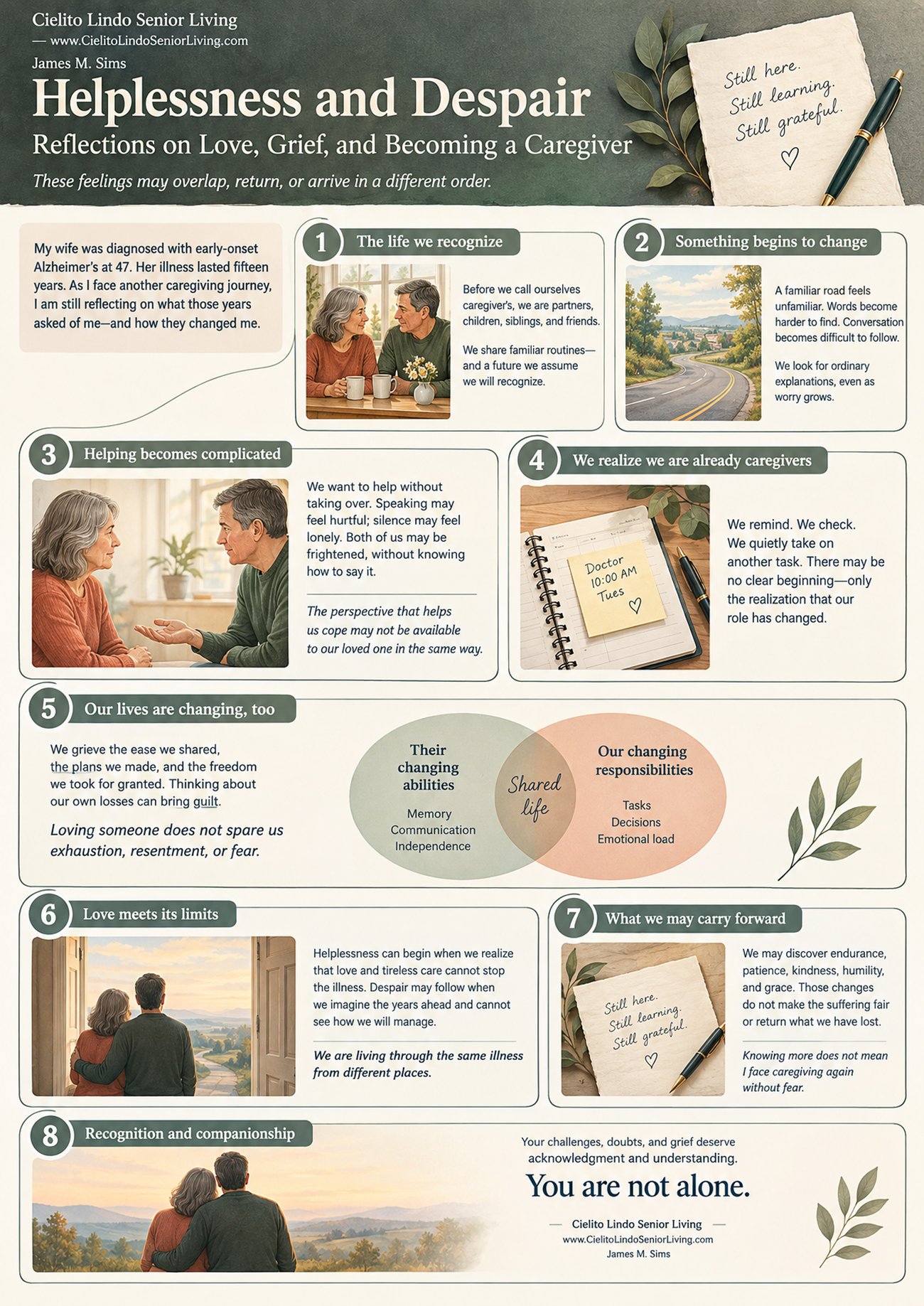
Helplessness and Despair
We may begin caring for someone we love long before we think of ourselves as caregivers. As familiar routines change, love can become intertwined with uncertainty, guilt, and grief for the life we once shared. This infographic accompanies my article, Helplessness and Despair: Reflections on Love, Grief, and Becoming a Caregiver, drawing on my years of caring for my wife through early-onset Alzheimer’s. It offers a way to recognize feelings that can be difficult to put into words, and that may overlap or return as our circumstances change. My hope is that, together, the article and these images help you feel that your own experience deserves acknowledgment and understanding—and that you are a little less alone.
Read the full article here.
https://cielitolindoseniorliving.com/helplessness-and-despair/
|
|
|
|
|
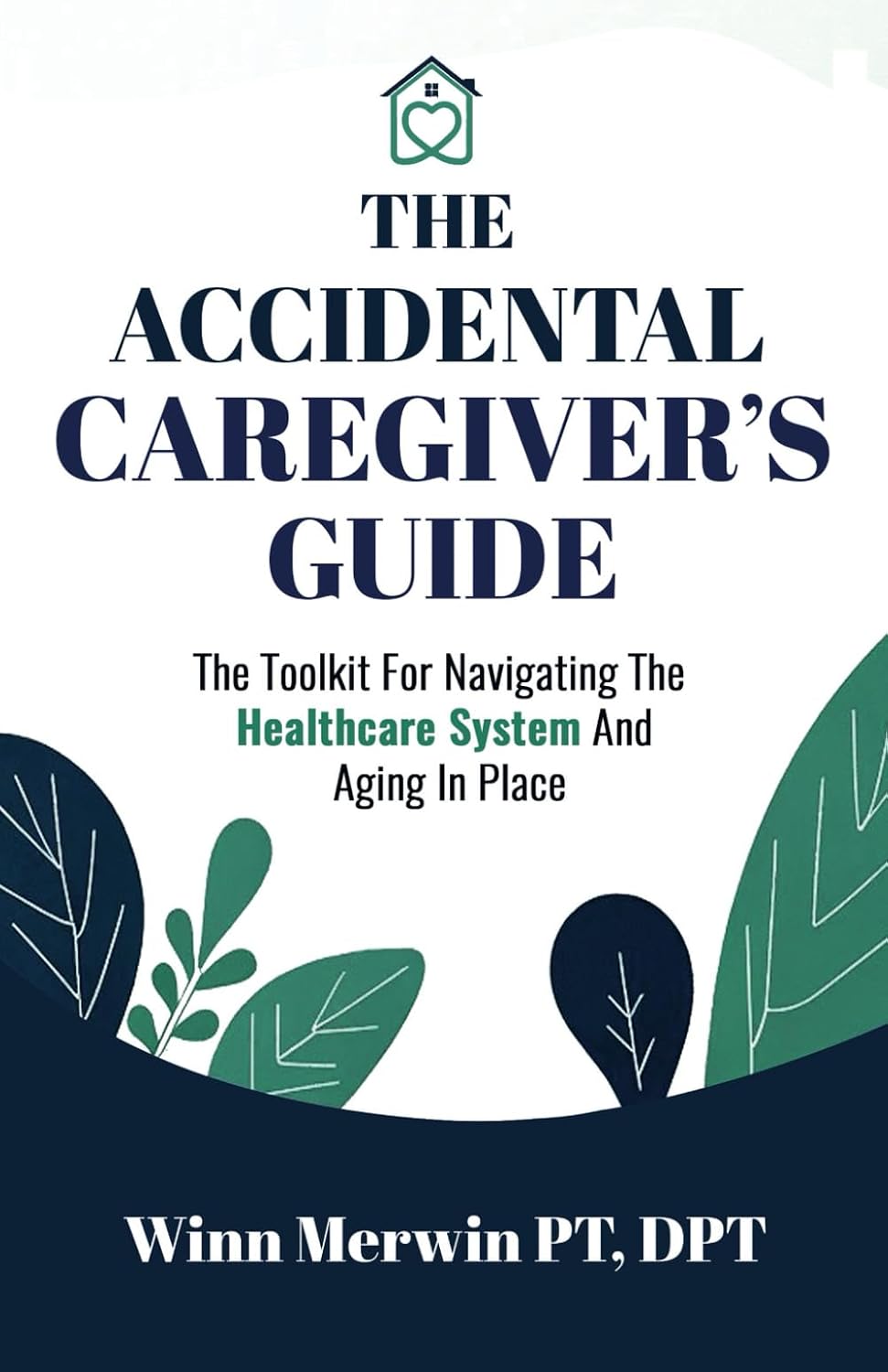
Book Review: The Accidental Caregiver’s Guide
The Toolkit for Navigating the Healthcare System and Aging in Place
By Winn Merwin, PT, DPT
Caregiving often begins before we feel prepared to call ourselves caregivers. A parent needs help after a hospital stay. A spouse becomes less steady at home. Suddenly, we are speaking with healthcare professionals, weighing unfamiliar options, and trying to determine what someone we love will need tomorrow. Our willingness to help may be certain; our understanding of how to help is often much less so.
Winn Merwin’s The Accidental Caregiver’s Guide addresses that gap between concern and preparation. A Doctor of Physical Therapy with experience working with older adults and their caregivers, Merwin offers a practical introduction to navigating healthcare, arranging assistance, and supporting a loved one at home. The book’s stated scope also includes recognizing when remaining at home is no longer safe.
Finding direction in an unfamiliar role
The word “accidental” captures something many families recognize. We may accept responsibility out of love without understanding how much coordination, judgment, and persistence it will require. Even identifying the right person to ask can become a challenge.
According to its published description, the guide addresses communication with doctors, nurses, and social workers, along with decisions about rehabilitation and paid caregiving. That focus gives the book a useful purpose: helping readers turn a broad sense of overwhelm into specific questions and decisions.
For someone newly responsible for a loved one’s care, this kind of orientation can be valuable. Knowing what needs clarification may be the first step toward participating more confidently in conversations that otherwise feel rushed or unfamiliar.
Making aging in place a considered choice
Remaining at home is central to the book’s premise. The attraction is understandable: familiar surroundings hold routines, relationships, and a sense of independence that can be difficult to surrender.
Shortform’s summary describes attention to home modifications, coordinating services, and supporting independence as abilities change. It also identifies discussion of transitions to care facilities and end-of-life planning. That breadth suggests an approach that extends beyond the initial hope of keeping someone home.
The distinction matters. Aging in place is a goal to evaluate as circumstances change. A useful care plan must leave room to reconsider what is workable, including the assistance available and the demands placed on the person providing it. Moving to a different setting should not be treated as evidence that a family failed to care enough.
Recognizing the caregiver’s limits
The book’s inclusion of caregiver self-care and decisions about hiring assistance is especially relevant to families who gradually take on more than they anticipated. Responsibilities can accumulate quietly until an arrangement that once seemed manageable begins to consume sleep, work, and personal relationships.
The practical question then becomes larger than whether a family member can perform a particular task. Can they continue doing it, alongside everything else their life requires? Guidance that brings paid support and the caregiver’s well-being into the discussion can help make those needs visible.
That is an important standard by which to approach this book: its usefulness should include helping readers recognize when they need more support, without making them feel that sufficient organization or devotion will solve every difficulty.
Keeping financial promises in perspective
One promotional claim deserves particular scrutiny: the suggestion that helping a loved one remain safely at home can save a minimum of $58,000 annually. Readers should treat that figure as a marketing claim, not a guaranteed outcome.
Any comparison needs to account for the actual alternatives, including paid assistance, home modifications, and the effects of unpaid caregiving on employment and family life. The material reviewed does not establish a basis for applying that minimum saving to every household.
For families considering care in México, the figure is particularly unsuitable as a ready-made comparison. Local services, costs, and healthcare arrangements need to be evaluated on their own terms.
Strengths and limitations
The book’s clearest potential strength is its practical scope. It brings healthcare navigation, home support, decisions about additional help, and caregiver well-being into one introductory resource. Merwin’s physical-therapy background is relevant to its emphasis on daily function and remaining at home.
A full-text reading would be necessary to judge the clarity of individual instructions, the depth of its examples, and how thoroughly it supports its claims. Its broad caregiving focus also should not be mistaken for a comprehensive dementia-care manual or guidance tailored to every healthcare system.
The most reasonable expectation is a starting resource that helps families prepare better questions and organize their thinking, supplemented by advice specific to their loved one’s circumstances.
Who may find it most helpful
The Accidental Caregiver’s Guide is particularly relevant to adult children, spouses, and friends who have recently assumed responsibility for an older person’s care. It may also interest families trying to decide how much assistance can realistically be provided at home and when additional support should enter the picture.
Its premise addresses a familiar and difficult moment: realizing that someone depends on us in ways we do not yet fully understand. A practical guide cannot remove every uncertainty, but it can offer a place to begin. For a new caregiver, that beginning can matter.
Reader Ratings
Amazon: ★★★★★ — 5.0 out of 5, with 162 reader reviews displayed on the listing checked for this review. Ratings may change.
|
|
|
|
|
|
Cielito Lindo's basic information is included for your convenience:
|
|
|
- Cielito Lindo Info: After the signature, the newsletter always includes information about Cielito Lindo, so it is at your fingertips when you want it: Our costs, various related websites, social media channels like YouTube, our various addresses, and so on.
- Travel Info: Recommended airports and shuttles.
- Downloadable Brochure: Click here.
|
|
|
Web Sites - Cielito LIndo and Rancho Los Labradores
Here are our Web sites, including Cielito Lindo and Labradores Suites (hotel) all of which are part of the larger Rancho Los Labradores gated community just north of San Miguel de Allende.
Web Sites - Cielito LIndo and Rancho Los Labradores
Here are our Web sites, including Cielito Lindo and Labradores Suites (hotel) all of which are part of the larger Rancho Los Labradores gated community just north of San Miguel de Allende.
- Cielito Lindo provides independent living, light assisted living, assisted living, memory care and hospice with 24*7 staffing along with a la carte assisted living services to those living in the villas and suites at Rancho Los Labradores.
- Rancho Los Labradores Suites offer short and long term residence.
- Rancho Los Labradores is a country club resort feeling CCRC that provides a gated community with countless amenities and opportunities for different levels of independent living along with assisted living and memory care within Cielito Lindo.
Cielito Lindo Living Options & Costs Guide
We offer several living options depending on the level of care you or your loved one needs. Here’s a breakdown to help you plan:
1) Villas (Rent or Own)
- Cost: $1,700 – $2,000 per month
- Additional Costs: Utilities, renter’s insurance, etc.
- What’s Included: This is mostly independent living.
- Extras: You can add independent or assisted living services (charged separately, à la carte).
- Support: We can connect you with a realtor if you'd like to purchase.
2) Cielito Lindo Condos & Suites
Best for: Independent living with optional assistance.
Option 1: Independent Living + Meals
- Cost: $2,250 per month
Includes:
- 2 meals a day
- Hotel like room cleaning, towel and linen service
- Monthly medical check-up
Optional Add-ons:
- Meals for an additional person: $450/month
- Extra care services available à la carte
Option 2: Light-Assisted Living in Condos & Suites
- Cost: $3,900 per month
Includes:
- Full assisted living services
- Designed for residents who still want independence but need some support
- Smooth transition to full Assisted Living or Memory Care as needs change
- One-Time Inscription Fee: $4,000
For Couples:
- $4,900/month for two people
- Same one-time fee ($4,000 per couple)
- Note: Suitability is based on cognitive ability, mobility, and safety.
3) Cielito Lindo Assisted Living, Memory Care, & Hospice
Best for: Seniors needing full-time care and supervision.
- Cost: $3,900 per month
Includes:
- 24/7 care and monitoring
- All meals
- Physical therapy
- Full-time doctor on site
- Spacious private room with bath
- One-Time Inscription Fee: $4,000
- For Couples:
- $5,400/month for two people (only one needs care)
- $6,900/month for two people (both need care)
- Same one-time fee ($4,000 per couple)
- Note: Suitability is based on cognitive ability, mobility, and safety.
4) Specialized Hospice Suite
Best for: Intensive care needs or end-of-life comfort and also recuperative at a far lower cost than a hospital
- Cost: $4,900 per month
Includes:
- Full 24/7 monitoring
- Recuperative, Palliative and hospice care
- On-site doctor
- All meals
- Special space for visiting family
|
|
|
YouTube videos and Curated Playlists
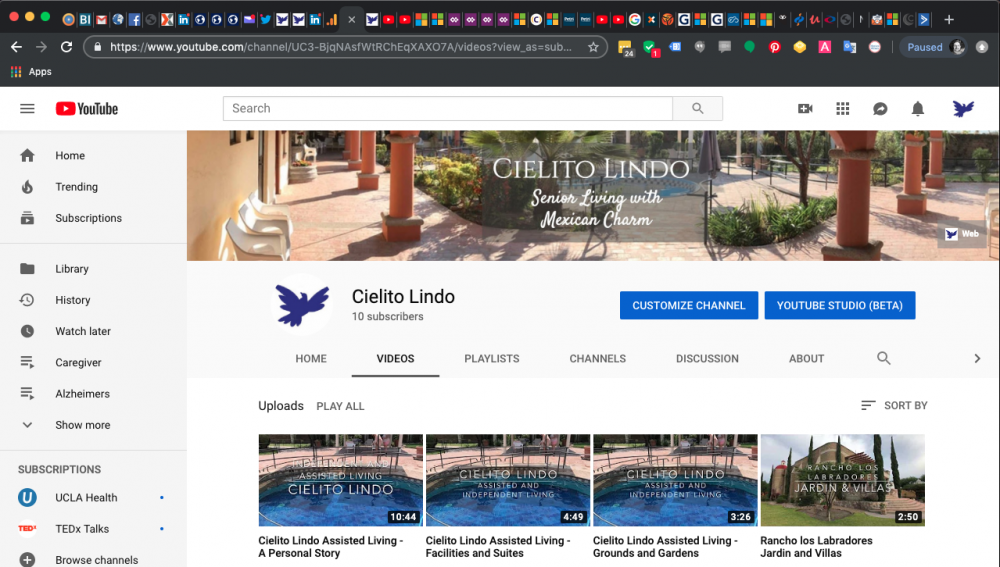
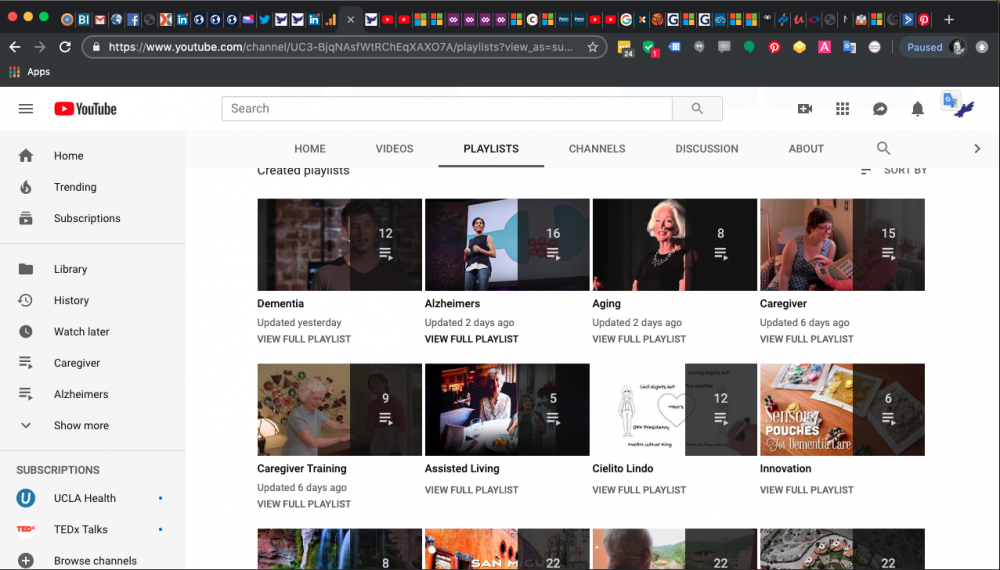
Here is our YouTube Channel. This is where we have lots of videos about Cielito Lindo and Rancho Los Labradores. We also have 1,600+ other senior care and expat in Mexico videos: YouTube
|
|
|
|
|
Additionally, our playlists cover a wide area and include 1,200+ videos. These playlists include videos about San Miguel and Mexico in general, caregiving and health, and a broad spectrum of senior living topics. Playlists
|
|
|
|
|
Additional Resources We Offer
We have curated collections of resources that may be useful:
Articles - We write fresh articles about senior living, health, care, and finances every week
Caregiver Books - We review books related to caregiving methods, logistics, challenges, and coping
Senior Health - We review books related to healthspan, lifespan, and disease
And here are our various social media forums, where we talk a lot about assisted living and memory care along with the various sort of challenges that sometimes come in our senior years (Alzheimer’s, Parkinson other dementias, and so on), but also about senior living in Mexico.
Facebook
|
|
|
|
|
|
|
|
|
|
|
Please don’t hesitate to contact me for anything related to senior living, especially in Mexico. I will gladly give you any assistance I can.
Thanks again!
James
James Sims
Marketing and Sales
Cielito Lindo Senior Living
1. 888.406.7990 (Voice and text)
1.209.312.0555 (WhatsApp)
Phones:
English-speaking:
1.888.406.7990 (in US & CDN)
00.1.881.406.7990 (in MX)
Spanish-speaking:
011.52.415.101.0201 (in US & CDN)
1.415.101.0201 (in MX)
SMA Colonias (subdivisions/neighborhoods):
Map and descriptions
Additional Map
Addresses and Travel:
Physical address:
Cielito Lindo Independent and Assisted Living, Camino Real Los Labradores S/N, Rancho Viejo 1, San Miguel de Allende, GTO, Mexico, 37885
Packages from online providers like Amazon:
Camino Real Los Labradores, Rancho Los Labradores / Cielito Lindo, San Miguel de Allende, GTO, 37880 México
PO Box for letters and small envelopes:
Rancho Los Labradores / Cielito Lindo, c/o Alejandra Serrano , PMB N° 515-C, 220 N Zapata HWY N°11, Laredo TX, 78043-4464
Air:
Best airports to fly into: Leon (BJX) or Queretaro (QRO)
Shuttle:
Best airport shuttle: BajioGo
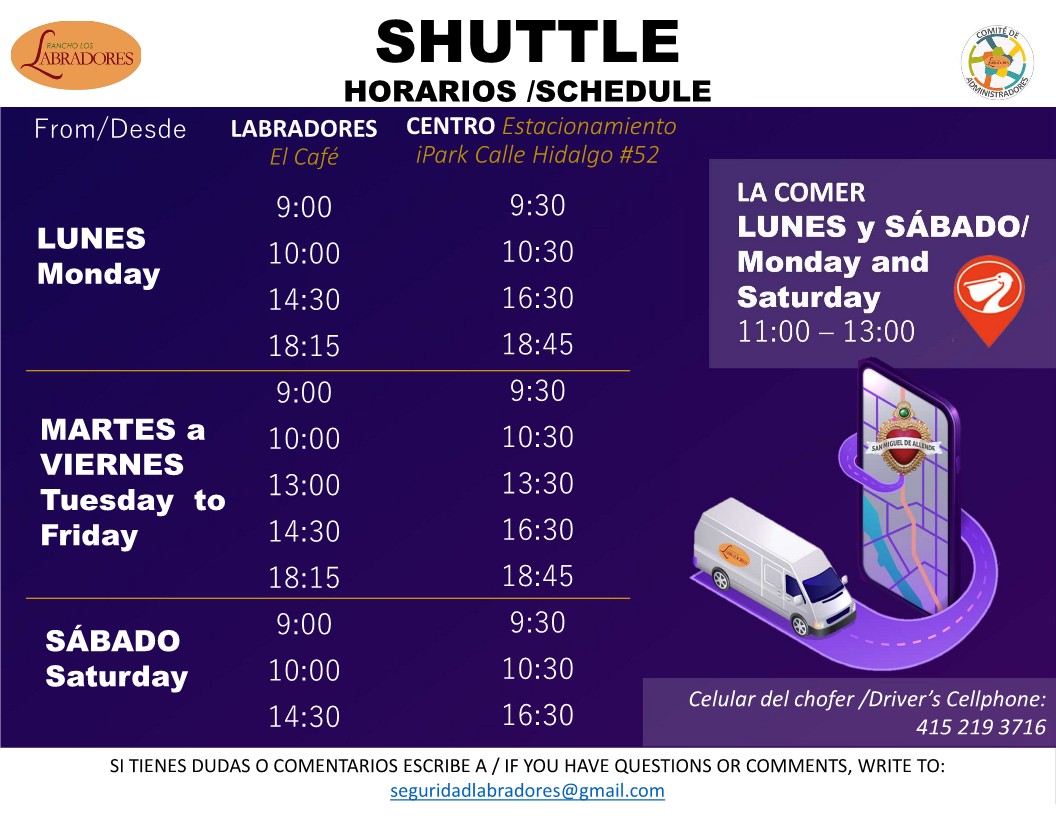
Shuttle between San Miguel and Rancho Los Labradores / Cielito Lindo
|
|
|
|
|
|
|
|
|
|
|