|
|
Dear ,
This is your weekly summary of our news, research, books, videos, and other resources related to senior living, retirement, and care in Mexico, along with independent and assisted living and information about age-related challenges (e.g., limited mobility, dementia, Alzheimer's, Parkinson's, ALS, stroke, multiple sclerosis, healthspan, and so on).
I hope you are finding this weekly newsletter helpful, and if you know of someone who may also find this information helpful, please forward it to them. They can subscribe using our Web Newsletter page (click here). If, for any reason, you do not wish to receive this weekly newsletter any longer, there is a simple 'Unsubscribe' or 'Opt Out' link at the bottom right corner of this newsletter and also right here: Unsubscribe
This weekly newsletter typically includes information in each of the following categories: San Miguel insights, senior care, and health information, as well as Cielito Lindo basic information.
Here’s what we typically cover each week:
- San Miguel de Allende highlights – why this is such a special place to live
- Health & wellness insights – articles, videos, and expert reviews
- Care options & community life at Cielito Lindo – flexible, affordable living with a warm, human touch
This Week’s Theme:
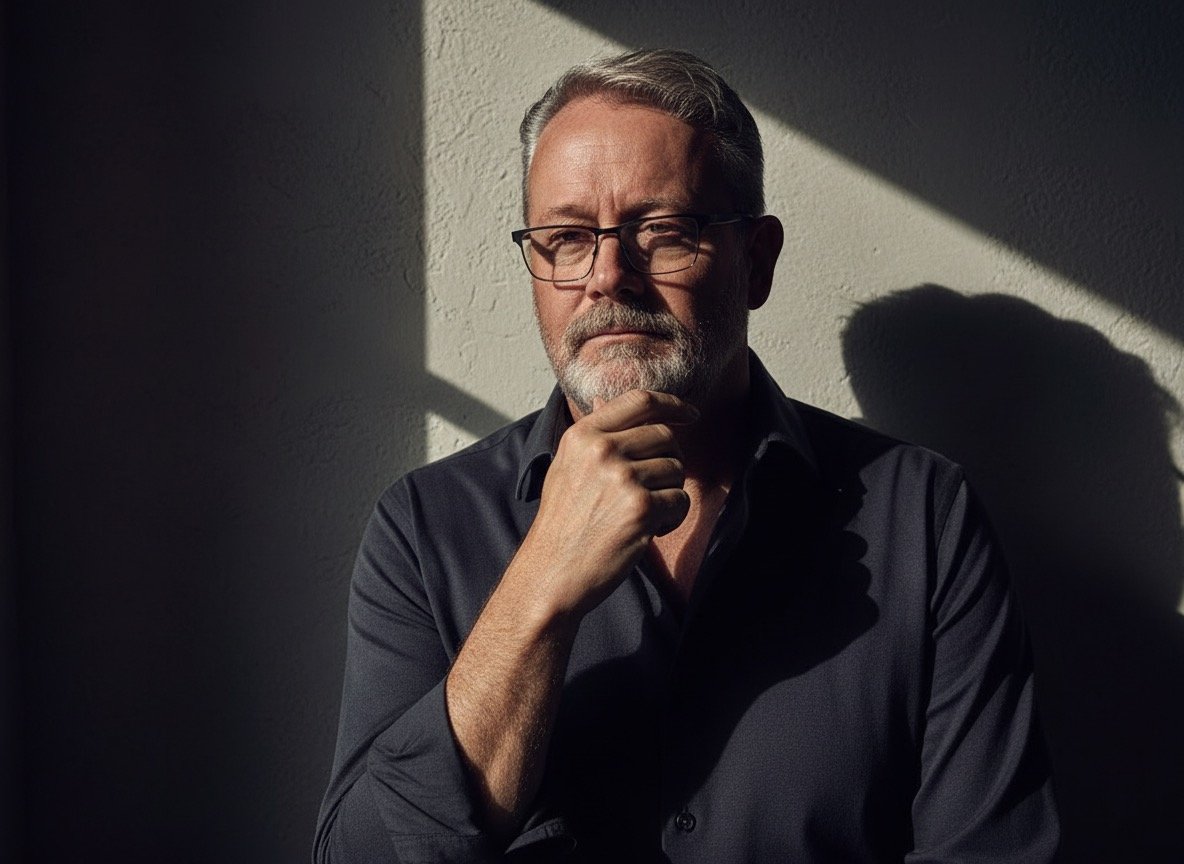
This week’s newsletter explores the dementia caregiving philosophies of Teepa Snow.
|
|
|
|
|
| Other News: Keynote Speaker
|
|
|
|
|
I am delighted to share that I will be a keynote speaker at the 3rd Annual Global Male Caregivers Symposium – April 11, 2026
Caregiving is a road that most people never expect to travel. Yet millions of men find themselves stepping into this role every day, caring for spouses, parents, siblings, and loved ones through illness, aging, and cognitive decline.
Too often, male caregivers walk this path quietly. Many feel isolated, unsure where to turn, or uncertain whether anyone truly understands the emotional, financial, and personal toll that caregiving can
bring.
The Global Male Caregivers Symposium exists to change that.
This gathering brings together caregivers from across the country and around the world to share experiences, hard-earned wisdom, and the simple but powerful reminder that no one has to carry
this burden alone. Some participants are currently in the middle of their caregiving journey. Others are just beginning. And some have already come through the other side and are learning what life looks like after caregiving.
In this preview video, James Sims introduces his keynote presentation:
“Is There Life After Caregiving?”
Here is the link to my preview video
After caring for his wife for nearly fourteen years as she moved through the stages of early-onset Alzheimer’s disease, James began exploring a question that many caregivers quietly carry:
What happens when caregiving ends?
The answer is not simple. Caregiving reshapes identity, relationships, finances, and emotional life. When the journey ends, many caregivers are left trying to rediscover who they are and how to rebuild a future.
This keynote explores:
• The emotional and psychological transition that follows long-term caregiving
• Why many caregivers struggle to rediscover purpose after loss
• How caregiving can reshape identity in ways we rarely anticipate
• The possibility that the end of caregiving may also mark the beginning of a new chapter
Most importantly, the presentation speaks to a central truth of the caregiving experience:
You are not alone.
There are men walking this road right now.
There are men who have already walked it.
And there are many who will one day step onto it.
By sharing our stories, our struggles, and our resilience, we make the journey a little less lonely for the next person who finds themselves called to care.
Event:
3rd Annual Global Male Caregivers Symposium
April 11, 2026 6 AM PST, 9 AM EST
It's virtual, so you will not even have to leave the comfort of your home.
REGISTER NOW – COMPLIMENTARY TICKETS!
https://bit.ly/3Yd7d3l
This event brings together caregivers, advocates, clinicians, and speakers who are committed to supporting men in one of the most challenging and
meaningful roles they may ever undertake.
If you are a caregiver, have been a caregiver, or may someday become one, this conversation is for you.
Video Preview.
|
|
|
| Weekly insights into San Miguel:
|
|
|
- Colorful and Epicurean San Miguel - This is such an amazing place,
particularly the food and the colors. Although we are addressing a topic that is stressful, challenging, and emotional, we should also acknowledge what an incredible place San Miguel is.
|
|
|
|
|
The Colors of San Miguel: Audacity with Color
What strikes me first is that unmistakable San Miguel audacity with color—the way a single wall can hold sunlight even in stillness. Here, the ochre facade glows with that warm, earth-rich confidence so typical of the city, while the cobalt base grounds it like a deep breath. Then comes the turquoise door, weathered and luminous, as if years of hands, heat, and rain have only made it more beautiful. Above it all, the bougainvillea spills forward in a rush of fuchsia so vivid it feels almost musical. San Miguel does this so well: it lets color behave not as decoration, but as emotion. The streets are full of these unforgettable conversations between pigment, stone, shadow, and bloom.
There is something especially lovely about how these colors never feel accidental. In San Miguel, they seem to rise naturally from the spirit of the place—bold yet elegant, exuberant yet deeply rooted. The carved cantera stone around the doorway brings a soft gray hush, which only makes the surrounding hues sing louder. You can almost feel the afternoon warmth stored in the wall, smell dust and flowers in the air, and sense the quiet life behind the door. This is part of the city’s enduring magic: even an ordinary facade becomes a small masterpiece, where vibrant color tells a story of history, artistry, and joy.
(Photo courtesy of San Miguel photographer - Sam Perez)
|
|
|
|
|
Restaurant Review: TostévereCodo 4, Col. Centro, 37700 San Miguel de Allende, Guanajuato, MexicoPhone: +52 415 121 3075
Days and Hours:
Monday–Wednesday: 1:00 PM–9:00 PM
Thursday–Saturday: 2:00 PM–10:00 PM
Sunday: 1:00 PM–7:00 PMClosed Tuesday. Hours are reported consistently across recent listings, though it is still wise to confirm when booking.
Atmosphere:Tostévere feels like one of those places that captures the soul of San Miguel de Allende without trying too hard. It is intimate, stylish, and full of charm, with a vintage, tucked-away feel that makes every meal seem slightly secret and very special. The small scale of the dining room adds to its appeal: cozy, personal, and ideal for lingering over lunch or dinner.
Service:Service is one of the restaurant’s quiet strengths. Tostévere has earned notably high marks from diners for attentiveness and warmth, and that matches the overall feel of the place—professional without stiffness, friendly without fuss. In a restaurant this compact, hospitality matters, and here it is part of the experience.
Cuisine:The cuisine is best described as eclectic author’s cooking with a Mexican heart and a global imagination. Tostévere may be known for tostadas, but these are not casual, everyday tostadas—they are refined, inventive, and composed with the care of small plates in a chef-driven restaurant. The menu is compact, which usually signals confidence, and in this case it does: fewer choices, more precision.
Signature Dish:
The signature move here is the gourmet tostada—the dish that defines the restaurant and explains the devotion of its regulars. Tostévere has built its reputation on taking something familiar and elevating it into something elegant, layered, and memorable.
Starters:Expect starters that are thoughtful rather than routine. Reported favorites include items like roasted beet salad, avocado tatemado taco, sweet potato chips, soft shell crab wraps, and serrano ham pizzetas—dishes that suggest a kitchen with range, confidence, and a playful hand with texture and contrast.
Main Courses:The main draw remains the tostadas and other savory plates built around bold flavor and careful presentation. This is food that feels composed rather than heavy, creative rather than gimmicky. Diners consistently praise the depth of flavor despite the concise menu, which is often the mark of a restaurant that knows exactly what it wants to be.
Desserts:Desserts are part of the appeal here because they follow the same philosophy as the rest of the menu: compact, considered, and worth saving room for. Even when the menu changes, the impression left is of a kitchen that treats the final course as part of the narrative, not an afterthought.
Wine and Cocktails:Tostévere’s drinks program appears to be carefully aligned with the food. Diners frequently mention well-crafted drinks, and the restaurant’s own description highlights thoughtfully prepared cocktails. In a town with no shortage of beautiful places to drink, that detail matters.
Final Thoughts:Tostévere is the kind of restaurant that reminds you why San Miguel de Allende has become such a compelling dining destination. It is intimate, original, and deeply satisfying—a place where a small menu delivers outsized pleasure. The concept is focused, the atmosphere inviting, and the food memorable enough to inspire repeat visits. For diners who appreciate creativity without pretension, Tostévere is easy to crave and even easier to recommend.
Cost: $$$
Rating: ★★★★★
The ★★★★★ rating comes from the combination of originality, consistency, atmosphere, and the fact that it inspires repeat cravings—which is usually the strongest compliment a restaurant can earn. Personally, I never tire of the food, presentation, service and atmosphere here.
|
|
|
|
|
| Information related to Mexico, senior care and health:
|
|
|
- Lead article - These are articles specifically written for you each week. They address a wide range of
relevant topics, such as factors that can increase your health and lifespan, diagnostics, understanding causal factors for Alzheimer's and other dementias, and so on. The lead article typically sets the tone for the core content of the newsletter (videos and book reviews). On occasion, the focus may be centered on Mexico, Pueblos Magicos, and San Miguel de Allende.
- Caregiver's Sentiment
- This quote typically honors what we, as caregivers, are going through and feeling.
- Caregiver's Affirmation - This affirmation bolsters our self care, our image or ourselves on this journey and our ability to endure.
- Videos - Typically, three videos are related to the lead article, and they include a summary and timestamped highlights.
- Book Review - Typically related to the lead article.
|
|
|
|
|
Understanding Teepa Snow’s SENSI and GEMS Frameworks
I am neither a fan nor a critic of the caregiving philosophy promoted by Teepa Snow. If I am honest, some aspects of the way her training programs package and market caregiving knowledge feel uncomfortable to me. That said,
there are genuine insights within her system that many caregivers find helpful, and some of those ideas are worth sharing.
Teepa Snow is a popular occupational therapist and dementia care educator known for developing the Positive Approach to Care, a widely taught system for helping caregivers communicate with people living with dementia. Two of the most often used frameworks in her teaching are SENSI, which focuses on sensory communication, and the GEMS model, which describes how the brain changes as dementia progresses.
You can access the full article here. Additionally, we have 100s of senior health and care-related articles (over 650,000 words) available here.
|
|
|
|
|
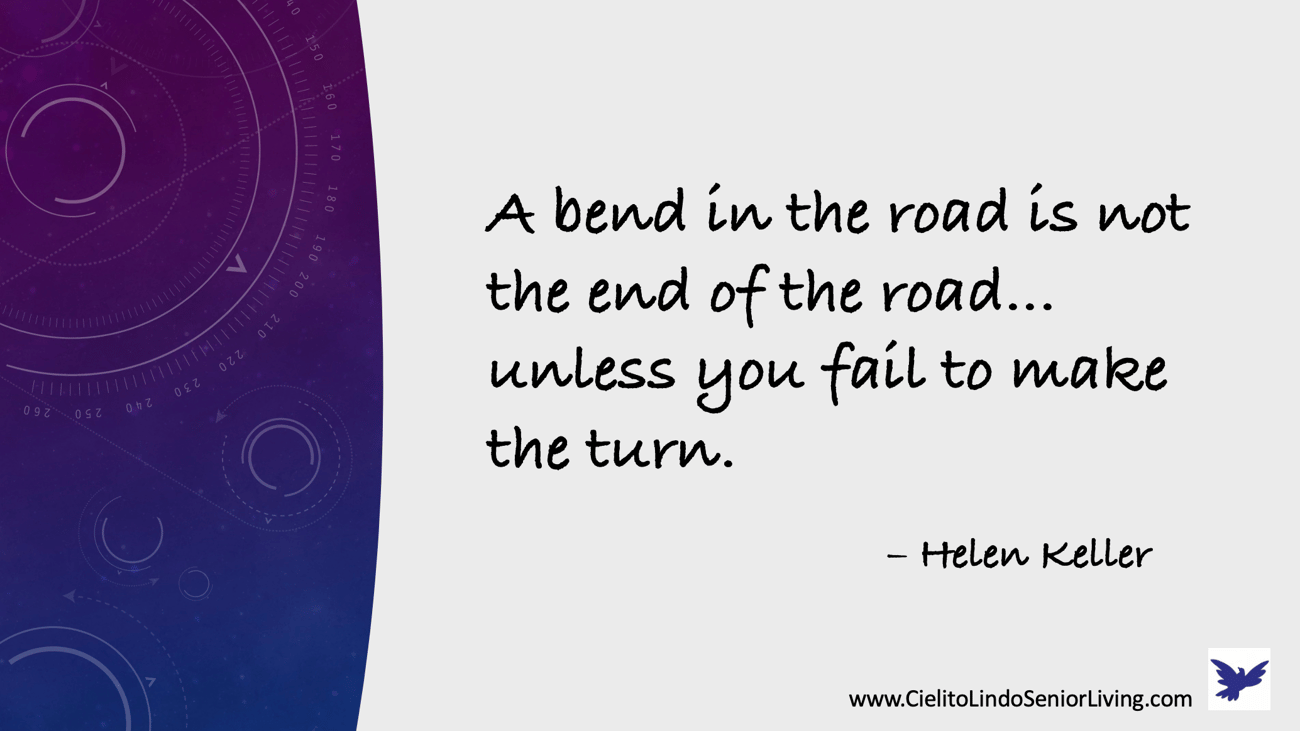
Caregivers' Sentiment: Accepting That the Journey Has
Changed
This quote fits the caregiving moment with unusual tenderness because becoming a caregiver often feels exactly like hitting a sudden bend in the road. Life was moving in one direction, with familiar roles and expectations, and then illness, injury, memory loss, or decline changes everything. A spouse becomes nurse, advocate, scheduler, and steady companion. An adult child becomes decision-maker, protector, and emotional anchor. The road is no longer straight, and that can feel frightening. Keller’s words remind us that this change, however disorienting, is not necessarily the end of the life, love, or meaning that came before. It is a turn that asks for adjustment, patience, and courage.
The second half of the quote is what makes it especially powerful for caregivers: “unless you fail to make the turn.” That does not mean doing caregiving perfectly. It means accepting that the journey has changed and learning how to move with it rather than staying frozen in grief over what used to be. Making the turn may look like asking for help, letting routines change, learning new skills, grieving honestly, and discovering that love can take a new form. For a spouse or adult child unexpectedly placed in this role, the quote offers both realism and hope: this is a hard turn, but not the end of the road. It is the beginning of a different path, one that can still hold dignity, devotion, and even moments of unexpected grace.
|
|
|
|
|
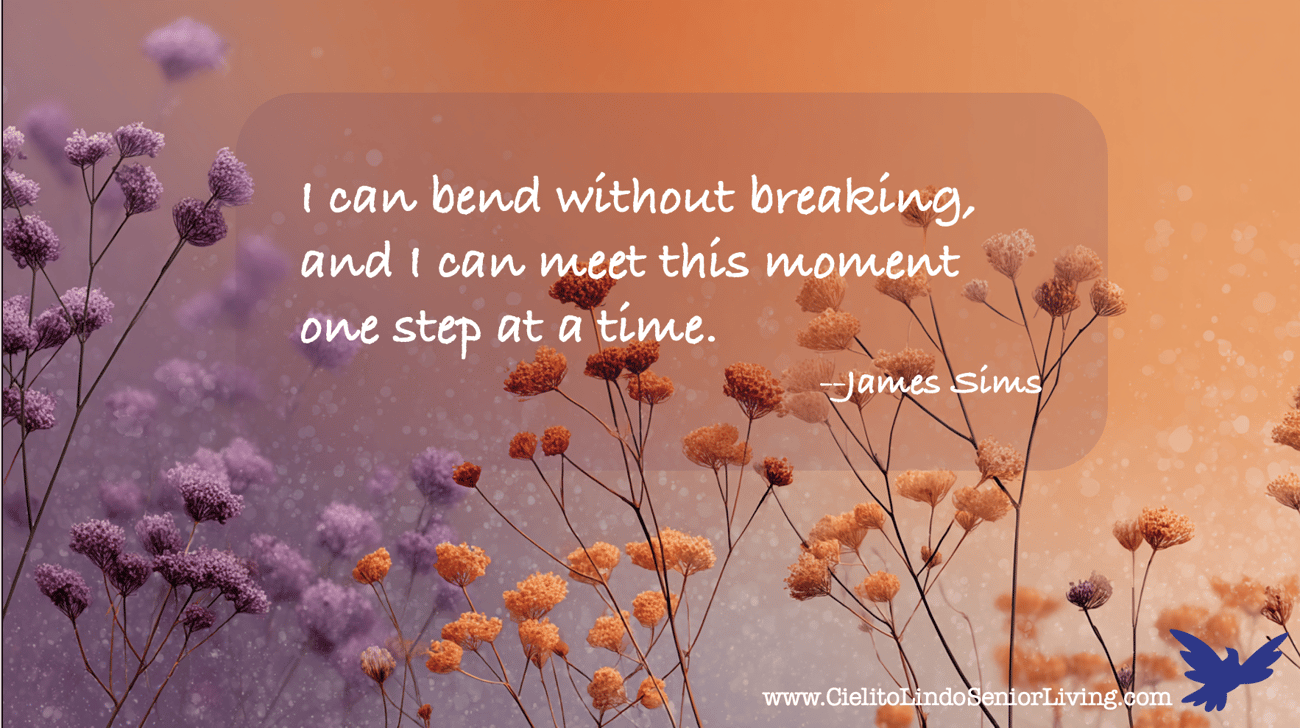
Caregiver's Affirmation
“I can bend without breaking, and I can meet this moment one step at a time” is a gentle affirmation of resilience. It recognizes that caregiving requires flexibility. Plans change, emotions rise unexpectedly, and the person stepping into this role may feel stretched in ways they never imagined. To “bend without breaking” means adapting without losing oneself. It gives permission to feel tired, sad, uncertain, or overwhelmed while still trusting that those feelings do not mean defeat. The affirmation honors the truth that strength is not always rigid; often, real strength is the ability to yield, adjust, and keep going.
The second half, “I can meet this moment one step at a time,” is what makes the affirmation especially grounding. Caregiving can feel crushing when someone tries to carry the whole road at once. This phrase brings the focus back to the present: the next conversation, the next appointment, the next small act of care, the next breath. It reminds a spouse or adult child that they do not need to solve everything today. They only need enough strength for this moment, then the next. In that way, the affirmation becomes both comforting and practical, offering a way to hold steady in the middle of change.
|
|
|
|
|
Song: I Am Not Broken – Folk/Country Anthem for Caregivers
“I Am Not Broken” is a folk-country anthem written for the unsung heroes: caregivers. Play the song on Youtube here. Whether caring for a parent with dementia, a partner with illness, or a child with special needs, caregivers often carry immense physical and emotional weight — and yet their stories are rarely centered. This song is a voice for them. It’s not a lament, but a declaration of resilience. It speaks to the quiet strength required to show up every day, the identity shifts that caregiving demands, and the deep, transformative growth that can emerge from enduring what was never chosen.
Inspired by the real-life emotional landscape of caregiving, the song rejects the idea that hardship must diminish us. Instead, it honors the power of choice — the choice to walk with tenderness, to find strength in service, and to grow rather than break. With each verse, it acknowledges the pain and isolation, but with each chorus it affirms the truth: You are not broken. You are becoming. This song is both comfort and rallying cry for anyone who has ever put someone else’s needs ahead of their own and still dared to keep becoming more whole in the process.
Key: G Major | Tempo: 74 BPM (slow–mid tempo) | Mood: Tender yet resilient | Genre: gentle folk/country
Lyrics
Verse 1
I didn’t ask for this road to rise
Didn’t see the storm roll in
One day I woke, the world had changed
And I was needed once again
I traded sleep for quiet strength
My name for “Mom” or “nurse”
But in the silence of their pain
I found my deeper worth
Chorus
I am not broken
Though the nights run long
Though the weight I carry
Feels a thousand strong
I may be weary
But I still belong
I am not broken
I am becoming
Verse 2
I lost some friends along the way
Who didn’t see me fade
They saw the helper, not the hurt
Behind the smile I made
But every lifted hand I give
Builds something deep in me
A softer heart, a steady will
A quiet dignity
Chorus
I am not broken
Though the tears still come
Though I sometimes wonder
If I’m the only one
I may be bending
But I won’t be undone
I am not broken
I am becoming
Bridge
This path was never drawn in light
It came through fire and stone
But every day I choose to rise
I carve a strength my own
Chorus – Final
I am not broken
Not by this role
I choose each moment
To hold, to heal, to grow
I am becoming
With each breath I show
I am not broken
I am whole
Copyright: Lyrics, music, arrangement, and production © 2025 James M Sims. All Rights Reserved.
|
|
|
|
|
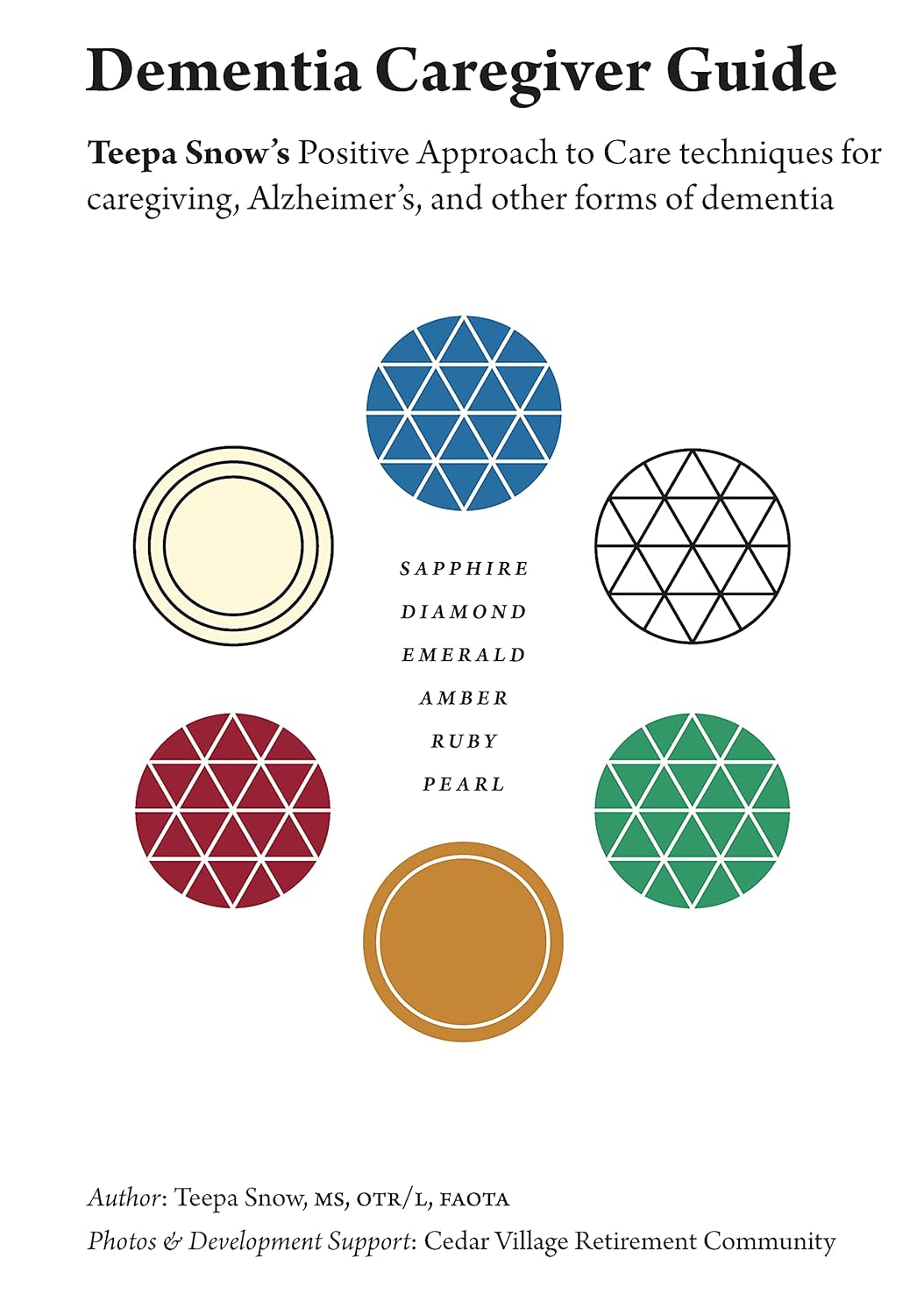
Book Review: Dementia Caregiver Guide: Teepa Snow’s Positive Approach
to Care Techniques for Caregiving, Alzheimer’s, and Other Forms of Dementia by Teepa Snow
Overview
This compact, practical guide is aimed at family caregivers, friends, and professionals supporting someone living with dementia or other cognitive changes. At just around 100 pages, it is designed to be accessible rather than academic, making it especially useful for overwhelmed caregivers who need clear help, not dense theory. Teepa Snow’s well-known caregiving philosophy—person-centered, respectful, and skill-based—forms the foundation of the book.
For readers interested in aging, caregiving, and the daily realities of dementia support, this book offers a grounded introduction to better care practices. Its strongest value lies in helping caregivers shift their mindset: instead of focusing only on loss, it encourages them to recognize retained abilities and adapt their approach accordingly.
Synopsis
The book explains how dementia changes a person’s thinking, reasoning, communication, and behavior, and then translates that understanding into usable caregiving techniques. Teepa Snow draws from her Positive Approach to Care framework, including her GEMS model, to help readers interpret what stage-like patterns of cognitive change may look like in everyday life.
Rather than treating dementia care as a fixed set of instructions, the guide emphasizes flexibility. Care partners are encouraged to observe what the person can still do, respond with empathy, and communicate in ways that reduce distress and resistance. The overall message is that caregiving becomes more effective when the caregiver adapts their expectations and methods to the person’s current abilities.
Key Themes
Person-centered care is the heart of this book. Snow emphasizes seeing the individual behind the diagnosis and adjusting care in ways that preserve dignity and connection.
Practical communication is another major strength. The guide appears to focus on how tone, body language, pace, and phrasing can either support or hinder daily interactions. This is especially important in dementia care, where a caregiver’s approach often shapes the outcome of an encounter.
Ability-focused caregiving stands out as one of the book’s most helpful ideas. Instead of dwelling only on decline, Snow encourages caregivers to recognize what remains possible and build supportive routines around those strengths.
Reducing caregiver stress is an underlying benefit throughout. By explaining why certain behaviors happen and how to respond more effectively, the book can help caregivers feel less confused, less reactive, and more confident.
Writing Style
Teepa Snow’s style, based on the description and structure of the guide, is straightforward, compassionate, and highly practical. This is not a book that tries to impress with medical jargon or lengthy research discussions. It aims to teach usable skills in a simple, easy-to-read format.
That readability is a major advantage for caregivers, especially seniors caring for a spouse or adult children caring for an aging parent. When someone is already emotionally and physically stretched, a concise guide is often far more valuable than a comprehensive but exhausting manual. Readers looking for a scholarly or deeply clinical text may find it too basic, but for day-to-day caregiving support, its simplicity is likely one of its greatest strengths.
Conclusion
Dementia Caregiver Guide appears to be an excellent entry-level resource for anyone caring for a loved one with Alzheimer’s or another form of dementia. Its value lies in making Teepa Snow’s respected caregiving methods approachable and actionable. It helps caregivers better understand behavioral and cognitive changes while offering a more compassionate and productive way to respond.
For seniors, spouses, and family members navigating the emotional difficulty of dementia care, this book seems particularly helpful because it is short, practical, and encouraging. It does not promise to make caregiving easy, but it does offer tools that can make it less confusing and more humane. That alone makes it a worthwhile addition to a caregiver’s library.
Rating: 4.5 out of 5 stars
Additional Resources We Offer
We have curated collections of resources that may be useful:
Articles - We write fresh articles about senior living, health, care, and finances every week
Caregiver Books - We review books related to caregiving methods, logistics, challenges, and coping
Senior
Health - We review books related to healthspan, lifespan, and disease
|
|
|
|
|
| Cielito Lindo's basic information is included for your convenience:
|
|
|
- Cielito Lindo Info: After the signature, the newsletter always includes information about Cielito Lindo, so it is at your fingertips when you want it: Our costs, various related websites, social media channels like YouTube, our various addresses, and so on.
- Travel Info: Recommended airports and shuttles.
|
|
|
Web Sites - Cielito LIndo and Rancho Los Labradores
Here are our Web sites, including Cielito Lindo and Labradores Suites (hotel) all of which are part of the larger Rancho Los Labradores gated community just north of San Miguel de Allende.
Web Sites - Cielito LIndo and Rancho Los Labradores
Here are our Web sites, including Cielito Lindo and Labradores Suites (hotel) all of which are part of the larger Rancho Los Labradores gated community just north of San Miguel de Allende.
- Cielito Lindo provides independent living, light assisted living, assisted living, memory care and hospice with 24*7 staffing along with a la carte assisted living services to those living in the villas and suites at Rancho Los Labradores.
- Rancho Los Labradores Suites offer short and long term residence.
- Rancho Los Labradores is a country club resort feeling CCRC that provides a gated community with countless amenities and opportunities for different levels of independent living along with assisted living and memory care within Cielito Lindo.
Cielito Lindo Living Options & Costs Guide
We offer several living options depending on the level
of care you or your loved one needs. Here’s a breakdown to help you plan:
1) Villas (Rent or Own)
- Cost: $1,300 – $1,700 per month
- Additional Costs: Utilities, renter’s insurance, etc.
- What’s Included: This is mostly independent living.
- Extras: You can add independent or assisted living services (charged separately, à la carte).
- Support: We can connect you with a realtor if you'd like to purchase.
2) Cielito Lindo Condos & Suites
Best for: Independent living with optional assistance.
Option 1: Independent Living + Meals
- Cost: $2,250 per month
Includes:- 2 meals a day
- Hotel like room cleaning, towel and linen service
- Monthly medical check-up
Optional Add-ons:- Meals for an additional person: $450/month
- Extra care services available à la carte
Option 2: Light-Assisted Living in Condos & Suites
- Cost: $3,900 per month
Includes:- Full assisted living services
- Designed for residents who still want independence but need some support
- Smooth transition to full Assisted Living or Memory Care as needs change
- One-Time Inscription Fee: $4,000
For Couples:- $4,900/month for two people
- Same one-time fee ($4,000 per couple)
- Note: Suitability is based on cognitive ability, mobility, and safety.
3) Cielito Lindo Assisted Living, Memory Care, & Hospice
Best for: Seniors needing full-time care and supervision.
- Cost: $3,900 per month
Includes:- 24/7 care and monitoring
- All meals
- Physical therapy
- Full-time doctor on site
- Spacious private room with
bath
- One-Time Inscription Fee: $4,000
- For
Couples: $4,900/month
4) Specialized Hospice Suite
Best for: Intensive care needs or end-of-life comfort and also recuperative at a far lower cost than a hospital- Cost: $4,900 per month
Includes:- Full 24/7 monitoring
- Recuperative, Palliative and hospice care
- On-site doctor
- All meals
- Special space for visiting family
|
|
|
YouTube videos and Curated Playlists
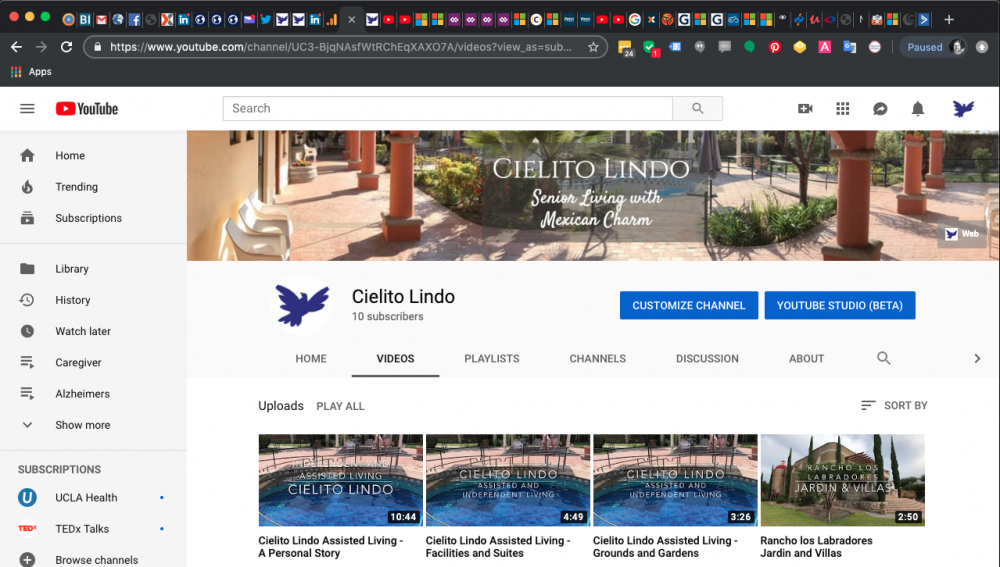
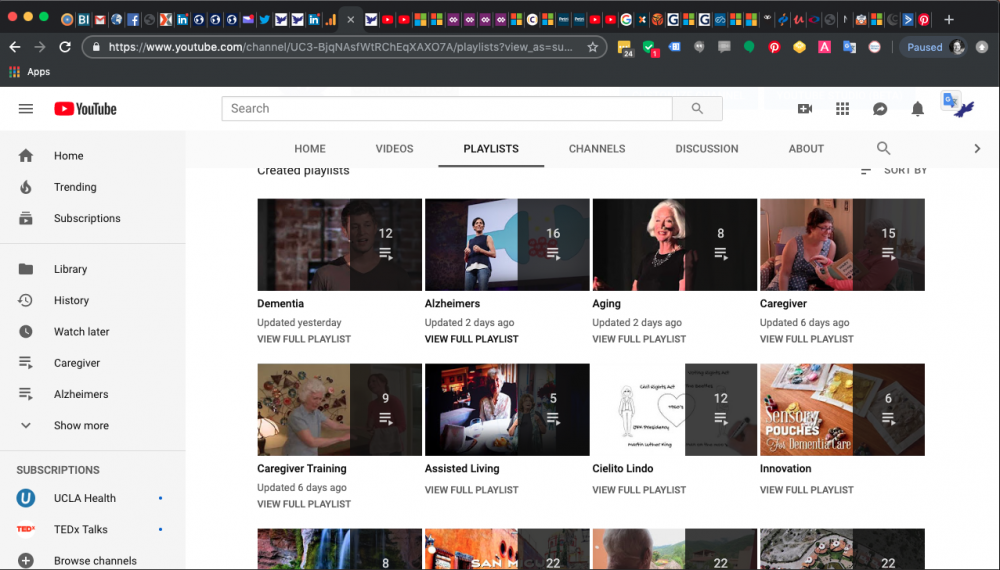
Here is our YouTube Channel. This is where we have lots of videos about Cielito Lindo and Rancho Los Labradores. We also have 1,600+ other senior care and expat in Mexico videos: YouTube |
|
|
|
|
Additionally, our playlists cover a wide area and include 1,200+ videos. These playlists include videos about San Miguel and Mexico in general, caregiving and health, and a broad spectrum of senior living topics. Playlists
|
|
|
|
|
Additional Resources We Offer
We have curated collections of resources that may be useful:
Articles - We write fresh articles about senior living, health, care, and finances every week
Caregiver
Books - We review books related to caregiving methods, logistics, challenges, and coping
Senior Health - We review books related to healthspan, lifespan, and disease
And here are our various social media forums, where we talk a lot about assisted living and memory care along with the various sort of challenges that sometimes come in our senior years (Alzheimer’s, Parkinson other dementias, and so on), but also about senior living in Mexico.
Facebook
|
|
|
|
|
|
|
|
|
|
|
Please don’t hesitate to contact me for anything related to senior living, especially in Mexico. I will gladly give you any assistance I can.
Thanks again!
James
James Sims
Marketing and Sales
Cielito Lindo Senior Living
1. 888.406.7990 (Voice and text)
1.209.312.0555 (WhatsApp)
Phones:
English speaking:
1.888.406.7990 (in US & CDN)
00.1.881.406.7990 (in MX)
Spanish speaking:
011.52.415.101.0201 (in US & CDN)
1.415.101.0201 (in MX)
SMA Colonias (subdivisions/neighborhoods):
Map and descriptions
Addresses and Travel:
Physical address:
Cielito Lindo Independent and Assisted Living, Camino Real Los Labradores S/N, Rancho Viejo 1, San Miguel de Allende, GTO, Mexico, 37885
Packages from online providers like Amazon:
Camino Real Los Labradores, Rancho Los Labradores / Cielito Lindo, San Miguel de Allende, GTO, 37880 México
PO Box for letters and small envelopes:
Rancho Los Labradores / Cielito Lindo, c/o Alejandra Serrano , PMB N° 515-C,
220 N Zapata HWY N°11, Laredo TX, 78043-4464
Air:
Best airports to fly into: Leon (BJX) or Queretaro (QRO)
Shuttle:
Best
airport shuttle: BajioGo
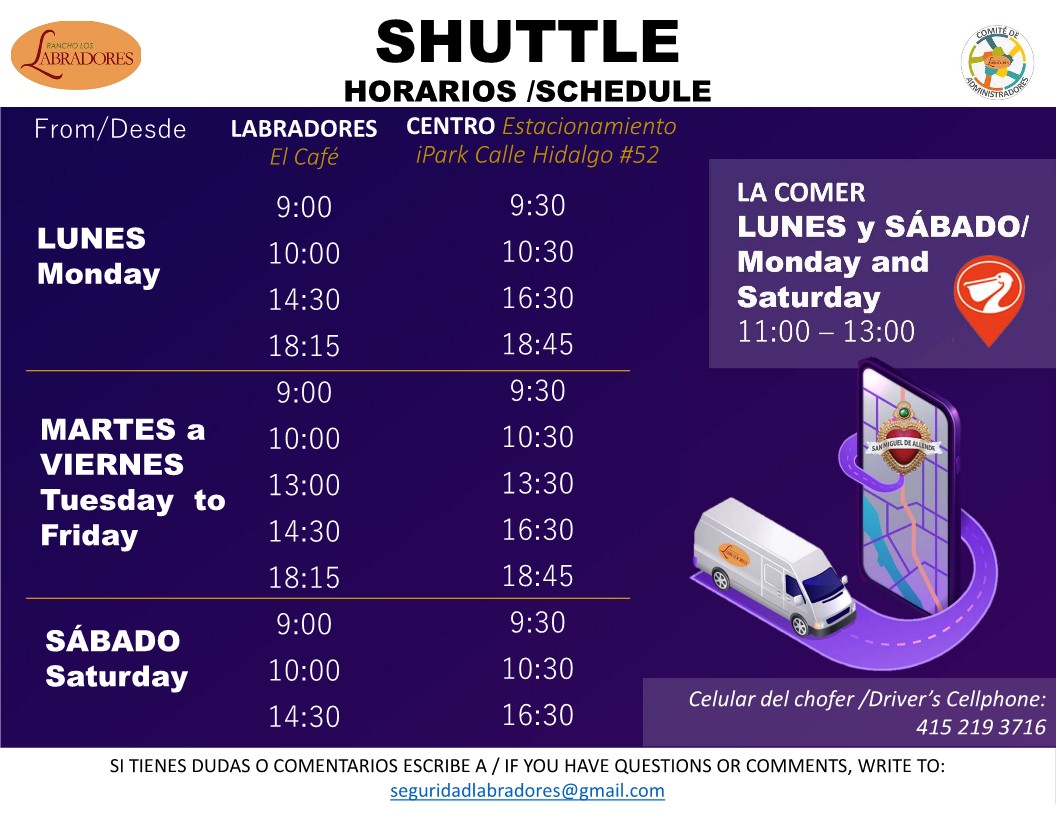
Shuttle between San Miguel and Rancho Los Labradores / Cielito Lindo
|
|
|
|
|
|
|
Regards,
James
James Sims
Marketing and Sales
Cielto LIndo Senior Living
jsims.cielitolindo@gmail.com
|
|
|
|
|
|
|
|