|
|
Subject: Your
Weekly Guide to Senior Living & Care in Mexico
Dear ,
Welcome to your weekly touchpoint from all of us at Cielito Lindo. Each edition brings together helpful insights, heartwarming stories, expert advice, and curated resources about senior living, retirement, and age-related care challenges—including Alzheimer’s, Parkinson’s, stroke, limited mobility, and more.
We understand that navigating this stage of life can be overwhelming, whether for yourself or a loved one. That’s why we're here—to offer guidance, support, and a glimpse into the enriching life many have found here in beautiful
San Miguel de Allende.
If you find this newsletter valuable, please forward it to a friend or family member who might also benefit. They can easily subscribe via our Newsletter page. And of course, if you ever wish to unsubscribe, there’s a quick opt-out link below at the bottom right corner of this newsletter.
Here’s what we typically cover each week:
- San Miguel de Allende highlights – why this is such a special place to live
- Health & wellness insights – articles, videos, and expert reviews
- Care options & community life at Cielito Lindo – flexible, affordable living with a warm, human touch
This Week’s Theme: Healthcare Costs in Mexico
This week, we explore the inequalities in healthcare for our elders and women.
|
|
|
|
|
| Weekly insights into San Miguel:
|
|
|
Colorful & Epicurean San Miguel
While much of what we discuss involves the challenges of aging
and caregiving, it's also important to celebrate the beauty that surrounds us. San Miguel de Allende is a feast for the senses—bursting with color, rich in culture, and renowned for its incredible food and art. It’s not just a place to live—it’s a place to thrive, to enjoy, and to heal.
|
|
|
|
|
The Colors of San Miguel: Even the walls here sing.
In San Miguel de Allende, color isn’t decoration — it’s a kind of
language, a way of life. Even a humble hand-painted advertisement like this one, scrawled across a sun-bleached, whitewashed wall, pulses with spirit. Look at those brush strokes — unapologetically imperfect, but full of movement. The deep emerald green, the golden yellow, the coral pinks and sun-warmed reds — they don’t just pop, they hum like mariachis warming up on a side street.
There’s something defiant and joyful about it. A declaration that even commerce, even something as ordinary as an ad for a band or event, can carry the heartbeat of a place. The wall itself — chipped, uneven, possibly hundreds of years old — is part of the canvas, giving texture to the message. The sun bakes it all into permanence, while dry vines trail above like fringe on a charro's sombrero.
In San Miguel, even the worn and weathered carry vibrancy in their bones. Here, color isn’t just seen — it’s felt. (Photo: James Sims)
|
|
|
|
|
Tastes of San Miguel: Lumbre at Finca La Devoción
Calle Insurgentes #333, Atotonilco, Zona Centro, C.P. 37893
San Miguel de Allende, Guanajuato, México
Phone: +52 415 139 0106
Facebook: Finca La Devoción
Days and Hours: Hours not officially published; events suggest evening service.
Atmosphere:
Nestled within the historic Finca La Devoción, Lumbre offers a rustic yet refined ambiance. The setting features expansive gardens, a 17th-century aqueduct, and heritage architecture, creating a serene environment ideal for intimate dinners and special events. Live jazz sessions and sunset gatherings enhance the enchanting atmosphere. They seem particularly well suited for high-end hosted events and weddings.
Service:
While specific details on service are limited, the venue's reputation for hosting memorable events suggests attentive and personalized service. The staff's commitment to creating unique experiences is evident in the curated events and culinary offerings.
Cuisine:
Lumbre specializes in fire-cooked, farm-to-table cuisine that celebrates local ingredients. The menu reflects a commitment to sustainability and authenticity, offering dishes that are both innovative and rooted in Mexican culinary traditions.
While an specific signature dish isn't specified, the restaurant's emphasis on fire-cooked techniques and local produce suggests standout offerings that highlight the flavors of the region.
Specific starters are not detailed, but the farm-to-table approach implies fresh, seasonal appetizers that showcase local ingredients.
Main courses likely feature a variety of fire-cooked meats and vegetables, emphasizing the natural flavors of the ingredients. The use of local produce ensures a menu that changes with the seasons, offering diners a taste of the region's bounty.
Dessert offerings are not specified, but given the restaurant's commitment to local ingredients, one can expect sweet finales that incorporate regional fruits and traditional Mexican flavors.
Lumbre is complemented by Casa Tinieblo, an on-site mezcalería offering a curated selection of artisanal mezcals and cocktails. This pairing enhances the dining experience, providing guests with authentic Mexican spirits in a setting that celebrates the country's rich beverage heritage.
Final Thoughts:
Lumbre at Finca La Devoción presents a harmonious blend of culinary excellence and historical charm. Its commitment to fire-cooked, sustainable cuisine, coupled with the enchanting setting of
Finca La Devoción, makes it a noteworthy destination for those seeking an authentic and memorable dining experience near San Miguel de Allende.
Cost: $$$
Rating: ★★★★½ (4.5 out of 5 stars)
|
|
|
|
|
Health, Caregiving & Life in Mexico
|
|
|
This section brings you thoughtful, relevant, and at times, even life-changing content to support your journey—whether you're exploring care options, supporting a loved one, or planning for your own future.
- Lead Article - Each week’s main feature is written just for you—diving into meaningful topics like extending healthspan, navigating diagnostics, or understanding the causes of Alzheimer’s and other dementias. We also occasionally explore the beauty and cultural richness of Mexico, including Pueblos Mágicos and the colorful life in San Miguel de Allende.
- Op Ed - A short editorial that reflects on the lead article’s themes, offering a personal or thought-provoking perspective.
- Caregiver’s Sentiment - A heartfelt quote or reflection honoring the emotional depth of caregiving—because your feelings and efforts matter.
- Videos - Two or three curated videos that align with the week’s theme, featuring summaries and timestamped highlights to make them easy to explore.
- Book Reviews - One or two handpicked books to deepen your understanding, lift your spirits, or simply remind you that you’re not alone.
|
|
|
|
|
Before You Judge a Caregiver, Walk a Mile in Their Shoes
When we’re not the ones in the thick of caregiving, it’s easy to see things only from our own vantage point—what we think we would do, what seems obvious from the outside. But caregiving isn’t lived from a distance; it’s lived in the day-to-day grind of impossible choices and quiet sacrifices. If there’s ever a moment to trade judgment for compassion, it’s when someone you love is carrying the overwhelming weight of care. Caregivers are often forced to make painful, complex decisions within the limits of emotional, financial, and logistical constraints. This article urges
non-caregivers to practice intentional empathy over judgment, offering insight into what caregiving truly involves—and how to support instead of scrutinize.
Article Highlights- Caregivers often face judgment from those who aren’t involved in the day-to-day reality of care.
- Distance creates the illusion of clarity. The further someone is from the caregiving role, the more
confident they may feel about how things “should” be done.
- Most caregiving decisions are not made out of preference, but out of necessity—often between two painful or imperfect options.
- The “privilege of distance” allows non-caregivers to critique without understanding the emotional, financial, and physical toll caregiving takes.
- Outsiders may see decisions but miss the constraints—like lack of affordable help, inadequate insurance, or emotional burnout.
- Well-meaning advice can land as harsh criticism, especially when caregivers are already weighed down by guilt, exhaustion, and self-doubt.
- Much of caregiving is
invisible labor, including sleepless nights, emotional vigilance, and logistical coordination that others never see.
- Caregiving isn’t a part-time task—it’s a constant state of alertness. There’s no true “off” switch.
- Family dynamics often leave one person—usually a daughter—shouldering the burden, while others critique from the sidelines.
- Cultural expectations and moral assumptions can make it harder for caregivers to pursue necessary solutions, like international assisted living.
- International care (such as in Mexico) is often a sustainable and dignified choice—not a careless or selfish one.
- Empathy is a practice, not a feeling. It requires intention, restraint, and a willingness to see beyond your own assumptions.
- Support means showing up, not speaking up. Help with errands, finances, or respite is often more valuable than opinions.
- Judgment, even when softly spoken, adds emotional weight to someone already carrying a heavy load.
- To truly support a caregiver, walk beside them—not ahead or above. Offer presence, not pressure.
|
|
|
|
|
Caregiver's Sentiment: Tread Lightly
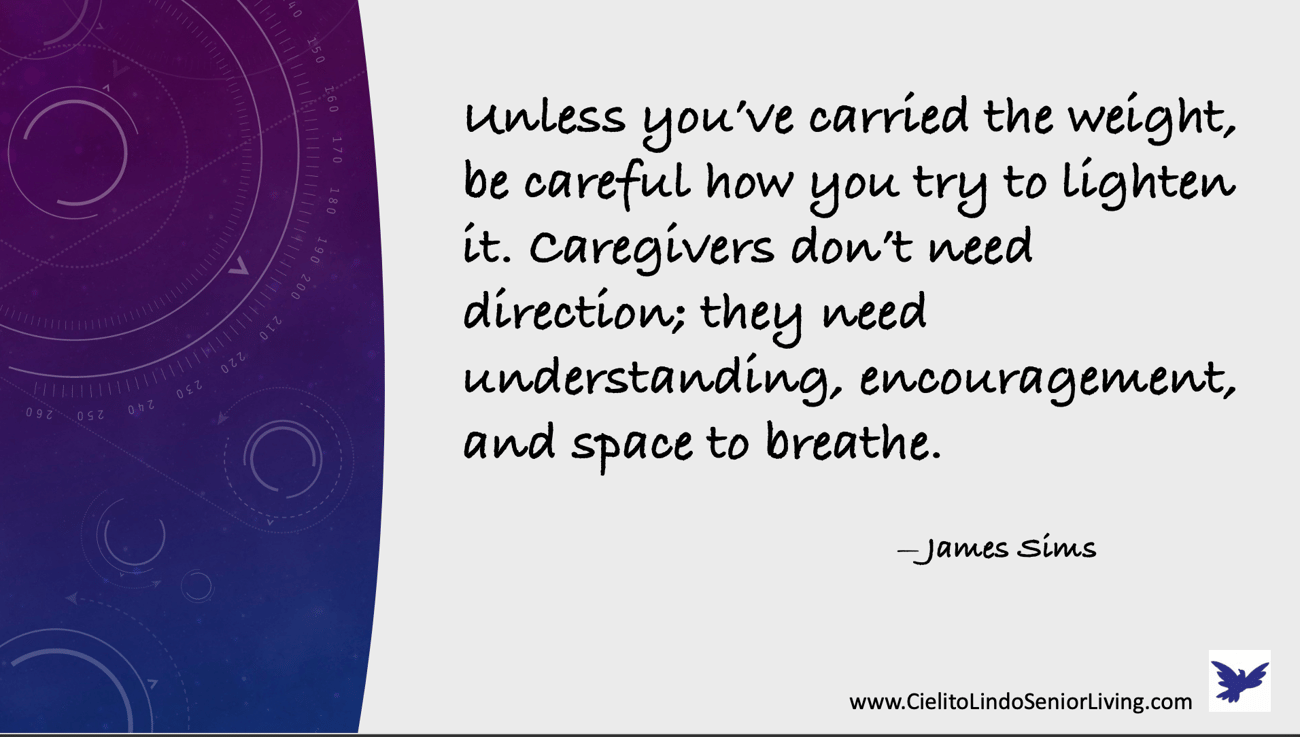
"Unless you’ve carried the weight, be careful how you try to lighten it. Caregivers don’t need direction; they need understanding, encouragement, and space to breathe."
Caregiving is an act of love, but it is often steeped in exhaustion, emotional strain, and unseen sacrifice. Those who step into this role—whether for a parent, partner, child, or friend—carry not only the physical tasks of daily care, but also the mental and emotional toll of watching someone they love in need. From the outside, it may be tempting to offer suggestions, advice, or worse yet, criticism. But unless we’ve lived in their shoes, our well-meaning words can land as unintended judgments, creating more pressure than relief.
That’s why it’s so
important to tread gently. The caregiver doesn’t need critique; they need companionship. They need us to listen more than speak, to honor their efforts instead of correcting their path. When we walk beside them—quietly offering presence, admiration, and practical support—we validate their experience in a way that uplifts rather than overwhelms. Let us remember: compassion is not just in what we give, but in how lightly we step around those already carrying more than we can see.
|
|
|
|
|
Walk With, Not Over: Why Caregivers Need Allies, Not Judges
May 18, 2025 | James Sims, Editor, www.cielitolindoseniorliving.com
Mark thought he was helping his sister Julia. On his short trip home, he noticed how much their mother had declined and casually asked whether Julia had considered memory care or maybe coconut oil for brain health.
He did not mean to condescend or second guess, nor did he realize that was exactly what he was doing.
Julia just nodded, rose from the table, and walked silently toward the bathroom where their mother had been calling for help. What Mark didn’t see: the midnight confusion, the unpaid medical bills, the hours spent wrangling with home care
agencies, or the constant, aching tension between love and collapse. He saw decisions; he missed the constraints.
This is the privilege of distance, and it is eroding caregivers, not just from the inside out, but from the outside in.
The Hidden Burden of Care
Millions of Americans, most of them women, are quietly holding together the lives of their aging parents, disabled partners, or chronically ill loved ones. They are unpaid, often unacknowledged, and overwhelmingly exhausted. They don’t just manage care; they live inside it. There is no off switch, no safety net, and too often, no support.
From the outside, caregiving looks like a series of choices. In reality, it’s a maze of constraints: financial, emotional, logistical. Outsiders see
the outcomes and judge the route; they rarely see the dead ends that came before.
What caregivers need is not critique. What they need is relief.
When “Help” Hurts
Even well-meaning suggestions—“Have you thought about hiring help?” or “Maybe you’re overdoing it”—can land like a slap when they come from someone who isn’t in the trenches. These comments assume that caregivers have overlooked obvious solutions, when in truth, those “solutions” often don’t exist, or come with trade-offs that outsiders fail to grasp.
Hiring help can be financially impossible. Placing a parent in assisted living can feel like betrayal. Taking a weekend off can invite shame. Every option has a cost.
Judgment only deepens the
caregiver’s burden. It adds emotional weight to people already stretched thin. It tells them, sometimes subtly, that they are not doing enough, even when they are doing everything they can.
The Family Judgment Gap
Within families, this dynamic is painfully common: the person doing the least often has the most to say. A sibling who visits for a weekend may question medication choices. An in-law might comment on the clutter in the home. A cousin might wonder aloud why better care hasn’t been arranged.
These people don’t mean harm, but their distance gives them false clarity. They aren’t on the phone with insurance. They aren’t coordinating transportation or responding to 2 a.m. falls. They aren’t there for the quiet, grinding losses that wear down the soul.
Caregivers often make decisions between impossible options. To then be second-guessed by those who aren't present is not just frustrating; it is profoundly invalidating.
Before offering advice, ask: Have I earned the right to weigh in? If the answer is no, consider offering help instead.
Love Isn’t Always Local
Few choices spark more outrage than the idea of placing a loved one in long-term care abroad. “How could you even consider taking Mom to another country?” people ask, as if geography were morality.
But here is the economic truth: care in the United States is financially out of reach for many families. Quality assisted living can cost $6,000 to $10,000 per month. Even then, that doesn’t guarantee skilled care or consistent
staffing.
In contrast, countries like Mexico, Thailand, and Costa Rica offer high-quality facilities with better staff ratios, personalized care, and sustainability for both the caregiver and the patient.
Choosing international care is not about abandoning a loved one; it’s about finding a way to care that won’t destroy the caregiver in the process.
It is not selfish; it is survival.
Critics often reject these decisions while offering no practical alternatives. But unless they are prepared to take over the care—or fund it—they should pause before passing judgment.
Love is not defined by ZIP code. Love is care, and care must be sustainable.
Empathy Requires Restraint
Empathy is not the same as pity. It is not feeling sorry from afar. It is the discipline of presence, the ability to set aside one’s assumptions and simply see.
Real empathy asks: What does this person need right now? And often, the answer is not advice. It is space. It is validation. It is practical support.
Caregivers may cancel plans, forget birthdays, or seem distracted. Not because they don’t care, but because they are running on empty.
Instead of saying, “You should try…,” say, “I trust your judgment.” Instead of offering solutions, ask, “What would help right now?”
Empathy isn’t about fixing everything. Sometimes, it’s about standing beside someone and refusing to add to their burden.
Allyship, Not Audit
If you are not the one giving daily care, your role is not to evaluate. It is to elevate. It is to be an ally. That means showing up when it’s inconvenient. It means sending groceries, offering respite hours, covering a utility bill, or simply texting, “Thinking of you. How can I help this week?” It also means knowing when to stay quiet. Not every situation needs your input. Many just need your presence.
Ask yourself: Am I trying to be helpful, or just heard? Am I offering support, or asserting control? The best allies know the difference.
Care for the Caregivers
Caregivers are not asking for medals. They are
asking for grace. For someone to believe that they are doing the best they can. For family members to stop adding pressure. For the weight to be shared—even just a little.
So before you speak, pause. Before you suggest, listen. Before you judge, consider what it costs to be in their shoes. Because if you love the person receiving care, you have a responsibility to care for their caregiver too.
Caregiving is an act of devotion. But it should never be a solitary sentence. Walk beside them. Carry part of the load.
Not over. Not ahead.
With.
|
|
|
|
|
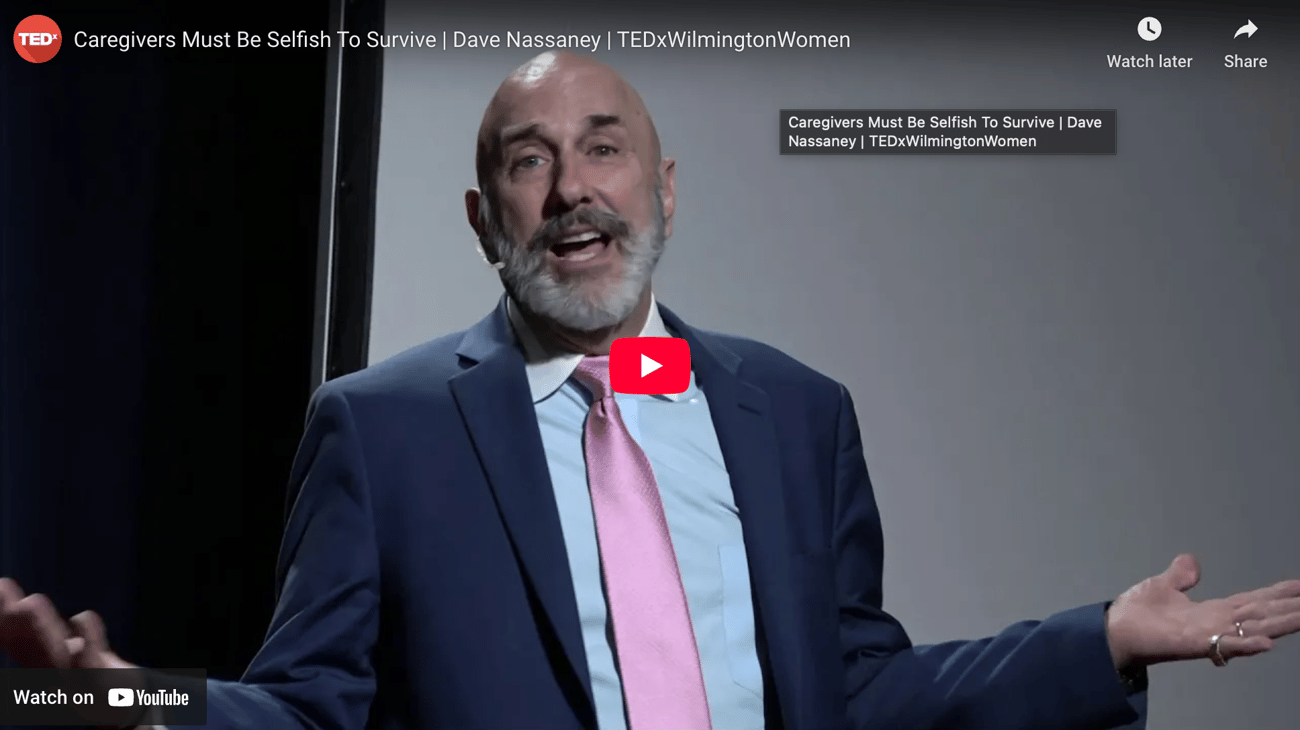
Video: Caregivers Must Be Selfish To Survive | Dave Nassaney | TEDxWilmingtonWomen
In this TEDx talk, Dave Nassaney emphasizes the importance of caregivers prioritizing their own well-being to effectively support their loved ones. He shares personal experiences, highlighting the overwhelming challenges caregivers face, including guilt, isolation, and depression. Nassaney stresses that many caregivers may become sicker than those they care for, with a significant percentage dying before their loved ones.
He advocates for caregivers to join support groups and adopt a mindset of self-care, using the metaphor of putting on
one’s own oxygen mask first. By doing so, caregivers can not only survive but thrive, ultimately providing better care for their loved ones.
View the video here.
Highlights:0:10 – Almost everybody will eventually care for a loved one or need care themselves.0:35 – One third of the US population are caregivers, with many feeling depressed.1:12 – 30% of caregivers may die before their loved ones.3:20 –
The speaker’s wife suffered a massive stroke, changing his role to caregiver.4:10 – The speaker realized he needed to be selfish to survive caregiving.5:55 – Joining a caregiver support group changed everything for him.6:06 – The metaphor of putting on your own mask first in emergencies applies to caregiving.7:34 – The speaker’s wife is doing well because he learned to prioritize his needs.9:00 – Imagine if every new caregiver was healthy and capable from the start.10:04 – Caregivers can thrive and be joyful while providing care.
|
|
|
|
|
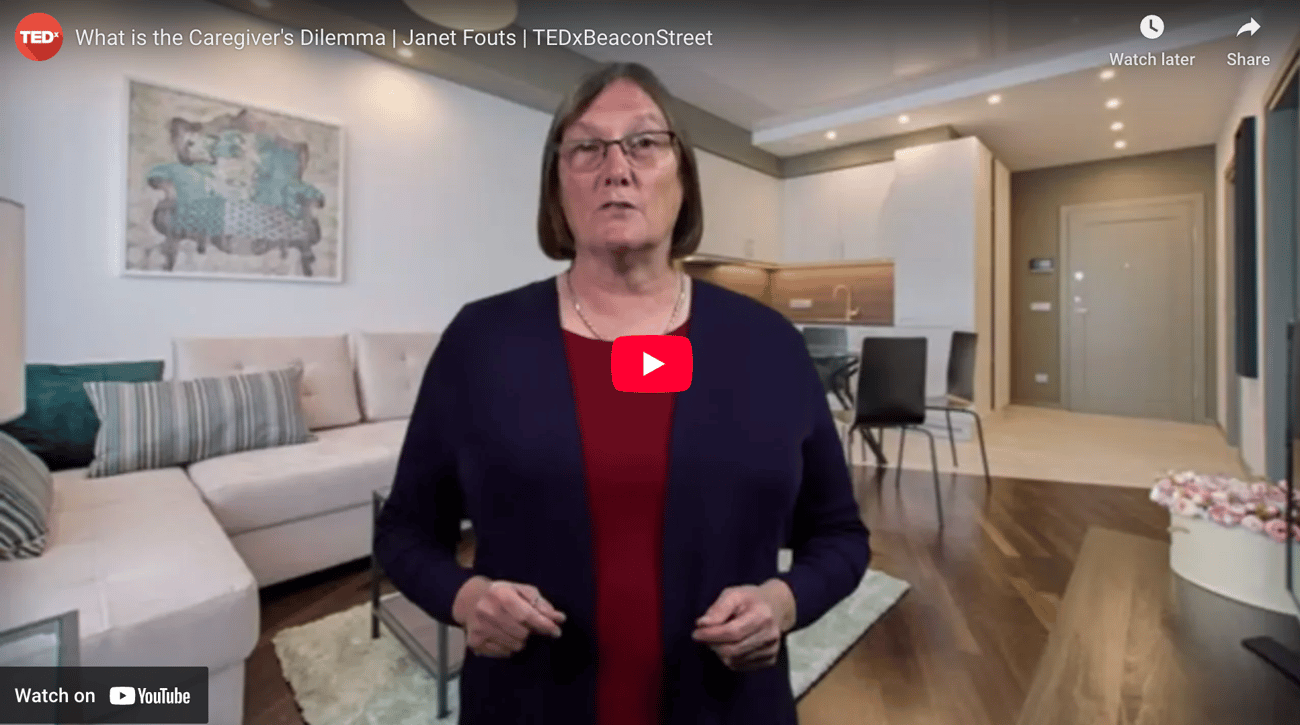
Video: What is the Caregiver’s Dilemma | Janet Fouts | TEDxBeaconStreet
In “What is the Caregiver’s Dilemma,” Janet Fouts shares her personal journey as a caregiver facing the challenges of balancing self-care with caring for a loved one. She emphasizes that neglecting one’s own health can lead to burnout and stress, which ultimately affects the quality of care provided. Fouts introduces mindfulness as a powerful tool to manage stress and improve well-being, advocating for “micro-doses” of mindfulness throughout the day. Simple practices like pausing and focusing on positive moments can significantly enhance resilience and emotional health. Ultimately,
she encourages caregivers to prioritize their own needs to be better equipped to care for others.
View the video here.
Highlights:0:12 – When my family got the cancer diagnosis, life hit the fan big time.1:00 – The harder it got, the more I realized my own mental and physical health was suffering.1:59 – The caregiver’s dilemma is how do we care for ourselves and those we love?2:55 – I discovered the simple, elegant power of mindfulness.4:38 – I realized I don’t have time to not be mindful because it helps me to be more creative and productive.5:19 – I couldn’t get out of that negative cycle of stress.7:41 – When you feel yourself slipping down that slope towards overwhelm, stop for a pause.9:12 – The pause becomes a habit that refreshes, restores, and revives.10:11 – Mindfulness can be about choosing what’s important in this moment.11:34 – May you be happy, may you be safe, and may you have ease.
|
|
|
|
|
Video: What is the Caregiver’s Dilemma | Janet Fouts | TEDxBeaconStreet
In “What is the Caregiver’s Dilemma,” Janet Fouts shares her personal journey as a caregiver facing the challenges of balancing self-care with caring for a loved one. She emphasizes that neglecting one’s own health can lead to burnout and stress, which ultimately affects the quality of care provided. Fouts introduces mindfulness as a powerful tool to manage stress and improve well-being, advocating for “micro-doses” of mindfulness throughout the day. Simple practices like pausing and focusing on positive moments can significantly enhance resilience and emotional health. Ultimately, she encourages caregivers
to prioritize their own needs to be better equipped to care for others.
View the video here.
Highlights:0:12 – When my family got the cancer diagnosis, life hit the fan big time.1:00 – The harder it got, the more I realized my own mental and physical health was suffering.1:59 – The caregiver’s dilemma is how do we care for ourselves and those we love?2:55 – I discovered the simple, elegant power of mindfulness.4:38 – I realized I don’t have time to not be mindful because it helps me to be more creative and productive.5:19 – I couldn’t get out of that negative cycle of stress.7:41 – When you feel yourself slipping down that slope towards overwhelm, stop for a pause.9:12 – The pause becomes a habit that refreshes, restores, and revives.10:11 – Mindfulness can be about choosing what’s important in this moment.11:34 – May you be happy, may you be safe, and may you have ease.
|
|
|
|
|
Book Review: The Caregiver’s Path to Compassionate Decision Making: Making Choices for Those Who Can’t by Viki Kind, MA
OverviewThis practical and heartfelt guide is designed to help caregivers navigate the complex and often emotionally taxing decisions required for individuals with compromised mental capacity. Viki Kind, an experienced bioethicist, provides a compassionate, adaptable framework for making ethical decisions on behalf of those who cannot advocate for themselves. Now in its second edition, the book includes bonus materials from Kind’s workbook, offering additional tools to empower caregivers in their decision-making process.
Synopsis
In The Caregiver’s Path to Compassionate Decision Making, Viki Kind addresses the challenges faced by caregivers responsible for making critical choices for individuals with dementia, stroke, mental illness, brain injury, and other cognitive impairments. The book is structured to guide readers through decisions ranging from everyday matters like taking away car keys to more life-altering situations such as end-of-life care. Kind provides a detailed decision-making framework rooted in ethics, respect, and compassion. Her system is flexible, ensuring it can be tailored to suit the specific needs of the person being cared for, depending on their mental and physical abilities. Real-life examples and personal stories are included to bring the content to life, making it relatable and practical for readers.
Key Themes
- Ethical Decision-Making: The book centers around a framework that helps caregivers make ethical decisions by considering the well-being and dignity of the person who cannot decide for themselves.
- Respect and Compassion: Kind emphasizes that the decision-making process should always be grounded
in empathy, honoring the individual’s values and preferences wherever possible.
- Flexibility: Recognizing that every situation is unique, the book’s decision-making system can be adapted to the specific cognitive and emotional capacity of the care recipient.
- Practical Guidance: Kind provides step-by-step questions, strategies, and scenarios that caregivers can apply in real-life situations, making the advice actionable and easy to follow.
- End-of-Life Care: Special attention is given to the difficult choices that come with end-of-life decisions, offering caregivers emotional support and practical tools for navigating these moments.
Writing StyleViki Kind’s writing is clear, compassionate, and direct. She expertly combines professional knowledge with personal insight, making the book accessible to both professional caregivers and family members. The real-life examples provide a relatable context, and the workbook-style questions and strategies ensure that the advice is practical and applicable. Kind’s tone remains empathetic throughout, acknowledging the emotional toll caregiving can take while
providing much-needed encouragement.
Conclusion
The Caregiver’s Path to Compassionate Decision Making is an invaluable resource for caregivers faced with making difficult decisions on behalf of loved ones with impaired mental capacity. Viki Kind’s approach blends ethical rigor with emotional sensitivity, giving caregivers the tools they need to make decisions they can feel confident about. This book is highly recommended for both professional caregivers and family members navigating the challenging and emotional landscape of caregiving.
Rating: ★★★★☆ (4.8/5)
Additional Resources Cielito Lindo Offers
We have curated collections of resources that may be useful.
Articles - We write fresh articles about senior living, health, care, and finances every week
Caregiver Books
- We review books related to caregiving methods, logistics, challenges, and coping
Senior Health - We review books related to healthspan, lifespan, and disease
We also have 1,600+ other senior care and expat in Mexico videos: YouTube
|
|
|
|
|
| Cielito Lindo's basic information is included for your convenience:
|
|
|
- Cielito Lindo Info: After the signature, the newsletter always includes information about Cielito Lindo, so it is at your fingertips when you want it: Our costs, various related websites, social media channels like YouTube, our various addresses, and so on.
- Travel Info: Recommended airports and shuttles.
|
|
|
Web Sites - Cielito LIndo and Rancho Los Labradores
Here are our Web sites, including Cielito Lindo and Labradores Suites (hotel) all of which are part of the larger Rancho Los Labradores gated community just north of San Miguel de Allende.
- Cielito Lindo provides independent living, light assisted living, assisted living, memory care and hospice with 24*7 staffing along with a la carte assisted living services to those living in the villas and suites at Rancho Los Labradores.
- Rancho Los Labradores Suites offer short and long term residence.
- Rancho Los Labradores is a country club resort feeling CCRC that provides a gated community with countless amenities and opportunities for different levels of independent living along with assisted living and memory care within Cielito Lindo.
Cielito Lindo Living Options & Costs Guide
We offer several living options depending on the level of care you or your loved one needs. Here’s a breakdown to help you plan:
1) Villas (Rent or Own)
- Cost: $1,300 – $1,700 per month
- Additional Costs: Utilities, renter’s insurance, etc.
- What’s Included: This is mostly independent living.
- Extras: You can add independent or assisted living services (charged separately, à la carte).
- Support: We can connect you with a realtor if you'd like to purchase.
2) Cielito Lindo Condos & Suites
Best for: Independent living with optional assistance.
Option 1: Independent Living + Meals
- Cost: $2,250 per month
Includes:- 2 meals a day
- Monthly medical check-up
Optional Add-ons:- Meals for an additional person: $450/month
- Extra care services available à la carte
Option 2: Light-Assisted Living in Condos & Suites
- Cost: $3,900 per month
Includes:- Full assisted living services
- Designed for residents who still want independence but need some support
- Smooth transition to full Assisted Living or Memory Care as needs
change
- One-Time Inscription Fee: $4,000
For Couples:- $4,900/month for two people
- Same one-time fee ($4,000 per couple)
- Note: Suitability is based on cognitive ability, mobility, and safety.
3) Cielito Lindo Assisted Living, Memory Care, & Hospice
Best for: Seniors needing full-time care and supervision.
- Cost: $3,900 per month
Includes:- 24/7 care and monitoring
- All meals
- Physical therapy
- Full-time doctor on site
- Spacious private room with
bath
- One-Time Inscription Fee: $4,000
- For Couples: $4,900/month
4) Specialized Hospice Suite
Best for: Intensive care needs or end-of-life comfort and also recuperative at a far lower cost than a hospital- Cost: $4,900 per month
Includes:- Full 24/7 monitoring
- Recuperative, Palliative and hospice care
- On-site doctor
- All meals
- Special space for visiting
family
|
|
|
YouTube videos and Curated Playlists
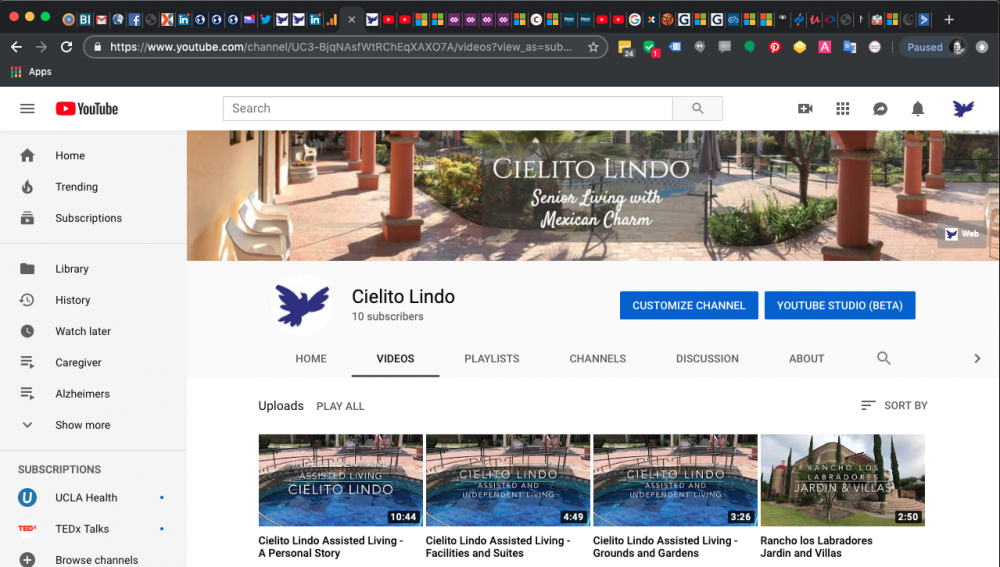
Here is our YouTube Channel. This is where we have lots of videos about Cielito Lindo and Rancho Los Labradores. We also have 1,600+ other senior care and expat in Mexico videos: YouTube |
|
|
|
|
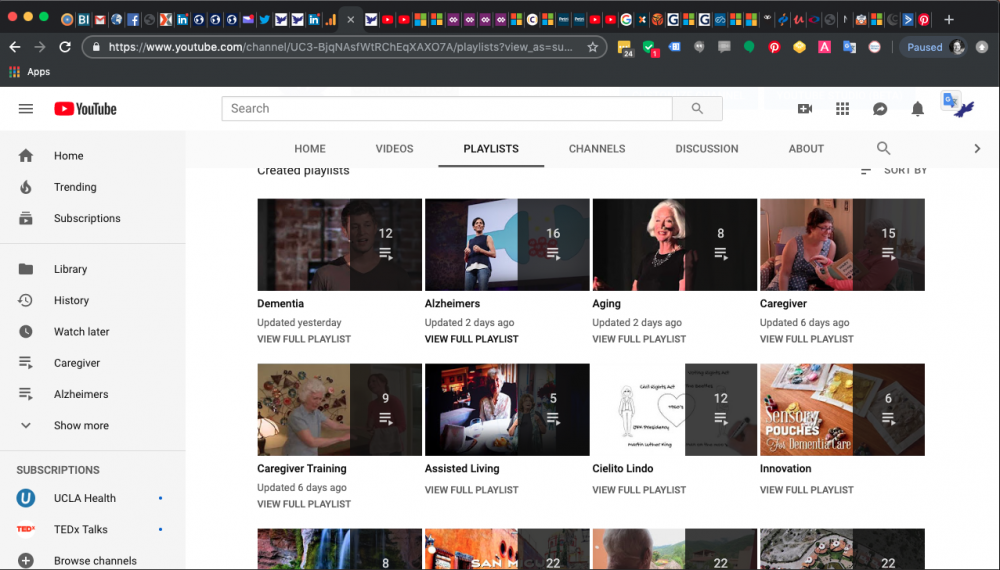
Additionally, our playlists cover a wide area and include 1,200+ videos. These playlists include videos about San Miguel and Mexico in general, caregiving and health, and a broad spectrum of senior living topics. Playlists
|
|
|
|
|
Additional Resources We Offer
We have curated collections of resources that may be useful:
Articles - We write fresh articles about senior living, health, care, and finances every week
Caregiver
Books - We review books related to caregiving methods, logistics, challenges, and coping
Senior Health - We review books related to healthspan, lifespan, and disease
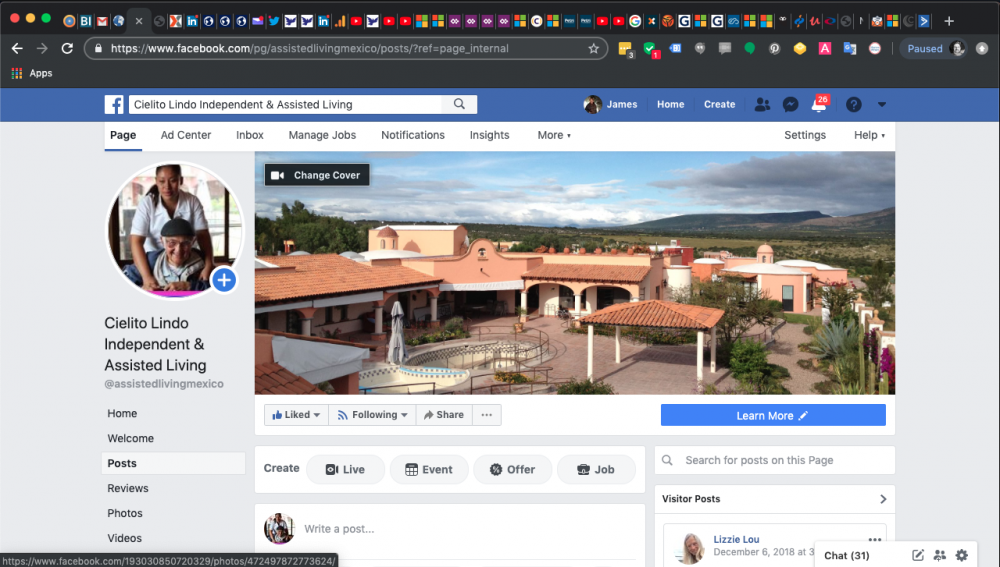
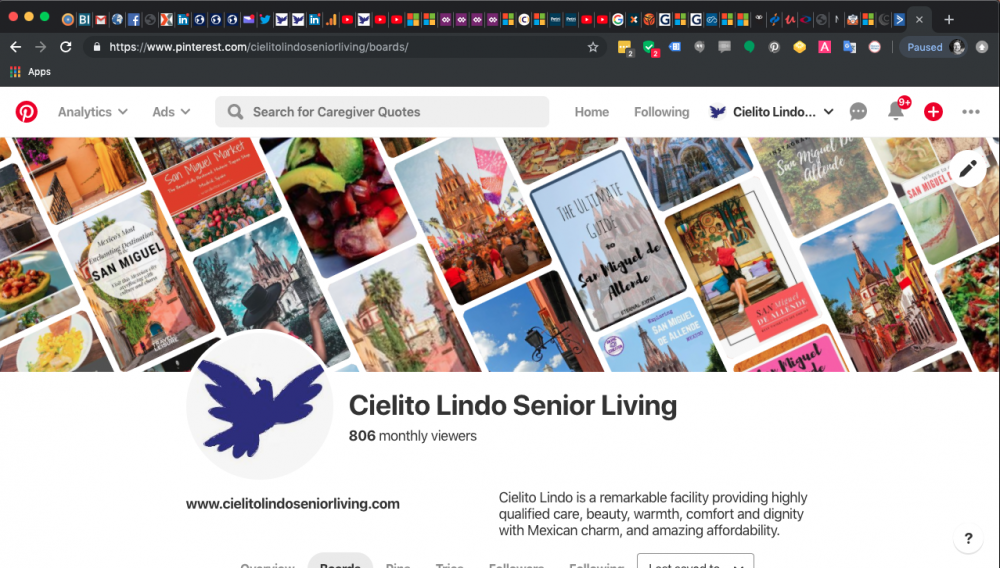
And here are our various social media forums, where we talk a lot about assisted living and memory care along with the various sort of challenges that sometimes come in our senior years (Alzheimer’s, Parkinson other dementias, and so on), but also about senior living in Mexico.
Facebook
|
|
|
|
|
|
|
|
|
|
|
|
|
|
|
|
|
|
|
Please don’t hesitate to contact me for anything related to senior living, especially in Mexico. I will gladly give you any assistance I can.
Thanks again!
James
James Sims
Marketing and Sales
Cielito Lindo Senior Living
1. 888.406.7990 (voice and text)
Phones:
English speaking:
1.888.406.7990 (in US & CDN)
00.1.881.406.7990 (in MX)
Spanish speaking:
011.52.415.101.0201 (in US & CDN)
1.415.101.0201 (in MX)
Expat Logistics:
Visas for Expats:
Sonia Diaz Mexico
Immigration Pros MX
Tax Considerations for Expats:
Robert Hall Taxes
Addresses and Travel:
Physical address:
Cielito Lindo Independent and Assisted Living, Camino Real Los Labradores S/N, Rancho Viejo 1, San Miguel de Allende, GTO, Mexico, 37885
Packages from online providers like Amazon:
Camino Real Los Labradores, Rancho Los Labradores / Cielito Lindo, San Miguel de Allende, GTO, 37880 México
PO Box for letters and small envelopes:
Rancho Los Labradores / Cielito Lindo, c/o Alejandra Serrano ,
PMB N° 515-C, 220 N Zapata HWY N°11, Laredo TX, 78043-4464
Best airports to fly into: Leon (BJX) or Queretaro (QRO)
Best airport shuttle: BajioGo
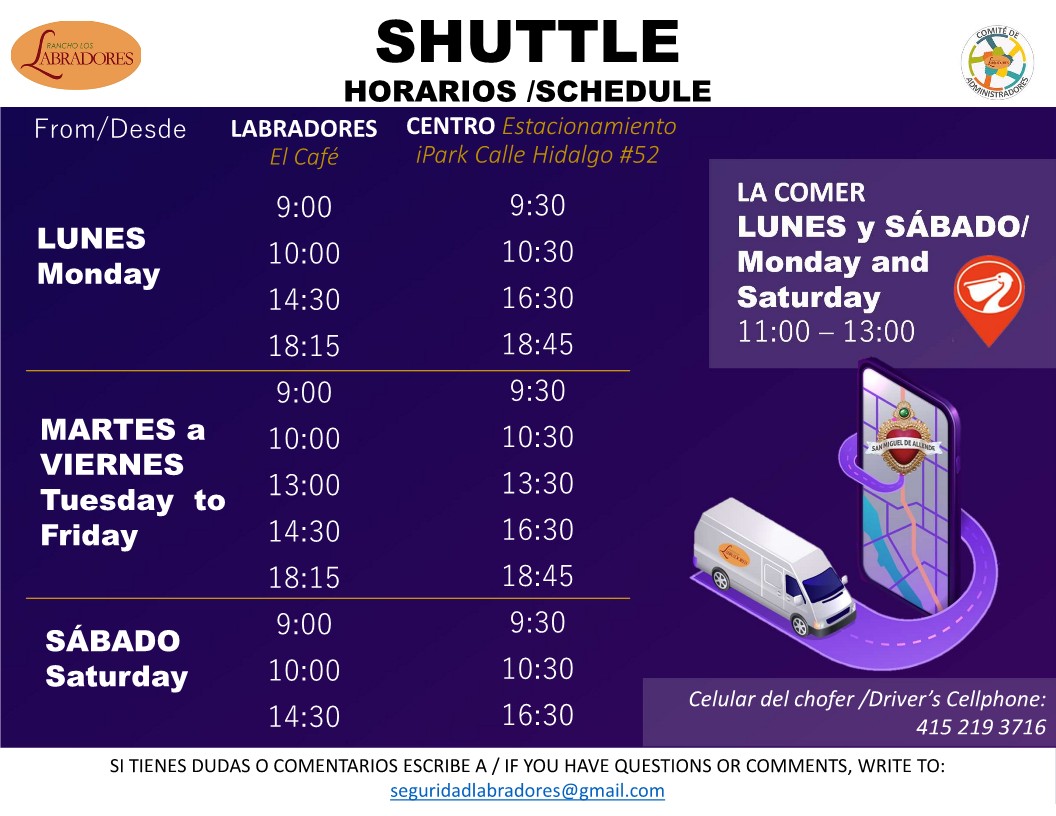
Shuttle:
Shuttle between San Miguel and Cielito Lindo
|
|
|
|
|
|
|
Regards,
James
James Sims
Marketing and Sales
Cielto Lindo Senior Living
James@CielitoLindoSeniorLiving.Com
|
|
|
|
|
|
|
|