|
|
Dear ,
This is your weekly summary of our news, research, books, videos, and other resources related to senior living, retirement, and care in Mexico, along with independent and assisted living and information about age-related challenges (e.g., limited mobility, dementia, Alzheimer's, Parkinson's, ALS, stroke, multiple sclerosis, healthspan, and so on).
I hope you are finding this weekly newsletter helpful, and if you know of someone who may also find this information helpful, please forward it to them. They can subscribe using our Web Newsletter page (click here). If, for any reason, you do not wish to receive this weekly newsletter any longer, there is a simple 'Unsubscribe' or 'Opt Out' link at the bottom right corner of this newsletter and also right here: Unsubscribe
This week’s newsletter explores how our desperation is sometimes being exploited by marketing.
Here’s what we typically cover each week:
- San Miguel de Allende highlights – why this is such a special place to live
- Health & wellness insights – articles, videos, and expert reviews
- Care options & community life at Cielito Lindo – flexible, affordable living with a warm, human touch
This Week’s Theme:
This week's newsletter explores compliance and beyond.
|
|
|
|
|
|
Weekly insights into San Miguel:
|
|
|
- Colorful and Epicurean San Miguel - This is such an amazing place, particularly the food and the colors. Although we are addressing a topic that is stressful, challenging, and emotional, we should also acknowledge what an incredible place San Miguel is.
|
|
|
|
|
|
Travel Poster - Siempre Una Buena Idea
San Miguel de Allende is the kind of place that seems almost designed to be photographed. Its historic center unfolds in a remarkable composition of cobblestone streets, warm ochre and terracotta façades, carved wooden doors, flowering bougainvillea, hidden courtyards, and centuries-old churches rising above the rooftops. At its heart, the soaring pink spires of the Parroquia de San Miguel Arcángel provide one of Mexico’s most recognizable cityscapes, particularly in the golden light of early morning or as the sun sets over the surrounding hills. Yet much of San Miguel’s beauty is found in smaller discoveries: a quiet plaza glimpsed through an archway, an elaborate doorway, a rooftop terrace overlooking the city, or a narrow street suddenly opening onto an extraordinary view. Rich in history, art, architecture, gardens, restaurants, galleries, and everyday Mexican life, San Miguel is not simply picturesque; it is a city that continually rewards wandering, curiosity, and the pleasure of slowing down.
|
|
|
|
|
The Hotels of San Miguel: Casa de Sierra Nevada, A Belmond Hotel
Hospicio 35, Centro, San Miguel de Allende, Guanajuato, México 37700
Phone: +52 415 152 7040Website: belmond.com
Atmosphere:
There are luxury hotels that happen to be located in San Miguel de Allende, and then there are hotels that seem inseparable from the city itself. Casa de Sierra Nevada, A Belmond Hotel, belongs firmly in the second category.
Rather than occupying a single purpose-built property, Casa de Sierra Nevada unfolds across six historic casonas, creating the feeling of a collection of extraordinary private residences scattered through the heart of old San Miguel. The hotel has just 37 rooms and suites, despite the considerable scale and sophistication of its amenities.
The buildings themselves span centuries. Casa Principal dates to the 16th century and was once the residence of an archbishop, while 17th-century Casa Parque was once a fort. Ancient masonry, baroque architectural details, courtyards, fountains, carved stone, traditional tile, gardens, original artwork, and Mexican craftsmanship connect the hotel unmistakably to its surroundings.
This is luxury, certainly, but it is luxury with a powerful sense of place.
Walk through an old wooden doorway and you may discover a flower-filled courtyard. Turn another corner and there is a quiet garden, a stone staircase, a fountain, or a glimpse of San Miguel's rooftops and church spires. The property reveals itself gradually, much as San Miguel itself does.
The result feels less like a conventional five-star hotel and more like being given the keys to a collection of beautifully restored colonial homes.
Accommodations:
Casa de Sierra Nevada's 37 accommodations include 14 rooms and 23 suites, distributed among the historic casonas.
Individuality is central to their appeal. Rooms incorporate local architecture, antiques, original artwork, Mexican textiles, wood, stone, tile, and traditional craftsmanship while adding the comforts expected of a modern luxury hotel.
Even within the same category, accommodations can differ considerably, which is part of the pleasure. Some overlook courtyards; others offer city views. Many Deluxe Rooms have private balconies, while several suites add terraces or patios.
At the upper end, the experience becomes considerably more indulgent. Some suites feature private plunge pools, and the Signature Suites combine private terraces and plunge pools with views toward the Parroquia de San Miguel Arcángel.
This isn't simply Mexican decoration applied to an international hotel room. The architecture came first, and the accommodations have largely been shaped around it.
That distinction matters.
The best rooms at Casa de Sierra Nevada remind you where you are every time you wake up.
Service:
Belmond operates some of the world's best-known luxury hotels, and Casa de Sierra Nevada brings that level of professional hospitality to what remains a remarkably intimate property.
That combination may be the hotel's greatest strength.
Smaller San Miguel inns can offer tremendous warmth and personality but relatively limited services. Large luxury resorts can provide impeccable service while occasionally feeling detached from their surroundings. Casa de Sierra Nevada occupies an attractive middle ground: the resources and polish of an international luxury hotel combined with the scale and architectural personality of a boutique property.
Concierge assistance is particularly valuable in San Miguel, where the difference between simply visiting the city and really experiencing it often lies in knowing where to eat, which galleries to explore, what is happening that evening, and which experiences deserve your limited time.
This is a hotel capable of arranging the details while allowing the guest to forget about them.
Dining and Breakfast:
Food is much more than an amenity at Casa de Sierra Nevada.
The property currently offers two restaurants and two bars, ranging from refined Mexican cooking at Restaurante del Parque to international cuisine at Andanza. Bar Azul provides a more traditional setting for drinks, while Tunki Rooftop brings a contemporary note with cocktails, Peruvian-influenced food, and elevated views across the city.
But perhaps the most interesting culinary offering isn't a restaurant at all.
The hotel's Sazón Cooking School gives guests the opportunity to move beyond simply eating Mexican cuisine and begin understanding it. Regional ingredients, techniques, traditions, and flavors become part of the travel experience rather than merely another dinner reservation.
That is particularly appropriate in San Miguel, where food is such an important part of the city's personality.
Breakfast, meanwhile, can be enjoyed at the leisurely pace this city seems to encourage. There is something particularly civilized about beginning the morning in a garden or historic courtyard over coffee and breakfast before setting out onto San Miguel's cobblestone streets.
Amenities:
This is where Casa de Sierra Nevada separates itself from many of San Miguel's smaller boutique hotels.
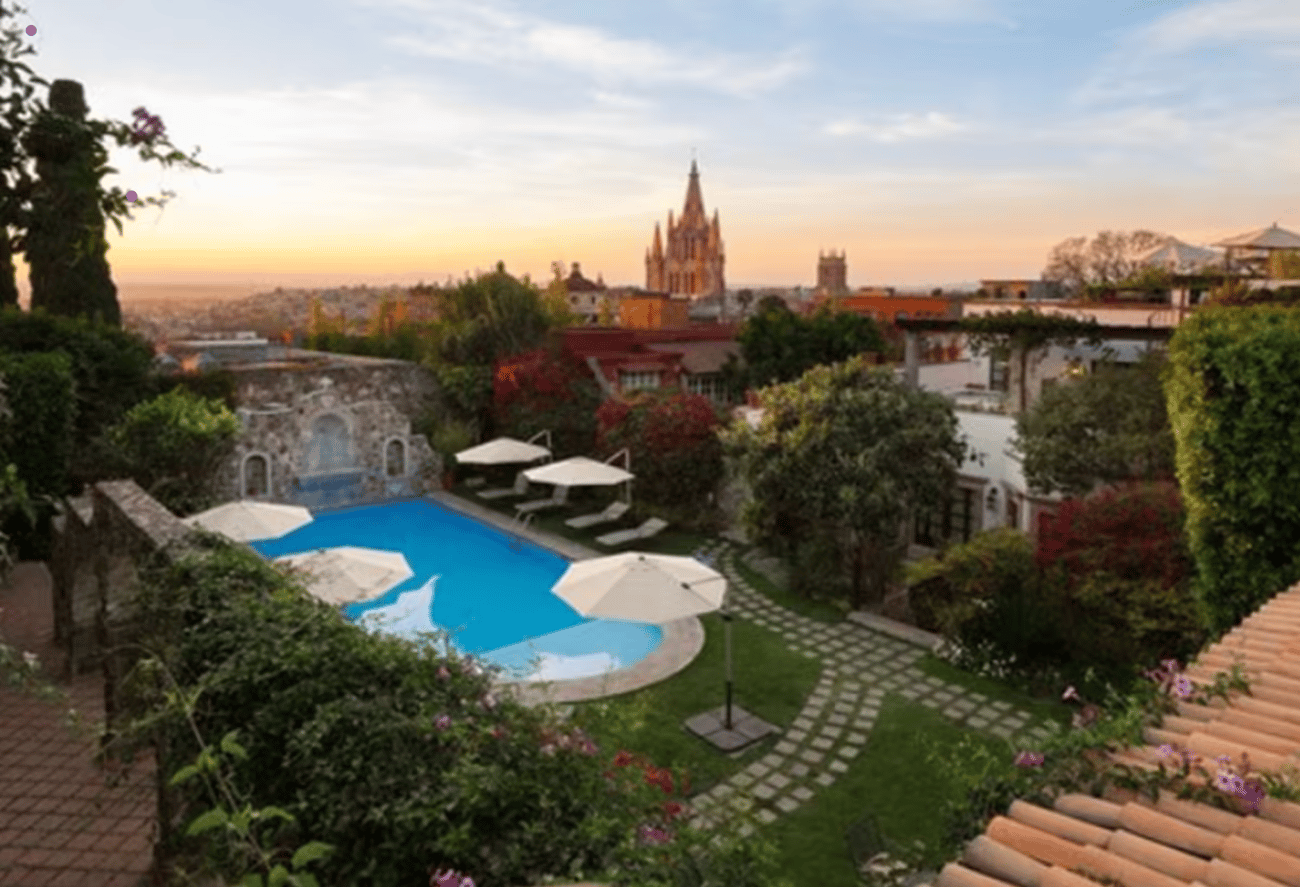
The property includes a beautiful outdoor swimming pool surrounded by gardens, Laja Spa, a 24-hour fitness studio, restaurants and bars, landscaped courtyards, event spaces, rooftop dining, and the Sazón Cooking School.
Laja Spa occupies part of a 16th-century manor and includes three treatment rooms, a salon, spa boutique, and fitness facilities. Treatments incorporate natural and botanical influences, including products from a local artisanal producer.
Yet the hotel's greatest amenity may still be its physical environment.
A swimming pool is lovely. A swimming pool hidden within the gardens of a centuries-old Mexican casona, with San Miguel's historic architecture rising beyond it, is something altogether different.
The hotel manages the difficult trick of providing genuine resort-level amenities without making you feel as though you have left San Miguel to enter an isolated resort.
Location:
The location is exceptional.
Casa de Sierra Nevada sits on Calle Hospicio in the historic center, placing guests within an easy walk of the Jardín Principal, galleries, restaurants, shops, historic churches, and the Parroquia de San Miguel Arcángel.
This matters more than it might initially seem.
San Miguel is a city best experienced incrementally and on foot. You don't simply travel from attraction to attraction. You wander. You notice an interesting doorway and investigate it. You stop for coffee. You discover a gallery you didn't know existed. You hear music coming from a plaza. You climb onto a rooftop for a drink because the sunset suddenly looks too beautiful to waste.
Staying at Casa de Sierra Nevada places all of that immediately outside your door.
You can spend the morning exploring, return to the hotel for lunch or a swim, venture out again in the afternoon, come home to change for dinner, and walk back into Centro without ever thinking about transportation.
In a city as beautiful as San Miguel, that freedom is an enormous luxury.
Who It's Best For:
Casa de Sierra Nevada is particularly well suited to couples, sophisticated leisure travelers, food lovers, art and architecture enthusiasts, special-occasion travelers, and visitors who want a genuine five-star experience without sacrificing San Miguel's historic character.
It would be an especially compelling choice for an anniversary, birthday, honeymoon, or milestone trip where the hotel itself should become part of the memory.
It also suits travelers who normally prefer small boutique properties but occasionally find their limited services frustrating. Here you get much of the intimacy and architectural character of a boutique hotel along with a spa, pool, fitness facilities, multiple dining choices, sophisticated concierge services, and the operational polish of Belmond.
There is, of course, a price attached to all of this. Casa de Sierra Nevada occupies the upper reaches of San Miguel's hotel market. Travelers primarily interested in a comfortable room from which to explore the city can spend considerably less.
But that isn't really the market this hotel is trying to serve.
Final Thoughts:
Casa de Sierra Nevada represents something San Miguel de Allende does exceptionally well: luxury that derives from beauty, history, craftsmanship, and atmosphere rather than sheer size.
There is no enormous marble lobby announcing that you have arrived at an important hotel. Instead, there are old stone walls, intimate courtyards, gardens, fountains, art, terraces, and rooms distributed among buildings that have stood in San Miguel for centuries.
And that may be the hotel's greatest accomplishment.
Belmond could easily have imposed an international luxury identity upon these historic buildings. Instead, the best parts of Casa de Sierra Nevada feel as though the hotel has adapted itself to San Miguel.
Spend the morning walking Centro. Have lunch in a courtyard. Retreat to the pool during the warmth of the afternoon. Take a cooking class. Return to your room, then wander onto a rooftop for cocktails as the light begins to soften over the city's domes and church towers.
And when evening arrives, step back onto Calle Hospicio, and you are already in the middle of one of Mexico's most beautiful cities.
Casa de Sierra Nevada isn't merely a luxurious place from which to visit San Miguel de Allende.
At its best, it feels like an extension of San Miguel itself.
Cost: $$$$ (Luxury / Ultra-Luxury Boutique)
Rating: ★★★★★ (5 out of 5)
|
|
|
|
|
Restaurant Reviews: Ghar
Mesones 14, Zona Centro, 37700 San Miguel de Allende, Guanajuato, MexicoWebsite: ghar.mx
Days and Hours:
Wednesday–Monday: Brunch 9:00 AM–1:00 PM; Lunch/Dinner 2:00 PM–11:00 PMTuesday: Closed
Ghar brings something still relatively uncommon to San Miguel de Allende: serious, contemporary Indian cooking that respects the traditions of the subcontinent while taking advantage of the ingredients available in Mexico.
Atmosphere:
Ghar occupies a lovely patio within Casa Hoya, a colonial property on Mesones in the heart of Centro. The setting is elegant without being overly formal, with the intimacy and architectural character that make San Miguel's best courtyard restaurants so appealing.
It is an appropriate home for the restaurant. Ghar isn't trying to recreate a stereotypical Indian dining room in central Mexico. Instead, the surroundings remain unmistakably San Miguel while the kitchen looks toward India.
The result feels sophisticated, relaxed, and genuinely cosmopolitan. It works equally well for a leisurely meal with friends, an intimate dinner, or for curious diners who want to spend some time exploring a cuisine that remains surprisingly underrepresented in Mexico.
Service:
Ghar has the feel of a chef-driven restaurant, and the experience benefits from a staff that can explain dishes that may be unfamiliar to diners without extensive experience with Indian cuisine.
That matters here because this is not simply a menu of familiar curries arranged according to heat level. There are regional influences, unfamiliar spice combinations, Mexican ingredients used in Indian preparations, and dishes that benefit from a little explanation.
If Indian cuisine is relatively new to you, don't hesitate to ask for guidance. Part of the pleasure of Ghar is allowing the kitchen to take you somewhere you may not have been before.
Cuisine:
Ghar was founded by Gujarat-born chef Hiran Patel, whose restaurant experience includes directing several establishments in Chicago. The kitchen draws inspiration from different regions of the Indian subcontinent rather than limiting itself to a single regional tradition.
Chef de cuisine Mauricio Hernandez adds another dimension by incorporating and adapting Mexican ingredients where they make culinary sense.
This is where Ghar becomes particularly interesting.
Indian and Mexican cuisines are, in some respects, kissing cousins. Both are collections of intensely regional culinary traditions. Both make extensive use of chiles, spices, aromatics, vegetables, legumes, breads, slow cooking, grilling, and complex sauces.
More importantly, both understand culinary transformation.
The greatest dishes in each cuisine frequently begin with numerous individual ingredients that are toasted, ground, cooked, blended, reduced, and combined until something entirely new emerges. The final flavor becomes greater than any of its individual components.
There is no doubt that masalas and moles invite comparison.
Ghar explores that relationship intelligently, without turning the menu into a contrived exercise in "fusion."
Signature Dish:
The nopal pakora may be the dish that best explains Ghar.
Pakora is a classic Indian preparation in which vegetables or other ingredients are coated in a seasoned chickpea-flour batter and fried until crisp. At Ghar, Mexican nopal enters the equation.
It is an inspired substitution.
Nopal is obviously not something one expects to encounter in a traditional pakora in India, yet it works so naturally that the dish feels less like culinary experimentation and more like the discovery of an overlooked relationship between two cuisines.
If you want to understand what Ghar is trying to accomplish, start here.
Starters:
Indian food is particularly rewarding when several dishes are ordered for the table, and Ghar lends itself to that style of eating.
The pakora, particularly the nopal interpretation, is an excellent beginning because it introduces the restaurant's approach immediately: recognizably Indian technique combined with ingredients that acknowledge where the restaurant actually is.
From there, I would lean toward contrasting preparations rather than ordering several dishes with similar sauces. Indian cuisine becomes much more interesting when something crisp is followed by something creamy, something aromatic by something spicy, and something cooked in the tandoor by something slowly developed in a sauce.
This is also where asking your server for guidance can produce a better meal than simply ordering the most recognizable dishes.
Main Courses:
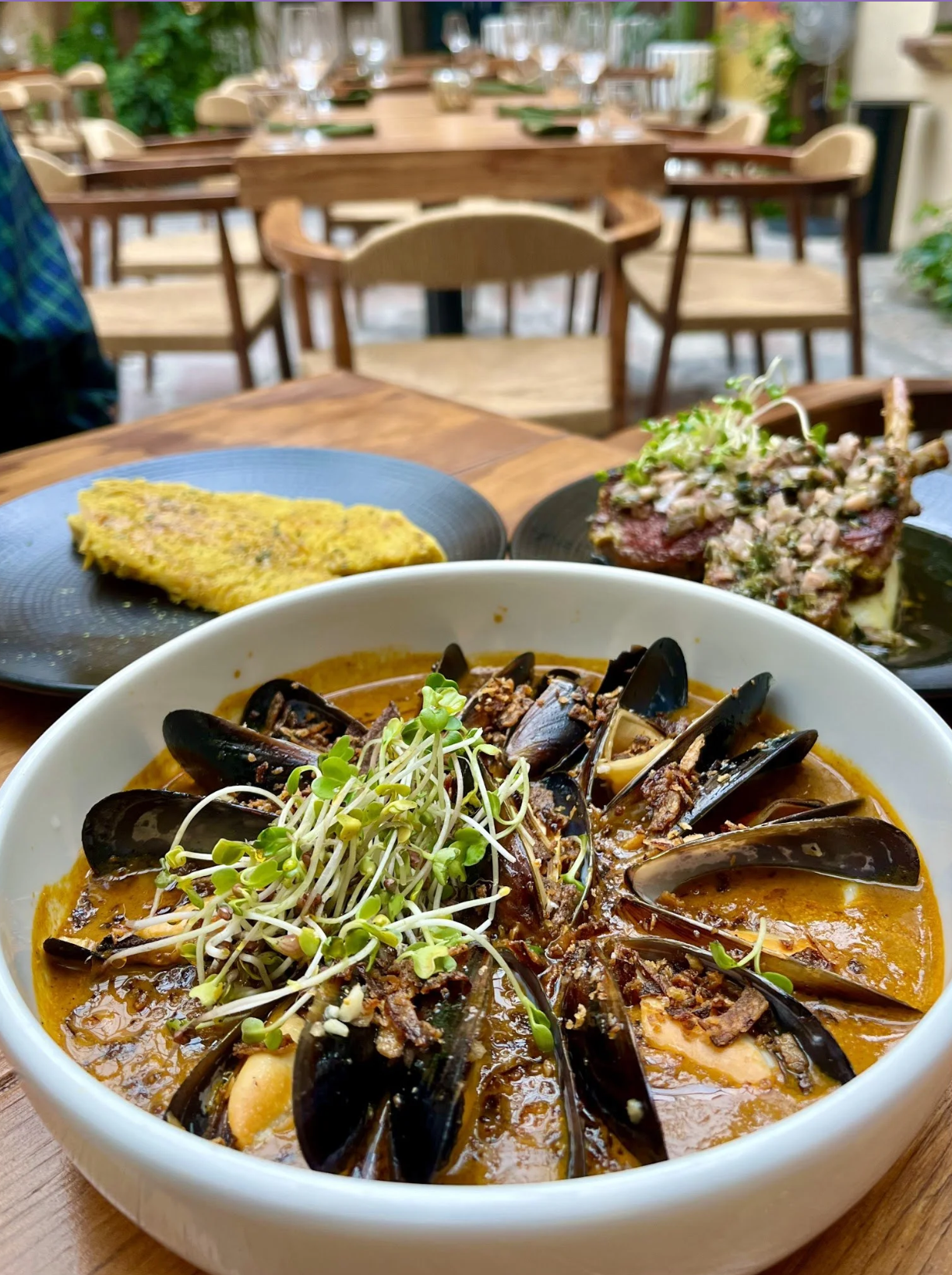
The tandoor-grilled lamb chops are among Ghar's most compelling main courses. Tandoor cooking gives meat an intense exterior char while retaining moisture inside, and lamb is particularly well suited to the aromatic spices surrounding it. The result is succulent, fragrant, smoky, and deeply savory.
The Baja mussels in Goan Vindaloo sauce offer an entirely different experience.
Goan cuisine carries the historical influence of Portugal alongside Indian ingredients and techniques, and vindaloo traditionally combines spice with pronounced acidity. Bringing that style of sauce together with Baja shellfish makes considerable sense. The mussels have enough natural richness and brininess to stand up to a fiery, assertive sauce.
It is another example of Ghar connecting India and Mexico without forcing the relationship.
Vegetarians should not feel relegated to secondary choices. The seta korma is particularly appealing. Mushrooms bring texture, earthiness, and considerable umami to a creamy, aromatic korma preparation.
That should hardly be surprising. India possesses one of the world's great vegetarian culinary traditions, and a good Indian kitchen can make an entirely meatless meal feel not merely adequate, but preferable.
Desserts:
After the considerable spice, aromatics, richness, and heat that can accumulate across an Indian meal, dessert is best approached as contrast.
If the restaurant is offering a lighter or cooling Indian-inspired dessert, that would be my inclination rather than something excessively rich. Indian sweets can be intensely sweet by Western standards, so sharing a dessert with the table can also be a good strategy.
Alternatively, finishing slowly with tea provides a pleasantly understated conclusion to a meal that has already delivered plenty of sensory stimulation.
Wine and Cocktails:
Indian cuisine can be challenging to pair with wine because a single dish may contain sweetness, acidity, chile heat, aromatic spice, richness, and smoke simultaneously.
For wine, aromatic whites with good acidity and modest alcohol are often the safest territory. Riesling, Gewürztraminer, Chenin Blanc, and similarly expressive wines can complement rather than fight the spices. Lighter reds can work with tandoor preparations, while heavily tannic, high-alcohol reds can become harsh alongside significant chile heat.
Cocktails offer more freedom. Citrus, ginger, herbs, tropical fruit, and aromatic spices can all interact beautifully with Indian flavors.
And this being Mexico, there is an obvious additional possibility: agave spirits. A thoughtful mezcal cocktail alongside smoky tandoor cooking can create another fascinating conversation between the two culinary traditions.
Final Thoughts:
Good Indian kitchens are finally beginning to appear in Mexico among our ever-more-diverse gastronomic options, and Ghar is a particularly interesting addition to San Miguel's dining scene.
What makes it noteworthy isn't simply that San Miguel now has a good Indian restaurant. It is the intelligence with which Ghar recognizes its location.
Chef Hiran Patel brings the culinary foundation of India. Chef de cuisine Mauricio Hernandez works with the ingredients of Mexico. Between them, the kitchen explores the considerable common ground between two of the world's great culinary cultures.
The nopal pakora may be the clearest expression of that philosophy. The tandoor-grilled lamb chops demonstrate that the kitchen can execute the classics. Baja mussels in Goan Vindaloo show how naturally Mexican ingredients can enter an Indian vocabulary, while the seta korma reminds us of the extraordinary sophistication of India's vegetarian traditions.
Most importantly, the cooking doesn't seem interested in novelty for novelty's sake.
The Mexican ingredients are there because they work.
That distinction separates thoughtful culinary evolution from gimmicky fusion.
San Miguel has become increasingly international without losing the Mexican identity that makes it special. Ghar reflects that evolution particularly well: an Indian restaurant in a colonial San Miguel courtyard, drawing upon traditions thousands of miles away while remaining attentive to the ingredients immediately around it.
And perhaps that shouldn't surprise us.
Mexico and India have been independently combining chiles, spices, aromatics, vegetables, meats, seeds, herbs, and countless other ingredients into extraordinarily complex dishes for centuries.
Masala, meet mole. You two have more to talk about than you might think.
Insider Tip:
If this is your first visit, don't simply order the Indian dishes you already recognize. Ask the server to build a progression for the table, ideally including the nopal pakora, something from the tandoor, a regional curry or sauce-based preparation, and at least one vegetarian dish.
Ghar is best experienced communally, with several contrasting preparations shared across the table. That's where the complexity and regional diversity of the cooking become most apparent.
Cost: $$–$$$ (Moderate / Upscale)
Rating: ★★★★½ (4.5 out of 5)
|
|
|
|
|
|
Information related to Mexico, senior care and health:
|
|
|
- Lead article - These are articles specifically written for you each week. They address a wide range of relevant topics, such as factors that can increase your health and lifespan, diagnostics, understanding causal factors for Alzheimer's and other dementias, and so on. The lead article typically sets the tone for the core content of the newsletter (videos and book reviews). On occasion, the focus may be centered on Mexico, Pueblos Magicos, and San Miguel de Allende.
- Caregiver's Sentiment - This quote typically honors what we, as caregivers, are going through and feeling.
- Caregiver's Affirmation - This affirmation bolsters our self care, our image or ourselves on this journey and our ability to endure.
- Videos - Typically, three videos are related to the lead article, and they include a summary and timestamped highlights.
- Book Review - Typically related to the lead article.
|
|
|
|
|
Caregivers' Sentiment
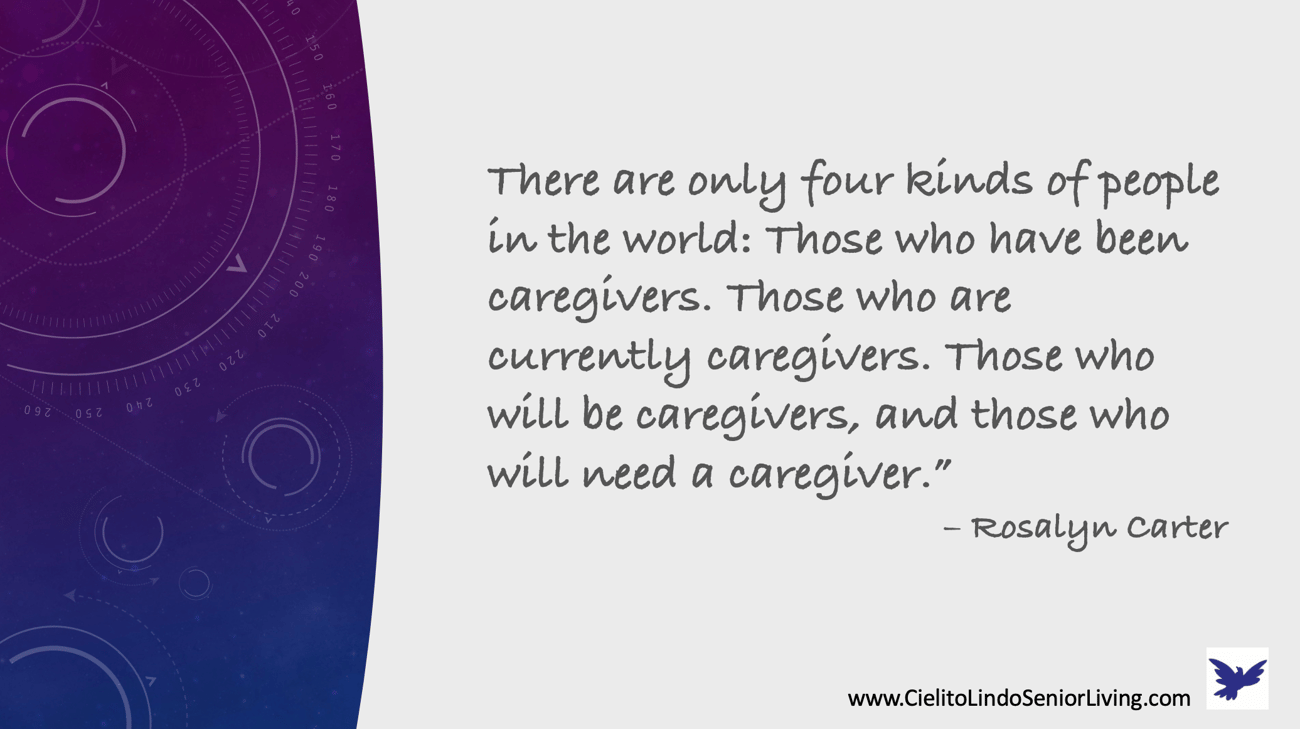
Rosalynn Carter’s words remind us that caregiving is not a separate world inhabited by a small and unfortunate few. It is part of the human journey. At different times in our lives, we may be the person offering strength, the person learning how to carry an unfamiliar responsibility, or the person who must trust someone else to help us through illness, disability, or the frailty of age. These roles are not fixed; time can move any of us from one to another.
For those who are caring for someone today, the quote carries both recognition and comfort. Caregiving can be exhausting, isolating, and deeply painful, but it is also an expression of our shared humanity. The caregiver is not standing outside ordinary life; the caregiver is living one of its most consequential chapters. And because nearly every family will eventually encounter the need for care, caregivers deserve more than admiration. They deserve understanding, practical support, rest, and the same compassion they extend so generously to others.
|
|
|
|
|
Caregiver Affirmation
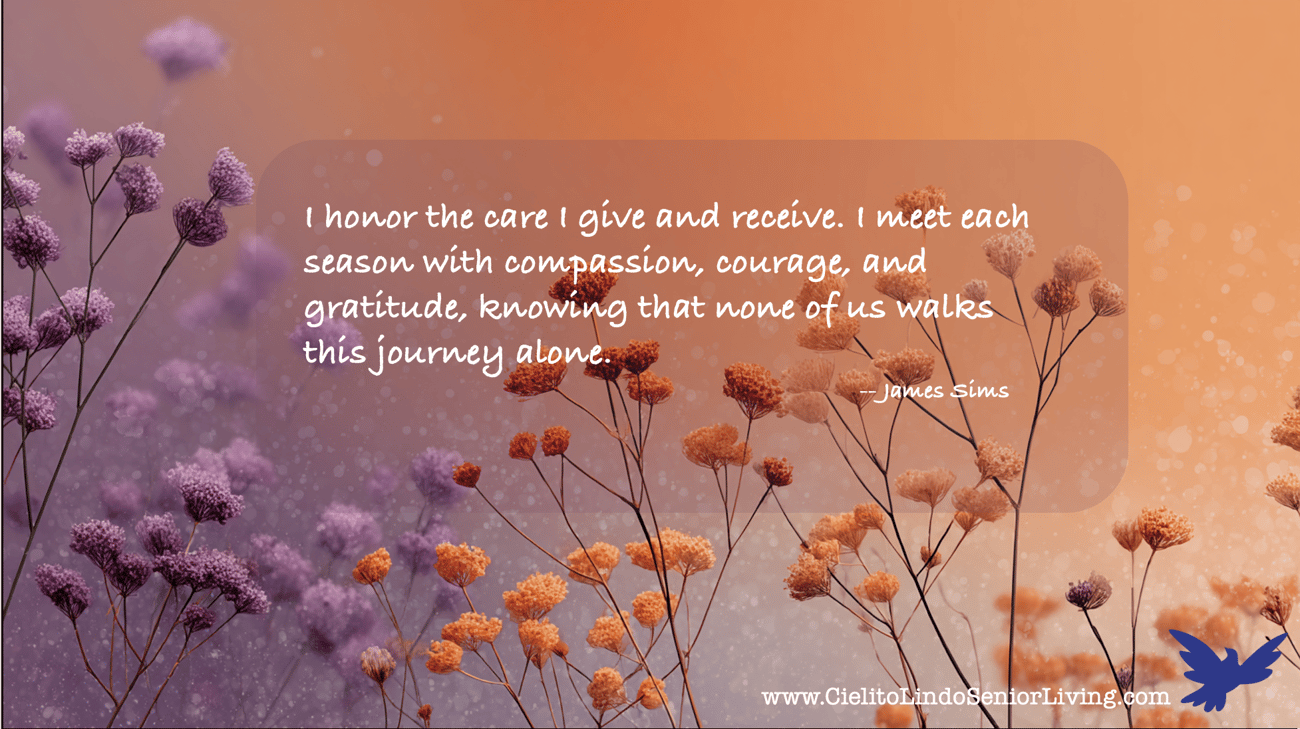
“I honor the care I give and receive” acknowledges a truth caregivers often struggle to accept: their efforts have value even when they cannot fix the illness, stop the decline, or meet every need. Caregiving is frequently measured in quiet acts that no one else sees, such as interrupted sleep, repeated reassurance, difficult decisions, and the steady presence offered through uncertainty and grief. Honoring that care means recognizing its courage and meaning without demanding perfection from the person providing it.
The affirmation also gives caregivers permission to receive care themselves. Accepting help, resting, setting limits, and tending to one’s own health are not betrayals of the person who depends upon them. They are necessary expressions of wisdom and self-compassion. Caregiving can feel profoundly isolating, but no one should have to carry it alone. Support from family, friends, professionals, and community can help transform an unbearable burden into a shared human responsibility.
|
|
|
|
|
Beyond Compliance
The Operating System Behind Cielito Lindo’s Care
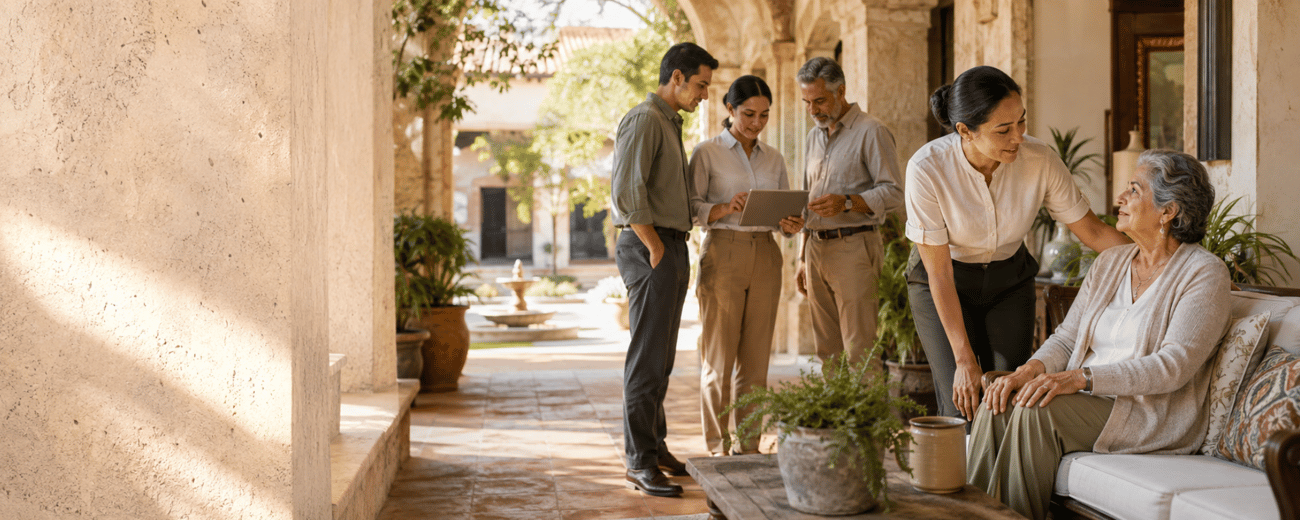
Care should never depend entirely on memory, habit, or the judgment of whoever happens to be working that day. Cielito Lindo has developed an approximately 3,000-page operations manual that connects its mission and values with clearly defined responsibilities, regulatory requirements, and respected international best practices.
Families evaluating senior living naturally focus on what they can see: the setting, private accommodations, dining, activities, caregivers, and the warmth of the community. These qualities matter enormously. Yet some of the most important measures of a senior living organization are largely invisible.
What happens during a change of shift? How is a subtle change in a resident’s condition documented and communicated? Who is responsible during an emergency? How are medications stored and handled? What safeguards govern infection prevention, food safety, privacy, memory care, end-of-life care, employee training, and family communication?
The quality of a senior living community is determined not only by the compassion of its people but also by the clarity of its purpose and the strength of the systems that support it.
For this reason, Cielito Lindo has undertaken an unusually comprehensive effort to assemble an operations, procedures, and protocols manual of approximately 3,000 pages. The manual encompasses 303 individual operating documents organized into 19 chapters. Collectively, they address the full resident experience, from the first inquiry and pre-admission assessment through daily care, changing needs, family communication, emergency response, and end-of-life support.
This is more than an administrative exercise. It is an attempt to answer a fundamental question:
How do we make thoughtful, respectful, high-quality care consistent, teachable, measurable, and accountable without losing the humanity that gives care its meaning?
You can read the complete article here.
You'll also find hundreds of additional articles exploring healthy aging, dementia, caregiving, hospice, senior living, and other topics designed to educate, support, and encourage older adults, families, and caregivers. Website
|
|
|
|
|
Beyond Compliance
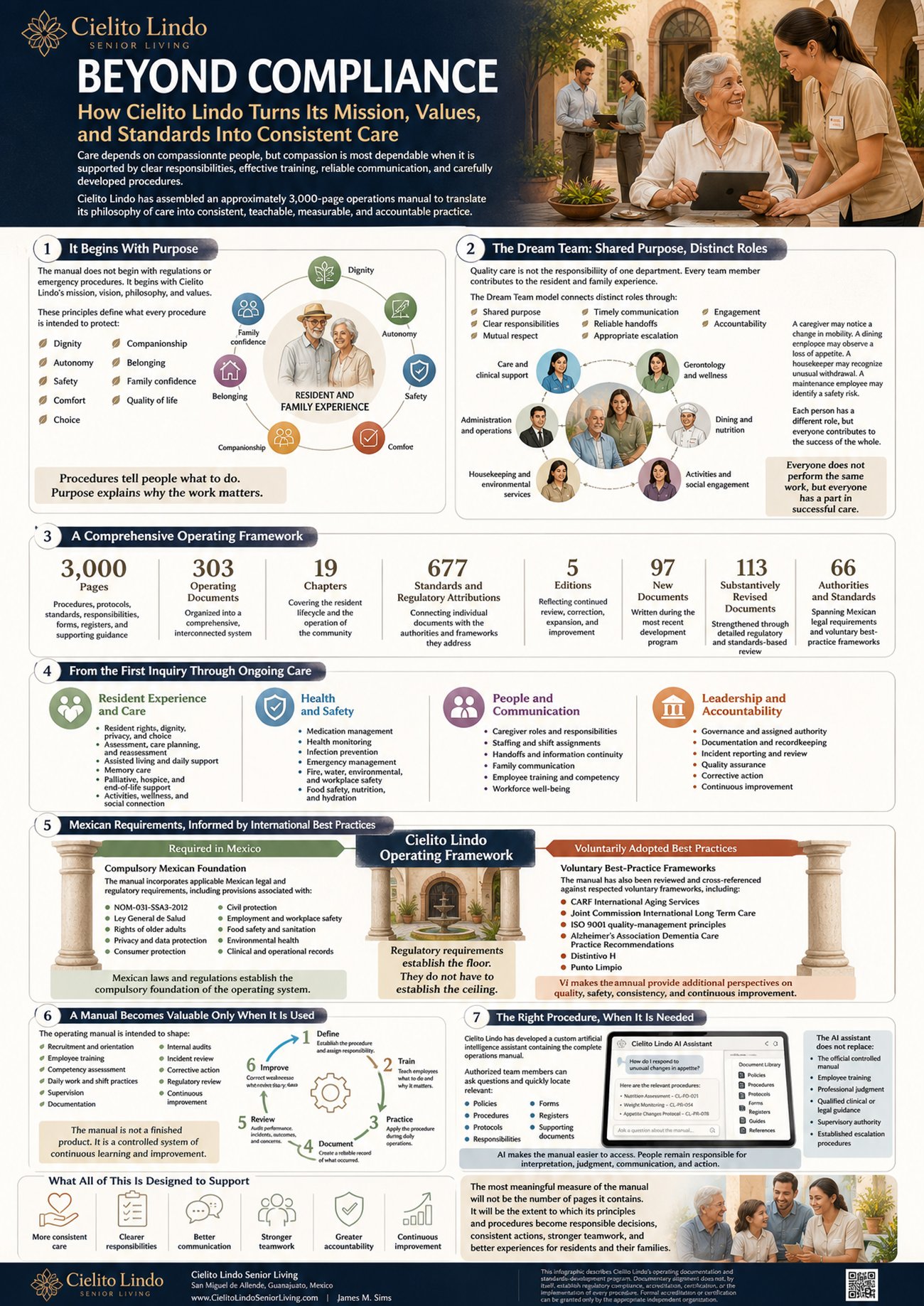
This infographic explains how Cielito Lindo turns its philosophy of compassionate, resident-centered care into a practical operating system. At its foundation are the mission, values, and standards that define why the work matters. Those principles are then translated into clearly defined responsibilities, procedures, training, documentation, quality controls, and accountability across every part of the organization. The result is a comprehensive framework designed to make excellent care more consistent, measurable, teachable, and sustainable.
But a 3,000-page operations manual has little value if it simply sits on a shelf. Its real purpose is to guide what happens every day, from the first inquiry and resident assessment to medication management, dining, housekeeping, family communication, incident response, and ongoing care. Cielito Lindo's Dream Team philosophy recognizes that no single department creates the resident experience. Caregivers, clinicians, administrators, dining staff, housekeepers, activity professionals, and leadership each see different pieces of the whole, and quality depends upon their ability to communicate and work together.
Ultimately, this is about moving beyond compliance. Mexican laws and regulations establish the essential foundation, while international standards and recognized best practices provide additional perspectives for continuous improvement. The true measure of the system is not the number of pages, policies, or procedures it contains, but whether those standards become better decisions, clearer responsibilities, stronger teamwork, greater accountability, more consistent care, and better lives for residents and their families.
You can read the complete article here.
You'll also find hundreds of additional articles exploring healthy aging, dementia, caregiving, hospice, senior living, and other topics designed to educate, support, and encourage older adults, families, and caregivers. Website
|
|
|
|
|
The Impact of Legacy Thinking on Medical Advances
I should probably begin with an admission: my perspective on the healthcare industry has been shaped, and to some degree soured, by my family's experience with my wife's early-onset Alzheimer's disease. Over many years, I watched a devastating illness progress while too often encountering a medical system that seemed better equipped to diagnose decline and manage symptoms than to aggressively investigate why it was happening, what might be contributing to it, or what could potentially alter its course. Some of our experiences also felt remarkably impersonal and insensitive given the magnitude of what our family was facing. That experience did not cause me to lose faith in medicine or science; quite the opposite. It left me with enormous respect for the people pushing medicine forward, but considerably less reverence for the assumption that today's conventional wisdom necessarily represents tomorrow's truth. It also made me deeply interested in the question at the heart of this article: How often does progress in medicine depend not simply upon discovering something new, but upon becoming willing to challenge something old?
You can read the complete article here.
You'll also find hundreds of additional articles exploring healthy aging, dementia, caregiving, hospice, senior living, and other topics designed to educate, support, and encourage older adults, families, and caregivers. Website
|
|
|
|
|
|
Cielito Lindo's basic information is included for your convenience:
|
|
|
- Cielito Lindo Info: After the signature, the newsletter always includes information about Cielito Lindo, so it is at your fingertips when you want it: Our costs, various related websites, social media channels like YouTube, our various addresses, and so on.
- Travel Info: Recommended airports and shuttles.
- Downloadable Brochure: Click here.
|
|
|
Web Sites - Cielito LIndo and Rancho Los Labradores
Here are our Web sites, including Cielito Lindo and Labradores Suites (hotel) all of which are part of the larger Rancho Los Labradores gated community just north of San Miguel de Allende.
Web Sites - Cielito LIndo and Rancho Los Labradores
Here are our Web sites, including Cielito Lindo and Labradores Suites (hotel) all of which are part of the larger Rancho Los Labradores gated community just north of San Miguel de Allende.
- Cielito Lindo provides independent living, light assisted living, assisted living, memory care and hospice with 24*7 staffing along with a la carte assisted living services to those living in the villas and suites at Rancho Los Labradores.
- Rancho Los Labradores Suites offer short and long term residence.
- Rancho Los Labradores is a country club resort feeling CCRC that provides a gated community with countless amenities and opportunities for different levels of independent living along with assisted living and memory care within Cielito Lindo.
Cielito Lindo Living Options & Costs Guide
We offer several living options depending on the level of care you or your loved one needs. Here’s a breakdown to help you plan:
1) Villas (Rent or Own)
- Cost: $1,700 – $2,000 per month
- Additional Costs: Utilities, renter’s insurance, etc.
- What’s Included: This is mostly independent living.
- Extras: You can add independent or assisted living services (charged separately, à la carte).
- Support: We can connect you with a realtor if you'd like to purchase.
2) Cielito Lindo Condos & Suites
Best for: Independent living with optional assistance.
Option 1: Independent Living + Meals
- Cost: $2,250 per month
Includes:
- 2 meals a day
- Hotel like room cleaning, towel and linen service
- Monthly medical check-up
Optional Add-ons:
- Meals for an additional person: $450/month
- Extra care services available à la carte
Option 2: Light-Assisted Living in Condos & Suites
- Cost: $3,900 per month
Includes:
- Full assisted living services
- Designed for residents who still want independence but need some support
- Smooth transition to full Assisted Living or Memory Care as needs change
- One-Time Inscription Fee: $4,000
For Couples:
- $4,900/month for two people
- Same one-time fee ($4,000 per couple)
- Note: Suitability is based on cognitive ability, mobility, and safety.
3) Cielito Lindo Assisted Living, Memory Care, & Hospice
Best for: Seniors needing full-time care and supervision.
- Cost: $3,900 per month
Includes:
- 24/7 care and monitoring
- All meals
- Physical therapy
- Full-time doctor on site
- Spacious private room with bath
- One-Time Inscription Fee: $4,000
- For Couples:
- $5,400/month for two people (only one needs care)
- $6,900/month for two people (both need care)
- Same one-time fee ($4,000 per couple)
- Note: Suitability is based on cognitive ability, mobility, and safety.
4) Specialized Hospice Suite
Best for: Intensive care needs or end-of-life comfort and also recuperative at a far lower cost than a hospital
- Cost: $4,900 per month
Includes:
- Full 24/7 monitoring
- Recuperative, Palliative and hospice care
- On-site doctor
- All meals
- Special space for visiting family
|
|
|
YouTube videos and Curated Playlists
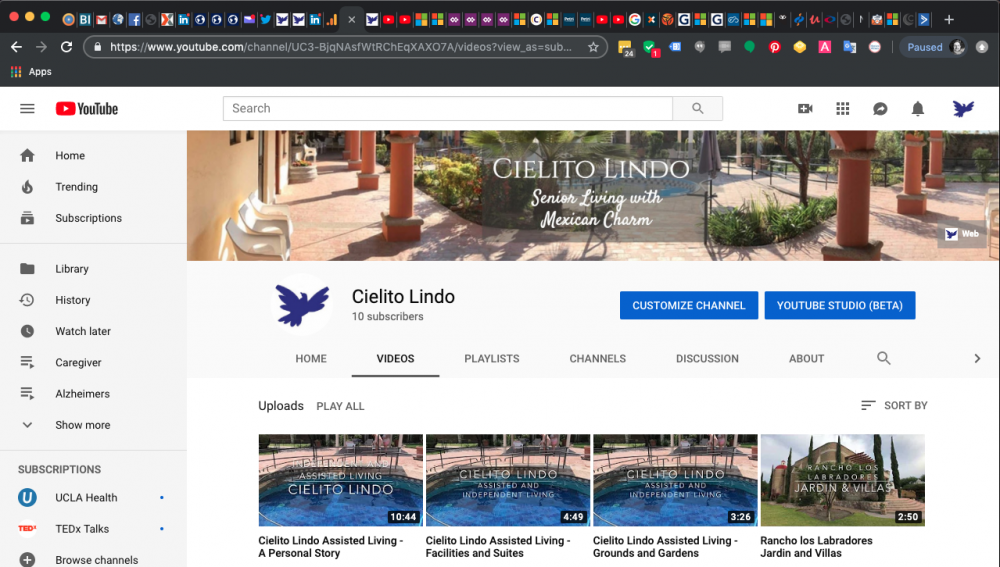
Here is our YouTube Channel. This is where we have lots of videos about Cielito Lindo and Rancho Los Labradores. We also have 1,600+ other senior care and expat in Mexico videos: YouTube
|
|
|
|
|
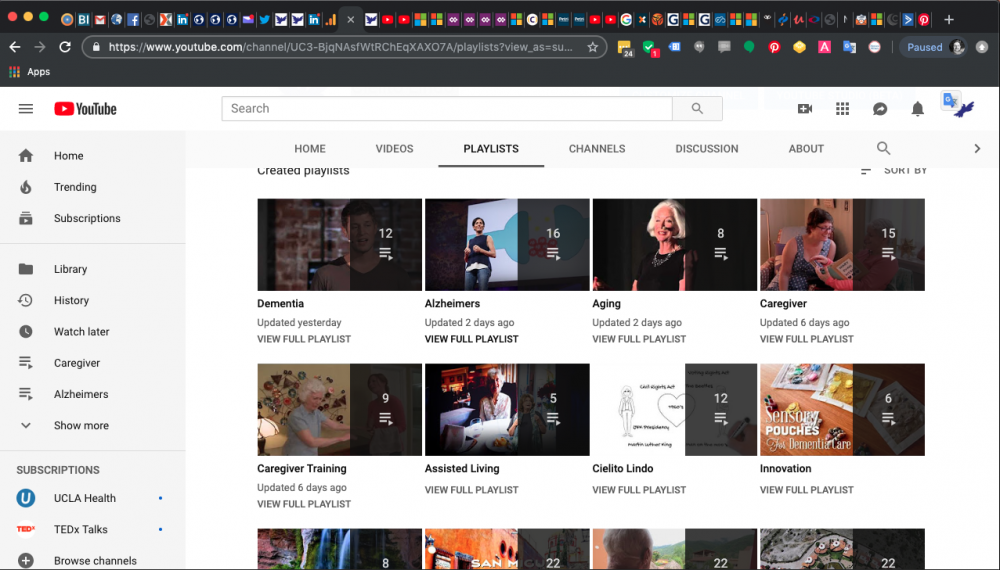
Additionally, our playlists cover a wide area and include 1,200+ videos. These playlists include videos about San Miguel and Mexico in general, caregiving and health, and a broad spectrum of senior living topics. Playlists
|
|
|
|
|
Additional Resources We Offer
We have curated collections of resources that may be useful:
Articles - We write fresh articles about senior living, health, care, and finances every week
Caregiver Books - We review books related to caregiving methods, logistics, challenges, and coping
Senior Health - We review books related to healthspan, lifespan, and disease
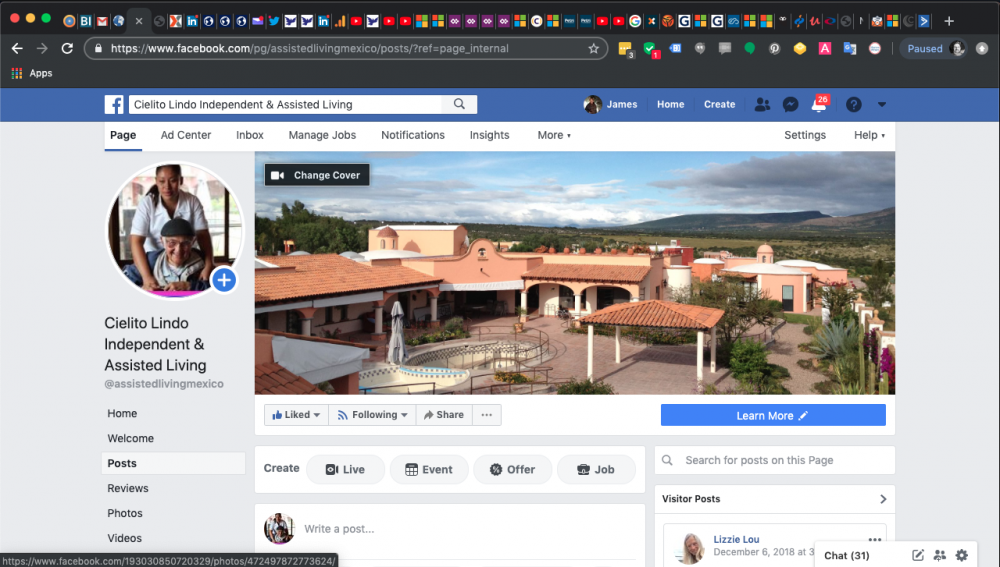
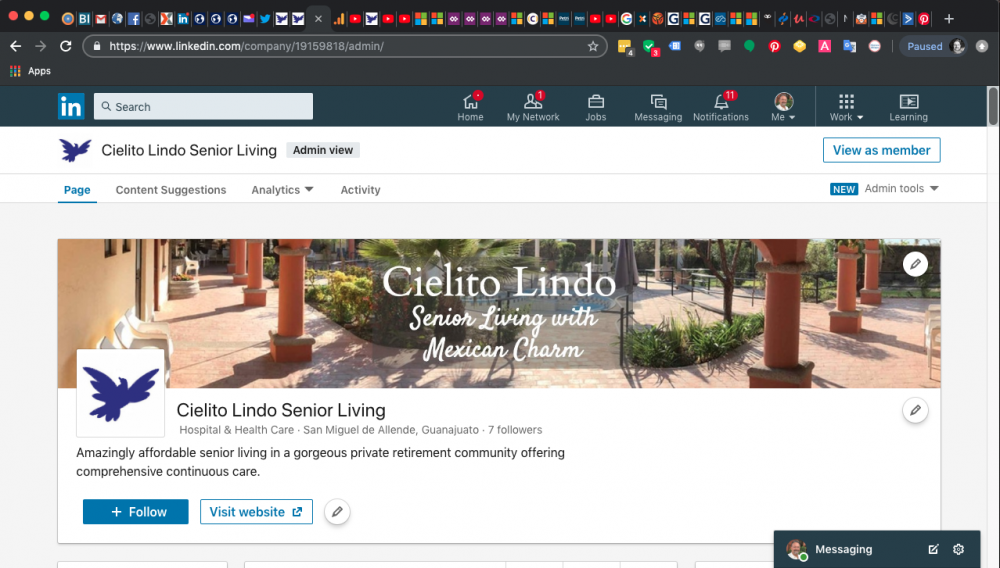
And here are our various social media forums, where we talk a lot about assisted living and memory care along with the various sort of challenges that sometimes come in our senior years (Alzheimer’s, Parkinson other dementias, and so on), but also about senior living in Mexico.
Facebook
|
|
|
|
|
|
|
|
|
|
|
Please don’t hesitate to contact me for anything related to senior living, especially in Mexico. I will gladly give you any assistance I can.
Thanks again!
James
James Sims
Marketing and Sales
Cielito Lindo Senior Living
1. 888.406.7990 (Voice and text)
1.209.312.0555 (WhatsApp)
Phones:
English-speaking:
1.888.406.7990 (in US & CDN)
00.1.881.406.7990 (in MX)
Spanish-speaking:
011.52.415.101.0201 (in US & CDN)
1.415.101.0201 (in MX)
SMA Colonias (subdivisions/neighborhoods):
Map and descriptions
Addresses and Travel:
Physical address:
Cielito Lindo Independent and Assisted Living, Camino Real Los Labradores S/N, Rancho Viejo 1, San Miguel de Allende, GTO, Mexico, 37885
Packages from online providers like Amazon:
Camino Real Los Labradores, Rancho Los Labradores / Cielito Lindo, San Miguel de Allende, GTO, 37880 México
PO Box for letters and small envelopes:
Rancho Los Labradores / Cielito Lindo, c/o Alejandra Serrano , PMB N° 515-C, 220 N Zapata HWY N°11, Laredo TX, 78043-4464
Air:
Best airports to fly into: Leon (BJX) or Queretaro (QRO)
Shuttle:
Best airport shuttle: BajioGo
Shuttle between San Miguel and Rancho Los Labradores / Cielito Lindo
|
|
|
|
|
|
|
|
|
|
|