|
|
Subject: Your Weekly Guide to Senior Living & Care in Mexico
Dear ,
Welcome to your weekly touchpoint from all of us at Cielito Lindo. Each edition brings together helpful insights, heartwarming stories, expert advice, and curated resources about senior living, retirement, and age-related care challenges—including Alzheimer’s, Parkinson’s, stroke, limited mobility, and more.
We understand that navigating this stage of life can be overwhelming, whether for yourself or a loved one. That’s why we're here—to offer guidance, support, and a glimpse into the enriching life many have found
here in beautiful San Miguel de Allende.
If you find this newsletter valuable, please forward it to a friend or family member who might also benefit. They can easily subscribe via our Newsletter page. And of course, if you ever wish to unsubscribe, there’s a quick opt-out link below at the bottom right corner of this newsletter.
Here’s what we typically cover each week:
- San Miguel de Allende
highlights – why this is such a special place to live
- Health & wellness insights – articles, videos, and expert reviews
- Care options & community life at Cielito Lindo – flexible, affordable living with a warm, human touch
This Week’s Theme: Binaural Beats for Mood Enhancement
This week, we explore the healthcare options in Mexico with particular attention to the affordabilty, access and quality factors.
|
|
|
|
|
| Weekly insights into San Miguel:
|
|
|
Colorful & Epicurean San Miguel
While much of what we discuss involves the
challenges of aging and caregiving, it's also important to celebrate the beauty that surrounds us. San Miguel de Allende is a feast for the senses—bursting with color, rich in culture, and renowned for its incredible food and art. It’s not just a place to live—it’s a place to thrive, to enjoy, and to heal.
|
|
|
|
|
The Colors of San Miguel: Golden Light and a Trio of Mariachis
A magical San Miguel evening, suspended in golden light. Star lanterns shimmer overhead as a trio of mariachis stand in stillness—caught between conversation and the first note. The dusk is warm, the cobblestones glow, and for a moment, the city
holds its breath. It’s quiet, intimate, and timeless—like so many small miracles that happen here without needing to announce themselves. (Photo courtesy of Stephanie Barrett)
|
|
|
|
|
Restaurant: Zumo Address: Orizaba 87, San Miguel de Allende, Mexico Phone Number: +52 415 152 0489 Days and Hours: Tuesday to Sunday: 1:00 PM – 10:00 PM Closed on Mondays
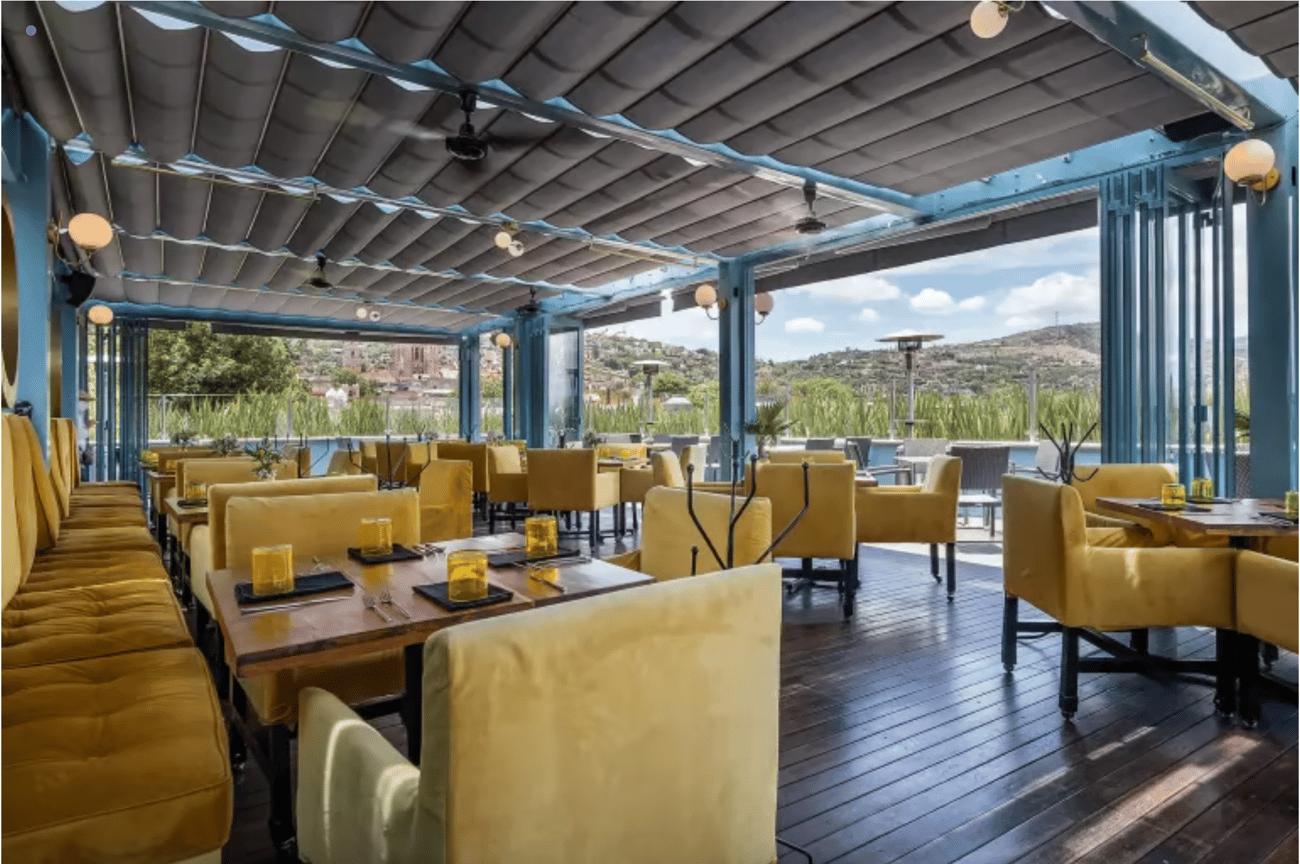
Atmosphere: Perched on a rooftop with panoramic views of San Miguel de Allende, Zumo offers an unforgettable visual feast. The space is a harmonious blend of contemporary design and relaxed sophistication—mustard-yellow chairs and dark wood accents strike a balance between vibrancy and warmth. Retractable panels ensure year-round comfort, making this a top pick for romantic dinners, sunset cocktails, or stylish celebrations. Service: Zumo delivers hospitality with finesse. The staff are gracious, professional, and impressively knowledgeable about both the cuisine and the wine list. Their attentiveness
feels seamless, with recommendations that elevate the experience without overwhelming it.
Cuisine: Modern international cuisine infused with Mexican sensibility defines Zumo’s culinary identity. The kitchen emphasizes seasonal, high-quality ingredients, crafting dishes that are visually compelling and flavor-forward. The execution is consistently refined, with bold yet harmonious flavor profiles.
The Duck Magret is a tour de force—succulent duck breast served with a deeply nuanced mole that nods to tradition while embracing innovation. It's a rich, layered dish that anchors the menu beautifully.
The Tuna Tartare is a refreshing, delicate start, pairing silky tuna with avocado and a zesty citrus ponzu. Equally compelling is the Grilled Octopus, expertly cooked to tenderness with a smoky char and a gentle heat that lingers.
Beyond the standout duck, the Braised Short Rib is comfort food elevated—fall-apart tender meat atop velvety mashed potatoes. Vegetarians will appreciate the Wild Mushroom Risotto, a dish that captures the earthy essence of its ingredients with impeccable creaminess and seasoning.
End on a high note with the molten-centered Chocolate Fondant, a luscious pairing with cool vanilla ice cream. For a lighter, zestier finale, the Lime Tart hits the perfect balance of tart and sweet.
Zumo’s wine program is robust, showcasing a curated mix of standout Mexican and international labels tailored to enhance the menu. The cocktail list is inventive and memorable—the Zumo Margarita bursts with fresh citrus and subtle spice, while the Mezcal Negroni offers smoky depth for the adventurous palate.
Final Thoughts: Zumo is a top-tier dining destination in San Miguel de Allende, seamlessly combining stunning vistas, refined cuisine, and gracious service. Whether you're a local or a visitor, it promises a meal to remember.
Cost: $$$$ Rating:
★★★★★
|
|
|
|
|
Health, Caregiving & Life in Mexico
|
|
|
This section brings you thoughtful, relevant, and at times, even life-changing content to support your journey—whether you're exploring care options, supporting a loved one, or planning for your own future.
- Lead Article - Each week’s main feature is written just for you—diving into meaningful topics like extending healthspan, navigating diagnostics, or understanding the causes of Alzheimer’s and other dementias. We also occasionally explore the beauty and cultural richness of Mexico, including Pueblos Mágicos and the colorful life in San Miguel de Allende.
- Op Ed - A short editorial that reflects on the lead article’s themes, offering a personal or thought-provoking perspective.
- Caregiver’s Sentiment - A heartfelt quote or reflection honoring the emotional depth of caregiving—because your feelings and efforts matter.
- Videos - Two or three curated videos that align with the week’s theme, featuring summaries and timestamped highlights to make them easy to explore.
- Book Reviews - One or two handpicked books to deepen your understanding, lift your spirits, or simply remind you that you’re not alone.
|
|
|
|
|
Health Care Options for Expats in Mexico
Updated for 2025
When it comes to healthcare in Mexico, the options can seem confusing at first. Between national programs, private insurance plans, and the option to pay out-of-pocket, it’s not always clear which path is right for you. This article breaks it all down in a straightforward way to help you make an informed decision.
Mexico’s healthcare system is widely regarded as high quality, with modern
hospitals, skilled professionals, and affordable care. Many doctors and dentists have trained in the United States—or vice versa—and it’s common to find English-speaking providers, especially in areas popular with expats.
Article Highlights- Mexico offers three main pathways to healthcare for expats: public coverage (IMSS/IMSS-Bienestar), private insurance, and paying out-of-pocket.
- Public healthcare is available to legal residents, with IMSS offering
comprehensive coverage for an annual fee, and IMSS-Bienestar providing no-cost care to underserved populations.
- IMSS enrollment is age-based and affordable, ranging from roughly $114 to $313 USD/year as of 2025.
- IMSS-Bienestar is free and inclusive, with no exclusions for pre-existing conditions, but services and facilities may be more
limited.
- Private insurance gives you choice, speed, and comfort, often with access to premium hospitals and English-speaking providers.
- Private health insurance costs vary, from around $100/month for basic plans to $400+ for
global coverage.
- Popular private providers for expats include AXA, Bupa Global, MetLife Mexico, and VUMI.
- Self-paying for care is a viable option, especially for healthy individuals or those on a tight budget—many procedures cost less than U.S. co-pays.
- Routine medical services in private clinics are very affordable, such as $35–$50 for doctor visits and $300–$500 for an MRI.
- Dental care is particularly economical, with cleanings, crowns, and implants priced far below U.S. equivalents.
- Medical evacuation insurance can complement self-pay strategies, allowing access to Medicare or private U.S. care in emergencies.
- Spanish proficiency helps, but many urban facilities offer services in English—especially in expat-rich regions.
- All systems (IMSS, private, or self-pay) offer flexibility, and your needs may evolve over time—so reassessing annually is wise.
- Many expats find healthcare in Mexico not only more affordable but also more humane, with shorter wait times and more personalized care.
- This guide empowers you to make informed choices, tailored to your needs, health status, budget, and peace of mind.
You can read the complete article here and select others from our
collection of 100+ articles on our site.
|
|
|
|
|
Caregiver’s Sentiment: The Bitter Truth
“In the wealthiest nation on Earth, it is not disease but the price of care that breaks the spirit — a cruelty made more bitter by its avoidability.”
This quote highlights the deep contradiction at the heart of the U.S. healthcare crisis. Despite its vast economic resources and medical innovations, millions of Americans are denied basic care or buried under medical debt. The injustice lies not in the existence of illness — a universal human experience — but in a system that places healing behind a paywall. It's not a failure of
ability, but of moral and political will. In a country with the means to do better, the fact that healthcare is treated as a luxury rather than a human right reveals a despicable betrayal of its own ideals.
|
|
|
|
|
What If We Didn't Have to Suffer to Heal? Lessons
from Mexico’s Humane Healthcare
June 12, 2025 | James Sims, Editor, www.cielitolindoseniorliving.com
In the world’s richest country, Americans
crowd GoFundMe pages instead of doctors’ offices. They ration insulin, skip check-ups, and fear ambulances—not for what they signal medically, but financially. Yet just south of the border, in Mexico—a country with a fraction of the United States' GDP—expats are discovering what compassionate, affordable care can actually look like.
This contradiction reveals a deep moral failing: the U.S. healthcare crisis isn’t rooted in a lack of resources or knowledge. It’s a crisis of priorities. Mexico’s healthcare system, accessible even to foreign residents, offers a striking contrast—care that’s affordable, flexible, and humane. If Mexico can do it, why can’t we?
Mexico provides three main options for healthcare: public coverage through IMSS and IMSS-Bienestar, private insurance, and pay-as-you-go care. For Americans accustomed to paying thousands in deductibles or co-pays, the numbers are almost hard
to believe. Annual enrollment in Mexico’s national public program can cost as little as $114. That’s less than the average American spends on a single urgent care visit.
Private insurance options are also significantly more affordable. Plans range from about $100 per month for basic coverage to just over $400 for premium global plans. Most include access to top-tier hospitals, many of which have English-speaking doctors. And for the relatively healthy or budget-conscious, paying out-of-pocket is not just feasible—it’s often cheaper than American insurance premiums. Basic doctor visits range from $35 to $50. An MRI might run $300 to $500. Dental care, often a luxury in the U.S., is downright accessible: cleanings, crowns, and implants are a fraction of U.S. costs.
But the real difference isn’t just financial—it’s cultural. In Mexico, many expats report shorter wait times, longer consultations, and a
healthcare experience that feels far more personal. Patients are seen as people, not billing codes. The system is not perfect—no system is—but it offers a baseline of decency that too often feels foreign in the American context.
And that’s the bitter truth: Americans aren’t fleeing to a utopia. They’re finding in Mexico something that should be foundational in the U.S.—functional, equitable, and respectful care.
Critics might argue that America’s size and complexity make such a system unworkable. But that argument falls apart quickly. Countries like Canada, France, and Germany—also large, diverse, and economically powerful—provide universal care without the cruelty. The U.S. doesn’t lack innovation or capacity. It lacks the political will to disentangle healthcare from corporate profit.
Others warn that cheaper care abroad must mean lower standards. Yet many Mexican
hospitals meet international standards, and a significant number of Mexican physicians are U.S.-trained. The question facing millions of Americans isn’t whether care in Boston is technically better than care in Guadalajara—it’s whether they can access any care at all.
In the wealthiest nation on Earth, it is not disease but the price of care that breaks the spirit—a cruelty made more bitter by its avoidability. It is not a failure of skill or science. It’s a failure of values.
Healthcare should not be a luxury. It should not require a passport to find dignity. Mexico’s system is far from perfect, but it proves that another way is possible: a system that values people over profit, and healing over bureaucracy.
Until America accepts that healthcare is a human right—not a commodity—its citizens will continue to look abroad not just for treatment, but for hope.
|
|
|
|
|
Beauty and Barriers: Traveling San Miguel de
Allende with Accessibility in Mind
June 13, 2025 | James Sims, Editor, www.cielitolindoseniorliving.com
As someone who writes frequently about elder care and health in Mexico, I’ve long admired the country’s cultural warmth toward aging. Families remain close-knit, caregiving is often multigenerational, and there’s a general reverence for older adults that many societies have lost. But recently, a reader emailed me with a pointed suggestion: “You write so much about how Mexico supports the elderly—what about those who can’t walk its streets?”
That question haunted me as I reflected on a recent visit to San Miguel de Allende. The sun had just touched the Cantera stones pink, casting a golden glow across the narrow streets,
when I watched an older gentleman, tottering and frail, as his walker caught on a ridge of ancient cobblestone. The traveler jolted to a stop, then slowly adjusted course as pedestrians parted and offered help. San Miguel is a place of undeniable beauty and grace—but for those with mobility challenges, it’s also a challenging landscape to negotiate.
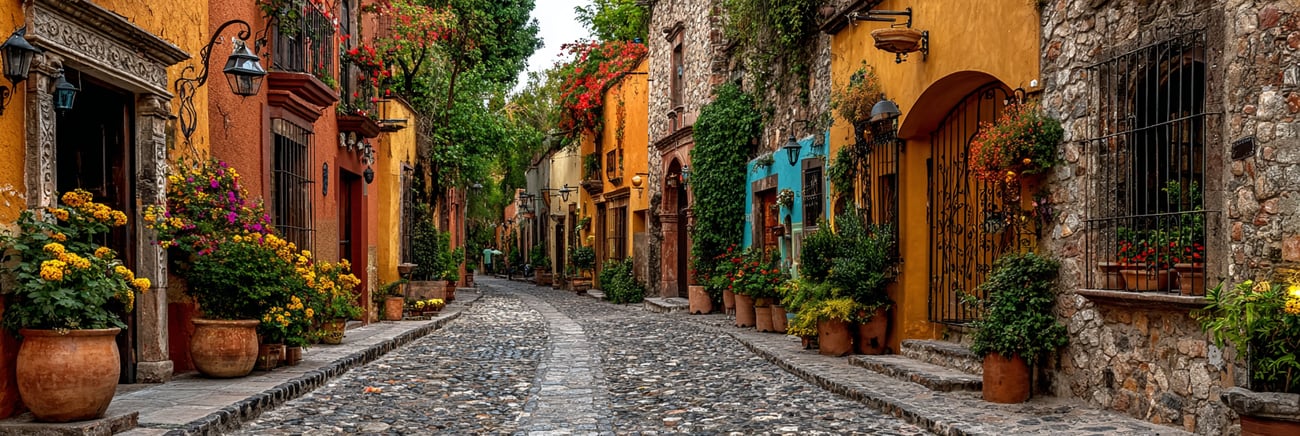
The Colonial Heart: A Timeless Charm, a Tangled TerrainSan Miguel’s historic center is a UNESCO World Heritage site for a good reason: its colonial architecture, pastel
facades, and flowering balconies evoke a storybook charm. But that charm comes at a cost—particularly for visitors who use mobility aids. Narrow alleyways, uneven paving, steep curbs, and buildings with multiple steps pose routine obstacles.
There’s a delicate tension here. Preserving the architectural heritage of a centuries-old city is no small feat. But for travelers who are older, injured, or disabled, the result is often exclusion. As one visitor told me, “This is a city you come to feel—every texture, every sound—but some of us are stuck on the outside of the picture.”
Progress in Small StepsThat said, progress is visible. Some boutique hotels, such as Casa 1810 and Live Aqua, have made accessibility an integral part of their design. El Jardín, the city’s central plaza, offers relatively smooth walkways and is one of the few places
where wheelchairs and walkers can navigate with confidence.
Local tour guides are now offering vehicle-assisted experiences, and accessible transportation can be arranged with advance notice. One guide described how he collaborates with advocates and expats to chart the most navigable routes, avoiding the steepest streets and
broken sidewalks. “It’s patchwork,” he admitted, “but it’s better than it was five years ago.”
Navigating the City: Strategy Over SerendipityFor travelers with mobility considerations, success in San Miguel depends less on spontaneity and more on planning. Staying in flatter, central neighborhoods close to El Jardín can dramatically improve ease of movement. Many modern restaurants and shops near the center now offer ground-level entry—though you often have to ask or look closely to find
them.
Accessible transportation—especially pre-arranged vans from the airport—is available through several local providers. Online forums, including local Facebook groups, are helpful for real-time tips on everything from accessible bathrooms to cafes with ramp access. These informal networks often serve as the most reliable source of up-to-date accessibility information.
The Hidden Beauty of Slower TravelTraveling with mobility in mind invites a different pace and with it, a different kind of depth. When you’re moving slowly, every corner becomes a point of focus. You hear more: the rustle of papel picado (traditional Mexican folk art made by cutting intricate designs into sheets of tissue paper) overhead, the faint echo of church bells, the scent of street-side tamales.
This is the paradox of accessibility travel: while barriers make movement harder, they can also open space for presence. The rhythm changes. San Miguel, at a slower pace, reveals new layers of intimacy.
Community Voices: Struggles and Surprises“I expected to be sidelined,” said Marisol, a retired teacher who uses a cane. “But people stepped in constantly—with kindness, not pity.” Another traveler shared that while some streets were entirely off-limits, she found joy in the accessible parts of the city—and in the gestures of help that often came unasked.
Still, the community has a long way to go. Locals with disabilities cite the lack of curb ramps, accessible restrooms, and dependable sidewalks as daily hurdles. What’s needed isn’t charity—but perhaps a little more conscious, consistent design that includes everyone from the start.
Looking Forward: Design with DignitySan Miguel doesn’t need to pave over its past to be more inclusive. With thoughtful planning—modular ramps, smoother walkways, better signage, seating areas—accessibility can become part of its charm, not a detraction from it. Public funding and policy incentives could support retrofitting historical spaces without compromising their character.
Tourists, too, can drive change—by supporting businesses that prioritize accessibility and by sharing resources with fellow travelers. Inclusion enhances tourism; it doesn’t dilute it.
Closing ReflectionI think back to that moment in
a quiet courtyard, where light spilled across the carved stone, and the bells of La Parroquia rang out above the city. In that stillness, I felt both the limitations and the possibilities of San Miguel de Allende, its undeniable magic, and its quiet exclusions.
The city isn’t fully accessible yet. And truthfully, I’m conflicted. I’m deeply sympathetic to those with mobility challenges, especially as San Miguel remains—by design and by history—difficult to navigate for many.
Yet it’s hard to imagine retrofitting such a place without losing some of what makes it special.
There is no easy answer here. But perhaps the goal isn’t to make every stone smooth but to ensure that beauty isn’t reserved for the sure-footed. As more voices call for thoughtful design and as small shifts accumulate, San Miguel has the chance to grow, not just in tourism but in inclusion. To be not only admired but shared.
|
|
|
|
|
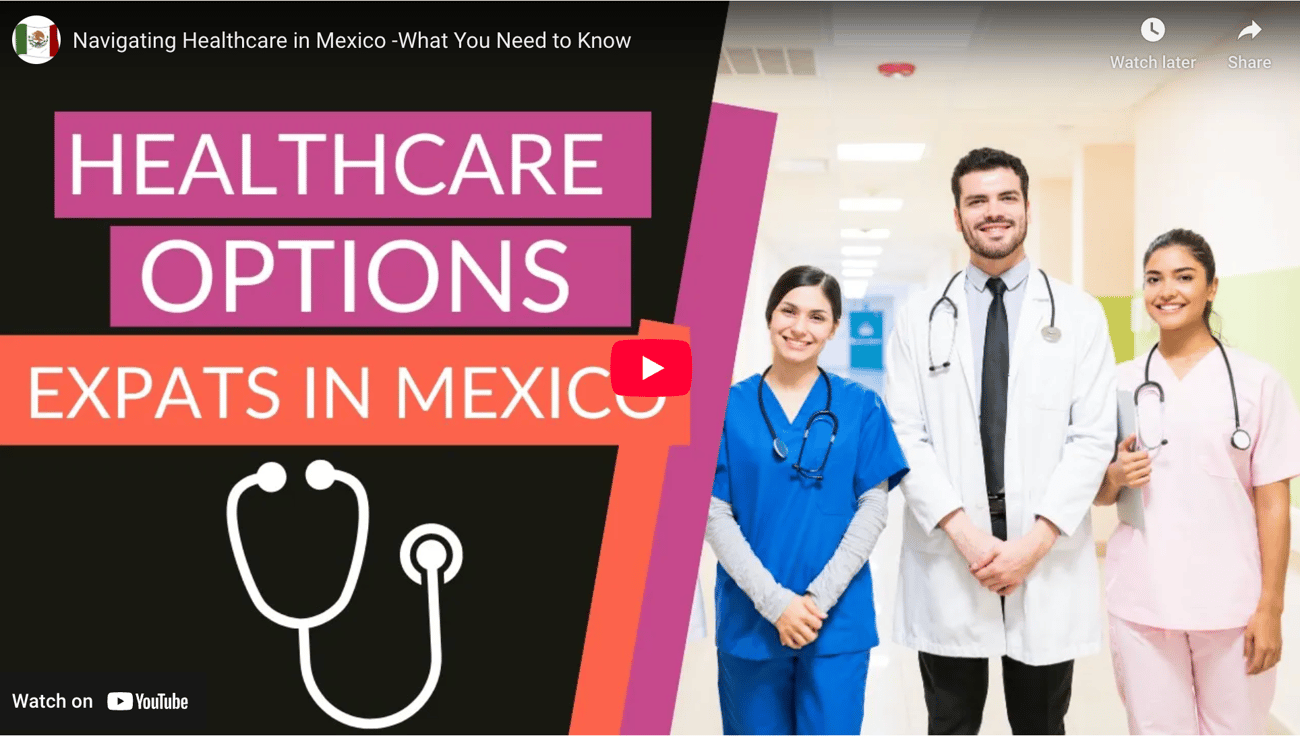
Video: Navigating Healthcare in Mexico -What You Need to Know
This video discusses healthcare options in Mexico, emphasizing the positive experiences of foreigners regarding medical care. It highlights the significant cost savings on medical expenses, with specialist visits averaging 800 to 1,000 pesos ($40-$50) and general doctor visits ranging from 50 to 400 pesos ($3-$22). Lab work and surgical
procedures are also notably cheaper than in the U.S., making Mexico a popular destination for medical tourism. While many expats choose to pay out of pocket for healthcare, the video stresses the importance of having health insurance. It also covers private health insurance options, noting that costs can vary based on age and coverage type, often being more affordable than U.S. premiums.
This video provides a comprehensive overview of healthcare options in Mexico for expats. It emphasizes the importance of understanding both private and government-sponsored health insurance, the potential costs involved, and the necessity of budgeting for medical emergencies.
The speaker encourages viewers to seek professional advice and to be proactive in their healthcare planning to ensure a smooth transition to living in Mexico.
View the video here.
Highlights:
0:04 – Overview of healthcare options in Mexico.
0:30 – Foreigners often report amazing medical experiences in Mexico.
1:01 – Significant savings on medical expenses compared to the U.S.
1:44 – Cost of specialist visits ranges from
800 to 1,000 pesos ($40-$50).
2:15 – General doctor visits cost between 50 to 400 pesos ($3-$22).
2:50 – Lab work, like a diabetes panel, is much cheaper in Mexico.
3:14 – Hip replacement costs about $40,000 in the U.S. versus $13,000 in Mexico.
4:06 – Importance of having health insurance despite being healthy.
4:43 – Private health insurance in Mexico can be affordable or expensive.
5:30 – Comparison of health insurance premiums between Mexico and the U.S.
5:47 – Many expats rely on Medicare Advantage plans for emergencies in Mexico.
6:02 – Private health insurance in Mexico is often cheaper than in the U.S. but may still be unaffordable for some.
6:14 – Expats can enroll in the government-sponsored IMSS program for affordable healthcare.
6:46 – Some pre-existing conditions may disqualify individuals from IMSS coverage.
7:42 – IMSS yearly premiums range from 8,000 to 19,000 pesos, depending on age.
8:15 – Healthy individuals under 70 are encouraged to get quotes from various insurance brokers.
8:31 – U.S. citizens should consider signing up for Medicare when eligible, especially plans covering Mexico.
9:05 – It’s advisable to save monthly for medical
emergencies, as deposits may be required at hospitals.
10:01 – Planning ahead for medical expenses can prevent financial strain during emergencies.
10:29 – Consult professionals for specific medical advice and consider using a relocation guide for moving to Mexico.
|
|
|
|
|
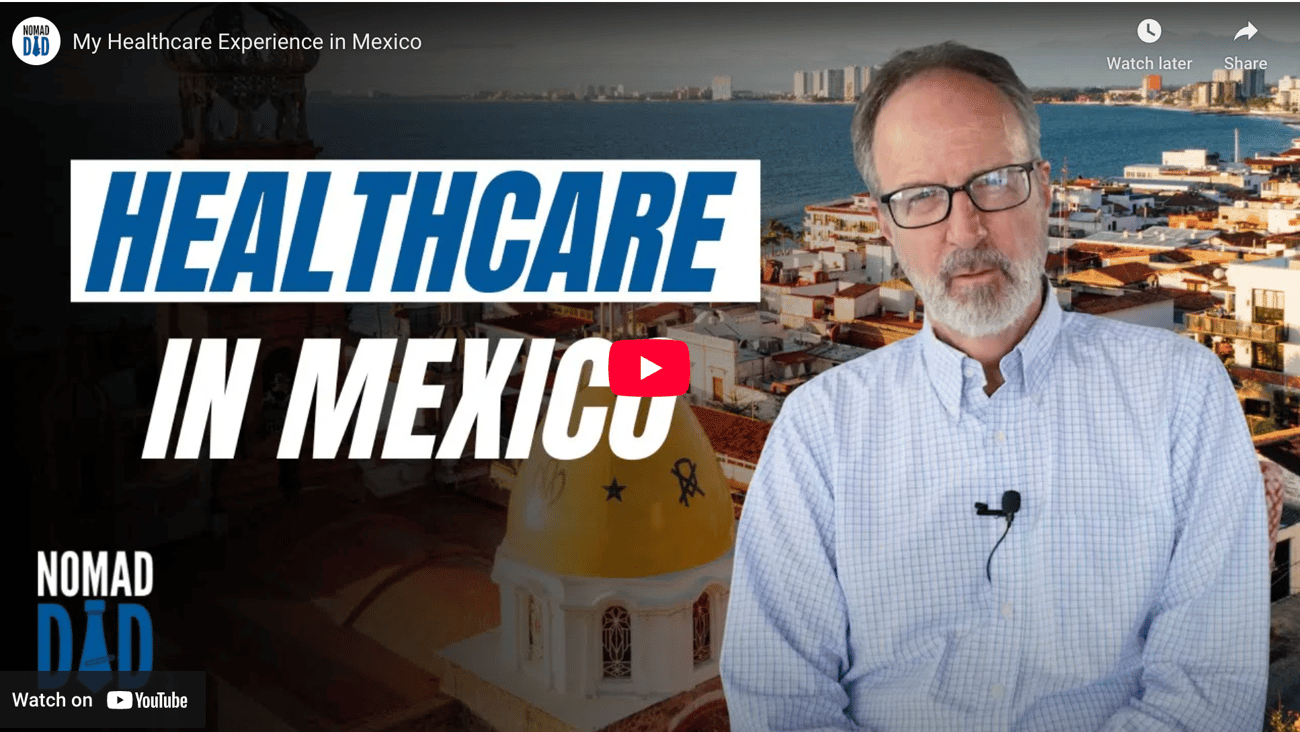
Video: My Healthcare Experience in Mexico
In this video, Bob Henderson shares his positive healthcare experiences in Mexico, emphasizing the attentive care provided by local physicians and specialists. He highlights the affordability of services compared to the U.S. and praises the personal touch, such as doctors offering their cell phone numbers for direct communication. Bob compares his experiences in Mexico to healthcare in other countries, noting that he finds the care in Mexico to be superior. He also discusses the benefits of a direct payment system, the accessibility of medications, and the importance of
having a medical evacuation plan. Overall, he encourages viewers to explore healthcare options in Mexico, starting with minor health issues.
View the view here.
Highlights:0:00 – Bob Henderson introduces his healthcare experience in Mexico.0:15 – He discusses having a family physician and specialists for
ongoing health issues.0:43 – Bob shares a positive experience with his family physician, highlighting her attentiveness.1:50 – He mentions local hospitals and a friend’s positive experience after a stroke.2:29 – Bob recalls a doctor giving his friend a personal cell phone number for direct contact.3:01 – He compares healthcare experiences in various countries, noting Mexico’s superior care.4:04 – Bob appreciates the direct payment system in Mexico, avoiding bureaucratic hassles.5:02 – He discusses the accessibility and professionalism of Mexican healthcare providers.6:10 – Bob mentions having a
medical evacuation plan for serious health issues.7:11 – He encourages trying out healthcare services in Mexico for minor issues first.
|
|
|
|
|
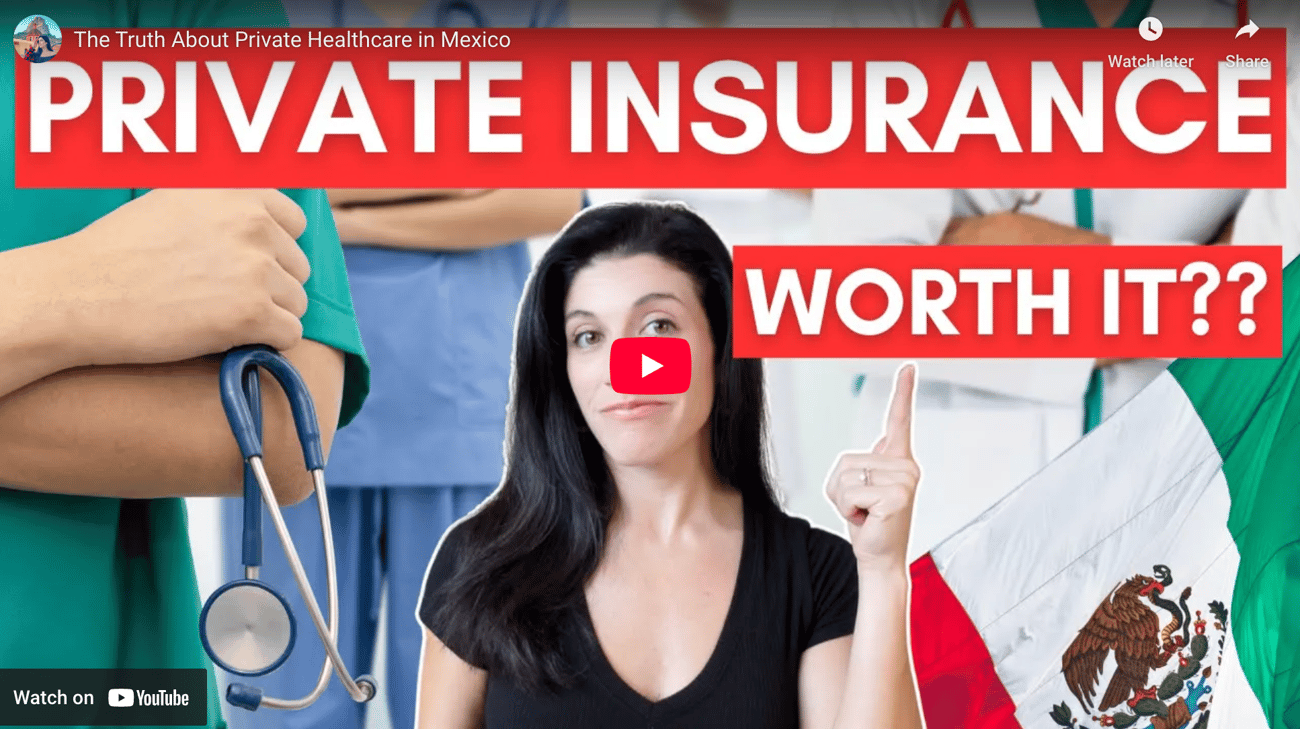
Video: The Truth About Private Healthcare in Mexico
The video discusses the realities of private healthcare in Mexico, highlighting the differences between public and private systems. With over 5,000 hospitals, 70% are private, offering shorter wait times for appointments and surgeries. Personal experiences, such as Jenny Hart’s swift surgery after an injury, illustrate the efficiency of private care. While medical costs in Mexico are generally
lower than in the US, catastrophic events can still lead to significant financial burdens. The video emphasizes the necessity of having health insurance, as private hospitals require upfront payment before treatment, contrasting with the US system where care is provided regardless of payment status.
The video further elaborates on the complexities of obtaining private health insurance in Mexico, stressing the importance of understanding policy details, especially for English-speaking clients. It highlights the necessity of having adequate coverage to avoid financial strain during medical emergencies and encourages viewers to seek advice and share their experiences in the comments.
View the video here.
Highlights:
0:00 – Introduction to private healthcare costs and policy details.
0:10 – Insights from insurance broker Santiago on public vs. private healthcare.
0:21 – Overview of the healthcare system in Mexico, with 70% of hospitals being private.
1:12 – Comparison of wait times between public and private hospitals.
1:29 – Jenny Hart’s experience with quick surgery scheduling after an injury.
2:33 – Cost comparison: $14,000 for surgery in Mexico vs. $50,000-$60,000 in the US.
3:02 – Discussion on the financial risks of catastrophic health events in Mexico.
3:31 – Explanation of payment requirements in private hospitals.
4:12 – Importance of having insurance for private healthcare access.
5:04 – Personal account of payment processing issues before hospital discharge.
5:21 – The speaker discusses the role of intermediaries between clients and insurance companies, emphasizing their support in hospitals.
6:57 – Age and hospital type significantly influence the cost of private health insurance in Mexico.
7:44 – The speaker
shares their annual health insurance cost of approximately $1,000 for two people.
8:34 – The policy covers emergencies while traveling, including trips back to the US.
9:12 – The importance of having a good insurance policy is highlighted, especially for unexpected health issues.
9:51 – Not everyone qualifies for private health insurance, especially those with pre-existing conditions.
10:20 – Maintaining coverage in one’s home country is recommended for those who cannot get private insurance in Mexico.
10:46 – The speaker mentions a company that provides transport back to one’s home country for serious medical events.
11:00 – The speaker believes private health insurance in Mexico is worth it for those concerned about medical costs.
11:06 – Viewers are encouraged to ask questions about private health insurance in Mexico.
|
|
|
|
|
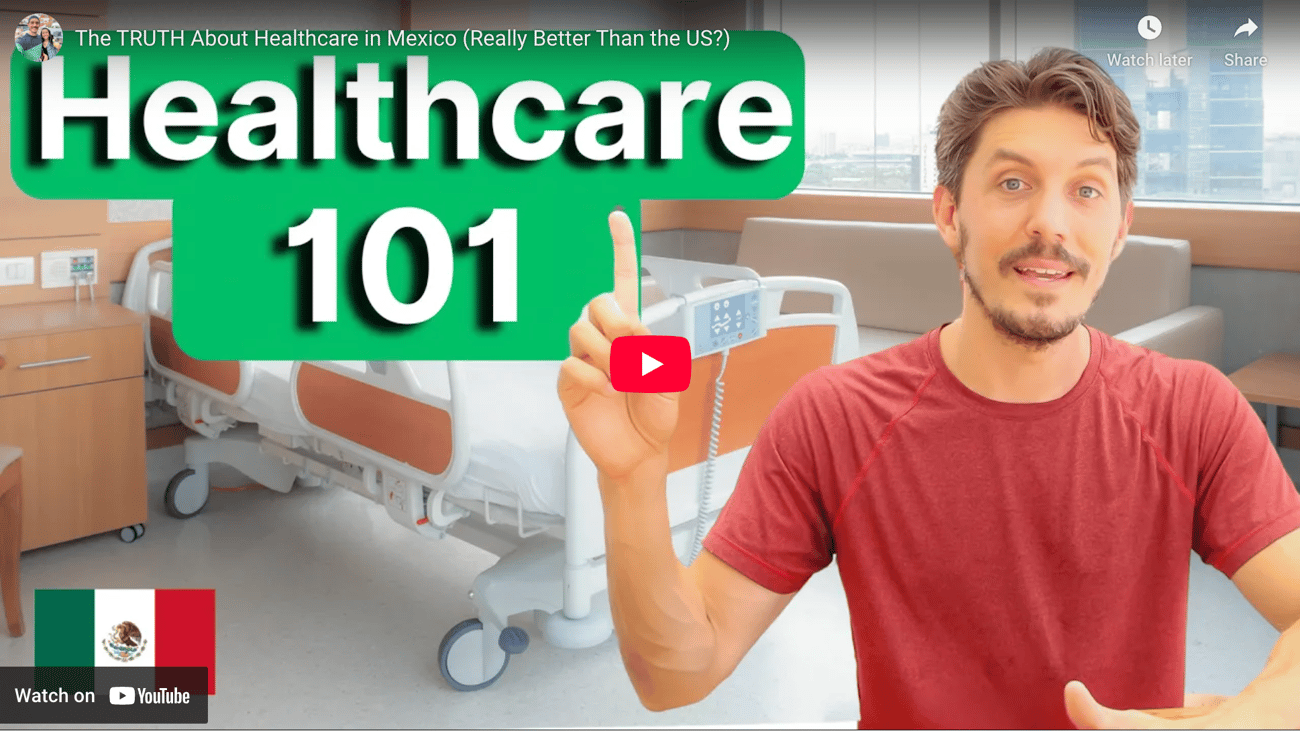
Video: The TRUTH About Healthcare in Mexico (Really Better Than the US?)
The video addresses common misconceptions about healthcare in Mexico, emphasizing that while there is a public healthcare system, it is not free for foreigners. Enrollment in IMSS requires payment, and public hospitals often lack resources, leading to subpar care. Personal anecdotes highlight the risks of relying solely on public healthcare. The video also clarifies that high-quality private healthcare options exist, particularly in larger cities, and challenges the notion that private care is always affordable enough to forgo insurance. Understanding these aspects is crucial for anyone
considering healthcare options in Mexico.
The video emphasizes the importance of understanding healthcare options in Mexico, particularly for foreigners. It addresses common misconceptions about insurance, costs, and coverage, highlighting the potential financial risks of self-insuring. Personal anecdotes illustrate the necessity of having adequate insurance, especially in emergencies. The discussion also clarifies the limitations of Medicare for those considering retirement in Mexico. Viewers are encouraged to ask questions and take a quiz to find suitable locations in Mexico for their healthcare needs.
View the video here. Highlights:0:00 – The topic of healthcare in Mexico is filled with misconceptions.0:13 – Misconception#1: Healthcare in Mexico is free; it is accessible through public systems but not entirely free for foreigners.1:04 – Misconception #2: Foreigners can access IMSS for free, but they must pay to enroll.2:01 – Public hospitals are under-resourced and may not provide the level of care expected.3:11 – A personal story illustrates the risks of relying on public healthcare over private options.4:14 – Pre-existing conditions may disqualify individuals from enrolling in the IMSS system.7:17 – Misconception #3: There are no good options for high-quality healthcare in Mexico; private hospitals can offer world-class care.8:26 – Misconception #4: Private healthcare is so affordable that insurance is unnecessary.8:31 – Many foreigners in Mexico opt to self-insure, covering medical costs out of pocket.9:02 – Serious medical emergencies can lead to costs exceeding $10,000
per day in ICU.10:03 – A personal story illustrates the importance of having insurance after a child’s minor accident.11:12 – Private healthcare costs can be significant, especially for surgeries, which can reach tens of thousands of dollars.12:03 – Misconception#5: Private health insurance is too expensive; it can be more affordable than US healthcare.16:20 – A quiz is available to help viewers determine the best location in Mexico for their needs.
|
|
|
|
|
| Cielito Lindo's basic information is included for your convenience:
|
|
|
- Cielito Lindo Info: After the signature, the newsletter always includes information about Cielito Lindo, so it is at your fingertips when you want it: Our costs, various related websites, social media channels like YouTube, our various addresses, and so on.
- Travel Info: Recommended airports and shuttles.
|
|
|
Web Sites - Cielito LIndo and Rancho Los Labradores
Here are our Web sites, including Cielito Lindo and Labradores Suites (hotel) all of which are part of the larger Rancho Los Labradores gated community just north of San Miguel de Allende.
- Cielito Lindo provides independent living, light assisted living, assisted living, memory care and hospice with 24*7 staffing along with a la carte assisted living services to those living in the villas and suites at Rancho Los Labradores.
- Rancho Los Labradores Suites offer short and long term residence.
- Rancho Los Labradores is a country club resort feeling CCRC that provides a gated community with countless amenities and opportunities for different levels of independent living along with assisted living and memory care within Cielito Lindo.
Cielito Lindo Living Options & Costs Guide
We offer several living options depending on the level of care you or your loved one needs. Here’s a breakdown to help you plan:
1) Villas (Rent or Own)
- Cost: $1,300 – $1,700 per month
- Additional Costs: Utilities, renter’s insurance, etc.
- What’s Included: This is mostly independent living.
- Extras: You can add independent or assisted living services (charged separately, à la carte).
- Support: We can connect you with a realtor if you'd
like to purchase.
2) Cielito Lindo Condos & Suites
Best for: Independent living with optional assistance.
Option 1: Independent Living + Meals
- Cost: $2,250 per month
Includes:- 2 meals a day
- Monthly medical check-up
Optional Add-ons:- Meals for an additional person:
$450/month
- Extra care services available à la carte
Option 2: Light-Assisted Living in Condos & Suites
- Cost: $3,900 per month
Includes:- Full assisted living services
- Designed for residents who still want independence but need some support
- Smooth transition to full Assisted Living or Memory Care as needs change
- One-Time Inscription Fee: $4,000
For Couples:- $4,900/month for two people
- Same one-time fee ($4,000 per couple)
- Note: Suitability is based on cognitive ability, mobility, and safety.
3) Cielito Lindo Assisted Living, Memory Care, & Hospice
Best for: Seniors needing full-time care and supervision.
- Cost:
$3,900 per month
Includes:- 24/7 care and monitoring
- All meals
- Physical therapy
- Full-time doctor on site
- Spacious private room with bath
- One-Time Inscription Fee: $4,000
- For Couples: $4,900/month
4) Specialized Hospice Suite
Best for: Intensive care needs or end-of-life comfort and also recuperative at a far
lower cost than a hospital- Cost: $4,900 per month
Includes:- Full 24/7 monitoring
- Recuperative, Palliative and hospice care
- On-site doctor
- All meals
- Special space for visiting family
|
|
|
YouTube videos and Curated Playlists
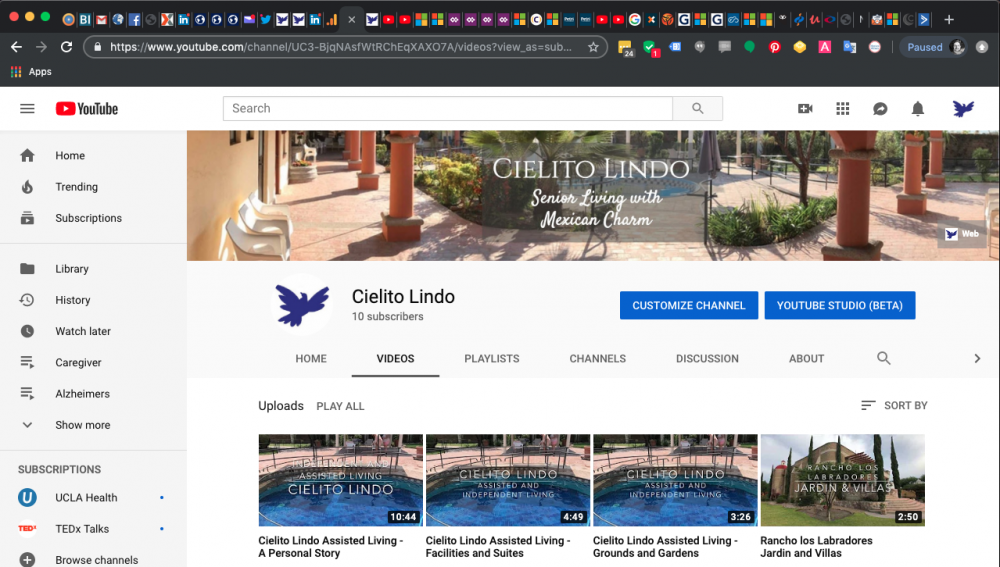
Here is our YouTube Channel. This is where we have lots of videos about Cielito Lindo and Rancho Los Labradores. We also have 1,600+ other senior care and expat in Mexico videos: YouTube |
|
|
|
|
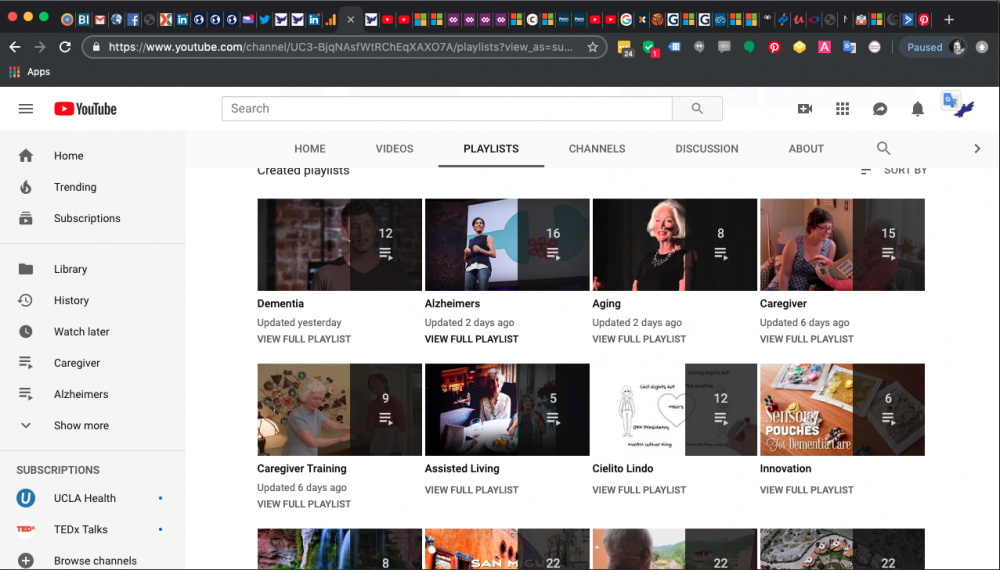
Additionally, our playlists cover a wide area and include 1,200+ videos. These playlists include videos about San Miguel and Mexico in general, caregiving and health, and a broad spectrum of senior living topics. Playlists
|
|
|
|
|
Additional Resources We Offer
We have curated collections of resources that may be useful:
Articles - We write fresh articles about senior living, health, care, and finances every week
Caregiver
Books - We review books related to caregiving methods, logistics, challenges, and coping
Senior Health - We review books related to healthspan, lifespan, and disease
And here are our various social media forums, where we talk a lot about assisted living and memory care along with the various sort of challenges that sometimes come in our senior years (Alzheimer’s, Parkinson other dementias, and so on), but also about senior living in Mexico.
Facebook
|
|
|
|
|
|
|
|
|
|
|
|
|
|
|
|
|
|
|
Please don’t hesitate to contact me for anything related to senior living, especially in Mexico. I will gladly give you any assistance I can.
Thanks again!
James
James Sims
Marketing and Sales
Cielito Lindo Senior Living
1. 888.406.7990 (voice and text)
Phones:
English speaking:
1.888.406.7990 (in US & CDN)
00.1.881.406.7990 (in MX)
Spanish speaking:
011.52.415.101.0201 (in US & CDN)
1.415.101.0201 (in MX)
Expat Logistics:
Visas for Expats:
Sonia Diaz Mexico
Immigration Pros
MX
Tax Considerations for Expats:
Robert Hall Taxes
Best Bank:
Intercam Banco
Located in: Plaza De La Conspiración
Address: San Francisco 4, Zona Centro,
37700 San Miguel de Allende, Gto., Mexico
Hours: Open ⋅ Closes 4 PM
Phone: +52 415 154 6660
Addresses and Travel:
Physical
address:
Cielito Lindo Independent and Assisted Living, Camino Real Los Labradores S/N, Rancho Viejo 1, San Miguel de Allende, GTO, Mexico, 37885
Packages from online providers like Amazon:
Camino Real Los Labradores, Rancho Los Labradores / Cielito Lindo, San Miguel de Allende, GTO, 37880 México
PO Box for letters and small envelopes:
Rancho Los Labradores / Cielito Lindo, c/o Alejandra Serrano , PMB N°
515-C, 220 N Zapata HWY N°11, Laredo TX, 78043-4464
Best airports to fly into: Leon (BJX) or Queretaro (QRO)
Best airport shuttle: BajioGo
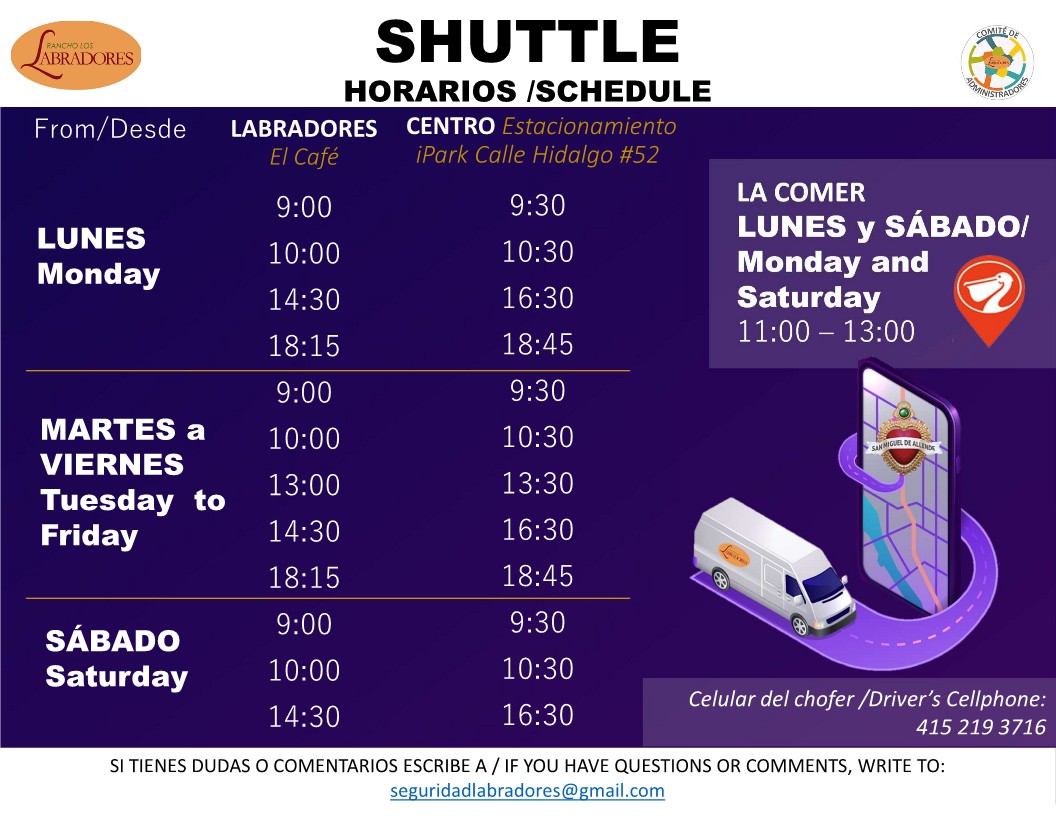
Shuttle:
Shuttle between San Miguel and Cielito Lindo
|
|
|
|
|
|
Maps and Navigation
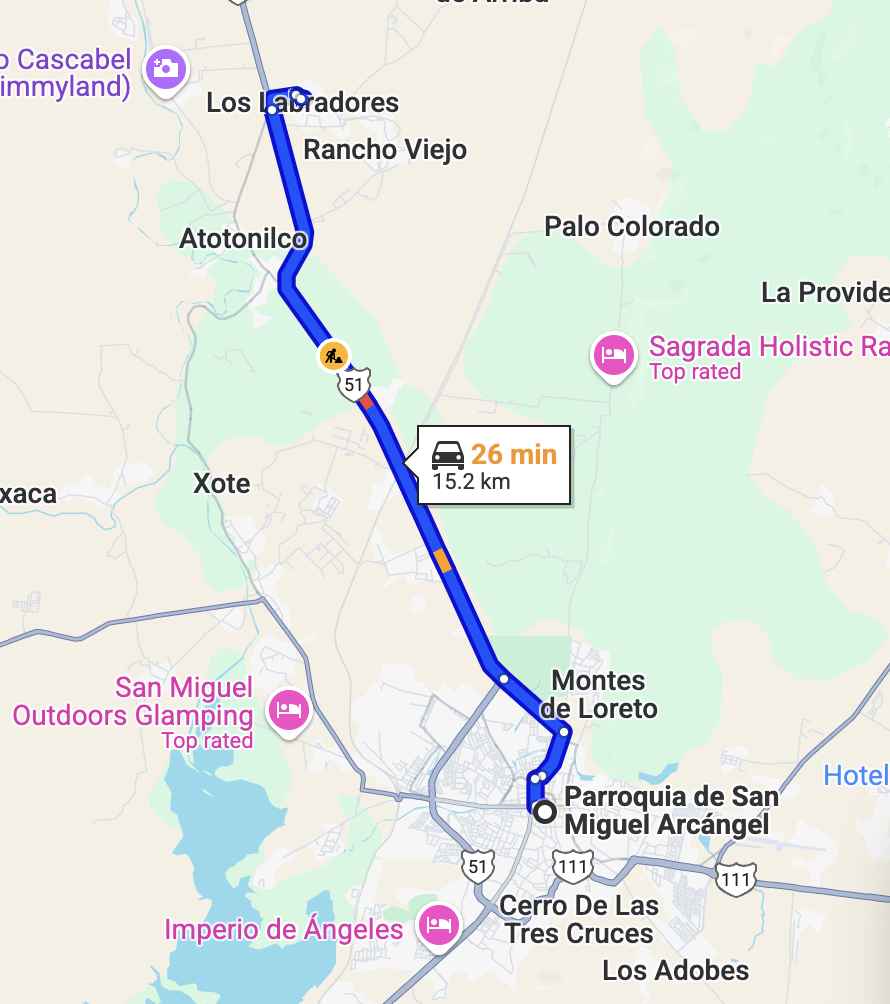
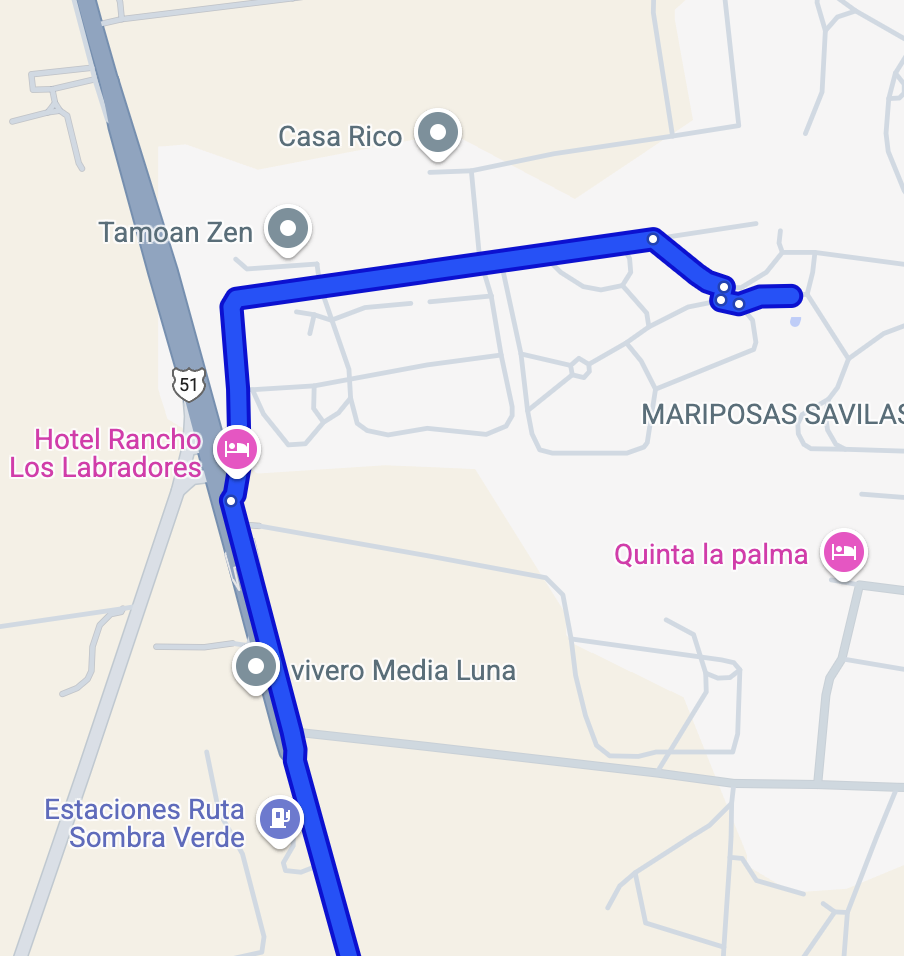
Best smartphone navigation for Mexico and Central America: Waze
These two maps the location of Cielito Lindo / Rancho Los Labradores, 15 km north of San Miguel on Highway 51, just opposite the Atoltinilco exit.
|
|
|
|
|
|
|
Regards,
James
James Sims
Marketing and Sales
Cielto Lindo Senior Living
James@CielitoLindoSeniorLiving.Com
|
|
|
|
|
|
|
|