|
|
Dear ,
This is your weekly summary of our news, research, books, videos, and other resources related to senior living, retirement, and care in Mexico, along with independent and assisted living and information about age-related challenges (e.g., limited mobility, dementia, Alzheimer's, Parkinson's, ALS, stroke, multiple sclerosis, healthspan, and so on).
I hope you are finding this weekly newsletter helpful, and if you know of someone who may also find this information helpful, please forward it to them. They can subscribe using our Web Newsletter page (click here). If, for any reason, you do not wish to receive this weekly newsletter any longer, there is a simple 'Unsubscribe' or 'Opt Out' link at the bottom right corner of this newsletter and also right here: Unsubscribe
This weekly newsletter typically includes information in each of the following categories: San Miguel insights, senior care, and health information, as well as Cielito Lindo basic information.
Here’s what we typically cover each week:
- San Miguel de Allende highlights – why this is such a special place to live
- Health & wellness insights – articles, videos, and expert reviews
- Care options & community life at Cielito Lindo – flexible, affordable living with a warm, human touch
This Week’s Theme: The Unacknowledged Caregiver
This week, we explore how journaling can serve as neurological triage for caregivers.
Holiday Message
|
|
|
|
|
| Weekly insights into San Miguel:
|
|
|
- Colorful and Epicurean San Miguel - This is such an amazing place,
particularly the food and the colors. Although we are addressing a topic that is stressful, challenging, and emotional, we should also acknowledge what an incredible place San Miguel is.
|
|
|
|
|
The Colors of San Miguel: The Mornining Hush
After the rain, San Miguel de Allende offered up one of its quiet miracles. The cobbled street of Aldama, still glistening from the storm, held a perfect reflection of the Parroquia — its pink spires, softened by the lantern glow, suspended in a puddle like a dream remembered.
The early morning hush was almost sacred. A woman passed in white, her figure trailing briefly across the water before
vanishing into the soft ripple of movement. Above and below, the city appeared doubled — as if it were admiring itself in a mirror of stone and silence.
There was no rush, no sound but the hush of damp stone and distant birdsong. Just a moment, held gently between rain and sun.
(Photo courtesy of Ian Gough, San Miguel photographer)
|
|
|
|
|
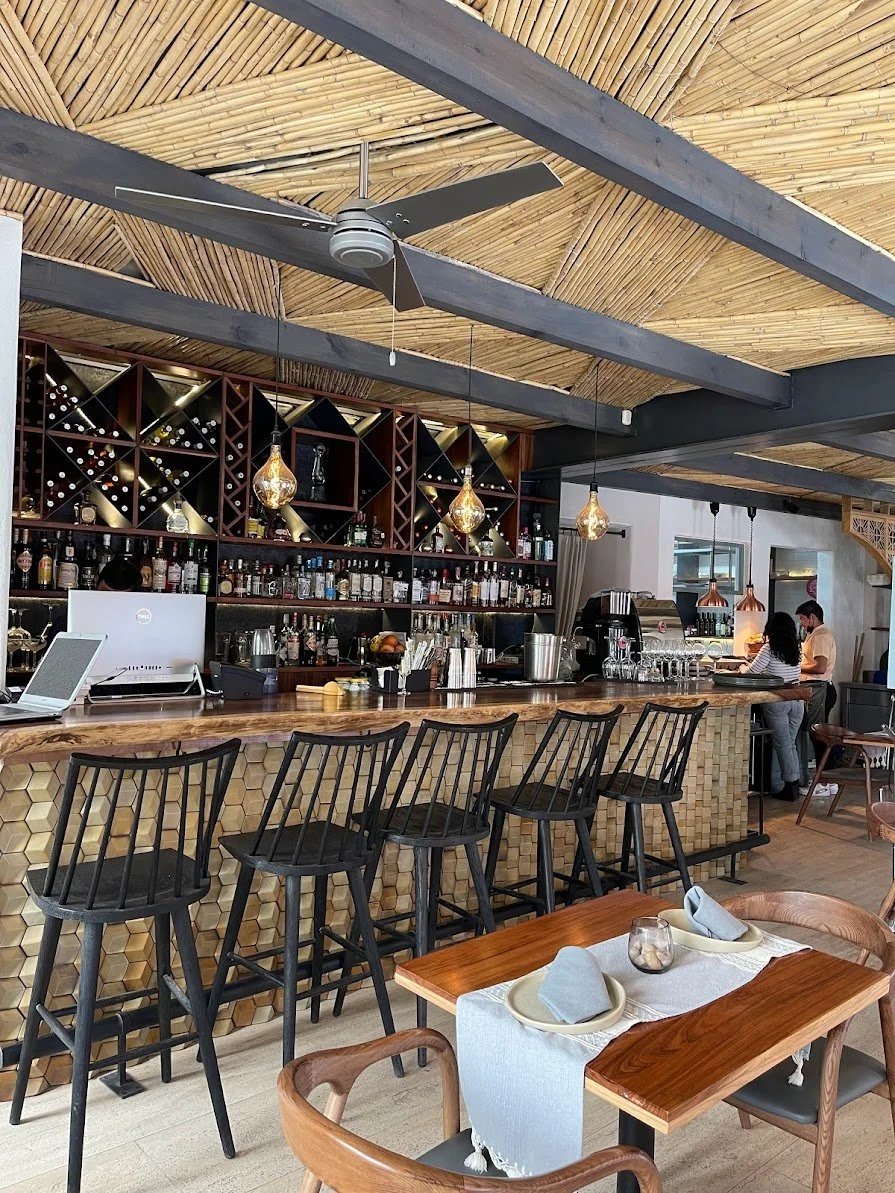
Tastes of San Miguel: Bocaciega
Phone: +52 415 177 7175
Website: Instagram: @bocaciega.mx
Days and Hours:
Lunch daily ~ 1:00 PM – 6:00 PM; Dinner Monday–Saturday ~ 6:00 PM – 10:00 PM; Sunday dinner until ~9:00 PM.
Atmosphere:
Bocaciega combines chic Mediterranean style with warm, modern touches — an intimate yet relaxed space that’s ideal for date night or celebratory dinners. The décor and lighting create a cozy, elegant vibe that feels special without being stiff.
Service:
Consistently praised for attentive, knowledgeable, and gracious service, staff often explain dishes and wine pairings with a welcoming manner. Some guests note language‑friendly service (in English) and excellent hospitality from hosts like Jorge and Mireya.
Cuisine:
This is Mediterranean cuisine with strong Greek and Lebanese influences, blending tradition with creative twists. Dishes emphasize fresh ingredients, aromatic herbs, and inventive presentations.
Signature Dish:
While several items stand out, the grilled octopus and lamb rack have been widely celebrated for texture and flavor — both executed with care and Mediterranean finesse.
Starters:
- Dolmas – vine leaves with tzatziki
- Hummus Terzo – creamy with kalamata olives
- Falafel with fig and hummus
- Tempura zucchini blossoms with ricotta and basil oil
- Greek & Fattoush salads with unique dressings
Guests also rave about spreads like jojoque and aioli cream and the warm bread service.
Main Courses:
Expect Mediterranean mainstays like:
- Gyros with shawarma and tzatziki
- Sea bass (lubina) & seafood preparations
- Rack of lamb
- Porcini croquettes and creative seasonal plates reflecting Greek, Lebanese, and broader Mediterranean traditions.
Desserts:
Desserts are more limited but noteworthy — the baklava and other sweet finishes, such as flan with caramel drizzle, are frequently recommended.
Wine and Cocktails:
A thoughtfully curated list with Mediterranean and Mexican wines complements the menu. Some guests recommend pairing with a Mexican Cabernet Franc or enjoy cocktails like carajillo for a local twist.
Final Thoughts:
Bocaciega brings a refined yet approachable Mediterranean dining identity to San Miguel de Allende. Its creative menu, elegant setting, and attentive service make it a standout choice for an elevated but comfortable meal, especially if you love Greek and Lebanese‑inspired cuisine. Reservations are advisable as it’s a popular stop in the Centro.
Cost: $$$
(Moderate to higher‑end for SMA, but corresponds to quality and experience.)
Rating: ⭐⭐⭐⭐½
(4.7/5)
Reflecting strong overall reviews with some variance in diner experiences.
|
|
|
|
|
| Information related to Mexico, senior care and health:
|
|
|
- Lead article - These are articles specifically written for you each week. They address a wide range of
relevant topics, such as factors that can increase your health and lifespan, diagnostics, understanding causal factors for Alzheimer's and other dementias, and so on. The lead article typically sets the tone for the core content of the newsletter (videos and book reviews). On occasion, the focus may be centered on Mexico, Pueblos Magicos, and San Miguel de Allende.
- Caregiver's Sentiment
- This quote typically honors what we, as caregivers, are going through and feeling.
- Caregiver's Affirmation - This affirmation bolsters our self care, our image or ourselves on this journey and our ability to endure.
- Videos - Typically, three videos are related to the lead article, and they include a summary and timestamped highlights.
- Book Review - Typically related to the lead article.
|
|
|
|
|
Op-Ed: The Caregiver’s Quiet Cure – How Journaling Helps Heal a Tired Brain
Caregivers of people with dementia are more likely to suffer from anxiety, depression, and cognitive decline themselves. But while the
spotlight is often on meditation or medication, a lesser-known intervention is gaining attention among neuroscientists: journaling. Not as a diary, but as a tool for brain repair. According to new research, the simple act of writing by hand can synchronize emotional and rational brain regions, reduce stress, and build resilience. And for caregivers, that’s not a luxury—it’s a lifeline.
The work of caregiving is not just physical—it’s mental, emotional, and spiritual. For those of us who care for loved ones with long-term terminal conditions like dementia, the weight is not something we occasionally feel; it’s something we carry every day. Even when we pause, our minds rarely do.
We’re told to exercise, to meditate, to breathe—and all of these help. But there’s a quieter, often overlooked practice that has shown extraordinary benefits for the brain, especially in high-stress caregiving roles: journaling.
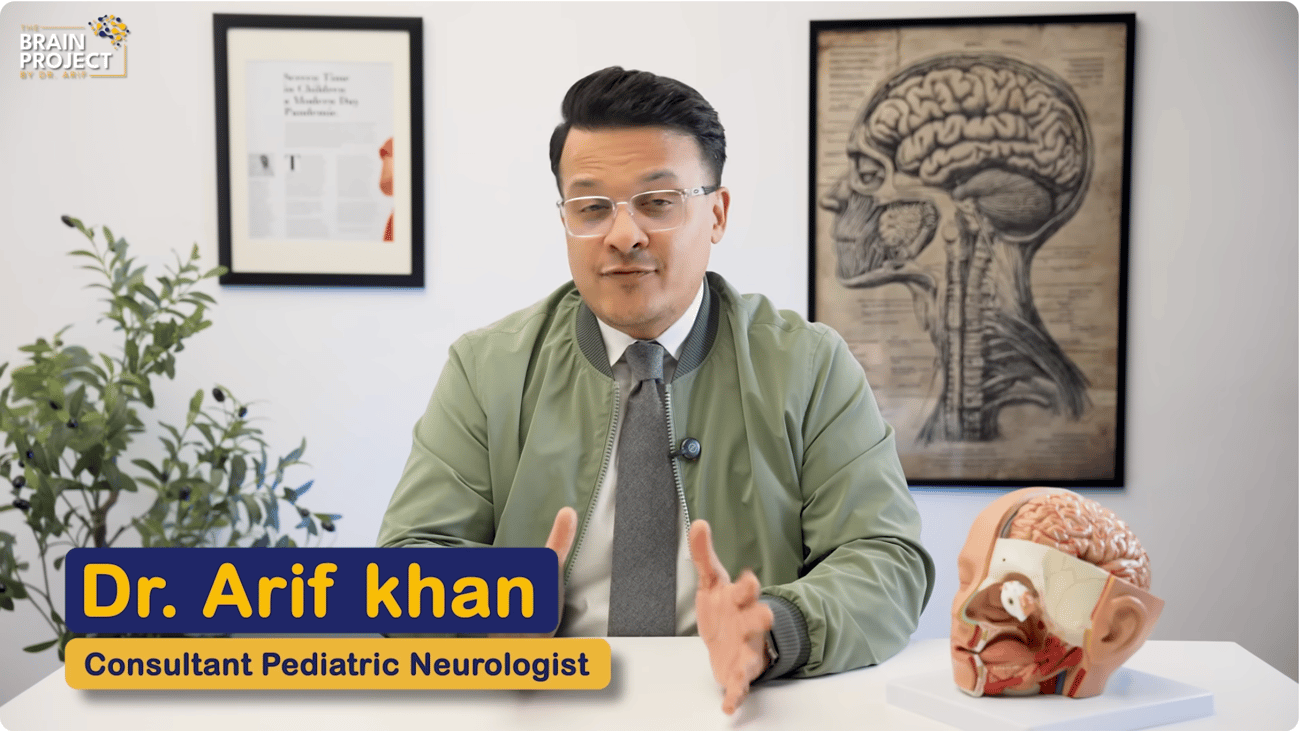
Not the kind of journaling you did in middle school. This is not about documenting your day—it’s about unloading the psychological and neurological burden caregiving can place on us. As neurologist Dr. Arif Khan explains in a recent video on journaling for brain health, writing doesn’t just help us reflect—it actually helps our brains repair.
When You Write, Your Brain Heals
Studies using brain scans reveal that when we write about our emotions, something profound happens: the emotional centers of the brain begin to “talk” to the rational ones. The prefrontal cortex—the part of the brain responsible for planning and reasoning—starts communicating with the amygdala, the region that processes emotions like fear and grief. This isn’t poetry—it’s science.
According to a 2021 Stanford study, this act of expressive writing calms parts of the brain that normally light up
under emotional stress. The technique, developed by psychologist James Pennebaker, allows the mind to complete emotional loops it’s been trying to suppress. It’s as if the brain, overwhelmed by grief or uncertainty, finds clarity and closure in ink.
Three Practices, Three Paths to Resilience
Dr. Khan outlines three types of journaling, each uniquely suited to the emotional rollercoaster of caregiving:
- Expressive Writing: When you’re overwhelmed, write without judgment about what you’re feeling. Grief, frustration, even guilt—get it all down. No editing. No audience. Just 15 to 20 minutes of release. This is not indulgent; it’s neurological triage.
- Gratitude Journaling: When numbness sets in—a common response to chronic stress—shift focus to what’s steady. Write down two or three specific things you’re grateful for. Not general platitudes, but concrete details: “I’m grateful for the nurse who let me cry in her office,” or “the smell of my mother’s perfume still lingering in her room.” This trains the brain to seek stability in the midst of chaos.
- Reflective Reframing: When you’re caught in confusion or helplessness, recount a difficult situation factually. Then reflect on what it taught you, and decide on one small thing you’d do differently next time. This builds the brain’s emotional regulation muscles—its ability to learn from pain rather than be paralyzed by it.
You don’t have to do all
three. Think of it like mental cross-training. Use what you need, when you need it. Some days, you might need to cry on the page. Other days, you might just need to remember something good.
Why This Matters for Caregivers
Dementia caregiving is often described as a “long goodbye,” and in that long, painful stretch, we lose not just our loved one, but sometimes ourselves. We need tools that do more than manage symptoms—we need practices that restore us.
Journaling is not a silver bullet. But in the silence of a caregiving day, with no one else around, it can be a voice that helps you hear yourself again. Over time, you may notice something small but life-changing: a longer pause before reacting, a deeper breath before speaking, a little more clarity when everything else feels foggy.
Those aren’t coincidences. They are signs your brain is healing.
So the next time you feel scattered, overwhelmed, or simply lost—don’t ask yourself, What should I write? Ask, What is my brain trying to tell me?
Then, listen. For caregivers stretched so impossibly thin, there’s little to lose—and perhaps more healing than we expect to gain—by simply picking up a pen and starting.
You can access the article here. Additionally, we have 100's of senior health and care-related articles (over 600,000 words) which can be found here.
|
|
|
|
|
I recently wrote an Op Ed that explores how journaling, especially gratitude journaling, can become a quiet but powerful companion for caregivers. I’m sharing this song
because it grew out of that same practice, sitting with difficult truths, writing them down, and slowly discovering meaning where none seemed possible. My Dearest Friend was written during a long season of caregiving shaped by love, loss, and daily moments that rarely feel poetic in the moment. My hope is that, in hearing it, some of you may recognize your own experience reflected back to you, and feel a little less alone in carrying it.
Here the song on Youtube, We have four albums on Spotify or 25 other music streaming services.
Gratitude Didn’t Come Easy – A Caregiver’s Folk Ballad on Loss, Love &
Alzheimer’s
This intimate folk ballad traces how gratitude is painfully, beautifully forged through caregiving, Alzheimer’s, and the long road of loss and remembrance.
“Gratitude Didn’t Come Easy” is a soul-bearing contemporary folk ballad about discovering grace in the darkest seasons of life. Inspired by real caregiving experiences—early-onset Alzheimer’s, long-term decline, and the quiet work of loving someone who no longer remembers—the song follows a journey from grief and confusion to presence, humility, and purpose.
Set in D minor with an intimate, bittersweet tone, the track blends acoustic storytelling, gentle melodic lines, and emotional folk textures. Through vivid scenes of caregiving, memory slipping away, and rediscovered meaning, the narrator reveals how gratitude becomes an act of resilience rather than a simple feeling.
Perfect for caregivers, memory-care communities, grief support groups, elder-care advocates, and anyone who has walked beside a loved one through decline. This video also supports awareness for compassionate senior-living environments like Rancho Los Labradores and Cielito Lindo in San Miguel de Allende, Mexico.
Genre: Contemporary Folk Ballad | Key: D minor | Mood: Intimate, bittersweet | BPM: 84
Lyrics
[Verse 1]
I used to think that gratitude
Was something sweet and small
A grace you said at dinnertime
Or after a windfall
It lived in good news, holidays
And laughter over wine
But never showed its face to me
When I was out of time
[Verse 2]
My father died too young to teach
What grief would make me see
And when she slipped away from me
Each year, more silently
Fourteen falls, and winter stayed
The years did not rewind
But I learned to sit in silence
And thank what pain would find
[Chorus]
Gratitude didn’t come easy
It never came wrapped in light
It crept in through the cracks of loss
And held me through the night
It’s not some fleeting feeling
It’s the only way to be
When loving means remembering
Someone who can't remember me
[Verse 3]
I fed her soup with quiet hands
She smiled, forgot my name
But still I saw a shimmer there
No illness could explain
Each nod, each breath, each trembling laugh
A moment to reclaim
And in that slow unraveling
Gratitude finally came
[Bridge]
Now I spend my days with others
Who walk the same worn track
We carry love in paper skin
And never ask for it back
It’s not a job, it’s not a chore
It’s what I’m meant to do
To show them they are not alone—
Like she once showed me too
[Final Chorus]
Gratitude didn’t come easy
But now it comes each day
In every hand I get to hold
And every word I say
It’s not about the sunlight
It’s what you choose to see
It’s not a prize, it’s how I live
Since grief gave sight to me
Copyright: Lyrics, music, arrangement, and production © 2025 James M Sims. All Rights Reserved.
© 2025 James M. Sims and The Resilient Heart (ASCAP). Lyrics, music, arrangement, and production. All Rights Reserved.
|
|
|
|
|
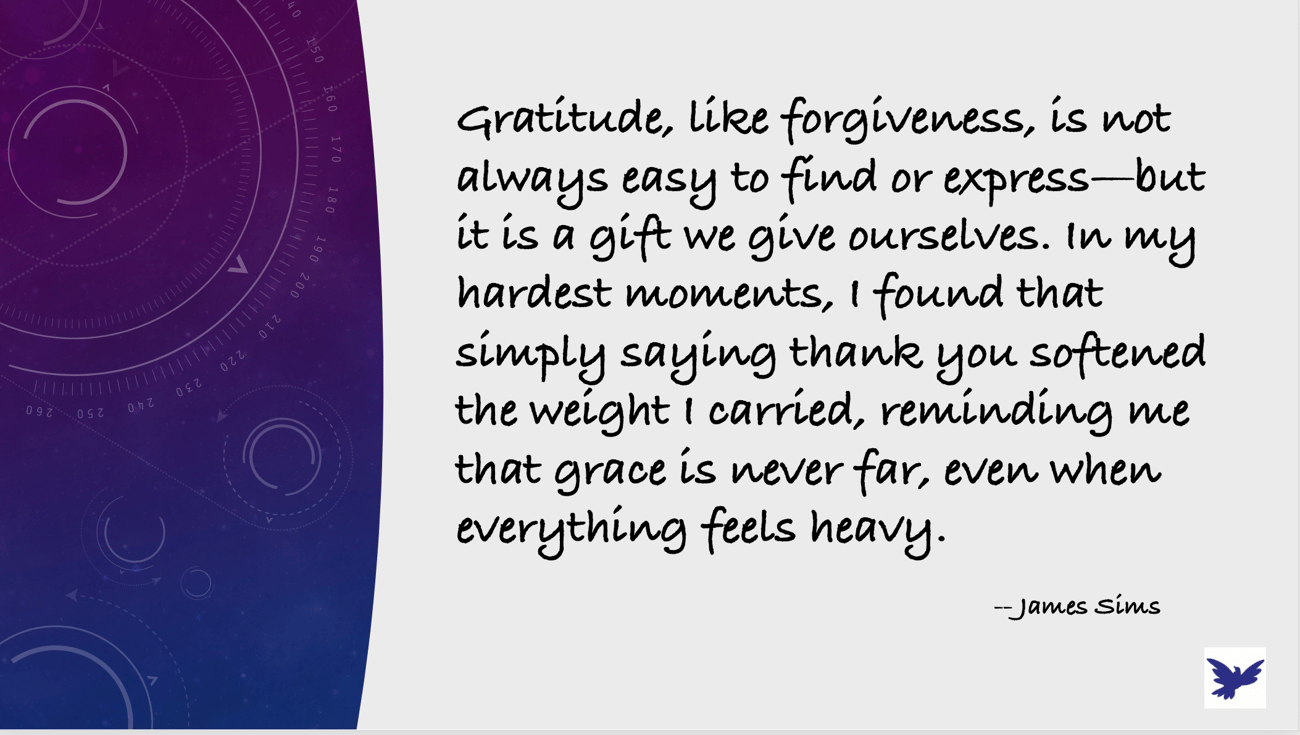
Caregiver's Sentiment: The Gift of Gratitude
This quote draws a powerful parallel between gratitude and forgiveness, showing that both are inner acts of strength and healing. Caregiving can be emotionally draining and often thankless, but choosing to express gratitude—even when exhausted, hurt, or overwhelmed—can shift the heart. Just as forgiveness releases us from bitterness, gratitude releases us from despair. It's not about ignoring hardship; it's about reclaiming a sense of purpose, dignity, and connection in the midst of it. Your insight affirms that in caregiving, small internal choices can lead to deep emotional freedom.
|
|
|
|
|
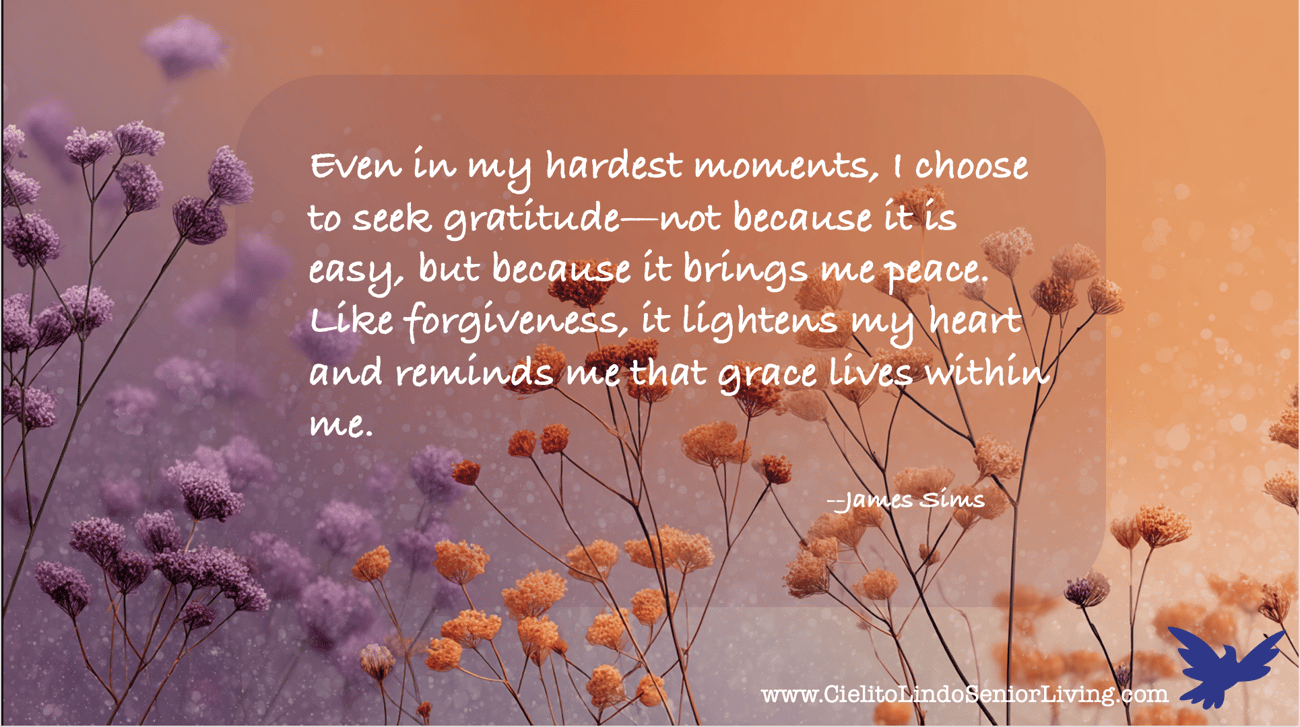
Caregiver Affirmation
This affirmation reframes gratitude as a conscious choice—empowering the caregiver to reclaim control in emotionally taxing situations. It doesn’t ignore pain; it honors it, while gently pointing toward inner strength, peace, and grace. It's especially meaningful because caregivers often give so much to others while carrying invisible burdens of their own.
|
|
|
|
|
Caregiving has a way of filling every quiet space in our minds. Worry, responsibility,
unfinished thoughts, and constant vigilance can leave us feeling mentally exhausted yet unable to slow down. Many caregivers live in this state for years, often without realizing the toll it takes on their own well-being. This video explores a simple, accessible practice, journaling, that can help clear mental clutter, calm the nervous system, and restore a sense of focus and steadiness, even in the midst of demanding caregiving days.
Video: The #1 Journalling Method for Brain Health You Need to Know | Dr. Arif Khan
Have you ever felt mentally cluttered, full of thoughts yet unable to focus? You scroll endlessly, drift between tabs, and struggle to form a single clear idea. In that moment, picking up a pen may seem insignificant, yet it is one of the most powerful actions you can take for your brain. In this video, Dr. Arif Khan, neuroscientist and mental health expert, explains the science behind journaling. Writing is not merely emotional release; it is a form of neurological repair. Through expressive writing, gratitude journaling, and reflective reframing, this talk shows how words can synchronize emotional and rational brain
circuits, calm the nervous system, and reshape the brain over time. View the video here Video Timeline 0:00 – Your mind feels full but unfocused 0:25 – The hidden power of journaling 0:45 – How writing heals the brain 0:58 – Stanford study on expressive writing (2021) 1:12 – Affect labeling, naming feelings to heal the brain 1:27 – Why handwriting works better (2023 study) 1:51 – Technique 1, expressive writing 2:19 – Why expressive writing works 2:46 – Technique 2, gratitude journaling 3:09 – The neuroscience of gratitude 3:25 – How to practice gratitude journaling 3:45 – Technique 3, reflective reframing 4:03 – How reflective reframing strengthens emotional control 4:24 – How journaling rewires the brain over time 4:55 – Handwriting as a trace of healing 5:00 – Final reflection, what your brain is
trying to tell you
What You Will Learn - Why writing helps resolve emotional overload at a neurological level
- How journaling activates brain regions associated with calm, focus, and clarity
- Three research-backed journaling techniques
- How gratitude alters mood and motivation through measurable brain changes
- Why handwriting engages deeper cognitive processing than typing
- How reflective journaling strengthens emotional regulation and resilience
- The link between writing and neuroplasticity, the brain’s ability to adapt and heal
|
|
|
|
|
Book
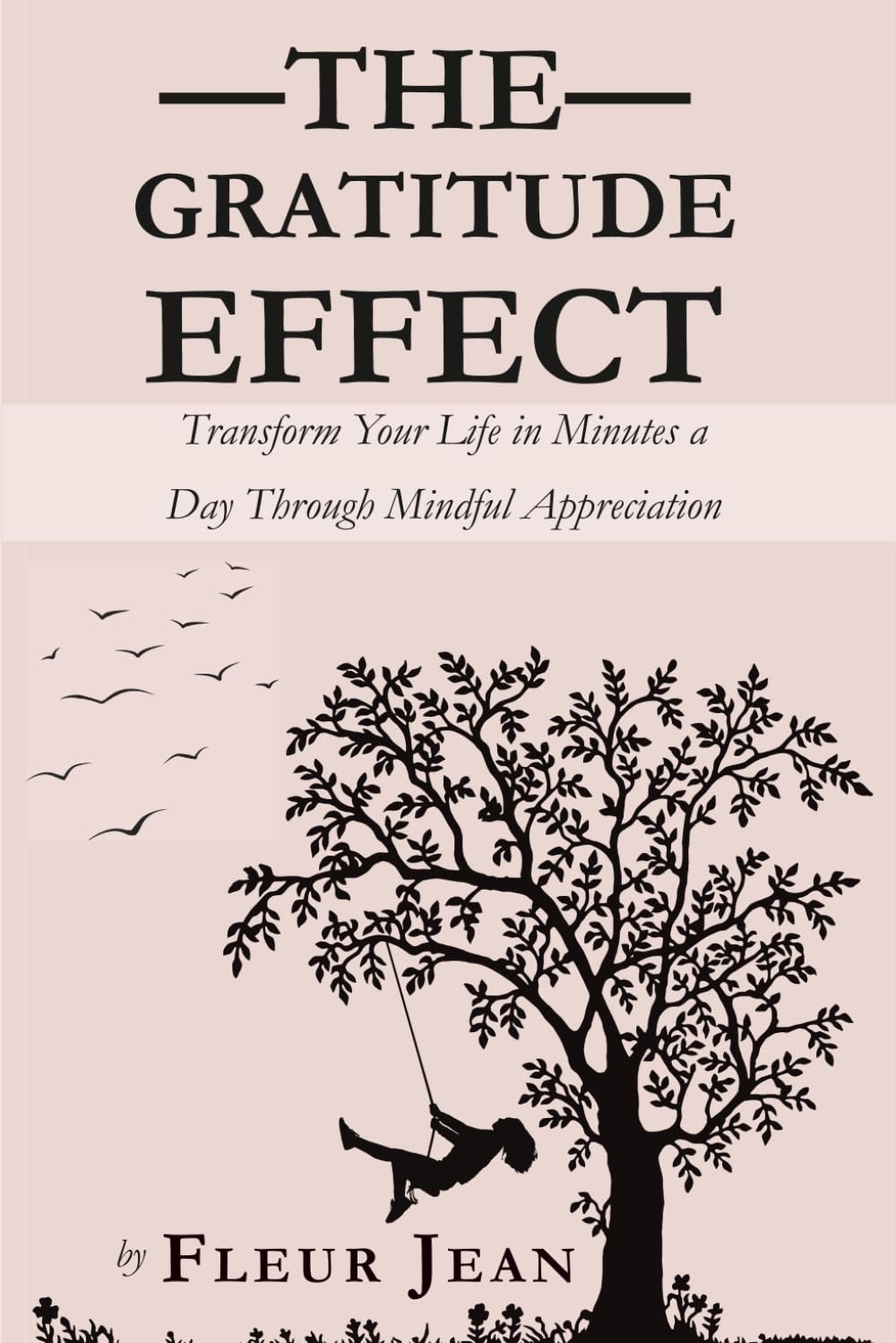
Review: The Gratitude Effect: Transform Your Life in Minutes a Day Through Mindful Appreciation by Fleur Jean
Overview
The Gratitude Effect by Fleur Jean is a heartfelt and practical guide to integrating gratitude into daily life, especially relevant for those experiencing emotional fatigue, stress, or the
challenges of later life. Drawing from both personal experience and scientific research, Jean offers a streamlined approach to mindfulness through gratitude that can fit into even the busiest of schedules. While its universal message appeals to all readers, the book’s calming tone and emphasis on emotional resilience make it particularly valuable for seniors seeking mental clarity, inner peace, or a renewed sense of purpose.
Synopsis
The book lays out a five-minute daily practice designed to help readers cultivate a consistent habit of gratitude. It opens with the author’s personal story of overcoming anxiety, depression, and burnout, framing gratitude not
just as a wellness tool but as a lifeline. Each chapter provides step-by-step exercises, real-life testimonials, and reflection prompts aimed at reinforcing gratitude as a core emotional skill. Fleur Jean also offers strategies for tracking progress, dealing with skepticism, and sustaining the practice through life's ups and downs.
Key Themes
- Mindful Appreciation: The core of the book revolves around learning to slow down and notice the positives in everyday life.
- Emotional Resilience: Jean links gratitude to long-term emotional strength, showing how it builds capacity for handling stress, grief, and uncertainty.
- Accessibility: The methods are intentionally simple, requiring no special tools or prior experience—making it approachable for older adults or those unfamiliar
with mindfulness practices.
- Mental and Emotional Health: With subtle but well-researched insights, the book connects gratitude to improvements in mood, sleep, and overall mental well-being.
- Consistency Over Perfection: Jean emphasizes that gratitude isn’t about ignoring hardships but rather about finding stability and peace in spite of them.
Writing Style
Fleur Jean writes in a warm, conversational tone that feels more like a supportive friend than a distant expert. Her prose is clear and uncluttered, making complex psychological concepts digestible for readers of all backgrounds. The pacing is gentle, and the structure of the book—broken into short, actionable sections—makes it ideal for seniors or caregivers with limited reading time or attention span. The inclusion of personal anecdotes adds authenticity and relatability.
Conclusion
The Gratitude Effect is not just another self-help book—it’s a quietly powerful invitation to reframe life through appreciation, especially during times when hope feels distant. It offers more than a practice; it delivers a mindset shift that can be profoundly healing, particularly for older readers navigating loss, loneliness, or life transitions. For caregivers, retirees, or anyone seeking emotional renewal, Fleur Jean’s book serves as a compassionate and empowering resource.
Rating: ★★★★☆ (4.5
out of 5 stars)
A beautifully written, accessible, and uplifting guide to making gratitude a daily habit. It would benefit from a few deeper explorations of gratitude within aging populations, but its practical value and emotional resonance make it highly recommended for senior readers and those who support them.
Additional Resources Cielito Lindo Offers
We have curated collections of resources that may be useful.
Articles - We write fresh articles about senior living, health, care, and finances every week
Caregiver Books - We review books related to caregiving methods, logistics, challenges, and coping
Senior Health - We review books related to healthspan, lifespan, and disease
We also have 1,700+ other senior care and expat in Mexico
videos: YouTube
|
|
|
|
|
| Cielito Lindo's basic information is included for your convenience:
|
|
|
- Cielito Lindo Info: After the signature, the newsletter always includes information about Cielito Lindo, so it is at your fingertips when you want it: Our costs, various related websites, social media channels like YouTube, our various addresses, and so on.
- Travel Info: Recommended airports and shuttles.
|
|
|
Web Sites - Cielito LIndo and Rancho Los Labradores
Here are our Web sites, including Cielito Lindo and Labradores Suites (hotel) all of which are part of the larger Rancho Los Labradores gated community just north of San Miguel de Allende.
Web Sites - Cielito LIndo and Rancho Los Labradores
Here are our Web sites, including Cielito Lindo and Labradores Suites (hotel) all of which are part of the larger Rancho Los Labradores gated community just north of San Miguel de Allende.
- Cielito Lindo provides independent living, light assisted living, assisted living, memory care and hospice with 24*7 staffing along with a la carte assisted living services to those living in the villas and suites at Rancho Los Labradores.
- Rancho Los Labradores Suites offer short and long term residence.
- Rancho Los Labradores is a country club resort feeling CCRC that provides a gated community with countless amenities and opportunities for different levels of independent living along with assisted living and memory care within Cielito Lindo.
Cielito Lindo Living Options & Costs Guide
We offer several living options depending on the level
of care you or your loved one needs. Here’s a breakdown to help you plan:
1) Villas (Rent or Own)
- Cost: $1,300 – $1,700 per month
- Additional Costs: Utilities, renter’s insurance, etc.
- What’s Included: This is mostly independent living.
- Extras: You can add independent or assisted living services (charged separately, à la carte).
- Support: We can connect you with a realtor if you'd like to purchase.
2) Cielito Lindo Condos & Suites
Best for: Independent living with optional assistance.
Option 1: Independent Living + Meals
- Cost: $2,250 per month
Includes:- 2 meals a day
- Hotel like room cleaning, towel and linen service
- Monthly medical check-up
Optional Add-ons:- Meals for an additional person: $450/month
- Extra care services available à la carte
Option 2: Light-Assisted Living in Condos & Suites
- Cost: $3,900 per month
Includes:- Full assisted living services
- Designed for residents who still want independence but need some support
- Smooth transition to full Assisted Living or Memory Care as needs change
- One-Time Inscription Fee: $4,000
For Couples:- $4,900/month for two people
- Same one-time fee ($4,000 per couple)
- Note: Suitability is based on cognitive ability, mobility, and safety.
3) Cielito Lindo Assisted Living, Memory Care, & Hospice
Best for: Seniors needing full-time care and supervision.
- Cost: $3,900 per month
Includes:- 24/7 care and monitoring
- All meals
- Physical therapy
- Full-time doctor on site
- Spacious private room with
bath
- One-Time Inscription Fee: $4,000
- For
Couples: $4,900/month
4) Specialized Hospice Suite
Best for: Intensive care needs or end-of-life comfort and also recuperative at a far lower cost than a hospital- Cost: $4,900 per month
Includes:- Full 24/7 monitoring
- Recuperative, Palliative and hospice care
- On-site doctor
- All meals
- Special space for visiting family
|
|
|
YouTube videos and Curated Playlists
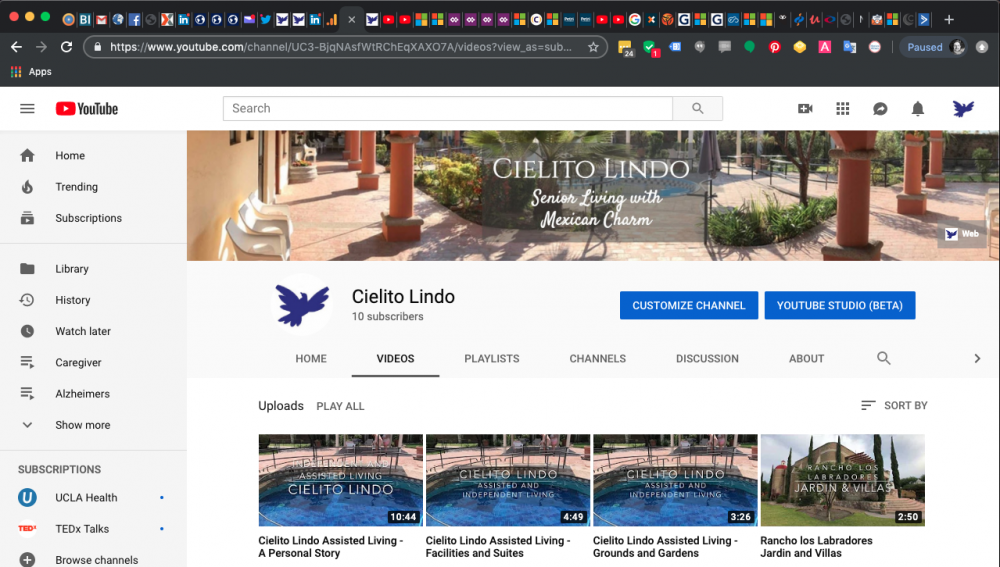
Here is our YouTube Channel. This is where we have lots of videos about Cielito Lindo and Rancho Los Labradores. We also have 1,600+ other senior care and expat in Mexico videos: YouTube |
|
|
|
|
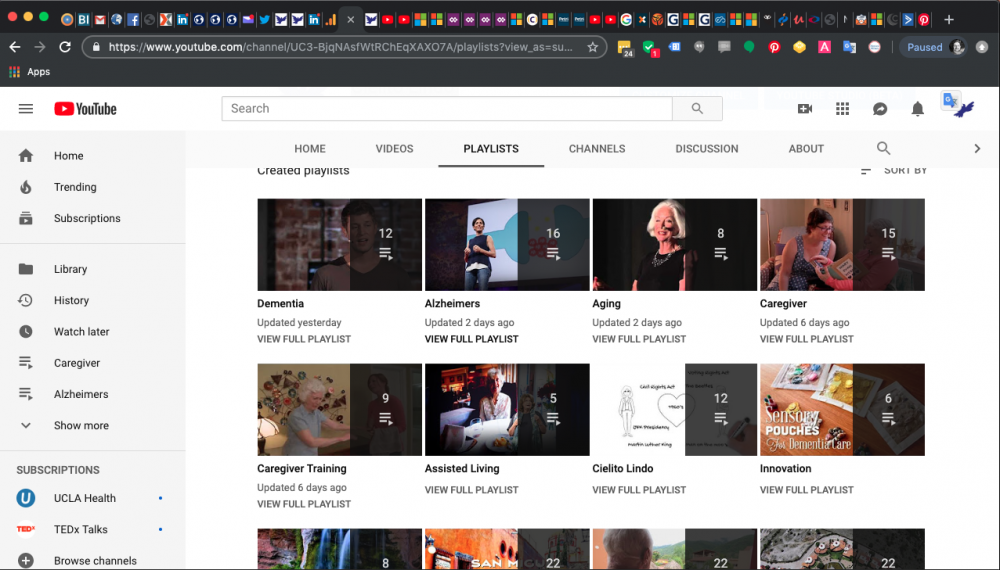
Additionally, our playlists cover a wide area and include 1,200+ videos. These playlists include videos about San Miguel and Mexico in general, caregiving and health, and a broad spectrum of senior living topics. Playlists
|
|
|
|
|
Additional Resources We Offer
We have curated collections of resources that may be useful:
Articles - We write fresh articles about senior living, health, care, and finances every week
Caregiver
Books - We review books related to caregiving methods, logistics, challenges, and coping
Senior Health - We review books related to healthspan, lifespan, and disease
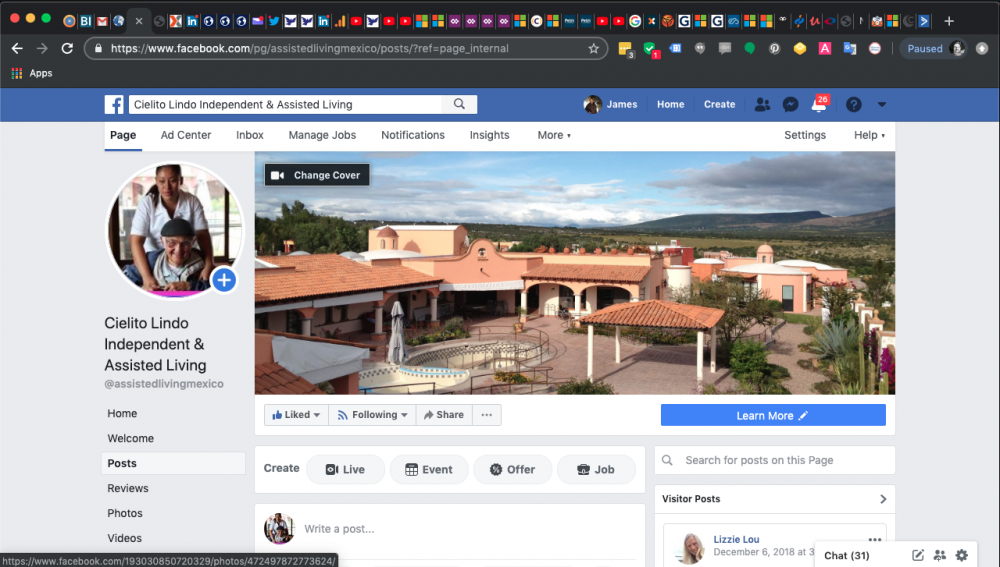
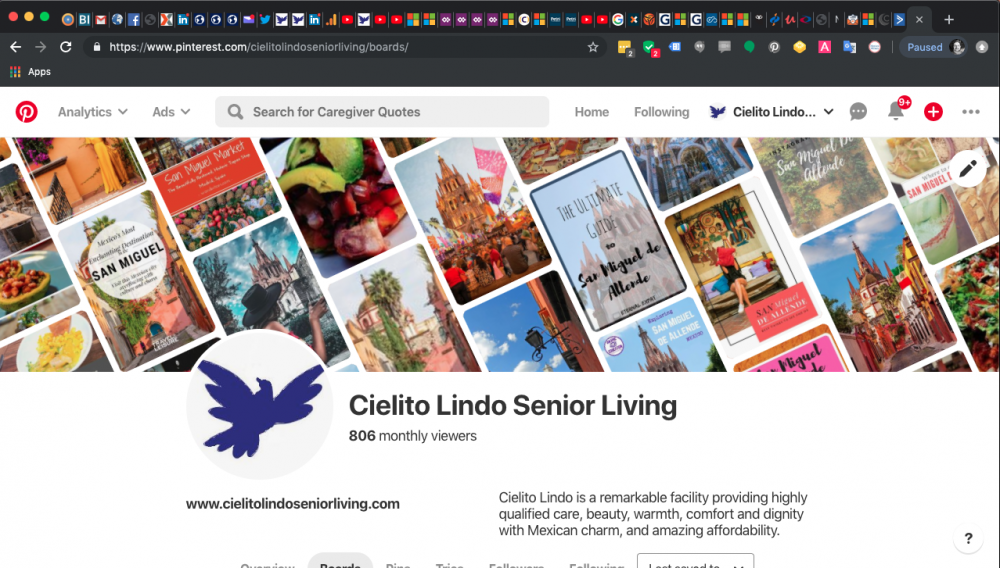
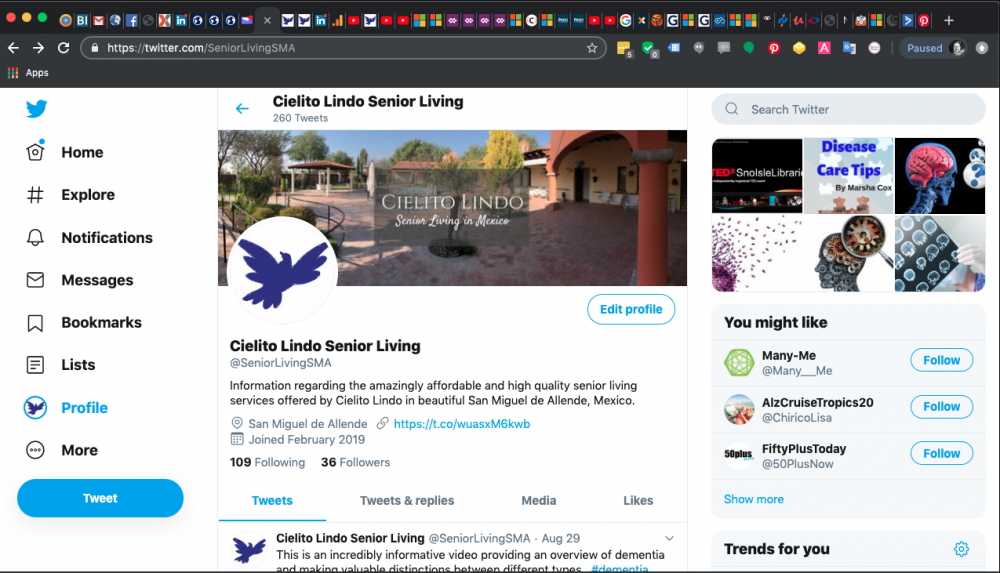
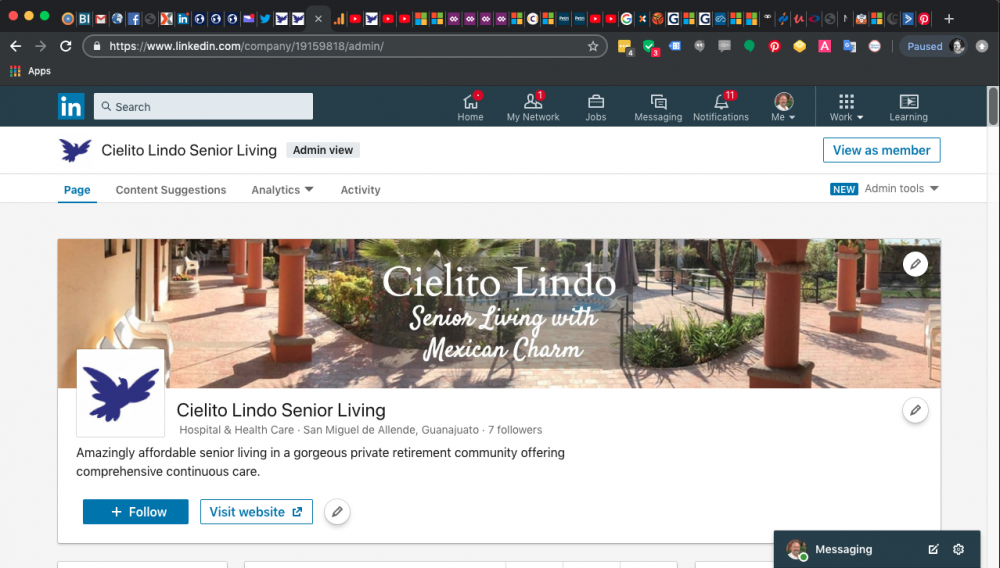
And here are our various social media forums, where we talk a lot about assisted living and memory care along with the various sort of challenges that sometimes come in our senior years (Alzheimer’s, Parkinson other dementias, and so on), but also about senior living in Mexico.
Facebook
|
|
|
|
|
|
|
|
|
|
|
|
|
|
|
|
|
|
|
Please don’t hesitate to contact me for anything related to senior living, especially in Mexico. I will gladly give you any assistance I can.
Thanks again!
James
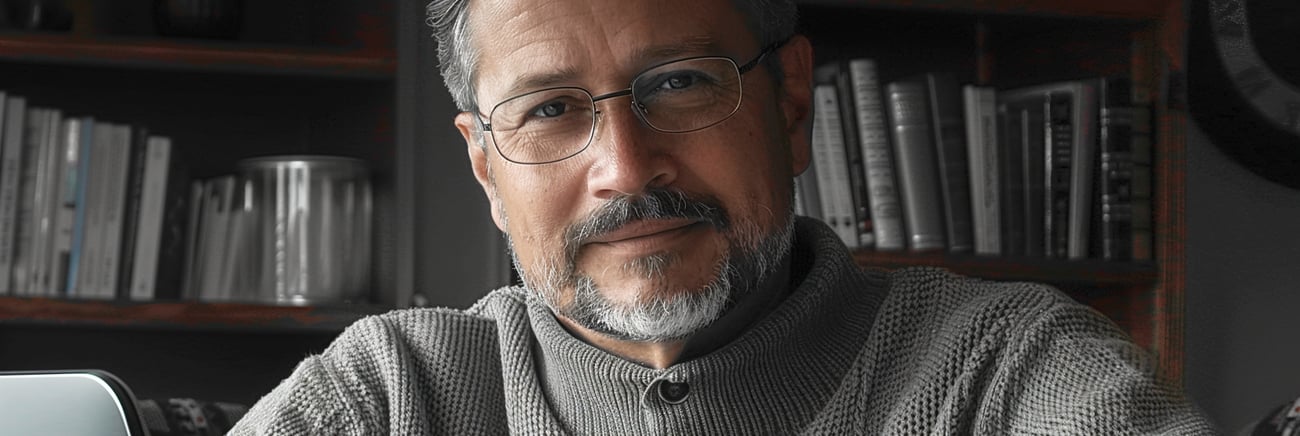
James Sims
Marketing and Sales
Cielito Lindo Senior Living
1. 888.406.7990 (Voice and text)
1.209.312.0555 (WhatsApp)
Phones:
English speaking:
1.888.406.7990 (in US & CDN)
00.1.881.406.7990 (in MX)
Spanish speaking:
011.52.415.101.0201 (in US & CDN)
1.415.101.0201 (in MX)
Expat Health
Insurance:
ExpatInsurance.com
Tax Considerations for Expats:
Robert Hall Taxes
Medicare in Mexico
Lakeside Medical Group:
Robert Ash - ash@lakemedical
Best Bank:
Intercam Banco
Located in: Plaza De La Conspiración
Address: San Francisco 4, Zona Centro,
37700 San Miguel de Allende, Gto., Mexico
Hours: Open ⋅ Closes 4 PM
Phone: +011 52 415 154 6660
Addresses and Travel:
Physical address:
Cielito Lindo Independent and Assisted Living, Camino Real Los Labradores S/N, Rancho Viejo 1, San Miguel de Allende, GTO, Mexico, 37885
Packages from online providers like Amazon:
Camino Real Los Labradores, Rancho Los Labradores / Cielito Lindo, San Miguel de Allende, GTO, 37880 México
PO Box for letters and small envelopes:
Rancho Los Labradores / Cielito Lindo, c/o Alejandra Serrano , PMB N° 515-C,
220 N Zapata HWY N°11, Laredo TX, 78043-4464
Air:
Best airports to fly into: Leon (BJX) or Queretaro (QRO)
Shuttle:
Best
airport shuttle: BajioGo
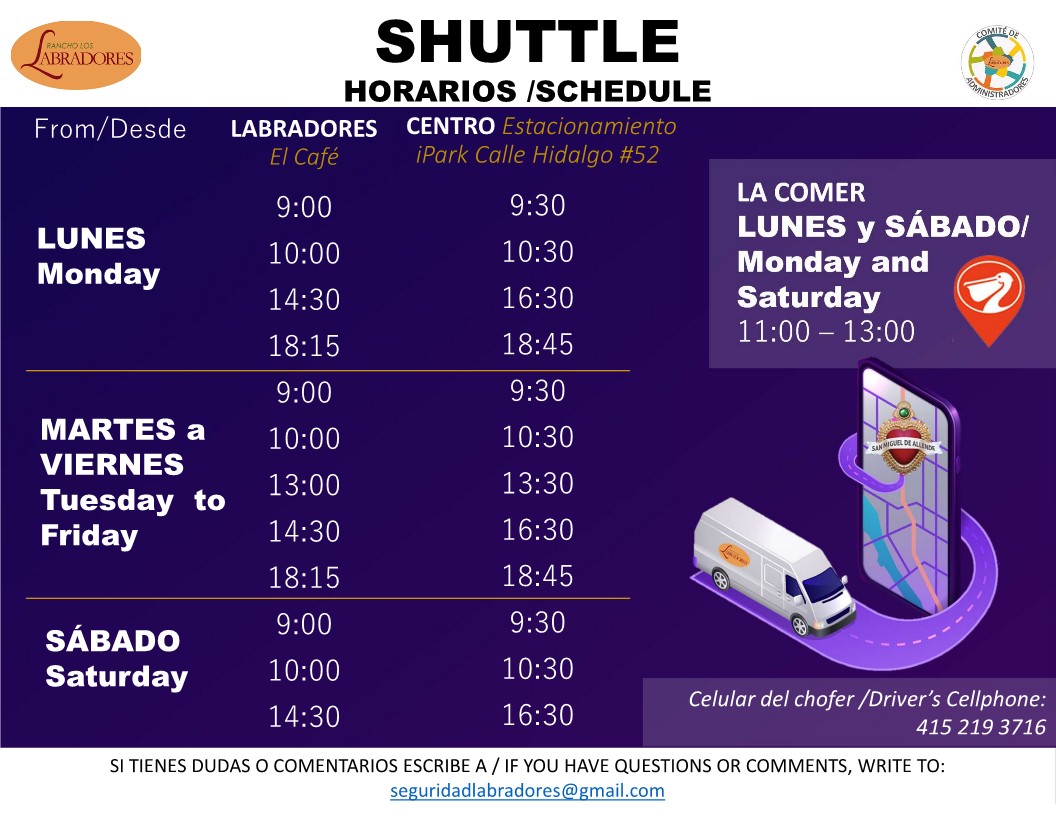
Shuttle between San Miguel and Rancho Los Labradores / Cielito Lindo
|
|
|
|
|
|
|
Regards,
James
James Sims
Marketing and Sales
Cielto LIndo Senior Living
jsims.cielitolindo@gmail.com
|
|
|
|
|
|
|
|