|
|
Dear ,
This is your weekly summary of our news, research, books, videos, and other resources related to senior living, retirement, and care in Mexico, along with independent and assisted living and information about age-related challenges (e.g., limited mobility, dementia, Alzheimer's, Parkinson's, ALS, stroke, multiple sclerosis, healthspan, and so on).
I hope you are finding this weekly newsletter helpful, and if you know of someone who may also find this information helpful, please forward it to them. They can subscribe using our Web Newsletter page (click here). If, for any reason, you do not wish to receive this weekly newsletter any longer, there is a simple 'Unsubscribe' or 'Opt Out' link at the bottom right corner of this newsletter and also right here: Unsubscribe
This weekly newsletter typically includes information in each of the following categories: San Miguel insights, senior care, and health information, as well as Cielito Lindo basic information.
Here’s what we typically cover each week:
- San Miguel de Allende highlights – why this is such a special place to live
- Health & wellness insights – articles, videos, and expert reviews
- Care options & community life at Cielito Lindo – flexible, affordable living with a warm, human touch
This Week’s Theme: The Unacknowledged Caregiver
This week, we explore how we can tap into gratitude as one of our coping mechanisms.
Holiday Message
|
|
|
|
|
Wishing You a Season of Peace, Joy, and Togetherness
Dear Friends, As the year gently draws to a close, all of us at Cielito Lindo Senior Living want to take a moment to send our warmest wishes to you and your loved ones. The holiday
season is a time of reflection, gratitude, and connection. Whether you are surrounded by family, remembering someone special, or quietly enjoying the season’s beauty, please know you are in our hearts. We are deeply honored to be part of a community that values care, dignity, and the small joys of life — from sunny mornings in San Miguel to shared laughter over café tables at Rancho Los Labradores. At Cielito Lindo, we believe that senior living should feel like an upgrade — not a compromise. That belief guides everything we do, especially during these meaningful times of year. From our festive meals to cozy music gatherings and therapeutic garden strolls, we aim to offer more than care — we offer companionship and comfort. If you or someone you love is navigating questions about aging, care options, or simply exploring new possibilities for the future, we are here with open arms and listening hearts. No pressure. Just
real conversations, compassionate understanding, and information you can trust. From our family to yours, we wish you a peaceful holiday season filled with warmth, health, and hope. With heartfelt gratitude, The Team at Cielito Lindo Senior Living 📍 Rancho Los Labradores, San Miguel de Allende 📞 +1 888.406.7990 | 🌐 cielitolindoseniorliving.com
|
|
|
|
|
| Weekly insights into San Miguel:
|
|
|
- Colorful and Epicurean San Miguel - This is such an amazing place,
particularly the food and the colors. Although we are addressing a topic that is stressful, challenging, and emotional, we should also acknowledge what an incredible place San Miguel is.
|
|
|
|
|
The Colors of San Miguel: Endless Beauty
I can never get enough of beautiful San Miguel de Allende, and this image is a perfect testament to why.
Look at that cobblestone street, wet from a recent rain — each stone darkened just enough to mirror the deepening sky, the kind that makes you pause and wonder if a late afternoon downpour will sweep through. The way the street narrows toward the distant dome of the Templo de San Francisco — it’s like the city is pulling you in, not just to walk it, but to feel it.
The facades bloom in dusky oranges, ochres, and rose-pinks — colors that don’t scream for attention but instead hum with the warmth of lives lived slowly. Painted walls that have known centuries of sun and storm. Wrought-iron balconies still cradle potted geraniums. Street lamps, unlit for now, stand sentinel like quiet poets watching the day unfold.
And then there’s the texture — of time, really. The chipped
plaster, the slightly bowed wooden doors, the way the buildings lean in a little, as if in conversation. Even the trees seem to grow with a kind of reverence here, just enough to offer shade but never too much to hide the view.
What I love most is the human scale of it — the scooter humming past, two people strolling without hurry, maybe mid-story, maybe mid-laugh. It’s a city that teaches you to slow down, to let beauty find you, rather than chase after it.
You'll have to admit that I am right — it’s the colors, the textures, the sense of history. But also the feeling that you’re walking inside a living canvas, one brushstroke at a time. (Photo courtesy of SMA
photographer - Sam Perez)
|
|
|
|
|
|
|
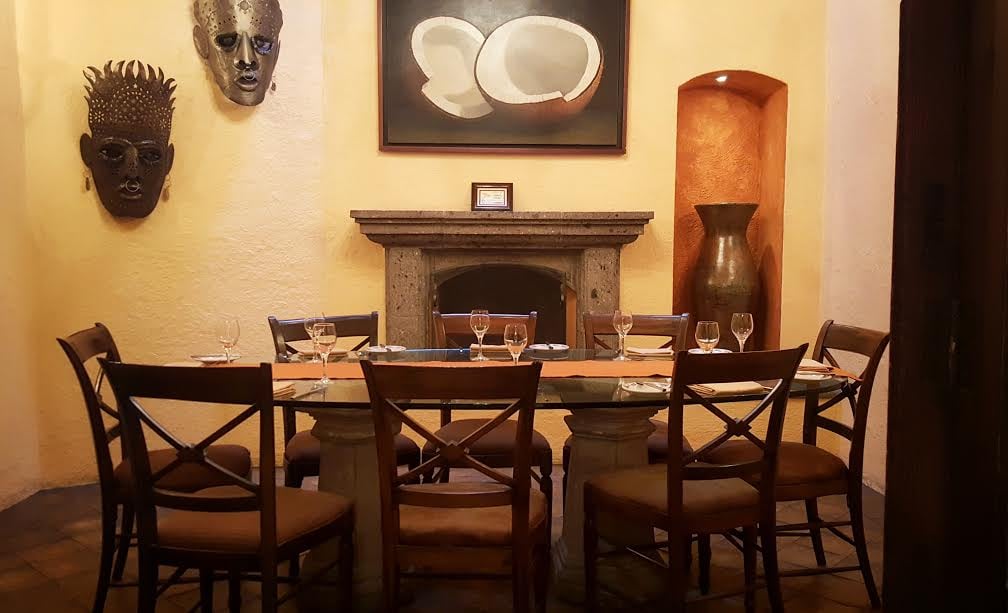
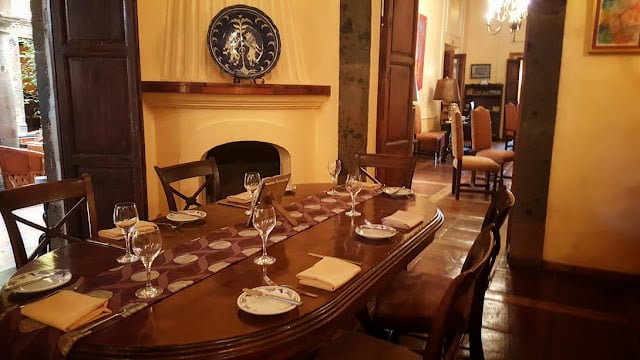
Restaurant: Andanza — Casa de Sierra Nevada, a Belmond Hotel
Address: Hospicio 35, Zona Centro, 37700 San Miguel de Allende, Gto., Mexico
Phone: +52 415‑150‑2018
Website: belmond.com
Days and Hours: Open Daily: 7:00 AM – 11:00 PM
Atmosphere:
Andanza may just be the coziest fine-dining destination in San Miguel de Allende — with the most fireplaces in a single restaurant, you’ll never be far from a warm hearth. Each dining room is thoughtfully appointed with colonial elegance, stately
charm, and soft lighting that casts a glow over the rich stone and wood textures. Whether you’re in the lush courtyard or tucked beside a roaring fire, the ambiance is timeless and transportive — perfect for both romantic dinners and special celebrations.
Service:
Service at Andanza is what you'd expect from a Belmond property: warm, attentive, and gracefully paced. Staff members are highly professional and intuitive, striking the right balance between formality and friendliness. From greeting to farewell, the experience feels personal and polished.
Cuisine:
Under the creative direction of Chef Antonio Arzola, Andanza presents an elevated, globally inspired menu grounded in Mexican traditions. Chef Arzola’s winter menu is a celebration of seasonal ingredients, hearty flavors, and comforting sophistication — a feast that makes braving the chill well worth it. Expect deeply satisfying dishes that pair beautifully with the restaurant's warming ambiance.
One of the standouts is the Cornish hen with au jus, delicately roasted and expertly balanced with seasonal vegetables. Another guest favorite is the spicy mussels in a curry-like broth, which brings a bold yet elegant touch to the appetizer section.
Andanza’s starters reflect its refined yet approachable ethos: salads with crisp local greens, inventive soups with warming spices, and indulgences like fresh-baked breads paired with house-made salsas and butters. The churros with Oaxacan chocolate, offered as a starter or dessert depending on mood, are a beloved staple.
The winter menu offers soul-warming options like duck quesabirrias, salmon bagel sandwiches with herb cream, and the aforementioned Cornish hen. Mexican ingredients are showcased alongside international techniques, resulting in a menu that is both comfort-driven and creative.
Desserts:
Classic Mexican flavors shine here — churros con chocolate, tamarind sorbets, and rotating seasonal tarts. Each dessert is carefully plated and never overly sweet, ideal for pairing with a digestif or nightcap.
Wine and Cocktails:
The wine list is extensive and thoughtful, with a strong emphasis on Mexican wines and international labels that complement the bold flavors of the cuisine. Cocktails, especially those highlighting mezcal and tequila, are crafted with flair. Don’t miss the seasonal specials, which often incorporate fresh herbs and fruits from the region.
Final
Thoughts:
Andanza is more than just a meal — it's a warm embrace on a cold San Miguel evening. With its abundance of fireplaces, richly historic setting, and Chef Arzola’s thoughtfully composed winter menu, this restaurant defines luxury dining without feeling pretentious. Whether you're staying at Casa de Sierra Nevada or simply seeking a magical dinner in town, Andanza delivers one of the most memorable culinary experiences in the city.
Cost: $$$$
Rating: ⭐️⭐️⭐️⭐️⭐️ (5 stars – for atmosphere, cuisine, and service)
|
|
|
|
|
| Information related to Mexico, senior care and health:
|
|
|
- Lead article - These are articles specifically written for you each week. They address a wide range of
relevant topics, such as factors that can increase your health and lifespan, diagnostics, understanding causal factors for Alzheimer's and other dementias, and so on. The lead article typically sets the tone for the core content of the newsletter (videos and book reviews). On occasion, the focus may be centered on Mexico, Pueblos Magicos, and San Miguel de Allende.
- Caregiver's Sentiment
- This quote typically honors what we, as caregivers, are going through and feeling.
- Caregiver's Affirmation - This affirmation bolsters our self care, our image or ourselves on this journey and our ability to endure.
- Videos - Typically, three videos are related to the lead article, and they include a summary and timestamped highlights.
- Book Review - Typically related to the lead article.
|
|
|
|
|
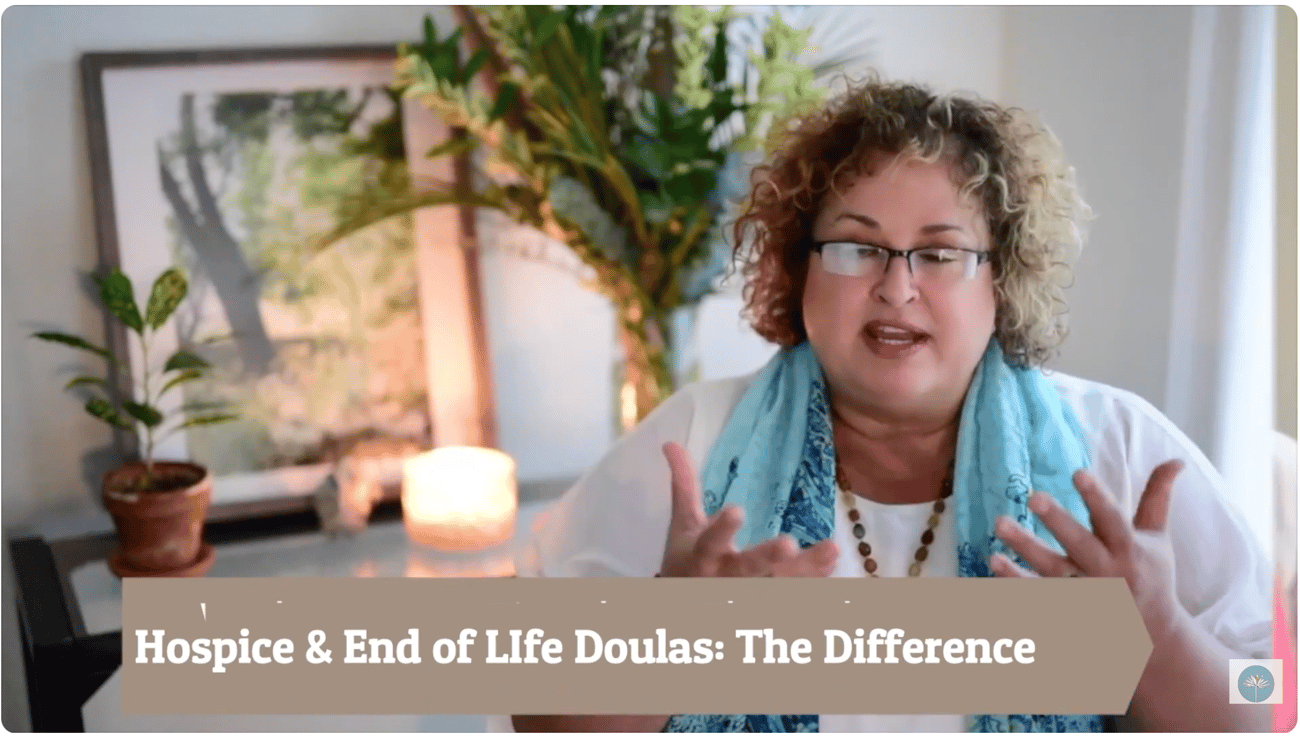
End-of-Life Care: Understanding the Roles of Hospice, ICU, Palliative Care, and Death Doulas
This guide explores the roles of hospice, ICU, palliative care, and death doulas, each offering unique and essential support for terminally ill patients and
their families. By comprehending these services, families can make informed decisions that prioritize the patient’s dignity and quality of life.
Introduction
Facing the end of life is one of the most profound and challenging experiences for individuals and their families. Despite its inevitability, many of us are unprepared for the end-of-life process—not just the brutal finality but the complex journey leading up to it. It involves a series of emotional, physical, and spiritual challenges that require thoughtful consideration and compassionate care. This article aims to provide a comprehensive guide to navigating end-of-life care, detailing the roles of hospice, intensive care units (ICUs), palliative care,
and death doulas. Understanding these services and their interplay can help patients and families make informed decisions that align with their values and needs during one of life’s most significant transitions.
Option Distinctions and Intersections
1. Hospice Care
Function and Support: Hospice care is a compassionate approach tailored for patients in the final months of life, typically when
life expectancy is six months or less. The focus shifts from curative treatments to comfort and quality of life. Hospice services encompass medical care, pain management, emotional support, and spiritual resources, primarily delivered in the patient’s home or a homelike setting. This holistic approach addresses the needs of both patients and their families, ensuring that the remaining time is as peaceful and meaningful as possible.
Intersecting Roles: Hospice care often works in synergy with palliative care teams to provide comprehensive symptom management. The hospice team comprises doctors, nurses, social workers, and spiritual advisors, all dedicated to offering a supportive environment that aligns closely
with palliative care practices. This collaborative approach ensures that patients receive consistent and compassionate care tailored to their individual needs.
2. Intensive Care Unit (ICU)
Function and Support: The ICU is designed for patients with severe, life-threatening conditions requiring intensive treatment and monitoring. The primary goal is to sustain life and stabilize critical conditions using advanced medical technologies and interventions. ICU care is characterized by its curative intent, focusing on aggressive treatments to manage acute health crises.
Intersecting Roles: While ICU care is fundamentally different from hospice and palliative care, there are situations where collaboration becomes essential. When a patient’s condition is deemed irreversible and recovery unlikely, ICU teams may work with palliative care specialists to transition the focus from curative efforts to comfort care. This shift often involves discussions with families about the potential benefits of moving the patient to hospice care, where the emphasis is on quality of life rather than prolonging life through intensive interventions.
3. Palliative Care
Function and Support: Palliative care is specialized medical care aimed at providing relief from the symptoms and stress of serious illnesses. Unlike hospice care, palliative care is not limited to end-of-life scenarios and can be provided alongside curative treatments at any stage of the illness. The primary objective is to enhance the quality of life for both the patient and their family by addressing physical, emotional, and spiritual needs.
Intersecting Roles: Palliative care
teams play a crucial role in bridging the gap between curative and comfort care. They work closely with ICU and hospice providers to ensure a seamless transition when the focus shifts from aggressive treatment to palliative measures. Palliative care specialists are integral in decision-making processes, helping patients and families navigate complex choices about the continuation or withdrawal of intensive treatments. Their involvement ensures that care plans are aligned with the patient’s goals and preferences.
4. Death Doula
Function and Support: Death doulas, also known as end-of-life
doulas, offer non-medical support to individuals and families facing the end of life. Their role is to provide emotional, spiritual, and practical assistance, helping to create a more personalized and meaningful end-of-life experience. Death doulas facilitate open conversations about death, assist with legacy projects, and support families through the grieving process.
Intersecting Roles: Death doulas complement the care provided by hospice and palliative care teams by addressing aspects of end-of-life care that medical professionals may not cover. They help patients and families navigate difficult decisions, plan home funerals, and ensure that the individual’s end-of-life wishes are honored. By providing
continuous support and a holistic approach, death doulas play a vital role in enhancing the overall experience of dying, making it a more peaceful and dignified process.
Summary
The end-of-life care spectrum is diverse, encompassing hospice, ICU, palliative care, and death doulas. Each service provides unique and essential support tailored to the needs of terminally ill patients and their families. By understanding the complementary and intersecting roles of these services, families can better navigate the complexities of end-of-life care. This knowledge empowers them to make informed decisions that
prioritize their loved one’s dignity and quality of life, ensuring that their final journey is one of comfort, compassion, and respect.
You can access the full article here; replete with bibliography and relevant videos here. You can also choose from our collection of 100+ articles on our site.
|
|
|
|
|
The Empty Side of the Bed is about how love lingers even after loss. When we spend a lifetime with someone, their presence seeps into everything — the routines, the silence, the small objects left behind. Even when they’re gone, the
house still carries their voice, their touch, their memory.
The song is written as a duet between the living and the departed: the husband’s voice warm and ghostlike, the wife’s voice clear and aching. Together they echo the refrain — “but you’re still here” — capturing both grief and comfort.
At its heart, the song says that love doesn’t vanish with death. It remains woven into the spaces we share, reminding us that absence can still feel like presence. Hear the song on YouTube. The Empty Side of the Bed
Style: inspired folk ballad | Key: D minor | Tempo: Medium-Slow (90 BPM)
Verse 1
I still hear you breathing when the night is long
Every silence in this house still carries our song
I can’t touch your hand, but I whisper in your ear
The body’s gone away… but you’re still here
Verse 2
I set out your cup though it never gets used
Your boots by the doorway, your sweater still folded and smooth
Every room is heavy with the weight of all our years
I lie down on my side… but you’re still here
Chorus
There’s an empty side of the bed
But your shadow still lies in the sheets
I reach through the dark, and your voice draws near
The world says you’re gone… but you’re still here
Verse 3
The moon spills silver on your weary face
I hum that old tune from our wedding day
I’m the breeze through the curtains, the chord you can’t quite hear
I can’t hold you close… but you’re still here
Chorus
There’s an empty side of the bed
But your shadow still lies in the sheets
I reach through the dark, and your voice draws near
The world says you’re gone… but you’re still here
Bridge
We’re two rivers running, bound for the same sea
The body fades away, but the soul won’t leav
Love remembers, stronger than the years
The promise still remains… because you’re still here
Final Chorus
There’s an empty side of the bed
But your shadow still lies in the sheets
I reach through the dark, and your voice draws near
The world says you’re gone… but you’re still here
Outro
(Last slide fades upward like a sigh — unresolved, lingering)
Copyright: Lyrics, music, arrangement, and production © 2025 James M Sims. All Rights Reserved.
About James M Sims
James brings nearly five decades of professional experience as a technology and strategy executive in industries including food and beverage manufacturing, grocery retail and distribution, worldwide augmentative staffing, heavy construction, home building, structural engineering, transportation, and healthcare. His creative pursuits have been equally diverse, spanning a career as a black-and-white fine art photographer, furniture designer and builder, custom Stratocaster guitar craftsman, culinary content creator, and digital marketing professional.
Following a 14-year journey caring for his late wife, who lived with early-onset Alzheimer’s, James discovered his purpose for this stage of life as a senior care advocate and journalist. His mission is to create meaningful content for
caregivers and their families—through long-form and op-ed articles, photography, videos, and songs—offering insight, support, and a voice for those navigating the challenges of care.
Cielito Lindo, situated within Rancho Los Labradores, is a warm, integrated senior-living community in the heart of San Miguel de Allende, Mexico. Offering full-spectrum care — from independent living to memory care and hospice — it blends heartfelt hospitality with beautiful grounds, colonial-style architecture, and compassionate, practical services tailored to each resident’s needs.
Rancho Los Labradores is a master-planned, gated retirement haven known for its elegant villas, lush gardens, mountain views, and a vibrant yet serene pace of life. Together, they create a setting where comfort, community, and quality of life flourish in every season.
James Sims
📧 James@CielitoLindoSeniorLiving.com
📞 1.888.406.7990
The Resilient Heart
Albums on YouTube:
• Taking Care
• The Long Goodbye
• Love and Renewal
• Bienvenidos
Official Website: The Resilient Heart
Streaming on 23+ platforms, including:
• Spotify
• Apple Music
• Amazon Music
• YouTube Music
• Tidal
• Deezer
• iHeartRadio
|
|
|
|
|
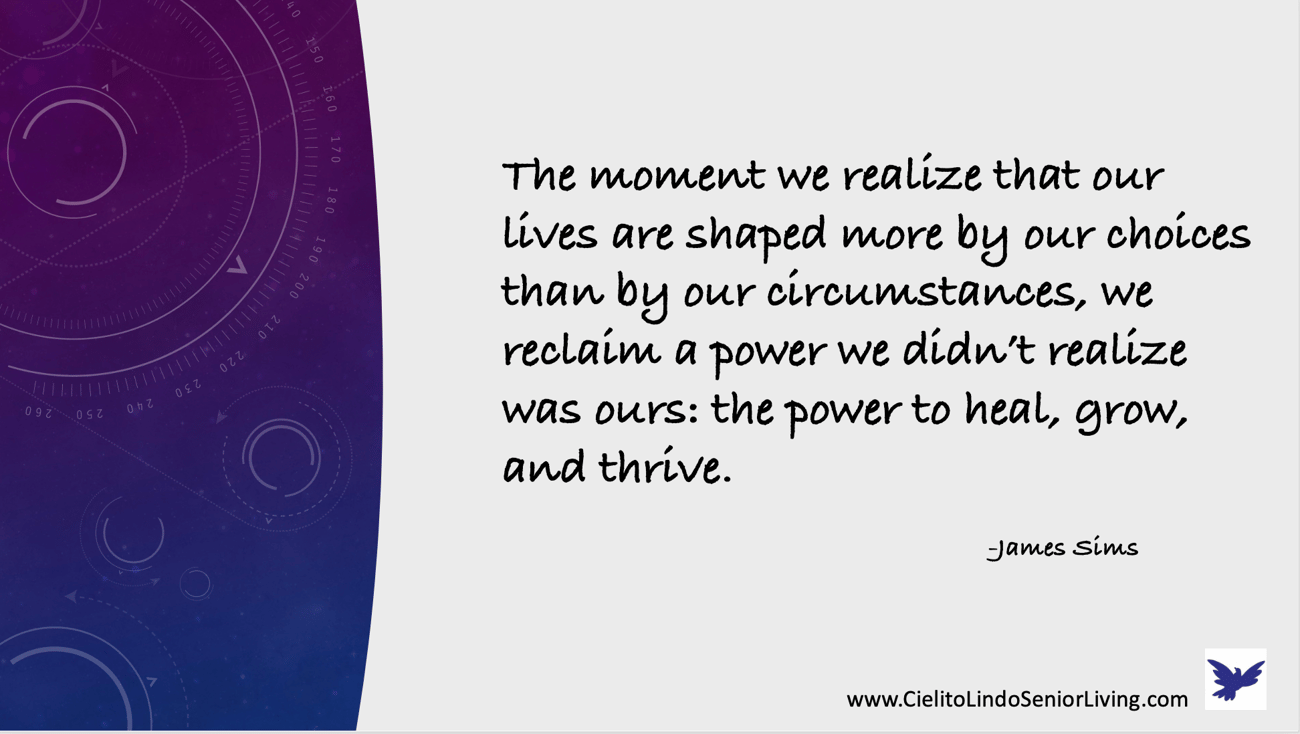
Caregiver's Sentiment: Taking Back Control
Life often feels like a storm, with circumstances beyond our control—unexpected challenges, hardships, or even the pressures of daily living. In these moments, it’s easy to believe we are passengers, subject to the whims of fate. But when we pause and reflect, we see that, even in the storm, we have choices: how we care for our bodies, nurture our minds, and tend to our spirits. These choices may seem small—what we eat, how we move, how we rest, what we believe—but they are profound. They are the quiet acts of self-respect and self-love that shape the very fabric of our health and vitality.
Managing the factors that govern our healthspan and spiritual well-being is not about denying the hardships we face; it is about realizing that, despite the chaos, there is still a sacred space within us where we can plant seeds of change. Choosing nourishing foods, moving our bodies, practicing mindfulness, or seeking moments of stillness are not acts of defiance against our circumstances but acts of harmony with our deeper purpose. They remind us that we are not powerless. These actions, however modest, honor the gift of life itself, humbly acknowledging that while we cannot control the length of our days, we
can profoundly shape their quality. And in doing so, we embrace the great paradox of life: that within surrender lies strength, and within acceptance lies the power to thrive.
My heart goes out to all caregivers, for only those that have been in your shoes can understand the journey you are on.
|
|
|
|
|
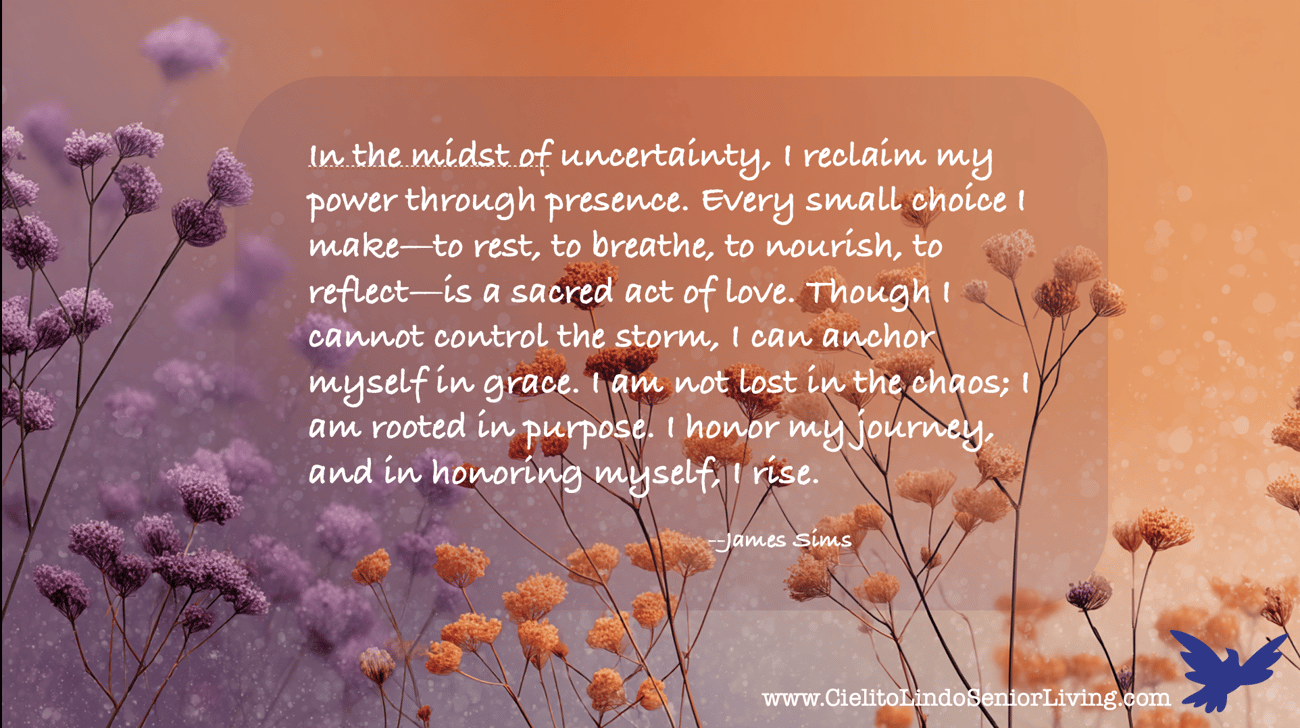
Caregiver Affirmation
“In the midst of uncertainty, I reclaim my power through presence.” This line invites the caregiver to anchor themselves in the now—to stop wrestling with the past or fearing the future, and instead to find power in this very moment. Presence is a form of self-liberation. In a world that often feels unpredictable, choosing to be fully present is a radical act of control and grounding. “Every small choice I make—to rest, to breathe, to nourish, to reflect—is a sacred act of love.” Caregivers are often attuned to the needs of others, sometimes to the point of losing sight of their own. This
line affirms that self-care is not indulgence; it is reverence. Each decision—to take a breath, to choose a nourishing meal, to sit in stillness—is a meaningful expression of self-respect and a return to wholeness. “Though I cannot control the storm, I can anchor myself in grace.” Here, we acknowledge that the external circumstances—the illness of a loved one, the demands of caregiving, the weight of emotional and physical exhaustion—may be outside our influence. But the response to those conditions is ours to choose. Grace becomes the anchor: a choice to meet difficulty not with resistance, but with inner steadiness and compassion. “I am not lost in the chaos; I am rooted in purpose.” This is a powerful reframe. Many caregivers feel like they’re being pulled in all directions, but this line shifts the narrative. Even amid chaos, the caregiver has roots—a reason, a calling, a quiet strength. Their identity isn’t swallowed by the role; it's deepened by it. “I honor my journey, and in honoring myself, I rise.” The closing lines speak to dignity and self-recognition. Caregivers often go unacknowledged—even by themselves. This is a call to pause and honor the path they walk: the choices, the sacrifices, the courage it takes to keep showing up. And by doing so—not just enduring, but choosing to honor themselves—they rise, not just in strength but in spirit.
This affirmation is not a platitude; it’s a mirror. It reflects the sacred truth that caregivers live every day: that love, though demanding, is transformative—and that strength is not always loud. Sometimes, it’s found in the softest choices we make to care for ourselves.
|
|
|
|
|
Video: When caregiving comes
your way: Pamela Nelson at TEDxSMU 2013
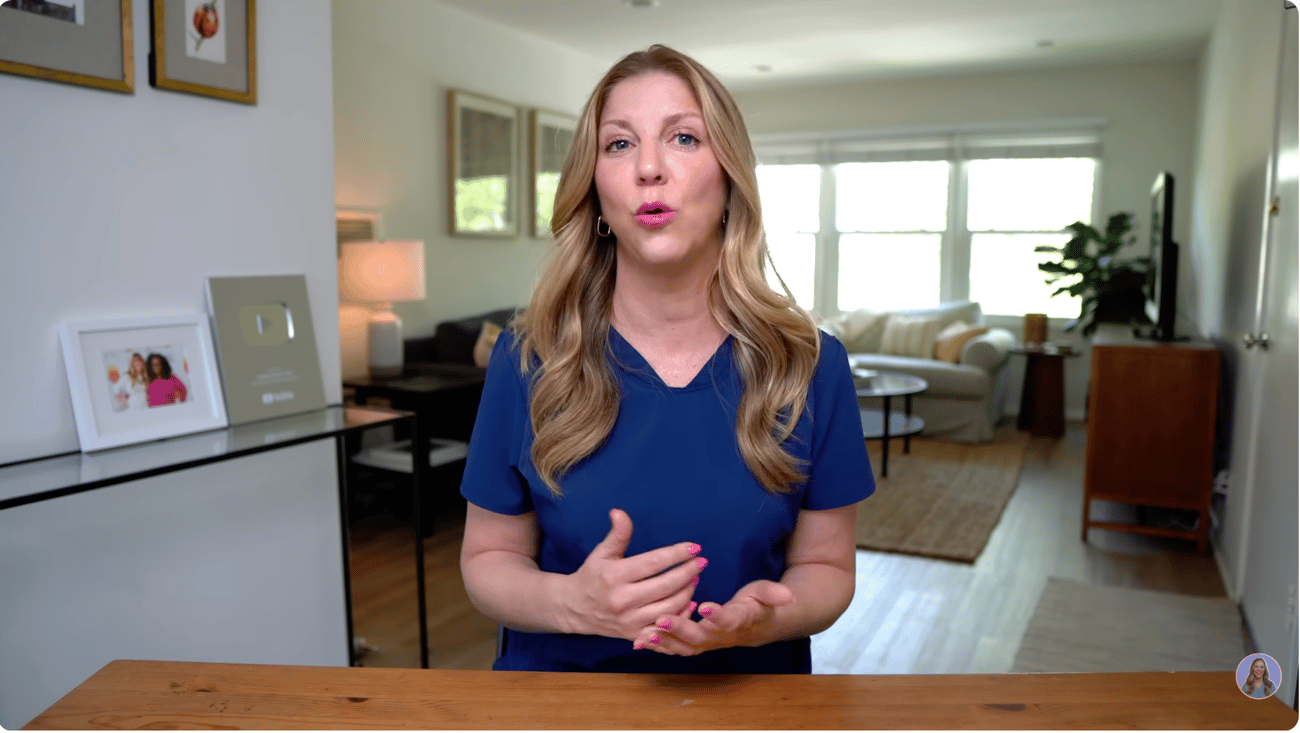
Pamela Nelson’s TEDx talk offers a warm, generous glimpse into the world of caregiving. Her reflections on humor, resilience, partnership, and the quiet strength that emerges when life changes direction will resonate with many who have walked this path. Her story is uplifting, rooted in mutuality, and carried by moments of connection that remain intact even as illness reshapes daily life.
For those caring for someone with a chronic disease marked by progressive cognitive loss, the journey often unfolds differently. Mutuality becomes harder to maintain. Shared decision-making, shared
jokes, shared rituals, and even shared memories may slowly slip out of reach. The emotional center of gravity shifts. Caregiving becomes less of a partnership and more of a one-way act of devotion; not because the love is diminished, but because the person you love is losing capacities they never wanted to
surrender.
None of this diminishes the value of Pamela’s message. In fact, it highlights why her reminders—to laugh when you can, to accept help, to forgive misunderstandings, to pause, to stay present—matter so deeply. For some of us, these practices become not just helpful suggestions but the lifelines that carry
us through the long, uneven terrain of cognitive decline.
Her talk serves as a beautiful entry point into the conversation, and I continue to admire it. At the same time, I want to honor the different emotional contours that come with conditions like Alzheimer’s, Parkinson’s, PSP, frontotemporal dementia, and other disorders that steadily erode cognition. The caregiving experience in these cases is often marked by ambiguity, anticipatory grief, and the slow unraveling of shared identity. Finding a mutually happy middle ground becomes more challenging as the illness advances, and yet many caregivers continue to show up with
extraordinary patience and quiet courage.
With that context in mind, this video is still worth every minute—not because it mirrors every caregiving experience, but because it reminds us why love keeps us in the room, long after circumstances have changed.
View the video here:
Highlights:
0:02 - Pamela introduces herself as an artist who has prioritized her art for decades.
1:10 - She reflects on a quote by Virginia Woolf about arranging the pieces that come your
way.
2:06 - Pamela recounts the day of September 11, 2001, and her husband's routine surgery.
3:11 - She shares her husband's diagnosis of progressive supranuclear palsy (PSP) and its impact on their lives.
5:44 - Bill's resilience and humor shine through despite his illness, teaching valuable life lessons.
6:35 - Pamela offers tips for caregivers, emphasizing the importance of laughter and support.
8:10 - She discusses the significance of taking moments to pause and reflect amidst caregiving challenges.
9:03 - Pamela stresses the need to forgive those who may not understand the struggles of caregiving.
10:14 - She
highlights the deep intimacy and connection developed through shared experiences in caregiving.
11:45 - The couple's nightly ritual of reviewing their day and sharing highlights before sleep.
|
|
|
|
|
Critical Brain Health Factors
For those of us who have cared for someone living with cognitive
decline, the experience reshapes more than our daily routines; it alters the way we think about our own future. Bearing witness to the slow, heartbreaking erosion of memory, personality, and independence naturally turns our attention inward. We begin to wonder what is happening inside our own brains. We hope, sometimes quietly and sometimes with real fear, that we will not face the same fate. That hope often sends us searching for answers, for something that can help us understand what protects the brain, what strengthens it, and what gives us a measure of agency in the midst of so much uncertainty.
That is why Dr. Lara Boyd’s TEDx talk is so meaningful. Her explanation of neuroplasticity—the brain’s ability to change, adapt, and reorganize throughout our entire
lives—offers more than scientific insight. It offers encouragement. She reminds us that the brain is not fixed or predetermined, that it responds to how we live, what we practice, and the choices we make each day. For caregivers, and for anyone living with the shadow of cognitive loss, this knowledge can feel like a lifeline. It reframes the conversation from inevitability to possibility, from fear to informed hope.Dr. Boyd’s research shows that meaningful change is driven not by age or luck, but by engagement, repetition, and sustained effort. Understanding this does not erase the grief of watching someone decline, but it does remind us that our
own brains remain responsive and capable. This video is a powerful starting point for anyone seeking to better understand how learning, habit, and intention can shape the health of the mind.
Video: After watching this, your brain will not be the same | Lara Boyd | TEDxVancouver
In her TEDx talk, Dr. Lara Boyd explores the dynamic nature of the brain and how learning reshapes it through neuroplasticity. She dispels common myths, such as the belief that the brain stops changing after childhood, and
emphasizes that the brain remains active even at rest. Boyd explains that learning induces chemical, structural, and functional changes in the brain, which are essential for both short-term and long-term memory. She provides examples of how specialized skills can lead to physical changes in brain regions. Ultimately, she questions the factors that limit neuroplasticity, particularly in the context of learning difficulties and recovery from brain injuries.In her talk, Dr. Boyd emphasizes the importance of understanding neuroplasticity and its implications for learning and recovery. She advocates for personalized approaches in both medicine and education, recognizing that individual differences significantly affect outcomes. The key takeaway is that active engagement and
practice are vital for brain development, and individuals should be mindful of their behaviors to foster positive changes in their brains.
View the video here.
Highlights:0:14 - Dr. Lara Boyd introduces her
fascination with how we learn and the differences in learning abilities.1:03 - The misconception that the brain does not change after childhood is debunked.1:27 - The brain is highly active even when at rest, contrary to previous beliefs.1:49 - Neuroplasticity is introduced as the concept that learning changes the brain.2:41 - The brain changes chemically to support learning through increased signaling between neurons.3:18 - Structural changes in the brain occur during learning, affecting long-term memory.4:02 - Short-term improvements in skills may not reflect actual learning due to the need for
structural changes.4:49 - Examples of brain structure changes in individuals with specialized skills, like Braille readers and taxi drivers.5:20 - Functional changes in the brain occur as regions become more excitable with use.6:08 - Dr. Boyd raises questions about the limitations of neuroplasticity and its implications for learning and recovery.6:53 - Stroke recovery is challenging, and effective rehabilitation interventions are lacking.7:41 - Behavior is the primary driver of neuroplastic change in the brain.8:05 - Research focuses on therapies that prepare the brain to learn, including brain stimulation and exercise.9:11 - There is no neuroplasticity drug; practice is essential
for learning.10:14 - There is no one-size-fits-all approach to learning; personalized medicine is crucial.11:20 - Biomarkers can help match therapies with individual patients for better recovery outcomes.12:03 - Personalized learning is important as each brain is unique.12:40 - Understanding individual patterns of change can advance neuroscience and interventions.13:00 - Learning strategies will vary between individuals and even within the same person.14:10 - Everything you do shapes your brain; aim to build the brain you want.
|
|
|
|
|
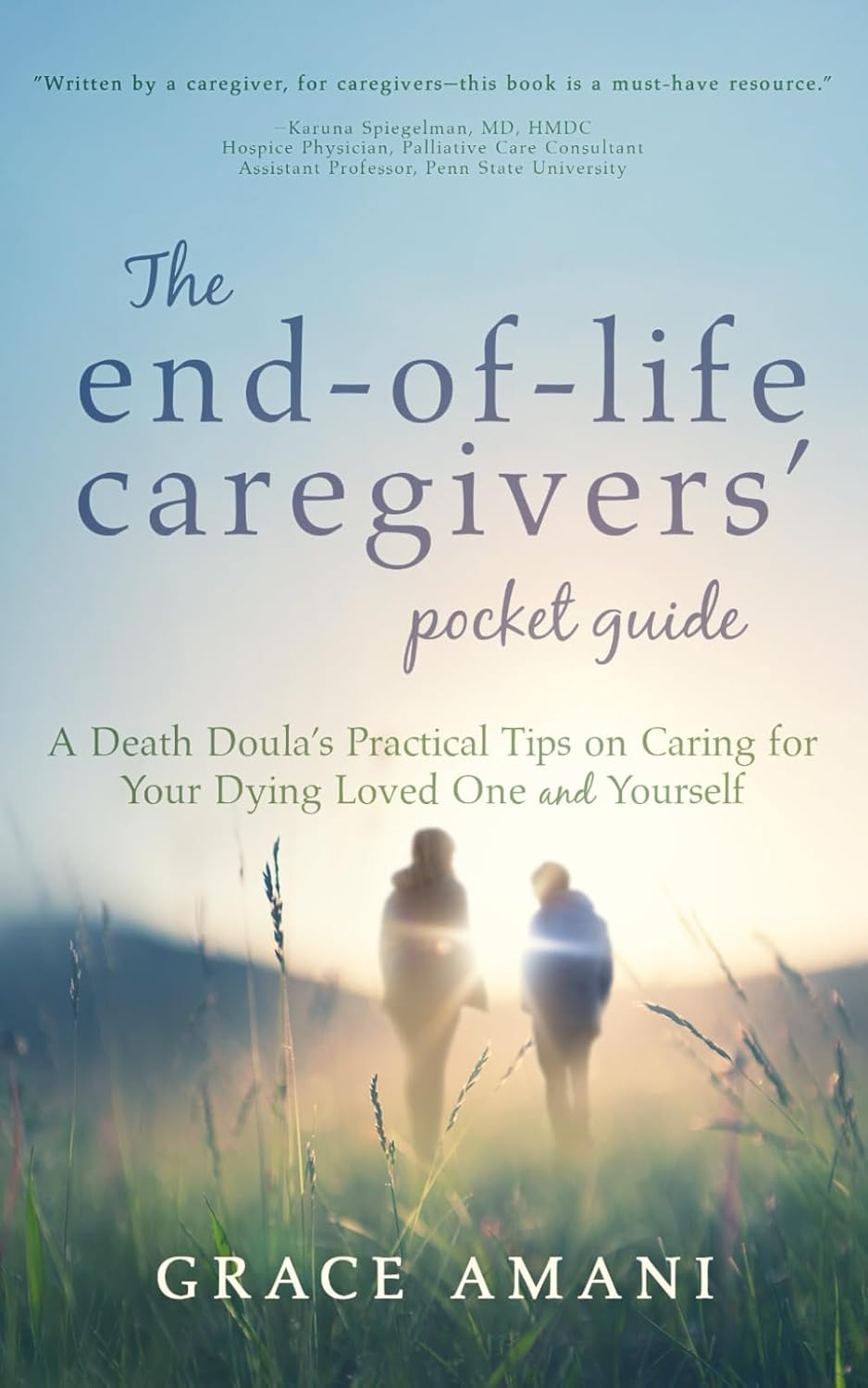
Book Review: The End-of-Life Caregivers’ Pocket Guide: A Death Doula’s Practical Tips on Caring for Your Dying Loved One and Yourself
By Grace Amani (Published June 16, 2025)
Overview
Grace Amani’s The End-of-Life Caregivers’ Pocket Guide is a
compassionate, grounded, and practical resource designed to support individuals caring for terminally ill loved ones. Drawing from her real-world experience as a death doula, Amani offers a rare blend of emotional insight and actionable advice, filling a much-needed gap for caregivers who often feel overwhelmed, isolated, or unsure of what to do next. This pocket guide is refreshingly accessible, yet deeply informative—ideal for both first-time and experienced caregivers.
Synopsis This compact guide functions as a hands-on manual for navigating the emotional, practical, and interpersonal aspects of end-of-life caregiving. It opens by validating the dual experience of
gratitude and burden that many caregivers feel, and it quickly moves into offering concrete tools. From comfort care strategies and communicating with dying individuals, to managing family conflict, legacy building, and coping with the inevitability of death, Amani provides support that is both human and professional.
The guide also offers tips on working alongside healthcare professionals and death doulas, explaining their roles and how they can assist in creating a more peaceful, dignified death experience. Equally important is the focus on the caregiver’s well-being—Amani emphasizes self-care, boundary-setting, and emotional resilience.
Key
Themes
- Emotional Intelligence in Caregiving: Understanding grief, anticipatory loss, and the unique psychological toll caregiving takes.
- Practical End-of-Life Support: Physical comfort care, communication techniques, and guidance on what to expect in the final days.
- Family Dynamics and Conflict Resolution: Navigating differing opinions, expectations, and histories within families during high-stress times.
- Self-Care and Burnout Prevention: Empowering caregivers to prioritize their own needs without guilt.
- Legacy and Meaning: Helping both caregivers and dying loved
ones explore meaning, memory, and closure.
- Professional Collaboration: Introducing the role of a death doula and encouraging readers to seek support when needed.
Writing Style Grace Amani writes with clarity, calm, and kindness. Her tone is direct but never clinical, and the advice is presented in digestible sections that suit the “pocket guide” format. This is not a dry manual, nor is it overly sentimental—it strikes a
careful balance, offering emotional validation alongside step-by-step guidance. Her experience as a death doula informs every page, lending the book a quiet authority and a deeply human touch.
Conclusion
The End-of-Life Caregivers’ Pocket Guide is an essential companion for anyone facing the emotional and logistical challenges of caring for a dying loved one. It doesn’t sugarcoat the process but offers comfort and clarity. It’s especially relevant for seniors caring for a spouse or peer, adult children supporting aging
parents, or anyone navigating hospice and palliative care settings. This guide will be a lifeline for many, offering not only practical tools but emotional strength.
Rating: ★★★★★ (5 out of 5 stars) This book stands out in the crowded caregiving literature by being both heartfelt and helpful. Highly recommended for personal caregivers, hospice volunteers, and professionals seeking a succinct, empathetic resource.
Additional Resources Cielito Lindo Offers
We have curated collections of resources that may be useful.
Articles - We write fresh articles about senior living, health, care, and
finances every week
Caregiver Books - We review books related to caregiving methods, logistics,
challenges, and coping
Senior Health - We review books related to healthspan, lifespan, and disease
We also have 1,700+ other senior care and expat in Mexico videos: YouTube
|
|
|
|
|
| Cielito Lindo's basic information is included for your convenience:
|
|
|
- Cielito Lindo Info: After the signature, the newsletter always includes information about Cielito Lindo, so it is at your fingertips when you want it: Our costs, various related websites, social media channels like YouTube, our various addresses, and so on.
- Travel Info: Recommended airports and shuttles.
|
|
|
Web Sites - Cielito LIndo and Rancho Los Labradores
Here are our Web sites, including Cielito Lindo and Labradores Suites (hotel) all of which are part of the larger Rancho Los Labradores gated community just north of San Miguel de Allende.
Web Sites - Cielito LIndo and Rancho Los Labradores
Here are our Web sites, including Cielito Lindo and Labradores Suites (hotel) all of which are part of the larger Rancho Los Labradores gated community just north of San Miguel de Allende.
- Cielito Lindo provides independent living, light assisted living, assisted living, memory care and hospice with 24*7 staffing along with a la carte assisted living services to those living in the villas and suites at Rancho Los Labradores.
- Rancho Los Labradores Suites offer short and long term residence.
- Rancho Los Labradores is a country club resort feeling CCRC that provides a gated community with countless amenities and opportunities for different levels of independent living along with assisted living and memory care within Cielito Lindo.
Cielito Lindo Living Options & Costs Guide
We offer several living options depending on the level
of care you or your loved one needs. Here’s a breakdown to help you plan:
1) Villas (Rent or Own)
- Cost: $1,300 – $1,700 per month
- Additional Costs: Utilities, renter’s insurance, etc.
- What’s Included: This is mostly independent living.
- Extras: You can add independent or assisted living services (charged separately, à la carte).
- Support: We can connect you with a realtor if you'd like to purchase.
2) Cielito Lindo Condos & Suites
Best for: Independent living with optional assistance.
Option 1: Independent Living + Meals
- Cost: $2,250 per month
Includes:- 2 meals a day
- Hotel like room cleaning, towel and linen service
- Monthly medical check-up
Optional Add-ons:- Meals for an additional person: $450/month
- Extra care services available à la carte
Option 2: Light-Assisted Living in Condos & Suites
- Cost: $3,900 per month
Includes:- Full assisted living services
- Designed for residents who still want independence but need some support
- Smooth transition to full Assisted Living or Memory Care as needs change
- One-Time Inscription Fee: $4,000
For Couples:- $4,900/month for two people
- Same one-time fee ($4,000 per couple)
- Note: Suitability is based on cognitive ability, mobility, and safety.
3) Cielito Lindo Assisted Living, Memory Care, & Hospice
Best for: Seniors needing full-time care and supervision.
- Cost: $3,900 per month
Includes:- 24/7 care and monitoring
- All meals
- Physical therapy
- Full-time doctor on site
- Spacious private room with
bath
- One-Time Inscription Fee: $4,000
- For
Couples: $4,900/month
4) Specialized Hospice Suite
Best for: Intensive care needs or end-of-life comfort and also recuperative at a far lower cost than a hospital- Cost: $4,900 per month
Includes:- Full 24/7 monitoring
- Recuperative, Palliative and hospice care
- On-site doctor
- All meals
- Special space for visiting family
|
|
|
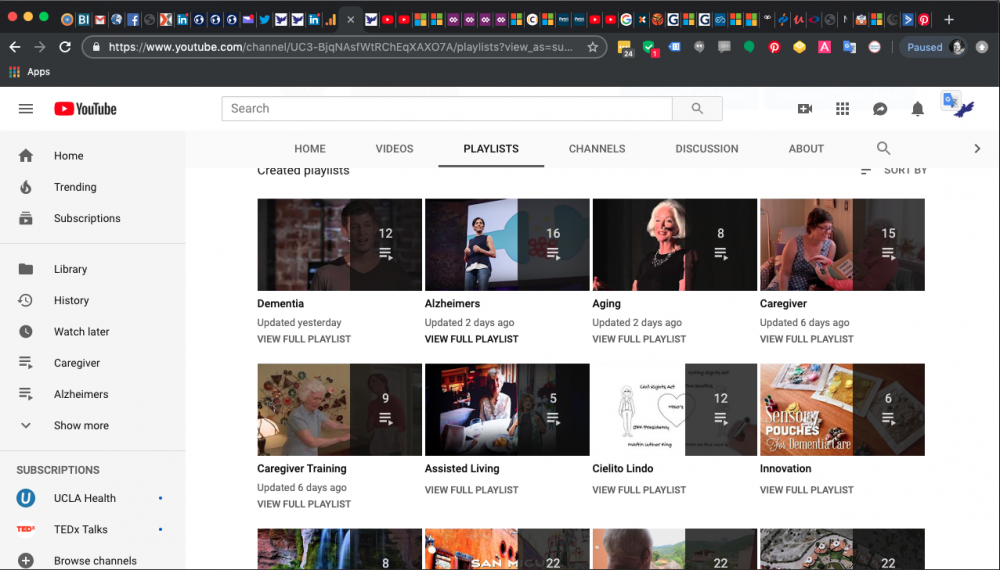
YouTube videos and Curated Playlists
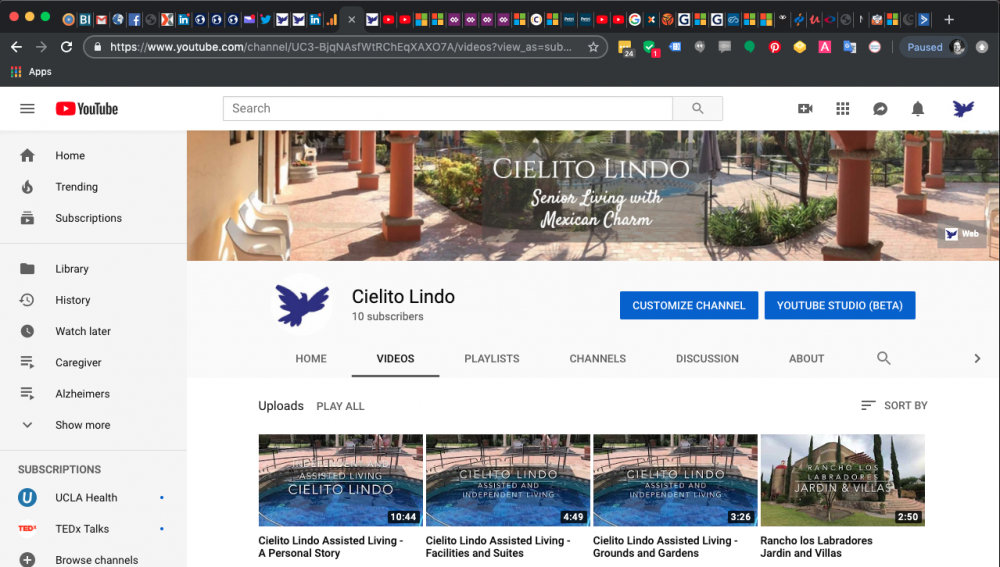
Here is our YouTube Channel. This is where we have lots of videos about Cielito Lindo and Rancho Los Labradores. We also have 1,600+ other senior care and expat in Mexico videos: YouTube |
|
|
|
|
Additionally, our playlists cover a wide area and include 1,200+ videos. These playlists include videos about San Miguel and Mexico in general, caregiving and health, and a broad spectrum of senior living topics. Playlists
|
|
|
|
|
Additional Resources We Offer
We have curated collections of resources that may be useful:
Articles - We write fresh articles about senior living, health, care, and finances every week
Caregiver
Books - We review books related to caregiving methods, logistics, challenges, and coping
Senior Health - We review books related to healthspan, lifespan, and disease
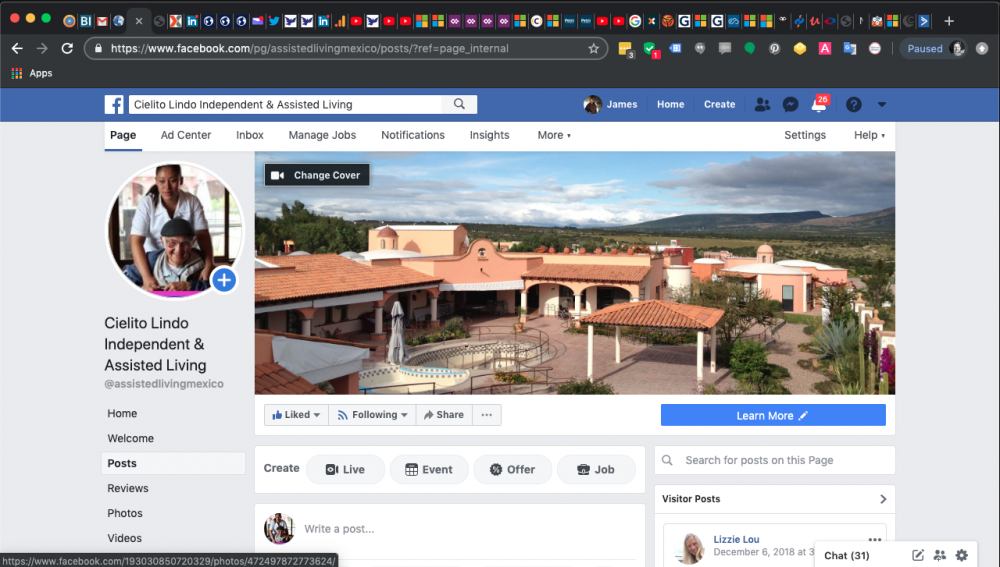
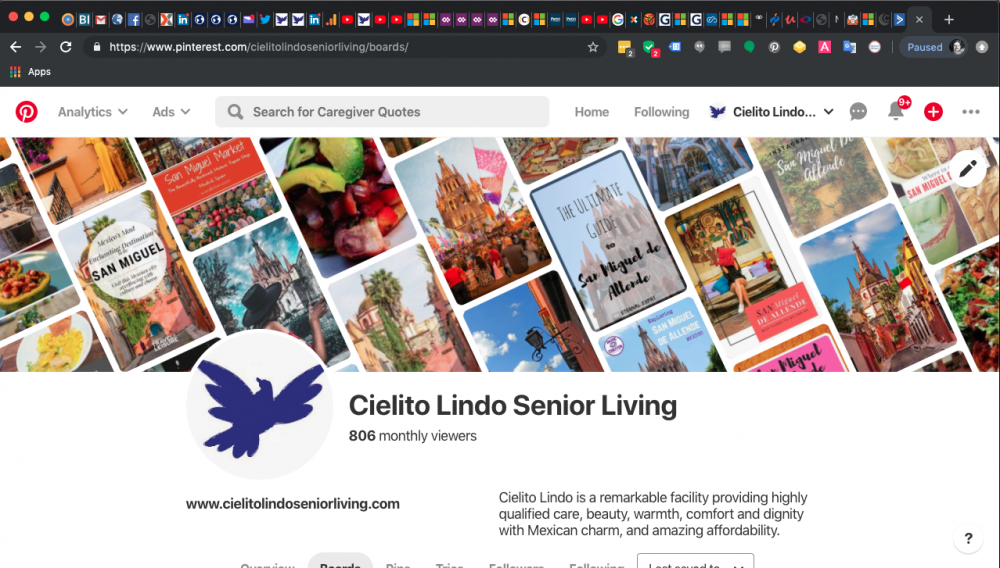
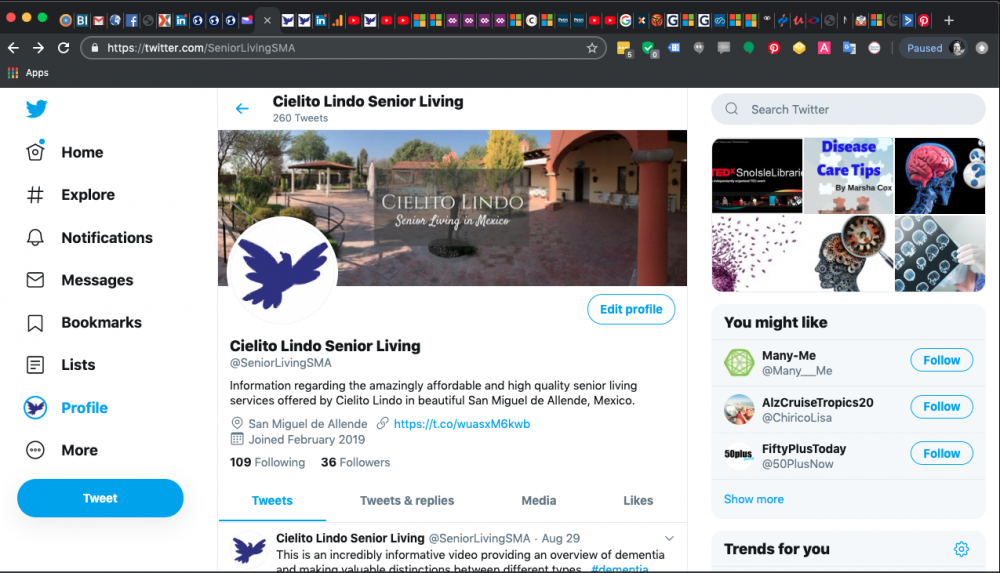
And here are our various social media forums, where we talk a lot about assisted living and memory care along with the various sort of challenges that sometimes come in our senior years (Alzheimer’s, Parkinson other dementias, and so on), but also about senior living in Mexico.
Facebook
|
|
|
|
|
|
|
|
|
|
|
|
|
|
|
|
|
|
|
Please don’t hesitate to contact me for anything related to senior living, especially in Mexico. I will gladly give you any assistance I can.
Thanks again!
James
James Sims
Marketing and Sales
Cielito Lindo Senior Living
1. 888.406.7990 (Voice and text)
1.209.312.0555 (WhatsApp)
Phones:
English speaking:
1.888.406.7990 (in US & CDN)
00.1.881.406.7990 (in MX)
Spanish speaking:
011.52.415.101.0201 (in US & CDN)
1.415.101.0201 (in MX)
Expat Health
Insurance:
ExpatInsurance.com
Tax Considerations for Expats:
Robert Hall Taxes
Medicare in Mexico
Lakeside Medical Group:
Robert Ash - ash@lakemedical
Best Bank:
Intercam Banco
Located in: Plaza De La Conspiración
Address: San Francisco 4, Zona Centro,
37700 San Miguel de Allende, Gto., Mexico
Hours: Open ⋅ Closes 4 PM
Phone: +011 52 415 154 6660
Addresses and Travel:
Physical address:
Cielito Lindo Independent and Assisted Living, Camino Real Los Labradores S/N, Rancho Viejo 1, San Miguel de Allende, GTO, Mexico, 37885
Packages from online providers like Amazon:
Camino Real Los Labradores, Rancho Los Labradores / Cielito Lindo, San Miguel de Allende, GTO, 37880 México
PO Box for letters and small envelopes:
Rancho Los Labradores / Cielito Lindo, c/o Alejandra Serrano , PMB N° 515-C,
220 N Zapata HWY N°11, Laredo TX, 78043-4464
Air:
Best airports to fly into: Leon (BJX) or Queretaro (QRO)
Shuttle:
Best
airport shuttle: BajioGo
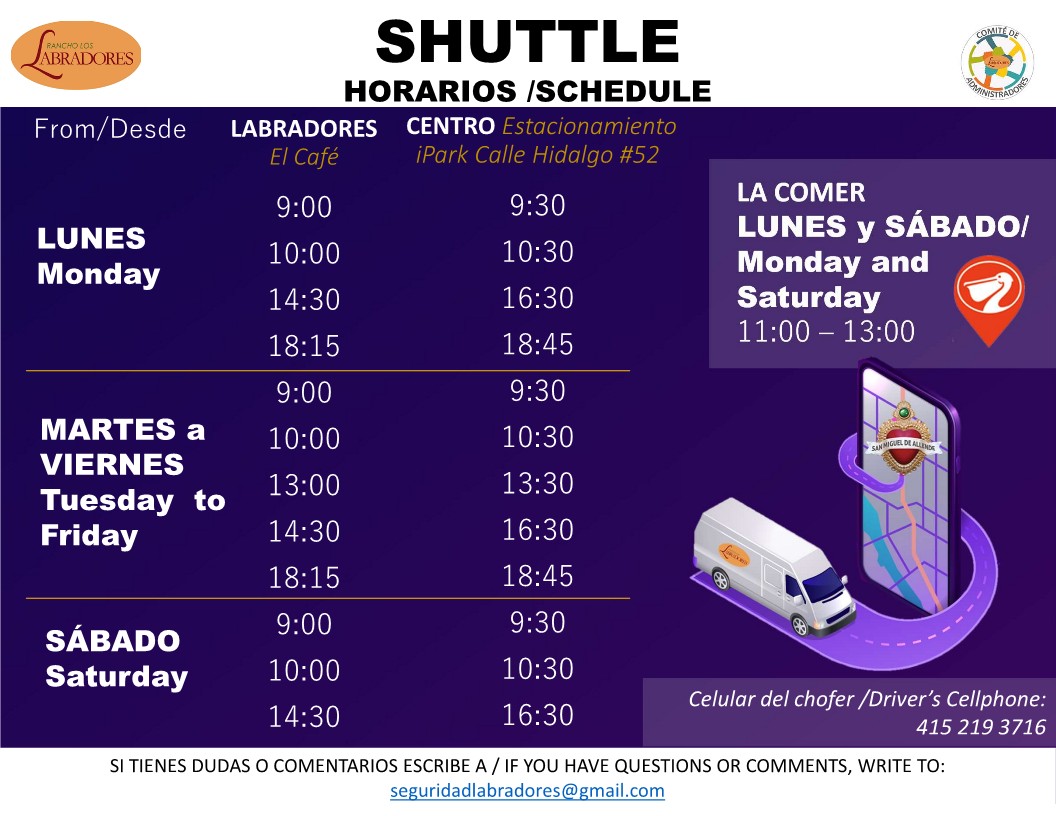
Shuttle between San Miguel and Rancho Los Labradores / Cielito Lindo
|
|
|
|
|
|
|
Regards,
James
James Sims
Marketing and Sales
Cielto LIndo Senior Living
jsims.cielitolindo@gmail.com
|
|
|
|
|
|
|
|