|
|
Dear ,
This is your weekly summary of our news, research, books, videos, and other resources related to senior living, retirement, and care in Mexico, along with independent and assisted living and information about age-related challenges (e.g., limited mobility, dementia, Alzheimer's, Parkinson's, ALS, stroke, multiple sclerosis, healthspan, and so on).
I hope you are finding this weekly newsletter helpful, and if you know of someone who may also find this information helpful, please forward it to them. They can subscribe using our Web Newsletter page (click here). If, for any reason, you do not wish to receive this weekly newsletter any longer, there is a simple 'Unsubscribe' or 'Opt Out' link at the bottom right corner of this newsletter and also right here: Unsubscribe
This weekly newsletter typically includes information in each of the following categories: San Miguel insights, senior care, and health information, as well as Cielito Lindo basic information.
Here’s what we typically cover each week:
- San Miguel de Allende highlights – why this is such a special place to live
- Health & wellness insights – articles, videos, and expert reviews
- Care options & community life at Cielito Lindo – flexible, affordable living with a warm, human touch
This Week’s Theme:
This week’s newsletter explores the dementia caregiving philosophies of Teepa Snow.
|
|
|
|
|
| Weekly insights into San Miguel:
|
|
|
- Colorful and Epicurean San Miguel - This is such an amazing place,
particularly the food and the colors. Although we are addressing a topic that is stressful, challenging, and emotional, we should also acknowledge what an incredible place San Miguel is.
|
|
|
|
|
The Colors of San Miguel: El Señor de la Conquista
Before the pink spires of the Parroquia rise into the evening blue, the dancers for El Señor de la Conquista turn the plaza into something older than spectacle and more intimate than performance. Their feathered headdresses flare like small suns—turquoise, magenta, gold, and emerald—while shells and ankle rattles keep time against the stone. In San Miguel de Allende, these moments feel less like something staged for a crowd and more like an offering: movement as prayer, color as devotion, the body remembering what the heart already knows. The church stands luminous behind them, but the true light is in the dancers themselves—their concentration, their strength,
the fierce grace in each step.
What moves me most is the way tradition here feels alive, not preserved behind glass. You can almost hear the rhythm echo off the cantera, feel the pulse of drums in your chest, watch children and elders alike pause to witness something sacred passing through the ordinary afternoon. Beneath the beauty of the regalia is reverence, discipline, and continuity—a living thread between faith, ancestry, and community. In San Miguel, the dancers for El Señor de la Conquista do more than fill the square with color; they remind you that devotion can be radiant, embodied, and impossibly beautiful.
(Photo courtesy of San Miguel photographer - Sam Perez)
|
|
|
|
|
Restaurant Review: Ghar Restaurante
Mesones 14, Zona Centro, 37700 San Miguel de Allende, Guanajuato. Phone: +52 415 690 3703. Website: www.ghar.mx.
Days and Hours: Historically listed as brunch Wednesday through Monday, 9 a.m.–1 p.m., and lunch/dinner 2–11 p.m., closed Tuesday. More recent reservation listings showed dinner Wednesday through Sunday, 2–9:30 p.m. Several current signals suggest the restaurant may no longer be operating in its original form, so hours should be treated as historical rather than confirmed current service.
Atmosphere: Ghar brought a polished, contemporary Indian sensibility to a lovely colonial patio setting inside Casa Hoyos. The contrast worked beautifully: elegant food in a refined San Miguel space, with enough warmth and intimacy to keep the experience inviting rather than stiff.
Service: The service appears to have matched the ambition of the kitchen—attentive, personable, and confident. Diners frequently noted strong hospitality, and the room seems to have been run with the kind of care that makes an imported culinary concept feel fully at home in San Miguel.
Cuisine: This is Indian cooking with intelligence and tact, not gimmickry. Gujarat-born chef Hiran Patel drew from multiple regions of India while chef de cuisine Mauricio Hernandez adapted local ingredients with a light hand. That made Ghar feel especially right for Mexico, where layered, aromatic cooking already shares a natural kinship with India’s great regional traditions.
Signature Dish: The tandoor-grilled lamb chops sound like the house standout—succulent, aromatic, and persuasive evidence that the kitchen understood both spice and restraint.
Starters: The nopales pakora is exactly the sort of dish that justifies the restaurant’s “Indian with a twist” identity: rooted in Indian technique, but adapted to Mexican ingredients in a way that feels inspired rather than forced. Baja mussels in a fiery Goan vindaloo sauce also sound like a memorable opener, vivid and bold.
Main Courses: Ghar’s strengths seem to have been on full display in its savory mains. The lamb chops offered depth and perfume from the tandoor, while a creamy setas korma gave vegetarians a thoughtful option that still felt luxurious. This was a kitchen interested in balance—heat, richness, acidity, and aroma all working together.
Wine and Cocktails: Ghar was positioned as more than a curry house; it operated with a full bar and cocktail program, which suited the stylish Casa Hoyos setting. That likely helped round out the experience and made it feel appropriate for both destination dining and celebratory evenings in Centro.
Final Thoughts: Ghar represented the kind of restaurant San Miguel needs more of: cosmopolitan without losing place, technically polished without losing soul. Its best idea was not merely serving Indian food in Mexico, but showing how naturally Indian and Mexican culinary vocabularies can speak to one another. On paper and on the plate, this sounds like one of the more intelligent cross-cultural openings San Miguel has seen in recent years. It also appears to have offered excellent value for the quality. A final note: recent online signals suggest it may now be closed or shifted away from regular restaurant service, so this review
reads best as an appraisal of what Ghar was at its peak.
Cost: $$$
Rating: ★★★★☆
|
|
|
|
|
| Information related to Mexico, senior care and health:
|
|
|
- Lead article - These are articles specifically written for you each week. They address a wide range of
relevant topics, such as factors that can increase your health and lifespan, diagnostics, understanding causal factors for Alzheimer's and other dementias, and so on. The lead article typically sets the tone for the core content of the newsletter (videos and book reviews). On occasion, the focus may be centered on Mexico, Pueblos Magicos, and San Miguel de Allende.
- Caregiver's Sentiment
- This quote typically honors what we, as caregivers, are going through and feeling.
- Caregiver's Affirmation - This affirmation bolsters our self care, our image or ourselves on this journey and our ability to endure.
- Videos - Typically, three videos are related to the lead article, and they include a summary and timestamped highlights.
- Book Review - Typically related to the lead article.
|
|
|
|
|
Diagnosing Dementia, Alzheimer’s Disease, and Mild Cognitive impairment (MCI)
Modern medicine has made extraordinary advances, yet some of its greatest challenges are not solved in an operating room or by a single blood test. Cognitive decline is one of them. Dementia, Alzheimer’s disease, and mild cognitive impairment (MCI) often develop gradually, with symptoms that can overlap with normal aging, stress, depression, poor sleep, medication side effects, and other medical conditions. That makes diagnosis both medically complex and emotionally charged: patients may dismiss early changes, clinicians may struggle to identify subtle patterns, and families are often left wondering when forgetfulness becomes something more serious.
For families, the challenge often begins long before a formal diagnosis. A spouse, adult child, or close friend is usually the first to notice missed appointments, repeated stories, medication mistakes, lapses in judgment, or subtle personality changes that are difficult to explain but impossible to ignore. Caregivers are asked to become observers, advocates, historians, and decision-makers, often while carrying their own grief, uncertainty, and exhaustion. The burden is not only practical, but deeply human: how do you protect someone’s independence while facing the possibility that their brain is changing?
This is the central modern medical and caregiving challenge: how do we diagnose dementia, Alzheimer’s disease, and MCI early enough to help, accurately enough to guide care, and compassionately enough to support both patients and the people who love them? A good diagnosis requires more than a label. It demands a careful history, input from caregivers, cognitive testing, medical evaluation, and an understanding that brain disease rarely announces itself clearly in its earliest stages. In that uncertainty lies the urgency of getting it right.
In this week’s newsletter, I’m sharing a handful of articles that explore this challenge and the diagnostic tools currently used to evaluate cognitive decline, each accompanied by an extensive bibliography, related books, and videos for further reading.
|
|
|
|
|
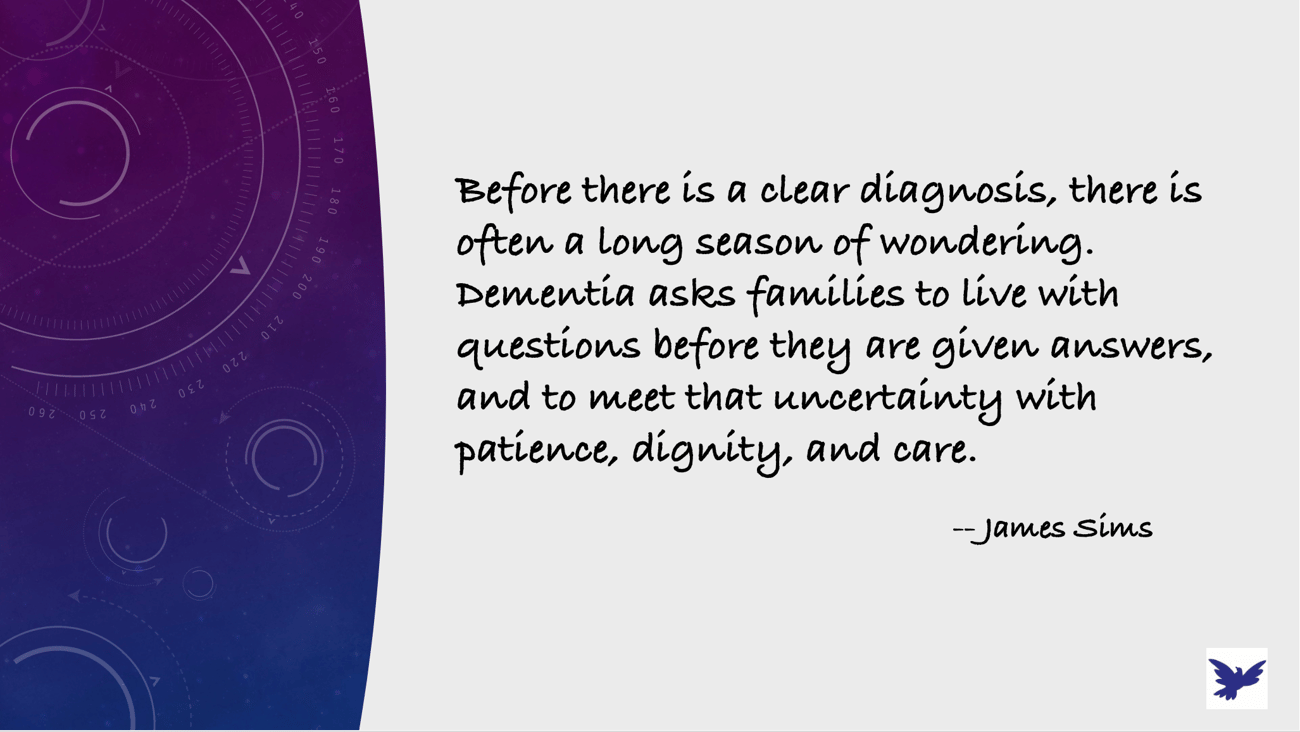
Caregivers' Sentiment: The Painful in-between
This quote speaks to the painful in-between that so many families experience long before any physician writes down a formal diagnosis. Dementia rarely begins with a single unmistakable event. It often emerges through small, ambiguous moments: a repeated question, a missed bill, an unusual lapse in judgment, a subtle shift in mood or personality. Each incident can be explained away on its own, yet together they begin to form a pattern that loved ones cannot ignore. That is the “long season of wondering” the quote describes, a period marked not only by uncertainty, but by emotional strain. Families are left asking difficult questions with no immediate answers: Is this normal aging? Is it stress, grief, depression, or something more serious? And perhaps most painfully, how
should they respond when they do not yet know what is happening?
It also emphasizes that uncertainty itself becomes a moral and emotional task. To “meet that uncertainty with patience, dignity, and care” is to resist both denial and panic. Patience means accepting that understanding may come slowly, through observation, conversation, testing, and time. Dignity means remembering that the person at the center of concern is not simply a case to be solved, but a human being whose autonomy, identity, and worth must be honored throughout the process. Care means showing up gently and consistently, even when clarity is absent. In that way, the quote suggests that before families are asked to manage a diagnosis, they are first asked to endure ambiguity with compassion. That may be one of the hardest parts of all.
|
|
|
|
|
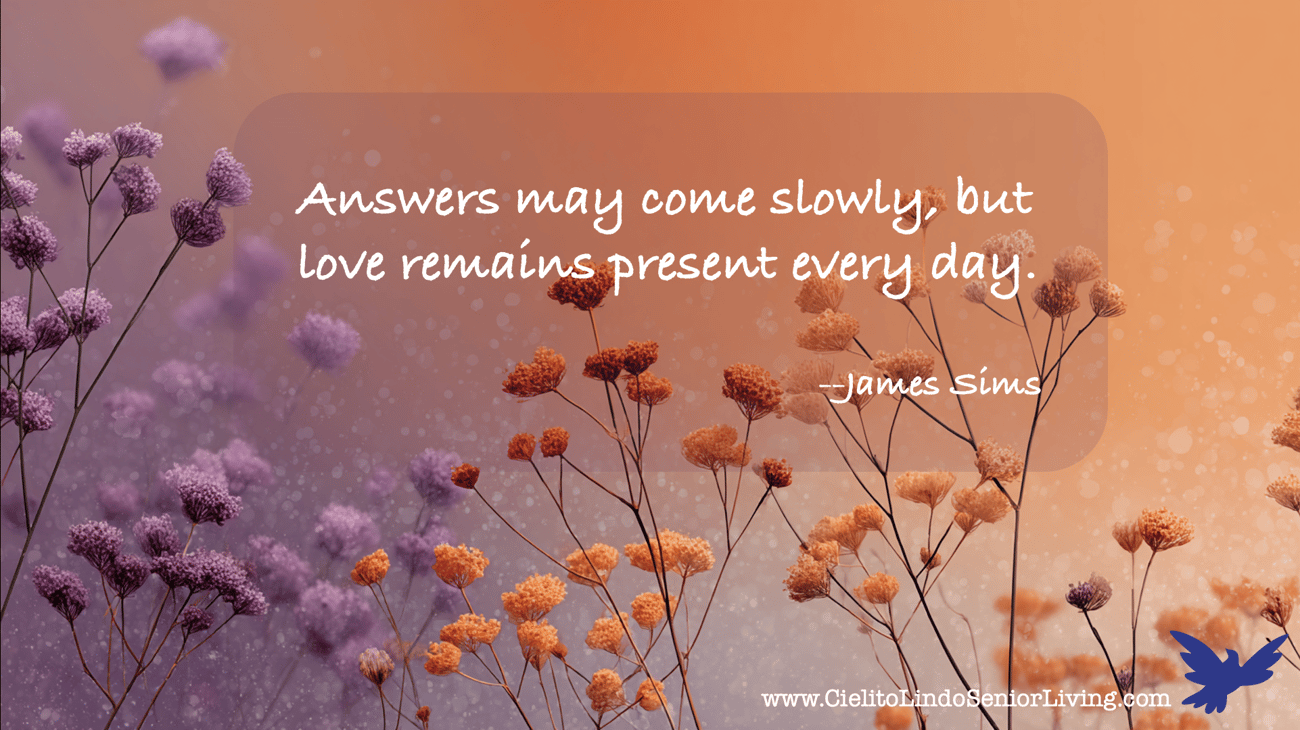
Caregiver's Affirmation
This affirmation speaks to one of the deepest truths in any season of illness or uncertainty: clarity does not always arrive when we want it to, but love does not have to wait. In the context of cognitive decline, families are often asked to live for weeks, months, or even years with incomplete information. Test results may be inconclusive, symptoms may progress unevenly, and the future may remain difficult to name. Yet while answers unfold slowly, the daily work of love continues: showing up, listening carefully, offering reassurance, preserving routines, and treating a loved one with patience and dignity. The
affirmation gently reminds us that while medicine may move in stages, compassion can be immediate.
It also offers comfort by shifting attention away from what cannot yet be controlled and toward what can still be faithfully given. Families may not be able to force certainty, stop every change, or solve every fear, but they can remain present. They can choose tenderness over frustration, steadiness over panic, and connection over despair. In that sense, love becomes more than a feeling; it becomes a daily practice. The affirmation honors the quiet courage of those who continue caring in the absence of easy answers, and it suggests that such presence is not secondary to the journey, but central to it.
|
|
|
|
|
A New Era in Neurological and Cognitive Assessment
June 10, 2023, by James Sims
Artificial intelligence is often discussed in terms of chatbots and language models, but its real significance may lie in what it can uncover in fields where earlier answers could change lives. In neurology and cognitive care, that promise is especially compelling. Diagnosing neurodegenerative disease has long been slow, expensive, and frustratingly imprecise, often requiring multiple tests that are invasive, inconclusive, or unavailable until symptoms have already advanced. AI raises the possibility that this process could become faster, earlier, and far more accessible.
That possibility extends beyond diagnosis alone. AI is already being explored in drug discovery, brain imaging, personalized treatment strategies, and even continuous monitoring tools that may help clinicians detect subtle changes before they become obvious to patients or families. In a field where timing matters enormously, the ability to recognize patterns earlier and respond sooner could reshape the way dementia and other neurological disorders are understood and managed.
This article examines that emerging frontier through a broad look at AI’s expanding role in neurological and cognitive assessment, while also spotlighting the work of Visitim Labs and founder James Emmett. Their approach—combining EEG, visual stimuli, and advanced AI analysis—points toward a future in which cognitive screening may become more rapid, affordable, and noninvasive. For readers interested in where medicine, technology, and early detection are beginning to converge, this piece offers a compelling glimpse of what may come next.
You can read the complete article here. Additionally we have 100's of other senior care and health related articles here.
|
|
|
|
|
Early Alzheimer’s Detection and Emerging Treatments
August 12, 2023 by James Sims
For decades, Alzheimer’s diagnosis has often come too late—after memory loss becomes obvious, daily life is disrupted,
and much of the damage has already been done. But that reality may be beginning to change. As dementia rates rise worldwide and families face growing emotional and financial strain, researchers are racing to find ways to detect Alzheimer’s earlier, more accurately, and with less reliance on invasive or inaccessible testing. At the same time, a new generation of treatments is shifting the conversation from symptom management toward the possibility of slowing disease progression itself.
That shift makes early detection more important than ever. New therapies such as lecanemab, aducanumab, and donanemab have fueled hope because they are designed to target the biology of Alzheimer’s disease rather than simply mask its symptoms. But these treatments appear to work best in
the earliest stages, when changes in the brain may already be underway long before a formal diagnosis is made. This creates an urgent challenge for medicine, patients, and caregivers alike: how do we identify those at risk soon enough to make meaningful intervention possible?
This article explores that question from multiple angles, examining both the limitations of current diagnostic tools and the promise of what may come next. From cognitive screening tests and brain imaging to blood biomarkers, virtual reality, wearable EEG, and artificial intelligence, it offers a wide-ranging look at how Alzheimer’s detection is evolving—and why the future of treatment may depend on getting diagnosis right much sooner than we do today.
You can read the complete article here. Additionally we have 100's of other senior care and health related articles here.
|
|
|
|
|
Dementia Diagnostics – From Traditional to the Latest Advancements
July 7, 2023 by James Sims
For most families, dementia begins not with a diagnosis, but with a suspicion—a missed appointment, a repeated question, a change in judgment that is easy to dismiss at first and harder to ignore over time. The path from those first signs to a clear diagnosis is often slow, fragmented, and frustrating. Traditional tools such as clinical exams, cognitive screening, lab work, and brain imaging remain essential, but they are often limited in their ability to detect disease early, distinguish among dementia types, or provide definitive answers when it
matters most.
That gap between concern and clarity is what makes advances in dementia diagnostics so important. Earlier and more accurate detection could help families plan sooner, allow clinicians to intervene earlier, and improve access to emerging treatments that may be most effective before decline becomes severe. Yet the reality today is that diagnosis still depends on a patchwork of methods, each with its own strengths, blind spots, costs, and practical barriers.
This article walks readers through that evolving landscape—from the traditional cognitive and clinical tools still widely used today to the latest innovations in biomarkers, retinal imaging, EEG, and artificial intelligence. It offers a useful overview of where dementia diagnosis stands now, where it falls short, and why the future of care may depend on finding ways to identify cognitive decline earlier, more accurately, and less invasively than ever before. You can read the complete article here. Additionally we have 100's of other senior care and health related articles here.
|
|
|
|
|
| Cielito Lindo's basic information is included for your convenience:
|
|
|
- Cielito Lindo Info: After the signature, the newsletter always includes information about Cielito Lindo, so it is at your fingertips when you want it: Our costs, various related websites, social media channels like YouTube, our various addresses, and so on.
- Travel Info: Recommended airports and shuttles.
|
|
|
Web Sites - Cielito LIndo and Rancho Los Labradores
Here are our Web sites, including Cielito Lindo and Labradores Suites (hotel) all of which are part of the larger Rancho Los Labradores gated community just north of San Miguel de Allende.
Web Sites - Cielito LIndo and Rancho Los Labradores
Here are our Web sites, including Cielito Lindo and Labradores Suites (hotel) all of which are part of the larger Rancho Los Labradores gated community just north of San Miguel de Allende.
- Cielito Lindo provides independent living, light assisted living, assisted living, memory care and hospice with 24*7 staffing along with a la carte assisted living services to those living in the villas and suites at Rancho Los Labradores.
- Rancho Los Labradores Suites offer short and long term residence.
- Rancho Los Labradores is a country club resort feeling CCRC that provides a gated community with countless amenities and opportunities for different levels of independent living along with assisted living and memory care within Cielito Lindo.
Cielito Lindo Living Options & Costs Guide
We offer several living options depending on the level
of care you or your loved one needs. Here’s a breakdown to help you plan:
1) Villas (Rent or Own)
- Cost: $1,300 – $1,700 per month
- Additional Costs: Utilities, renter’s insurance, etc.
- What’s Included: This is mostly independent living.
- Extras: You can add independent or assisted living services (charged separately, à la carte).
- Support: We can connect you with a realtor if you'd like to purchase.
2) Cielito Lindo Condos & Suites
Best for: Independent living with optional assistance.
Option 1: Independent Living + Meals
- Cost: $2,250 per month
Includes:- 2 meals a day
- Hotel like room cleaning, towel and linen service
- Monthly medical check-up
Optional Add-ons:- Meals for an additional person: $450/month
- Extra care services available à la carte
Option 2: Light-Assisted Living in Condos & Suites
- Cost: $3,900 per month
Includes:- Full assisted living services
- Designed for residents who still want independence but need some support
- Smooth transition to full Assisted Living or Memory Care as needs change
- One-Time Inscription Fee: $4,000
For Couples:- $4,900/month for two people
- Same one-time fee ($4,000 per couple)
- Note: Suitability is based on cognitive ability, mobility, and safety.
3) Cielito Lindo Assisted Living, Memory Care, & Hospice
Best for: Seniors needing full-time care and supervision.
- Cost: $3,900 per month
Includes:- 24/7 care and monitoring
- All meals
- Physical therapy
- Full-time doctor on site
- Spacious private room with
bath
- One-Time Inscription Fee: $4,000
- For
Couples: $4,900/month
4) Specialized Hospice Suite
Best for: Intensive care needs or end-of-life comfort and also recuperative at a far lower cost than a hospital- Cost: $4,900 per month
Includes:- Full 24/7 monitoring
- Recuperative, Palliative and hospice care
- On-site doctor
- All meals
- Special space for visiting family
|
|
|
YouTube videos and Curated Playlists
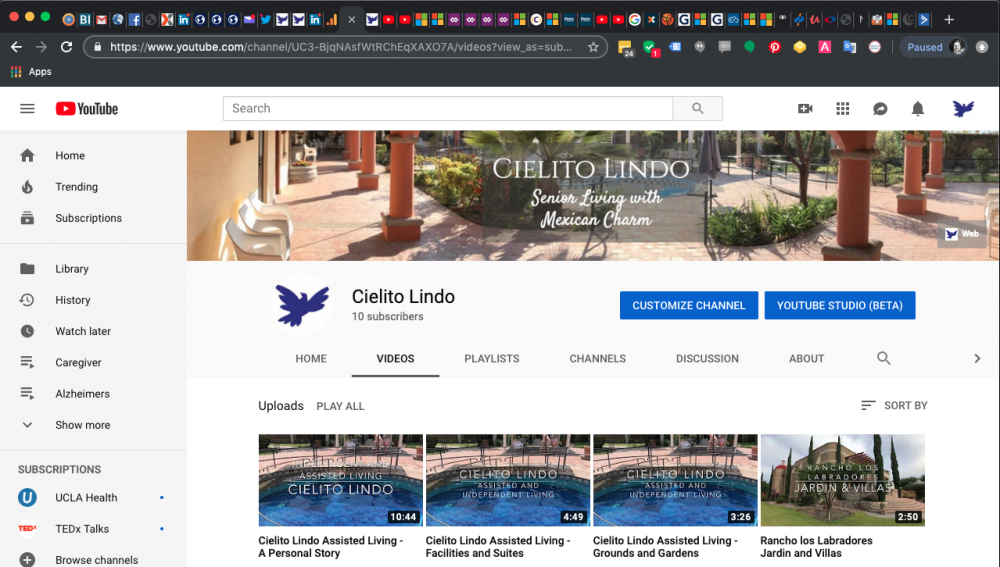
Here is our YouTube Channel. This is where we have lots of videos about Cielito Lindo and Rancho Los Labradores. We also have 1,600+ other senior care and expat in Mexico videos: YouTube |
|
|
|
|
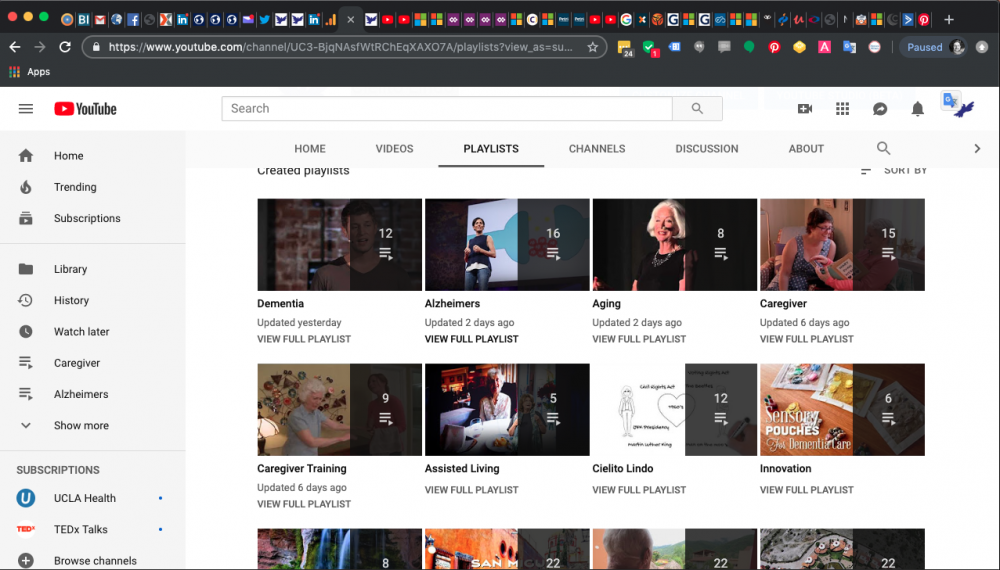
Additionally, our playlists cover a wide area and include 1,200+ videos. These playlists include videos about San Miguel and Mexico in general, caregiving and health, and a broad spectrum of senior living topics. Playlists
|
|
|
|
|
Additional Resources We Offer
We have curated collections of resources that may be useful:
Articles - We write fresh articles about senior living, health, care, and finances every week
Caregiver
Books - We review books related to caregiving methods, logistics, challenges, and coping
Senior Health - We review books related to healthspan, lifespan, and disease
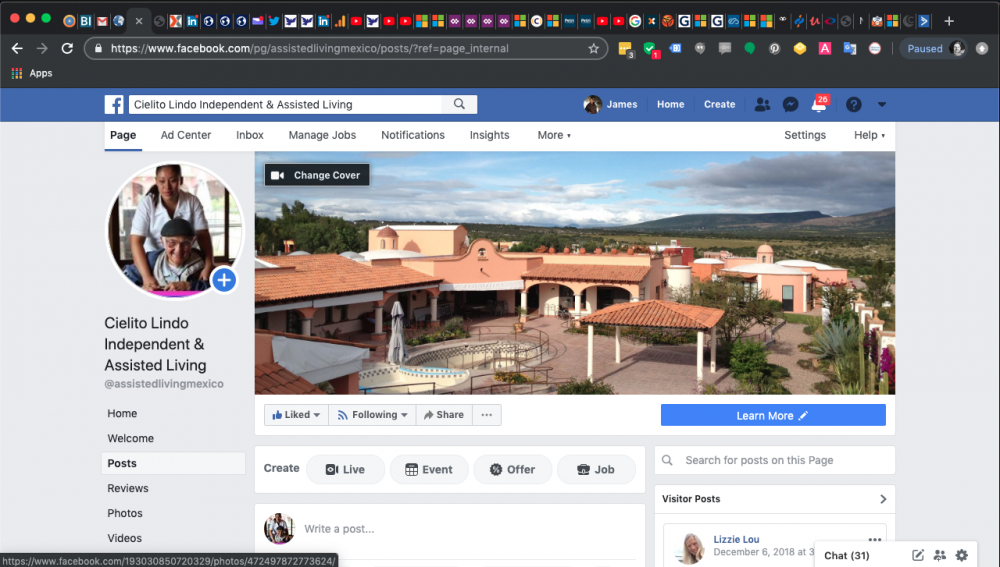
And here are our various social media forums, where we talk a lot about assisted living and memory care along with the various sort of challenges that sometimes come in our senior years (Alzheimer’s, Parkinson other dementias, and so on), but also about senior living in Mexico.
Facebook
|
|
|
|
|
|
|
|
|
|
|
Please don’t hesitate to contact me for anything related to senior living, especially in Mexico. I will gladly give you any assistance I can.
Thanks again!
James
James Sims
Marketing and Sales
Cielito Lindo Senior Living
1. 888.406.7990 (Voice and text)
1.209.312.0555 (WhatsApp)
Phones:
English speaking:
1.888.406.7990 (in US & CDN)
00.1.881.406.7990 (in MX)
Spanish speaking:
011.52.415.101.0201 (in US & CDN)
1.415.101.0201 (in MX)
SMA Colonias (subdivisions/neighborhoods):
Map and descriptions
Addresses and Travel:
Physical address:
Cielito Lindo Independent and Assisted Living, Camino Real Los Labradores S/N, Rancho Viejo 1, San Miguel de Allende, GTO, Mexico, 37885
Packages from online providers like Amazon:
Camino Real Los Labradores, Rancho Los Labradores / Cielito Lindo, San Miguel de Allende, GTO, 37880 México
PO Box for letters and small envelopes:
Rancho Los Labradores / Cielito Lindo, c/o Alejandra Serrano , PMB N° 515-C,
220 N Zapata HWY N°11, Laredo TX, 78043-4464
Air:
Best airports to fly into: Leon (BJX) or Queretaro (QRO)
Shuttle:
Best
airport shuttle: BajioGo
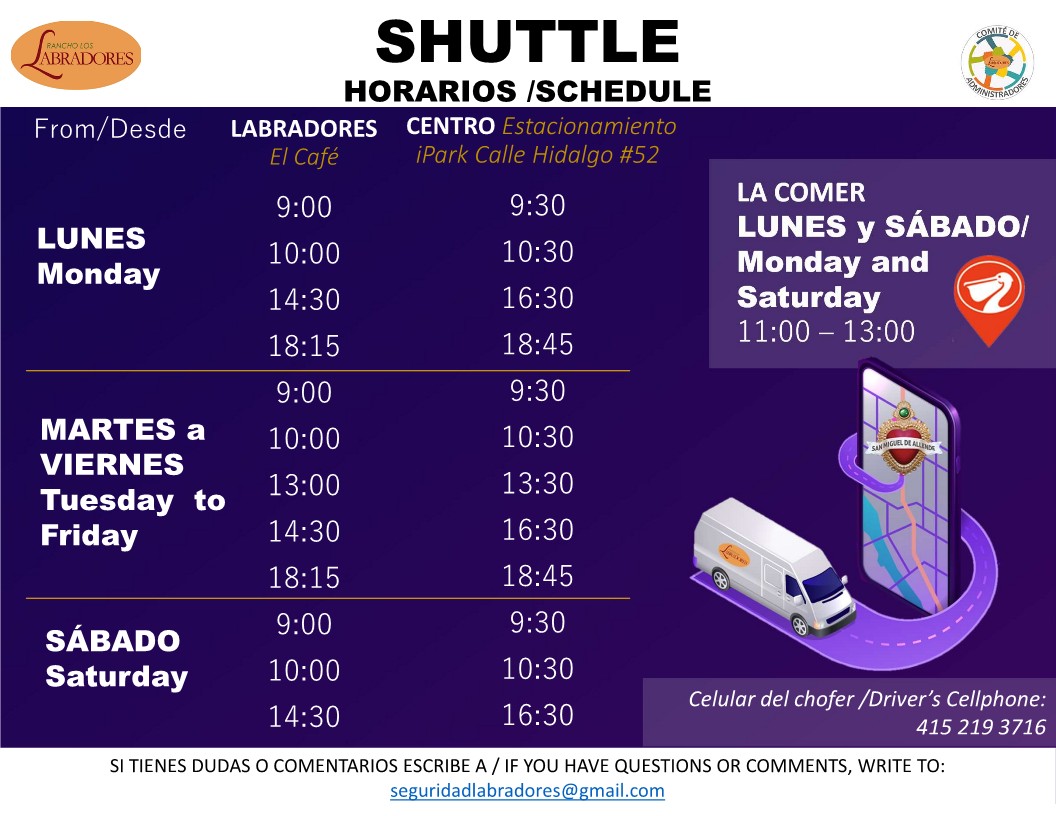
Shuttle between San Miguel and Rancho Los Labradores / Cielito Lindo
|
|
|
|
|
|
|
Regards,
James
James Sims
Marketing and Sales
Cielto LIndo Senior Living
jsims.cielitolindo@gmail.com
|
|
|
|
|
|
|
|